
SHEIN's First Full Financial Report: Revenue Down 5.9%, Net Profit Up 26.8%, Accelerating Local Fulfillment in Europe
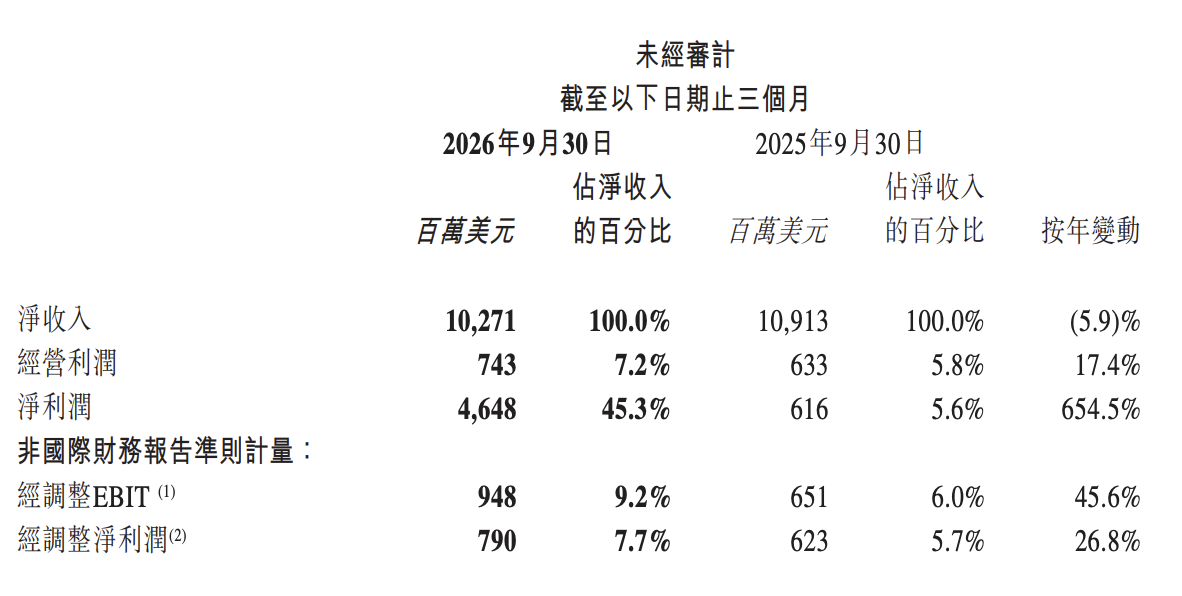
【Ebrun Original】SHEIN recently released its Q3 2026 earnings announcement. The financial report shows that in Q3, the company achieved net revenue of $10.271 billion, down 5.9% year-over-year; operating profit of $743 million, up 17.4% year-over-year; net profit of $4.648 billion, up 654.5% year-over-year; adjusted net profit of $790 million, up 26.8% year-over-year, accounting for 7.7% of net revenue.
In Q3, SHEIN's total fulfilled orders were 264 million, compared to 272 million in the same period last year; active consumers reached 291 million in the 12 months ended September 30, 2026, up from 265 million in the same period last year.
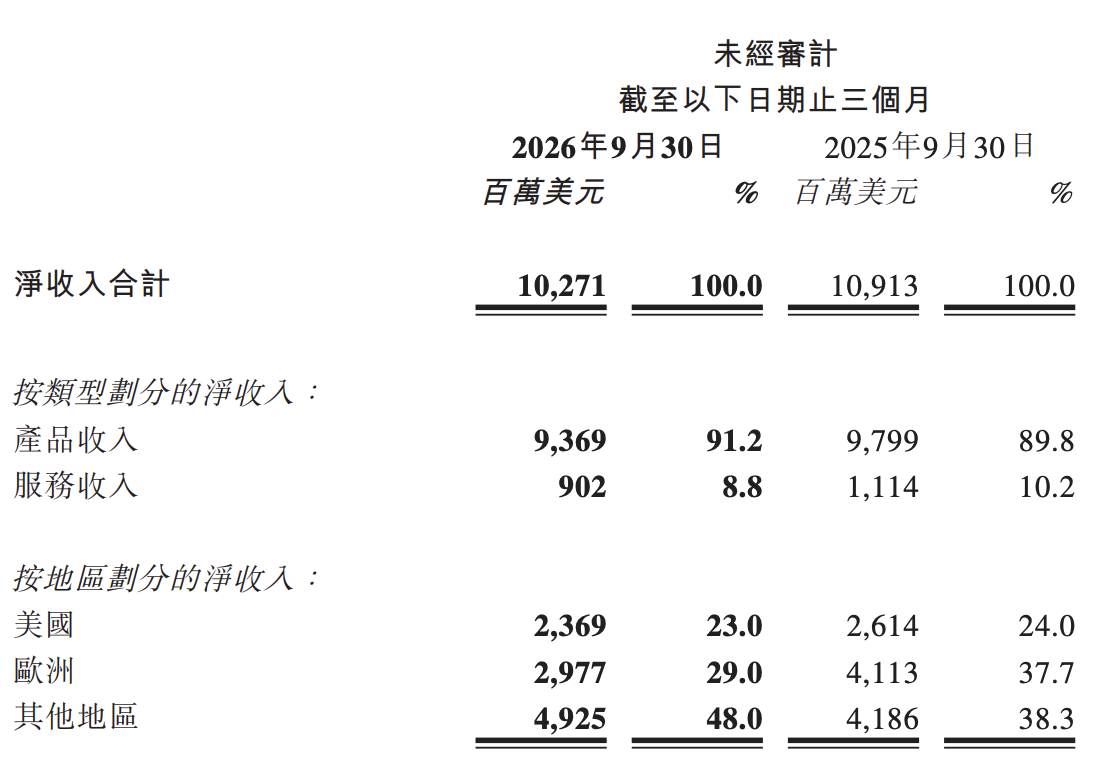
By region, in Q3, SHEIN's net revenue from the U.S. was $2.369 billion, down 9.4% year-over-year, accounting for 23.0% of total revenue; net revenue from Europe was $2.977 billion, down 27.6% year-over-year, accounting for 29.0% of total revenue; net revenue from other regions was $4.925 billion, up 17.7% year-over-year, accounting for 48.0% of total revenue.
The European market remained the main reason for SHEIN's pressure on performance this quarter. The financial report explains that due to trade policy adjustments in the European market, the company has raised prices to cover additional costs, reallocated marketing investment based on ROI, and accelerated local fulfillment layout.
The report predicts that price increases will affect consumer purchases in the short term, but as long as differentiated and competitive products continue to be offered, consumers will return to the SHEIN brand in the medium to long term. "We believe the European market size will return to and exceed its previous peak sales amount in the medium to long term."
In terms of fulfillment, SHEIN is accelerating the rollout of its European local fulfillment solution "small-batch quick replenishment," which can bring better user experience, faster delivery, and lower costs. Currently, this model covers more than 40% of delivery volume for European consumers, more than double compared to Q2, and is expected to reach approximately 50% coverage by the end of 2026, with plans to cover most deliveries in the second half of 2027.
The financial report states that products fulfilled through "small-batch quick replenishment" significantly outperform cross-border fulfillment in both conversion rate and per-unit profitability. SHEIN will continue to expand local fulfillment capabilities and continuously invest in automation, demand forecasting, and routing technology to ensure the continued success and optimization of the "small-batch quick replenishment" model.
Regarding the U.S. market, the financial report states that total fulfilled orders increased slightly year-over-year; although net revenue remains below the same period last year, the gap is mainly due to the rising proportion of marketplace business orders. SHEIN judges that "the adjustment in the U.S. market has passed its most difficult stage," and the year-over-year decline in Q3 net revenue narrowed month by month, with a clear improvement trend.
In addition, other regions of the world continued to maintain strong growth, with Latin America performing particularly well; due to regional conditions, demand in the Middle East was somewhat suppressed.
SHEIN stated directly in the financial report: "Q3 2026 was a special quarter for SHEIN: it is our first full quarterly performance report after going public, and also the quarter most concentrated with the impact of external policy changes. We withstood the pressure brought by changes in European trade policy, but the U.S. market continued to recover, and other regions of the world also maintained healthy growth."
By revenue type, in Q3, SHEIN's product revenue was $9.369 billion, down 4.4% year-over-year, accounting for 91.2% of net revenue, higher than 89.8% in the same period last year; service revenue was $902 million, down 19.0% year-over-year, accounting for 8.8% of net revenue, lower than 10.2% in the same period last year. The financial report explains that the decline in the proportion of service revenue is mainly related to the decline in the proportion of the marketplace model in the European business.
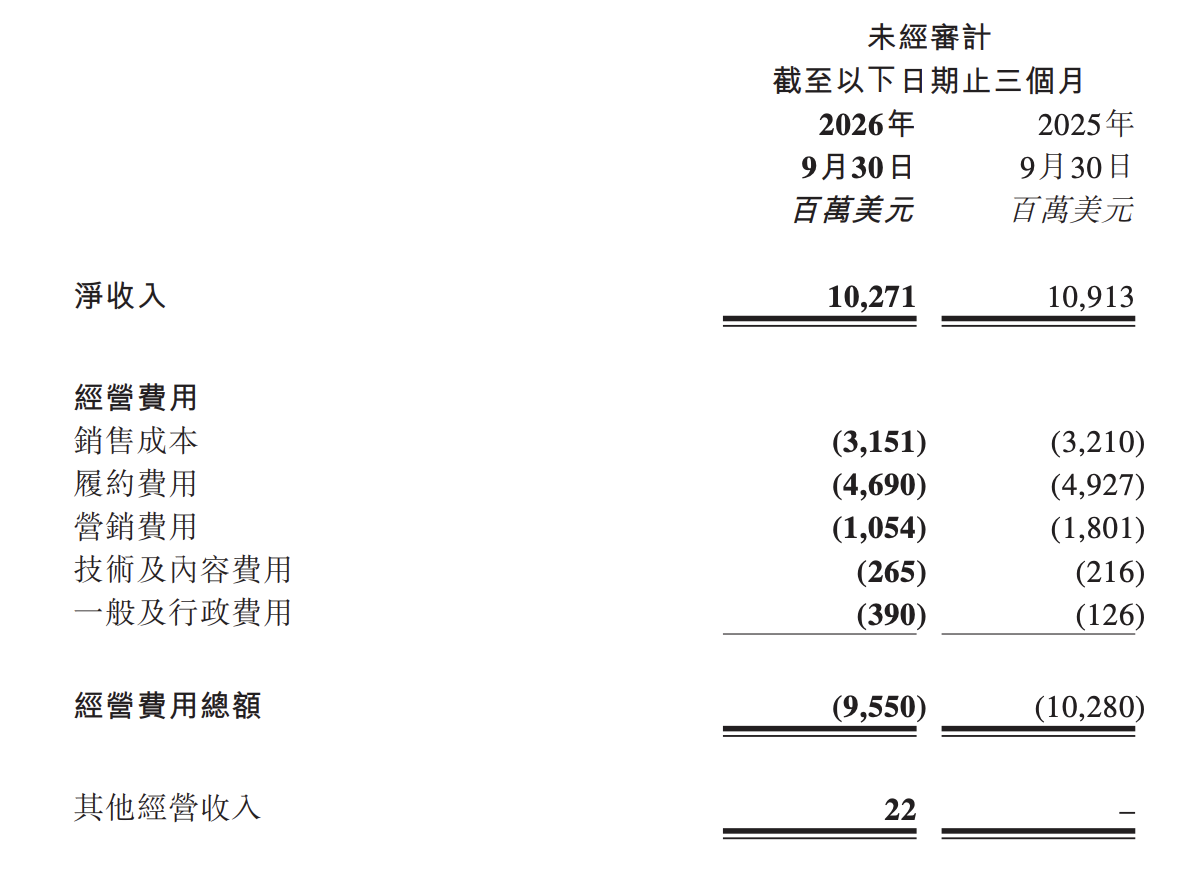
From the perspective of operating expenses, in Q3, SHEIN's total operating expenses were $9.550 billion, down 7.1% year-over-year, and the proportion of net revenue decreased from 94.2% in the same period last year to 93.1%. Among them, cost of sales was $3.151 billion, down 1.8% year-over-year; fulfillment expenses were $4.690 billion, down 4.8% year-over-year; marketing expenses were $1.054 billion, down 41.5% year-over-year; technology and content expenses were $265 million, up 22.7% year-over-year.
The financial report explains that the significant decline in marketing expenses was mainly due to the company reallocating advertising budgets across markets, especially reducing online advertising investment in the European market. The decline in fulfillment expenses was also affected by factors such as cost optimization, refunds of some tariffs already paid, and a decrease in order volume. The increase in technology and content expenses was mainly used to enhance consumer experience and strengthen system capabilities.
Strategically, SHEIN continues to advance three priorities: enriching price bands, improving product quality and compliance levels, and optimizing consumer communication. At the same time, SHEIN is deepening cooperation with upstream and downstream suppliers in the supply chain, promoting product quality improvement and upward extension of price bands, and strengthening platform compliance management through measures such as merchant access, product qualification control, and physical inspections. In addition, the brand empowerment business maintained good performance, with brands such as KIZN and AiiRZ achieving strong year-over-year revenue growth, further enriching the company's mid-price product portfolio.
SHEIN also made judgments on changes in the consumer environment in its financial report: against the backdrop of continuously rising global living costs, consumers value cost-effectiveness more and concentrate spending on choices with the best combination of design, quality, and price. SHEIN will continue to leverage its supply chain advantages of on-demand design, small-batch production, and immediate replenishment to meet consumer demand for fashion, richness, and cost-effectiveness with a flexible and efficient supply chain system.
This article was first published on the Ebrun official website.
[Copyright Notice] Ebrun advocates respecting and protecting intellectual property rights. Without permission, no one is allowed to copy, reproduce, or use the content of this website in any other way. If any copyright issues are found in the articles on this website, please provide copyright questions, identification, proof of copyright, contact information, etc. and send an email to run@ebrun.com. We will communicate and handle it in a timely manner.
Translated by AI. Feedback: run@ebrun.com