
From Single-Site Start to Global Footprint: Compliance Barriers for Cross-Border Sellers Are Being Leveled
 By Li Mengqi | Edited by Shi Lei
[Ebrun Original] What preparations are needed to launch a product across multiple marketplaces? For cross-border sellers, after identifying demand, developing the product, and arranging logistics, there is still a hurdle that determines whether the business can actually launch: whether the product meets the compliance requirements of the target region.
However, different marketplaces do not have identical requirements for the same product. If existing test reports cannot cover the requirements of a new marketplace, sellers must conduct additional testing. Each additional round of testing, with repeated sample submissions and communications, consumes time and slows down the product's entry into new marketplaces.
These upfront investments directly affect time-to-market and also change sellers' judgments about the efficiency and timing of expansion.
But the opportunity of globalization is already within reach. In December 2025, at its Amazon Global Selling Cross-Border Summit held in Hangzhou, Amazon disclosed that since 2025, sales by Chinese sellers in mature marketplaces such as Europe and the U.S. grew by more than 15%, while growth in emerging marketplaces exceeded 30%. It is evident that expanding existing products to more regions, or even considering multi-marketplace layouts during product development, has become a highly certain growth path for Chinese sellers today.
Against this backdrop, how to reduce repetitive investment in compliance and accelerate entry into more emerging marketplaces has become a core need for cross-border sellers in their global expansion.
Recently, Amazon's Global Test One (GTO) service expanded from toys to two additional categories—electronics and appliances, and maternal and child products—enabling a single test to satisfy product compliance review requirements across multiple marketplaces, thereby supporting more sellers in accelerating their global marketplace expansion.
GTO is a product compliance service Amazon offers to Chinese sellers. Specifically, Amazon has consolidated product testing standards that are common across marketplaces and has third-party testing institutions provide testing services and corresponding reports, helping sellers reduce the burden of submitting samples marketplace by marketplace and repeated communications, while also lowering compliance testing investment for multiple marketplaces through preferential testing prices.
How much impact does compliance actually have on sellers' product launches and global expansion? Can Amazon GTO solve these challenges? Will it bring new growth space to the industry?
01
Global Opportunity, Stuck Before Launch
A product selling well in one marketplace does not mean it can enter the next marketplace at the same pace. A cross-border seller told Ebrun that, based on their experience, the team and supply chain are ready and they have a clear judgment of local demand, but when the product can launch often depends on the progress of compliance preparation. Compared with other steps, this stage requires time and investment that are harder to predict.
More importantly, in the context of global expansion, if the same product is sold in multiple marketplaces simultaneously, sellers may also face the problem of repeated sample submissions. 'If existing reports cannot meet the requirements of other marketplaces, we have to conduct the corresponding additional tests. Each additional round of testing means extra money and energy costs, and the product launch will also be delayed,' the cross-border seller added.

This is not the experience of a single seller. In the compliance preparation process, sellers usually need to compare the testing scope and prices of multiple institutions at the same time. Take children's products as an example: the U.S. Consumer Product Safety Commission (CPSC), in its laboratory selection guide on its website, recommends that companies obtain two to three quotes, require laboratories to list testing items, and confirm item by item whether the laboratory has the corresponding qualifications for the required tests, while also comparing differences in the scope of different quotes on that basis. (This guide applies to children's products subject to third-party testing under U.S. federal consumer product safety requirements. Obtaining two to three quotes is a CPSC recommendation for price inquiries, not a mandatory requirement.)
For electronic products, testing itself also requires more budget and time. Technical materials published by test and measurement company Tektronix show that a single safety test for an electronic product can take three to five weeks, excluding waiting time before entering the testing queue. In addition, the cost of a single submission for testing in this category can be as high as US$20,000.
Therefore, the cost companies pay for compliance has become a factor sellers must consider when evaluating profits and investment.
A head of a Chinese brand that previously operated a German marketplace told Ebrun earlier that although Chinese companies have supply chain cost advantages, after products enter Europe they still need to bear additional costs such as compliance certification and local operations. The executive acknowledged that this has to some extent narrowed the competitive space companies operate in and even affected their confidence in continuing to operate in that marketplace.
The executive further explained that the overall cycle for electronic products entering Europe is often very long, and companies need to advance payments during the process, while gross margins for such products are relatively low and sales are mainly concentrated in spring and summer. Once a company delays in compliance preparation and misses the peak season, capital may be tied up in inventory for a long time. More importantly, compliance issues may further amplify operational risks. 'Once goods are seized due to compliance problems, the company is finished.'
Such operating pressure also makes sellers more cautious when expanding into new marketplaces. Marketplace Pulse research author Ben Donovan has also pointed out that regulatory complexity and the trade-off between expansion investment and return are among the main reasons sellers are cautious about international expansion.
For sellers hoping to enter multiple marketplaces at the same time, the calculation is clearly even harder. Each additional marketplace means compliance preparation time and costs, as well as the operational pressure borne by the company, may continue to increase.
02
Global Business Needs a New Compliance Solution
In fact, in the process of bringing the same product into multiple marketplaces, how much repetitive work in compliance preparation can be reduced is crucial to product launches and even sellers' global business layout.
On this point, GTO offers a way to consolidate testing needs across multiple marketplaces: after the seller submits product information and target marketplaces, a third-party testing institution assesses the required testing items, and through a single testing process, product compliance reports required by multiple marketplaces can be obtained. Sample submission and communication work originally scattered across different marketplaces can also potentially be completed together.

For sellers already operating in some marketplaces, existing test reports can also serve as the basis for expansion. For example, if a product already has a valid report meeting U.S. standards and the seller hopes to enter Europe further, Amazon GTO's third-party testing institution can directly verify the existing report and, if verification passes, assess the additional testing items required for the European marketplace. In this way, sellers can understand what preparations are still needed to enter the new marketplace and estimate the additional testing costs accordingly.
This GTO service update also extends the above approach to more categories and products. According to the November 2026 version of operations, GTO has expanded from the initial toy category to some lithium-battery-powered consumer electronics, and will continue to cover home appliances as well as portable power supplies and lithium batteries. For maternal and child products, it has covered children's jewelry and children's toys, and will further cover children's sleepwear and more categories in the future.
Now, when sellers operating in the above categories plan to sell the same product to multiple marketplaces, they can directly submit testing needs for target marketplaces to a third-party testing institution, which will uniformly assess the applicable testing plan. Currently, GTO aims to cover 16 major marketplaces in North America, Europe, Asia-Pacific, and the Middle East, though which marketplaces a specific product applies to still needs to be confirmed based on the specific scope of availability. But what is certain now is that testing work that previously required marketplace-by-marketplace coordination can potentially be completed uniformly in the same service.
On the cost issue that sellers also care about greatly, Ebrun learned that GTO third-party testing institutions will apply consistent standardized unit prices for major testing items within the scope of Amazon product listing-related and direct product validation (DPV). In other words, this gives sellers a relatively unified pricing basis and to some extent reduces the previously cumbersome price comparison process. It should be noted, however, that unified unit prices do not mean the total testing price is the same for all products. The more materials a toy uses, the more testing points may be required; correspondingly, the circuit design of electronic products will also affect the final testing cost.
In any case, sellers can now first obtain an estimated quote based on product information and then decide whether to proceed with sample submission.
On other issues sellers care about, such as whether the testing cycle is visible and whether it can be used as a basis for working backward to plan product launches, Amazon's latest upgrade also provides an answer. Reference times given in the same guide show that, with sufficient samples and passing testing on the first attempt, 62368-1 testing for complete electronic and electrical appliances takes about 20–25 working days, ordinary toys about 7 working days, and children's jewelry depending on material—non-metallic children's jewelry about 7 working days and metal jewelry about 12 working days (subject to the actual scope of availability/institution assessment).
It is worth noting that for marketplaces already connected to DPV, after the institution issues the report, it usually takes about 3–7 working days to complete verification and upload (subject to the actual scope of availability/institution assessment), but the testing institution will submit it directly, and sellers no longer need to upload documents themselves.
This helps sellers control new investment in the marketplace expansion process to a great extent. Clearer pricing methods and reference cycles also give sellers a basis for judging upfront costs and time investment that previously were difficult to estimate.
03
Global Layout, Pressing the Accelerator
'The improvement in multi-marketplace compliance efficiency must ultimately be reflected in the progress of products reaching more countries.' A cross-border industry insider pointed out that whether a product whose demand has already been validated in one marketplace can enter other marketplaces more smoothly is the most direct measure of the business value of such services.
However, single-marketplace operation is still the choice of most Amazon sellers. Research published by Marketplace Pulse in March 2025 shows that 69% of Amazon sellers operate in only one marketplace, while sellers operating in six or more marketplaces account for 6%.
In fact, however, sellers do not lack the willingness to expand. Based on actual communications with sellers, in the past when facing new marketplace opportunities, companies needed to repeatedly assess and bear the cost of entering new marketplaces. The more items that needed to be confirmed one by one, the harder it was to advance expansion plans quickly, and the greater the operational risk and pressure companies bore.
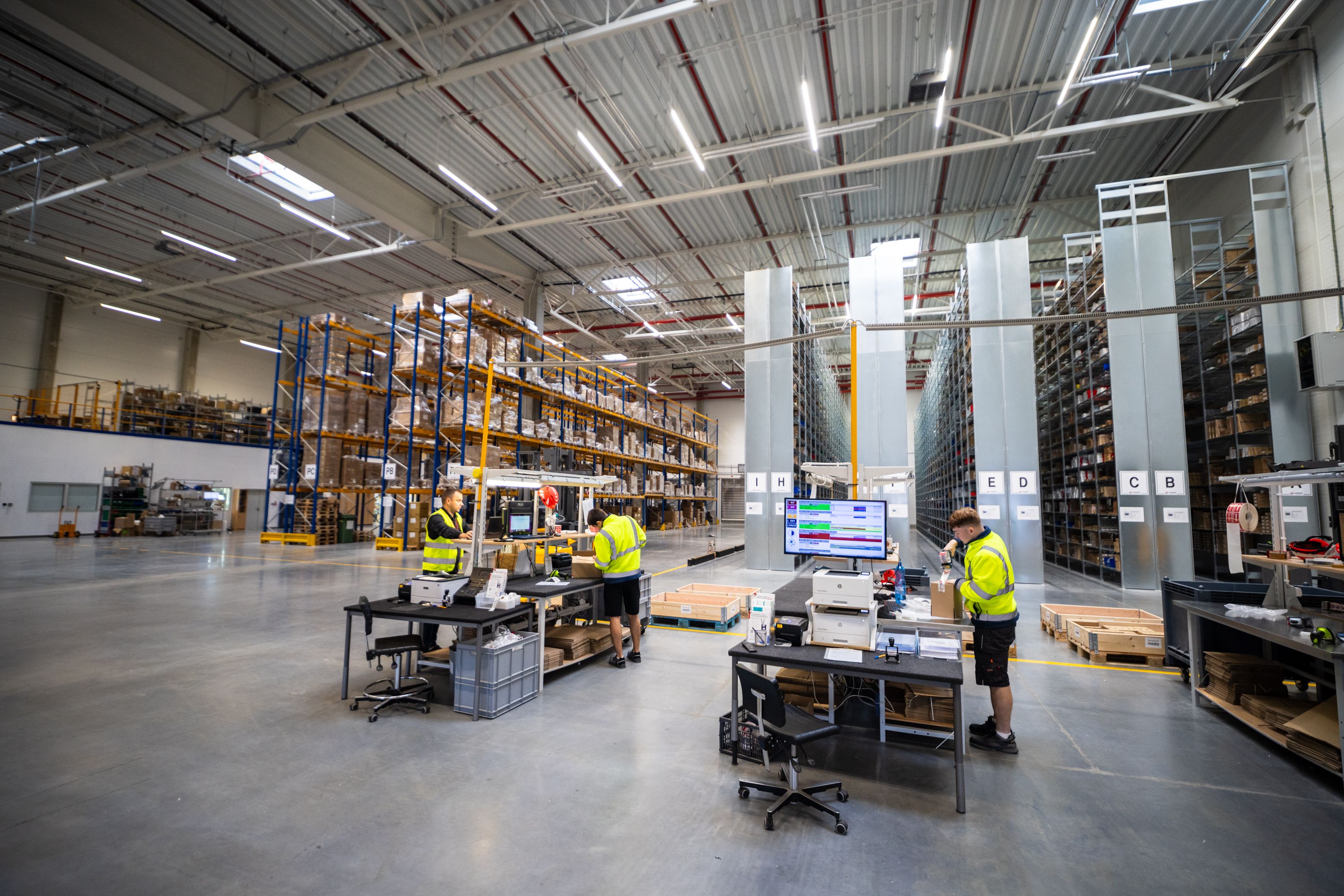
GTO largely simplifies the compliance preparation step and gives sellers a clearer basis for assessment. This has also accelerated, to some extent, the process of sellers' global operations, and given the single-marketplace operating data above, there is still very large growth space here.
Therefore, in Ebrun's view, the growth space brought by GTO lies first in helping sellers bring existing products to more marketplaces more efficiently, reach more consumers, and generate more returns on original product investment.
Multi-marketplace launch plans for new products also have better execution conditions. Sellers can handle the compliance needs of multiple target marketplaces together, reduce the impact of marketplace-by-marketplace preparation on launch progress, bring new products on sale in multiple marketplaces faster, and push 'launch globally upon release' into actual operations.
This article was first published on the official website of Ebrun.
[Copyright Notice] Ebrun advocates respecting and protecting intellectual property rights. Without permission, no one is allowed to copy, reproduce, or use the content of this website in any other way. If any copyright issues are found in the articles on this website, please provide copyright questions, identification, proof of copyright, contact information, etc. and send an email to run@ebrun.com. We will communicate and handle it in a timely manner.
Translated by AI. Feedback: run@ebrun.com