
Wang Rui of Langshi Strategy Consulting: How Does MINISO Turn 'Browsing' into Big Business?
【Ebrun Original】In 2024, MINISO renovated a store located in Jewel Changi Airport, Singapore. The store is themed around Loopy and also features a MINISO GO zone with a concentrated display of travel supplies. Some people enter the store to browse for their favorite character, while others want to stock up on travel essentials before departure.
On November 20, at the 'Foreign Trade Qinglan Program · Brand Leap' conference hosted by the Global Cross-border E-commerce Knowledge Service Center and Ebrun Matica, under the guidance of the China (Hangzhou) Cross-border E-commerce Comprehensive Pilot Zone and the Xiaoshan District Commerce Bureau of Hangzhou, Wang Rui, a partner at Langshi Strategy Consulting, delivered a closed-door sharing session titled 'MINISO: From a 10-Yuan Store to a Global Super Brand.' Starting with how customers make choices, he reviewed MINISO's process of brand upgrading domestically and localized operations overseas.
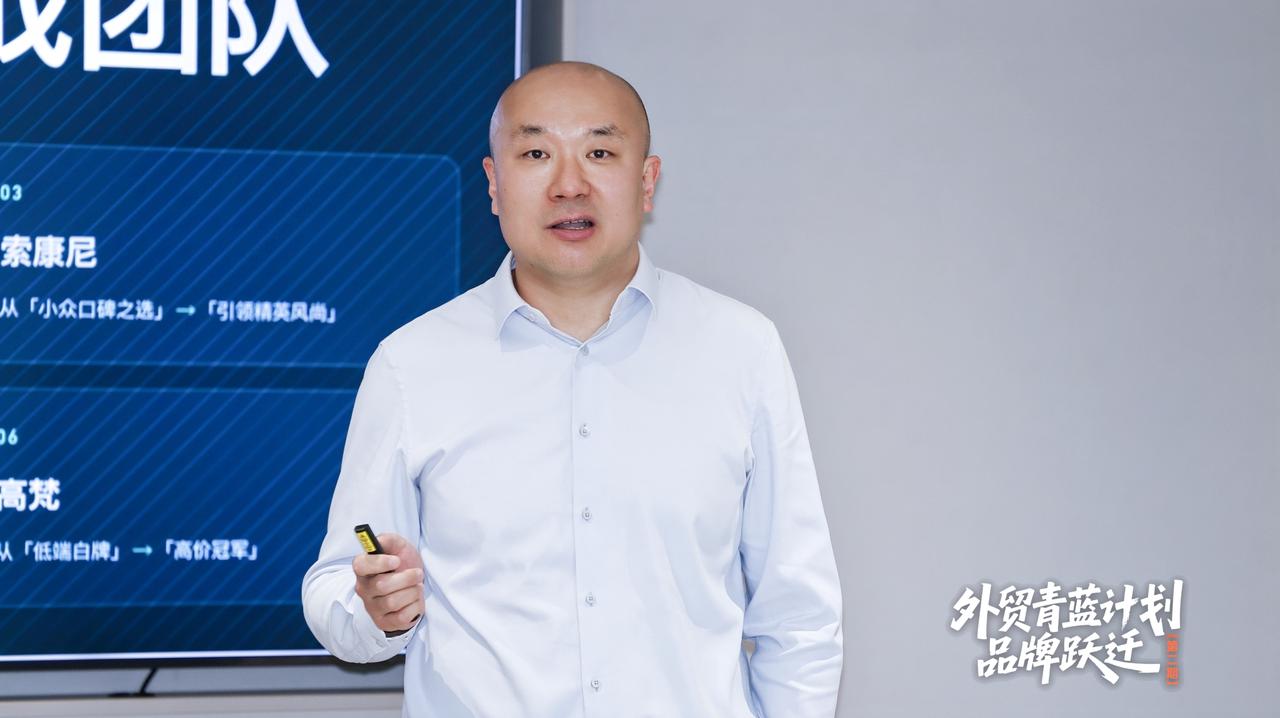
Wang Rui, Partner at Langshi Strategy Consulting

Three Soul Questions: First Clarify What Choice Customers Are Making
The first question: In the customer's mind, are you a product brand or a channel brand?
Wang Rui used a pair of slippers to explain this question. 'I go to MINISO to buy a pair of slippers' means the customer first decides where to buy; 'For slippers, I'll buy MINISO' means the customer first decides which brand to buy. The same retailer can accommodate both types of choices. Whether customers first choose the store or the product brand affects where a company should focus its operations. For MINISO, many customers first know the store, then know the products in the store. Therefore, brand upgrading should start from the strengths of the channel and then use distinctive products to give customers more reasons to enter the store.
The second question: Do customers treat this store as a 'buying place' or a 'browsing place'?
People going to a 'buying place' usually have a task and already know what they want to buy before entering the store; people entering a 'browsing place' may have seen the storefront, window display, or an interesting product, and only decide whether to buy after entering. Daily necessities such as hair ties, cotton swabs, and slippers often have flexibility in when and where to buy, and customers can easily judge whether they are suitable once in hand. For retailers dealing in such products, the store itself is an important competitive unit. If the store is easy to find, has enough stock, and offers something new each visit, passing traffic has a chance to convert into transactions.
Wang Rui divides the ways to trigger purchases into three categories: being prompted only after seeing a recommendation is 'choosing by hand'; passing by a store and seeing products before deciding is 'choosing by foot'; thinking of a brand when a need arises is 'choosing by brain.' When discussing long-term competitive barriers, Wang Rui's order is 'brain first, then foot, then hand.' What he values most is that customers proactively think of the brand as soon as a need arises. For companies skilled in offline operations, stores can become the starting point for building this awareness. First let customers enter the store and experience products, then use distinctive products to make them think of the brand next time they have a need.
The third question: What need does 'browsing' actually satisfy?
A hair tie solves the problem of tying hair up, while a store that is fun to browse brings the joy of discovering new things. Wang Rui uses the 'seesaw of demand' to explain this: whether customers are willing to buy depends on the difference between purchase motivation and purchase obstacles. An easily acceptable price and a store nearby lower obstacles; encountering a favorite character or finding something that makes the home look better increases motivation.
These three questions correspond respectively to which choice a company should compete for, at which stage to intervene, and what to use to move customers. From this, Langshi Consulting derived a path in the MINISO case: maintain the foundation of daily necessities and cost-effectiveness, then incorporate the interest and experience brought by IP into the products.

Daily Necessities + IP: From Developing a Set of Goods to Operating a Store
The basic functions of the same type of daily necessities are often similar, but IP design can add a purchase motivation beyond the original function. Just as a person may already have a cup but still look at a new cup for a favorite character. This is the starting point of 'daily necessities + IP.' To turn this interest into a sustainable business, product development, key categories, stores, and communications all need to connect.
First, product development. Wang Rui summarizes this change as moving from 'selling products' to 'selling IP.' In terms of product development, this means making the character itself the reason to buy, then expressing that difference through styling and series design. In the 2023 Barbie collaboration, MINISO developed more than 120 SKUs, covering 12 lifestyle trend categories. The same image across multiple categories has a chance to reach different customers and also gives fans of the character more choices within the same store. From an operational perspective, this requires companies to simultaneously consider which products best express the character, which are suitable for bundled purchases, and how this set of goods should be launched in coordination with the theme.
Next, key categories. Master fragrance and IP blind boxes are key directions in brand upgrading. Choosing these categories requires looking at market demand, the company's existing product foundation, and whether they can leave customers with a clear reason to visit the store. Fragrance is a typical case. MINISO combined floral art with reed diffusers and set up a fragrance experience space in its Guangzhou flagship store. Customers can smell the scent and also judge how the product would look at home. Product design adds a reason to buy, and the store displays that reason.
Stores, brand symbols, and marketing handle several other tasks. The Shanghai Huaihai Road flagship store once set up a Harry Potter-themed Platform 9?, with products divided by the four Hogwarts houses, so that when customers walk into a themed area, they can see a set of related products. MINISO's Wink blinking smiley face undertakes the task of brand recognition and can be recognized across different marketing activities. Wang Rui's 'marketing flywheel' can be understood from these actions: product launches and store experiences provide content that can be spread, giving customers reasons to visit; the experience and sharing after visiting can then become material for the next round of communication.
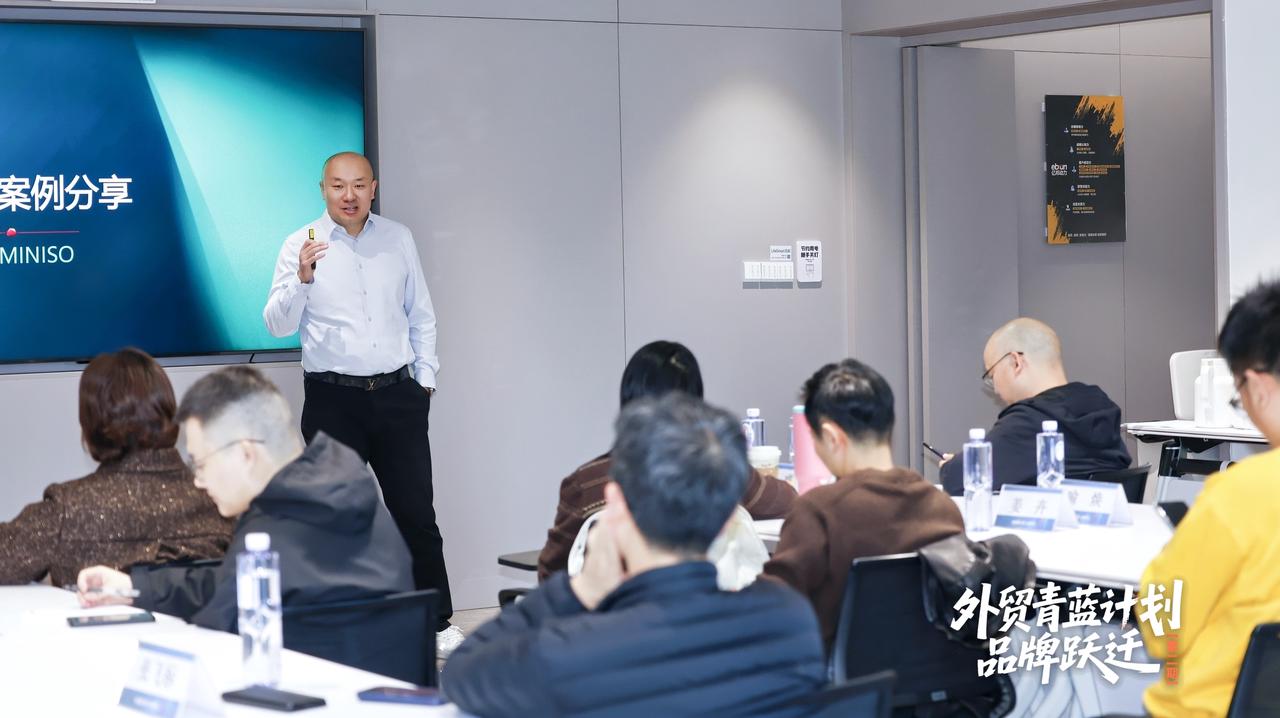
Foreign Trade Qinglan Program · Brand Leap

Going Global 2.0: Connecting Global Store Formats with Local Operations
Wang Rui calls the stage dominated by country agents placing orders and operating local markets 'Going Global 1.0.' This approach allows products and stores to enter different markets quickly. In 'Going Global 2.0,' companies need to further manage local consumer demand and bring what they learn from stores back into product selection, product development, and marketing. Overseas, MINISO adopts models such as distribution, retail partners, and direct operation. In strategic markets such as North America, it uses direct-operated stores to directly obtain local consumer insights and operating experience.
Which capabilities can be used across markets? Which decisions should remain local? The Sanrio-themed store that MINISO opened at Margo City in Indonesia provides a case. The operating approach of a themed store can be reused, but the featured characters depend on local preferences. The Sanrio series is very popular among young consumers in Indonesia, so it was made into an independent store theme. The brand also invited Indonesian actress Pully Ratukanshina to participate in the opening event and serve as the local spokesperson for the fragrance category.
Channel formats also change product selection. When reviewing US market research, Wang Rui cited the example of open-air commercial plazas. On one side of the plaza might be Walmart, and on the other Target. Customers often drive there and have already decided before leaving home what they want to accomplish on this trip. It might be going to the supermarket to buy a week's worth of daily necessities, buying a tool, or getting something for a pet; in some domestic shopping malls, customers may just be out for a stroll and decide to enter a store only after seeing an interesting window display. The difference between the two scenarios lies in when customers decide which store to go to. In such open-air commercial plazas, customers often choose the store before departure. In shopping malls mainly oriented toward leisure browsing, customers may decide which store to enter only when they reach the window.
For retailers accustomed to capturing passing traffic in shopping malls, this difference directly affects site selection and product selection. Opening in such a plaza requires first thinking clearly about which type of product can become the customer's shopping purpose. Wang Rui puts this question very concretely: 'What is something customers must specifically drive to your store to buy?' Langshi's direction is to create one or two 'mind categories' that customers can remember. First find procurement needs that local customers already have, then see which needs nearby stores have not satisfied, and build the difference into a specific set of products. Only then, when customers next want to buy this type of product, will they have a reason to schedule this store into their trip before leaving home.

The Underlying Business Logic: Use Formulas to Find Bottlenecks and Use Market Feedback to Decide the Next Investment
Wang Rui uses a two-layer multiplicative relationship to judge the growth space of a brand business:
Brand scale = category scale × brand's mind share in that category. Category scale = demand scale × the category's share of demand.
Combined, this becomes: Brand scale = demand scale × the category's share of demand × the brand's mind share in that category.
Here, 'mind share' can be understood as how many people, when intending to buy this category, would think of this brand first. Take sports quick-dry towels as an example. The customer has already decided to buy a quick-dry towel; which brand they think of first is brand competition. After exercise, customers can use a quick-dry towel or an ordinary towel; which solution is more worth adopting is category competition. How many people often encounter the trouble of having to put a wet towel into their bag after wiping sweat is a demand issue. The three levels correspond to different operational actions: making the brand easier to recognize, improving the product solution, or reselecting the audience and usage scenarios.
To further judge demand, Wang Rui uses the 'seesaw of demand' to break it into four variables: Demand = audience × scenario × (motivation - obstacle)
Audience and scenario determine how many people demand may cover and how often it occurs. Motivation and obstacles affect whether customers are willing to buy in this scenario. For sports quick-dry towels, one can first look at which users most often encounter the problem of wet towels being hard to store, then develop samples around their usage process. If what they care about most is being able to put the towel back into the bag as soon as possible after wiping sweat, testing must cover three aspects: sweat absorption, drying, and storage. In this way, category judgment lands on specific product requirements.
On this basis, Wang Rui offers three rules for developing new categories. First, look for opportunities where demand has a certain scale, usage frequency is sufficient, and the supply chain can be standardized, and confirm that stable delivery is possible after sales scale up. Second, look for 'primary pain points and aspirations' and distinguish which selling point can most change the customer's purchase decision. Third, conduct user insights, asking what customers complain about most and what they have been settling for. Clues from interviews and reviews should be restored to a specific usage process so that the product team knows where to improve.
The final step is value validation. Wang Rui treats repeat purchases and reviews as two types of signals. Repeat purchases help companies judge whether customers are willing to choose the product again, while reviews show what customers actually recognize. If a towel positioned around quick-drying is repeatedly recommended by customers for its softness, the company then has a direction for the next round of experimentation: make the quick-dry difference easier to perceive, or verify whether softness can become a stronger reason to buy.

From why customers enter the store, to why they pick up a product, to whether they are willing to come back and buy after using it, every step can provide feedback to the company. This feedback helps companies decide whether the next investment should go to products, channels, or communications.
The 2026 government work report of Xiaoshan District, Hangzhou, mentioned that Xiaoshan's cross-border e-commerce export scale already ranks first in Zhejiang Province. To deeply empower foreign trade enterprises in the district to achieve high-quality development and help traditional foreign trade transform and upgrade from 'product going global' to 'brand going global,' the Xiaoshan District Commerce Bureau of Hangzhou, with support from the China (Hangzhou) Cross-border E-commerce Comprehensive Pilot Zone, based on the local foreign trade and manufacturing foundation and relying on platforms such as the Global Cross-border E-commerce Knowledge Service Center, launched the 'Foreign Trade Qinglan Program · Brand Leap' series of cultivation activities for high-quality hundred-million-level foreign trade enterprises in the district.
'Foreign Trade Qinglan Program · Brand Leap' is hosted by the Global Cross-border E-commerce Knowledge Service Center and Ebrun Matica. This series responds to the practical difficulties foreign trade enterprises encounter when moving from 'product going global' to 'brand going global,' focusing on solving problems such as some enterprises emphasizing supply chains over brand building, price competition, and insufficient market pricing capability. It helps enterprises fill gaps in brand strategy awareness, make good use of tools such as digitalization and AI, consolidate their competitiveness in going global, and cultivate more local Xiaoshan going-global brands.
This article was first published on the official website of Ebrun.
[Copyright Notice] Ebrun advocates respecting and protecting intellectual property rights. Without permission, no one is allowed to copy, reproduce, or use the content of this website in any other way. If any copyright issues are found in the articles on this website, please provide copyright questions, identification, proof of copyright, contact information, etc. and send an email to run@ebrun.com. We will communicate and handle it in a timely manner.
Translated by AI. Feedback: run@ebrun.com