
Shopify: AI Entry Points Reshape Traffic Landscape, Independent Brands and Niche Products See Breakout Opportunities | Black Friday Micro Interview
【Ebrun Original】This year's Black Friday shopping event, consumers are still willing to 'vote' for their favorite brands with their wallets, but the process of persuading and winning them over has become more complex and unpredictable.
In the past, brands were accustomed to using broad traffic flooding to drive conversions. Now, the shopping decision chain is being reshaped, and traditional marketing tactics are facing new variables. Shopify believes that this year's Black Friday competition is no longer just about budgets; whether a brand can translate its unique advantages into language consumers fully understand, whether it can appear in precise scenarios more suitable for exposure, and whether the transaction infrastructure can 'hold up' at the moment of conversion have become key factors determining peak-season results.
Shopify observed that consumer decision-making has become more cautious this year, with more specific standards for product quality, price, and actual value. AI is also beginning to intervene in product discovery and comparison, deeply changing the traffic structure and conversion entry points of independent sites. The increasingly fragmented channel landscape also poses new challenges for sellers' backend infrastructure: only by building a highly collaborative and unified business architecture can they capture growth from multiple touchpoints rather than being dragged down by them.
However, changes also create new opportunities. As consumers' path dependence on traditional search entry points weakens, independent brands and niche products with deep segmentation and differentiated offerings have a chance to gain more attention; more 'flash-in-the-pan' consumer needs can potentially be precisely fulfilled through AI recommendations.
For this Black Friday, Shopify believes the key metric for navigating the new landscape is not just short-term sales peaks, but whether operational assets with compounding effects can be accumulated: expanding more high-value new customers whose profiles align with brand tone, winning high-quality transactions with premium pricing without relying on 'low-price involution,' and solidifying first purchases into ongoing customer relationships.
'What we most look forward to seeing is Chinese cross-border brands leveraging this shift in shopping behavior to gain more attention for their product advantages, win more customers, and extend peak-season growth into long-term operational results,' it said.
In the year-end promotional season, Ebrun has specially curated the 'Pioneering Strength · 2026 Cross-Border E-Commerce Black Friday Peak Season' feature, inviting cross-border brands and service providers for a series of interviews to discuss how companies can respond to market competition changes, plan for the Black Friday peak season, and convert promotional traffic into long-term brand value. Below is the edited transcript of Ebrun's conversation with Shopify officials.
Ebrun: Every Black Friday peak season (year-end peak) is a key battle for the entire cross-border e-commerce industry to sprint toward annual performance. What areas is your preparation strategy focusing on this year?
Shopify: For peak-season operations, this year we are mainly focusing on three directions: expanding AI shopping entry points, improving purchase and payment experiences, and enhancing peak-season preparation and operational efficiency, to help Chinese cross-border brands seize new growth opportunities.
I can share three basic judgments.
First, new shopping entry points require corresponding commercial capabilities. According to our statistics, 65% of consumers plan to use AI to complete at least one shopping task during the holiday season. For merchants, having products accurately understood, discovered, and recommended in new AI shopping entry points is becoming an important opportunity to expand customers.
Second, after acquiring customers, purchase demand needs to be better accommodated. Consumers today place greater emphasis on whether products meet their needs and also carefully compare prices, delivery, and return conditions. Merchants need to provide clear, credible information and allow consumers to continue shopping across different entry points and complete payments smoothly, turning purchase intent into actual orders.
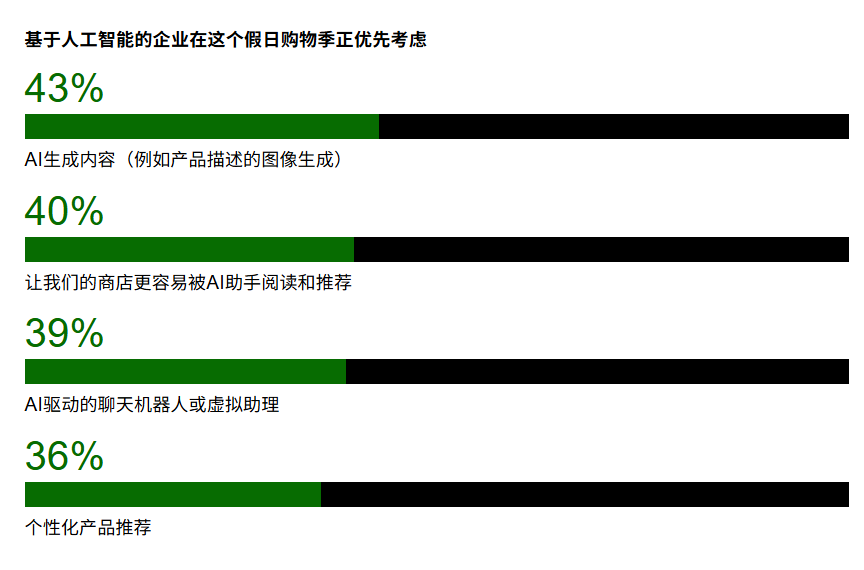
Source: 《Shopify Releases 2026 Holiday Retail Report》 Figure 1
Third, peak-season tasks are concentrated, requiring improved team execution efficiency. Product displays, store design, promotion launches, and campaign wrap-ups are all pushed forward simultaneously, requiring more efficient team coordination. Reducing repetitive operations and planning ahead allows merchants to devote more energy to product and customer operations.
Ebrun: What goals have you set for this year's Black Friday peak season? What breakthrough are you most looking forward to achieving?
Shopify: We hope cross-border brands can gain more attention and win more customers through AI shopping entry points, and extend peak-season growth into long-term operational results.
Specifically, we recommend sellers focus on three dimensions for measuring growth quality.
First, have they expanded valuable new customers? 71% of frequent AI users are more inclined to choose independent brands than last year, and these consumers are highly open to distinctive brands. We look forward to Chinese cross-border brands seizing this opportunity, making product features and expertise the reason to attract new customers, and reaching more consumers who match their products.
Second, achieve higher-quality transactions. 35% of consumers will choose the product that best meets their needs, even if it is not the cheapest option. This means brands can win purchases by more fully presenting product value and explaining product features and use cases.
Third, extend first purchases into ongoing customer relationships. Black Friday is an important moment for consumers to first discover and experience a brand, and also an important window to convert new customers into long-term customers. Merchants can achieve customer retention through repeat-customer offers, membership rewards, improved delivery and return experiences, and providing priority purchase opportunities for subsequent new products or promotions.
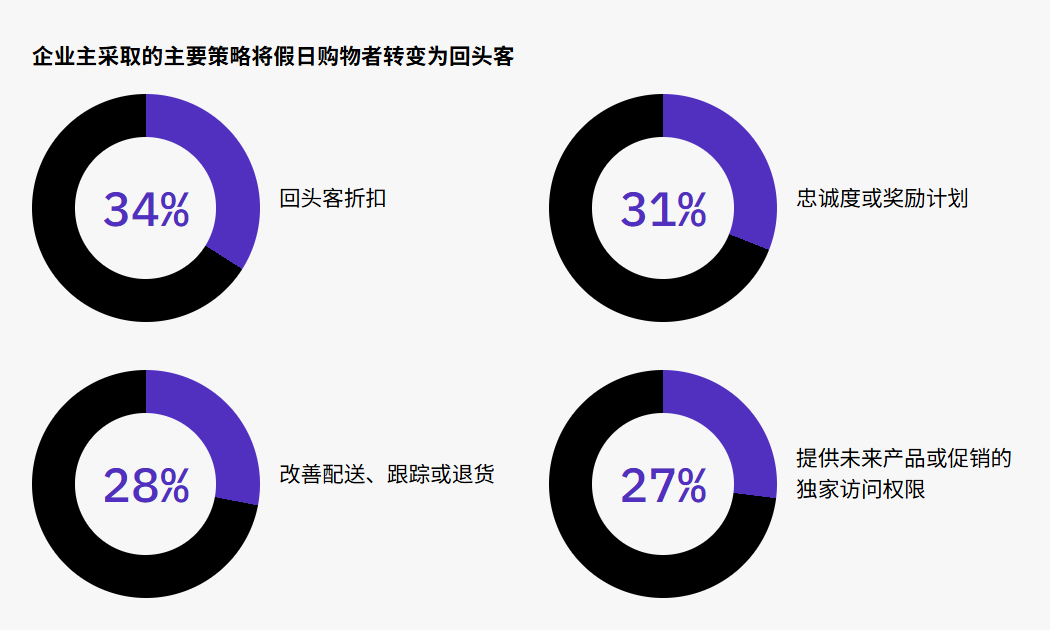
Source: 《Shopify Releases 2026 Holiday Retail Report》 Figure 2
Ebrun: What important arrangements or adjustments have you made to prepare for this year's Black Friday peak season?
Shopify: To prepare for the Black Friday peak season, Shopify further improved support from promotion preparation and channel expansion to transaction management, enabling Chinese cross-border brands to schedule key tasks in advance and coordinate different channels and operational links more efficiently during the peak season.
For example, before promotions go live, store design and campaign arrangements can be better coordinated. Merchants can edit the entire store in a single view through Canvas and complete custom designs with Sidekick; at the same time, themes, discounts, and product catalog adjustments can be scheduled uniformly and automatically restored after the campaign ends. This allows teams to prepare in advance, coordinate launches, and reduce manual operations when switching campaigns.
When expanding sales channels, Shopify supports sellers in connecting new entry points to the existing order management system. Eligible merchants can sell products through Google AI. After consumers discover products in Google Search's AI Mode or Gemini, they can complete purchases through checkout provided by Shopify, and related orders enter Shopify's backend for unified management, making it convenient for teams to process orders from different channels centrally.
When handling peak-season transactions, both purchase convenience and risk management are considered. Cart synchronization between Shop and brand stores makes it convenient for consumers to continue their previous selections; unified multi-brand checkout within the Shop app supports consumers in paying for products from different brands together. At the same time, Shopify Payments strengthens interception of high-risk transactions and risk alerts, helping merchants judge fulfillment risk more clearly, and provides more withdrawal currency options for Hong Kong merchants.
These adjustments focus on specific connections in peak-season operations, allowing merchants to prepare in advance and, when demand arrives in concentration, complete work from promotion launch to order processing in a more orderly manner.
Ebrun: What obvious market changes have you felt this year?
Shopify: The obvious change we feel is that consumers still have purchase demand, but the process of choosing products is more cautious and detailed, and judgments about what is 'worth buying' are more specific.
Consumers consider quality, price, and use value together based on actual needs, and also factor delivery fees, arrival times, and return conditions into their judgments. For brands, it is necessary to clearly explain who the product is suitable for, what problems it solves, and what services consumers can receive.
At the same time, shopping paths are also more diverse. AI is beginning to participate more deeply in shopping decisions, and the accuracy and completeness of product information are more important.
Consumers can directly describe use scenarios, budgets, and preferences, and then use AI to find and compare products. This means that products that can respond to specific needs and have distinctive features have a chance to enter the consideration set before consumers have decided on a brand.
Finally, shopping paths are more dispersed, and consistency of cross-channel experience faces tests. Whether prices, inventory, promotional conditions, and service information remain consistent across different channels, and whether backend orders can be processed efficiently, will affect the purchase experience. As channels increase, merchants need to better coordinate front-end experience and backend operations to avoid operational complexity accumulating with business expansion.
These changes create opportunities for Chinese cross-border brands with distinctive products, and also require brands to connect product value expression, purchase experience, and daily operations, so consumers can both find them and have sufficient reason to choose them.
Ebrun: Where do you think the biggest highlight and new increment of this year's Black Friday peak season will come from?
Shopify: We believe the most anticipated new increment this Black Friday comes from brands connecting distinctive products with more specific consumer needs through new shopping entry points.
Specifically, there are three opportunities worth sellers following up on.
First, more specific shopping needs have a chance to translate into new brand discovery. Consumers can describe use scenarios, budgets, and preferences to AI, for example looking for 'fitness equipment suitable for small apartments and easy to store,' and then receive corresponding product suggestions. Brands therefore have a chance to enter the consideration set while consumers have not yet decided on a brand and are still looking for solutions. For Chinese cross-border brands deeply engaged in segmented needs, this is an opportunity to reach new customers through product features.
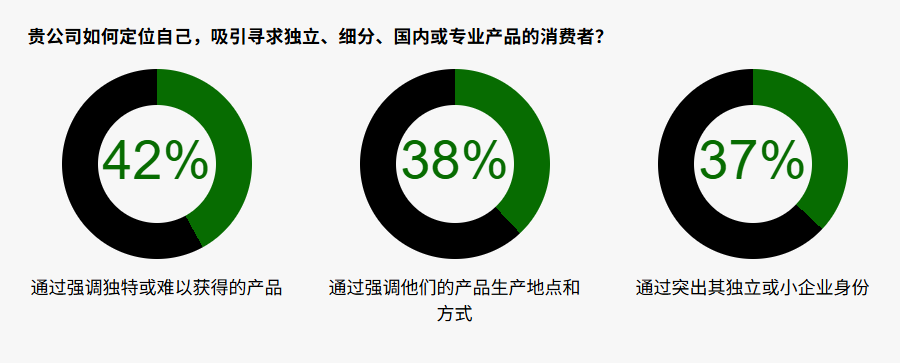
Source: 《Shopify Releases 2026 Holiday Retail Report》 Figure 3
Second, independent brands and niche products have a chance to receive more consideration. 71% of frequent AI users are more inclined to choose independent brands than last year. This provides a positive signal for brands with distinctive functional advantages, design features, and value propositions.
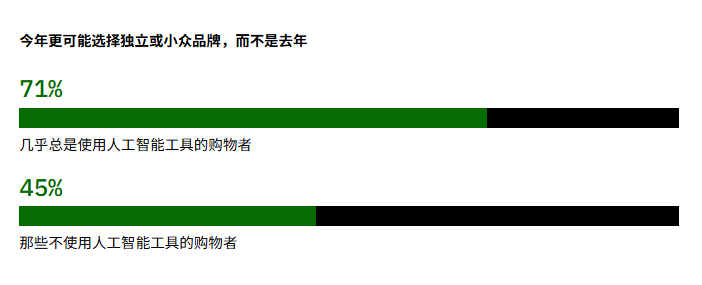
Source: 《Shopify Releases 2026 Holiday Retail Report》 Figure 4
Third, the connection between AI entry points and the purchase process is expected to further turn shopping interest into orders. We are also observing whether these new entry points can bring new customers and actual transactions, and which categories and needs are more suitable for growth through conversational shopping.
Ebrun continues to track and report this intelligence. To learn more information related to this article, please scan the author's WeChat QR code.

This article was first published on the official website of Ebrun.
[Copyright Notice] Ebrun advocates respecting and protecting intellectual property rights. Without permission, no one is allowed to copy, reproduce, or use the content of this website in any other way. If any copyright issues are found in the articles on this website, please provide copyright questions, identification, proof of copyright, contact information, etc. and send an email to run@ebrun.com. We will communicate and handle it in a timely manner.
Translated by AI. Feedback: run@ebrun.com