
From Gimmick to Real Track: 3D Printing Carves Out a Multi-Billion Dollar New Market in Footwear
By Han Xiao | Editor: He Yang
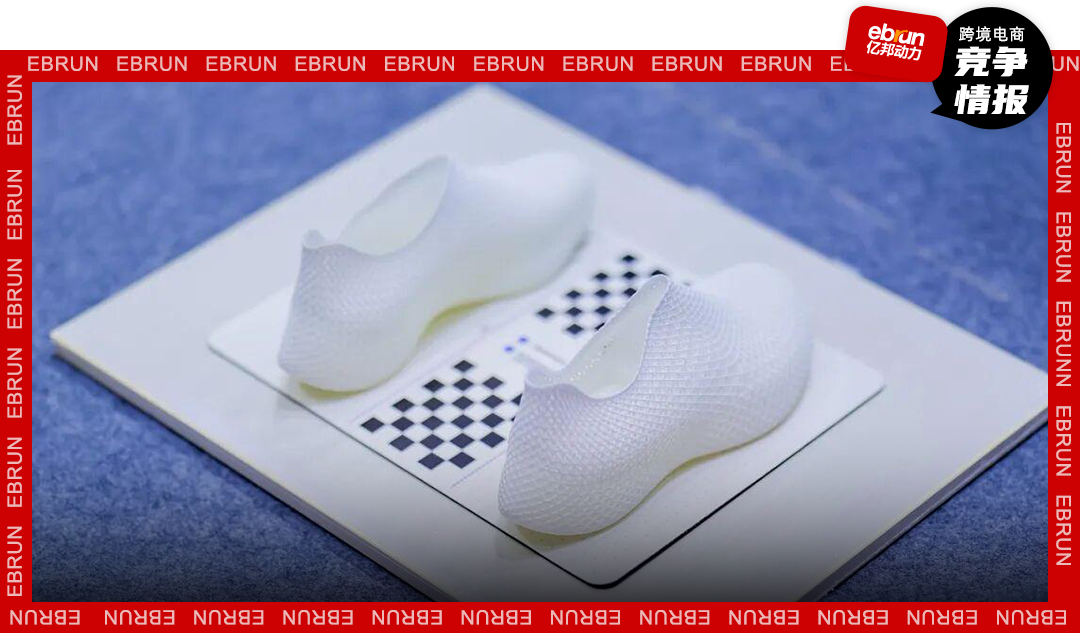
【Ebrun Original】No molds, no stitching, no assembly lines—a whole shoe can 'grow' complete from a printer. The manufacturing logic has changed, and 3D-printed shoes have transformed from conceptual products into truly mass-producible goods.
'The stage of making money by treating 3D printing as a gimmick is long gone. Customization was emphasized before because mass production wasn't achievable,' Wang Teng, Innovation Business Director at Boli Technology, a 3D-printed shoe infrastructure provider, told Ebrun. 'The core advantage of 3D printing for shoes is comfort, which aligns with what everyone considers when buying shoes.'
This assessment may serve as a footnote to the 'breakout year' that 3D-printed shoes are now ushering in.
Back in the 2010s, traditional footwear brands like Nike and Adidas had already begun experimenting with 3D printing for certain shoe structures, and fashion brands also viewed 3D printing as an important innovation technology for the future. But with breakthroughs in mass production technology and gradually increasing category penetration, 3D-printed shoes are now growing from a technology testing ground for major players into a niche brand track.
STARAY, a 3D-printed footwear brand founded in 2020, was the first to create the '3D-printed shoes' category keyword on e-commerce platforms. Its current domestic annual sales have reached 200,000 pairs, with a hit product ranking among the top three on Douyin's casual shoe list with monthly sales of RMB 4-6 million, providing a reference sample for the industry.
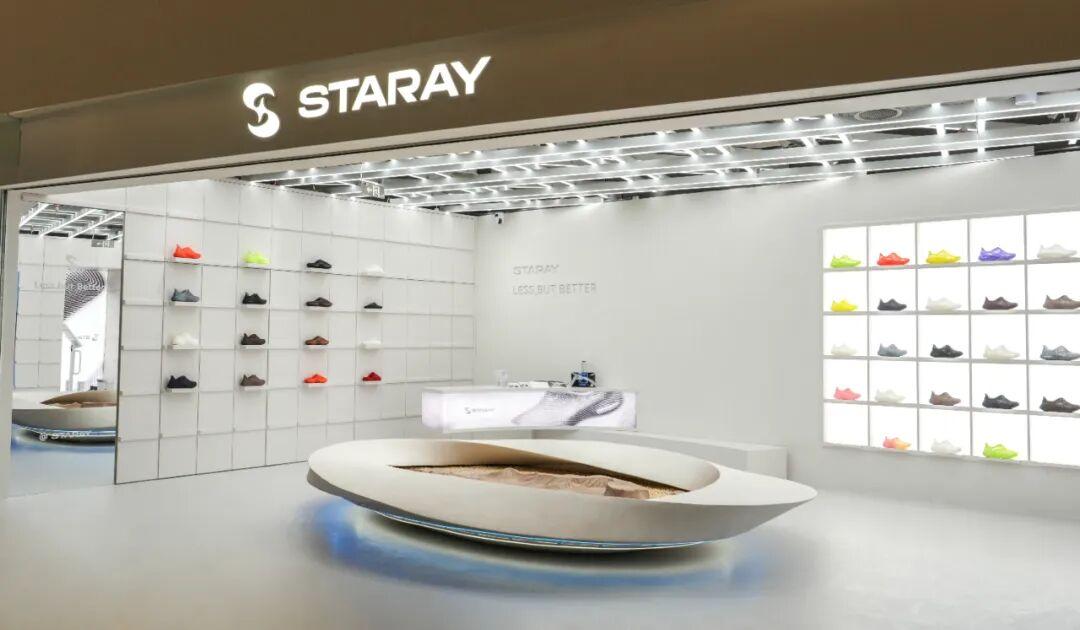
STARAY storefront
More similar brands have emerged like bamboo shoots after rain in the past two years—GEEXFOOT, Xingqishang, AC3D, Muxiaoli, Naituya, and others—each using niche shoe categories as an entry point, capturing user mindshare with category labels like 'first 3D-printed board shoe,' 'first 3D-printed slipper,' and 'first 3D-printed shoe with laces,' competing for this blue ocean market. In addition, equipment manufacturers including Creality, BIQU, Xuli 3D, and Zhongke 3D are also entering the 3D-printed footwear market.
'Now brands are entering the fray one after another. Next, you'll be able to see and experience products on the streets, in stores, and even through broader online channels. As long as users have the opportunity to experience them, conversion rates will certainly rise. Further breakout for 3D-printed shoes is just around the corner,' Wang Teng said.

From industry exhibitions to offline stores, 3D-printed shoes embark on the path to 'breakout'
The excitement around 3D-printed shoes is intuitively felt at industry exhibitions. At earlier 3D printing exhibitions, exhibitors' displays were still concentrated in dental, automotive, aerospace, and other fields, but now shoes have become the most eye-catching and popular products at exhibitions, and an important breakthrough point for 3D printing technology to enter the mass consumer market. Whether materials companies, equipment manufacturers, solution providers, or consumer-grade 3D printer makers, all exhibit their 3D-printed shoes.
At the end of August this year, as a major event in the additive manufacturing field, the Formnext exhibition also held the first International 3D-Printed Footwear Design Awards; in mid-October, another professional 3D printing and additive manufacturing exhibition, TCT Asia, spent a full day holding the 3D-Printed Footwear Summit Forum. 3D-printed shoes have taken over from '3D printing farms' to become the center of conversation in the circle.
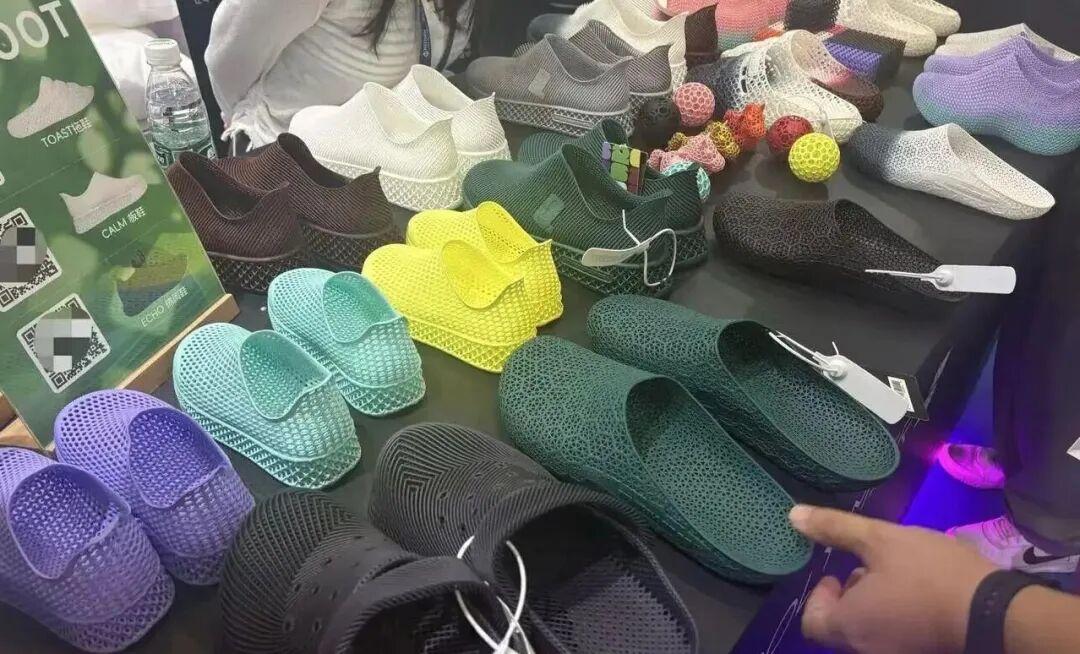
3D-printed shoes at the Formnext exhibition
Of course, exhibitions are also excellent sales scenarios. On-site displays, explanations, experiences, plus discount incentives, easily facilitate order conversion. Moreover, because they are printed in one piece from a 3D printer, most 3D-printed shoes have a relatively simple appearance without elaborate designs or patterns. Although they look unremarkable, trying them on makes it easy to feel their breathability and comfort.
This breathability and comfort largely come from the elastomer materials used. Currently, mainstream 3D-printed shoes mainly use flexible thermoplastic polyurethane (TPU), while some high-end or photopolymerization routes use photosensitive elastic resins or specialized foaming materials. These materials themselves have good elasticity and can achieve shock absorption, while printing them into lattice structures (hollow honeycomb networks composed of tiny units) opens up numerous air channels, achieving breathability that the materials themselves cannot.
In terms of printing techniques, unlike the FDM (fused deposition modeling) technology commonly used in consumer-grade 3D printers, 3D-printed shoes mainly use DLP photopolymerization. Photopolymerization utilizes the principle that liquid resin hardens when exposed to ultraviolet light, printing layer by layer by 'stamping' with light. DLP (digital light processing) is a type of photopolymerization that projects each layer's cross-section image of a 3D model onto the surface of liquid photosensitive resin all at once with ultraviolet light, stacking layers to build the physical object. This printing method offers high precision and smooth surfaces, capable of printing complex hollow lattices and fine textures in shoe soles.
Building on DLP, Boli Technology has independently developed HALS (Hindered Asynchronous Light Synthesis) technology since its founding in 2017. DLP is intermittent curing with layer-by-layer printing, while HALS achieves continuous curing and forming, so the forming speed reaches 20 to 100 times that of traditional photopolymerization, capable of printing a pair of shoes in an average of less than 10 minutes, largely solving the mass production challenge of 3D-printed shoes. With technological breakthroughs, Boli Technology has built an integrated 3D-printed shoe infrastructure covering materials, equipment, technology, and design, and has incubated numerous downstream 3D printing manufacturers and brands.
In October this year, PollyFab (Bomuzhi), a 3D printing buyer's store under Boli Technology, opened at Shenzhen Bay MixC. PollyFab aggregates 3D-printed products from designers and consumer brands, including 3D-printed shoes, accessories, home decorations, and cultural creative products. Shenzhen is the launch site for many new tech products; the same mall also houses the first flagship store of Bambu Lab. PollyFab bringing 3D-printed shoes into high-end commercial districts also means 3D printing technology is further moving toward mass consumer experience.
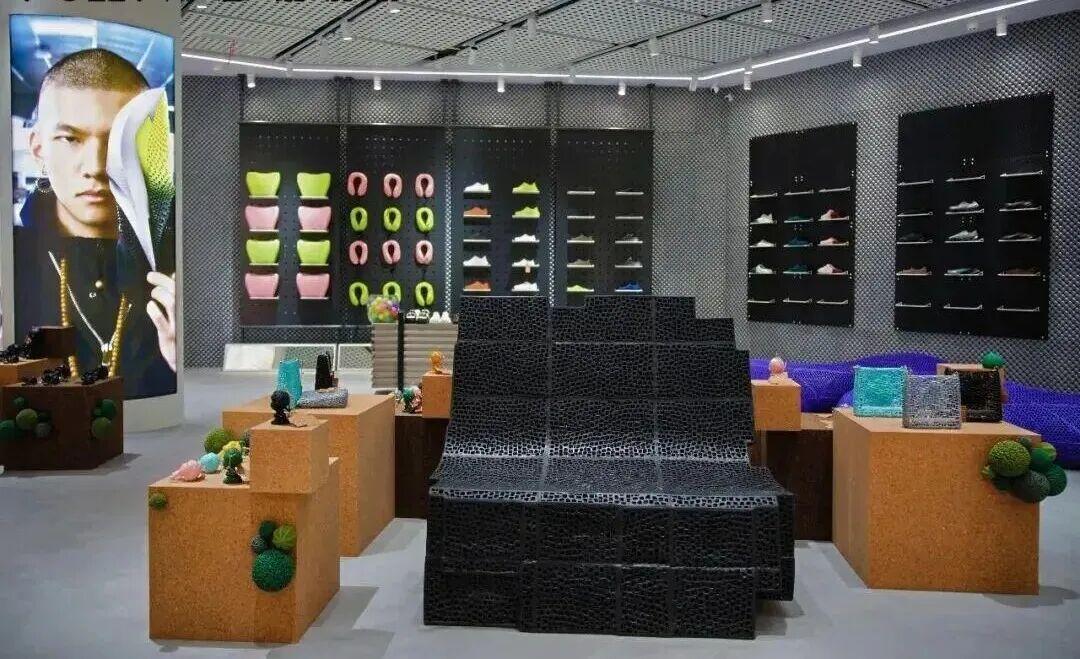
PollyFab (Bomuzhi)
Bringing technology into daily life, stores are also important entry points for experiencing 3D-printed shoes, playing a key role in promotion, popularization, and cultivating market awareness. As a leading brand, STARAY is also laying out offline channels, currently opening pop-up stores and slow-flash stores in multiple locations across the country, and has entered several brand collection stores.

Why can 3D printing flourish in the footwear industry?
Footwear is not the only consumer product that 3D printing can make. In 3D printing experience stores, you can see bouncy balls, neck pillows, seating, cultural creative products, figures, and various other products. But currently, footwear has become the area where 3D printing first achieves large-scale implementation and breakout.
The biggest reason is that this is a rigid-demand and relatively high-frequency category with a sufficiently large market to support it. With 8 billion people worldwide, assuming each person buys three pairs of shoes a year, the world needs to produce 24 billion pairs. Even if a company only captures a 1% share, that's sufficient volume.
Data shows that the global 3D-printed shoe market is currently about USD 2 billion (including 3D-printed shoe molds, 3D-printed soles, 3D-printed integrated shoes, etc.), growing 10%-20% annually, while the global footwear industry is about USD 365 billion. Although the overall penetration rate of 3D-printed shoes is negligible, the future imagination space is enormous.
Moreover, shoes are a product that can accommodate expression and design. From their birth, they have not only been functional items to protect feet but also incorporate meanings of identity, status, and taste. The earliest shoes were cattle-hide sandals from ancient Egypt around 3000 BC. Italy developed this craft to its peak, transforming it from craftsmanship into a symbol of taste and class. Italy's handmade leather shoes are also world-renowned, giving birth to luxury brands like Ferragamo, Gucci, and Prada.
Until now, Italy is also one of the first countries to apply 3D-printed shoes, and thus an important destination for footwear companies going global. In 2025, STARAY established a joint R&D center with Italy's JO SYSTEM and brought 3D-printed shoes into local view through Milan Fashion Week.
Besides the characteristics of shoes themselves, the second reason is that the application of elastomer materials in footwear runs through its decades-long development history, with major international brands having made related attempts long ago; the emergence of 3D printing merely continues this historical tradition. For example, New Balance used EVA (ethylene-vinyl acetate copolymer, a common plastic/elastic material) midsoles in the 1970s to make elastic foam a standard feature of running shoes; Asics embedded αGEL silicone-based gel into midsoles in 1986, proving that soft elastomers could systematically enter shoe soles; Nike's Air cushion, which wrapped gas in polyurethane film in 1979, validated the cushioning effect of elastic structures...
But 3D printing's greatest transformation of the footwear industry lies not in changing the production methods of certain shoe components, but in lowering the manufacturing threshold through integrated forming. The most typical example is the integrated forming of midsole and outsole. Traditional shoe soles are divided into midsole, outsole, and insole. The midsole sits below the insole and is mainly responsible for absorbing impact, rebound, support, and stability; the outsole is the bottommost layer directly contacting the ground, mainly responsible for wear resistance, slip resistance, grip, and protecting the midsole. Traditional injection molding requires separate manufacturing, while 3D printing can achieve a two-in-one. A further step is the integrated shoe, which directly prints the entire shoe including the upper.
From an industry perspective, this integrated forming is significant. Wang Teng explained that compared with apparel, which iterates rapidly and sees new brands emerge endlessly, shoes have always had high production thresholds—a pair of shoes involves six or seven components and requires coordinating with six or seven suppliers. Traditional injection molding requires mold opening before processing; a shoe style with 10-plus sizes requires a mold set costing hundreds of thousands to millions of RMB, and must achieve tens of thousands to hundreds of thousands of pairs to amortize costs and launch. Moreover, shoe styles have a 'hit rate'; if they don't sell, inventory piles up.
In contrast, 3D-printed shoes require only one model to achieve small-batch production with zero inventory, equivalent to having only one supplier. If you buy machines and build a factory, you can even manufacture in-house, without spending heavily on molds, greatly lowering the barrier to entry.
Boli Technology is one of the key companies promoting the implementation of 3D printing technology in footwear. Relying on its self-developed HALS ultra-high-speed photopolymerization technology and specialized high-performance elastomer materials, it has achieved large-scale manufacturing of 3D-printed integrated shoes. According to Wang Teng, Boli Technology has designed and manufactured over 5,000 shoe styles, saving customers more than RMB 100 million in mold costs cumulatively.
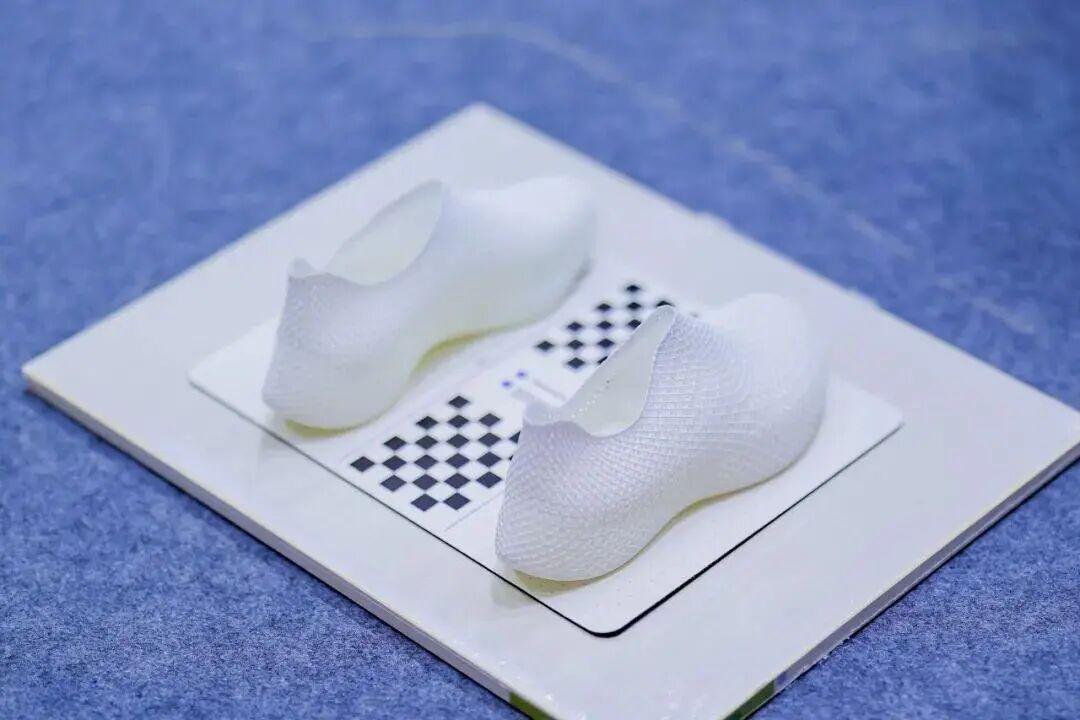
3D-printed shoes under Boli Technology
'This is an industry where even good wine fears a deep alley—without several hundred million, it's hard to make everyone see your products. Against this backdrop, emerging brands have risen, everyone sees this thing is profitable, and Chinese brands have also witnessed the success of international brands. We can feel that in the past two years many companies have shown great interest and sincerity in investing in 3D-printed shoes,' Wang Teng said.

Emerging brands race to enclose territory, seizing niche footwear categories
'Before 2023, although 3D-printed shoes could be produced, most were uncomfortable to wear. Only after 2023 did shoes that could be mass-produced and of good quality truly appear,' recalled Wang Jingen, brand head of Jinghongguo, a 3D printing service provider. Seeing such market opportunities, Jinghongguo also pivoted from art installations into consumer products, founding the Muxiaoli brand in 2025 and launching lace-up 3D-printed shoes.
3D printing shoemaking technology has indeed improved considerably, but as a new technology, it still lags far behind the maturity of traditional shoemaking. Data shows that the comprehensive material price for 3D-printed shoes has dropped by more than 50% compared to 2020. But including equipment depreciation, post-processing labor, and yield loss, its comprehensive manufacturing cost is still more than 50% higher than traditional processes.
Higher costs are also reflected in pricing. Currently, 3D-printed shoes typically cost between USD 100 and 300, with domestic prices ranging from several hundred to over a thousand RMB. This also determines that its audience is generally middle-class people in their 30s and 40s. According to colleagues in STARAY's marketing department, STARAY's users are mostly people who love technology and are willing to try new things. Observations show that male consumers are generally the majority; even when women buy, the end users are mostly men. This is partly related to men generally having higher insteps and stronger demand for breathability—the lattice structure of 3D-printed shoes precisely meets such needs.
Some lightweight, simple-style shoes have already achieved pricing of around RMB 200 through cost optimization. Xingqishang, founded in 2025, is an emerging 3D-printed footwear brand headquartered in Yangzhou. According to its founder Mi Jie, Xingqishang's products range in price from over RMB 200 to over RMB 900, with slippers around RMB 200, home and travel styles concentrated at RMB 600, and outdoor styles at RMB 800-900.
Currently, Xingqishang's overseas revenue accounts for about 40%, covering Europe, the US, Southeast Asia, and other regions. Mi Jie said that Southeast Asia has a hot climate, and the breathability of 3D-printed shoes precisely meets local consumers' needs, making simple styles like slippers suitable for sale there. Xingqishang has reached cooperation with Thailand's Lishi Group and plans to develop the Southeast Asian market with Thailand as the core.
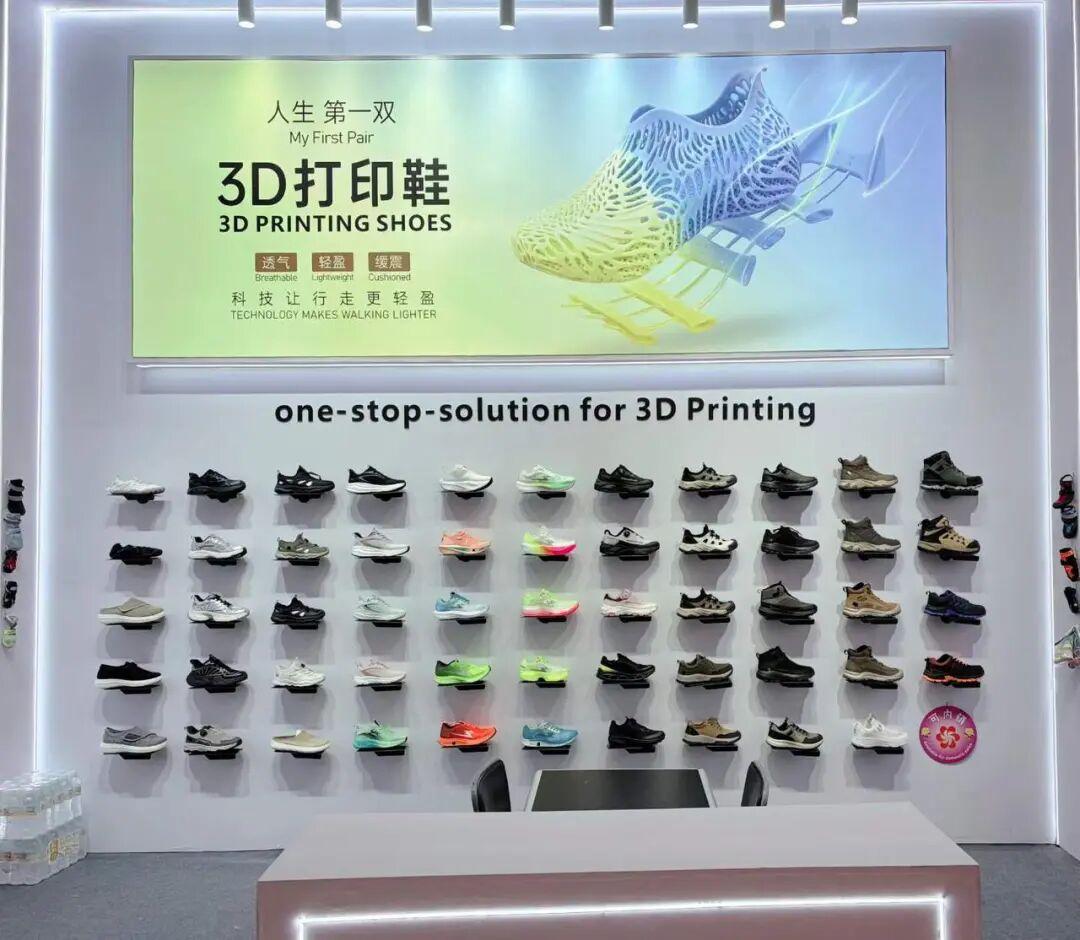
Xingqishang's booth at the Canton Fair
Brands like Muxiaoli and Xingqishang are all launched by 3D printing factories or service providers originally focused on the B-end. As 3D-printed shoes accelerate toward the mass market, the C-end market has entered a stage of capturing user mindshare and competing for market share. Even Boli Technology has launched a 3D-printed shoe brand, Bomuzhi.
Niche categories are also a focus of competition among brands. For example, GEEXFOOT, founded in 2023, launched its first 3D-printed board shoe Calm; AC3D, founded in 2024, made the relatively rare 3D-printed flip-flop; and American designer brand Spore launched the world's first 3D-printed skate shoe.
If STARAY has already taken the lead in capturing user mindshare for the 3D-printed integrated shoe category, benchmarking against snow boot brand UGG and clog brand Crocs, then broader 3D-printed niche footwear categories remain to be developed. In the future, it's not impossible that 3D-printed running shoes, 3D-printed basketball shoes, 3D-printed boots, and more will emerge.
In addition, the emergence of more and more 3D printing brands is expected to drive the market toward standardization. According to Wang Teng's observation, the breakout of 3D-printed shoes has also allowed counterfeit and shoddy goods to flourish. Some merchants use injection molding to create shoes with mesh-like appearances, insert a solid midsole to fake 3D-printed shoes, and sell them for just tens of RMB on e-commerce platforms, fooling many uninformed consumers.
The emergence of brands not only helps consumers filter products but also drives the category toward breakout through marketing promotion and market education. 'First, the product must be very ready, then the channels must be conquered. Brands can use higher marketing investment to let everyone see 3D-printed shoes. From seeing with eyes to wearing on feet, breakout accelerates.'
Ebrun continues to track and report this intelligence. If you want to learn more information related to this article, please scan the QR code to follow the author's WeChat.

This article was first published on the Ebrun official website.
[Copyright Notice] Ebrun advocates respecting and protecting intellectual property rights. Without permission, no one is allowed to copy, reproduce, or use the content of this website in any other way. If any copyright issues are found in the articles on this website, please provide copyright questions, identification, proof of copyright, contact information, etc. and send an email to run@ebrun.com. We will communicate and handle it in a timely manner.
Translated by AI. Feedback: run@ebrun.com