
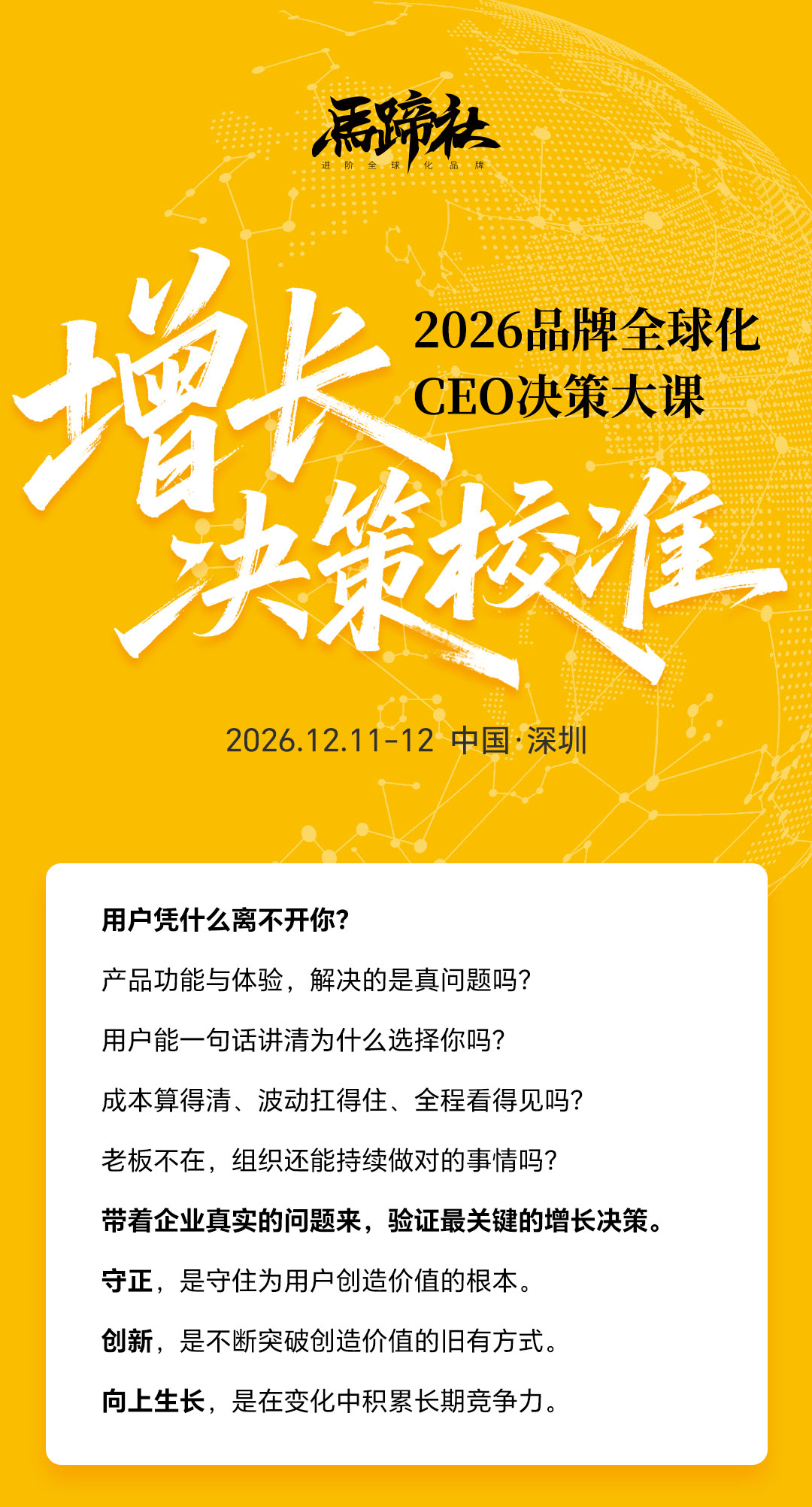
Why Can't Users Leave You? | 2026 Mates Global Brand CEO Decision Course
On December 11-12, the 2026 Mates Global Brand CEO Decision Course will be held in Shenzhen. Two days and one night, focused on one core question: Why can't users leave you?
For cross-border e-commerce companies, this is about what remains beyond platform traffic; for Chinese brands going overseas, this is about how to build brand awareness and trust after entering a new market; for brands born global, this is a survival question that must be answered from day one.
The starting points differ, but ultimately everyone must answer the same question: When users have more choices, why are they still willing to keep choosing you?
Broken down, there are four questions.
Question one: Do product features and experience solve a real problem?
The first thing a product must answer is whether users actually have this problem.
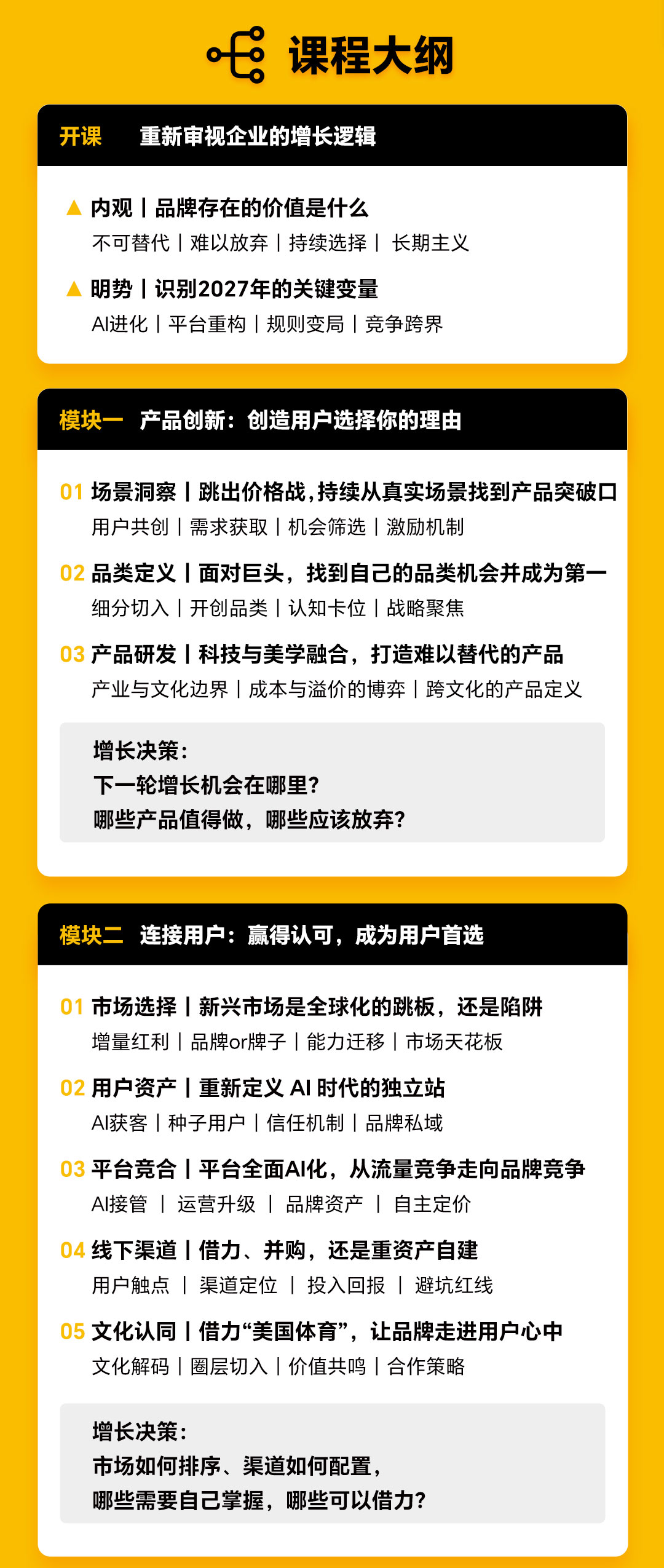
The engineer dividend and supply chain capabilities have made speed a ticket to entry, but speed is not a moat, and product specifications are increasingly easy to catch up with. Functional leadership can bring first-mover advantage, but may not alone build a long-term barrier. Technology is responsible for delivering functionality, while aesthetics and emotional value are responsible for leaving a memory; only when function and feeling combine does value take hold.
Question two: Can users explain in one sentence why they choose you?
The markets, channels, and methods through which brands connect with users are constantly changing: from judgments about emerging markets, to the layout of independent sites, online platforms, and offline channels, and then to new entry points brought by AI. No matter how much changes, no matter which channel users encounter you through, what remains in their minds should be the same sentence.
The logic of selling goods is to treat traffic and shelves as transaction opportunities, counting one at a time; the logic of branding is to treat every connection as an opportunity to accumulate user awareness, experience, and trust. Channels can belong to others, but users' trust in the brand should gradually become one's own asset.
Question three: Are costs clear, can fluctuations be withstood, and is the whole process visible?
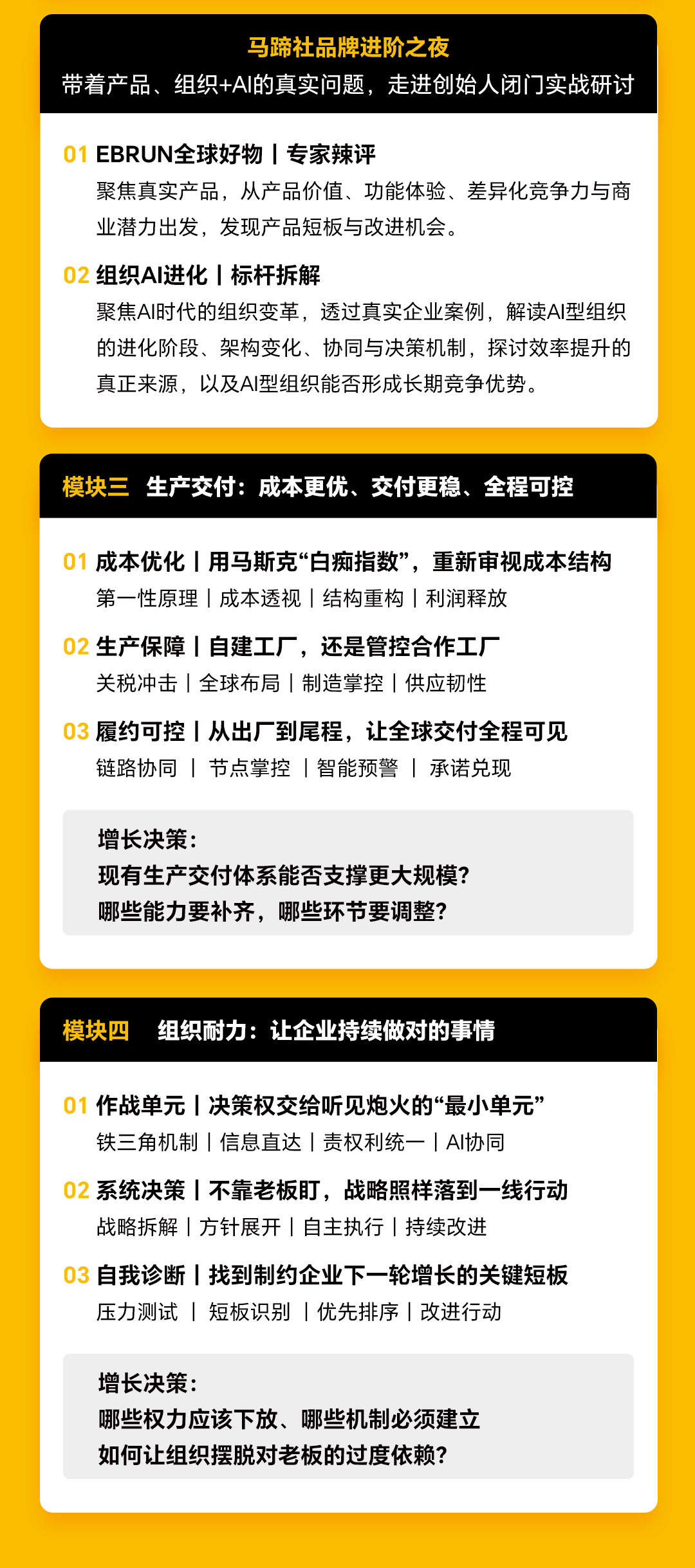
Delivery is not just a supply chain matter; a single delay or quality fluctuation consumes brand trust. From production to transportation, and then to fulfillment and after-sales, the entire chain must simultaneously achieve three things:
first, better costs. Break down every cent and ask, 'Why is this so expensive?'
Second, more stable delivery. Yield rates and capacity must hold up, and goods must still be delivered to channels and consumers on time and efficiently.
Third, full-process controllability. From factory exit to last-mile delivery, key nodes must be visible, anomalies must be warned in advance, and the company itself must know where goods are and where they are stuck, rather than waiting for users to complain.
Question four: When the boss is away, can the organization continue to do the right things?
Product innovation, user connection, and production delivery must ultimately be realized through the organization. A single product innovation or channel opportunity can bring growth, but whether an advantage can be maintained long-term depends on whether the organization can continuously create value and adapt to change.
The footing of long-termism is building a user-centered organizational system, so that problem discovery, decision-making, and continuous improvement no longer depend on any one person.
Time itself is not a moat; an organization that can withstand the test of time and continuously evolve is the moat.
Products make users choose you, connections make users remember you, delivery makes users trust you, and organization makes all of this continue to happen.
A brand's ability to be continuously chosen depends on the combined effect of four capabilities: product, connection, delivery, and organization. They are not simply additive, but influence and amplify one another. No matter how unique the value, if delivery repeatedly fails, trust will be consumed; no matter how broad the channels, if the product has no memorable point, every connection may be merely a one-off transaction; if the organization cannot hold up, even the best product will be only a passing phase.
Therefore, companies must not only look at what they are best at, but also at which shortcoming is limiting growth in the next stage.
Bosses who started out selling goods asked at the beginning, 'What sells well?' That question kept the company alive, but today, if they still only chase hit products and trends, AI will let competitors follow faster, and this path may become narrower and narrower.
Moving from selling goods to building a brand first requires changing some questions: from 'What sells well?' to 'Why do users continue to choose me?' From 'Which platform has the most traffic?' to 'What can each connection with users leave for the brand?'
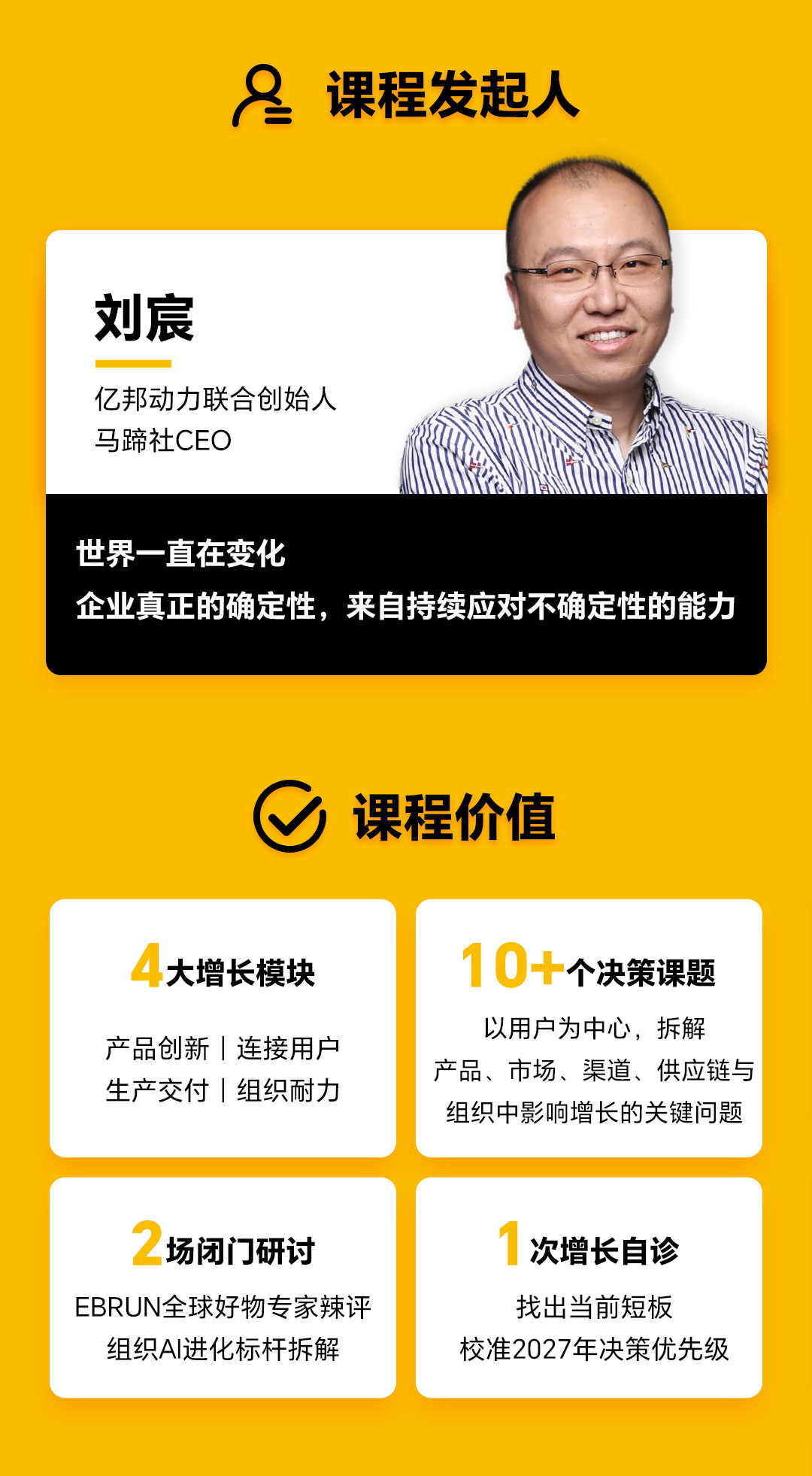
In 2026, Mates visited another group of practitioners on the path of globalization, and we found that true certainty is the ability to respond to uncertainty.
The world is always changing, but the fundamental reason users choose you is always that you can create some real value for them.
The 2026 Mates Global Brand CEO Decision Course focuses on three things:
first, seeing, to find the real problem. What is the company currently facing: a selling problem or a branding problem? Among product, connection, delivery, and organization, which one is holding the company back? Often, companies are stuck because they are still using yesterday's questions to think about today's operations.
Second, choosing, to find the direction truly worth investing in. How to build unique value? How to turn channel reach into brand assets? How to improve delivery efficiency? When resources are limited and opportunities are many, what should be prioritized and what should be decisively abandoned? With real cases and methods, form actionable business decisions.
Third, lasting, to let the organization continuously make better decisions. How can strategic choices truly be implemented in the organization, so that teams can judge independently, collaborate in execution, and continuously improve? The market is changing, and a company's decision-making system must also constantly iterate.
Why choose to hold it in Shenzhen?
This city never lacks practical experience, efficiency, and tactical approaches; but when companies move from selling goods to global brands, founders also need to set aside a whole block of time to re-examine what they are doing through the lens of user value and long-term operation.
Looking toward 2027, what companies truly need is not to bet on the next hit product, but to have a decision-making system that can continuously see problems clearly, make choices, and transform them into organizational capability.
Staying true means upholding the foundation of creating value for users;
innovation means constantly breaking through the old ways of creating value;
growing upward means companies continuously accumulating long-term competitiveness amid change.
December 11-12, Shenzhen, bring your company's real problems and validate the most critical growth decisions.
Course | 2026 Mates Global Brand CEO Decision Course
Theme | Stay True, Innovate, Grow Upward
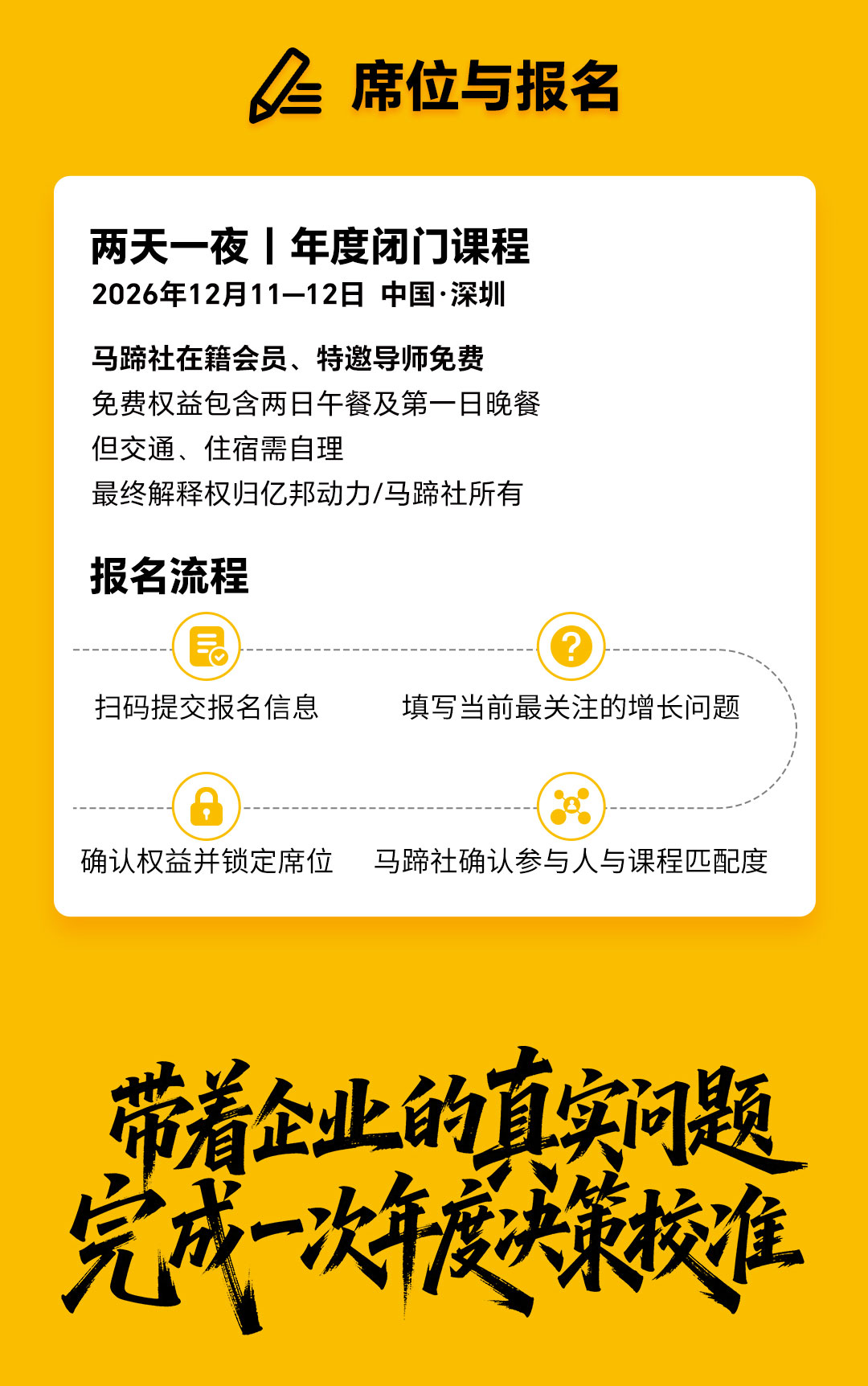
Time | December 11-12, 2026
Location | Shenzhen
Format | Annual growth calibration, two days and one night, closed-door course
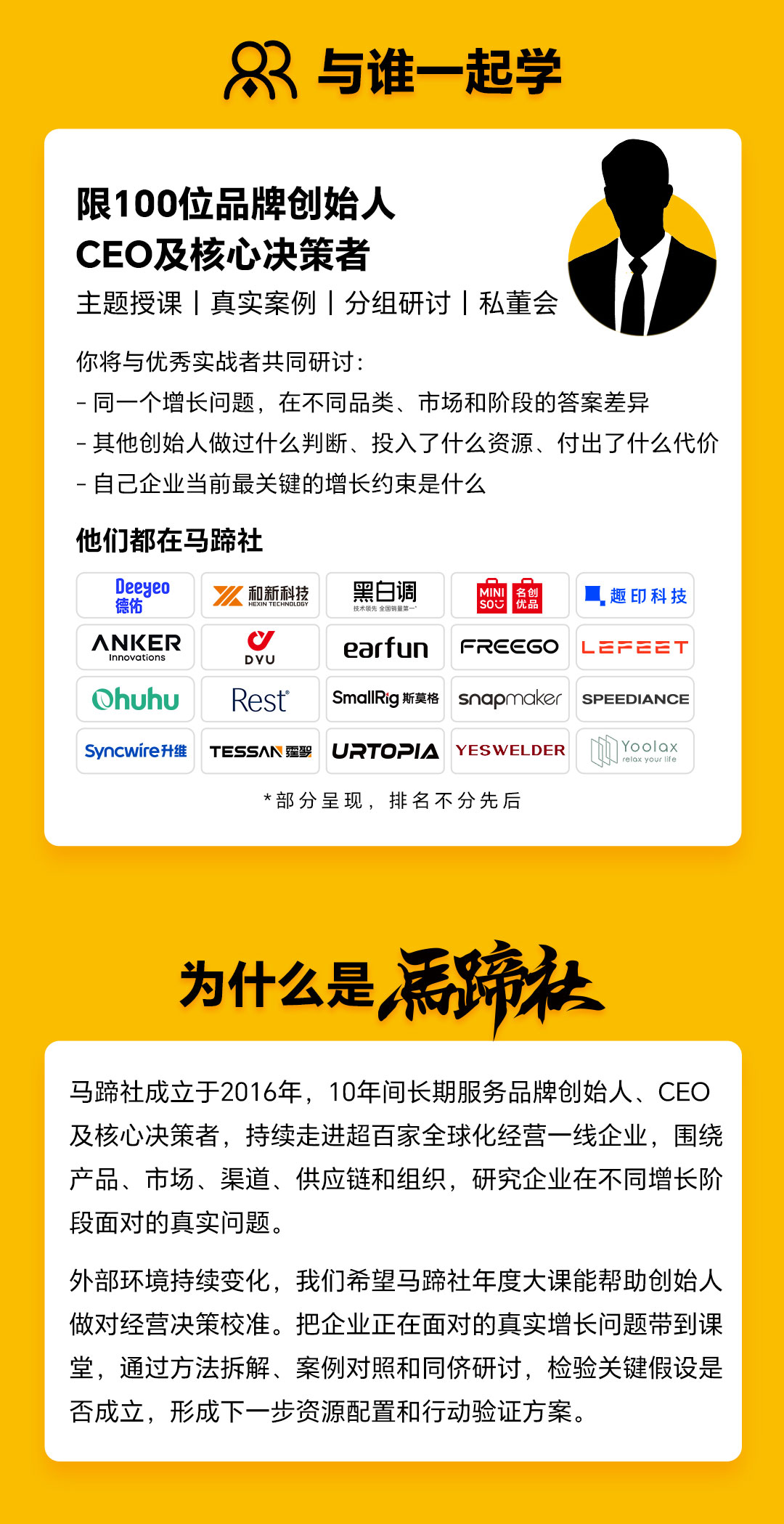
Participants | Founders, CEOs, and core decision-makers of Mates member companies
For details, consult Mates staff.

This article was first published on the official website of Ebrun.
[Copyright Notice] Ebrun advocates respecting and protecting intellectual property rights. Without permission, no one is allowed to copy, reproduce, or use the content of this website in any other way. If any copyright issues are found in the articles on this website, please provide copyright questions, identification, proof of copyright, contact information, etc. and send an email to run@ebrun.com. We will communicate and handle it in a timely manner.
Translated by AI. Feedback: run@ebrun.com