
We Spoke with Brands About Their Real Thoughts on AliExpress & Tmall's 'China Brand Global Growth Plan'
 By Han Xiao Edited by He Yang
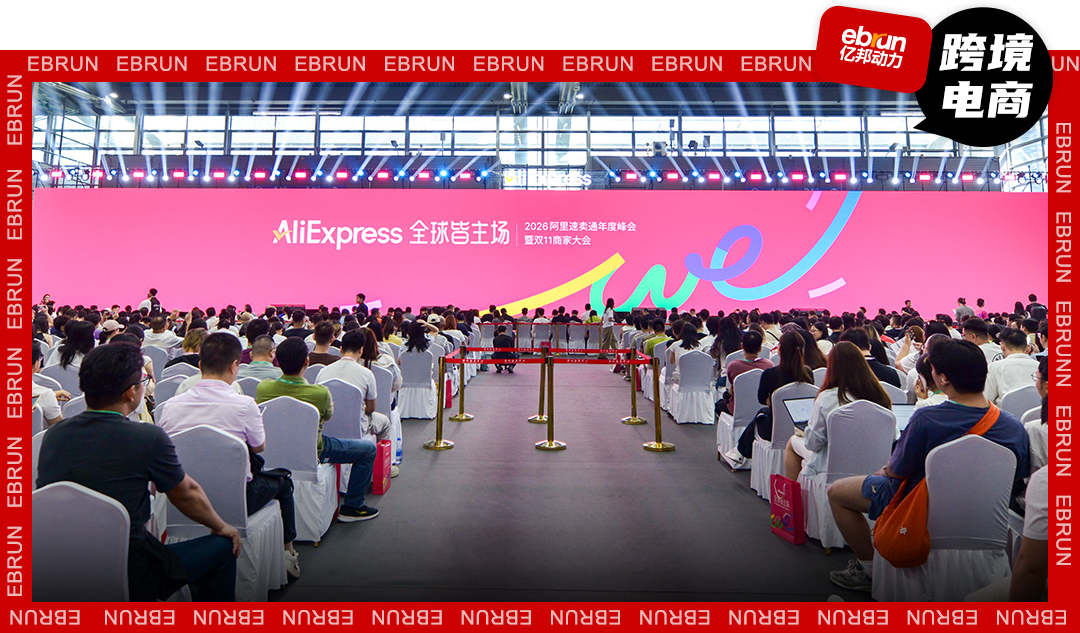
【Ebrun Original】"This year is the hardest year for cross-border e-commerce in the past three years, but we're not sure if it will be the best year in the next three." At the 2026 Alibaba AliExpress Annual Summit and Double 11 Seller Conference, AliExpress President Jingshi said bluntly.
As the global trade environment becomes increasingly complex, cross-border e-commerce, which previously relied mainly on low prices and abundant supply to drive growth, has entered a new stage of development. Jingshi believes that brand-building, localization, AI adoption, and compliance will become important directions for the industry to cope with future uncertainty.
The challenges Chinese brands face in going global are also changing—"selling more goods" is no longer the sole pursuit. For leading brands, the question is how to convert domestic brand momentum into global operating capability. These are exactly the problems AliExpress aims to solve.
To this end, a major plan was announced at the conference: jointly with Tmall, launching the "China Brand Global Growth Plan," focusing on supporting Tmall brands, AI hardware brands, and factory brands, and setting a goal of "50% growth in both brand count and brand GMV" over the next three years.

Alibaba is combining AliExpress, which represents "international," and Tmall, which represents "domestic," to create a true "globalization" map. This dual-pronged approach is an important step in AliExpress's continued deepening of its brand globalization strategy and echoes Alibaba's recent direction of promoting synergy between domestic and international e-commerce businesses.
At the media group interview after the conference, three merchants from different sectors sat before the media: Rockbros, a cycling brand that has been going global for over a decade; GameSir, a game controller brand that has been overseas for 11 years; and Bear Electric, which has been going global for nearly a decade but "only started truly localizing in the past two years." This group interview focused on what this plan actually means for brands.
(Mainly direct quotes, slightly abridged.)
Interviewed guests—
· Lian You, Partner & VP of GameSir (game peripherals, 11 years overseas)
· Zhang Xingang, Founder of Rockbros (cycling gear, cross-border e-commerce since 2010, overseas accounts for 70-80% of revenue)
· Huang Zhijin, E-commerce Head of Overseas Business Division at Bear Electric (small home appliances, going global after 2019 listing)
· Yanzhi (Head of Brand Marketing at AliExpress)
· Yingpeng (Head of Country Business at AliExpress)
01
First Lesson in Going Global: Directly Transplanting Domestic Hit Products Overseas Doesn't Work
Ebrun Observation: No brand seeking growth would not consider going global. For today's Chinese brands, going global has shifted from an optional path to expand business boundaries to a necessary choice for seeking growth. But there is no one-size-fits-all path to going global. For those new to overseas markets, the key is to find the product-market fit.
Q: How big is the difference between overseas and domestic markets?
Bear Electric · Huang Zhijin: Our category has huge differences between domestic and overseas markets. At first, we thought domestic products could be replicated overseas, but we took some detours. You can't lump overseas into one "overseas"—each country is a market of comparable size to China, with different safety regulations, laws, tax rates, consumption and dietary habits. What we do is find the commonalities among all these differences.
For example, domestic kettles generally have small capacity and 1800W power, taking 7 to 9 minutes to boil water. But in the UK, they want to boil that kettle in 3 minutes—not a moment longer. I still don't know why Brits are in such a hurry, but that's how it is, and they must have 2800W to 3000W or above to accept it. If you take domestic products to the UK market, they just won't sell. Voltage also has to be changed entirely. So-called globalization is "finding the same within the different."
Q: The same controller sells for 79 RMB domestically but can sell for 80 USD overseas? Where does the price gap come from?
GameSir · Lian You: The gap is huge. The best-selling domestic product is a 79 RMB entry-level PC controller, selling 10,000 units a day; the overseas average order value is 80 USD. The reason is different consumption scenarios: the mainstream in Europe and the US is the living room console scenario, where people buy Xbox, PS, Switch. We mainly take Xbox-licensed products, so the price gap naturally widens. Brazil is different again: consoles entering Brazil face very high taxes, so the home console market is actually small, but PC and mobile gamers are numerous, and the scenario is closer to domestic. So what sells well for us in Brazil is exactly the model that also sells well domestically, priced at 25 to 29 USD overseas. Overseas cannot be treated as "one business"—you have to analyze region by region what devices locals use to play games, then develop accordingly.
Rockbros · Zhang Xingang: Same for cycling—products must be localized. Asian head shapes tend to be round, while Europeans and Americans are oval. Asian helmets are too loose for Europeans and Americans, while European helmets are too tight for Asians. Wind goggles and cycling apparel also need European and American sizes, developing fits based on local markets.
02
In Uncertainty, Stock the Most Certain Goods
Ebrun Observation: This year's Double 11 and Black Friday promotions may be the first truly "globally synchronized promotion" for Chinese brands going global. Brands started preparing as early as half a year ago, and inventory levels on AliExpress have hit new highs. This stems both from confidence in certain growth and echoes AliExpress's "double 50%" growth target.
Q: How did you prepare inventory for Double 11? When did you start, and at what scale?
Rockbros · Zhang Xingang: Overseas inventory preparation started in April and May. Shipping now takes longer and longer—previously we reserved two months, now we need three. This year we have relatively high expectations for AliExpress Double 11, at least 50% growth. Goods were prepared early and are now in overseas warehouses.
GameSir · Lian You: This year we aim to sprint for 4 million USD in sales, with inventory preparation reaching 5 million USD. The inventory preparation cycle on AliExpress was advanced by three months; for some products, to ensure no stockouts, we even prepared half a year ahead. Inventory in the Brazil overseas warehouse has also doubled. Currently, the team is fully cooperating with the platform.
Long term, we plan to maintain a compound growth rate of over 50% for the next few years, impressing global consumers with more competitive products.
AliExpress: This year's Double 11 overseas inventory preparation increased 146% year-on-year.
Q: With so much external uncertainty, why bet on such high growth?
Bear Electric · Huang Zhijin: Regardless of domestic or overseas, consumer demand for good products is consistent. The biggest feeling from doing overseas is: if you have goods, there are many possibilities. So our strategy is to stock first. Bear Electric's first two years going global were tuition fees.
GameSir · Lian You: No matter how complex the external environment, one relatively certain thing is that demand always exists—provided you have goods locally. Demand is always there; as long as you put the right products in the local market, there basically won't be big problems.
AliExpress · Yanzhi: From the platform perspective, merchants' enthusiasm for stocking depends largely on two points. First, overseas supply is diverging—categories like 3D printers and game controllers are growing rapidly, with highs and lows for individual companies. Second, the platform is doing "rolling plans": we had a big surge with President Lian at 828, some products went out of stock, so for Double 11 we hope he stocks a bit more. More importantly, we are not "industry connecting with merchants" but a Masters matrix: industry, marketing, supply chain, compliance, and business analysis all together, telling you what products suit which country. Making business more planned and certain—that's the confidence behind everyone's willingness to stock more.
03
Compliance Is Not a Monster, But a Moat for Brands Going Global
Ebrun Observation:As the global trade environment becomes increasingly complex, cross-border e-commerce, which previously relied mainly on low prices and abundant supply to drive growth, has entered a new stage of development. Brand-building, localization, AI adoption, and compliance will become important directions for the industry to cope with future uncertainty.

Q: What particularly memorable pitfalls have you encountered in global local compliance?
Rockbros · Zhang Xingang: We did compliance relatively early. The biggest pitfall was Indonesia's one-size-fits-all policy—cross-border entry was not allowed. We originally had a high share there and could only authorize agents to operate locally. The overall biggest challenge is setting up local subsidiaries in many countries: we've set up in Europe, North America, Australia, Japan, and South Korea, making compliant operations easier; but in some small Southeast Asian countries, without a local company you can't import, goods can't go out, because there's no responsible receiving party. That's the reality.
Q: Facing the "uncertainty" repeatedly mentioned for the next three years, what is your most certain strategy?
Rockbros · Zhang Xingang: Geopolitics is uncontrollable; for merchants, we only consider the controllable parts. First, broaden the market—South America, North America, Europe, Southeast Asia, Australia, Japan, and South Korea—don't bet on a single bloc, so risks are diversified. Second, do products and quality well, and do localized service well. Geopolitics will pass, wars will pass; if you are deeply rooted locally, you can win the market back sooner or later.
GameSir · Lian You: We've been going global for 11 years. Many things were resolved for compliance before bad results occurred. Last year's many events didn't affect us much. The rest is watching for unmet consumer needs. As long as pain points are solved, for long-termist global brands, external changes are not a big problem. There are over 200 country markets globally; we've done far from enough.
AliExpress · Yingpeng: Compliance is not a monster but the next competitive moat for every brand going global. User demand includes compliance demand: corporate qualifications, trade actions, tax and legal entities, and the product itself. If you did this well over the past 12 months, then when this wave of certifications and local requirements rises, you'll do better than others—because it helps you lock in many local demands, since others can't sell.
04
Why Are Brands Joining AliExpress and Tmall's Joint Effort?
Ebrun Observation:Over the past year, AliExpress has continued to push "brand globalization." After launching the "Brand " plan in September 2025, over 1,100 brands have achieved over 1 million USD in sales. This time, AliExpress and Tmall jointly releasing the "China Brand Global Growth Plan" responds to more merchants' demands for new growth and offers specific strategies for different types of merchants, further connecting domestic brand resources with overseas channels and exploring full-chain growth paths.

Q: Why launch the "China Brand Global Growth Plan" with Tmall at this moment?
AliExpress · Yanzhi: Two aspects. First, the time has come: we need to leverage Alibaba's entire resources to push a batch of brands that have cooperation or potential on both Tmall and AliExpress to go global. These brands have maintained good business development over the past decade.
Second, the solution has changed. We have built a full-chain integrated globalization solution for brands, and AliExpress Brand continues to grow rapidly. Tmall's brand products have been validated. Under current compliance requirements, using our full-chain capabilities plus AI, we can help brands handle operations that previously cost a lot with AI—this will unlock a very big new opportunity.
Q: What specific support can brands leverage?
AliExpress · Yingpeng: Three directions: brand-building, localization, and full AI adoption.
First, brand-building: our biggest stage is Brand , the core being helping excellent brands grow sales in various compliance and market environments. The platform has developed tools, traffic, migration policies, and fulfillment chains. Brands only need to produce excellent products; we handle the rest, with platform capabilities backing merchants. Second, localization: goods, company, R&D, and decision-making chains all need to be local. You must establish cultural and psychological connections with local users; otherwise, why would people trust "something from a foreign land"? Third, full AI adoption: 95% of traffic and product matching is already done by AI. Except for core 20 countries with human staff, operations in the hundreds of lower-ranked countries among the 200+ are all run by AI.
AliExpress · Yanzhi: Let me add a real case of localized marketing. Recently we helped mini-PC maker Zhiwei do an offline pop-up in Europe: in Spain, we decorated an entire large bus as a mobile showroom. Local young people could board and experience different models and feel the performance firsthand; we invited KOLs to experience on site and spread comments, then during Double 11 expand across the web to interested consumers. This refreshes European and American consumers' perception of brand performance and converts interested audiences into potential buyers for the promotion, achieving both brand and performance.
Q: Why choose to join the "China Brand Global Growth Plan"? What support do you hope to receive?
Bear Electric · Huang Zhijin: On one hand, we hope to use AliExpress's accumulated global e-commerce experience to expand into emerging markets like the Middle East and Latin America and share compliance pressure; on the other hand, we hope Brand can provide deterministic traffic support and joint marketing investment in key markets similar to domestic "Juhuasuan," helping brands quickly build confidence in new markets.
Q: If you could give one sentence to brands preparing to go global or hesitating, what would you say?
GameSir · Lian You: In my first year doing overseas business, I registered the AliExpress account myself. I chose it back then because of "one-click sell globally." We didn't know which market to choose first, so we tested: it turned out Russia sold best initially, now it's Brazil. So new sellers don't need to overthink—first use the platform to test which country suits you. Next, we'll launch new country sites on the platform and discuss specific plans with country managers.
Rockbros · Zhang Xingang: Newcomers should look at two things: first, which region your product and industry suit, and in which market you truly have competitiveness; second, operational difficulty—whether there's a mature platform locally and whether it's friendly to Chinese products. Start with one region, hone product power and team capability, then expand outward.
Bear Electric · Huang Zhijin: This is what every seller thinks about every day. Bear Electric can spread globally to screen countries, but the result is simple—after trying all countries, it's still those few. In our first two years we spread across over 40 countries; this year we've shrunk to four core countries. With focused resources, single-product and efficiency improved markedly, and people became more professional. We're already past the traffic dividend period; next we must focus.
AliExpress · Yanzhi: Let me say one last thing. The reason we set relatively aggressive targets is that the previous methodology is starting to work, and many brands here have seen significant growth. Crisis and opportunity—within crisis there must be opportunity. Every stage feels like today is the hardest, but looking back, after experiencing it we live better because we grow faster. As long as you run faster than others, you have a chance.
Ebrun continues to track and report this intelligence. For more information related to this article, please scan the QR code to follow the author's WeChat.

This article was first published on the Ebrun official website.
[Copyright Notice] Ebrun advocates respecting and protecting intellectual property rights. Without permission, no one is allowed to copy, reproduce, or use the content of this website in any other way. If any copyright issues are found in the articles on this website, please provide copyright questions, identification, proof of copyright, contact information, etc. and send an email to run@ebrun.com. We will communicate and handle it in a timely manner.
Translated by AI. Feedback: run@ebrun.com