
Overseas Infrastructure, Digital AI, Global Compliance: Tuowei Tianhai Rebuilds the Cross-Border Logistics Moat for Bulky Goods
[Ebrun Original] The export of bulky goods is charting its own course. According to data from the General Administration of Customs, in the first half of 2026, China's goods trade exports reached 14.73 trillion yuan, a year-on-year increase of 13.4%. Among these, exports of lithium batteries and wind turbines grew by 37.6% and 35.6%, respectively, while electric vehicles, electric motorcycles, and bicycles increased by 68.7% and 31.5%. Home appliance exports hit 360.96 billion yuan, with 'cooling' appliances such as air conditioners, fans, and refrigerators accounting for 107.91 billion yuan. Compared with declining domestic consumption data and the fierce competition in small cross-border parcels, the high double-digit growth in exports of bulky goods subcategories has become a key driver of the overall market. Cross-border logistics is a core necessity for bulky goods going overseas. According to research by Ebrun Think Tank, the market size for cross-border e-commerce logistics and warehousing exceeds 230 billion US dollars. For products like furniture and other bulky items, logistics and warehousing costs account for a high proportion, about 25% to 30% of sales, sometimes even reaching 40%. This underscores the significant cost leverage that cross-border logistics holds in the bulky goods export sector. At the start of 2026, Tuowei Tianhai, a benchmark enterprise in bulky goods cross-border logistics services, secured nearly 100 million yuan in Series C funding from Zheshang Venture Capital and Aerospace Fund. Focusing on categories such as furniture, home appliances, energy storage, fitness equipment, and large outdoor items, Tuowei Tianhai has redefined the barriers to end-to-end digital fulfillment services for bulky cross-border goods with its unique model of overseas infrastructure, digital AI, and global compliance.
01
Industry Dividend: High-Growth Categories and the DTC Wave
Cross-border e-commerce fulfillment for bulky goods has long benefited from the spillover effects of platforms. The self-operated warehousing and delivery systems of platforms like Amazon are fundamentally designed for high turnover and small to medium-sized items, with warehousing management and fee structures that do not fully accommodate bulky goods. Items like mattresses and energy storage cabinets require special heavy-duty truck delivery, necessitating a separate setup of drivers, fleets, and warehousing operations, which is entirely different from small parcel handling. Therefore, fulfillment for bulky cross-border e-commerce is mainly handled by third-party logistics or brands' own operations. Companies like Zoyear Home and Loctek have built their own overseas warehousing and delivery systems from early on. Tuowei Tianhai has grown with the bulky cross-border e-commerce market, establishing its own consolidation warehouses, overseas warehouses, and last-mile delivery capabilities, forming a professional door-to-door cross-border fulfillment infrastructure for bulky goods from China to overseas.
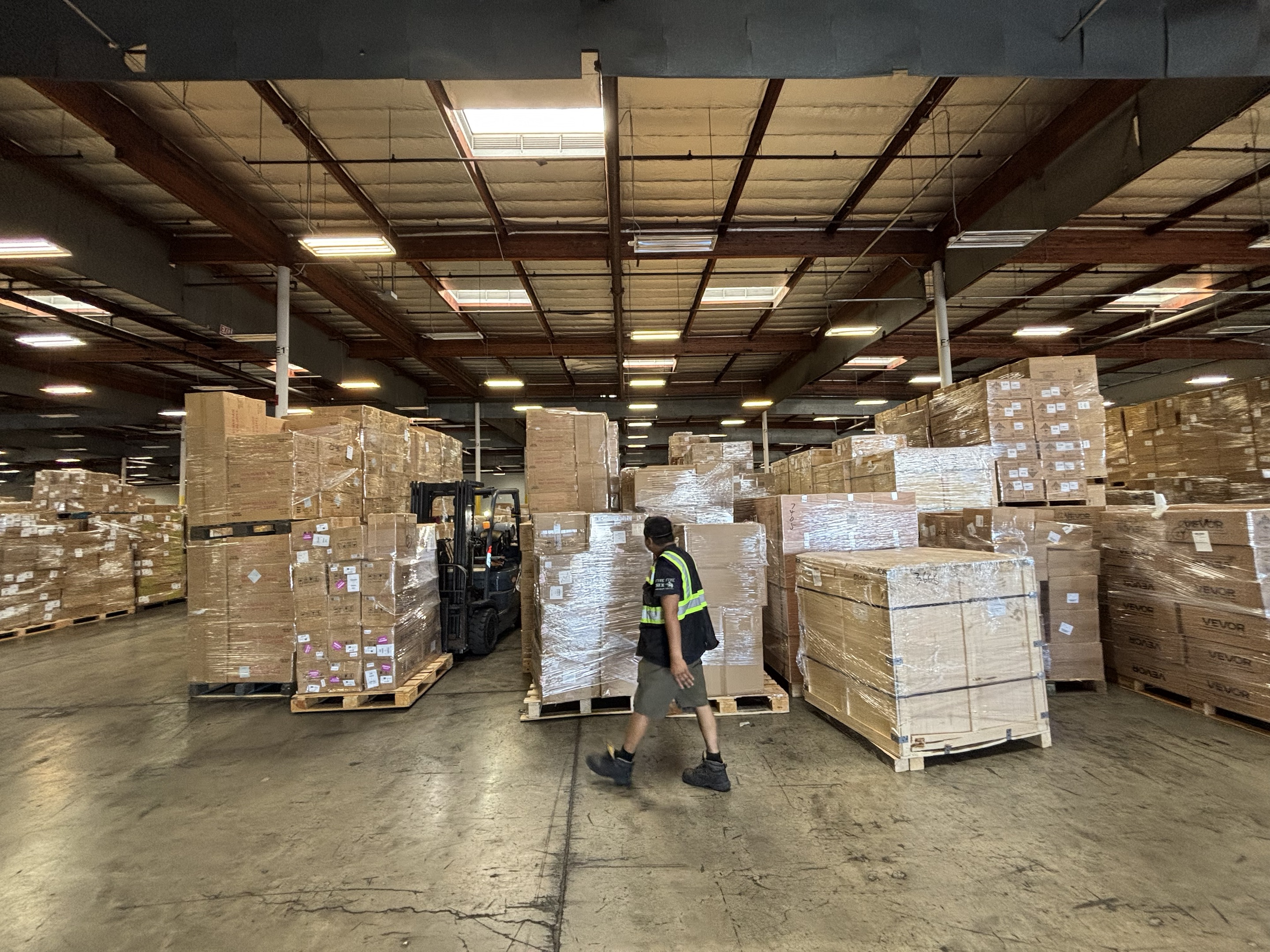
With a new wave of energy transition in Europe and the US driving sustained growth in energy storage and heat pumps, coupled with the structural high growth of branded independent websites amid the globalization wave, the bulky goods cross-border logistics sector is set to experience a new wave of dividends.
High-growth categories in bulky goods exports are booming, and e-commerce penetration is continuously rising. The export of bulky cross-border e-commerce is showing structural growth, with categories such as energy storage, sensitive electronic products, fitness equipment, large outdoor items, and auto parts exhibiting high growth characteristics. According to customs data, in the first half of 2026, energy storage battery exports grew by 28.5% year-on-year, electric two-wheelers by 36.6%, lawn mowers by 14.4%, refrigerators by 12.4%, and washing machines by 10.9%.
Meanwhile, e-commerce penetration for bulky goods is increasing. For example, in the US market, a recent report by Marketplace Pulse indicates that the market size for bulky e-commerce has exceeded 180 billion US dollars, with furniture, fitness equipment, and auto parts each seeing annual growth rates over 25%. Furniture e-commerce penetration has reached 38%.
In 2025, leading cross-border e-commerce brands achieved double-digit growth. Zoyear Technology's furniture series revenue grew by 11.65% year-on-year, with categories like beds and tables increasing by over 50%. Henglian Group, which mainly deals in office furniture, saw first-quarter 2026 revenue grow by 21.27% year-on-year, with cross-border e-commerce business growing over 50%, making it a core driver of performance growth.
The DTC trend in brand globalization is unleashing the demand for dropshipping bulky goods. With the decentralization of traffic, social media platforms like TikTok, Instagram, and YouTube have become channels for overseas consumers to discover products. Users often watch short video reviews and then click through to brand independent websites to make purchases. This has made independent websites a key platform for brands to build their identity, accumulate user assets, and enhance profit margins.
Large furniture brand Loctek saw its 2025 independent website revenue reach 931 million yuan, a year-on-year increase of 13.69%, triple the growth rate of its Amazon channel, accounting for over 40% of its cross-border e-commerce revenue. Ecom Power, specializing in portable power stations, saw its first-quarter 2026 independent website revenue grow by 35.31% year-on-year, representing 29.59% of total revenue. By early 2025, the official website of the well-known energy storage brand BLUETTI contributed about 40% of revenue, making it its most profitable channel.
Bulky goods like furniture, home energy storage, heat pumps, and fitness equipment require significant after-sales and installation services. Platforms can only offer standardized fulfillment, whereas independent websites can provide differentiated services such as installation and maintenance, building brand trust. The expansion of brand independent websites is further driving the demand for dropshipping bulky goods from overseas warehouses.
Overall, the growth of high-volume bulky goods categories in cross-border e-commerce, combined with the expansion of brand independent websites, is unleashing dividends in warehousing and distribution logistics for bulky cross-border e-commerce.
On one hand, there is a structural supply shortage. For instance, nine categories of hazardous goods like energy storage and new energy batteries require full HM and USDOT certifications for road transport, with high compliance barriers. There is also a lack of standardized fulfillment solutions for ultra-large engineering machinery subcategories like excavators. On the other hand, bulky cross-border logistics involves high costs, non-standardization, and numerous value-added services such as after-sales installation, offering higher value points and greater efficiency improvement potential than small items.
02
Self-Operated Overseas Infrastructure: Building End-to-End 'Certainty' for Bulky Goods
The competition in cross-border e-commerce has shifted from low-price, extensive competition to refined supply chain competition, where supply chain security, fulfillment efficiency, and overall costs determine sellers' survival space.
The logistics chain for bulky cross-border goods is long, covering domestic consolidation, customs declaration, international sea/air freight, destination port clearance, trailer transfer, overseas warehousing, last-mile delivery/truck dispatch, and return handling. Any failure at a single point can lead to a loss of control over the entire chain.
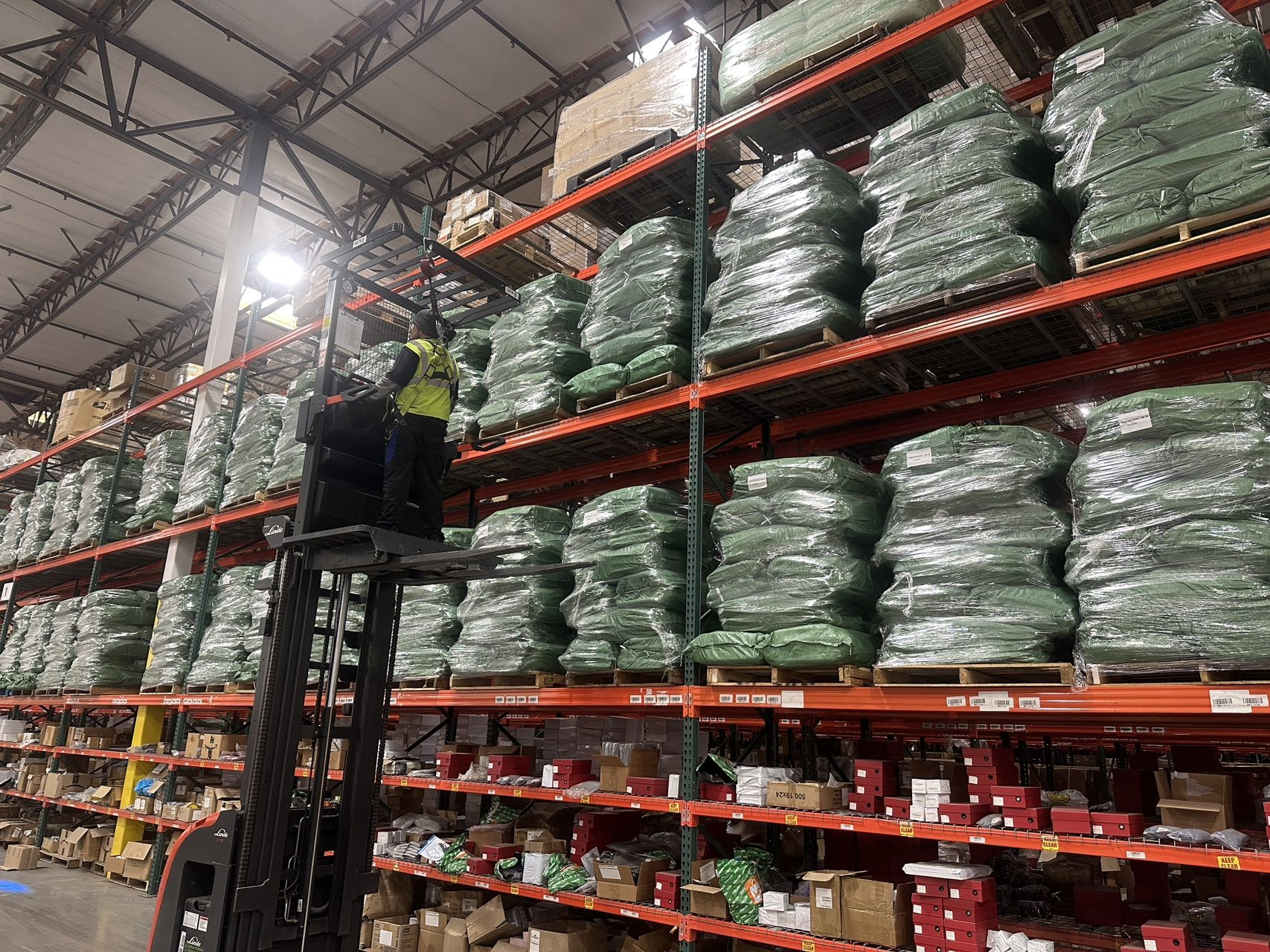
Asset-light models have many touchpoints across the chain, with fragmented information, making responsibility and timeliness difficult to manage. Especially for bulky goods with high value, large volume, high damage rates, and high return costs, any deviation in the fulfillment chain can lead to cargo damage and returns, resulting in cost losses and customer attrition.
Certainty comes from integrated self-operation. Drawing an analogy with JD Logistics in domestic e-commerce, self-operated warehousing and delivery assets are the ultimate guarantee of efficiency. For cross-border e-commerce logistics with extremely long chains and many links, self-operation means stronger control, higher efficiency, and more reliable certainty.
However, self-operation is a long-cycle, asset-heavy investment. Tuowei Tianhai took seventeen years to achieve control over all key nodes in bulky cross-border logistics.
Destination port clearance is the most easily disrupted link; clearance efficiency directly determines overall timeliness, and clearance capability determines the risk of cargo detention. Tuowei Tianhai operates its own customs brokerage in the US, accumulating extensive experience with local customs policies, inspections, and clearance techniques for high-value bulky goods, achieving far higher clearance efficiency than peers.
Its own container yard is just a 15-minute drive from the port, and its self-operated trailer platform ensures priority container pick-up and rapid transfer after unloading, creating a closed loop of clearance, container pick-up, port area transfer, and warehouse delivery, avoiding detention fees and public yard storage charges caused by port congestion. This internalizes uncertain external factors, using controllable certainty to ensure cargo safety and efficiency.
In China and the US, Tuowei Tianhai has built 7 distribution centers and 15 consolidation warehouses, with seven overseas warehouses centered around the dual hubs of Los Angeles and New Jersey, totaling over 300,000 square meters of self-operated warehouse space. The self-operated overseas warehouses are designed for bulky goods with appropriate ceiling heights, load-bearing capacities, and loading/unloading facilities, enabling domestic dropshipping in the US, handling over 5 million orders annually.
Crucially, Tuowei Tianhai's overseas warehouses include hazardous materials segregated storage, accommodating new high-growth bulky goods like energy storage and sensitive electronic products.
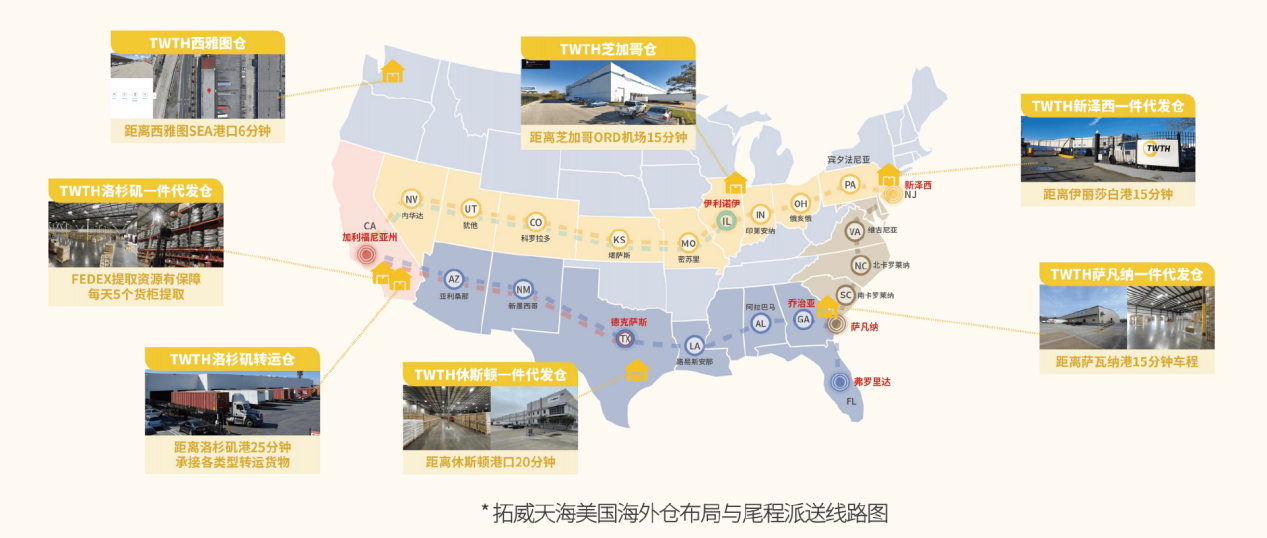
Tuowei Tianhai holds full USDOT MC road transport certifications and provides diverse services such as scheduled delivery, signature confirmation, in-home installation, and old item removal, solving the pain point of separate delivery and installation in the last mile for bulky goods overseas. With full HM transport certification for lithium batteries, it can handle Class 9 hazardous materials for last-mile truck delivery, meeting the highest compliance requirements for energy storage equipment—a rare capability for high-growth e-commerce categories.
From domestic doorstep pickup to overseas customs clearance, container pick-up, unpacking, warehousing, and delivery, Tuowei Tianhai's fully self-operated configuration truly achieves door-to-door service for cross-border bulky goods, minimizing every outsourced interface that could lead to timeliness and risk issues, eliminating intermediate links, and resulting in a cost-effective and higher-quality service edge.
Tuowei Tianhai's asset-heavy, digital-AI-driven self-operation model locks in fulfillment stability across four dimensions: timeliness, cost, risk, and after-sales, completely distinguishing it from traditional freight forwarders and positioning it as a dedicated cross-border supply chain infrastructure service provider for bulky goods. Leveraging an irreplicable physical moat, it can capture long-term dividends from high-growth categories like energy storage.
03
Digital AI End-to-End Control: Securing Supply Chain Competitiveness
Tuowei Tianhai's self-developed end-to-end digital system is its second layer of certainty.
Physical infrastructure handles business operations, but the true challenge lies in making this long-chain, multi-link, and heterogeneous system operate efficiently, at scale, and with high frequency.
Questions like where inventory should be located to minimize last-mile costs, how to manage multi-platform inventory with varying delivery, tracking, and arrival deadlines, and which truck and route to select for last-mile delivery make this a fragmented, rule-complex, and densely coordinated task.
Initially, logistics players relied on manual efforts, but as order volumes grow, systems and AI become essential.
Tuowei Tianhai Cloud's global digital fulfillment platform features six proprietary digital matrices: a global digital capacity network, a global multimodal intelligent scheduling platform, a global digital AI logistics control tower, a global digital AI consolidation platform, a global cross-border compliance platform, and a global geo-visualization platform.
These six platforms digitize seventeen years of operational experience and resources. By converting physical resources like ocean freight, air freight, trucking, and overseas warehouses into digital formats, and encoding dimensional assembly experience, logistics route maps, and platform rules into system logic, they create replicable standard operating procedures with efficiency and precision.
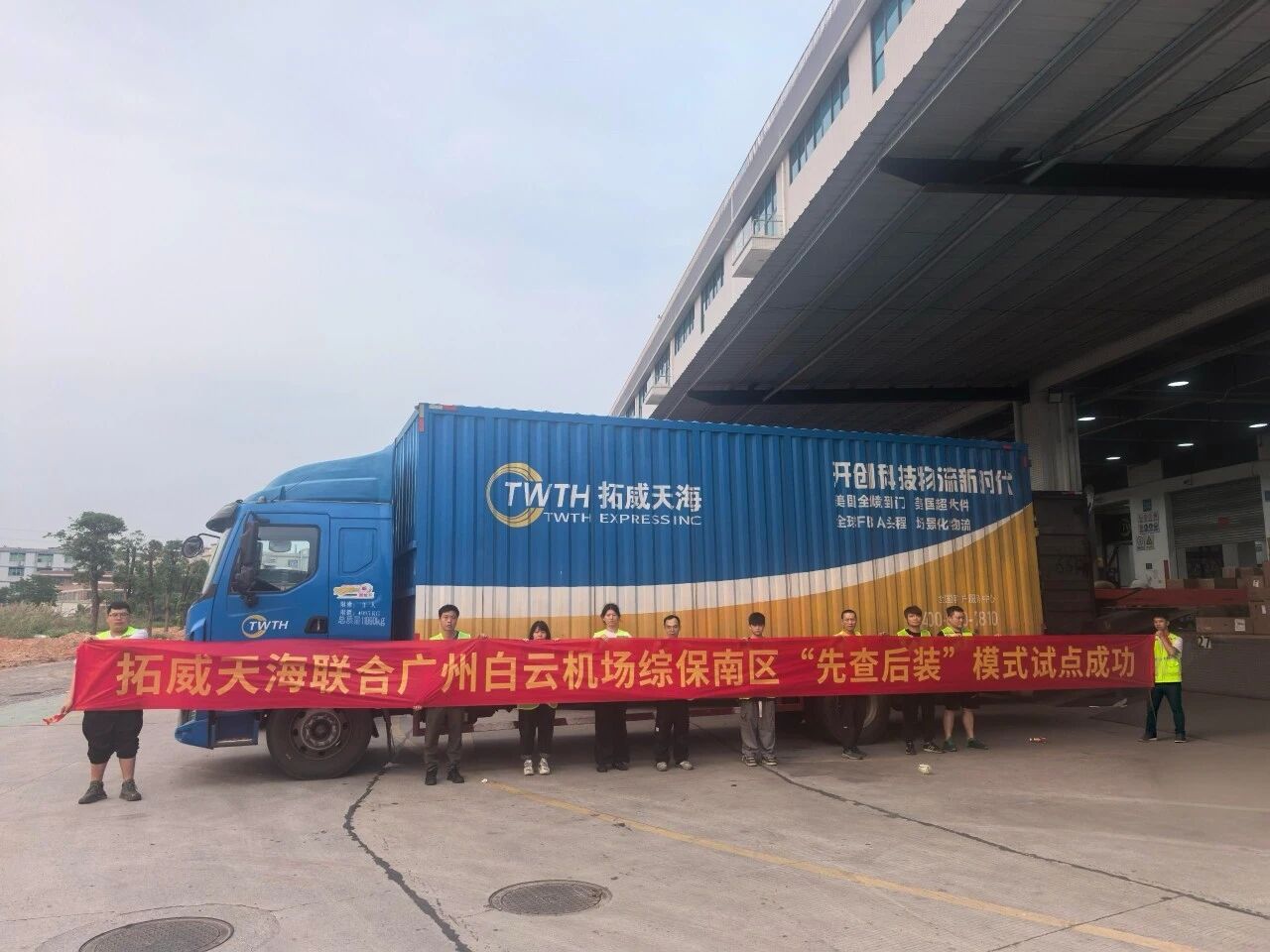
The digital platform is just the surface; the accumulation of end-to-end resources, business insights, and experience forms the core barrier. Powered by AI, this system has evolved into a vertical model for cross-border door-to-door logistics, deeply applied across six major scenarios.
For instance, the intelligent pricing and quotation model generates optimal quotes within 3 seconds by inputting cargo weight, origin, and required timeliness, automatically matching consolidation options, with a quotation accuracy of 99.5%.
The AI Agent fulfillment automation model allows sellers to fully automate booking, label generation, tracking synchronization, and customer notification without manual intervention. For over a dozen types of fulfillment risks like delays, inspections, and damage, the risk warning and handling model enables proactive system alerts and intelligent interventions.
If the previous phase of cross-border logistics competition was about securing containers, space, and courier discounts to help sellers go global, the new phase of brand globalization truly tests end-to-end intelligent operational capability—automatically and efficiently matching the most cost-effective solutions based on cargo type, weight, volume, and destination, helping brands secure supply chain security, efficiency, and risk.
And this is the strategic moat for brand growth.
04
Seventeen Years: Building a Moat in US Last-Mile Trucking
The last-mile delivery segment is a profit point in cross-border logistics.
In the US market, third-party cross-border logistics providers can obtain negotiated discount accounts of 5-6% off UPS and FedEx rates by leveraging high volumes, with some cargo types and routes even getting discounts as low as 2-4%, creating core profit margins and competitiveness.
Unlike the highly concentrated parcel delivery market, the bulky goods trucking market is extremely fragmented and non-standardized, offering greater value potential.
Each trucking company independently prices based on weight, volume, and density (CLASS rating), with no common market baseline price. For the same trucking company and same dimensions, lighter cargo can sometimes be quoted higher than heavier cargo. The same cargo to different states, or different cities within a state, can see drastic price fluctuations. Capacity prices are also subject to frequent fuel and seasonal changes.
Additionally, rigid trucking restrictions—such as prior appointment for residential delivery, two-person handling for bulky items, and narrow roads that heavy trucks cannot traverse—lead to high exception rates and difficult cost estimation. Hidden charges like redelivery and waiting fees, overweight/oversized surcharges, and liftgate fees become a black hole.
Therefore, the last-mile trucking market is hard to consolidate, requiring more time and resource accumulation than parcel delivery. Tuowei Tianhai has spent seventeen years building a moat in US last-mile trucking for bulky goods.
Its self-operated last-mile trucking platform covers nationwide door-to-door delivery, with detailed control of every truck on the platform, including routing, GPS coordinates, and timeliness.
Beyond its own fleet, Tuowei Tianhai has integrated deep cooperation with over 200 top-tier trucking companies in the US, directly connecting to their price interfaces to access real-time baseline prices for different states, cities, sizes, and weights. The front-end system uses AI to automatically compare and dispatch, filtering the lowest-price trucking company nationwide based on cargo dimensions, weight, and destination.
As a core top-tier partner of trucking companies, Tuowei Tianhai secures exclusive tiered discounts, 20% to 50% better than what typical small logistics firms and brands receive, a resource barrier accumulated over 16 years of stable, high-volume orders.
This capability even allows the company to offer customers a guaranteed baseline price, ensuring their rates are lower than third-party market channels.
Tuowei Tianhai's Kuayunda product, designed specifically for bulky items, offers one-stop door-to-door customized solutions for oversized, irregular, and overweight cargo that traditional logistics cannot easily quote online, particularly suited for furniture, home appliances, and fitness equipment.
Kuayunda's proprietary self-service procurement platform overcomes traditional repetitive, rigid, and non-differentiated quoting, innovatively enabling 'instant standard pricing, manual backstop for non-standard needs', covering customer demands through automation of standard products and human service for non-standard requirements.
Its transparent, end-to-end visible fulfillment model per customer reduces manual communication, grants direct access to the most favorable US logistics policies, and allows customers to choose value-added services like in-home delivery and basic installation (White Gloves) beyond standard doorstep service.
With scarce qualifications, Tuowei Tianhai can handle high-growth categories that other logistics providers cannot. Ground delivery of energy storage and sensitive electronic products falls under Class 9 hazardous materials, with mandatory regulations for vehicles, drivers, insurance, and warehouse registration. Most general logistics providers lack this compliance capability.
Tuowei Tianhai's wholly-owned US subsidiary holds full USDOT MC certifications for its own fleet and HM certifications for lithium battery transport, uniquely serving categories like home energy storage, commercial energy storage cabinets, electric bicycles, and new energy battery packs, establishing differentiated competitiveness.
Additionally, Tuowei Tianhai's Guangdong Jianwei Foreign Trade Service Co., Ltd. has developed a highly integrated foreign trade service system, providing export enterprises with integrated services covering customs, inspection, taxation, foreign exchange, finance, and logistics, supporting multiple supervision methods like 9610, 9710, 9810, and 0110, along with tax rebates, tax exemptions for non-invoice export, and corporate tax compliance. Through door-to-door logistics, overseas warehousing, and dropshipping, it offers efficient fulfillment services, aiming to become a leading infrastructure provider for cross-border e-commerce compliance, empowering Chinese manufacturing and brands to go global, with compliance as a solid wing to help export enterprises thrive in the global market.
Ebrun Think Tank believes that the bulky goods sector is characterized by high entry barriers, high margins, and continuous expansion. Tuowei Tianhai is precisely positioned with its unique model of overseas infrastructure, digital AI, and global compliance, building a controllable, stable, and compliant end-to-end digital fulfillment competitiveness for cross-border bulky goods.
Ebrun continues to track and report on this intelligence. For more information related to this article, please scan the QR code to follow the author's WeChat.

This article was first published on the Ebrun Power official website.
[Copyright Notice] Ebrun advocates respecting and protecting intellectual property rights. Without permission, no one is allowed to copy, reproduce, or use the content of this website in any other way. If any copyright issues are found in the articles on this website, please provide copyright questions, identification, proof of copyright, contact information, etc. and send an email to run@ebrun.com. We will communicate and handle it in a timely manner.
Translated by AI. Feedback: run@ebrun.com