
Snapmaker Redefines the Consumer-Grade Tool-Changing 3D Printer Category with U1 | Dialogue with Ke Shuqiang
[Original article by Mati Club] From a single machine that handles 3D printing, laser engraving, and CNC, to focusing R&D resources on a single consumer-grade tool-changing 3D printer—Snapmaker's latest transition isn't just a new product generation, but a shift in product philosophy: from "one machine doing three things" to "perfecting one thing: tool-changing 3D printing." Around 2023, Snapmaker internally grappled with one recurring question: why not keep building new modules around the existing "3-in-1" user base? Existing users were still active, old products were still selling, and sticking to that proven path for incremental growth was an easy calculation. Pouring resources into the fiercely competitive consumer 3D printing market carried far more risk and uncertainty. But Snapmaker ultimately chose the less comfortable route. In an interview with Liu Chen, CEO of Mati Club, Snapmaker co-founder and COO Ke Shuqiang recalled that after internal evaluation, the team decided to stop heavy investment in the next-generation 3-in-1 and redirect core R&D toward the consumer-grade tool-changing 3D printer U1. The old products were not discontinued; sales, after-sales, and necessary software support continued as usual. What was truly paused was the plan to keep expanding along the original tech roadmap. More unusually, Snapmaker made this pivot while the 3-in-1 was still selling. Ke said, "If we wait until it stops selling, it's too late."

Snapmaker co-founder and COO Ke Shuqiang

Why the "3-in-1" once made sense
Founded in 2016, Snapmaker's first product answer was a desktop fabrication device capable of 3D printing, laser engraving, and CNC by swapping tool heads. For makers who needed all three capabilities, this combination saved space and avoided buying three separate machines. The market quickly responded positively. In 2017, the Snapmaker Original raised approximately $2.27 million on Kickstarter; in 2019, the Snapmaker 2.0 raised approximately $7.85 million, setting a then-record for 3D printing projects on the platform. These two crowdfunding campaigns not only generated orders but also helped the team confirm how to define the product. According to Ke, during the first-generation pre-sale, the company offered both single-function and multi-function options, and the vast majority of backers chose the "3-in-1." The second generation further amplified this logic based on user feedback on build volume, laser power, and smart features. Given the industry conditions at the time, this path was viable. The pace of technological change in 3D printing, laser, and CNC was slow, so a product could iterate all three modules gradually over a longer lifecycle, keeping overall value-for-money solid. It was this approach that built Snapmaker's recognition in the multi-function desktop fabrication category, while accumulating expertise in precision mechanics such as all-metal structures, linear modules, multi-axis calibration, and in-house manufacturing.
However, multi-function devices inherently faced a trade-off from the start. 3D printing requires lightweight moving parts, CNC demands structural rigidity, and laser processing values larger work areas and better enclosure protection. Fitting all three capabilities into one structure means balancing these conflicting requirements. When technology moves slowly, such compromises can be offset by savings in space and equipment cost; but once single-function products begin accelerating, those same compromises become a burden.
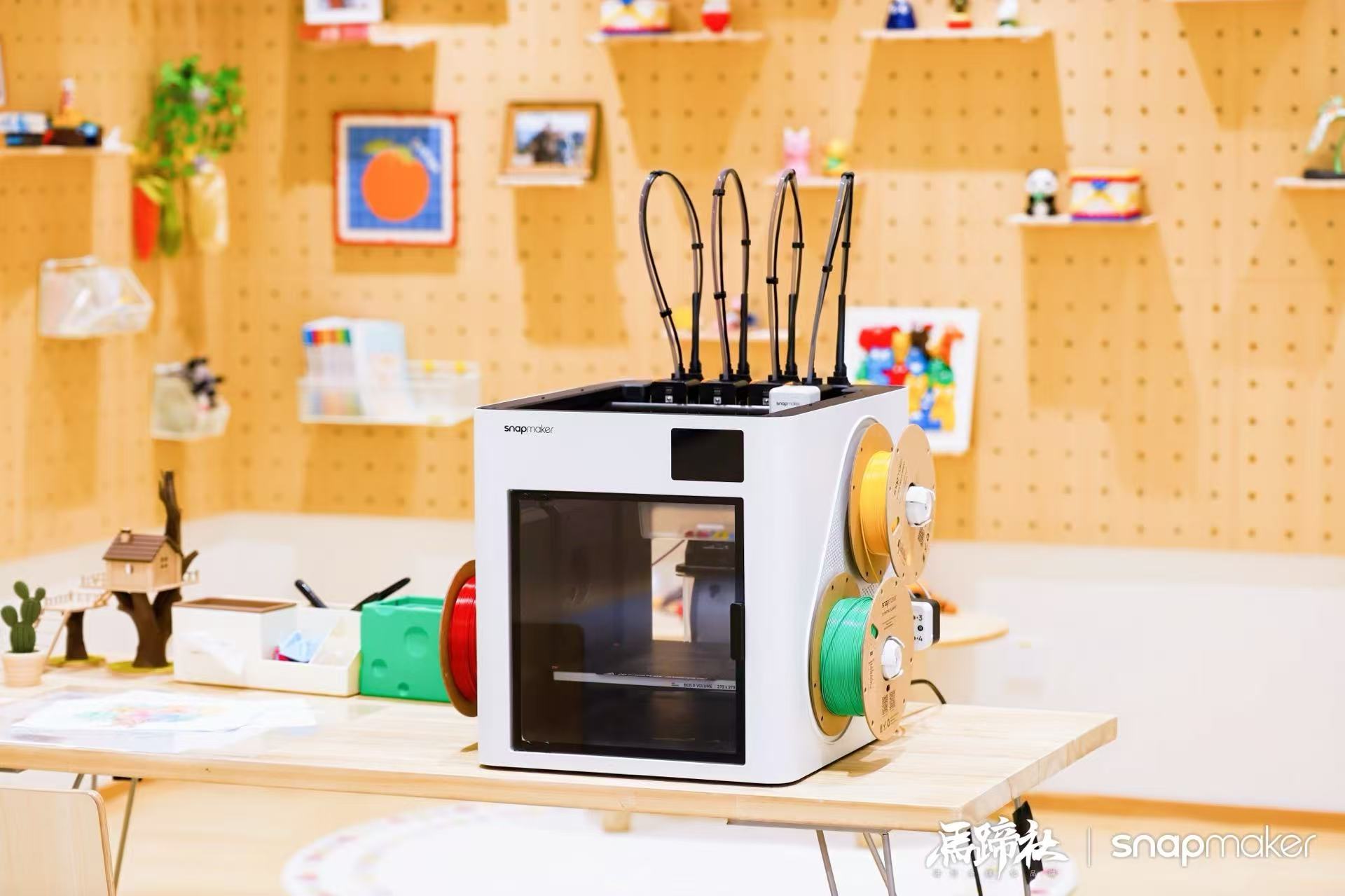
Snapmaker consumer-grade tool-changing 3D printer U1

Industry speeds up, old cadence breaks
Ke pinpointed the turning point to around 2020 and beyond. New approaches—high-speed CoreXY architecture, automatic bed leveling, and multi-color systems—began rewriting the experience standards of consumer 3D printing. Devices that once required users to repeatedly assemble and calibrate were becoming faster, smarter, and more like out-of-the-box consumer electronics. Snapmaker's existing R&D cadence began to lag behind the industry's momentum. The team's post-mortem: the 3-in-1 had to advance three functions simultaneously, typically allowing iteration only once every two years, while single-function competitors could pour all resources into one direction, achieving faster update cycles. The third-generation 3-in-1 was more capable, but its market performance fell short of expectations. More critically, the user base was shifting—beyond hobbyist geeks and makers comfortable with tinkering, mainstream users who valued convenience, efficiency, and price were becoming the majority of new adopters. If the problem were just price, stripping features might seem like a shortcut. But Snapmaker believed the 3-in-1's value was built on the complete combination of all three capabilities; cutting any one wouldn't achieve the "easy-to-use" experience that mainstream users demand. Continuing the old path meant carrying the R&D complexity of three modules while struggling to enter the larger consumer 3D printing market. The question before the team: where to bet for the next phase of growth?
Internally, opinions were divided at first. Some wanted to defend the 3-in-1 as a niche category with established recognition; others advocated shifting to laser equipment where competition was less intense. Ultimately, betting on 3D printing rested on a forecast for two to three years out: multi-color would evolve from a tinkerer's hobby to a default expectation for ordinary users. At the time, mainstream single-nozzle filament swapping meant more colors led to more waste and longer waits—a contradiction that couldn't be solved by optimizing filament changes and would inevitably lead to independent tool heads. This view was not mainstream in 2023. Two years later, leading competitors also launched auto-nozzle-switching and multi-tool-head models, targeting the same color-change waste. Snapmaker wasn't starting from scratch. Since its first generation, the company's core concept was "tool changing": earlier, it was manual swapping among 3D printing, laser, and CNC modules; now, it's automated switching among four print heads. The experience in linear modules and multi-axis calibration from the 3-in-1 era directly addressed the hardest part of tool changing—ensuring the tool head returns to an accurate position after each swap.
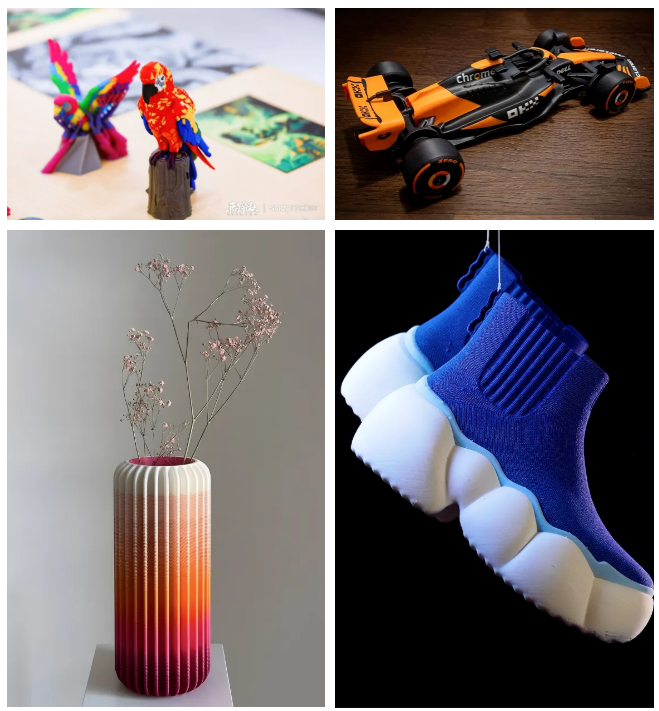
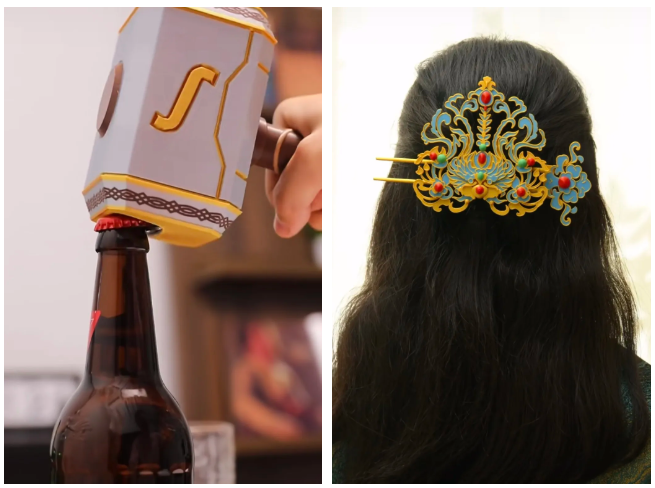
Snapmaker consumer-grade tool-changing 3D printer U1 printed work

From changing filaments to changing tool heads
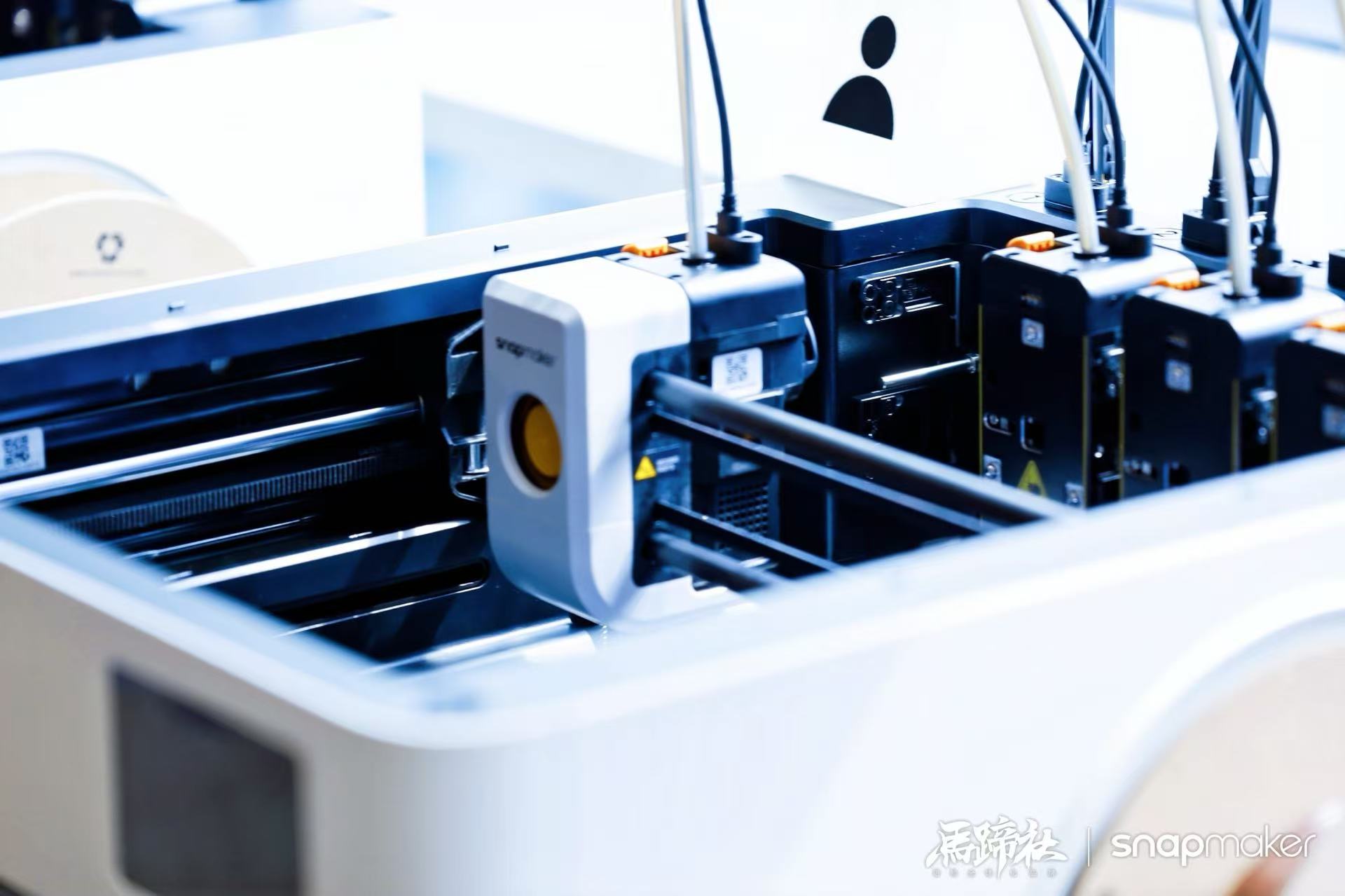
The dominant multi-color printing approach at the time involved multiple filament spools sharing a single nozzle. Each color change required the machine to retract the old filament, feed new filament, and extrude a purge segment to clear the nozzle. The more colors and the more frequent the switches, the longer the waits and the greater the waste. When flexible materials, support materials, and the main material share one channel, compatibility becomes even trickier. Snapmaker took a different approach: four independent tool heads each handle a different color or material, and during printing the entire tool head is swapped, so filament doesn't repeatedly pass through the same nozzle.
Tool-changing systems had existed in open-source communities and professional equipment. Snapmaker's challenge was to pack it into a machine that ordinary consumers could afford, fit in their space, and use comfortably. Four print heads mean more precision elements to control; beyond the machine's XYZ axes, tool heads must repeatedly align and auto-calibrate among themselves. A single unstable swap can ruin the final print quality. According to Ke, the team spent roughly a year validating tool-changing reliability before moving to trial production and mass-production preparation. Experience in linear modules, dual-nozzle calibration, and precision assembly from the past provided a starting point for this transition. Manufacturing techniques were subsequently adjusted, shifting from an emphasis on all-metal and machined aesthetics to injection molding and sheet metal processes better suited for mass production, to meet reliability, capacity, and price targets simultaneously.
In the end, the U1 features four independent tool heads, with each swap taking about 5 seconds, and automatic calibration controlling the relative positions of the tool heads. Snapmaker's published lab data shows the tool-changing mechanism completed over one million consecutive switch cycles without mechanical failure. It's Snapmaker's own test data, but it addresses the hardest question of tool changing: everyone has the idea, but the real work lies in assembly and calibration details.
Once the technology was ready, the company still had to communicate what it meant for users. According to Snapmaker's global GTM lead She Na and user operations lead Wu Qiuyu, before the U1 launch, operations and product teams manually filtered through over 500 user voices from overseas communities, social media, and customer service channels, plus completed more than 30 in-depth interviews. The team narrowed the issues to three high-frequency scenarios: multi-color printing time, material waste from switching, and the difficulty of sharing a single channel for different materials. In the first phase of product communication, Snapmaker distilled U1's core value into eight Chinese characters that roughly translate to "five times faster, five times less material waste." According to Ke, this expression came from comparative tests on typical multi-color printing scenarios, targeting the two most perceptible costs: waiting time and material consumption. Users don't need to understand tool-changing principles; they just need to remember two things: less waiting, less waste.
Fast color changes are just the most visible benefit of independent tool heads. Different heads can separately handle the main material, flexible materials, or support materials, reducing residue and contamination from a shared nozzle. Multi-color printing is the most obvious selling point, while multi-material printing and more complex single-pass integrated molding also appeal to creators and small studios.
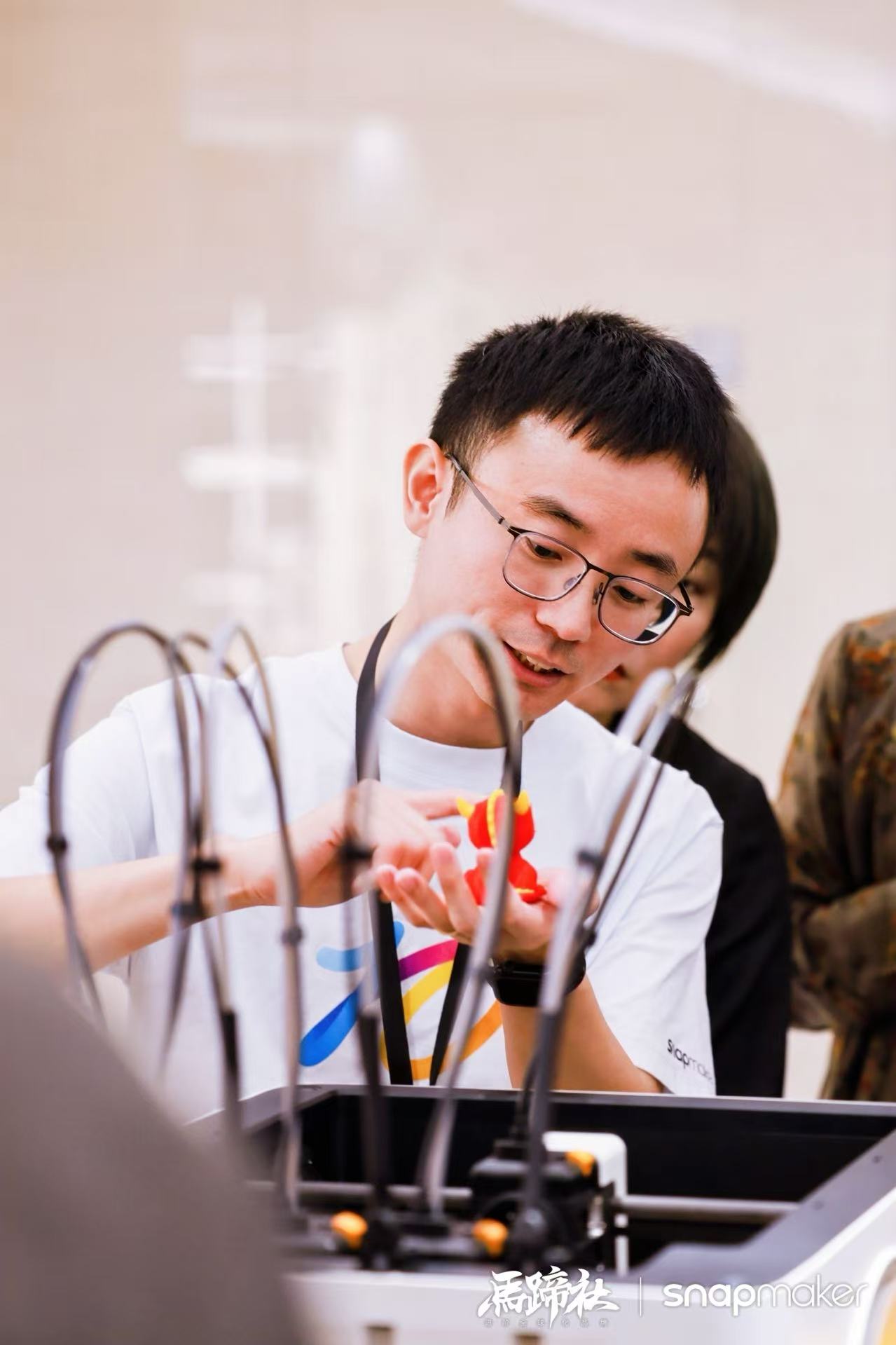
Snapmaker co-founder and COO Ke Shuqiang shows 3D printed work to Mati Club members

Crowdfunding as public validation, but only the beginning
The hardware direction was set, but whether the market would accept it remained an open question. Another challenge when the U1 was approved was that Snapmaker's existing users identified with the 3-in-1, while new consumer 3D printing users already had well-formed brand and product perceptions. A new architecture product had to both explain its technical differences and rebuild purchasing trust.
Before mass production, 19 community users received trial units and participated in testing hardware, firmware, and software. These testers later became the U1's earliest advocates. The team subsequently used Kickstarter updates to keep backers informed of improvements and candidly discuss unresolved issues. For a crowdfunding project, such communication lets backers know exactly how far the product has come, what pitfalls remain, and how the team plans to address them.
From August 19 to September 30, 2025, the U1 raised $20.61 million on Kickstarter from 20,680 backers, making it the highest-funded 3D printing project in the platform's history. More than twenty thousand people voted with their money: the consumer-grade tool-changing path has demand, and the trust Snapmaker built over the years in its community didn't vanish when it changed categories. Crowdfunding proved people are willing to pay upfront; next, the company must prove other things: on-time production and delivery, continuous software updates, and channels and after-sales support that keep pace. After crowdfunding ended, Snapmaker expanded the U1 to its official site, e-commerce platforms, and various channels, and began developing mobile apps, slicing software, and model content. These efforts may not be as flashy as a product launch, but they determine how long this business can last.

The next threshold: making devices and content grow together
Ke is measured about hardware advantages: a hardware innovation typically buys only a temporary lead window, and competitors will eventually follow. That was quickly confirmed—within six months to a year after the U1's crowdfunding, competitors launched auto-nozzle-switching and multi-tool-head models. The long-term competition lies in whether the device, software, content, and users can reinforce each other.
3D model files can move across devices, but one-click printing requires color assignments, material choices, and process parameters that often must be tuned for specific machines. The more users, the more the brand can consolidate parameters and lower the printing barrier, attracting designers to create content specifically for the system. The richer the content, the higher the device's value for ordinary users. This path is still in its early stages. Snapmaker has released Snapmaker Orca, based on Orca Slicer, and is gradually integrating the Full Spectrum mixing method proposed by community developer Radu into its official software. In September 2026, Snapmaker Space, a model platform for the U1, opened public beta, with the company claiming over 2,500 ready-to-print models, focusing on multi-color and multi-material designs, with print parameters preset for the U1. This is just the beginning, but the direction is clear: the gap opened in hardware must be defended through software, content, and creators.
Looking back at this transition, Snapmaker did something quite difficult: the old path was still viable, yet the team chose to proactively judge where the industry was heading, extract the reusable parts of past capabilities, and re-bet them on a bigger problem. Precision manufacturing addressed tool-changing reliability, user research helped sharpen the product value proposition, crowdfunding turned uncertainty into visible orders and feedback, and omnichannel plus content ecosystem is set to capture the next phase of growth. A decade ago, Snapmaker let one machine swap heads to do three things; a decade later, it has four heads working in turn to perfect just one thing. Consumer-grade tool-changing is moving from one company's choice to an industry direction. The question for the next decade is simple: how to let more ordinary people print the colors in their minds exactly as they imagine them. (Mati Club original / October 10, 2026)
About Mati Club
Mati Club is a high-end practitioner community under Ebrun focused on brand globalization. Led by Liu Chen, co-founder of Ebrun and CEO of Mati Club, we aim to break cognitive boundaries, empower Chinese companies to advance strategically from regional to global, and accelerate the development of globally competitive new capabilities. By bringing together hands-on mentors and industry-leading experts, we use benchmarking studies, resource connections, and closed-door co-creation to explore growth paths for global brands. Non-stop, growing upward.
This article was first published on Ebrun's official website.
[Copyright Notice] Ebrun advocates respecting and protecting intellectual property rights. Without permission, no one is allowed to copy, reproduce, or use the content of this website in any other way. If any copyright issues are found in the articles on this website, please provide copyright questions, identification, proof of copyright, contact information, etc. and send an email to run@ebrun.com. We will communicate and handle it in a timely manner.
Translated by AI. Feedback: run@ebrun.com