
David Wei of Harvest Capital: Deconstructing AI Commercialization with 'Cars, Roads, and Cargo'
[Matishe Original] At the end of November 2022, ChatGPT, based on the GPT-3.5 series model, was released to the public. AI had been developing for years, but in the view of David Wei, founding partner and chairman of Harvest Capital, this version brought the technology into mainstream use with a low enough barrier for the first time. In China, the collective awareness of this shift occurred roughly between late 2022 and the Chinese New Year of 2023.
During a discussion, Wei used the metaphor of 'cars, roads, and cargo' to unpack his understanding of AI.
Large models are the 'cars'; infrastructure such as transmission, storage, and computing power serves as the 'roads'; and code generation, video generation, conversational bots, and various industry applications are the 'cargo' loaded onto these cars. This analogy is straightforward, but the question Wei aims to address is evolving: three years ago, the market cared which car could run the fastest; by 2026, while model capabilities continue to iterate, applications have begun to inversely define vehicle types and roads.
Shifting focus from model racing to application 'cargo loading', Wei attempts to answer a more specific question: when AI transitions from technological breakthroughs to commercial realization, what can generate revenue, what can build moats, and which investments are securing the company's future entry points?

While the 'racing cars' are still catching up, users can already switch models
After ChatGPT, Chinese and American large models entered a period of intensive iteration. DeepSeek, Kimi, and Z.ai have successively launched new versions in China, while OpenAI, Anthropic, and Google have continued updating their models. Wei describes this competition as 'chasing each other': today's leader may not hold its advantage until the next release.
According to his observation, the leading window for large models is shrinking. It used to last about six months; now it may be only three. These timelines lack a unified market statistical standard but reflect the changing pace of model competition—leadership is increasingly short-lived, and catching up is increasingly frequent.
Another shift comes from users. In coding scenarios, overseas users may switch from Claude to Codex within a day; domestically, they might move from Z.ai to Kimi or DeepSeek. For enterprise developers, switching models typically does not require rebuilding complete business systems; slight changes in performance or price can prompt migration to another product. Wei believes that low switching costs weaken user stickiness for models and raise the risk for investors betting on a single technological path.
Traditional internet products, even if temporarily behind, can rely on account relationships, usage habits, and historical data to retain users, buying several months of catch-up time. Switches between large models are faster; once performance or cost loses its edge, users may leave immediately. Wei explains that during a period of uncertain outcomes and limited leading windows, the model layer is not the most suitable area for heavy bets.
In the early stages of AI development, a substantial amount of capital was used to train models. Wei compares large models at this stage to F1 racing cars: fast and expensive, but without cargo-carrying capabilities. Model companies must continuously consume computing power and pay high costs to infrastructure providers; if clear applications are not found, commercial value can hardly cover investments, giving rise to concerns about an AI bubble.
Now, the criteria are changing. Training scale and model rankings remain important, but the market is beginning to examine: what cargo can a car carry, and is someone willing to pay for it? While model racing is not yet over, whether applications can generate stable demand has become the next checkpoint for evaluating this round of AI investment.

Three Types of 'Cargo', Three Sets of Business Logic
Here, 'cargo' refers to AI applications that can deliver revenue, data moats, or entry-point value. Wei categorizes emerging AI applications into three types. They all require models and computing power, but the reasons for investment differ: some generate revenue through efficiency, some build advantages through data, and others may be hard to profit from in the short term, yet platforms must continue investing.
The first type is code generation. In Wei's view, the earliest successful B2B scenarios in AI often concentrate in industries with 'many and expensive' personnel. With high numbers of engineers and high labor costs, coding processes can be broken down, tested, and repeatedly verified. Enterprises can compare workload, delivery speed, and staffing before and after adopting AI, making the technological value relatively easy to factor into business accounting. Professional services such as doctors and lawyers are an extension of this efficiency logic in the U.S. market, but their compliance, liability, and validation barriers are higher. AI writing code is the first to 'pull cargo', that is, to form scale revenue, indicating that AI applications are beginning to provide returns on earlier investments in models, computing power, and cloud infrastructure.
The second type is video generation. It has entered practical use but has higher training costs and data barriers. Public videos can be obtained, but backend data such as completion rates are held only by platforms. Wei uses the completion rate as an example: for the same video, external parties can only see the content, while the platform can see whether users finished watching it. Such feedback helps determine which content is more effective and can be used for content filtering, recommendation, and retraining, making data quality more important than sheer data volume.
Therefore, companies with content platforms hold both video materials and user feedback, making it easier to form a training loop. The moat here lies in the 'content-feedback-retraining' cycle. Without backend behavioral data, even massive amounts of public video make it difficult to judge which content is truly effective.
The third type is conversational bots. These products gather a large number of users, but monetization methods are still being explored, and daily operation consumes computing power. Internet companies continue to invest, considering more than just subscription revenue. Wei predicts that AI could redistribute internet traffic entry points: search faces more direct impact, social relationships are relatively stable, and e-commerce falls between the two.
For platforms, conversational bots therefore carry an entry-point defensive attribute. They may consume significant resources in the short term, yet they relate to where users will start searches, shopping, and service requests in the future. These three types of 'cargo' correspond to three sets of logic: code generation addresses efficiency, video generation competes for data loops, and conversational bots guard traffic entry points. Only by separating them can one distinguish between user growth, technological advantages, and commercial value.

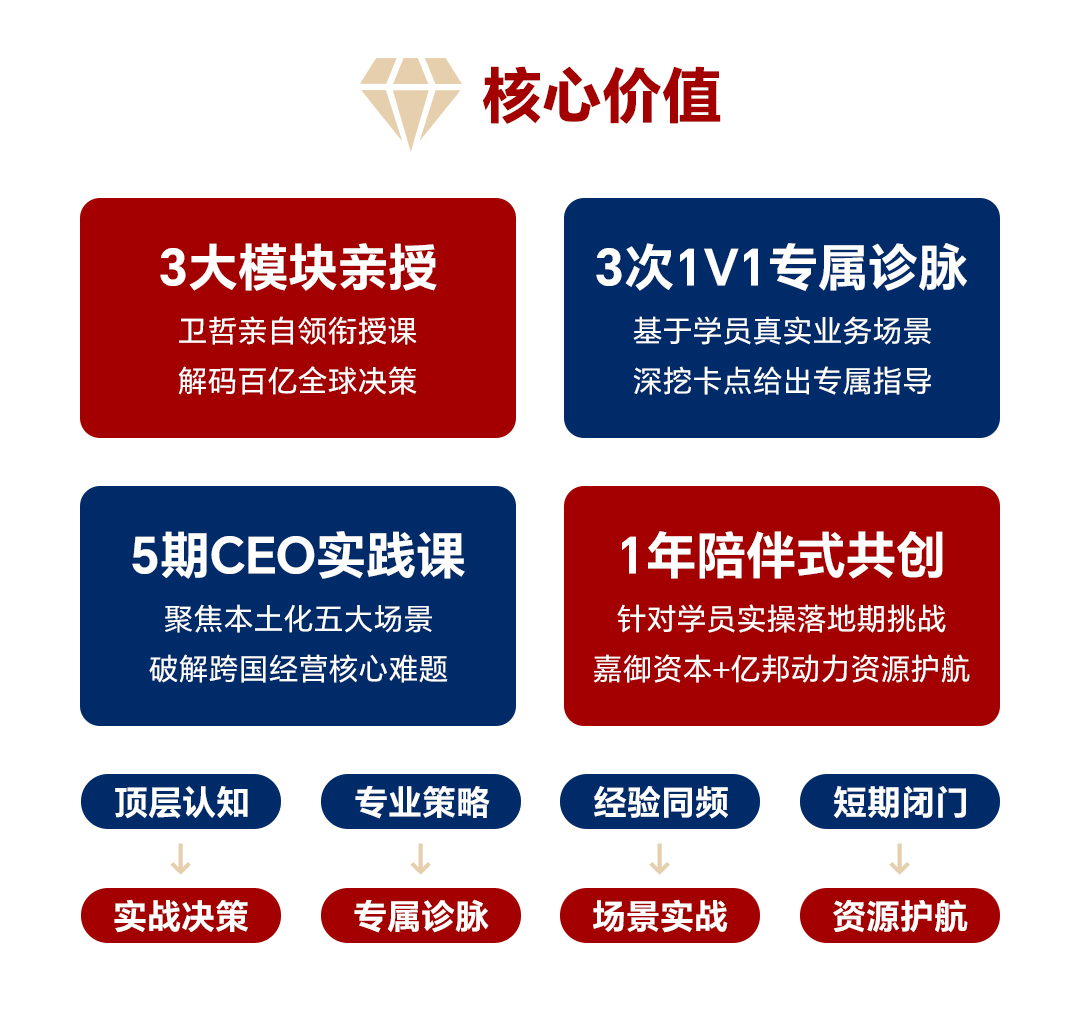
The sixth cohort of Harvest Capital's Global CEO Decision-Making Seminar is now open for enrollment! This is not about grand, empty theories; it's about practical methodologies validated by market values in the tens of billions.
Mr. Wei will use nearly 20 years of investment and operational management experience to break down the underlying logic behind billion-level decisions for you. Your peers and private board partners will be founders of brand-going-global companies with annual revenues exceeding 500 million yuan.
Who you learn from determines your height; who you journey with determines your vision.
>>Click here for course details<<

'Cargo' Begins to Define 'Roads'
In the generative AI 'cargo' landscape, before it became clear, Harvest Capital chose to look at the 'roads' first. Wei has used the internet cycle as a reference: application companies may change, but traffic continues to grow, and infrastructure such as transmission, storage, and computing will expand accordingly.
To clarify the relationships among the three infrastructure categories, Wei uses the road analogy: transmission expansion is like widening roads, storage is like building parking lots, and computing power is like the road's carrying and scheduling capacity. More cars and more complex cargo impose changing demands on the roads. Storage is particularly important, as enterprises need to retain large amounts of computational results and interaction data, while model training and application feedback continuously generate new data.
In the early stages, when it is unclear which applications will win, investors and enterprises must first build general infrastructure; as applications like code, video, and conversation diverge, different tasks place varying demands on training, inference, storage, and transmission. Wei uses code generation as an example: these tasks require continuous, stable, and cost-controllable computation, prompting enterprises to reconsider chip and system solutions beyond general-purpose GPUs. Once application scenarios are clear, 'cargo' begins to select the 'car', and changes in vehicle types also alter how roads are built.
Changes are also occurring within enterprises. Wei recalls that during his tenure as CEO at Alibaba, chip and technology choices were typically handled by the CTO. New technologies, from successful testing to large-scale adoption, prioritized safety and stability, and the adoption cycle could take up to five years. Today, computing power investments directly affect product costs and market competition, leading an increasing number of tech company CEOs to participate in technology choices, balancing security risks, capital expenditures, and commercial returns.
According to Wei, the adoption cycle for new technologies is shortening. This shift is difficult to explain solely by technological progress. Application competition is intensifying, infrastructure investments are rising, and a single chip choice can simultaneously impact model capabilities, service costs, and product rhythm, making technology routes a business decision that CEOs must own.

Cross-Border E-Commerce: From 'Human-Powered Operations' to Data Loop Closure
Wei brings AI discussions back to cross-border e-commerce because the industry has long relied on platform algorithms for everything from traffic acquisition to transaction fulfillment. Merchants operating on Amazon, advertising on Google and YouTube, are also beginning to explore Generative Engine Optimization (GEO), hoping their products and brands will be included, cited, and recommended in generative search. Regardless of the channel, enterprises face ever-changing algorithmic systems.
In the past, the operational capability in cross-border e-commerce largely depended on manual expertise. Teams relied on experience to judge product selection, keywords, ads, platform rules, and user feedback, then scaled execution by adding more people. Wei characterizes this as using 'human flesh' to counter platform algorithms. As platforms accelerate AI adoption, the costs of stacking manpower and accelerating response times will continue to rise. AI tools for images, videos, customer service, and document sorting can first replace some repetitive tasks, but this remains point-specific efficiency gains.
A deeper change occurs between processes. Whether user insights from product selection can feed into content creation, whether ad feedback can return to product development, and whether customer service issues can become inputs for the next round of operations and product improvements, determines if a company has formed its own data loop. Using AI across individual functions yields only a set of efficiency tools; connecting data and processes allows AI to enter a company's operating system.
For cross-border e-commerce enterprises, the most practical current task is to first determine what 'cargo' they need to pull, then decide which 'car' to use and what 'roads' to build. As applications begin to define models and infrastructure, this technology cycle is moving from watching race cars to testing who can deliver the cargo to the destination. (Matishe Original / October 9, 2026)
Editor's Note: What 'Cargo' Does AI Hardware Globalization Need to Pull?
It should be noted that the following is not Wei's direct quote, but rather an extension based on his 'cars, roads, and cargo' framework by Matishe.
If this framework is applied to AI hardware globalization, the 'cars' are general-purpose large models, on-device small models, voice and vision models; the 'roads' are cloud, edge computing, chips, connectivity, storage, compliance, and distribution channels; and the 'cargo' includes AI glasses, AI toys, AI wearables, AI home devices, AI companions, and AI education hardware. Hardware also introduces additional variables such as cost, power consumption, latency, privacy, compliance, OTA updates, return rates, and data feedback loops. First clarify the 'cargo', then choose the 'car' and 'roads', so as not to misallocate resources from the start.
For CEOs advancing toward global brands, AI is no longer just a CTO's technical issue; it simultaneously reshapes product definition, cost structures, channel strategies, and organizational decision-making. The value of Wei's 'cars, roads, and cargo' framework lies not in predicting which model will win, but in helping CEOs return to decision-making itself: who will pay for your new product, how will the payment form differ, can data flow back, and can the organization keep up? The framework is public; the real choices vary by company. The same logic, applied across different industries and globalization stages, yields entirely different conclusions.
This is what the 'Harvest Capital Global CEO Decision-Making Seminar' aims to do with CEOs building global brands.

>>Click here for course details<<
For registration inquiries, contact Matishe staff.

This article was first published on the official website of Ebrun.
[Copyright Notice] Ebrun advocates respecting and protecting intellectual property rights. Without permission, no one is allowed to copy, reproduce, or use the content of this website in any other way. If any copyright issues are found in the articles on this website, please provide copyright questions, identification, proof of copyright, contact information, etc. and send an email to run@ebrun.com. We will communicate and handle it in a timely manner.
Translated by AI. Feedback: run@ebrun.com