
Dialogue with He Ding of Qianke Technology: How Micro-Innovation Breaks Through Mature Categories to Build a Global Brand
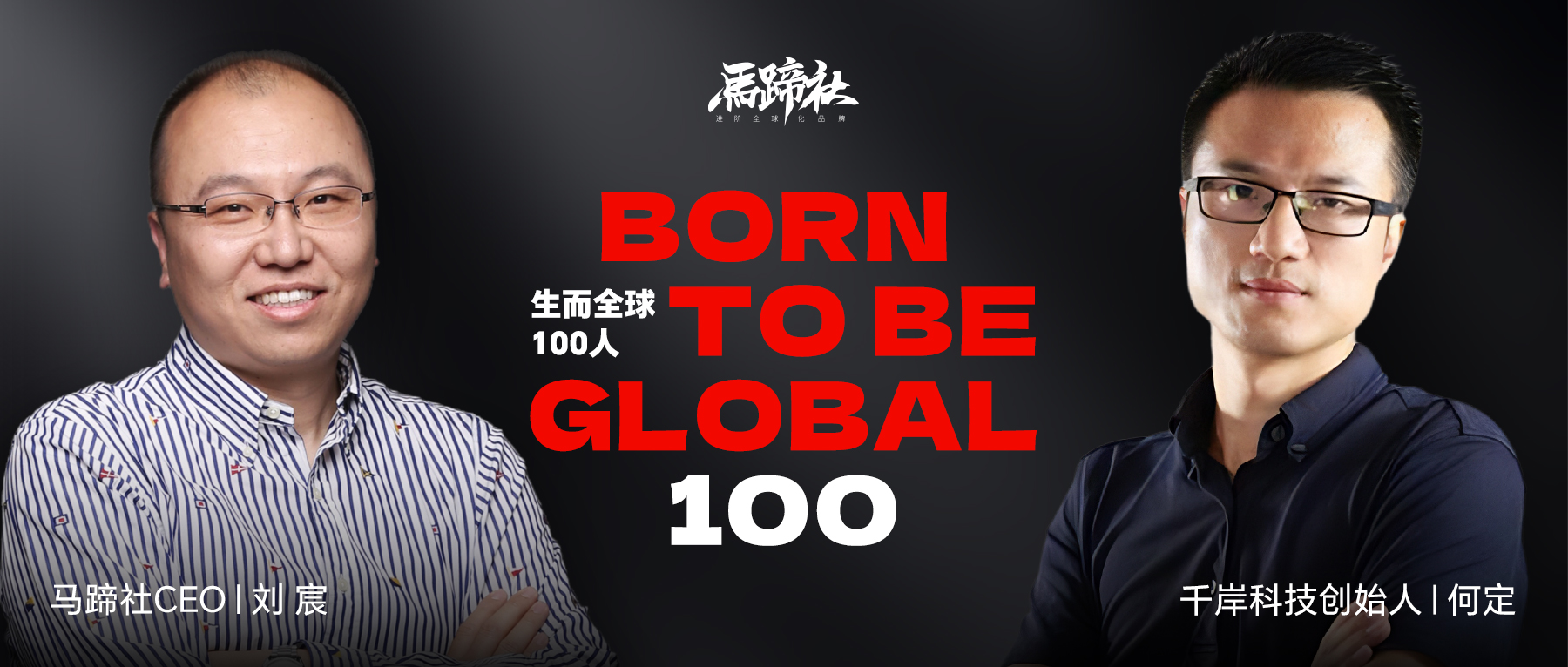
Witnessing the deep thinking of 100 founders to refine the next decade of global business insights.
On July 29, 2026, Qianke Technology was listed on the Beijing Stock Exchange with stock code 920065. By then, the company had just completed 16 years of operation.
What it brought to the capital market was not a brand-new category born from new technologies. From artistic creation and digital electronics to sports outdoors and home gardening—Qianke Technology's core sectors are already mature markets with ample supply and crowded players. Its flagship brand Ohuhu's alcohol markers are a long-standing category.
In a conversation with Matui Society about product methodology, He Ding, founder and chairman of Qianke Technology, avoided words like "disruption" or "redefinition." Instead, he used a simpler term: "micro-innovation." It's not about deep basic research but making products progressively better suited to user needs based on existing technology.
Though the phrase sounds modest, it strikes a chord with many cross-border e-commerce founders facing a common reality: low technical barriers, increasingly transparent supply chains, and similar products emerging at any moment. How can these incremental improvements accumulate into a brand that users consistently choose?
The information disclosed by Qianke Technology after its listing partially answers this question—the company is driven by an entire system, not an accidental hit product. The allocation of raised funds confirms this: investments were directed toward product development, supply chain and operational system building, brand building, and channel promotion. In other words, "micro-innovation" is about cultivating long-term capabilities that gradually grow across the entire chain—identifying needs, R&D, delivery, and maintaining customer relationships.

Between high-priced brands and low-priced white-label products, find real users first
The alcohol marker market Ohuhu entered already had two relatively distinct ends: one with established players holding long-term brand recognition and high prices, and the other dominated by low-cost white-label products competing on price. During an Amazon public event in June 2026, He Ding recalled that Ohuhu initially relied on pricing to open the market, but what truly helped it escape the price war was stopping price reductions and starting to genuinely engage with painting enthusiasts.
"In-depth feedback from 100 real users is more valuable than 10,000 superficial exposures," He Ding said at that time.
Users raised very specific issues: whether a set had enough color variety, if the hard nibs were flexible, and whether they could buy refills for frequently used colors. Based on this feedback, Ohuhu expanded its product line from 48 colors to 72 and then 320 colors, adding soft nibs, dual soft-hard nibs, replaceable nibs, and refillable ink designs.
Individually, these changes are modest and hardly qualify as "revolutionary technology." But they address recurring frustrations users face when selecting colors, controlling strokes, and in daily use. For a mature category, whether innovation is new technology matters less than whether it occurs in a scenario where users encounter problems frequently, perceive the improvement clearly, and are willing to switch brands for it.
In its roadshow materials, Qianke Technology summarized this capability as "scenario-based, refined, and differentiated" product R&D design. Information sources include both online consumer feedback and offline user research. He Ding added in an interview that social media, platform reviews, and fan interactions provide clues, but clues don't equal demand. The team must judge whether a piece of feedback reflects a minority's personal preference or a common issue substantial enough to justify a product project.
This is where micro-innovation is most often underestimated. The changes may seem small, but extracting real problems from noise is anything but simple.
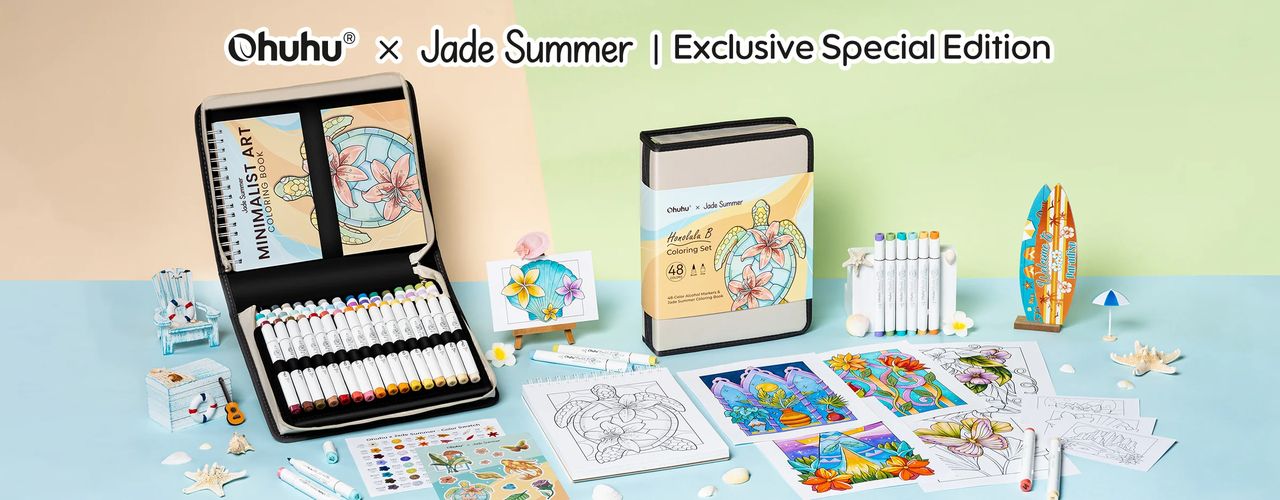
Ohuhu x Jade Summer Alcohol Markers Coloring Book Set

Let the product pass internal validation first
In Qianke Technology's product process, user insights don't directly translate into a production order.
According to He Ding, when a product enters project discussion, the product team must explain: where the insight came from, what unmet need it addresses, and how much the solution actually improves things. The sales team, from the perspective of market outcomes and delivery results, challenges back: Is the user facing a real pain point or a false one? Does the product truly solve the problem, or does it improve things only slightly while overselling the effect? When necessary, the user insights team re-verifies the evidence from both sides.
Sales holds the final authority to place orders, but this isn't a simple "veto." Because they face direct market results, sales has the right to challenge product proposals; meanwhile, product teams don't just follow the existing market—they must use user evidence and test results to convince sales. He Ding rarely uses his founder authority to unilaterally settle disagreements. In his view, if a product can't convince even the internal sales team, there's no hope of convincing consumers.
He Ding cited an example in the interview: a bleed-proof marker notebook. Alcohol ink dries quickly and layers well but easily bleeds through paper, affecting the back and even the next page. Early solutions involved adding a backing sheet, but later the product team began trying to reduce ink penetration without compromising drying speed or drawing feel. The sales team pushed back: Can this "anti-bleed" claim withstand testing? What are the test standards? Can the results be replicated?
This example illustrates not that sales knows more about R&D than product teams, but that the statement "users need anti-bleed" gets broken down into more specific issues—material performance, drawing experience, and testing standards. Only when product claims can be validated do those small needs have a chance to survive R&D and mass production and finally become differences users can feel the moment they receive the product.

Suppliers achieve 70 points; the rest 30 must be built by the brand itself
In the early days of cross-border e-commerce, product development typically followed a pattern: the brand sets the standard, and the supplier delivers. This model quickly leverages the mature capabilities of China's supply chain but hits a ceiling at a certain stage. When existing solutions are already well developed, suppliers may be reluctant to invest further in a single brand, and the next upgrade a brand wants often can't be directly sourced from off-the-shelf products.
He Ding recalled that Qianke Technology initially relied heavily on supplier-driven R&D. As product requirements became more demanding, the company began building its own R&D capabilities while retaining co-development with suppliers. Further disclosure in post-IPO investor relations records shows: for core categories involving brand positioning, where existing supply falls short, or where suppliers' R&D capabilities are immature, the company conducts its own R&D to achieve technological or functional breakthroughs; for categories where the supply chain is already mature, the company works with suppliers, combining end-use scenarios and consumer needs.
Self-developed and co-developed products are more a division of labor—self-R&D captures product definition power and the ability to keep advancing key capabilities, while co-development leverages mature supply chains' strengths in engineering implementation, manufacturing, and large-scale delivery. Brands must judge which capabilities can be borrowed externally and which variables must be controlled internally.
The marker category perfectly illustrates why this division is necessary. Users see only a pen, but behind it is the coordination of ink, nibs, reservoir cores, and paper. According to Qianke Technology's investor relations records disclosed in August 2026, the company continuously tests color changes before and after ink drying, layering and blending, water and light resistance, and leakage under high-altitude conditions. For user experience, differentiation comes through color formulations, nib combinations, color-coded caps, replaceable nibs, and refillable ink.
These still qualify as "micro-innovations," but they go far beyond picking a ready-made style from a supplier's shelf. User problems must first become performance metrics, metrics must be translated into materials, structures, and tests, and finally withstand mass production and delivery. The real difficulty in micro-innovation often lies not in a single technical point but in whether a company can repeatedly run this entire chain successfully.
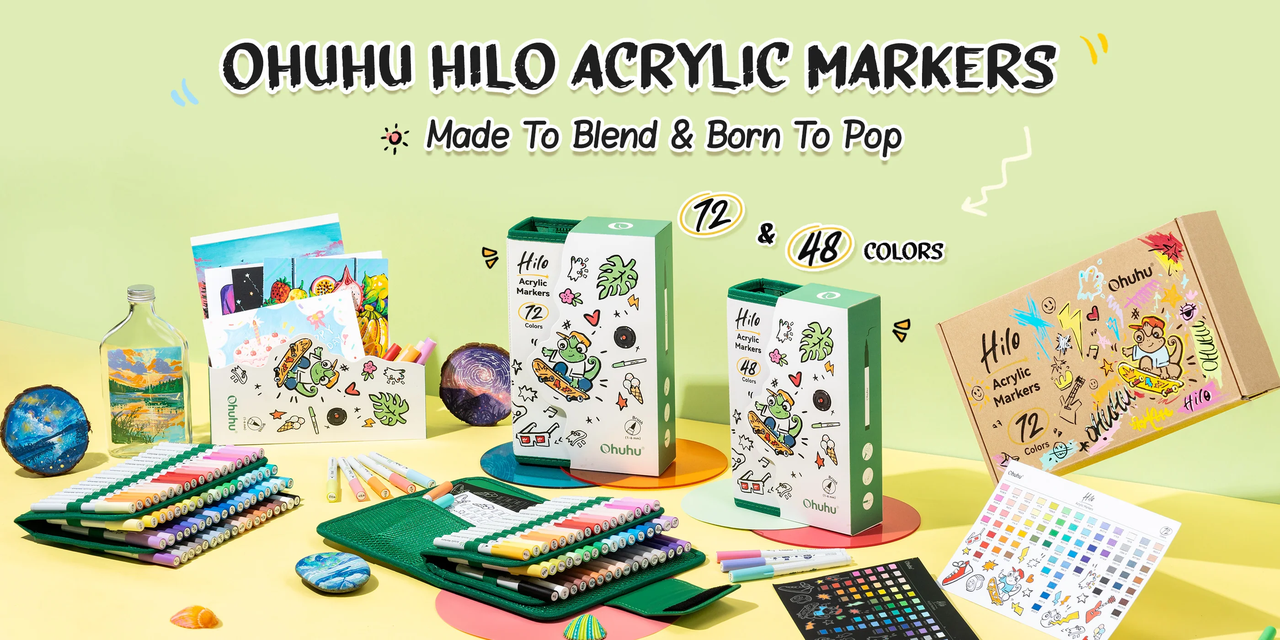
Ohuhu Hilo Series Direct-ink Acrylic Paint Markers

A brand isn't a one-time premium but repeated choice
When He Ding talks about brands, he repeatedly uses the term "inertia." In his view, selling products is like restarting transactions each time, but once a brand forms relatively stable user awareness, the company doesn't have to bet on the success of any single product and has room to keep iterating and correcting.
This "inertia" isn't built on the brand name alone, nor can it be achieved with a single large-scale campaign. It requires users to accumulate relatively consistent experiences over repeated purchases and requires the brand to maintain an ongoing relationship with users beyond the product.
In its August 2026 public disclosure, Qianke Technology said that Ohuhu connects with a global community of painting enthusiasts through its official website, hosts themed painting events, and collaborates with vertical creators and professional artists. The company counts improvements in natural traffic, conversion efficiency, repurchase rates, user stickiness, and loyalty as operational outcomes of brand building.
This also explains why features like replaceable nibs and refillable ink aren't just functional additions. They extend the product's usable life and meet users' desire to reduce waste and continue creating. When a brand consistently meets these specific needs, users remember not just a set of specs or a low price but a predictable product experience.
There is no automatic path from product strength to brand strength. Products solve problems; content and community help users understand that value; channels and service deliver the product; and after multiple experiences, trust gradually accumulates. The so-called "brand inertia" ultimately relies on each product and repeated confirmation.
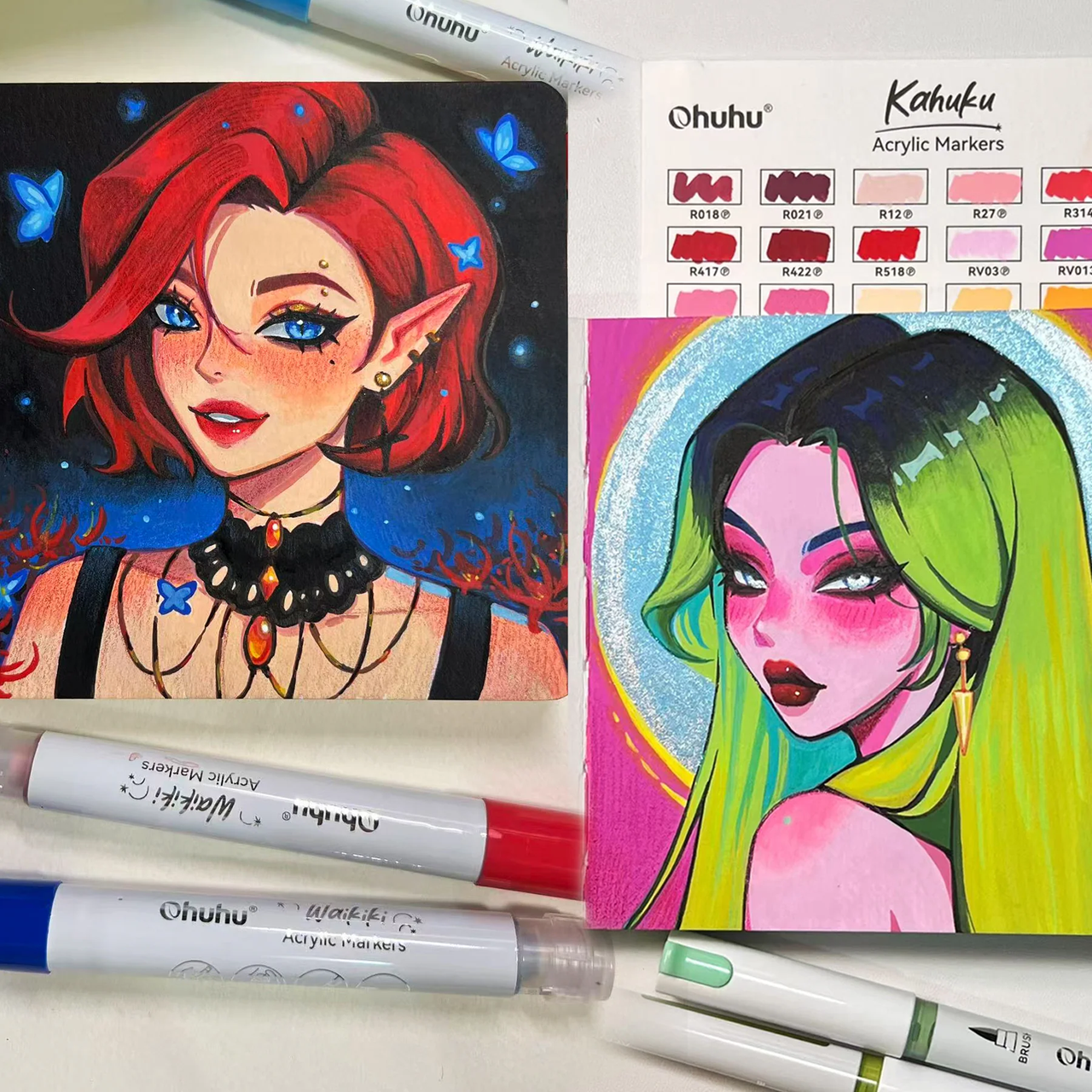
Ohuhu x Artist

After listing, "micro-innovation" must become a replicable group capability
Ohuhu, Tribit, iClever, and Sportneer target artistic creation, Bluetooth audio, children's digital products, and sports fitness respectively. The categories are diverse, but Qianke Technology groups them all under "family leisure life." Each brand serves different audiences and environments; what the group can reuse are foundational capabilities: user insights, product development processes, digital operations, supply chain collaboration, and brand building.
According to investor relations records disclosed on August 25, 2026, Qianke Technology generated revenue of 943 million RMB in the first half of 2026, up 5.57% year-over-year; net profit attributable to shareholders was 112 million RMB, down 3.14% year-over-year. The company said the revenue and profit changes are linked to increased investment in developing higher-profit products and stronger brand-building efforts.
These latest figures push Qianke Technology's challenge forward: from "how a single brand stands out" to "can proven methods be continuously replicated." The capital market offers more resources, but resources don't automatically turn into products. User problems, R&D depth, and channel structures differ across categories; Ohuhu's experience can't be simply copied to other brands.
What Qianke Technology genuinely needs to replicate is a whole set of capabilities: filtering out real problems from user feedback, turning problems into product definitions, and delivering them through R&D and supply chain. Based on currently disclosed information, the more stably this cycle runs, the greater the chance that "micro-innovation" transcends individual product life cycles and becomes a shared foundation for a multi-brand group.
Listing on the BSE gives Qianke Technology a new temporal coordinate, but it's not the end point of brand building. Whether a global brand can truly stand firm ultimately comes down to those seemingly unglamorous questions: Does it see user inconveniences earlier than others? Is it willing to invest longer in R&D and validation for minor improvements? Can it, in each delivery, make users choose it again next time?
(Original by Matui Society / October 8, 2026)
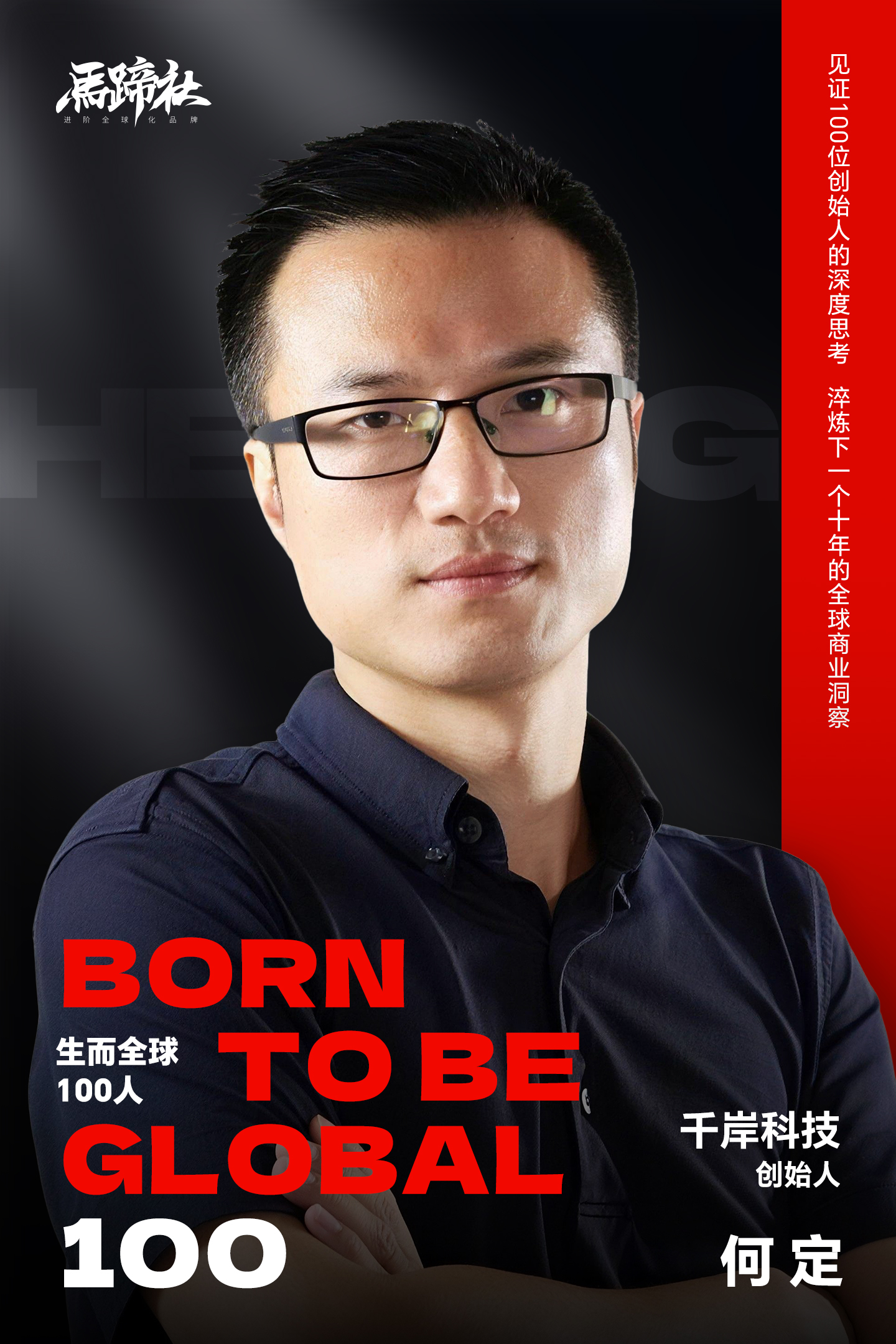
On October 29, Matui Society's study tour will visit Qianke Technology. Founder He Ding will fully unpack the critical path of Ohuhu's evolution from cross-border seller to global brand.
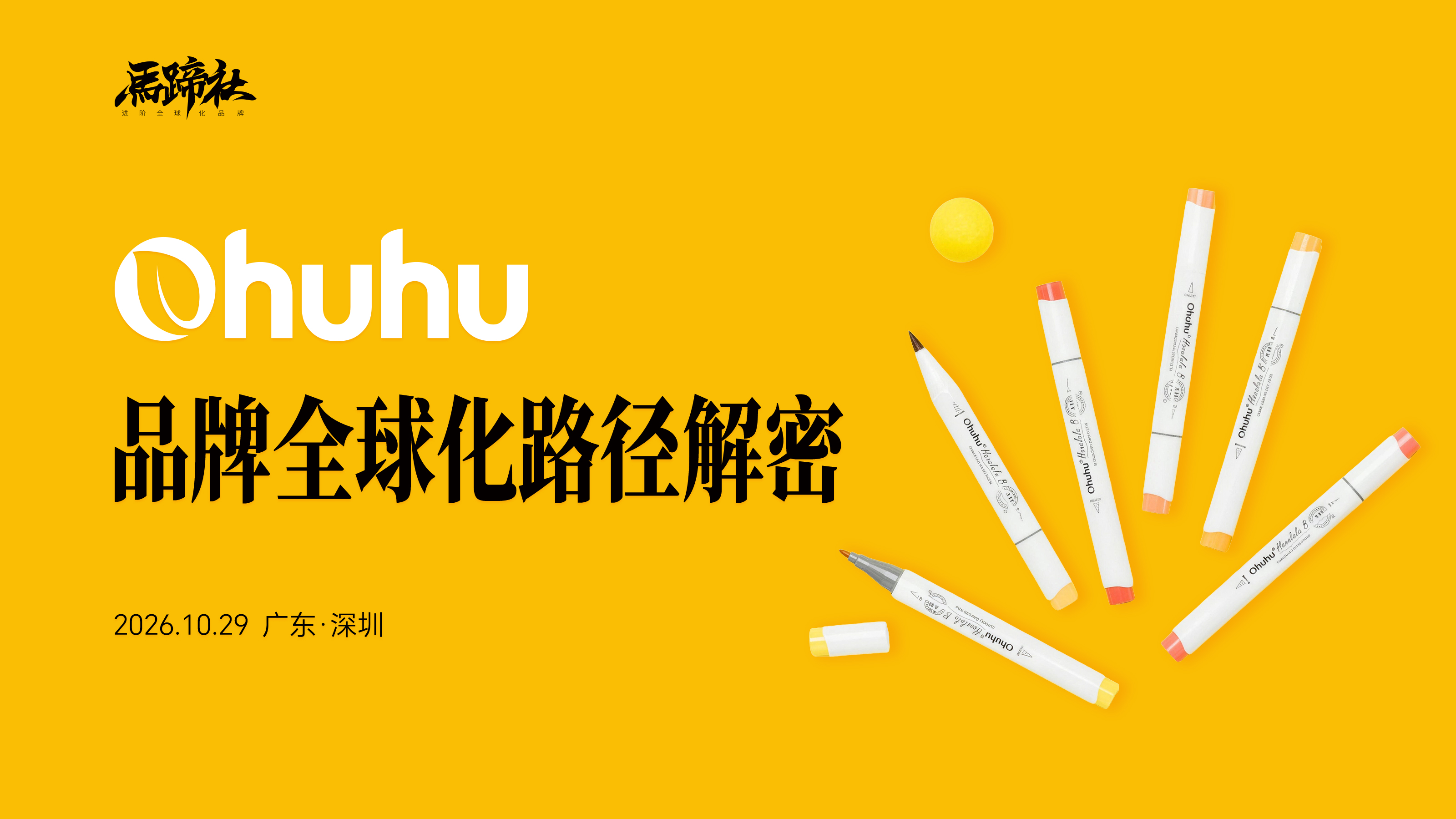
Background of the study tour
Most founders in cross-border e-commerce share a common dilemma: they can make products, but building a brand is difficult. Some believe product innovation is key—but staying far ahead of peers in R&D speed is no easy task. Others compete on price, yet traffic costs are rising, and platform policies and geopolitics directly affect profits. Where does the problem lie?
Qianke Technology, founded on cross-border e-commerce, achieved revenue of 1.981 billion RMB in 2025 and successfully listed on the Beijing Stock Exchange in July 2026. It holds four profitable categories: art materials, fitness equipment, children's headphones, and speakers. Among these, the art materials category to which Ohuhu belongs is the most traditional, niche, and lacking in technological appeal. Yet founder He Ding chose it as the key brand to build. In 2025, Ohuhu generated revenue of 824 million RMB, accounting for 40% of the company, becoming its most important pillar.
Looking back at Ohuhu, it has no hard tech like chips, algorithms, or flight controllers; its real technology lies in ink formulations. And from 48 to 320 colors, with replaceable nibs and refillable ink—these micro-innovations are things others can replicate. Its success isn't in these visible areas. Nor does it rely on low prices—its price range starts at $25 for entry-level and goes up to a $289 flagship. Yet this seemingly ordinary alcohol marker has earned the trust of American creators. What exactly did it do right?
More intriguing is this: many tech-savvy founders believe technology is a moat, but technology often leads by only one step—whether it's ink formulation or any single product innovation. Ohuhu seems to offer another answer. What kind of people did it attract? What mechanism did it build? Why did users shift from comparing prices to recognizing the brand?
This study tour will take members into Ohuhu to decode: How does a Chinese-born overseas brand earn the trust of American users in a traditional category with low technical barriers?
Study tour details
Time: October 29, 2026 (Thursday)
Location: Shenzhen
Participants: Founders, CEOs, and core decision-makers of overseas brand enterprises
Scale: Limited to 30 seats
Format: Company visit + Theme sharing + Deep dialogue + Workshop
Agenda
09:30–10:00 Sign-in and networking
10:00–10:30 Company tour and ice-breaking
10:30–11:50 Theme sharing
Why choose Ohuhu to build a brand?
Speaker: He Ding, founder of Qianke Technology
11:50–12:00 Interactive Q&A
12:00–13:30 Lunch and break
13:30–15:00 Theme sharing
How to build Ohuhu as a user-chosen brand?
Speaker: He Ding, founder of Qianke Technology
15:00–16:00 Matui Dialogue
Why is Ohuhu's moat hard to copy?
Matui Society CEO Liu Chen dialogues with He Ding, founder of Qianke Technology
16:00–17:00 Workshop (group discussion)
This course is exclusively for founders, CEOs, and core decision-makers of overseas brand enterprises, limited to 30 people.
Scan the QR code for course details.

This article was first published on the official Ebrun website.
[Copyright Notice] Ebrun advocates respecting and protecting intellectual property rights. Without permission, no one is allowed to copy, reproduce, or use the content of this website in any other way. If any copyright issues are found in the articles on this website, please provide copyright questions, identification, proof of copyright, contact information, etc. and send an email to run@ebrun.com. We will communicate and handle it in a timely manner.
Translated by AI. Feedback: run@ebrun.com