
SHEIN's First Earnings Report: Pressure in US and Europe, Latin America Emerges as New Growth Driver, Brand Empowerment Program Makes Tangible Progress
[Ebrun Original] Recently, Xinyin International Holdings Limited (00625.HK) released its interim report for 2026, marking its first earnings disclosure since listing on the Hong Kong Stock Exchange. In the first half of the year, the company reported net revenue of $20.134 billion, up 1.0% year-over-year; net profit of $2.299 billion, up 111.7% year-over-year; adjusted net profit of $499 million, down 55.6% year-over-year; and total orders reached 549 million, up 6.4% year-over-year. Following the earnings release, SHEIN's stock price fell over 10%.
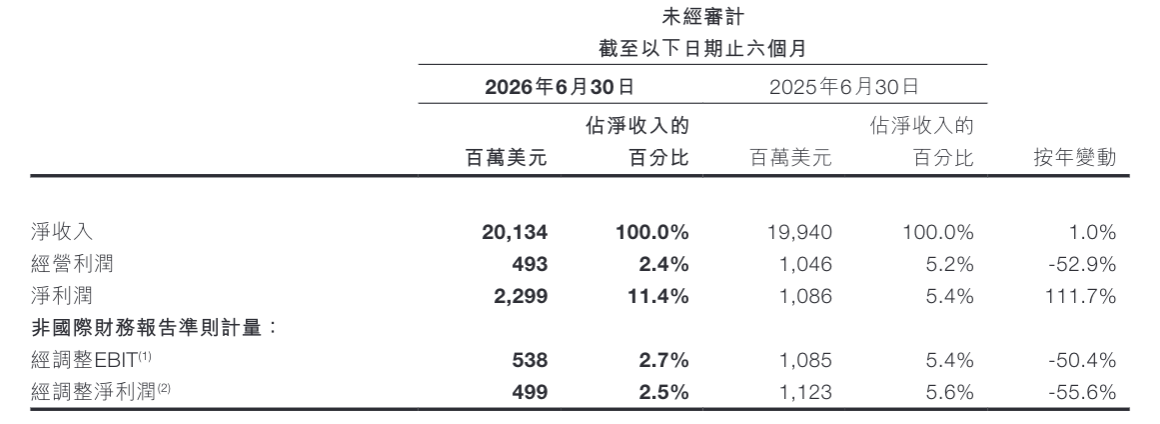
Looking at the second quarter alone, net revenue was $11.082 billion, up 0.9% year-over-year; net profit was $2.398 billion, up 247% year-over-year; adjusted net profit was $228 million, down 66.6% year-over-year; and total orders reached 298 million, up 7.6% year-over-year.
The report noted that the slower net revenue growth compared to order growth is attributed to the increasing share of the marketplace business model, where service revenue is recognized rather than merchandise sales. However, SHEIN emphasized that in the long term, self-operated business will remain the core, with the marketplace and brand empowerment services as integral parts of the ecosystem.
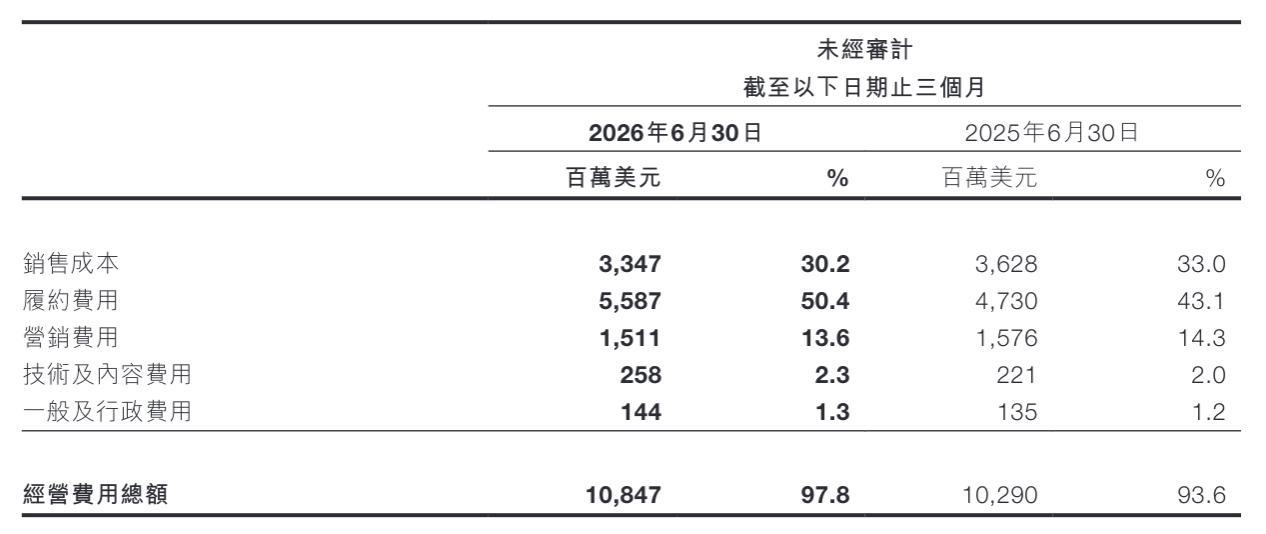
In terms of operating expenses, in the second quarter, cost of sales was $3.347 billion, down 7.7% year-over-year, accounting for 30.2% of net revenue; the decline was driven by the increased share of the marketplace model, pricing adjustments, and cost optimization. Marketing expenses were $1.511 billion, down 4.1% year-over-year, representing 13.6% of net revenue. Fulfillment expenses were $5.587 billion, up 18.1% year-over-year, accounting for 50.4% of net revenue, primarily due to order volume growth and higher oil prices and freight costs stemming from the Iran conflict. The report indicated that SHEIN chose to absorb these temporary costs rather than pass them on to consumers to maintain stable pricing and sustain order growth momentum.
By business segment, in the second quarter, product revenue was $9.676 billion, down 3.4% year-over-year; service revenue was $1.406 billion, up 44.2% year-over-year, accounting for 12.7% of net revenue.
Geographically, in the second quarter, net revenue from the United States was $2.474 billion, down 6.0% year-over-year, representing 22.3% of total; Europe contributed $3.770 billion, down 13.9% year-over-year, accounting for 34.0%; and other regions brought in $4.838 billion, up 21.6% year-over-year, representing 43.7%.
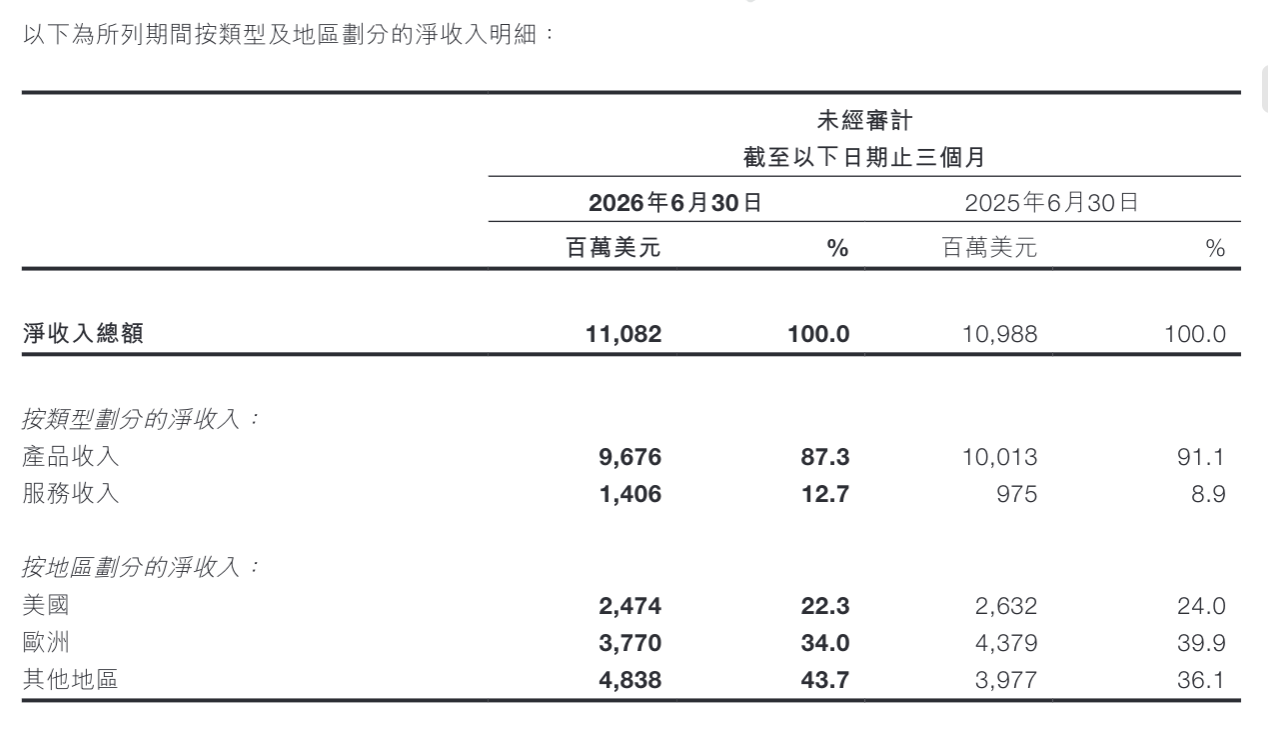
The report explained that the decline in U.S. revenue was mainly due to tariff impacts and the increased share of the marketplace model; the European decline was linked to the EU's removal of the duty exemption for low-value goods under ?150, effective July 1, 2026, prompting the company to raise product prices and cut online advertising spending, leading to lower sales. Growth in other regions was primarily driven by Latin America, though partially offset by the impact of the Iran conflict on the Middle East market.
SHEIN again emphasized its proprietary LATR model, i.e., 'Large-scale Automated Small-Batch Quick Return.' The company continues to invest in and optimize the two pillars of this model: intelligent supply chain and global fulfillment network. On the supply side, it has implemented centralized procurement, intelligent cutting systems, and simplified supplier management structures; on the fulfillment side, it has enhanced local inventory coverage in Europe and deployed robotic picking and automated sorting in warehouses.
Additionally, the report disclosed progress on SHEIN's brand empowerment program. In the second quarter, the program achieved tangible progress—the company integrated its LATR supply chain system with the DesignX creative system, enabling partner brands and designers to leverage intelligent systems to optimize workflows and shorten the design-to-market cycle. Women's apparel brand AiRZ recorded over 50% year-over-year order growth in the second quarter; newer partners such as KIZN, BabyPhat, and FashionSZN also posted record sales.
Among owned brands, MUSERA expanded into sportswear, while Aloruh broadened into swimwear, sleepwear, activewear, and occasion wear, both achieving strong growth in the second quarter.
Looking ahead to the second half of 2026, the external environment remains uncertain, with tariff headwinds and logistics cost volatility likely to persist. The fourth quarter, which includes Double 11, Black Friday, Cyber Monday, and the Christmas season, remains the company's most critical promotional window and is expected to drive a significant surge in order volume.
SHEIN maintains a cautiously optimistic outlook for adjusted net profit in the second half of 2026. Over the next one to two years, management's focus areas will include broadening the price band, strengthening quality and compliance, and optimizing consumer communications.
Ebrun will continue to track and report on this intelligence. For more information related to this article, please scan the code to follow the author on WeChat.

This article was first published on the official Ebrun website.
[Copyright Notice] Ebrun advocates respecting and protecting intellectual property rights. Without permission, no one is allowed to copy, reproduce, or use the content of this website in any other way. If any copyright issues are found in the articles on this website, please provide copyright questions, identification, proof of copyright, contact information, etc. and send an email to run@ebrun.com. We will communicate and handle it in a timely manner.
Translated by AI. Feedback: run@ebrun.com