
AI Empowerment and Four Major Upgrades: New Growth Opportunities for Merchants on JD.com
By Zheng Ya Edited by Shi Lei
[Ebrun Original] In an era of intensifying competition for existing market share and widespread "traffic anxiety" among merchants, securing high-quality, deterministic growth amidst uncertainty has become a core challenge for the entire e-commerce industry.
UR's explosive sales of over 40 million yuan during JD.com's Super Brand Day provides a tangible answer—by kicking off growth with a strategy of "integrated marketing across internal and external channels," UR has charted a robust growth trajectory.
This is not an isolated case. Data shows that in the first half of 2026, the number of merchants on JD.com achieving sales exceeding 100 million yuan grew by double digits year-on-year, and new merchants joining in the past year increased by over 30%. More than 100 sub-categories, including women's apparel, outdoor clothing, and pet supplies, saw triple-digit growth. The collective surge of brands on the platform underscores the resilience of JD.com's merchant ecosystem.
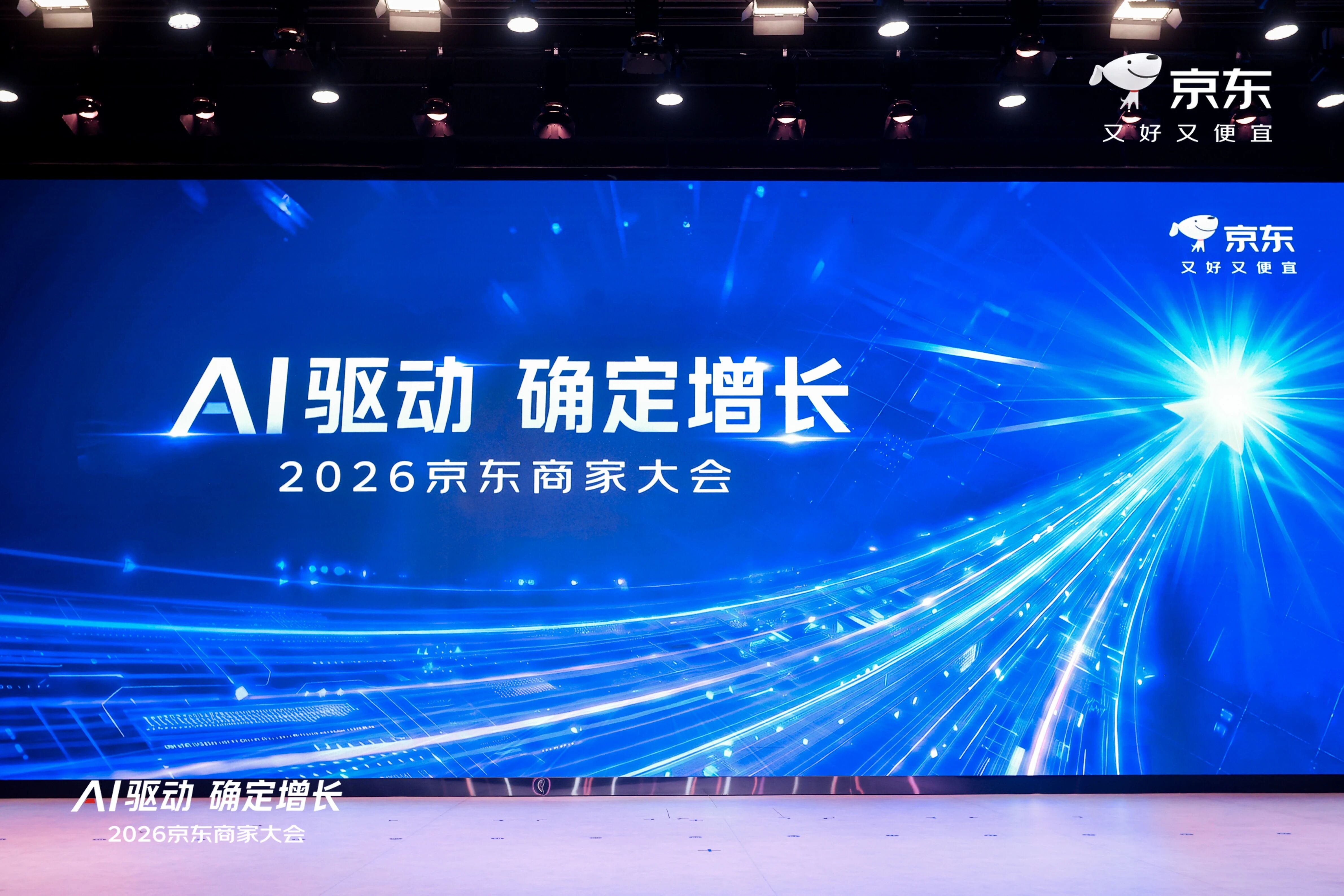
At the recent 2026 JD Merchant Conference, JD.com unveiled four major upgrade initiatives: platform value proposition, collaboration between first-party (self-operated) and POP (third-party) models, increased support investment, and optimized business environment, alongside several AI-powered business tools, aiming to build a full-link deterministic growth path for merchants. As JD.com Group SEC Vice Chairman and CEO Xu Ran stated, fostering a thriving merchant ecosystem is JD.com's core strategy, and the platform will work with merchants to co-create refined growth and achieve long-term win-win outcomes.
01
Four Major Upgrades for Sustainable High-Quality Operations
Amid fierce traffic competition, JD.com has launched upgrades across four dimensions—platform value proposition, self-operated and POP collaboration, increased support investment, and business environment optimization—to foster a sustainable growth ecosystem for merchants.
In terms of platform value proposition, JD.com has significantly upgraded its store star rating model. First, it emphasizes high repurchase rates: regardless of industry, merchants who excel at driving repeat purchases have the opportunity to earn higher star ratings. Second, the review system now better aligns with industry characteristics. JD.com has added bonus points for industry-specific services, allowing the star rating calculation to vary based on sector traits, such as integrated delivery-and-installation services for 3C electronics and home appliances, or money-back guarantees for food products if customers are unsatisfied.
Through this upgraded star rating model, JD.com aims to ensure that good stores receive more deterministic traffic and that excellent experiences translate into increased business growth. In merchant operations and competition, the store star rating model acts like a traffic conductor, influencing the allocation of traffic to products and stores. Comparatively, stores with higher ratings see an average of 5.1 times more page views (PV) than those with lower ratings.

For example, a flagship computer store improved its after-sales process and strengthened customer communication, raising its star rating from 3.5 to 4.7 stars. This upgrade led to a 2.7-fold increase in total product detail page PV and a 3.17-fold rise in GMV.
On the self-operated and POP collaboration front, in addition to the "Attract Phoenix Plan" and "Jingcang Jingpei" logistics policies, JD.com introduced the "Brand 1+1+N" traffic integration tool to boost POP store exposure. This tool builds a matrix of "POP store + self-operated store + seconds-delivery store," enabling cross-linking and traffic redirection between stores and products on store homepages and product detail pages. Currently, over 8,000 brands have completed the integration upgrade, driving a 40%+ increase in 30-day sell-through units for new POP products and a 10% rise in store UV.
Regarding increased support investment, JD.com focuses on merchant training to help more sellers master sustainable growth strategies, while also offering incentive policies to inject momentum and vitality into merchant operations.
For training, JD.com has distilled its "Merchant Growth PLUS Methodology" based on four stages: Product planning (P), Stable daily sales (L), Brand growth (U), and Platform enablement (S). For each stage, the platform has outlined eight key tactics, including product matrix planning and store user operations. With supporting training courses and a coaching system, JD.com's specialized coaching program has been implemented in over a hundred sessions, covering tens of thousands of merchants, with participating stores achieving year-on-year GMV growth exceeding 21%.
UR has already leveraged these eight tactics to drive business growth. In its marketing strategy, UR uses off-platform traffic generation and content marketing tactics to efficiently convert new customers attracted through external content seeding. UR continuously invests in celebrity livestreams, influencer matrices, and fashion styling content off-platform to draw new customers to JD.com, where it converts and retains them through livestreams and other touchpoints.
Thanks to this approach, UR saw a 387% increase in new customers from external channels on JD.com. During peak campaign moments, sales introduced from external platforms can account for up to 30% of UR's store revenue.
In terms of incentive policies, JD.com has aligned multiple differentiated policies for new merchants, high-potential merchants, and top-tier merchants, with a continued investment of 10 billion yuan to genuinely support merchant growth. Notably, the "Spring Dawn Plan" for new merchants has cumulatively saved them over 18.1 billion yuan in costs.
JD.com also places significant emphasis on optimizing the business environment. On one hand, it has made substantial efforts to listen to merchant feedback through multiple channels to resolve various bottlenecks in their operations. Data shows that in the first half of this year, JD.com collected over 2.08 million pieces of merchant feedback, reducing merchant complaint volumes by more than 20% year-on-year. On the other hand, JD.com launched three operational safeguard tools—"Malicious Order Prevention," "Malicious Return Prevention," and "Malicious Claim Prevention"—to provide merchants with a secure business environment.
As the head of UR's online retail operations noted: "Competition in the apparel industry will only intensify. Relying on a single brand or channel alone won't sustain a lead. Those with real potential to go further will always be those who combine brand, platform, and supply chain capabilities into a unified force."
02
AI Operational Capabilities to Help Merchants Scale Up
In the AI era, JD.com is also exploring how to enable merchants to leverage AI tools tailored to real business scenarios, delivering superior shopping experiences and accelerating growth.
AI is reshaping the shopping entry point: consumers no longer just search for specific keywords but instead express complete shopping needs to AI systems to find more precise products. To help merchants better understand user intent and provide a more seamless shopping experience, JD.com revamped its app with AI before the 11.11 shopping festival, launching the AI shopping assistant "Dongdong."
Recognizing the trend toward agentic e-commerce, JD.com introduced a hybrid dual-engine model: GUI (graphical user interface for shelf-based shopping) + CUI (conversational user interface for AI agents). In the JD app, GUI leverages mature search and recommendation models for traffic distribution and efficient transaction conversion. CUI, powered by AI models, handles complex demand comprehension and problem decomposition. Under this dual-engine model, the platform integrates AI capabilities across the entire chain, from need generation and product selection to purchase decisions and fulfillment services.
On AI tools, JD.com launched the Jingmai AI Business Center for merchants in July, extending AI tool coverage across the full operational chain, from product selection, listing creation, and operations to fulfillment and after-sales. Recently, the Jingmai AI Business Center was upgraded again, opening dozens of core AI tools to merchants and officially debuting the first batch of Jingmai AI Expert Teams.
For instance, in the product listing phase, the AI design agent "Jingdian Dian" helps merchants identify different target audiences for the same product and generate differentiated assets, while also enabling A/B testing of advertising strategies to inform downstream operations. Data shows that "Jingdian Dian" reduced merchants' content production costs by 99% and boosted overall operational efficiency by over 10 times.
It is reported that with AI tools, JD.com aims to drive a year-on-year increase of over 60% in the number of new merchants achieving sales exceeding 1 million yuan during the 11.11 festival. Additionally, at this merchant conference, JD.com systematically elaborated on its newly upgraded marketing service system, centered on "refined growth, sustained innovation, and AI-driven strategies," designed to provide merchants with a more deterministic growth environment, long-term business security, and more stable return cycles.
Since the start of this year, JD.com has fully upgraded its marketing service system, leveraging the "5+N+X" fine-grained audience segmentation strategy. This covers five high-growth demographic segments—JD PLUS members, campus users, seniors, women, and lower-tier market consumers—along with long-cultivated high-value customers and incremental audiences that AI models can infer but have yet to be precisely targeted, helping merchants refine their growth pathways. Concurrently, JD.com has closed the loop from content seeding, trend absorption, AI recommendations, to transaction conversion, using an intelligent ad matrix and omnichannel integrated marketing to help merchants precisely reach target users, improve marketing efficiency, and ultimately achieve comprehensive business growth.
For example, in new product development, the upgraded approach of "online-offline integration, AI-driven precision, and omnichannel new product operations" enables JD.com to cover the full lifecycle of new products from seeding to sustained sales, making product launches faster, sales cycles longer, and returns more certain. In content seeding, JD.com has upgraded three content products—Reviews, Circles, and Cover Gallery—along with content seeding marketing tools, creating a content ecosystem closer to transactions. Results from early seed advertisers have been promising: campaign volume capabilities have increased 3-5 times, seeding costs have dropped by over 50%, and new customer concentration has exceeded 70%.
Additionally, recognizing that consumers increasingly turn to AI for purchase decisions, JD.com has added GEO marketing to its off-platform seeding toolkit. This helps brands secure priority recommendations in the AI era by diagnosing brand information, uncovering scenarios, and selecting queries to anticipate demand, enabling brands to capitalize on traffic trends and drive conversions.
Haier has already achieved incremental business growth on JD.com through GEO marketing. The head of Haier Air Conditioning's large HVAC division noted that the core of GEO is systematically making brand information understandable, trustworthy, and actively citable by AI, enabling recommendation leaps. He summarized Haier AC's GEO strategy as a five-step method—from being seen, understood, trusted, remembered, to recommended.
This approach quickly delivered results: when Haier's Comfort Breeze 1.5 HP wall-mounted unit launched on JD.com, the company created six exclusive product keywords, selling over 10,000 units within the first 28 hours.
03
JD.com Reshapes Merchant Growth Curves with Multiple Blue Ocean Opportunities
At the 2026 JD Merchant Conference, a cohort of brands has already seized blue ocean opportunities on JD.com, identifying fresh growth points. Among these opportunities, two scenarios stand out: instant retail, which opens up online-offline integration avenues for merchants, and cross-border e-commerce expansion.
In the instant retail space, the head of Mengniu's online platform highlighted the richness of food delivery scenarios at the conference. During Mengniu's World Cup marketing campaign this year, when external traffic flowed into JD.com, Mengniu opted to integrate e-commerce and instant retail scenarios. Thanks to differentiated product specifications, the two channels didn't cannibalize each other's users but instead contributed incremental sales to the brand's overall performance.
Additionally, Mengniu collaborated with Qixian Kitchen, using its channel to showcase World Cup-themed products online and distribute trial samples with meal deliveries. This created a closed loop connecting marketing to distribution while unlocking additional sales growth opportunities.
According to JD.com's head of instant retail user operations, the value of instant retail lies in three key aspects:
First, it doesn't simply redivide the shelf e-commerce base but generates new sales increments for brands through an entirely new model;
Second, it addresses users' urgent needs, complementing traditional shelf e-commerce;
Third, it helps brands consolidate fragmented offline users into online channels, enabling deeper user engagement.
In cross-border e-commerce, JD.com currently operates JD Joybuy for the European market, the JD Worldwide service covering over 30 countries, and dedicated operations for Hong Kong, Macao, and Taiwan.
The head of Zoyi Home Furnishing noted that JD Joybuy's same-day and next-day delivery network in Europe has delivered a superior large-item shopping experience for local customers. Within a year, Zoyi's sales on JD Joybuy exceeded 100 million yuan.
The head of luggage brand tomtoc added that JD.com not only provides absolute advantages in warehousing and logistics for exporting brands but also acts as a co-builder, efficiently collaborating with brands to help them enter new markets.
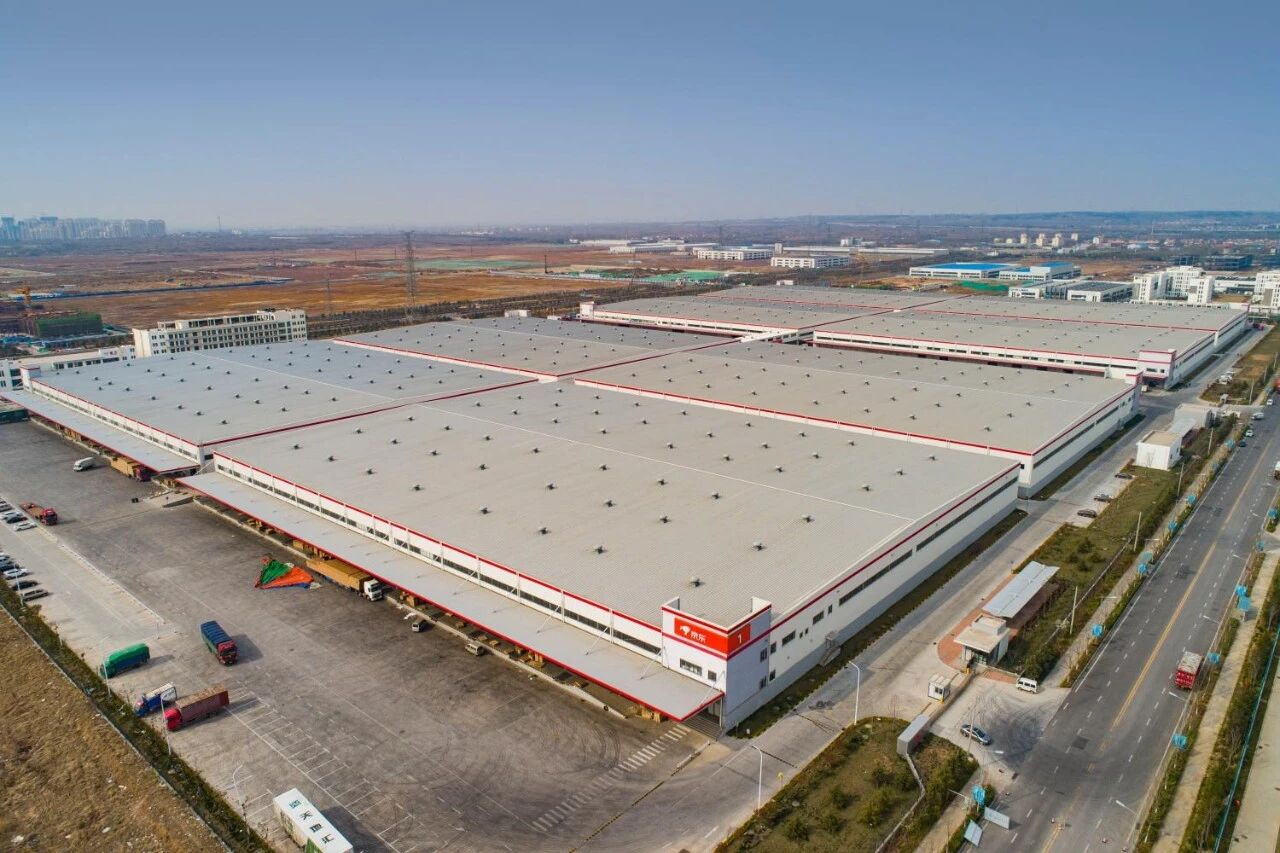
For merchants navigating the era of intensifying stock competition, relying solely on channel expansion is no longer sufficient to break growth bottlenecks. Whether a platform can deliver high-quality and sustainable increments has become the decisive factor in brand retention. Through its revamped store star rating model, full-chain AI tool integration, and expansion into instant retail and overseas scenarios, JD.com is evolving from a simple transaction channel into a commercial infrastructure deeply embedded in brand lifecycle management.
As e-commerce competition shifts to a battleground of supply chain, technology, and omnichannel capabilities, JD.com's ecosystem synergy—combining determinism with innovation—not only offers a clear path for brands to overcome anxiety but also provides a replicable industry benchmark for the symbiotic relationship between platforms and merchants in a limited-growth era.
This article was originally published on the Ebrun official website.
[Copyright Notice] Ebrun advocates respecting and protecting intellectual property rights. Without permission, no one is allowed to copy, reproduce, or use the content of this website in any other way. If any copyright issues are found in the articles on this website, please provide copyright questions, identification, proof of copyright, contact information, etc. and send an email to run@ebrun.com. We will communicate and handle it in a timely manner.
Translated by AI. Feedback: run@ebrun.com