
SmallRig Global Imaging Scenario Industry Conference: Scenario Expansion, New Species Emerge, Imaging Equipment Ushers in Volume Growth
[Ebrun Original] Recently, the third Global Imaging Scenario Industry Conference (2026, hereafter referred to as the "Conference"), hosted by SmallRig, was held in Shenzhen. With the theme "Connect & Coexist & New Boundaries," the Conference focused on content production, product innovation, commercial validation, and talent development, spotlighting ongoing scenario shifts in the imaging hardware industry and how new technologies and demands are further expanding industry boundaries. In the afternoon, three parallel themed sessions were held on technology, cultural creativity, and talent.
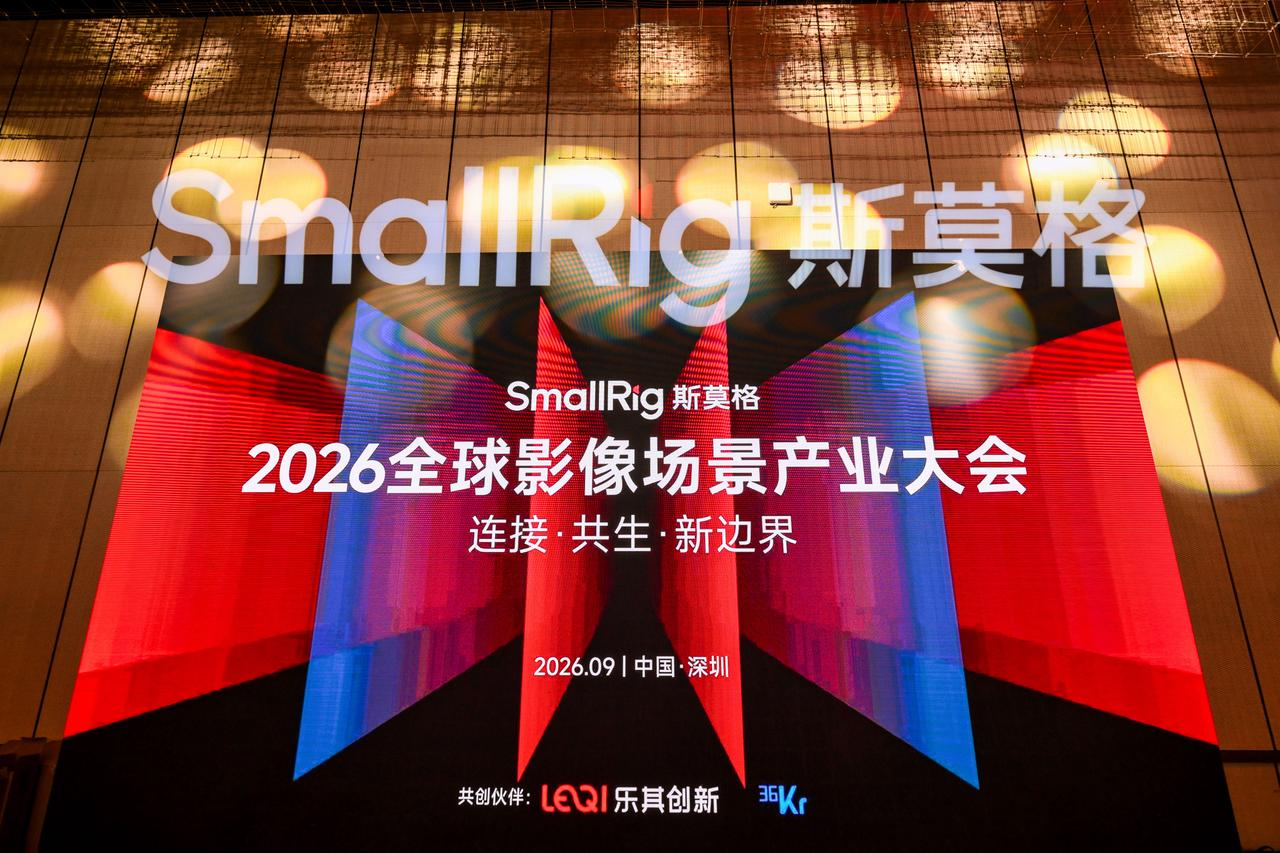
SmallRig Third Global Imaging Scenario Industry Conference (2026) Imaging Scenario Products & Cultural Creativity Session
01 Entering Every Industry, Tapping Ecosystem Growth: Imaging Scenario Industry Ushers in the "Best Era"
At the Conference, SmallRig disclosed its latest business data: over the past five years, the company has maintained a compound annual growth rate of approximately 30%. Beyond its own continuous innovation, this growth is closely linked to the industry trend of expanding imaging scenarios. In his address, Zhou Yang, Founder and CEO of Lerq Innovation SmallRig, stated that the professional-grade imaging market is converging with the mass-market imaging market, and the imaging scenario industry is ushering in a "best era": capture devices, equipment, and software/hardware tools are entering a faster innovation cycle, attracting more production factors and innovative activities into the imaging scenario industry. In his view, "Without scenario development, there is no industry development; without a large industry, there are no large enterprises; without a productivity boom, there is no scalable value creation."
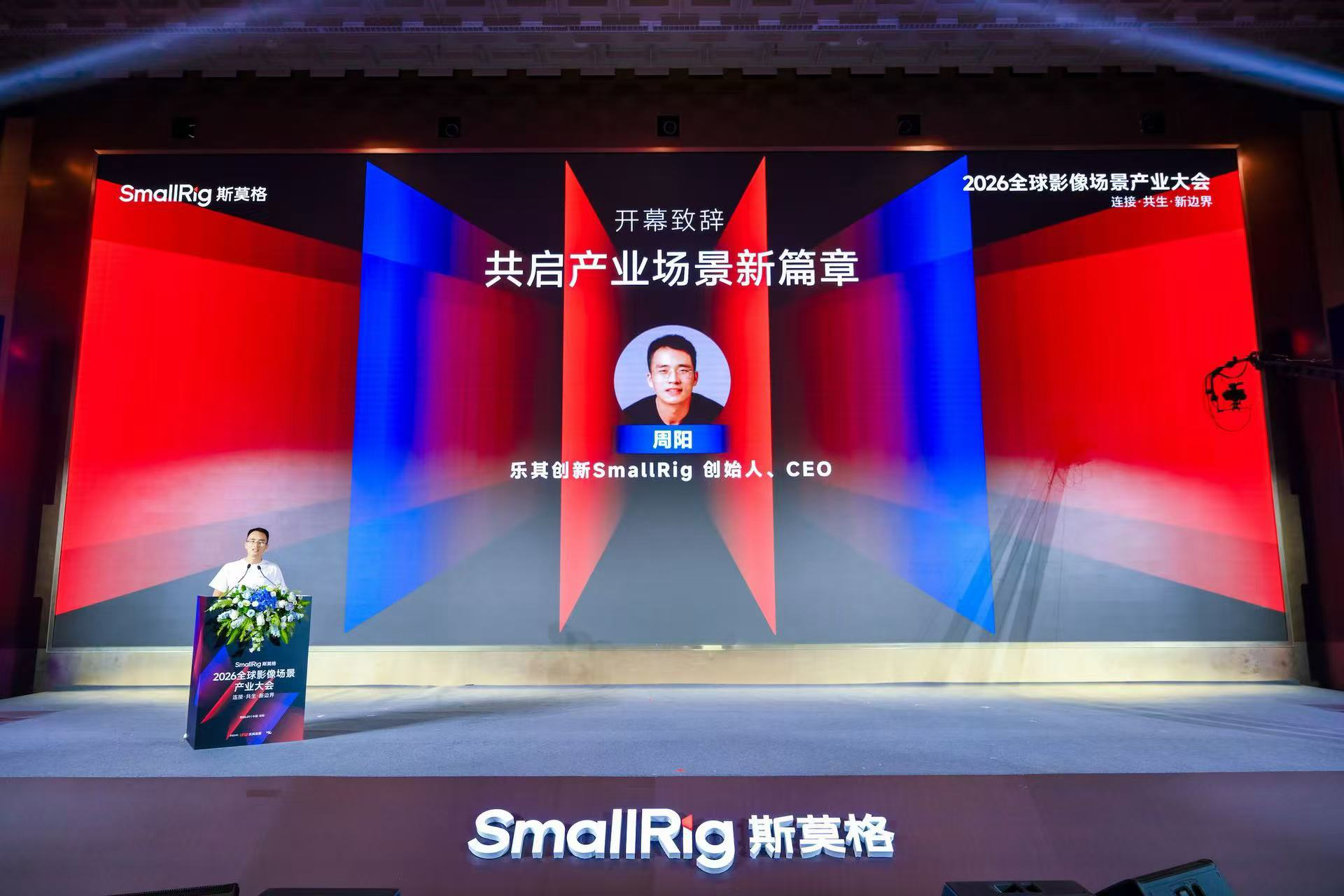
Zhou Yang, Founder and CEO of Lerq Innovation SmallRig, delivering the opening address at the SmallRig Third Global Imaging Scenario Industry Conference
In the past, advancements in imaging hardware products often revolved around image quality, performance, and specifications. Today, new demands such as cycling, live streaming, short dramas, aerospace documentation, and even machine vision are beginning to reversely drive changes in product forms and workflows. Where creators shoot, how they move, how they capture sound and transmit, and whether equipment can operate stably under complex or even extreme conditions are all becoming part of product definition. This means that with the accelerated proliferation of imaging for all, the continuous iteration of creative demands, and the ever-finer segmentation of application scenarios, the logic defining the imaging hardware industry is changing: from a device-centric approach to a scenario-centric one. Consequently, the key to the next round of competition is not just what form the next-generation device will take, but who can enter real scenarios earlier, identify unmet needs, and translate technology into products that are genuinely used.
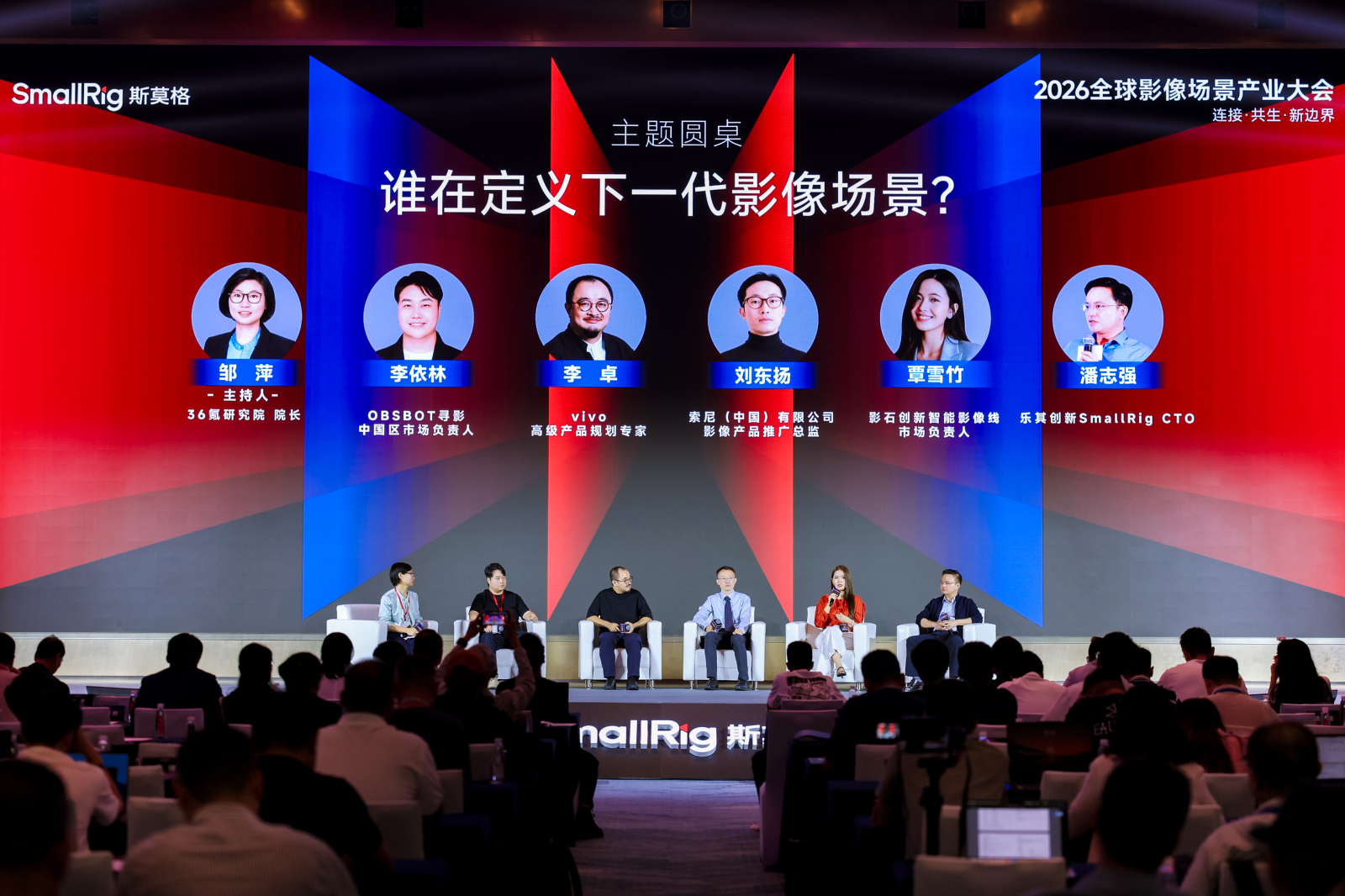
SmallRig Third Global Imaging Scenario Industry Conference: Keynote Roundtable "Who Defines the Next-Generation Imaging Scenario?"
In his written address, Li Ge, Vice Chairman of the China Federation of Literary and Art Circles and Chairman of the China Photographers Association, also noted that the imaging scenario industry is transitioning from a single growth model driven by technology iteration, equipment updates, and market competition into a new growth cycle jointly propelled by scenario innovation, cross-sector integration, ecosystem symbiosis, and full-scale expansion. "The mainframes, accessories, and equipment we understood in the past will undergo many category changes, as well as changes in industry services. The capacity of this track in the future cannot be defined by past experience or past practice," Li Ge said frankly. He added that what truly defines the industry's future is not the stock of old business forms but the increment of new ecosystems; not the scale of leading enterprises but how many cross-sector entities, new forces, and innovative tracks can be absorbed; and also whether it can stimulate the release of national creativity and the reconstruction of industry rules. "I remain full of confidence and anticipation for the development of the next five years. In particular, trends such as the shift of professional-grade imaging production toward lightweight production and the descent of imaging capture products from tool-oriented to consumer-grade are especially noteworthy. Whether imaging equipment can enter every industry, even into industrial and agricultural application scenarios, is precisely the question we need to explore," Zhou Yang said optimistically.
02 Beyond Traditional Industry Horizons: "New Species" Emerge in Abundance, Imaging Auxiliary Equipment Sees Volume Growth
At the Conference, Zhou Yang, Founder and CEO of Lerq Innovation SmallRig, and co-founder Gao Haiyan jointly released the "SmallRig Global Top 12 Imaging Scenarios Report," which outlines the most vibrant and promising scenarios in the current imaging creation field.
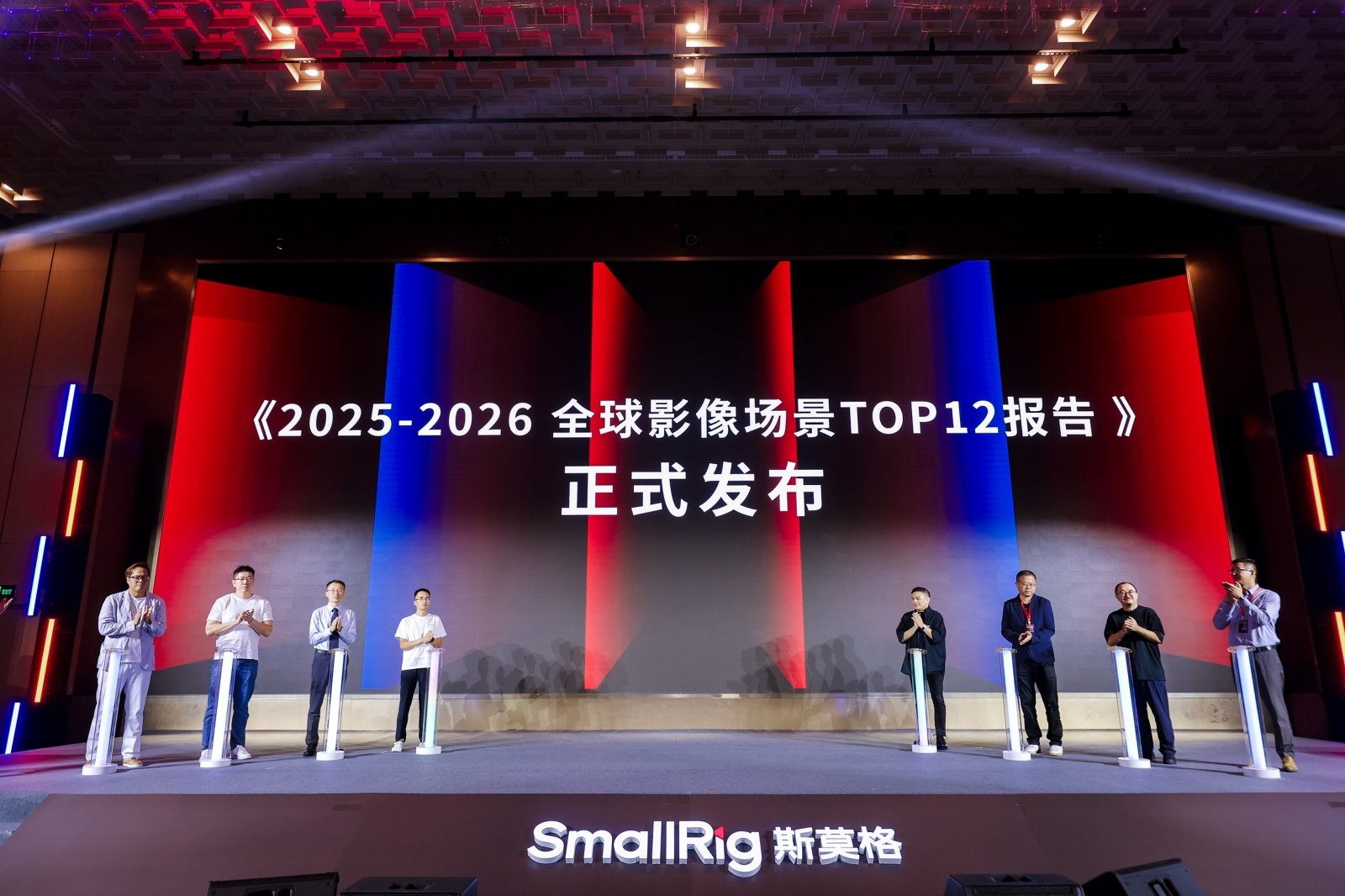
The 2026 Global Imaging Scenario Industry Conference released the "SmallRig Global Top 12 Imaging Scenarios Report"
The report includes 12 ongoing creation scenarios in its annual observation: life documentation, instant live streaming, intangible cultural heritage and folk customs, leisure sports, extreme sports, interest circles, live performance scenes, story interpretation, micro-short dramas, public welfare documentaries, ecological photography, and special imaging. It also distills four annual keywords: "mobile cinema," "downward expansion of professional institutions," "creator popularization," and "AI-driven imaging creation." Citing data, the report notes that as of the end of 2024, the number of short-video creator accounts in China had reached 16.2 billion, with over 130 million short videos going live daily. Meanwhile, the "2026 China Imaging Scenario Research" released by 36Kr Research Institute offers another set of judgments from the industry side: the next five years will become a "window of opportunity" for large-scale volume growth in the domestic imaging hardware market—especially with peripheral equipment expected to grow at 9.2%, outpacing mainframes. The continuous expansion of imaging creation demographics and scenarios is also bringing the imaging scenario industry beyond traditional industries. A notable change is that products are no longer just formed with a fixed set of capabilities and then matched to usage; increasingly, demands from real scenarios are entering product development and validation earlier in the process. Companies such as Photon Transition, LandSpace, and Hypershell are attempting to combine imaging equipment with AI, aerospace launches, exoskeletons, and other technologies and application scenarios, exploring the intersections of the imaging scenario industry.
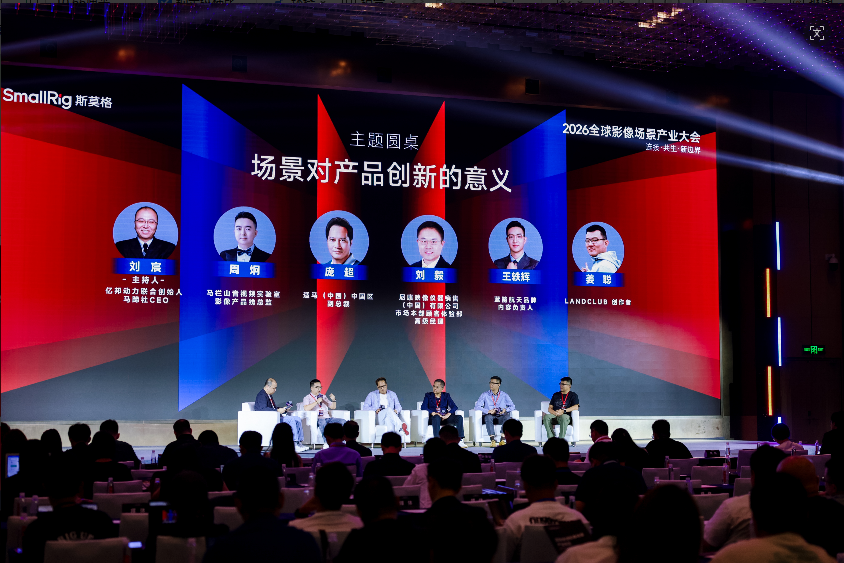
SmallRig Third Global Imaging Scenario Industry Conference: Keynote Roundtable "The Significance of Scenarios to Product Innovation"
In the view of Yuan Qian, President of Photon Transition, AI is changing the boundaries of camera capabilities. "We hope to combine imaging with AI," Yuan Qian stated. He noted that in the past, imaging equipment focused more on improving image quality and output, but with AI support, cameras can further advance from "capturing things" to "understanding things." "This is our important R&D direction. In the past, cameras relied on people bringing their own brains to compose and create; next, we only need to give the camera a command, and it can compose, optimize, and complete post-processing on its own," Yuan Qian explained.
The changes brought by AI also extend beyond functional equipment features to potentially alter the interaction between imaging devices and users. "We previously considered imaging products as tools; in the future, all imaging equipment will be companions to users," Yuan Qian said, expressing hope that AI can bridge and bridge the cognitive and aesthetic gap between ordinary users and professional photographers, solving the problem of "ordinary users not being able to produce good results even with good equipment."
If AI is extending the "cognitive capabilities" of imaging devices, exoskeletons aim to further push the physical boundaries of creators themselves.
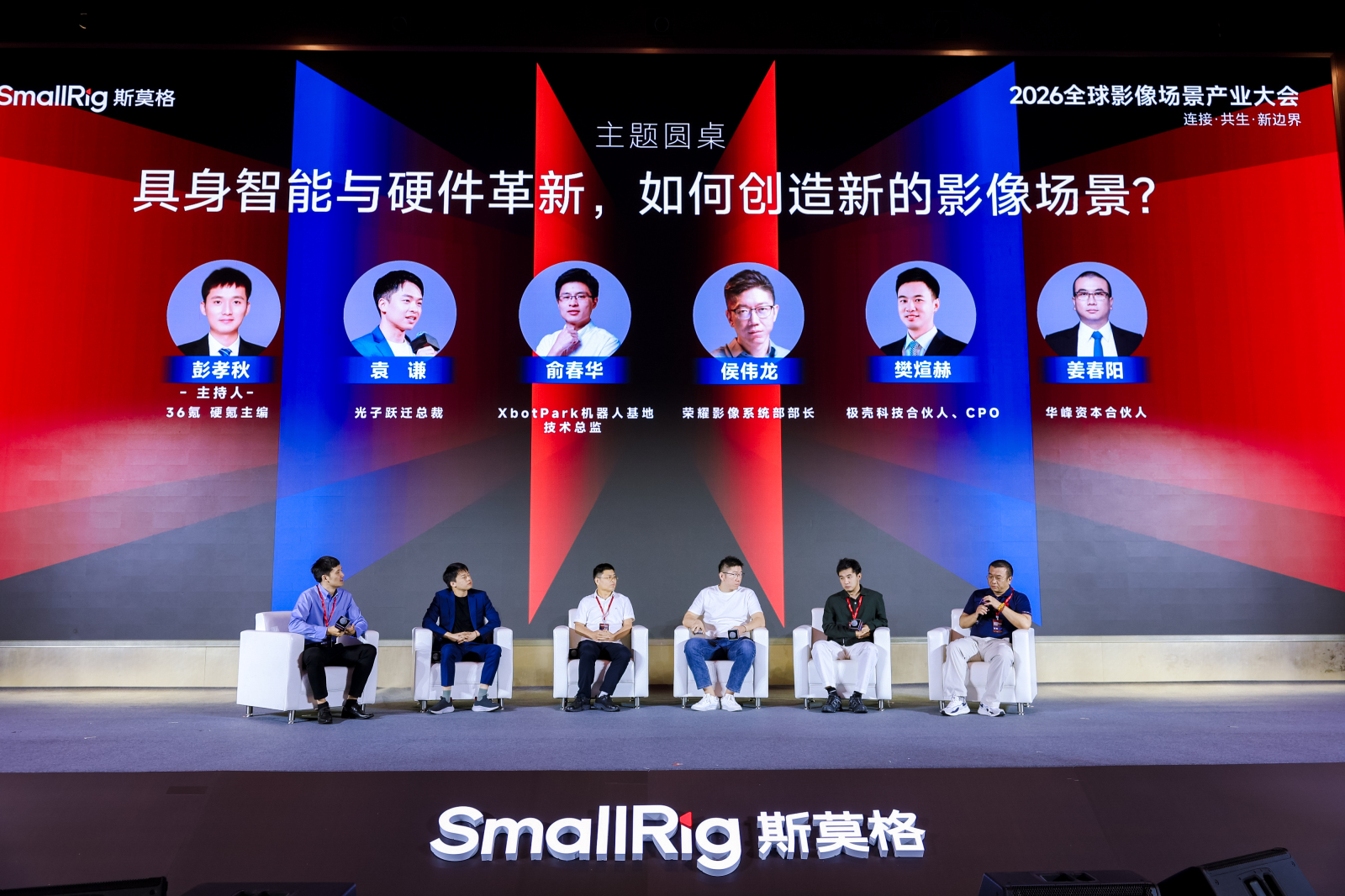
Keynote Roundtable "Embodied Intelligence and Hardware Innovation: How to Create New Imaging Scenarios?"
Fan Xuanhe, Partner and CPO of Hypershell Technology, stated that as a consumer-grade exoskeleton brand, Hypershell's connection to the imaging scenario industry also stems from user needs in real scenarios. "We found that many outdoor photographers are recording the most precious moments in extreme environments. To some extent, for photography creators, the true hardware is their own bodies," Fan Xuanhe said. He noted that some experienced and artistically tasteful creators may, as they age and their mobility declines, no longer be able to reach the most suitable vantage points or fully execute their creative visions. "The physical energy, stamina, and creativity of the human body greatly affect the state of creation. What we are doing is using exoskeleton and AI power to help creators carry out their will and explore imaging art—this is a perfect combination scenario for the exoskeleton and imaging hardware industries," he pointed out.
03 Open Co-Creation: A Long-Term Proposition for the Imaging Scenario Ecosystem
Technology never naturally evolves into a mature scenario. Whether a technology can truly land often depends not only on how advanced it is but also on whether it can meet real demands. Today, a new round of productivity is seeking application outlets, and the ever-emerging new imaging scenarios are becoming important carriers for absorbing technological and productivity shifts. However, from technology to product, and from product to scaled application, there remains a considerable gap. For many entrepreneurial teams with technology and creativity, completing the journey from concept validation to mass production and then to demand validation in real scenarios is often the hardest hurdle to cross in commercialization. In this process, the participation of the demand side is particularly crucial.
As a representative of the "major client" in the domestic imaging equipment field, Long Hongliang, Manager of the Expansion Department at Hunan Radio and Television Group's Technical Dispatch Center, stated that broadcasting and television imaging equipment undergoes rapid iteration with substantial demand. "Originally, broadcasting belonged to the professional domain with a relatively clear boundary from consumer-grade equipment, but as C-end products and technologies become more advanced, the market is also pushing B-side to adopt lightweight, consumer-oriented, AI-enabled new equipment."
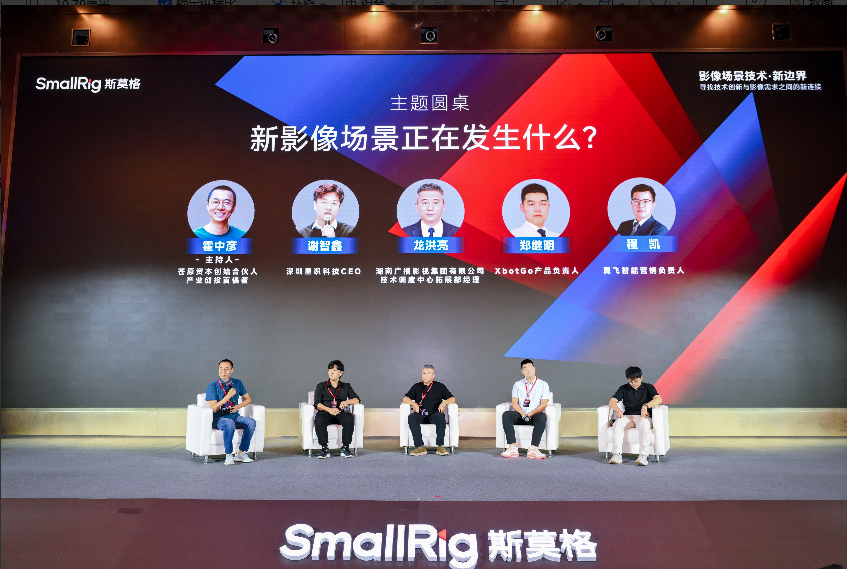
Thematic Roundtable "What Is Happening in New Imaging Scenarios?"
In his view, the rapid development of the imaging hardware industry is also reversely changing usage habits on the B-side application front. For demand-side parties, technological advancement is only the first step; more importantly, whether it can enter real business scenarios and withstand scaled application testing. "In the next three years, I hope not only to see more new hardware imaging devices, but mainly to actually bring new technologies through application parties and clients, to coexist, co-build, and co-progress with manufacturers, collectively iterating products and ensuring good technology is steadily implemented and put into practice," Long Hongliang admitted. "It's not limited to how advanced the technology is; as the B-side demand side, we also focus on whether new hardware can be landed at scale and ensure safety and stability."
In fact, for scenario innovation in imaging, a single enterprise often finds it difficult to gain market trust and self-sustain from the start. Every startup entrepreneur is deeply aware of the various difficulties of taking a commercial project from zero to one. Particularly for fledgling R&D enterprises with limited resources, beyond technology reserves, production manufacturing, marketing, sales channels, and capital chain security are all practical issues that must be confronted. Many creative and passionate entrepreneurial teams have failed halfway due to insufficient resources. How to help more innovative ideas cross the threshold from "0 to 1" has become a common challenge for the entire industry. To address this pain point, Lerq Innovation SmallRig proposes integrating production factors and innovation resources to build an industrial collaboration and product co-creation mechanism of "when one thrives, many benefit," activating more innovation potential within the industry.
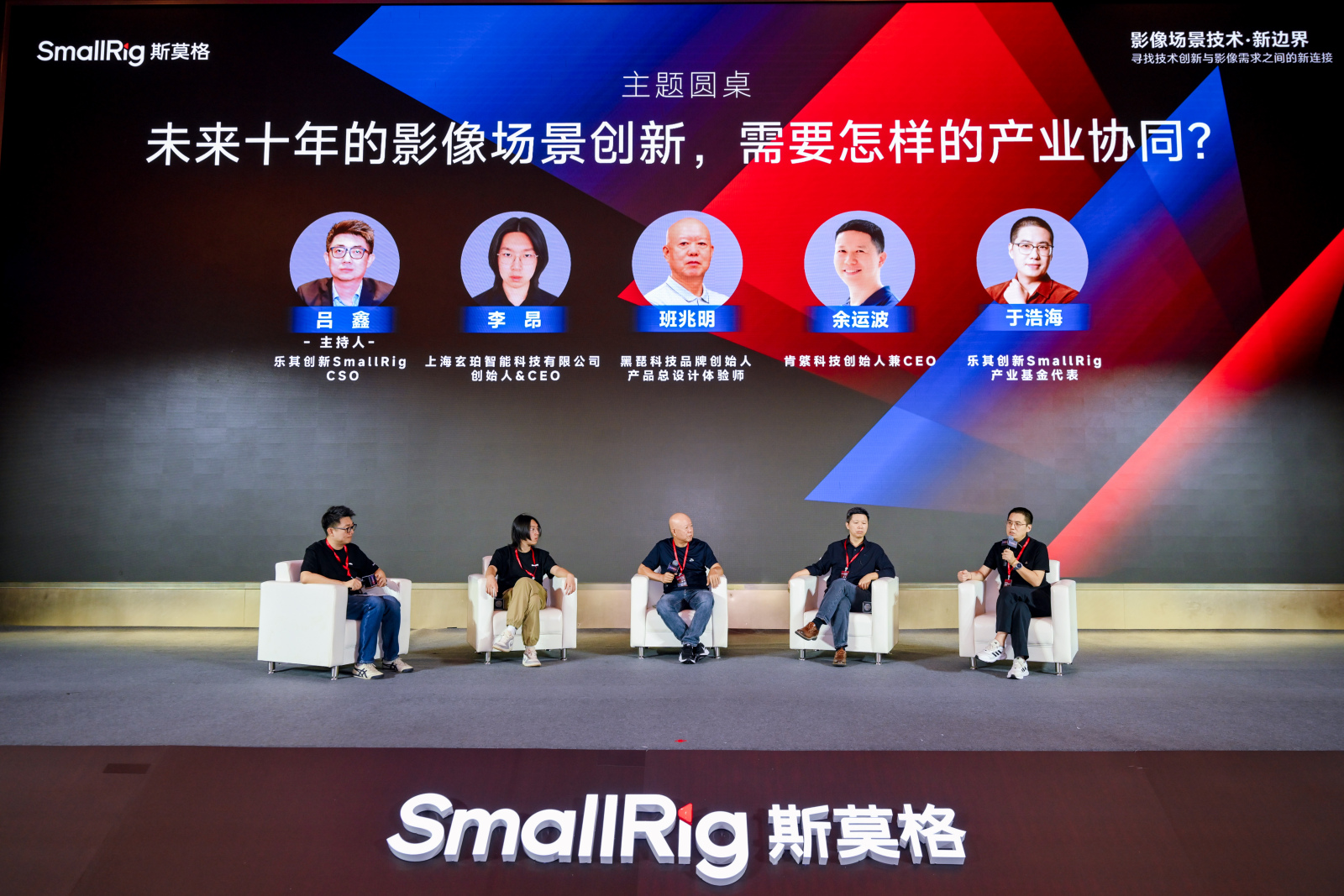
Thematic Roundtable "What Kind of Industrial Collaboration Does Imaging Scenario Innovation Need in the Next Decade?"
"Lerq Innovation is willing to open up our foundational resources and facilities to develop together with partners who have ideas and technology," Zhou Yang stated. He noted that Lerq Innovation SmallRig will continue to connect users, industry partners, and creators through openness and co-creation: opening supply chain capabilities from concept validation, pilot testing, prototyping, to mass production to R&D entities; supporting product validation, joint marketing, and pre-sales through the brand DTC platform; and connecting innovative projects through angel funds and industrial funds. From R&D, supply chain, to market and capital, this mechanism aims to fill the gaps in the path to profitability for innovative projects. "Overall, we hope to create a friendlier industrial environment and convenient innovation ecosystem for all entities engaged in innovation and creation for imaging scenarios," Zhou Yang said.
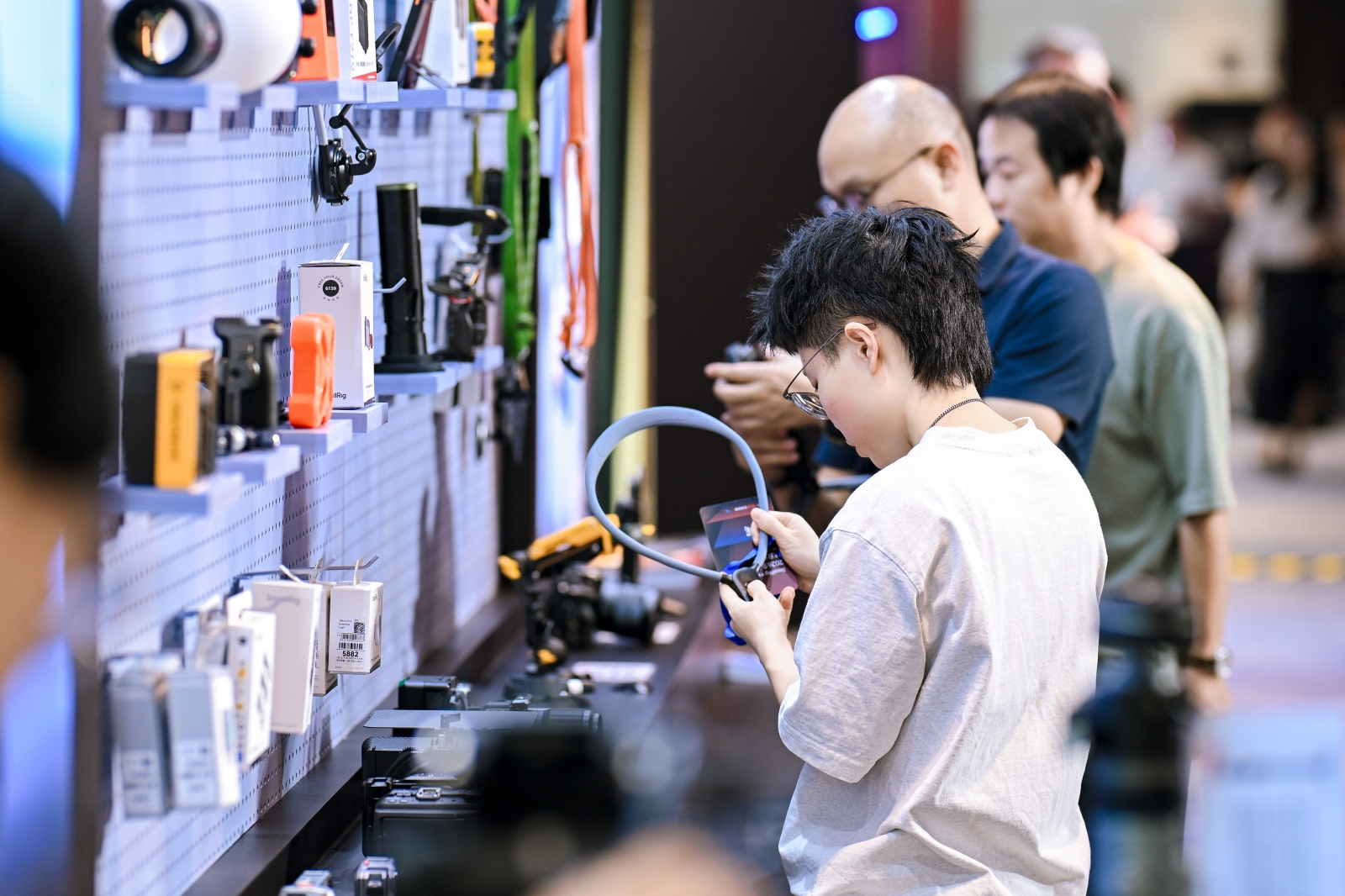
SmallRig Third Global Imaging Scenario Industry Conference (2026) Product Display Area
It is reported that Lerq Innovation SmallRig is hailed as the pioneer of the global imaging scenario industry and the definer of the niche track. At the end of 2023, Lerq Innovation SmallRig formally proposed and systematically defined the "imaging scenario" industry track, simultaneously upgrading its brand positioning to "Global Imaging Scenario Innovative Product Manufacturer," anchoring its core development direction of scenario-based, ecosystem-based, and globalization.
Ebrun will continue to track and report on this intelligence. For more information related to this article, please follow the author's WeChat by scanning the QR code.

This article was first published on the official website of Ebrun.
[Copyright Notice] Ebrun advocates respecting and protecting intellectual property rights. Without permission, no one is allowed to copy, reproduce, or use the content of this website in any other way. If any copyright issues are found in the articles on this website, please provide copyright questions, identification, proof of copyright, contact information, etc. and send an email to run@ebrun.com. We will communicate and handle it in a timely manner.
Translated by AI. Feedback: run@ebrun.com