
Silk Road E-commerce Requires Both 'Hard Connectivity' and Enhanced 'Soft Connectivity' in Rules and Standards
[Ebrun Original] On September 24, at the "Silk Road E-commerce Day" launch ceremony and the "Silk Road E-commerce" resource matching roundtable dialogue during the 5th Global Digital Trade Expo, Wang Xiaofeng from China Communications Services shared the company's 20 years of practice in the Middle East market and offered suggestions on digital infrastructure, regulatory coordination, and AI services.
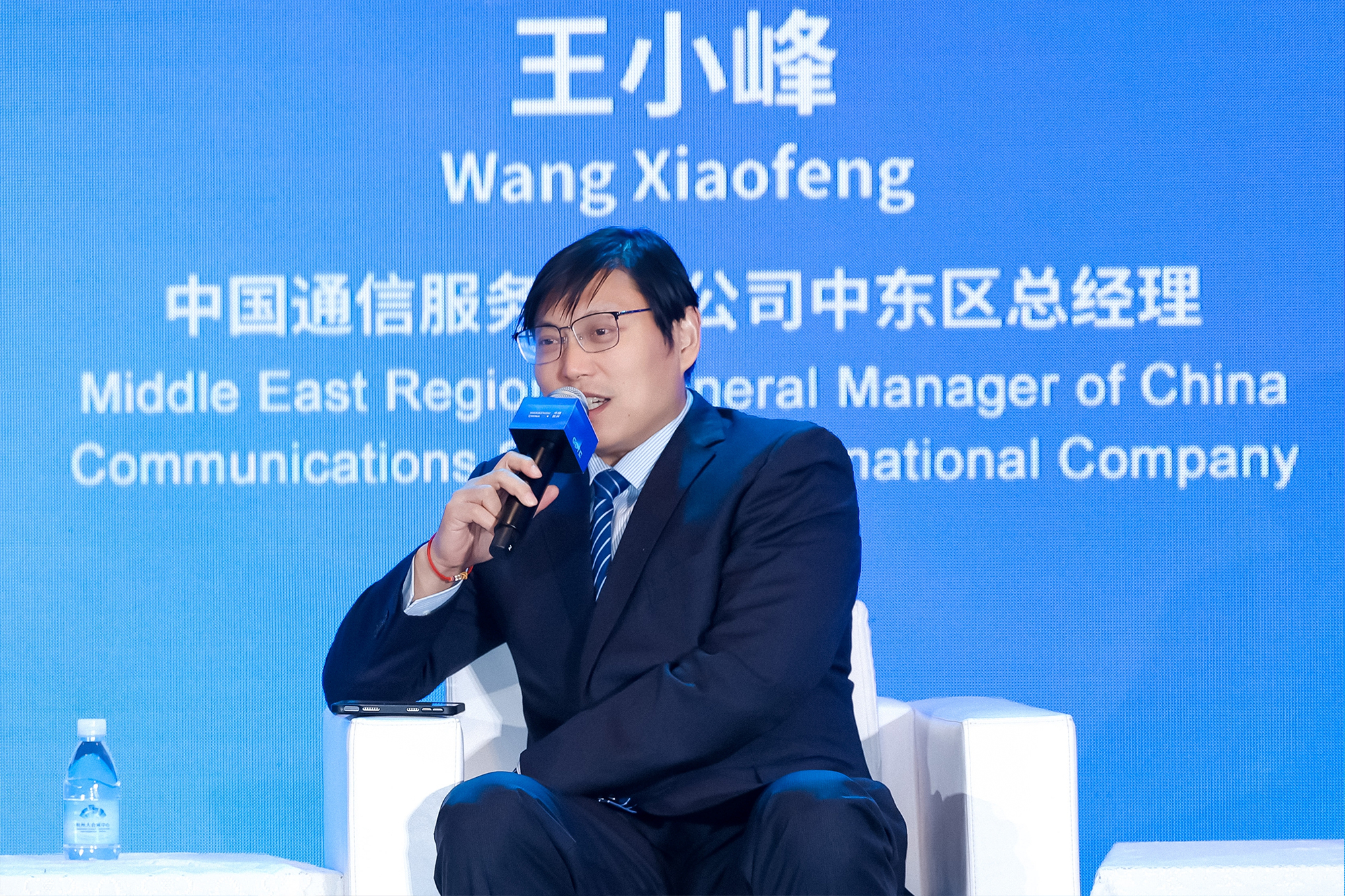
Wang Xiaofeng stated that cross-border cooperation is not just about trade or engineering services; it also involves policy communication, facilities connectivity, and financial integration. The greater bottlenecks companies currently face often stem from differences in rules, regulations, standards, and management. Advancing "Silk Road E-commerce" cooperation requires enhancing "soft connectivity" on the basis of "hard connectivity" in facilities.
This article is compiled from on-site shorthand notes from the roundtable, with minor deletions and edits without affecting the original meaning.
Below is a summary of Wang Xiaofeng's views:
01
From Telecommunications Services to AI Services
China Communications Services began operations in the Middle East in 2005. Initially, we primarily provided telecommunications services, participating in projects such as local communication base stations, fiber optic cables, cross-border cables, and fiber-to-the-home installations. As local digitalization needs evolved, our business expanded into AIDC (AI Data Centers) and AI application services.
From an initial team of ten to twenty people to our current team of around a thousand, it has taken us 20 years. The team comprises about 200 Chinese employees and about 1,000 local employees, including talent from the Middle East, South Asia, and Southeast Asia. Being deeply rooted locally over the long term allows us not only to build digital infrastructure but also to provide local clients with informatization, digitalization, and AI services.
02
The Greater Bottleneck for Companies Comes from 'Soft Connectivity'
For cross-border e-commerce and e-commerce in general, we provide infrastructure and construction capabilities. However, when companies go global, it is not just about trade, imports/exports, or engineering services; it also involves policy communication, facilities connectivity, and financial integration. In our operations, we also encounter issues like cross-border settlement in RMB.
Beyond "hard connectivity" in facilities, bottlenecks in "soft connectivity"—such as rules, regulations, standards, and management—are more prominent. Cross-border companies must handle differences in cross-cultural, cross-device, and even cross-industry standards. If we rely entirely on manual resolution item by item, it requires significant time and effort. We hope that, building on policy, facility, and standard agreements, we can leverage AI or other cooperation mechanisms to promote corporate participation in "soft connectivity" development.
03
Serving More Participants with Local Expertise and Full-Stack Capabilities
China Communications Services is gradually transforming from an engineering services provider to an AI services provider, and we also hope to participate in the cooperation and construction of "Silk Road E-commerce." With over 20 years of experience in the Middle East, we can support companies in areas such as local policies, internet regulations, and cross-border network rules, helping new market entrants reduce information asymmetry.
In AI construction, we can offer full-stack services from planning and design to construction and operation, as well as deploy medium- and small-scale models and intelligent agents for companies. For cross-border cooperation, product companies export goods, while we export construction and service capabilities. Our paths differ, but our goal is the same: to help more companies enter and establish a foothold in the market.
This article was first published on the official website of Ebrun.
[Copyright Notice] Ebrun advocates respecting and protecting intellectual property rights. Without permission, no one is allowed to copy, reproduce, or use the content of this website in any other way. If any copyright issues are found in the articles on this website, please provide copyright questions, identification, proof of copyright, contact information, etc. and send an email to run@ebrun.com. We will communicate and handle it in a timely manner.
Translated by AI. Feedback: run@ebrun.com