
From Cross-Border E-Commerce to Offline Presence: How Should Chinese Brands Choose Their Global Path?
By Li Mengqi Edited by He Yang
[Ebrun Original] This November, Chinese beauty brand Proya will appear in approximately 400 Ulta Beauty stores across the United States.
This is a new move announced by Proya in August. The main brand will enter both Ulta Beauty's offline stores and online platform, directly reaching American consumers.
Looking back a few years, when Chinese consumer brands entered overseas markets, online channels like cross-border e-commerce platforms and independent sites were more common starting points. But today, brands are appearing in more overseas consumption scenarios—local malls, chain retail outlets, and even opening their own direct-operated stores. Another group of younger new consumer brands going global is taking completely different paths—they might not formally establish overseas sales channels yet, but they first gain their initial seed users overseas through social media.
It can be said that going global has become an essential part of many Chinese brands' development plans, evolving from a phased incremental experiment to an important direction for seeking long-term growth. Data shows that in the first half of 2026, exports of China's independent brands grew 25.4% year-on-year. Their methods of going outward are also becoming increasingly diversified—e-commerce platforms, content channels, distributors, local retail channels, and direct-operated stores each correspond to different entry barriers, operating costs, and market depth.
Among these, what new attempts are brands making? With increasingly abundant channels and markets, what basis do they use to make different operational choices? When entering overseas markets becomes increasingly 'simple,' what changes occur in the problems brands truly need to solve?

Big brands also enter new markets through small openings
From the overseas moves of several mature consumer brands this year, a similar feature can almost be seen: even though they are already very successful domestically, even though their channels and resources are already abundant, when entering a new overseas market, the first step is not taken too big.
Proya is one example.
This May, Proya further acquired a 12.5479% stake in domestic color cosmetics brand Florasis, increasing its shareholding to 51%. Regarding this, Proya mentioned in its announcement that Florasis is a "market-validated pioneer in going global," and its experience can provide reference for the group's brands venturing overseas.
According to information subsequently disclosed by Proya, overseas, Florasis has entered platforms like Amazon, TikTok, Shopee, and Lazada online, also operates its own independent site, and offline has entered large chain channels like Ulta Beauty and Boots Beauty.
But for the main brand's going global, Proya did not directly transfer Florasis's multi-channel capabilities. This November, Proya will enter 400 Ulta Beauty stores, which is not many across Ulta Beauty's entire U.S. retail network. Data shows that as of the end of January 2026, Ulta Beauty had 1,505 stores in the U.S. and 46.7 million active members (approximately 95% of sales come from these members).
Proya's expectations for this cooperation extend beyond sales scale. The brand's overseas business head stated in the announcement that the company hopes to build trust among U.S. consumers through Ulta Beauty's store network and membership system, and distill a retail cooperation and operational standard that can be replicated in markets like Western Europe.
Anta's moves in the U.S. this year follow a similar pace. In February, Anta opened its first flagship store in North America in Beverly Hills, Los Angeles. Previously, it had entered European and American markets through local retail channels like Foot Locker, Dick's Sporting Goods, and JD Sports, and also operated online businesses on e-commerce platforms like Amazon.
Anta is not short of overseas store-opening experience—as of the end of 2025, the Anta brand had 241 single-brand stores outside China. Over the past few years, the group has consistently treated Southeast Asia as the 'bridgehead' for its globalization strategy, expanding coverage through physical stores and e-commerce; in mature markets like North America and Europe, it mainly relied on large retailers for channel entry.
But in the U.S., Anta did not directly replicate its earlier pace of expanding store networks in Southeast Asia. On the basis of already establishing sales through local large retailers and online channels, Anta chose to open one flagship store in the U.S. first. This store, covering approximately 2,500 to 3,000 square feet, offers products across running, basketball, and lifestyle categories. Anta calls it its 'brand hub' in the U.S. market in official information, used to showcase product innovation, athlete resources, and brand image.
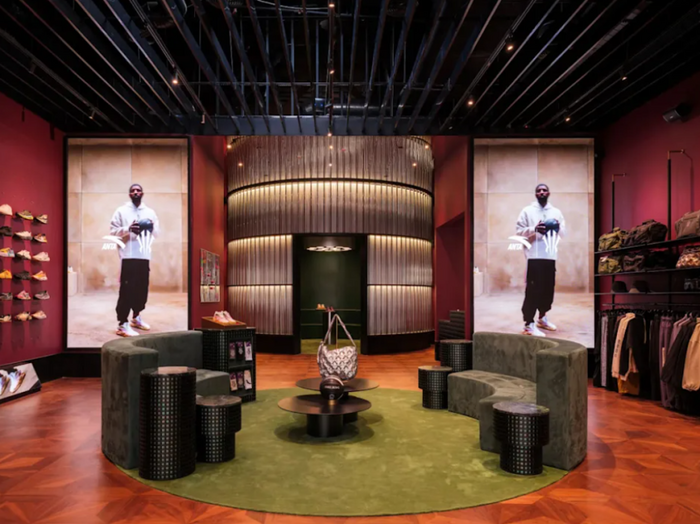
Image source: Anta.
On this, a cross-border brand founder told Ebrun directly that cross-border e-commerce platforms, local distribution, and offline channels have all become mature options today, "Brands have more choices than before, but when it comes to actual execution, the first step can actually be made smaller."
This January, Bosideng moved its premium product line AREAL into Galeries Lafayette Haussmann in Paris. This marked the first overseas appearance of this product line since its launch in 2025, making Bosideng the first Chinese down jacket brand invited to open a pop-up store at Galeries Lafayette Paris.
But for Bosideng, Paris is not the first overseas trial. In 2012, Bosideng invested in purchasing a property in West London, opening its first European flagship store and European headquarters; in 2014, it opened its first U.S. store in New York's Union Square.
Unfortunately, its early direct-operated explorations did not continue. In 2017, influenced by factors stemming from Brexit, Bosideng closed the high-end menswear and apparel retail business of its London flagship store. Since then, Bosideng's overseas moves have gradually shifted toward fashion weeks and brand expression.
In 2018, Bosideng independently landed at New York Fashion Week, subsequently holding launches and shows in Milan and Paris. In 2025, the brand released its new 'Puff Series' at Paris Fashion Week and, in the same year, collaborated with British designer Kim Jones to launch AREAL. Kim Jones is one of the most influential designers in the international luxury fashion industry, having served as artistic director of Louis Vuitton menswear, then heading Dior menswear, and also holding roles as artistic director of Fendi womenswear and haute couture.
Therefore, by this year, when Bosideng chose to re-enter core European retail scenarios, it did not replicate the approach of directly opening flagship stores from over a decade ago, but instead let a newly launched premium product line enter Galeries Lafayette Paris in pop-up form.
"AREAL's entry into Galeries Lafayette Paris is first and foremost an overseas debut of the product," Bosideng stated in related release. At the same time, the brand hopes to enter Europe's mainstream fashion consumer circles through this, validating the design and product capabilities of Chinese down jacket brands.
Wei Zhe, chairman and founding partner of Jiasu Capital, once pointed out that domestic brands face many adaptation issues when entering overseas markets, with the biggest trap being still treating themselves as a big company overseas—expanding too fast and spreading too thin. Especially for companies that have already achieved a certain scale domestically, they may easily make unnecessary investments due to 'too much money' when going global. "So, use an investment approach, not a budget system."
Looking back at Proya, Anta, and Bosideng's moves this year, although these companies already possess considerable brand scale and channel capabilities, when truly entering new overseas markets or operational stages, they all focused their actions on 'small openings.' For these mature brands, going global is not just about whether they have the capability to expand—controlling the pace is also an important part of operational decisions.

Young brands recalibrate the first step of globalization
Compared to big brands with substantial business scale and mature channel networks, some younger, growth-stage domestic brands may realize the necessity of globalization at an earlier stage. For them, when truly taking the first step outward, choosing which market to enter, which channels to leverage, how to reach target audiences, and where to invest limited resources all require earlier trade-offs.
HEFANG initially took a relatively easier path. In 2024, this designer jewelry brand joined Taobao's overseas initiative, leveraging the platform's existing payment, logistics, and operational systems to sell products abroad. Subsequently, the brand began building its own independent site. This July, HEFANG opened its first offline pop-up in Los Angeles and established a local team.
Through this process, HEFANG gradually discovered that merely selling products is not difficult—the challenge is reaching the people the brand truly wants.
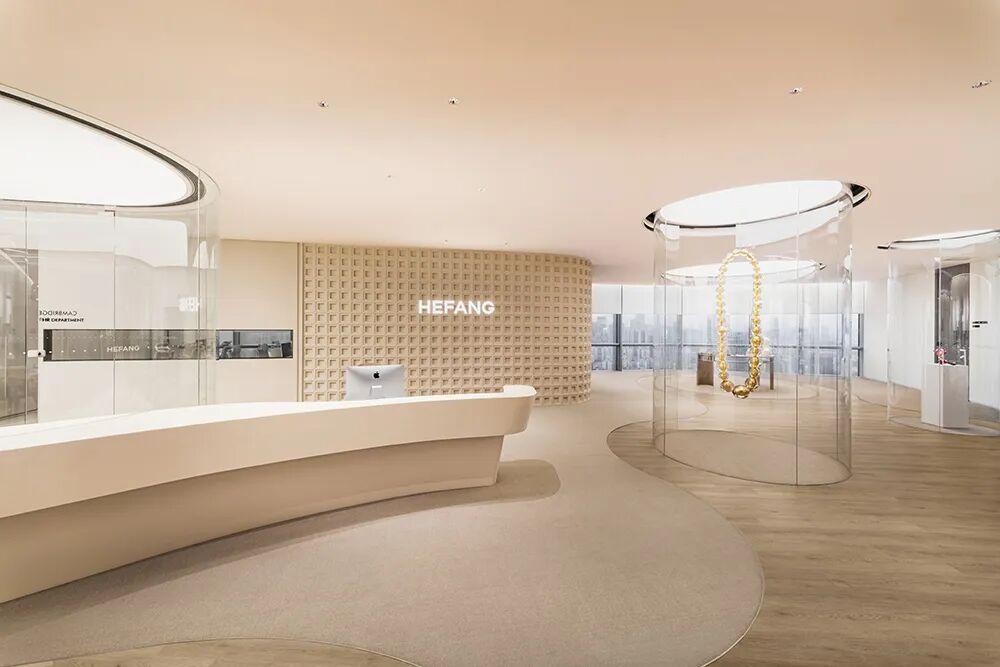
Founder Sun Hefang mentioned that the trial-and-error cost on Taobao's overseas platform is low, but consumers are still mainly overseas Chinese. For a jewelry brand highly dependent on design and aesthetic expression, to enter mainstream European and American consumer groups, it still needs to operate its own independent site, social media, and offline spaces to leave more complete user behavior and brand expression.
This also influenced HEFANG's market choices. Compared to geographically closer Southeast Asia, HEFANG placed its first true overseas foothold in the U.S. Sun Hefang's reasoning is straightforward: New York, London, Paris, and Milan still hold significant influence in the global fashion industry, and European and American consumers already have mature awareness of designer brands and fashion-lite jewelry. Rather than going to a market that still needs explanation of 'why pay for design,' HEFANG prefers to validate its design language first in a more competitive arena.
Therefore, the first pop-up in Los Angeles was not required to quickly contribute sales scale. HEFANG gave itself a 1-3 year brand-building period, not using sales as a core KPI in the short term, and insists on same price for same products domestically and overseas. Sun Hefang describes this approach as 'continuously throwing stones into the water'—first observing how the market responds, then deciding where to increase investment next.
What HEFANG wants to be seen is not just 'Made in China.' The tableware series permanently collected by the Central Saint Martins Museum in London last year is one of the products the brand is currently focusing on introducing overseas. Elements like forks, plates, and pasta are transformed into jewelry, without deliberately emphasizing traditional Chinese symbols. Sun Hefang hopes to use design language that international consumers are already familiar with, letting them first understand the product itself, then recognize it comes from a Chinese brand.
Kaijian's first step in choosing is further ahead—the first overseas trip didn't even reach sales.
This womenswear brand, grown from Taobao, has mainly operated online over the past few years. After opening its first offline flagship store last year, Kaijian quickly went to Paris, but without rushing to open stores or find distributors—it held a small-scale brand salon during Paris Fashion Week.

Image source: GRAZIA.
Founder Jin Hao later recalled that the Paris trip allowed the team to temporarily step away from the familiar competitive methods of domestic e-commerce. He admitted that previously, daily discussions centered on price, products, and supply chains; in Paris, the questions they faced became 'Who is Kaijian?' and 'How to make a group of people from completely different cultural backgrounds understand this brand?'
Jin Hao mentioned that many Chinese brands emphasize 'Oriental aesthetics' overseas, but Kaijian prefers to tell the contemporary urban women's mental state and sense of relaxation. Such exchanges made the team see whether some expressions already taken for granted domestically can still be understood in another market, and what genuinely belongs to Kaijian.
Fuyumanpu, on the other hand, chose its first stop based on existing overseas consumer demand.
This aromatherapy skincare and fragrance brand actually saw overseas demand in its domestic stores first. Chen Kejun, regional manager of its offline business division, once revealed that foreign customers in Shanghai stores have reached 20%-30% of traffic, and they found that products with Eastern fragrances, such as perfumes, scented candles, essential oils, and body oils, are particularly easily accepted by overseas consumers.
This July, Fuyumanpu secured a small 2-3 square meter pop-up display at the historic London pharmacy John Bell & Croyden. Founder Jiang Teng previously stated that compared to traditional cross-border e-commerce and overseas multi-brand store paths, Fuyumanpu hopes to eventually establish 'high-end independent experience stores.' He said that for products whose brand recognition depends on aroma, touch, and spatial experience, small offline scenarios like John Bell & Croyden allow the brand to directly see whether local consumers are willing to try, willing to purchase at higher prices, and whether the 'Eastern aromatherapy' expression can hold up beyond the domestic market.
The three brands' eventual first steps differ, but the underlying judgments are similar: for these still-growing brands, globalization cannot simply be equated with 'first shipping goods overseas.' Where products are best seen, what consumers the brand wants to reach, and how the first communication is completed all influence market and channel choices at an earlier stage.

When 'going out' becomes easier, what else do brands need to solve?
In the aforementioned cases, brands' new overseas moves this year are more offline, but this does not mean online channels are falling out of favor.
It's just that in recent years, cross-border e-commerce platforms, independent sites, and social media have become routine pathways for Chinese brands going global. More subtle changes are emerging among online channels—beyond selling goods, different online channels also take on functions like new product testing, consumer education, and market feedback.
LUSBY, an AI eyewear brand established in 2025, encountered a typical problem. When new products first launched on traditional shelf-based e-commerce, they had almost no exposure for several months. The reason was simple: for a new category with no recognized awareness, consumers didn't even know what to search for.
Later, LUSBY shifted more focus to TikTok, using KOC content to break down the product's usage scenarios. According to data disclosed by TikTok Shop, LUSBY's cumulative sales in the U.S. market reached $4.75 million over a year. The founder later called this platform a 'product validation ground.'
Rowatt Appliances primarily uses TikTok as a testing ground for new products. Before formal sales of some new products, the team first finds 20-50 local influencers for trials. For example, when its camping ice maker was tested in an RV scenario, influencers pointed out noticeable noise and shaking after vehicle bumps, leading the Rowatt team to adjust the product structure based on feedback before formally launching it.

In these cases, e-commerce platforms provide not just traffic and sales channels, but also tools for brands to discover new needs, scenarios, and audiences.
Similar attempts are not limited to TikTok as a representative of interest-based e-commerce. Ebrun previously learned in communication with creative audio brand MORROR ART that moving new products to the crowdfunding platform Kickstarter also aims to bypass existing channel and brand recognitions, directly testing whether overseas consumers are willing to pay for a new category.
Domestic outdoor brand Mobigarden also utilized similar platform capabilities—when entering Southeast Asia via Lazada, it first used real transaction feedback from several single products in a few markets to screen key markets, then decided subsequent resource investments.
Online channels remain the key and preferred route for many domestic brands going global, but their roles and values are changing. Previously, online channels mainly played a product-selling function; now, they also become important arenas for brands to test new products and gain market insights.
In exchanges with a group of content-native new consumer brands, Ebrun also found that more and more young brands engage with overseas markets at early stages, with more 'born-global' players emerging. It's hard to find a unified path from them, but from their different choices, it's clear: today, Chinese brands bringing products overseas is far easier than before—more platforms and more mature infrastructure solve many problems. What truly requires constant reflection is how to stay after entering overseas markets, and why overseas consumers would choose you.
LUSBY's experience well illustrates this change. A newly established brand can quickly reach American consumers via content platforms and continuously optimize products through real usage scenarios and review feedback. Compared to the past, the path and time from finding consumers, testing a product, to completing a first transaction have been greatly shortened.
But it cannot be ignored that today, although there are more pathways and relatively lower barriers for a Chinese brand entering overseas markets, operational requirements are rising. Beyond faster consumer reach, capabilities in supply chain, operations, compliance, and services all need to be built simultaneously, and market competition intensity is different from the past.
After export channels become increasingly abundant, brands can start testing from different positions, but each choice ultimately must answer a more specific question: can this path truly allow me to enter local consumers' usage scenarios and sustain operations there?
Ebrun continuously tracks this intelligence. For more information related to this article, please scan the QR code to follow the author's WeChat.

This article was originally published on Ebrun's official website.
[Copyright Notice] Ebrun advocates respecting and protecting intellectual property rights. Without permission, no one is allowed to copy, reproduce, or use the content of this website in any other way. If any copyright issues are found in the articles on this website, please provide copyright questions, identification, proof of copyright, contact information, etc. and send an email to run@ebrun.com. We will communicate and handle it in a timely manner.
Translated by AI. Feedback: run@ebrun.com