
Ebrun Think Tank and Lianlian DigiTech Jointly Release the Global Cross-Border Enterprise Payment Service Competitiveness Report
[Ebrun Original] For a long time, cross-border payments have connected transactions and capital across different markets through collection, payment, currency exchange, and settlement, serving as a vital support for enterprises engaged in cross-border trade. Today, the role of payments is being redefined: the global e-commerce payment market continues to grow, cross-border enterprises are accelerating their expansion into multi-market, multi-channel, and multi-currency operations; tightening regulations have driven up compliance costs, while exchange rate fluctuations and working capital pressures add to the strain; as AI begins to participate in procurement and transactions, payments are evolving from the endpoint of a transaction into intelligent commercial infrastructure that spans identity verification, authorization, risk control, transaction processing, and settlement. Against these changes, how can payment services keep pace with business expansion? Which pain points trouble enterprises the most? What service capabilities should payment institutions possess?
On September 23, 2026, at the Lianlian DigiTech booth during the 5th Global Digital Trade Expo, Ebrun Think Tank and Lianlian DigiTech jointly released the Global Cross-Border Enterprise Payment Service Competitiveness Report (hereinafter referred to as the "Report"). Based on 502 valid questionnaires, supplemented by enterprise interviews and public data, the Report analyzes the operational characteristics and payment needs of cross-border enterprises, constructs a "Five-Dimensional Competitiveness" model encompassing core product strength, compliance support, digital intelligence drive, brand service, and ecosystem synergy, and offers a forward-looking discussion on industry trends under the emerging Agentic Economy and Agentic Payment paradigms. The findings primarily reflect the characteristics and perspectives of the surveyed sample, providing a reference for cross-border enterprises selecting payment services and for payment institutions enhancing their service capabilities.

Click the link to download the full report
01
Value Reconfiguration: Global Market Differences and Technological Evolution Expand Payment Service Boundaries
The sustained growth of global e-commerce brings incremental opportunities for payment services. According to Worldpay data, the global e-commerce payment market is projected to grow from $7.6 trillion in 2025 to $11 trillion by 2030, with a compound annual growth rate of 7.5%.
Payment landscapes vary significantly across regions. North America boasts a well-established card infrastructure, Europe sees rising digital wallet penetration, the Asia-Pacific region leads in digital wallet adoption, and Latin America, the Middle East, and Africa continue to develop digital wallets and account-to-account (A2A) payments. Enterprises entering different markets must adapt to local payment preferences, currency systems, and regulatory requirements.
Compliance serves as the entry ticket to global operations. As tax, data privacy, and anti-money laundering regulations become more detailed, payment institutions' license holdings and local compliance response capabilities become critical support for enterprises operating across markets.
Technological innovation expands service capabilities. Real-time payments help shorten fund transit time, blockchain enhances transparency in clearing and reconciliation, and AI moves from auxiliary analysis to business execution. Payments thus extend further into identity verification, authorization, and risk control, evolving into infrastructure that supports global operations.
02
Business Profile: Mid-Tier Enterprises Drive the Market, with Divergent Growth and Multi-Regional Layouts
Platform-based sellers maintain a solid foundation with a clear trend toward branding, while mid-tier enterprises underpin the market. Based on the survey sample, cross-border e-commerce B2C and B2B sellers together account for 65.7%, independent site sellers account for 15.7%, with platform operations and self-owned channels forming key business scenarios. Enterprises with annual revenues between $510,000 and $5 million account for 53.8% cumulatively, indicating that mid-tier enterprises represent a significant share of the sample.
Growth performance varies across enterprise sizes. Among enterprises with annual sales exceeding $10 million, 62.9% achieve high or medium-high growth; enterprises with revenues between $1.01 million and $5 million show a negative growth rate of 18.8%, the highest across all size segments; enterprises with revenues between $510,000 and $1 million exhibit a mix of high growth and negative growth.
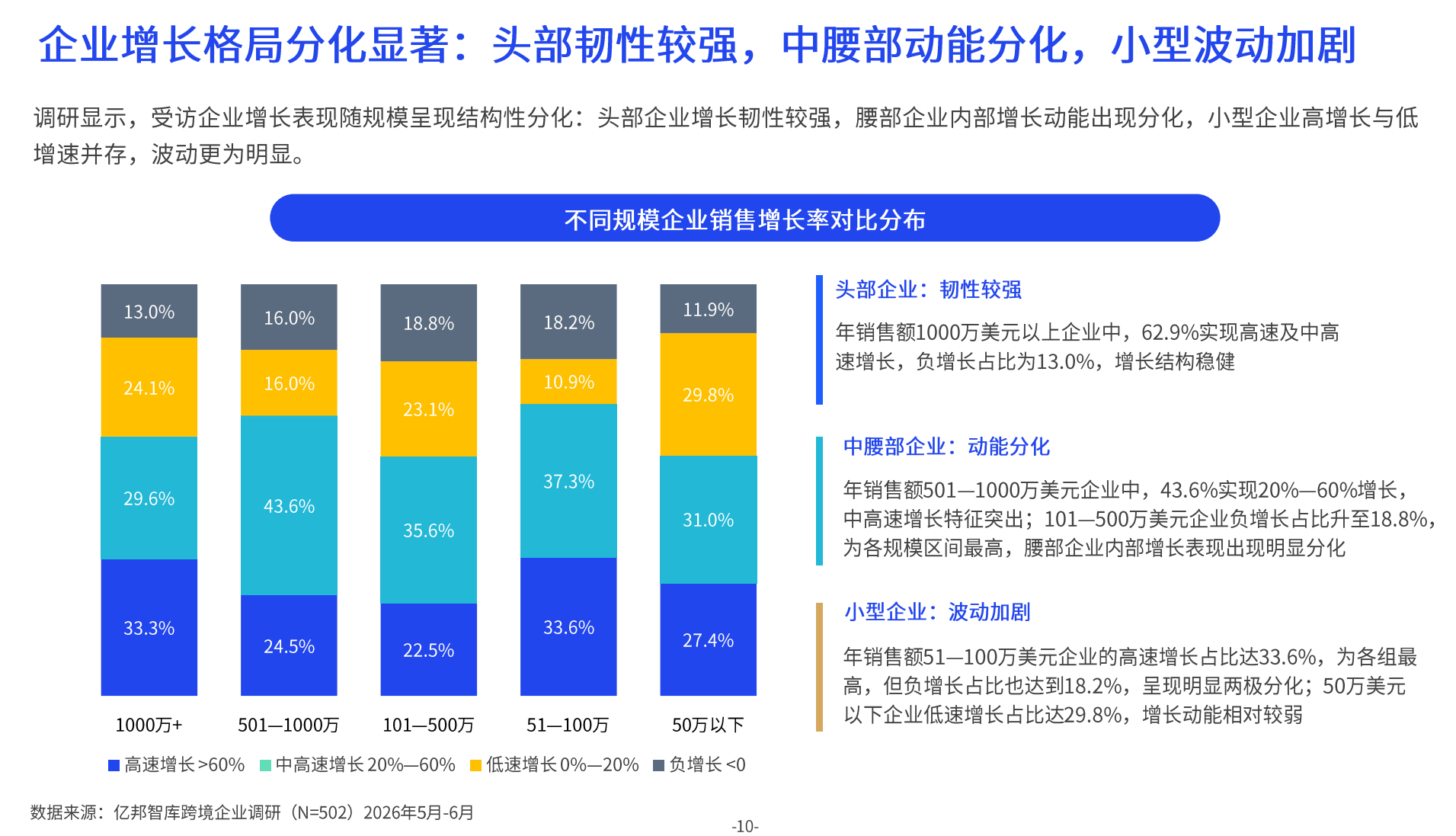
Multi-regional expansion is not merely additive; it multiplies the demands on capital coordination, compliance response, and operational efficiency. In terms of market presence, the United States and Europe are selected by 38.6% and 24.7% of respondents, respectively, with Southeast Asia following at 19.9%, and Japan and the Middle East both exceeding 10%. Multi-regional expansion increases growth opportunities but also creates cross-market capital coordination needs, requiring payment services to support both market expansion and day-to-day operations simultaneously.
03
Core Needs: From Basic Collection and Payment to Operational Synergy, with Greater Focus on Capital Efficiency and Profit Protection
Platform collection and multi-currency management rank as the two most common payment needs among surveyed enterprises. The survey shows that 87.6% and 84.7% of respondent enterprises list platform collection and multi-currency management as their most common requirements, respectively. Payment needs are comprehensively extending toward channel operations, supply chain procurement, and capital risk control, presenting a new pattern of "transaction-channel-risk control" integration.
Exchange rate fluctuations, compliance costs, and capital efficiency are the three most prominent pain points. 84.7% of respondent enterprises cite exchange rate fluctuations as a pain point in payment and related financial services, while 79.1% and 78.3% of respondents face high compliance costs and capital efficiency issues, respectively. Exchange losses erode profits, compliance investments add costs, and capital return speed affects procurement and inventory restocking rhythms. Therefore, when evaluating payment services, enterprises should pay more attention to the comprehensive costs throughout the entire operational chain.
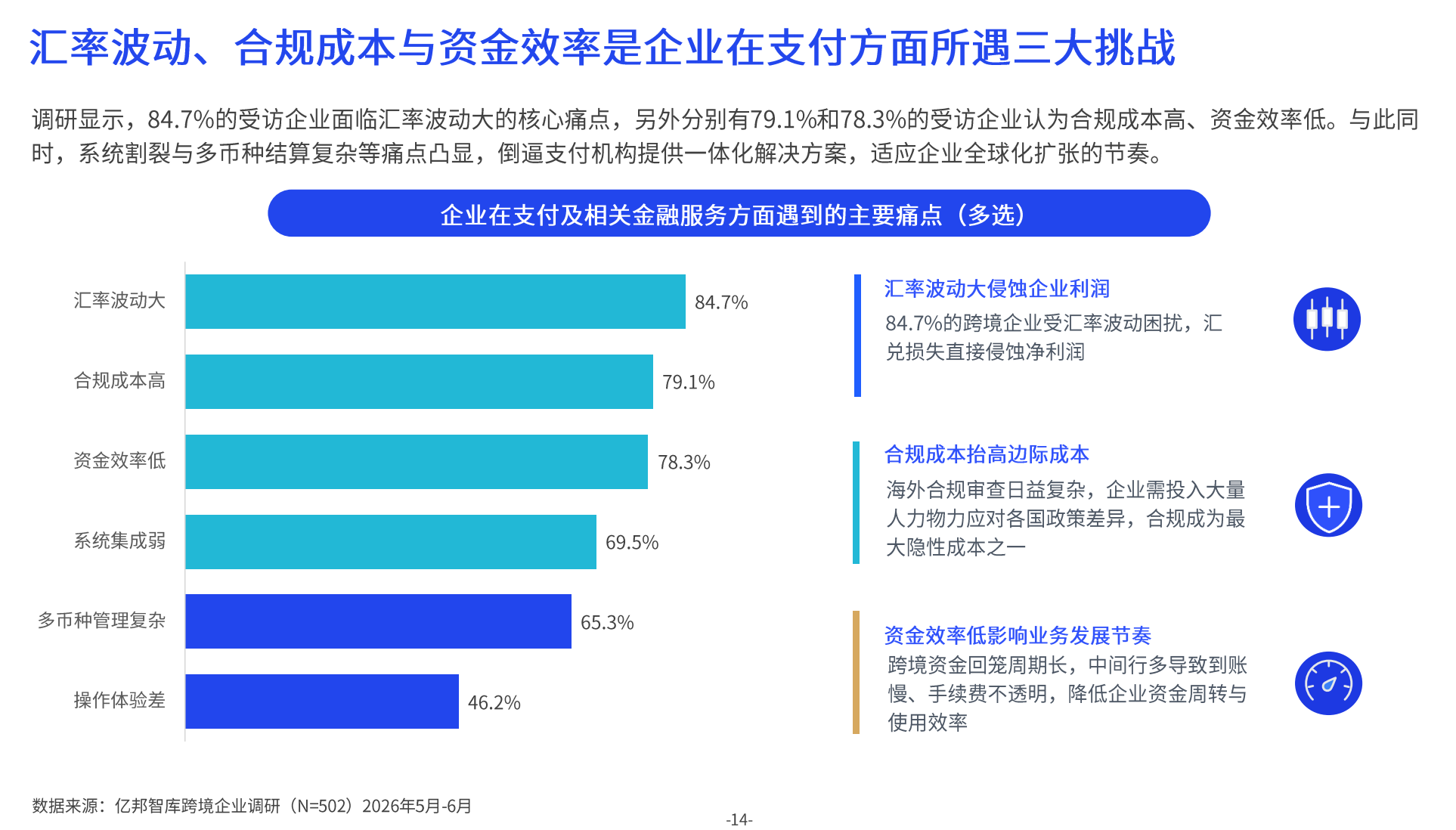
Cross-border RMB settlement is extending from trade collection to the full spectrum of enterprise operational expenditures. Export collection and supplier payments form the core of cross-border RMB settlement, but settlement scenarios are rapidly expanding to operational expenses such as logistics, marketing, and tax payments, driven by enterprises' comprehensive considerations of reducing or hedging exchange rate risks, saving conversion costs, and achieving cost and efficiency improvements.
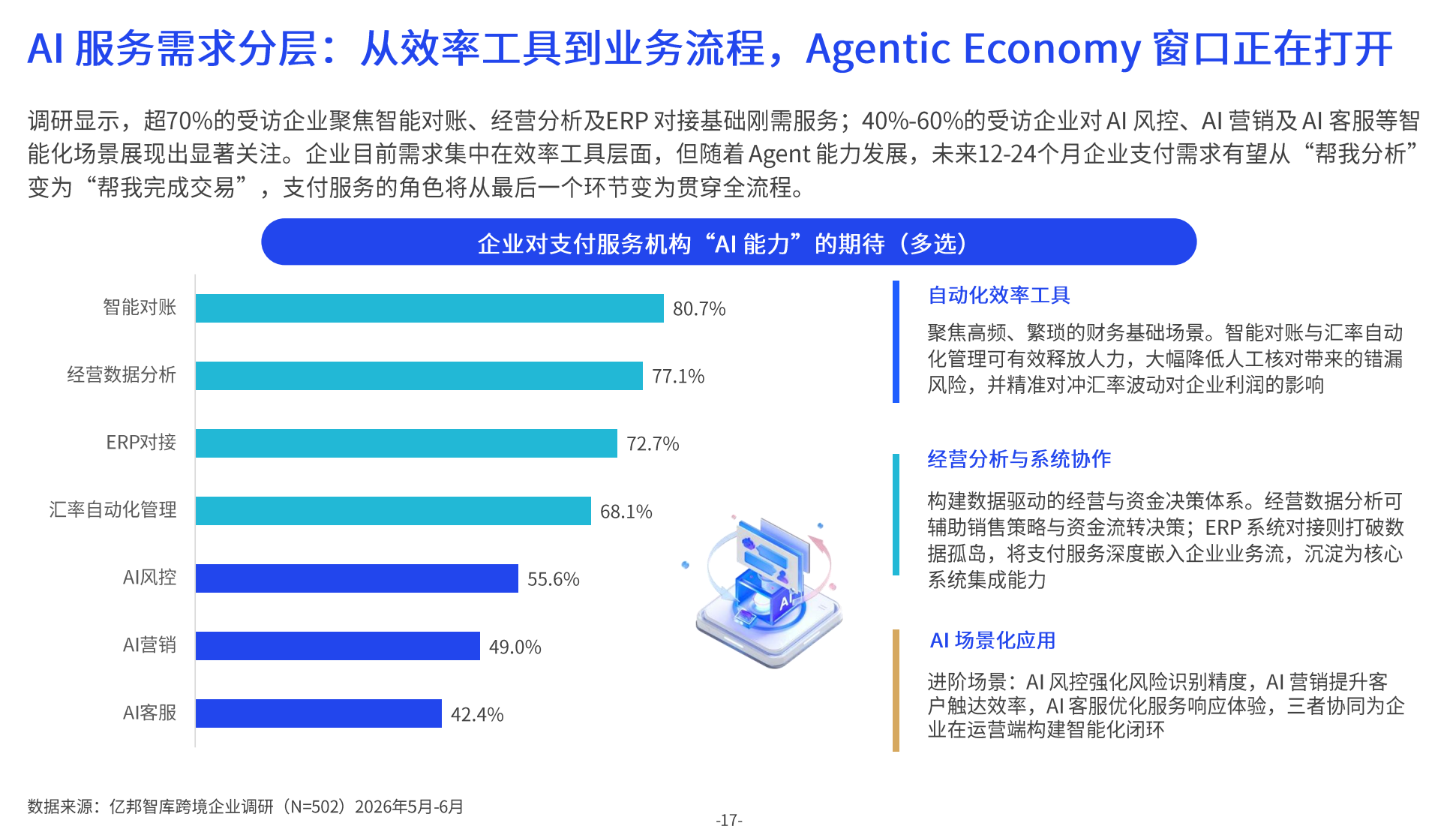
From efficiency tools to business processes, the Agentic Economy window is opening. More than 70% of respondent enterprises look forward to intelligent reconciliation, business data analytics, and ERP system integration, aiming to reduce manual verification and address data fragmentation and system collaboration issues. The Report suggests that with the advancement of agent capabilities, over the next 12 to 24 months, enterprise payment needs are expected to shift from "help me analyze" to "help me complete transactions."
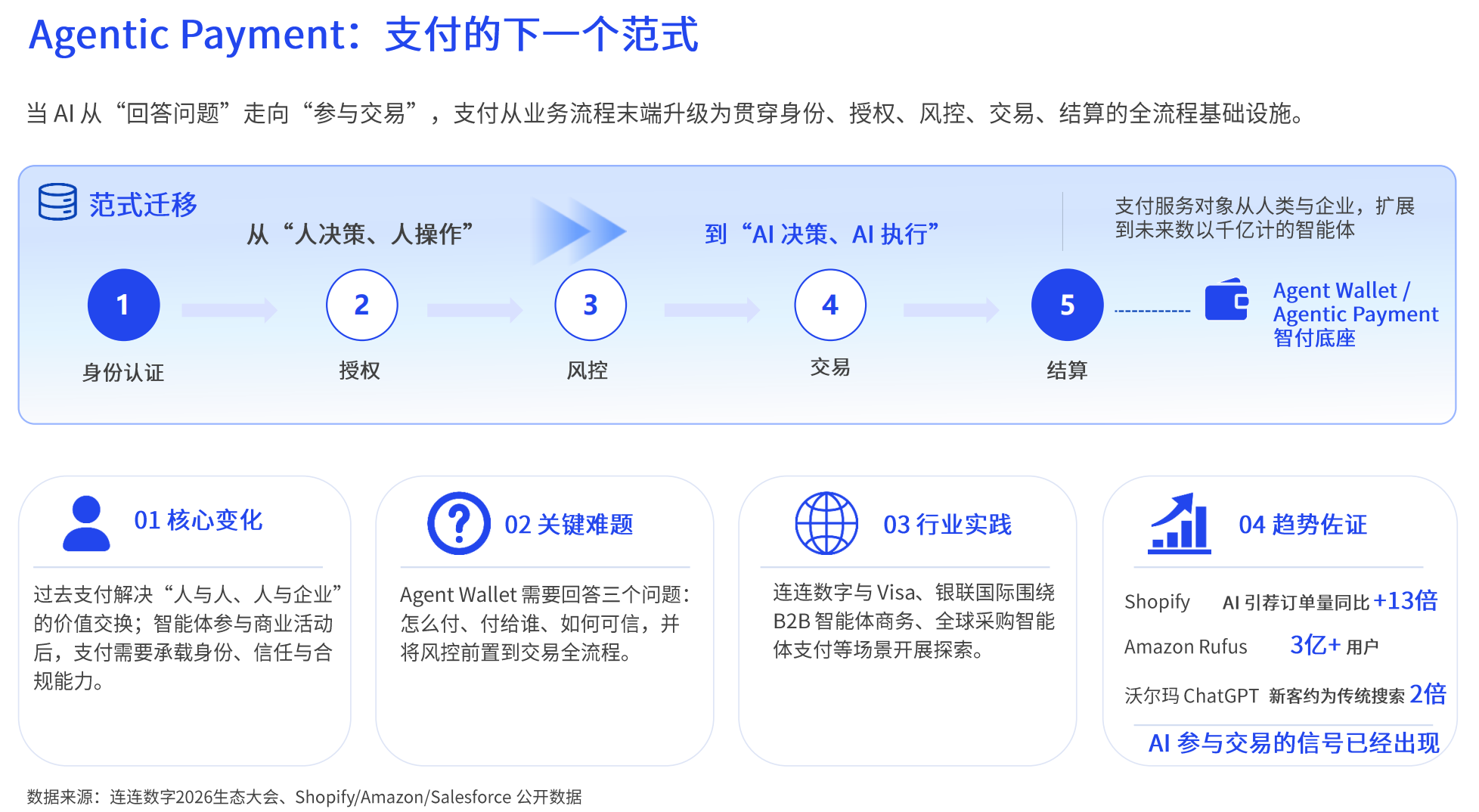
Agentic Payment is regarded as the next-generation payment paradigm. When AI participates in transactions, payments must also answer questions such as "who is paying," "is it authorized," and "is the transaction trustworthy." The identity verification, trust, authorization, risk control, and compliance capabilities required behind agent wallets also provide directions for payment service expansion.
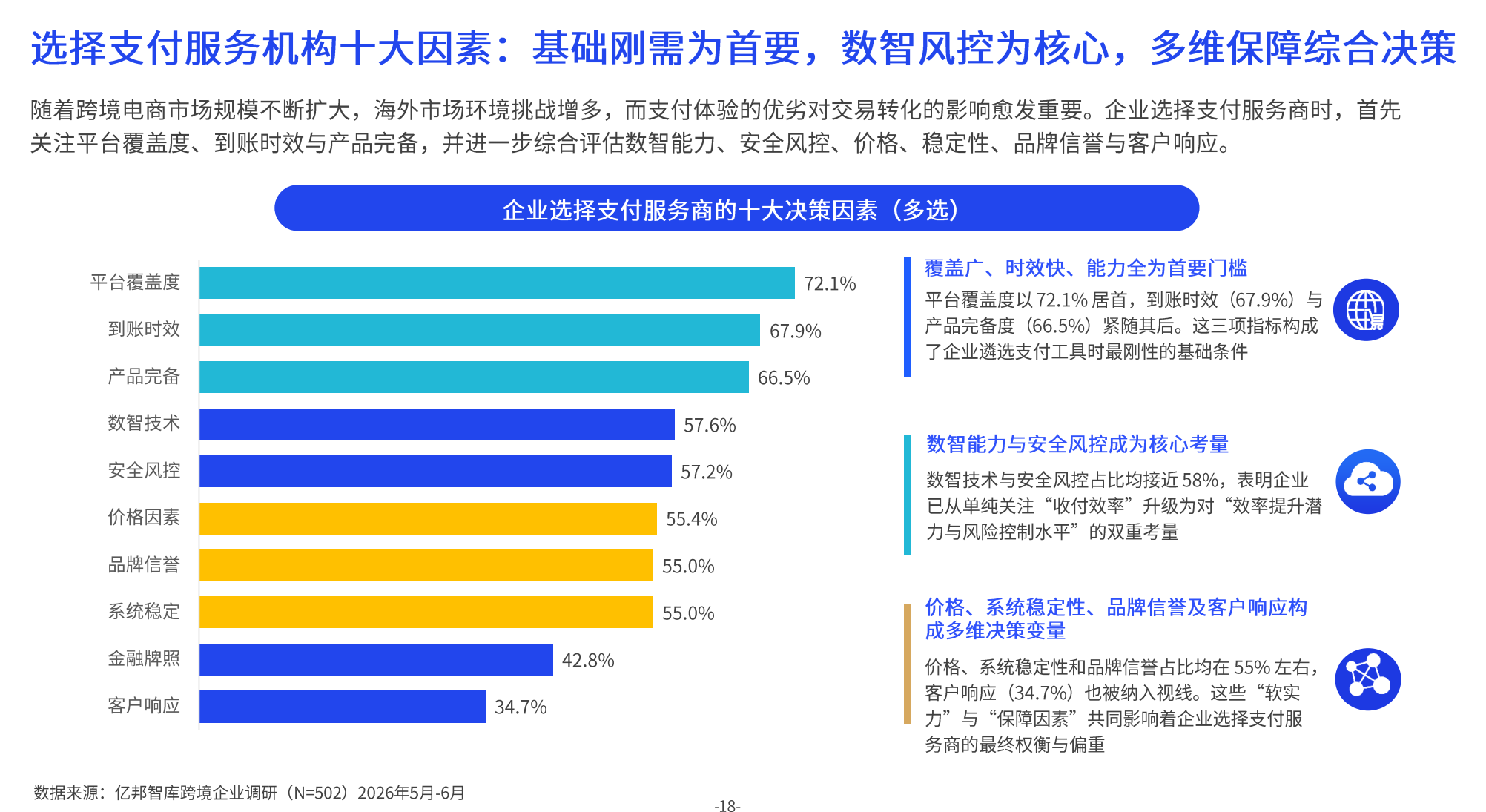
Basic needs come first, digital intelligence and risk control serve as the core, and multi-dimensional assurance informs comprehensive decisions. When selecting payment service providers, enterprises first focus on platform coverage, settlement speed, and product completeness, and further evaluate digital intelligence capabilities, security and risk control, pricing, stability, brand reputation, and customer response.
Lianlian DigiTech is the most commonly used third-party payment tool among surveyed enterprises. In the survey, 33.1% of respondent enterprises identify Lianlian DigiTech as their most frequently used third-party payment tool, representing the highest share in the sample, with the top five payment service institutions accounting for over 90% of the market.
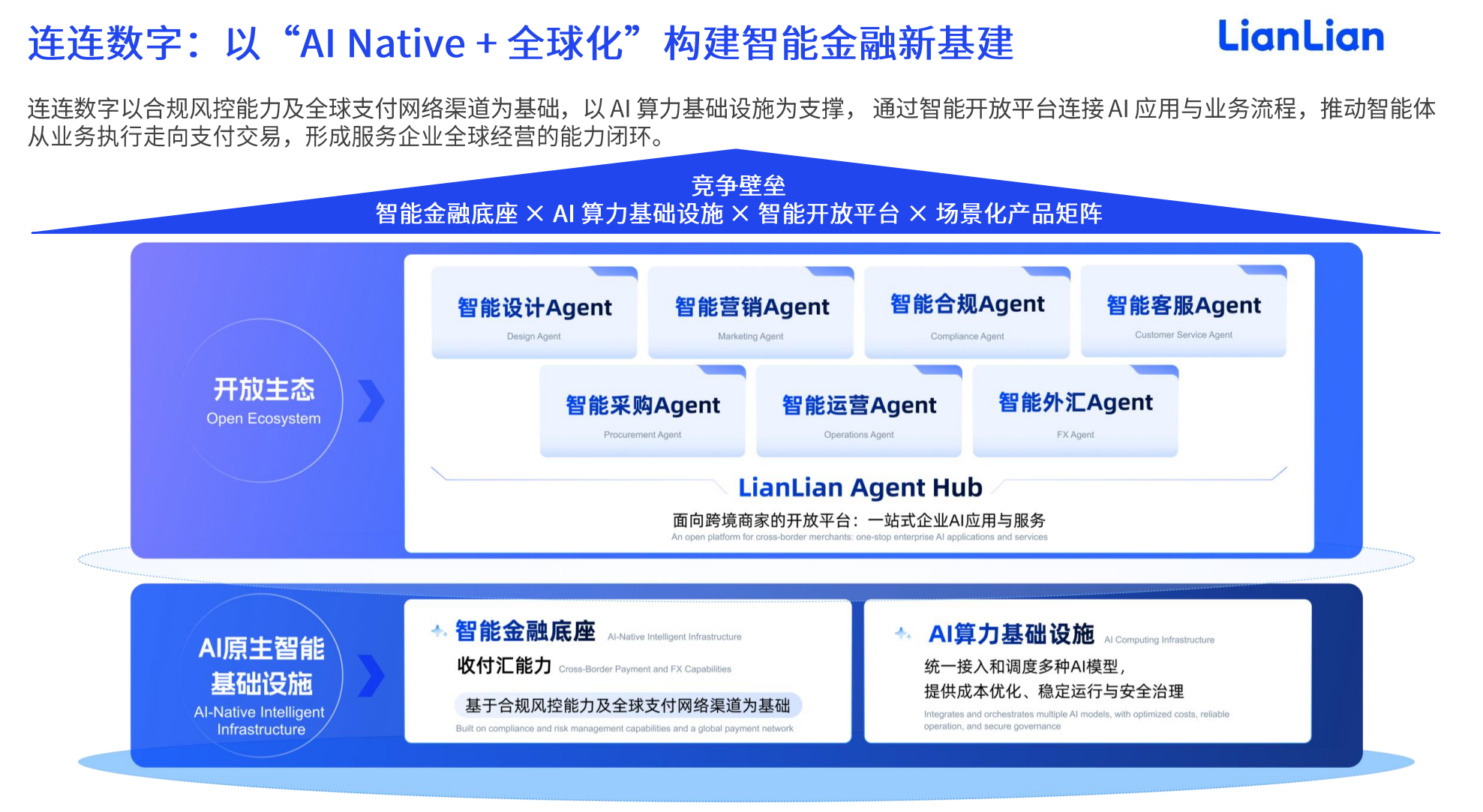
As of June 30, 2026, Lianlian DigiTech holds 68 global payment licenses and related qualifications, including a Hong Kong Virtual Asset Trading Platform (VATP) license, supports transaction settlement in over 140 currencies, covers more than 200 countries and regions, and has served over 13.3 million customers cumulatively. Under its "AI-Native Globalization" strategic layout, Lianlian DigiTech is transforming from a "cross-border payment expert" into "AI-native global intelligent financial infrastructure." The company has built a self-controllable, full-chain Agent-based technical system, deeply embedding AI into core processes such as payments, compliance, treasury management, and enterprise services, accelerating the deep integration of AI capabilities with payment infrastructure and enterprise service scenarios.
For the agent era, Lianlian DigiTech has taken a forward-looking approach to Agentic Payment. The "Lianlian Zhishu" platform, through unified interfaces, turns over 300 mainstream models into on-demand computing resources, combined with self-developed scheduling algorithms, achieving an optimal match of cost, speed, and quality. Additionally, Lianlian DigiTech has initiated collaborations with ecosystem partners such as Visa and UnionPay International around scenarios like B2B agent commerce and global procurement agent payments.
04
Deconstructing Five-Dimensional Competitiveness: Cross-Border Payment Services Enter the Era of Comprehensive Capability Competition
The reshaping of the payment role and the upgrading of enterprise needs are driving service providers into a stage of comprehensive capability competition.
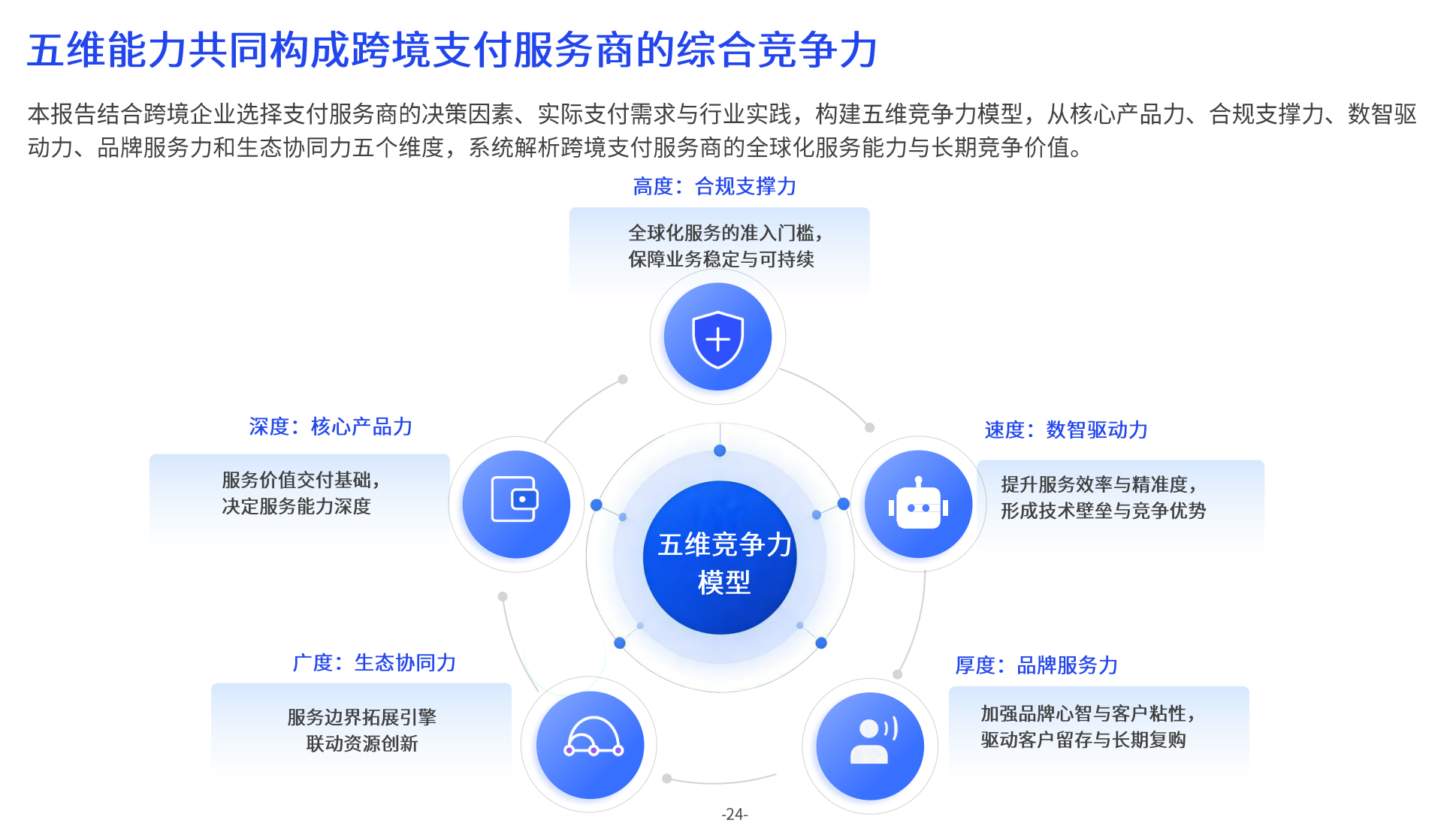
Based on enterprise needs, decision-making factors, and industry practices, the Report further constructs a "Five-Dimensional Competitiveness" model, providing a systematic reference framework for enterprises to evaluate and select cross-border payment service providers.
· Core Product Strength — Depth. Form a closed loop of products around collection, payment, acquiring, and currency exchange, adapting to multi-currency, multi-region, and multi-channel needs, ensuring delivery through system stability, settlement speed, and transparent pricing.
· Compliance Support — Height. Global license holdings provide an access foundation, with full-process compliance risk control and local response capabilities supporting enterprises in meeting different market requirements.
· Digital Intelligence Drive — Speed. Connect AI applications, enterprise systems, and business processes, drive technology implementation in operational scenarios, and explore the identity and trust mechanisms required for agent transactions.
· Brand Service — Thickness. Improve problem resolution efficiency and service experience through multi-time-zone, multi-language response, and operational support aligned with the enterprise growth stage.
· Ecosystem Synergy — Breadth. Leverage partnerships with e-commerce platforms, banks, and enterprise service providers, reducing collaboration barriers through open interfaces and system integration.
The key to five-dimensional competitiveness lies in mutual support. Product coverage requires compliance assurance, digital intelligence applications require system connectivity, and sustained service translates various capabilities into customer experience. Enterprises should determine specific evaluation priorities based on their size, business model, operational regions, and payment scenarios.
05
Long-Term Value: Deposit Service Capabilities into Customer, Data, and Trust Assets
How comprehensive capabilities can form a sustained competitive advantage is a further question addressed in the Report.
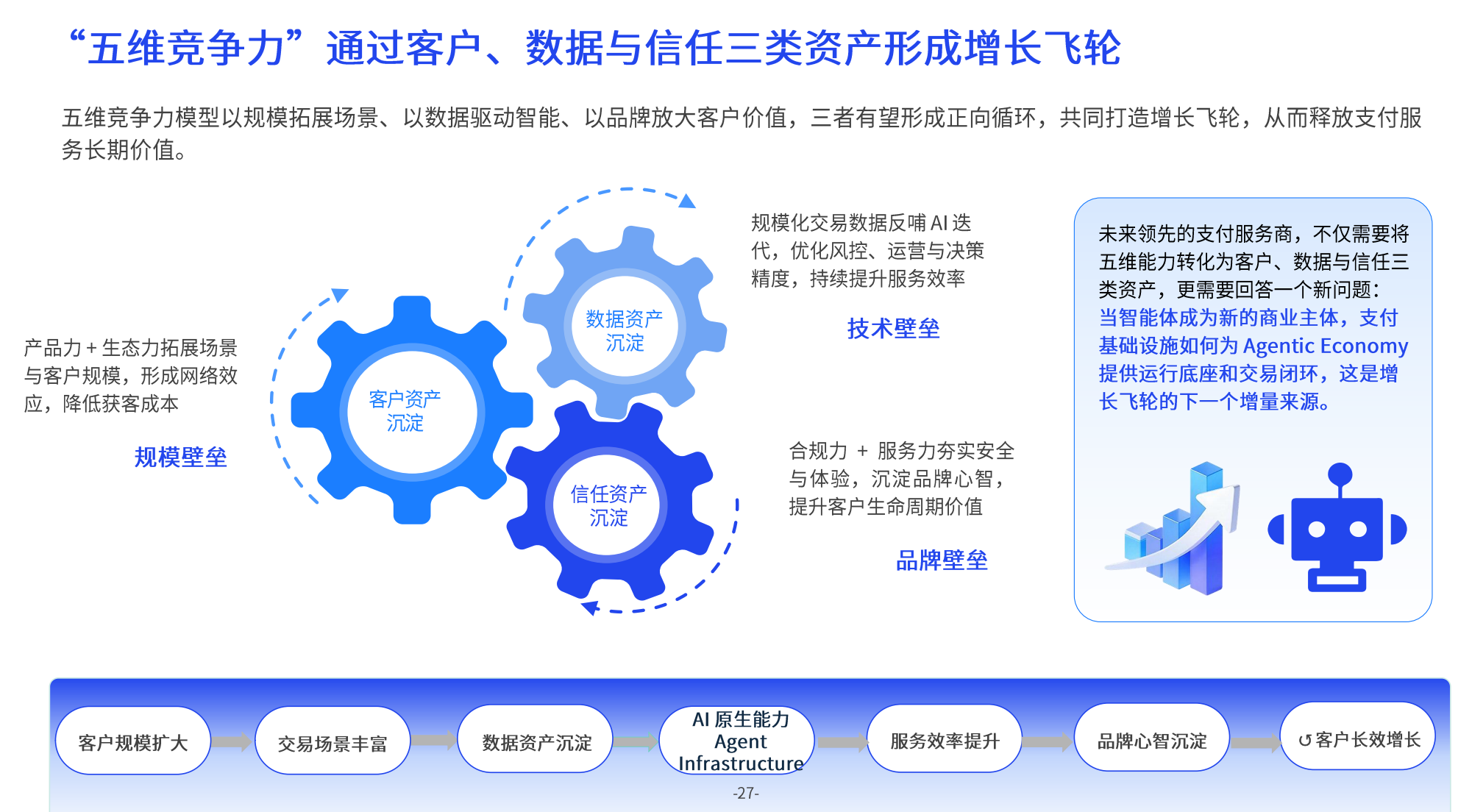
Product and ecosystem capabilities help expand customers and transaction scenarios; accumulated transaction data further supports risk control, operations, and decision-making iterations; and compliance and service capabilities continuously build trust through stable delivery. As service scenarios become more diverse, payment institutions can optimize products and operational efficiency based on more data, while enhanced service experiences promote customer retention and long-term collaboration, thereby forming a growth flywheel where customers, data, and trust mutually reinforce each other.
The Agentic Economy brings new growth space for this cycle. As agents gradually participate in enterprise operations and commercial transactions, payment institutions need to convert their existing global networks, compliance, and digital intelligence capabilities into support for new scenarios. Whether they can connect business execution with fund settlement through Agentic Payment and establish credible, controllable transaction processes will become a competitive direction worth watching in the next phase.
From industry changes to enterprise needs, and then to five-dimensional competitiveness and the growth flywheel, the Report reveals a clear direction for cross-border payments: responding to global operational complexity with comprehensive service capabilities and creating sustained value through long-term delivery. For cross-border enterprises, choosing a payment service provider should not only consider fees and settlement speed but also examine product and global coverage, compliance support, digital intelligence capabilities, service responsiveness, and ecosystem synergy. For payment institutions, the challenge is to continuously deposit these capabilities into customer, data, and trust assets, building a long-term competitive advantage in the era of intelligent commerce.
To learn more about the Report and gain insights into cross-border enterprises' global operations and payment needs, as well as the "Five-Dimensional Competitiveness" model and Agentic Payment trends, please click the link to access the full report
This article was first published on the official Ebrun website.
[Copyright Notice] Ebrun advocates respecting and protecting intellectual property rights. Without permission, no one is allowed to copy, reproduce, or use the content of this website in any other way. If any copyright issues are found in the articles on this website, please provide copyright questions, identification, proof of copyright, contact information, etc. and send an email to run@ebrun.com. We will communicate and handle it in a timely manner.
Translated by AI. Feedback: run@ebrun.com