
Cross-Border E-Commerce Practice Guide for SMEs, Co-Developed by Ebrun Think Tank, Released in Jakarta
[Ebrun Original] Organized and compiled by the World Internet Conference (WIC), the Cross-Border E-Commerce Practice Guide for Small and Medium-Sized Enterprises serves as a practical navigation manual for global small and medium sellers pursuing cross-border market expansion.
Local time on September 3, 2026, the guide officially launched at the WIC Cross-Border E-Commerce International Seminar themed "Connecting Businesses via the Silk Road, Driving Win-Win Smart Trade" held in Jakarta, Indonesia. Wang Shan, Executive Director of Ebrun Think Tank and representative of the research team, presented the core content of the guide to Chinese and international guests at the release event.
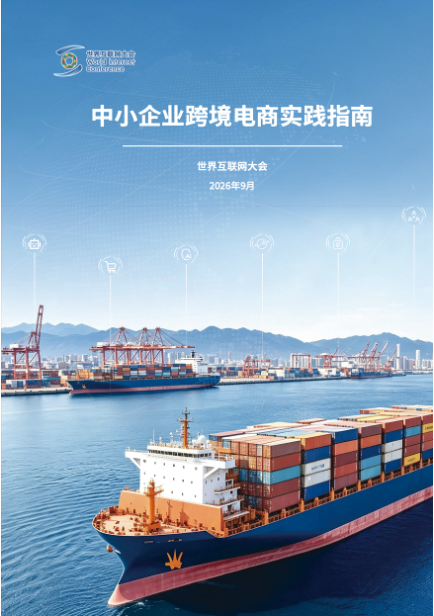
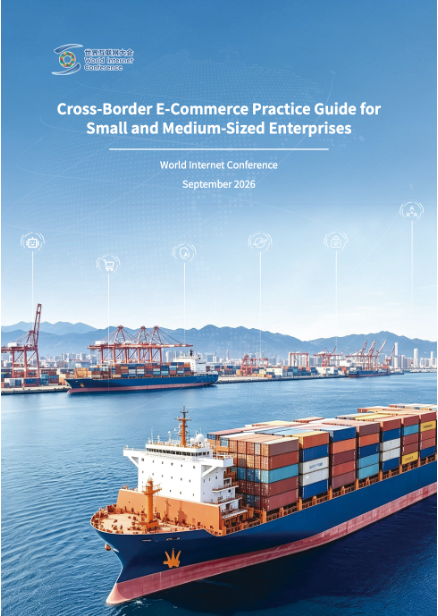
Currently, the global cross-border e-commerce sector maintains rapid growth, with its market size projected to exceed $5 trillion, as emerging markets including Southeast Asia, the Middle East, Latin America and Africa continue to unleash strong momentum. At the same time, small and medium-sized enterprises (SMEs) expanding globally still face widespread practical challenges, including homogeneous operations, rising compliance costs, and high market trial-and-error expenses. Tailored to the actual needs of global SMEs, the guide is built around the full operational logic of overseas expansion, and provides a set of standardized practical guidance covering from preliminary market research to on-the-ground execution.
The Chinese version of the guide runs about 34,000 characters, consisting of a preface, four core sections, and an appendix of practical supporting resources:
1. Target Market Access Guide: This section systematically profiles eight key markets: North America, Europe, China, Japan and South Korea, Southeast Asia, the Middle East, Latin America and Africa. It puts forward a three-step market selection framework of "macro assessment, competition screening, low-cost validation", supported by a 30-day startup checklist and common risk alerts, to help enterprises avoid blind market expansion.
2. Business Model Selection Guide: It compares the capital, team and supply chain requirements of different models, including DTC independent sites, B2C, B2B, social content commerce, as well as fully managed and semi-managed platform models, and provides phased development pathways for the startup, expansion and mature stages of business growth.
3. Full-Stack Operation Guide: Covering four core links – product selection and localization, supply chain and logistics fulfillment, finance and payment, as well as marketing and advertising – this section distills directly applicable practical methodologies, including product selection frameworks, dual-track supplier systems, combined express and economy logistics solutions, and the pricing structure of "traffic-driving SKUs, profit-generating SKUs, and brand-building premium SKUs".
4. Practical AI Application Guide: It divides SMEs' AI adoption into four stages: efficiency improvement and task replacement, decision support, business integration, and native intelligence. It also outlines principles for tool selection, and flags risks including content copyright infringement, cultural missteps, data privacy violations, and brand homogenization.
The appendix also provides onboarding guides for mainstream platforms, channels to subscribe to policy updates, links to practical toolkits, and a Chinese-English glossary of terms.
Entrusted by the WIC, Ebrun Think Tank formed a dedicated research team to advance the compilation work. In April, the research team supported the WIC in holding an inception seminar in Beijing, attended by representatives from international organizations including the International Trade Centre (ITC), the Asia Small and Medium-sized Enterprises Council (ASBF), and the Malaysia-China Chamber of Commerce, as well as domestic academic experts, cross-border e-commerce platforms and enterprise representatives, who joined both online and offline to fully exchange views on the report framework and content priorities. After that, the research team conducted enterprise interviews at industry expos in Hangzhou and Shenzhen, and joined the WIC research group on field visits to cross-border e-commerce enterprises, logistics ports and industrial parks in Ningbo and Zhoushan, Zhejiang Province. In July, at the 2026 WIC Digital Silk Road Development Forum, Ebrun Think Tank hosted a roundtable on "SME E-Commerce Practices in the AI Era", where it discussed SME AI implementation pathways with representatives from platforms and enterprises including Jumia, Ozon, Sevendiary, Yeahmobi, and CICC. The guide was refined through multiple rounds of research including enterprise visits, in-depth interviews with service providers, and consultations with industry experts, and was completed after six months of development.
Ebrun Think Tank has long tracked and conducted research in the fields of e-commerce, cross-border e-commerce and industrial digital intelligence. Backed by 20 years of industry accumulation from Ebrun, it has continuously provided high-quality research references for government departments, international organizations and industry institutions.
Scan the QR code to download the guide.

This article was first published on the official website of Ebrun.
[Copyright Notice] Ebrun advocates respecting and protecting intellectual property rights. Without permission, no one is allowed to copy, reproduce, or use the content of this website in any other way. If any copyright issues are found in the articles on this website, please provide copyright questions, identification, proof of copyright, contact information, etc. and send an email to run@ebrun.com. We will communicate and handle it in a timely manner.
Translated by AI. Feedback: run@ebrun.com