
Two Months After New EU Tariff Rules Took Effect, European Consumers Are Divided Over Chinese Cross-Border E-Commerce Platforms
By Wang Yu | Edited by He Yang
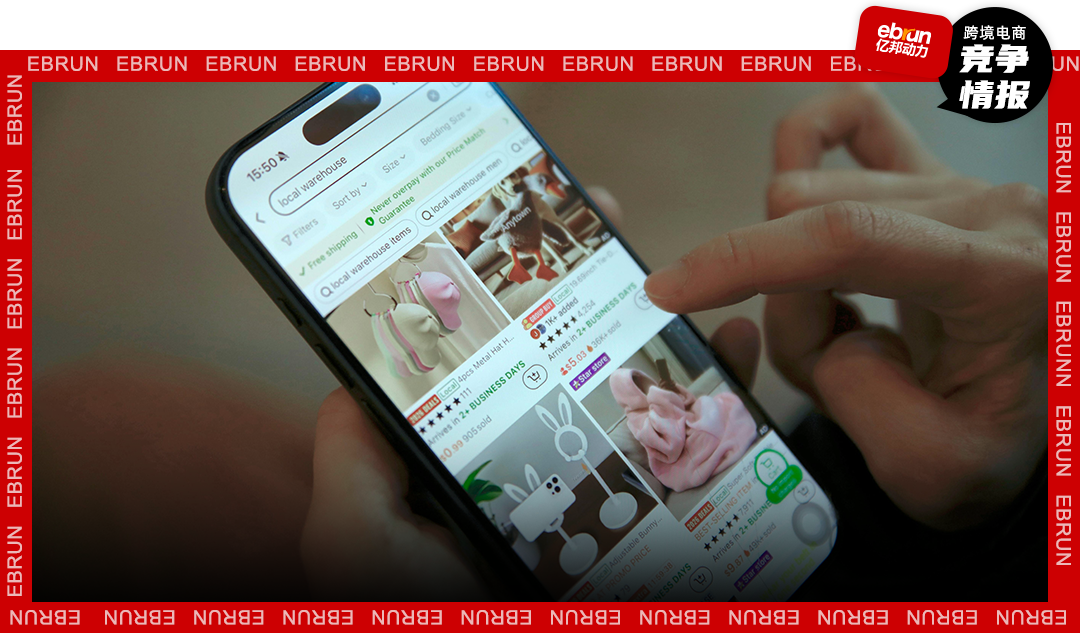
[Ebrun Original] Starting in July, when European consumers logged onto e-commerce platforms such as Temu, SHEIN or AliExpress as they usually do, adding small items to their shopping carts, they may have been caught completely off guard by the final price displayed at checkout.
“I was stunned — I thought I was seeing things,” recalled Ariel, a Chinese student studying in Germany. She added 45 euros worth of goods to her Temu cart, only to find at checkout that she was required to pay an additional 48 euros in taxes. “I’d heard rumors about tax hikes before, but when it actually happened, it was still unbelievable — the tax was higher than the price of the goods themselves.” She said nearly all her friends were “shocked” by the eye-popping tax charges. Some canceled their orders outright; others asked around trying to figure out “what went wrong, did I place the order incorrectly?” Some only realized at that moment that the new EU tariff policy, which the European Parliament had spent years hammering out, had officially gone into effect.
Since the EU’s new tariff rules — which impose a fixed 3 euro levy per product tariff category on imported small parcels valued at 150 euros or less — came into force on July 1 this year, European consumer forums have been flooded with questions about the tax rules, alongside half-baked answers. For the first time, consumers are realizing that the low-cost cross-border online shopping model they had grown accustomed to is gone for good.
When a product priced at just a few euros suddenly carries an additional fixed cost, and when small purchases that used to be impulse buys now require careful calculation, consumers’ shopping habits, purchasing decisions, and even their perception of “a good deal” may be permanently altered.

European consumers relearning how to shop
Before the new tariff policy landed, cross-border e-commerce had already become deeply embedded in Europeans’ daily lives.
The latest Statista Consumer Insights survey covering Spain, France, Germany and the U.S. found that in the year before the policy took effect, Temu, SHEIN and AliExpress had become the most frequently used Chinese e-commerce platforms among European consumers. Over the past 12 months, Temu reached order penetration rates of 20–31% across different markets, SHEIN 16–33%, and AliExpress 12–36%.
A spring 2026 consumer survey from the European Central Bank also shows that overall usage of Chinese cross-border e-commerce channels, led by these three platforms, hit 52% across the eurozone, with rates as high as 79% in Greece, 77% in Portugal and 69% in Spain.
Against this backdrop, the “sticker shock” from the new policy may be far more severe than Europeans initially anticipated.
The first shock comes down to a simple question: How much more expensive is it, really? For higher-ticket items, an extra 3 euros is not an insurmountable cost. But for small goods priced at a few euros to a dozen euros, the picture is completely different.
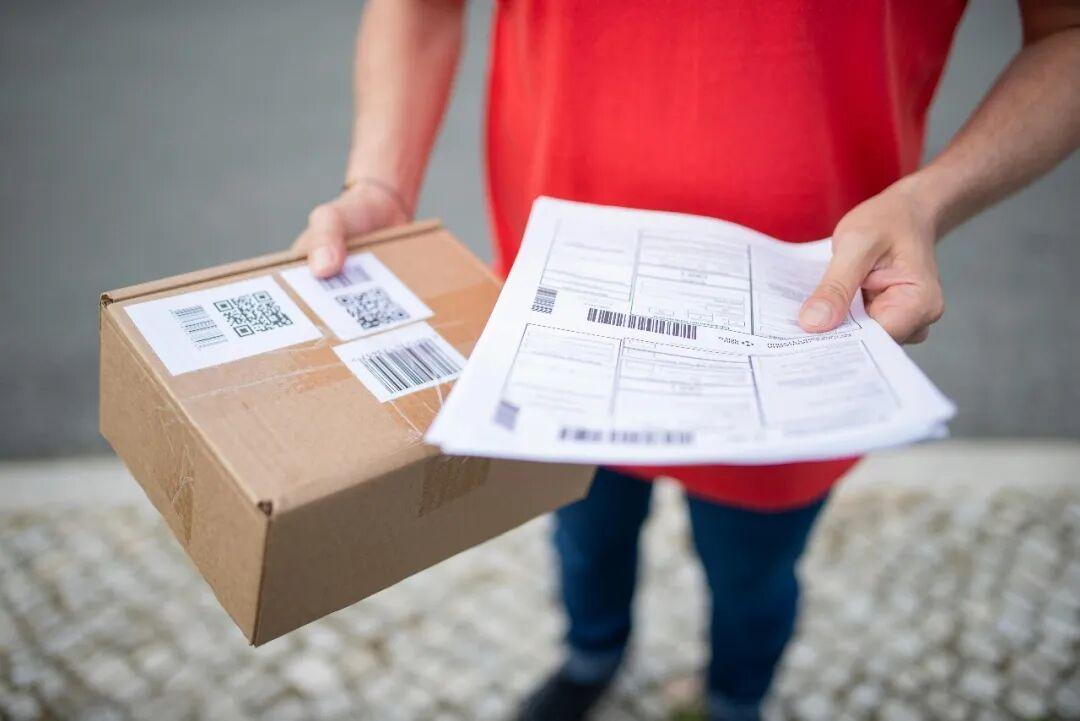
A seller based in Huaqiangbei, the electronics hub in Shenzhen who runs a mobile accessories business, noted that consumers find it psychologically hard to accept a tariff nearly equal to the value of the product itself, creating a sense of “being priced out.” For a 5 euro item purchased alone, adding the 3 euro tariff plus various new customs clearance fees means consumers end up paying close to 9 euros, a price jump of over 80%. For price-sensitive product categories, this change is enough to drive away a large share of shoppers.
One international student shared a similar experience: she had piled a large number of items into her cart, but when she saw that tariffs alone made up half of the total checkout amount, she silently abandoned her payment.
Other consumers are speeding up their purchases: “I need to buy the things I need sooner rather than later. After October, there may be an additional 2 euro customs processing fee, which will make cross-border shopping even more expensive.”
Another shift is visible in shopping cart metrics. According to monitoring from GlobeCross, the average shopping cart value has risen from roughly 40 euros to 61 euros, an increase of more than 50%. Many cross-border sellers also report that while order volumes have plummeted, the remaining orders tend to have significantly higher average order values.
The combination of falling order counts and rising per-order values signals that the classic low-cost, small-purchase shopping model is changing. Consumers can no longer enjoy the convenience of “grabbing a few cheap small items on a whim” — it simply is not worth it when you factor in taxes.
Instead, they are being forced to master what amounts to “shopping optimization strategy”: they not only have to compare prices, but also build carts to meet minimum order thresholds and free shipping requirements, maximize the value of coupons and cross-store discounts, guess whether items can be grouped under the same HS code, and estimate how many different tariff categories will apply to a single order.
While the tariff hit is harsh, consumer demand has not disappeared. So where can shoppers find affordable goods without paying exorbitant taxes?
Some consumers first looked to local product listings on platforms like Temu and AliExpress. But there are obvious drawbacks: for example, products marked “Local” on Temu come from its semi-managed program inventory, which has far more limited selection and does not cover a huge range of long-tail products.
A large number of shoppers are also switching to other platforms. JD.com’s Joybuy is among the most frequently mentioned alternatives. One student said she had originally planned to place an order on Temu, but after seeing the tariff charges, she found that Joybuy carried similar products to Temu, with faster delivery. “A lot of people around me have downloaded Joybuy, though right now it’s only available in a handful of major cities.”
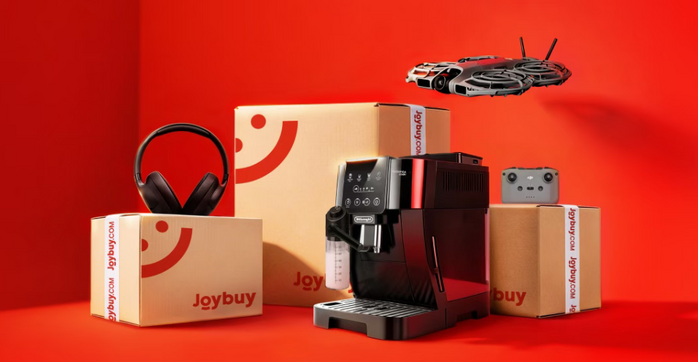
Image: Official Joybuy account
Many consumers are returning to Amazon. Franz, a Chinese resident in Germany, remarked that when he first arrived in Europe more than a decade ago, limited shopping options meant he only used Amazon; later, as SHEIN, Temu and AliExpress grew popular, consumers gained access to far more low-price options; now, “we’ve come full circle” — Amazon has a huge selection and fast delivery, but its prices are much higher.
Some shoppers have decided to leverage “collective purchasing power.” On Reddit, Chinese residents in Europe have proposed that if enough people in a community are interested, they can set up group buying groups, with each person responsible for a different product category, pooling orders to split the fixed tariff costs. A Dutch student posted on Xiaohongshu looking for people to split a large Temu order worth hundreds of euros, to bring down the marginal cost per item.
Others have turned to secondhand markets. “I’m just going to start shopping at vintage stores, buying secondhand clothing and used electronics,” Ariel said. She noted that European consumers are far more accepting of secondhand goods than Chinese shoppers, and Europe’s secondhand e-commerce platforms have grown rapidly in recent years.
Of course, some shopping activity is also shifting back from online to offline. While local brick-and-mortar supermarkets have higher sticker prices, the once-wide price gap between offline retail and online cross-border shopping is narrowing once tariffs are factored in.

For consumers, the issue is not just higher prices
In the view of many consumers, a large number of European brands and local retailers also rely heavily on Asian supply chains. If the final products are still made in Chinese factories, raising the cost of direct cross-border purchases will not bring back “Made in Europe” — it will only lower ordinary people’s quality of life.
In Germany, some consumers cited discount retail chains including Tedi, Action, Woolworth, Euroshop and Kik. They argued that many products sold in these stores are similar to items on AliExpress, with comparable quality and design, but cost 3–5 times as much; the price gap is smaller compared to Amazon, but even there, similar products often carry a 100% markup.
There is no shortage of concrete examples of the “extreme value for money” offered by Chinese cross-border e-commerce. Take eyeglass nose pads, for example. One French consumer previously bought 50 nose pads from an Italian brand for 15 euros — the packaging read “Made in China”; on Temu, 300 identical nose pads cost just 3 euros. He said the products were “exactly the same,” right down to the type of silicone used.

The issue is not just about saving money, either. Many long-tail products do not have a large enough market in Europe’s traditional retail system to support stable local supply.
One French consumer has long purchased repair parts, replacement components, and electronic parts redeveloped by Chinese OEM manufacturers on AliExpress. For example, new motherboards with legacy ports can extend the lifespan of many old devices and older electronics. “There’s no other option for me, because you can’t find these things in France,” he said.
The beauty category has similar dynamics. Some consumers say they regularly buy skincare and cosmetics from Asian sellers because European offerings do not meet their needs. The Asian market developed sun care products earlier and offers more specialized formulations, and many niche brands and products tailored to specific skin types are simply not available in Germany.
This is the truly irreplaceable advantage of Chinese cross-border e-commerce platforms: low prices are important, but their deeper moat is their massive selection of SKUs.
On another front, as European media loudly amplify “product quality controversies,” many European consumers have taken to social media to defend Chinese cross-border platforms against what they see as unfair criticism.
Some consumers say their SHEIN clothes have lasted longer than items from Uniqlo and H&M; one shopper said a pair of yoga pants bought on AliExpress has lasted ten years; another noted that a metronome and instrument tuner purchased on Temu two years ago still work perfectly.
While individual experiences do not represent the overall picture, they at least show that for some European consumers, the simplistic claim that “cheap Chinese goods equal poor quality” does not match their actual lived experience.
More importantly, these platforms have long supported a wide range of purchases that are not strictly necessities, but significantly improve quality of life.
One shopper buys disability aids, hygiene products, cotton clothing, physical therapy supplies, herbal pain patches, musical instruments and art supplies from Temu. “I use some of the things I buy on Temu every day. If Temu didn’t exist, I couldn’t afford them, and I’d have to give up those small little joys in life,” posted a French recipient of AAH (Adult Disability Allowance).
Many hobbyists rely on the “low-cost consumption” enabled by cross-border e-commerce. A college student who is a DIY electronics enthusiast complained that pulleys that used to cost 1 euro now cost 8 euros; a pack of resistors that cost 0.10 euros may now cost 3.10 euros, and the cost of custom PCB boards has also skyrocketed.
“Many of these components have such low profit margins that European companies don’t bother making them. Only Chinese manufacturers can rely on economies of scale to make small profits on high volume,” he said. He noted that even if you can find European distributors for these parts, they often require minimum orders of 100 units per model. On AliExpress, by contrast, he can buy a kit with 15 different models, with 20 units of each. For an electronics hobbyist, that difference means he used to be able to test out an idea for very little money, but now part costs may force him to abandon entire projects.
Household consumption tells the same story. One consumer recalled regularly buying paint, art supplies and craft tools for her children on Temu for parent-child activities. “They got so excited every time a package arrived; now, the same things might cost twice or even three times as much, so I can’t shop the way I used to.”

Some call to “scrap the tariffs,” others want platforms to “come up with solutions”
In contrast to the comments under serious media reports praising the tax hike as a measure to “protect local European businesses,” browsing Reddit or X reveals a very different picture: in comment threads, Europeans are delivering sharp, witty takedowns of the small parcel tariff policy.
Per Ebrun observations, supporters of the tariffs make up roughly 40% of commenters at most, and as little as 30%, with the overwhelming majority of users critical of the policy.
“What normal person would just kill off a whole category of imported goods without having any alternatives in place?” French commenters often ask bluntly. Such jabs at pro-policy “tariff supporters” are common.
German commenters have brought their own brand of humor. “It took China 50 years to become the manufacturing hub for most of the world’s electronics, plastic and rubber components. Do you really think slapping a 3 euro tax on Temu orders means we’ll have local factories making those things by 2076, so I can buy locally made circuit boards when I’m 90?”
For many consumers, frustration with the EU’s new policy has evolved from “things are more expensive” to “who exactly is this supposed to protect?”, as discontent continues to build.
Some have denounced the 3 euro fee as the product of lobbying groups misleading the EU — arguing the only beneficiaries are large retail conglomerates that source goods from Asia and resell them at marked-up prices. Some users have even set up groups on Discord to try to launch an EU-wide signature petition pushing to repeal the tariffs.
That said, European consumers do not hold a unified anti-tariff position. More often than not, views on the policy remain fragmented.
And many shoppers have taken a more pragmatic approach: can platforms make the tax calculation process smarter?
Some hope platforms will further optimize their checkout systems to automatically identify and group products by HS code, consolidating items in the same category to reduce unnecessary duplicate tax charges.
Others have proposed that platforms could partner with logistics providers to offer consolidated shipping: first pooling orders from different customers to ship to a single EU hub, completing centralized customs clearance to avoid duplicate tax payments, before handling local sorting, packaging and last-mile delivery.
These ideas may seem small, but they point to a very real shift in the market. For cross-border e-commerce platforms, past competition focused on who could sell a product for the lowest price to win over consumers; now, the most pressing challenge is figuring out how to make consumers still feel comfortable placing orders under the new tax, logistics and regulatory framework. After all, consumer demand has not gone away — there is still strong public appetite for these offerings, which means cross-border platforms still have deep popular support as they work to regain momentum.
Ebrun will continue to track and report on this topic. For more related information, scan the QR code to follow the author’s WeChat account.

This article was first published on the official website of Ebrun.
[Copyright Notice] Ebrun advocates respecting and protecting intellectual property rights. Without permission, no one is allowed to copy, reproduce, or use the content of this website in any other way. If any copyright issues are found in the articles on this website, please provide copyright questions, identification, proof of copyright, contact information, etc. and send an email to run@ebrun.com. We will communicate and handle it in a timely manner.
Translated by AI. Feedback: run@ebrun.com