
Dialogue: From "Fighting for Water at the Wellhead" to "Refilling at the Source": Brand Globalization Requires a Rethink of Full-Funnel Marketing
【Ebrun Original】As Chinese enterprises shift from “just selling products” to building global brands, advertising is no longer limited to keywords, clicks, and one-off conversions. Rising traffic costs and intensifying competition are forcing brands to rethink: How to turn short-term ad spend into long-term, accumulative brand equity? And how to measure the reach and long-term value of content beyond search ads?
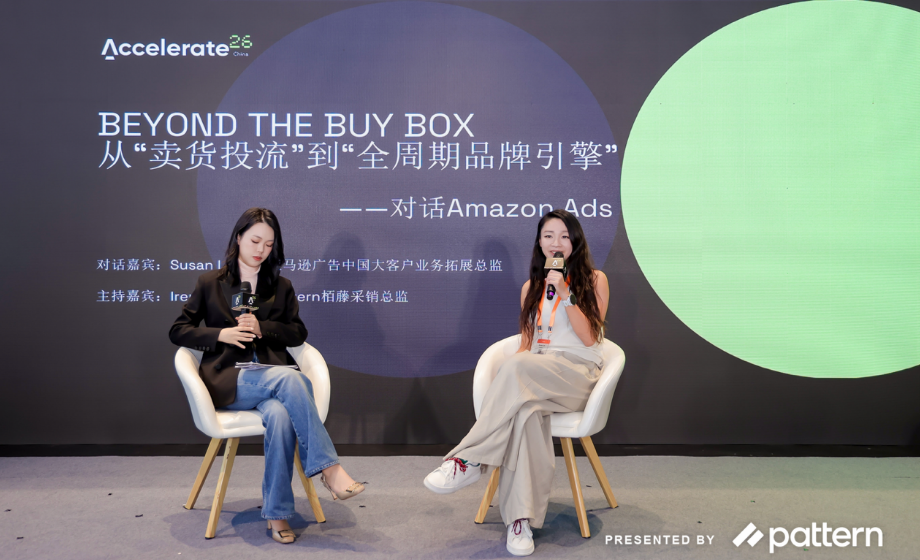
On September 17, 2026, at the thematic forum of “Accelerate26 Cross-Border Ecosystem Acceleration Summit · China Stop”, hosted by Pattern with Ebrun as the strategic partner, Susan Lai, Director of Key Account Business Development for Amazon Ads China, delivered a speech centered on “How Amazon Ads Redefines ‘Full-Funnel Advertising’”. Irene Huang, Director of International Business Sourcing and Merchandising at Pattern, moderated the dialogue.
Warm reminder: This article is an initial draft of on-site shorthand, consisting of selected excerpts from the discussion, and was edited and organized by Ebrun without altering the original meaning.
01 From Searching for Product Categories to Searching for Brand Names
Irene Huang: It’s a great honor to have Susan with us today. You have long been deeply engaged in the front lines of global e-commerce and brand globalization, and have first-hand observations of the changes Chinese brands have undergone over the years. Today, we don’t just want to talk about advertising—we want to discuss how marketing should evolve as Chinese brands move from cross-border product sales to full-fledged global brand building.
In the past, many Chinese sellers focused on how to sell their goods, but now more enterprises are thinking about how to build a real brand. What exactly is driving this shift from selling products to building brands?
Susan Lai: First of all, thank you Pattern for the invitation. I’m very glad to share our new perspectives and observations on global expansion with Chinese cross-border brands.
I’m Susan from the key account team at Amazon Ads. For more than a decade, I have been supporting Chinese brands going global. I spent the previous eight years at Google Ads, serving Chinese cross-border sellers, mobile phone brands, consumer electronics brands, as well as overseas-expanding apps like DiDi and Kuaishou. I joined Amazon Ads two and a half years ago.
A very important reason for my move is: if we want to accompany Chinese brands through their global journey, we have to figure out how to tell their brand stories well and truly embed their brand messages in consumers’ minds. Amazon Ads has a complete ecosystem that can help Chinese brands tell their stories more effectively.
Over the past year or two, many global brand owners have asked me: “Why do the tactics that used to work so well seem to lose their edge now?” The core reason is that as more brands enter overseas markets, the market is becoming saturated, and the underlying logic of going global has changed.
In the past, many Amazon teams operated with a pure sales mindset: they focused on keyword ranking competition, fought for limited traffic slots, were highly price-sensitive, and felt constant anxiety over fluctuations in ad ROI and ACOS. The biggest pain point of this model is that “traffic stops as soon as you stop paying”—once ad spend is cut, sales can plummet off a cliff.
Today, companies should shift from a traffic and sales mindset to building brand equity. The essence of a brand is the certainty of user mindshare and the compound interest of trust. Many brand owners say they want to build a brand, but their actions tell a different story because they still have to account for ad ROI. But ask yourself: If you stop running ads, will your sales still hold up? When overseas users truly identify with your brand value, you gain pricing power, higher repurchase rates across longer customer lifecycles, and organic traffic that you don’t have to keep paying for. This is the fundamental leap from paying for every single order to letting the flywheel run on its own.

If I had to pick the most intuitive metric to measure a global brand’s success, I would say: getting consumers to search for your brand name instead of a product category.
When a user needs a robot vacuum, a power bank, or a pair of headphones, they don’t search for the category term on Amazon or Google and compare a bunch of similar products—they type in your brand name directly. That’s when a brand truly breaks free from cutthroat low-price competition and builds its own moat.
This is equally important in the AI-driven GEO (Generative Engine Optimization) landscape. When consumers type a request into an AI chatbox and the AI recommends different brands, can you stand alongside names like Samsung and Apple, and will consumers ultimately choose you? That’s exactly why brand equity matters.
Irene Huang: Are there any successful cases that can help us better understand this shift from selling products to building brands?
Susan Lai: I’d like to share a consumer electronics brand I really like—Shokz. I’m a triathlon enthusiast, and I’ve been using Shokz products since 2021. I first saw them on the shelves of a bike shop and always thought they were a foreign brand. After joining Amazon, when Shokz became my client, I learned it’s actually a Chinese brand.
Shokz first entered the U.S. market, starting with sales in local sporting goods stores across cities before launching on Amazon. When it entered the Japanese market in 2017, it replicated its U.S. operating model, but sales failed to take off. After the team conducted in-store visits, they found that consumers at Japanese sporting goods stores mainly bought sportswear and swimming gear, and on-site sales staff were not skilled at selling consumer electronics. Further research revealed that local sports enthusiasts mainly purchased consumer electronics online on Amazon or at offline consumer electronics stores. After Shokz adjusted its channel strategy, sales gradually picked up.
That’s the first step: figuring out exactly where your users buy your products.
The second step is identifying your brand’s core seed customers. Shokz’s seed customers are marathon runners. For some time, the brand sponsored World Marathon Majors and various trail running events around the world, because that’s where its core user group is. These events helped more core users get to know the brand, and after using the products, they shared them with fellow sports enthusiasts.
The third step is expanding beyond the core audience when hitting a growth ceiling. When Shokz expanded from ear-hook bone conduction headphones to the open-ear headphone market, it had to compete with brands like Apple, Samsung, and Huawei. In the Japanese market, it invited popular local celebrities to endorse its products and launched co-branded editions, reaching a wider audience through large-screen video ads. That 15-second video boosted awareness of the new product, and the co-branded headphones sold out within a week.
02 Amazon Ads Is Not Just On-Site Search Advertising
Irene Huang: When talking about brand growth, we can’t avoid the topic of advertising and marketing. But there’s a perception gap here: when many people hear “Amazon Ads”, their first thought is still on-site search ads or e-commerce traffic buying. What is Amazon Ads today, and how is it different from people’s old perceptions?
Susan Lai: After moving from Google to Amazon, I talked to many clients and brand owners. When I told them I now work on Amazon Ads, they often replied, “Let me connect you with our e-commerce team.” This shows that in the eyes of many brand owners and advertisers, Amazon Ads is still just search ads on Amazon.com—driving traffic through search to the Amazon site to complete purchase conversions.
In fact, over the past decade, Amazon has built a powerful content ecosystem. In sports, it has content rights for the NBA, NFL, Premier League, UEFA Champions League, and more; in film, television, and streaming, it owns resources and platforms including MGM Studios, Prime Video, and Twitch. Amazon Ads has established a presence across many content platforms that consumers use and watch in their daily lives.
Irene Huang: Where does Amazon Ads get its consumer insights from?
Susan Lai: On social platforms, we can learn what users talk about and what they’re interested in; on search platforms, we can see what they’re looking up. What makes Amazon unique is that, based on user-authorized shopping data, we can understand what consumers actually buy, how often they repurchase, which products they add to their wish lists, and which competing products they weigh against each other.
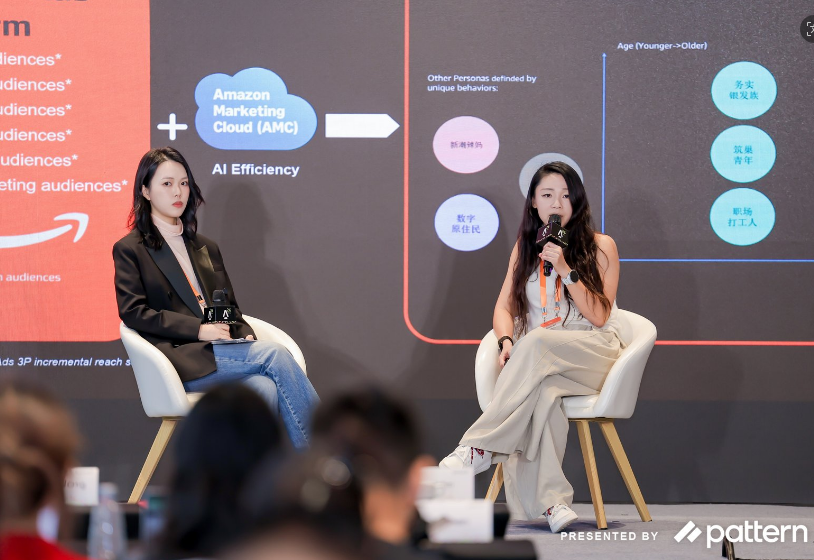
Amazon has both shopping data and content touchpoints across multiple scenarios. Leveraging these data points and streaming signals, Amazon can use AI and the Amazon Marketing Cloud (AMC) to refine audience segments, such as trendy young moms, affluent middle-class consumers, young urban professionals, and new home settlers.
This means brands don’t have to cast a wide blind net when investing; instead, they can use consumption data to deliver brand messages to target audiences who are actively in the decision-making window.
Irene Huang:Does Alexa also collect consumer questions and feed that data back to Amazon?
Susan Lai: Yes. Alexa is Amazon’s smart hardware endpoint, which captures a wealth of daily household interaction data. With user authorization, it can also serve as a data source for advertising decisions.
03 Don’t Just Fight for Water at the Wellhead—Refill the Source
Irene Huang: Today, brands can do far more than just buy traffic for a product and track conversions. Many sellers in the audience already have a solid foundation on Amazon. How can these brands use the new capabilities of Amazon Ads to drive growth and turn traffic-buying sales into real brand marketing?
Susan Lai: For some time, many advertisers have been asking: “Why is the cost per ad click getting higher and higher, and why do ACoS numbers look worse and worse?” I often answer this with an analogy: if a team puts 90% or even 100% of its budget into lower-funnel search ads, it’s like everyone crowding around a wellhead to scoop up water; there’s only so much water in the well, and when everyone is ladling it out, costs naturally rise.
The real brand play is not just to “fight for water at the wellhead”, but also to focus on “refilling the source”. Brands must shift part of their budget upstream, investing in top-of-funnel awareness and mid-funnel nurturing through streaming, content marketing, and in-feed ads, so that new consumers keep discovering the brand and developing positive feelings toward it. That way, when it comes time for lower-funnel conversions, capturing that demand with premium pricing will be much easier, and marketing costs will be lower.
Irene Huang: Lower-funnel search ads are usually measured by ROI. What metrics should we look at for upper-funnel brand ads to judge whether campaigns are effective?
Susan Lai: I recommend four key metrics.
The first is New to Brand (NTB), or new customer acquisition. How many new customers does the budget bring in? This metric measures incremental growth, rather than spinning wheels in the existing customer pool.
The second is Brand Search, or brand search volume. After running upper-funnel ads, has the volume of users actively searching for your brand increased? This is the most direct barometer of changes in brand mindshare.
The third is Lifetime Value (LTV), or user lifetime value. Brands need to extend their focus from one-off transactions to the full repurchase value chain across a user’s entire lifecycle.
The fourth is multi-touch attribution via the Amazon Marketing Cloud. Brands should move away from last-click attribution and examine the full user conversion cycle tied to every marketing dollar. Through AMC, you can track the complete user journey—from being reached by a video ad, seeing an in-feed ad, to finally making a purchase on Amazon—and then judge whether your marketing budget is being spent in the right places.
These four metrics form a performance dashboard for brand owners.
04 Traffic Is a Cost, Brand Is an Asset
Irene Huang: There are also brands in the audience that run strong DTC businesses and independent sites, and some have not even set up Amazon stores yet. Can these brands also use Amazon Ads? What opportunities are worth noting?
Susan Lai: The answer is absolutely yes. Amazon Ads has built a full-funnel marketing ecosystem, which is also an open global digital network. We serve many DTC brands and clients who do not sell on the Amazon platform across different countries.
There are three types of incremental growth scenarios here: DTC and independent site brands, automotive and high-ticket durable goods enterprises, as well as finance, travel, and local lifestyle apps.
For independent site brands: First, they can use Amazon’s shopper signals to drive traffic to their own sites; second, they can integrate Buy with Prime to boost conversions by leveraging Amazon’s trusted brand endorsement; third, they can feed user signals from their independent sites into AMC, cross-reference users who have been reached on both Amazon and their own sites, reduce duplicate ad delivery to the same user across platforms, and improve overall marketing ROI.
For high-ticket durable goods enterprises such as automakers, they can target upper-middle-class households via Prime Video to build brand buzz and identify high-intent test drive leads.
For finance, travel, and local lifestyle apps, they can combine Amazon’s data on spending power and cross-border travel behavior signals to reach high-value users.

Irene Huang: How can automotive brands and high-end apps build brand awareness through Amazon Ads? Are there real-world examples?
Susan Lai: Let’s start with an automotive case. Nissan partnered with Amazon Prime Video on a documentary that launched on the International Day of Persons with Disabilities, telling the story of a Paralympic champion and bowel cancer survivor who defied fate to complete a marathon. The project ultimately won a Clio Award. Through connected TV (CTV) large screens and the documentary format, Nissan connected its brand with emotions such as passion, perseverance, and trust. The emotional impact of this long-form content is very different from fast-paced, hard-sell ads.
Another example is the travel app Booking.com. It ran an ad partnership with Prime Video, which resulted in an 8% lift in overall brand awareness, an 11% lift in brand favorability, and a 73% lift in future usage intent. Prime Video allowed the brand to reach a massive, highly engaged audience, connect with consumers in a content-aligned, entertaining way, and join cultural conversations.
Irene Huang:Booking.com is already a leading player in the travel app ecosystem, yet its partnership with Prime Video still delivered a significant lift in brand awareness. Are there any cases of Chinese brands that can help sellers in the audience better understand these new tactics?
Susan Lai: I can share a case of a Chinese maternal and baby brand. The specific brand name and some data have not been publicly disclosed, so I will describe it anecdotally.
The brand’s core categories are breast pumps and nursing bras. Facing red-ocean competition and increasingly discerning consumers, it wanted to make a strategic leap: from competing on traffic to competing as a high-ticket brand, and evolving from a “mom brand” to a “family brand”.
For a long time, its ads only spoke to mothers, covering 17.2% of the core maternal and baby audience. But through Amazon’s first-party data, the team found that another 14.7% of users—dads—were an untapped audience. These users are interested in technology, home appliances, and consumer electronics, and participate in purchase decisions for family products such as bottle warmers and baby monitors, yet past marketing efforts rarely addressed them.
The team further identified two core audience segments from the user profiles: one is “rational consumers”, a group with a high proportion of dads who are interested in tech and home appliances; the other is “affluent middle-class consumers” aged 30 to 45 with strong spending power.
With clearer audience targeting, the brand created personalized creatives for different user groups: for moms, it presented real parenting scenarios, emphasizing trust and peace of mind; for high-net-worth users, it highlighted lifestyle quality and consumption upgrades; for dads, it focused on product specs and hardcore tech appeal.
Subsequently, the brand leveraged Amazon’s AI-powered “brand + performance” integrated product matrix, which not only drove sales growth and expanded audience reach but also strengthened brand equity.
Irene Huang: The last question is simple yet somewhat difficult. If you could only give one piece of advice to the global brand decision-makers in the room, what would it be?
Susan Lai: I hope you take away one line: Traffic is a cost, brand is an asset.
Please don’t forever fixate on chasing the next click or fighting for the next Buy Box. In an era of uncertainty, brand is the only antidote that can help you weather cycles. Step out of that small box, and build true global influence.
Amazon Ads is also ready to be your steadfast brand partner to help you build that brand.
Ebrun will continue to track and report on this topic. For more information related to this article, please scan the code to follow the author’s WeChat account.

This article was first published on the official website of Ebrun.
[Copyright Notice] Ebrun advocates respecting and protecting intellectual property rights. Without permission, no one is allowed to copy, reproduce, or use the content of this website in any other way. If any copyright issues are found in the articles on this website, please provide copyright questions, identification, proof of copyright, contact information, etc. and send an email to run@ebrun.com. We will communicate and handle it in a timely manner.
Translated by AI. Feedback: run@ebrun.com