
Roundtable: How to Replicate Hit Products on TikTok Shop US?
【Ebrun Original】On interest-driven e-commerce platforms like TikTok Shop, it is not hard to score a viral video that drives explosive sales. The real challenge is getting the second and third pieces of content to perform consistently, turning a one-off viral hit into a repeatable business. What new opportunities are emerging from livestreaming, photo-based content, and high-ticket products? How can brands leverage content and creators to build brand presence and drive sales conversion in the U.S. market on TikTok?
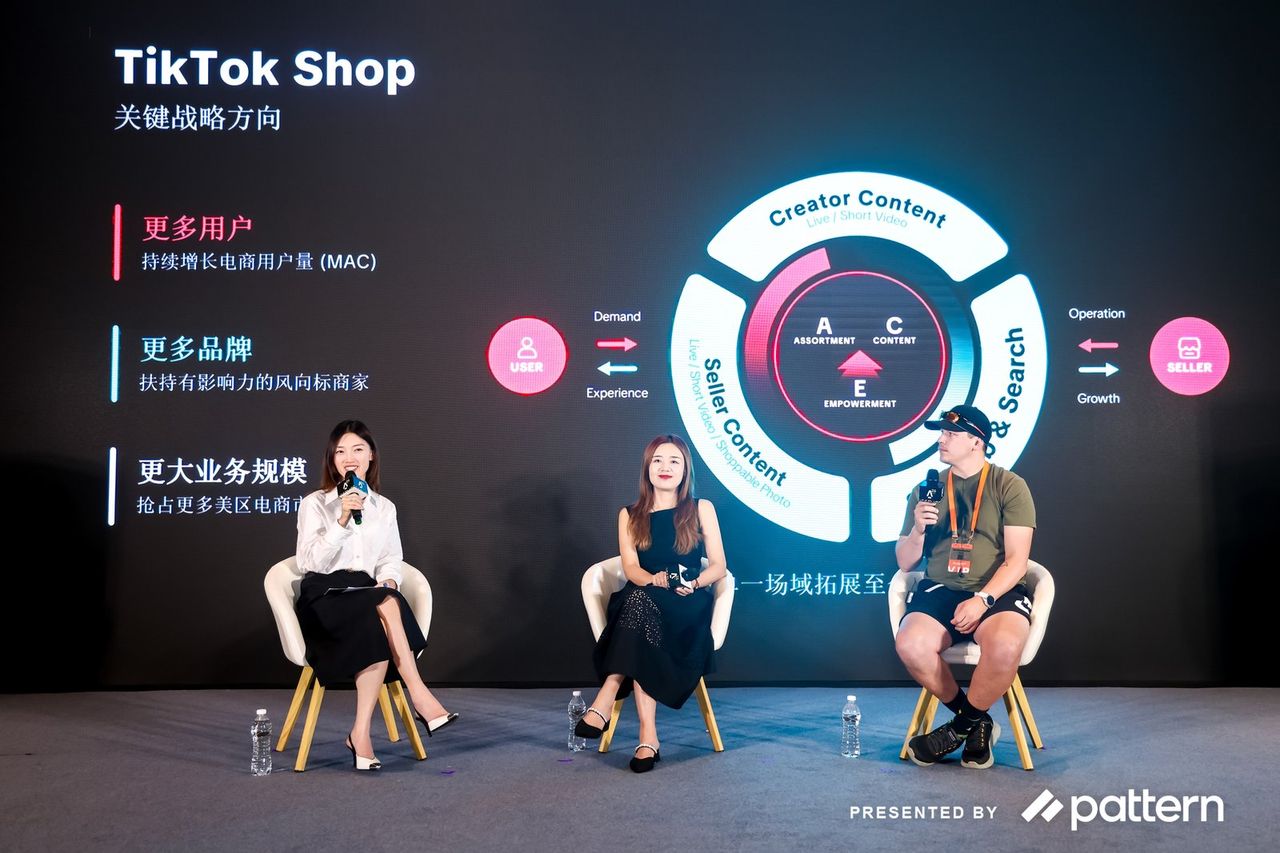
On September 17, at the "Connect" thematic forum of the Accelerate26 Cross-Border Ecosystem Acceleration Summit · China Stop, hosted by Pattern with Ebrun as its strategic partner, Liu Mengyue (Shirley), Head of User, Creator Marketing and Methodology at TikTok Shop US, and top U.S. TikTok creator Brandon Michol held a discussion centered on "Winning on TikTok Shop US: Breaking Down Pattern’s Best Practices for North American Growth." Grace Yang, Vice President of Creators and Social Commerce at Pattern, served as the host and panelist.
Disclaimer: This article is an initial draft of on-site shorthand, featuring excerpts from the discussion, edited by Ebrun without altering the original intent of the speakers.
1. Three key opportunities on TikTok Shop US: Livestreaming, shoppable photos, and high-ticket products
Grace Yang: Good afternoon, everyone. I’m Grace Yang, and I’ll be moderating today’s TikTok Shop-focused roundtable. We have two guests on stage: Shirley from the TikTok Shop platform, and top U.S. creator Brandon. Let’s start by having both of you introduce yourselves.
Liu Mengyue (Shirley): Hello everyone. It’s great to be here as an official representative of TikTok Shop to join Grace and Brandon in sharing platform trends, opportunities, and strategies to win in the U.S. market. With Black Friday fast approaching, I hope today’s discussion will help you better understand the platform and deliver stronger results for your global business.
Brandon Michol: Hello everyone, I’m Brandon. It’s an honor to be here. As a representative of U.S. creators, I hope to share our perspectives on content creation and brand building to deliver value for all of you.
Grace Yang: Over the past year, one of the most discussed, anxiety-inducing pain points for sellers is that while content occasionally goes viral and GMV rises, it is extremely hard to replicate that success with the second or third video after a single hit. Today, we want to dive deep into how to turn viral content from a random stroke of luck into a repeatable business. To start, what opportunities should cross-border brands prioritize when building out their TikTok Shop U.S. presence this year?
Liu Mengyue (Shirley): The U.S. e-commerce market, especially the social commerce segment, has seen dramatic shifts this year. If I had to distill the top opportunities down to three keywords, they would be the following.
The first keyword is livestreaming. Over the past two years, U.S. users were still gradually growing accustomed to livestream shopping. But after TikTok Shop introduced live auction features this year, livestream GMV has grown extremely rapidly. Looking solely at TikTok Shop’s cross-border third-party POP business, livestream GMV in August was roughly 5 to 6 times higher than in January of this year. U.S. consumers prefer interactive features. Auctions, which involve incremental bidding and require active communication between viewers and hosts to close a sale, align well with U.S. user habits. Auctions also start at just $1, which is inherently attractive to consumers. As more users enter livestream rooms, interact with hosts, and learn about products, conversion becomes much easier. The platform actively encourages merchants to enter the livestream space.
The second keyword is photo-based content. In May, TikTok Shop launched Shoppable Photos, a format directly comparable to Instagram’s photo posts. In the past, many merchants, especially local sellers, would run performance ads on Instagram to drive traffic to their DTC sites for conversion. Now that TikTok Shop has brought shoppable photo formats to its e-commerce ecosystem, access to this feature has been rolled out to nearly all merchants. It has independent traffic allocation, recommendation algorithms, and a distinct user base, so we recommend merchants get in early.
The third keyword is high-ticket products. TikTok Shop relies heavily on content and recommendation algorithms to drive purchases. For example, during the Black Friday period, consumers stock up on gifts for Christmas. If merchants launch high-ticket gift sets centered around holiday gifting to meet demand for special occasions, these products are well suited to being showcased through content, and ideal for sparking consumer interest on social platforms. The definition of a high-ticket item varies by category: it may be above $30 for small items, and above $100 for large goods, so merchants can set targets based on their own categories. Overall, the platform encourages merchants to create product bundles and raise average order value, which leaves more room for both content creation and ad spend.
Grace Yang: Brandon, as a creator, how do you judge whether a product has the potential to become a viral hit?
Brandon Michol: We usually look at whether the product solves a simple problem, and we pay special attention to product functionality. That function needs to be demonstrable, and in a cool way. For example, a toy that moves when you open it, or a mouthwash that makes teeth look visibly whiter. We focus on whether the product’s benefits are immediately obvious to users, and make them go "wow.” As content creators, we look for products that are both visually appealing and capable of solving a real problem.
Grace Yang: What advice do you have for Chinese brands looking to enter the U.S. market, especially via TikTok Shop?
Brandon Michol: First and foremost, solve real problems in the market. To understand the U.S. market, brands need to know how to work well with content creators, leveraging them to boost brand engagement, strengthen brand influence on the platform, and drive sales. This delivers long-term returns over time.
2. From product discovery to search and transaction: TikTok Shop covers the full content commerce funnel
Grace Yang: Next, let’s talk about content. TikTok Shop is a content-driven platform. How can Chinese brands build their brand on such a content platform? Beyond short videos, how much growth potential do other formats like livestreaming hold? What differentiated advantages does interest e-commerce have over traditional e-commerce, and how does the platform empower long-term brand growth?
Liu Mengyue (Shirley): Let’s start with livestreaming. Earlier, Grace mentioned that livestreaming only accounted for 10% to 20% of platform GMV — that was last year’s figure. Livestreaming has grown extremely fast this year, and now makes up over 25% of total GMV in the U.S. market. There are several core factors driving this growth. First is live auctions. The platform launched highly interactive tools and brought in corresponding inventory, which drove rapid transaction growth. Second, U.S. user habits are shifting. The old impression was that creators mostly made short videos, and users mostly converted via individual short videos. But this year, as TikTok Shop and other platforms expanded their supply of livestream hosts and content, and as consumer habits evolved, the livestream ecosystem has grown even faster than short video. For agencies and merchants, we recommend that you start exploring U.S. user behavior in livestream rooms early, learn more about livestream product tools, and even build out your own in-house livestream rooms for operation.
Now, let’s talk about how TikTok Shop differs from traditional e-commerce. TikTok Shop is a one-stop funnel solution with multiple core attributes. First, it is an entertainment and content platform: TikTok has over 200 million monthly active users in the U.S., and over 1 billion global users. That means merchants don’t only get end-of-funnel e-commerce conversions — they can also reach more users and drive traffic from the very top of the funnel, which delivers major user value.
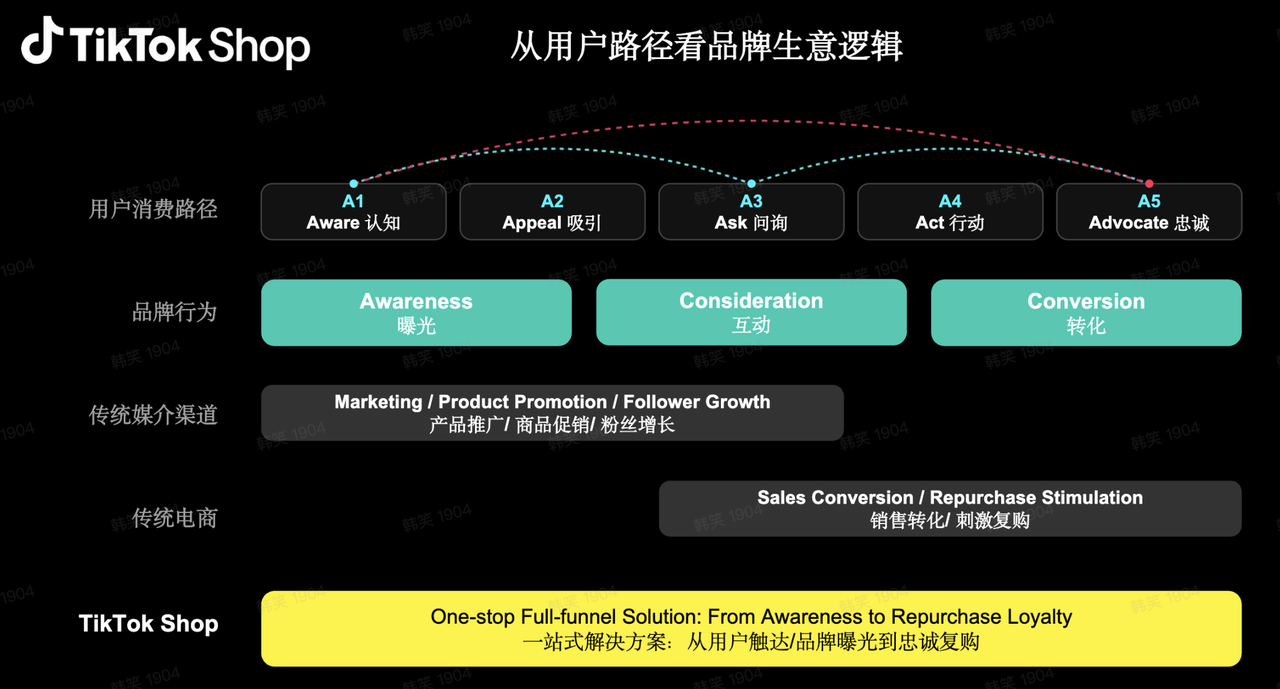
Second is its product discovery and transaction value. When users scroll through short videos and see repeated content featuring the same gift set, they may be swayed to purchase. Through its closed-loop transaction system, TikTok Shop connects the content users see directly to in-app purchases, across both short videos and livestreams. Traditional media channels usually only cover the awareness and consideration stages — they can build product interest but cannot close transactions. Traditional e-commerce platforms like Amazon and Walmart mostly capture users who already have clear purchase intent. TikTok Shop, by contrast, connects the entire chain: from brand awareness and traffic acquisition, to content-driven interest sparking, to search, in-app mall, and purchase conversion. Brands can both acquire new users here and drive direct in-app transactions from those users.
Cross-border merchants often excel at supply chain management and end-of-funnel transaction conversion. If they can leverage the native content platform to do a better job of upstream brand building and user acquisition, then express that value through content, they can unlock longer-term returns. We’ve observed that when U.S. brands evaluate TikTok Shop, they see 70% of its value as marketing, and only 30% as direct sales.
Grace Yang: Given their core strengths, Chinese brands often want to turn every platform into a direct sales channel. But TikTok Shop is both a full-funnel media platform and an e-commerce platform, where brands can take a wide range of brand-building actions. Our next question: how do creators decide whether a product is better suited to short video or livestream?
Brandon Michol: A lot of the time, it depends on what format the creator is better at. If they lean into livestreaming, they do livestreams; if they prefer short video, they make short videos. I’m comfortable with both formats. When I do livestreams, I look at whether the product requires promotional and educational content. Livestreams let you answer product questions in real time, interact more with audiences, and add more fun elements to keep the energy high in the room. Users come to the platform for both entertainment and shopping. If they find the livestream fun and participate, they are more likely to make a purchase. For products that require more consumer education, livestreaming also makes it easier to close sales.
Coming back to brand building, content creators need to understand the difference between brand building and selling. Brands need to build closer ties with their affiliate partners, and communicate core product selling points clearly. Every creator has their own angle, but core messaging needs to be aligned at a basic level, and brands need to work closely with creator teams to ensure the right message gets across.
3. The key to high-ticket products: thorough explanation and trust building
Grace Yang: Many sellers are dealing in 3C products, home goods, and other high-ticket items. The conventional wisdom used to be that the sweet price point for TikTok Shop US was around $20 to $30. For a 3C product priced over $100, how can you drive sales on TikTok Shop and also fuel growth off the platform?
Liu Mengyue (Shirley): There are two questions here: first, how to operate high-ticket products; second, how to think about the off-platform spillover value TikTok Shop can deliver.
For high-ticket product operations, it comes back to the one-stop funnel. The platform has a natural advantage in product discovery, with a huge pool of short video and livestream creators like Brandon. Creators can use content to clearly explain their take on the product, reasons to buy, and key features, to better spark user interest. Users may also comparison shop, checking prices on TikTok Shop, Amazon, or other platforms — that’s a basic part of how brands measure value across channels. But TikTok Shop can spark user interest through content storytelling. When users like a product enough, and get a recommendation from a creator who feels like a friend, they may skip the comparison process entirely.
So for high-ticket products, it is critical to lean into creator content: let creators explain the product, produce high-quality content, and drive passive, latent demand conversion. High-ticket products are not just suited to short videos — they work even better on livestreams. Livestream rooms allow for much longer explanations, unlike a 15-second short video that ends before users can fully grasp the product’s value. On a livestream, a host can spend two or even five minutes giving a full breakdown. For example, for a robot vacuum, they can fully showcase its advanced features, target users, and how to use it at home. Once users understand the value behind a high price tag, they are much more likely to convert. So brands can use short videos for product discovery, then use livestreams for in-depth explanation and conversion.
Now for platform spillover value. TikTok Shop offers a merchant tool called Brand Analytics, which helps merchants measure the incremental value that spills over to Amazon and DTC sites from TikTok. Sometimes users see content on the platform and don’t make a purchase immediately, but later buy the product on another channel — that’s the spillover halo effect. Take Fenty Beauty as an example: Brand Analytics data shows that TikTok Shop drove 6.7x higher transaction growth for the brand on other platforms, and one-third of its new customers were sourced from TikTok Shop. This shows that the platform does not only drive closed-loop transactions, but also delivers brand value: it generates GMV, expands brand awareness across broader user groups, and can drive transactions on other platforms.
Grace Yang: Brandon, how should high-value, high-ticket products be marketed to convince consumers to pay a premium?
Brandon Michol: Every product is different. Some products perform better on livestreams, because livestreams give more time for users to understand the product, and allow real-time interaction with consumers. Take vacuums, for example: Chinese products may have a price advantage over U.S.-made products, but some consumers prefer domestically produced versions. Through livestreams, we can better showcase Chinese products, letting consumers see that they work well and are built to last. High-priced electronics need more thorough demonstrations to help consumers recognize their true value: why does it cost this much? Why is it better than competing products? The most important thing when selling high-priced products on TikTok is building trust.
Grace Yang: How do you build trust with consumers?
Brandon Michol: First, when I select products, I only pick ones I genuinely like. That way, when I promote them, I can recommend them to consumers sincerely. Audiences can tell immediately whether I actually like a product. Only authentic product pitches build trust over time.
Second, you have to empathize and connect with consumers, which requires truly understanding who they are. For example, when I sell vacuums, the target customers may be stay-at-home moms with kids, who care about topics related to caring for and raising their children. I can learn about them deeply, talk to them about those topics, and build trust that way.
4. Rules for long-term collaboration with U.S. creators: Fair pay, communication, and creative freedom
Grace Yang: Next, let’s talk about how to work better with U.S. creators. For brands operating on TikTok Shop US, communicating with creators is an essential part of the process. Would you rather work with an average product backed by an excellent team, or a great product with a terrible team?
Brandon Michol: If the product is great but the team behind it is terrible, I might still sell it, because I know the product has potential — the team just hasn’t found the right marketing approach. But it depends on the situation; the odds are maybe 50/50. On the flip side, if the product itself is average and not selling well, but the brand team is great, easy to communicate with, low-friction to work with, and doesn’t make me re-shoot and edit videos over and over, I would also consider working with them. So for me it’s split 50/50. But overall, I lean slightly toward "average product, great team," because we need long-term, sustainable partnerships, and relationship building is extremely important. The ideal scenario, of course, is having both a great team and a great product.
Grace Yang: How can brands motivate creators to produce content?
Brandon Michol: Brands sometimes think creators are only motivated by material incentives, but we don’t just care about material rewards — more often, we also enjoy the sense of achievement that comes from successfully selling a product.
Grace Yang: How can a viral video deliver sustained impact, driving more breakout reach instead of being a one-off hit?
Brandon Michol: The best approach is to keep communication with the brand team good and straightforward, then make the best possible video, instead of going through endless rounds of revisions. Brands need to give creators creative freedom, because creators understand platform mechanics and their audience, and this is how they make a living. Ad spend is also important. If brand teams impose too many restrictions, that can actually kill creator motivation.
Grace Yang: Finally, let’s talk about Black Friday. What’s the most effective way to prepare for Black Friday? Which categories have the biggest opportunities? How have U.S. consumer shopping habits changed?
Liu Mengyue (Shirley): For cross-border merchants, there are two layers of insights here: one from the consumer side, one from the merchant side.
During Black Friday, U.S. consumers have a longstanding habit of buying gifts. Right after Black Friday come Christmas and New Year, so many users stock up during Black Friday to buy gifts for family, friends, and even themselves. Merchants can capitalize on this window by leveraging content strengths and stocking inventory around holiday gifting. Any category can work for gifting: small 3C appliances can be packaged as gifts for family, beauty products as gifts for female friends, daily necessities as family gifts. Merchants need to understand U.S. consumer habits, treat Black Friday as a stock-up window for holiday gifts, and design bundle packs and core product offerings accordingly. When drafting creative briefs for creators, or running your own livestreams and short videos, you can theme livestream room setups and content tone around Christmas and gifting. Adding those elements to creative briefs makes it easier to stimulate purchases.
On the merchant side, preparation needs to start early. Cross-border operations involve different systems, including cross-border direct mail, local warehouses, and third-party logistics. This year, TikTok Shop’s Black Friday campaign will start earlier, not just on Black Friday itself. Given the longer promotion period, we recommend merchants stock up at least two months in advance. This year’s event will kick off in mid-November, so if you have local warehouse capabilities, you should start preparing your Black Friday product lineup now, and move inventory into local warehouses. Only with sufficient stock can you capture the Black Friday sales peak.
Grace Yang: One line of advice for sellers: stock up early, and prepare holiday gift offerings. Brandon, if you could sit down with a Chinese brand and tell them three things about U.S. affiliate creators, what would they be?
Brandon Michol:
First, understand how affiliate creators work and how they select products.
Second, communicate appropriately. Creators get tons of emails, and many brands blast generic messages to thousands of creators. So brands should research a creator first before reaching out to build a personal connection. For example, learn their name first, then say, “We’re really interested in your content, we love what you do — what do you think of this product?” Partnerships start with building a relationship.
Third, maintain that relationship. After you make initial contact, brands should keep communicating, because you may want to work with that creator again on future products. Don’t limit the relationship to a single product; build open-ended, long-term partnerships.
We prefer upfront payment; if that’s not in the budget, revenue share or commission works too. For example, offer higher exclusive commission rates for deeply partnered creators, to incentivize them to make more great content for the product, and reward them with higher returns. If the relationship lasts, it can deliver steady product sales and ongoing commissions for both sides.
To sum up, three things motivate creators: first, fair compensation for the content they create; second, smooth, clear communication; third, creative freedom. Some brands offer me very high pay, but micromanage every step of the process, interfere with content creation, and leave no room for me to do my work. Even if the pay is great, I might end the partnership. So once brands have communicated their core product information, they should stop micromanaging creators.
Grace Yang: Last question, for both of you. If there was one single thing that could make a critical difference for cross-border brands, what would you advise them to do?
Liu Mengyue (Shirley): If there was only one thing, I think the most important step is to get in early. TikTok Shop’s user base in the U.S. continues to grow, and the platform is rolling out a series of support policies to help more brand-building, high-impact merchants scale. As our operational tools, platform systems, and rules become more mature, growth will accelerate even faster. Cross-border merchants, especially large sellers, should seize the opportunity early, while fully understanding that TikTok Shop is a content platform, fundamentally different from traditional e-commerce and media platforms. Brands should stock up early for Black Friday, start connecting with creators early to produce content tailored to their categories and products, and build out their own livestream and account operation capabilities early to drive growth from in-house content. The earlier you enter the market, the better positioned you are to build accumulated advantages and capture dividends. The platform will also provide methodology, product operation tools, and incentive policies to help merchants succeed in the U.S. market.
Brandon Michol: I agree with Shirley — brands need to act early. The fourth quarter is always a critical sales period in the U.S., so start building out your livestream rooms now, start connecting with affiliate creators now, build a strong creator network, find the creators who can actually drive sales, and maximize your sales potential. Black Friday and Cyber Monday are both huge opportunities. If you haven’t entered the platform yet, your strategy should be to onboard as soon as possible, analyze your niche market, find the right affiliate creators, and start building partnerships with them.
This article was first published on the official website of Ebrun.
[Copyright Notice] Ebrun advocates respecting and protecting intellectual property rights. Without permission, no one is allowed to copy, reproduce, or use the content of this website in any other way. If any copyright issues are found in the articles on this website, please provide copyright questions, identification, proof of copyright, contact information, etc. and send an email to run@ebrun.com. We will communicate and handle it in a timely manner.
Translated by AI. Feedback: run@ebrun.com