
Pattern CRO John LeBaron: In the New Market Cycle, Brand Growth Hinges on Seizing Opportunities From Social Content and AI-Powered New Entry Points
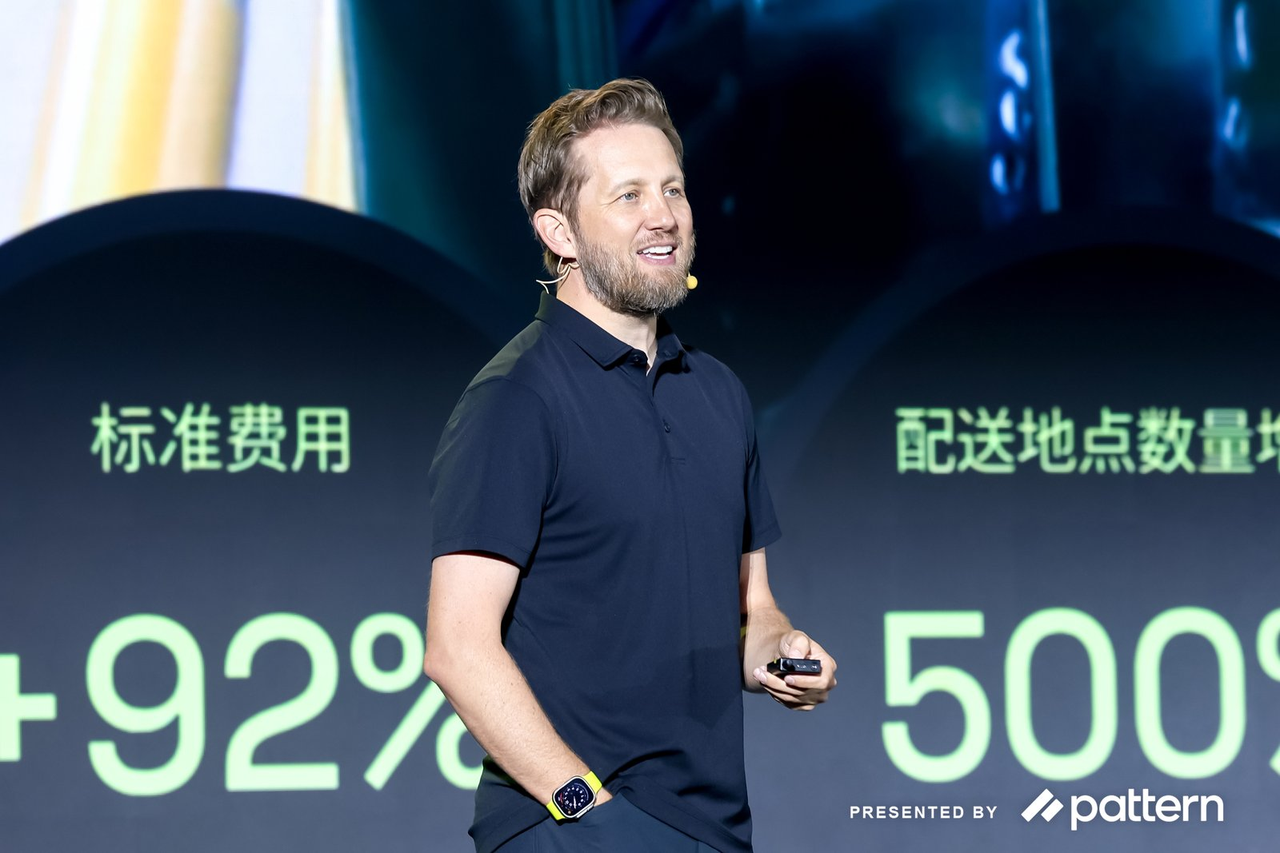
[Ebrun Original] On September 17, John LeBaron, Chief Revenue Officer of Pattern, delivered a speech titled "The Evolving Global Go-To-Market Landscape: North America’s New Cycle and Growth Opportunities for Chinese Brands" at Accelerate26 Cross-Border Ecosystem Summit · China, an event hosted by Pattern with Ebrun as a strategic partner.
LeBaron argued that global e-commerce is entering a new development phase. The way consumers discover products is expanding beyond active search to include social content, short-form video, and AI-powered recommendations, meaning brand growth no longer depends on performance in a single channel, but on the ability to build synergy across direct-to-consumer (DTC) websites, third-party marketplaces, social commerce, and offline retail.
In the North American market, TikTok is accelerating the growth of social commerce. Its value is not limited to in-app transactions; consumer interest sparked by TikTok content also spills over to other channels such as Amazon. Meanwhile, large language models (LLMs) are beginning to shape product discovery and purchasing decisions, creating a new priority for brands: ensuring their products appear in recommendation results when consumers ask AI tools what they should buy.
LeBaron noted that these shifts are creating new traffic entry points while also increasing the complexity of advertising, fulfillment, and cross-channel operations. To capitalize on North America’s new market cycle, Chinese brands need to shift from single-platform operations to full-funnel, omnichannel management, and leverage data and technology to boost efficiency across advertising, content, fulfillment, and merchandising decisions. This is exactly the support Pattern provides to brands, he added.
(This article is compiled from the speaker’s on-site presentation materials, with minor edits made without altering the core meaning.)
The following is the full transcript of John LeBaron’s speech:
01 From Search to Omnichannel Discovery: Brand Growth No Longer Depends on a Single Channel
Hello, everyone. I am the Chief Revenue Officer at Pattern. Today, I want to discuss several emerging trends and how they will shape future brand growth.
Pattern started out in the Amazon ecosystem, and our business now covers more than 70 global platforms. We currently manage over $3 billion in GMV worldwide. Through our partnerships with brands, we ship products from factories to global markets every month, and have built an integrated end-to-end chain covering port processing, customs clearance, cross-border logistics, and last-mile fulfillment. Over this process, our system has accumulated 91 trillion core business data points, and that number continues to grow. In today’s e-commerce market, data is becoming a critical foundation for brands to improve decision-making efficiency.
This is the first time Accelerate has been held in China. We have hosted this event in North America for several years. Through this summit, we aim to connect China with the global e-commerce ecosystem, enabling participants from different markets, platforms, and brands to exchange ideas, understand market differences, and identify areas for collaborative growth.
Global e-commerce is undergoing rapid change. Today, China is leading in many technology application scenarios. People often ask me how to predict the future of global e-commerce, and my answer is always: look at today’s Chinese market. China is highly forward-looking in the evolution of e-commerce models.
We have been through the era of rapid search e-commerce growth, when search engines were the key entry point for consumers to discover products and for brands to acquire traffic. Now, through platforms like Douyin and WeChat, social content and short-form video are increasingly integrated into e-commerce, transforming how consumers discover products. Even if consumers do not complete a purchase directly on a social platform, they may develop purchase interest while browsing content. This means the number of touchpoints between consumers and products is growing, and brands can no longer focus solely on the final transaction.
For brands operating in global markets, where will future growth come from? DTC websites are already well-established in North America and Europe. But beyond DTC, there are a large number of third-party platforms that can deliver incremental growth for brands; for some brands, offline physical retail is also a channel that cannot be ignored. That is why brands must adopt an omnichannel operating perspective. Pattern’s coverage of more than 70 global platforms is designed to adapt to this shift. For brands, future growth is not a multiple-choice question of picking one channel, but a question of how to make different channels work together to drive growth.
At the same time, the growing number of channels also brings higher operating costs and complexity. Every day, we run large-scale ad bidding optimization via algorithms and automation tools, while also managing global product fulfillment and content placement. From our conversations with Chinese brands, there is a widespread pain point: rising customer acquisition costs (CAC) for advertising. Continuous growth in platform ad revenue means the threshold for brands to acquire traffic is also rising. Brands need to think about how to improve the return on every dollar of ad spend, rather than simply increasing budgets. Pattern has developed relevant technologies to help brands improve ad return on investment (ROI), delivering more predictable growth while controlling costs.
Fulfillment is another critical issue that cannot be overlooked. Brands now need to cover sales channels including TikTok Shop, Walmart, DTC websites, and others, all of which have different requirements for warehousing, delivery, and order timelines. According to data we presented at the event, standard fulfillment and delivery costs have risen significantly since 2020; the number of FBA inbound checkpoints brands must comply with when operating on Amazon has also increased. The more channels a brand operates on, the more complex inventory allocation, capital turnover, and fulfillment management become. That is why omnichannel operation is not simply about listing products on more platforms. Brands must also build synergy across advertising, inventory, logistics, and cash flow; otherwise, more channels may only lead to higher costs.
02 TikTok Is Reshaping North American E-Commerce, With Social Content Value Spilling Over to Other Channels
Next, I want to focus on social commerce. Social commerce first achieved large-scale development in the Chinese market. For years, we have been waiting for it to truly take off in the U.S. market. Meta and Google have both made attempts, but neither managed to build a complete closed-loop social commerce ecosystem. That landscape began to shift after TikTok entered the U.S. market and made a major push into e-commerce.
TikTok’s rapid growth is driven by a shift in how consumers spend their entertainment time and shopping habits. Many people, including myself, are spending increasing amounts of time on TikTok every day. These videos provide entertainment and information, while also naturally showcasing products and sparking consumer demand.
Shelf e-commerce usually starts with clear purchase intent: consumers know what they need, then search, compare options, and place orders on a platform. TikTok operates on a different logic: consumers may have no initial plan to shop, but discover a product while browsing content and develop interest in it. This "content first, demand second" model is changing how North American consumers discover products. We project that TikTok’s U.S. GMV could reach $20 billion to $30 billion by 2026, with even larger volumes generated in markets outside the U.S. While TikTok still lags significantly behind Amazon today, its growth rate and development potential demand attention.
From shelf e-commerce represented by Amazon to social content commerce represented by TikTok, we are seeing two distinct growth logics. TikTok first built a content ecosystem that keeps users engaged for long periods, then gradually improved its marketing and transaction pipelines. For brands, an even more important point is that the value TikTok delivers is not limited to the TikTok platform itself. After seeing a video, consumers may not place an order on TikTok immediately; instead, they may turn to Amazon, brand DTC sites, or other channels to search for and purchase the same product. That means brands’ content investments on TikTok can spark consumer interest and create spillover effects across other channels.
This is why we repeatedly emphasize omnichannel operation. A brand cannot measure the return on its content investment solely by TikTok in-app GMV; it also needs to track whether brand search volume, Amazon sales, and performance across other sales channels are improving in lockstep. We cited a study from SmartScout which found that among large brands selling on Amazon, those with a presence on TikTok Shop were likely to see overall business growth even if their in-app TikTok performance was not outstanding; brands with strong TikTok performance also posted significantly higher overall business growth than their control group peers. This finding shows that social commerce not only creates new transaction channels, but may also influence consumer purchase behavior on other platforms.
Pattern has built a partnership network covering more than 1 million creators, and maintains collaborations with a large number of top creators. We track content and transaction data every day to identify what kind of content resonates with consumers, and how that influence translates to performance on other platforms. For Chinese brands, the opportunity presented by TikTok should not be understood as simply opening a new storefront. It is more accurately a new product discovery entry point. Brands need to incorporate creator content, in-app conversion, and sales outcomes across other channels into a unified operating framework for evaluation.
03 AI Becomes a Consumer Decision Entry Point, Brands Need to Compete for Visibility in LLM Responses
Finally, I want to talk about large language models, and how AI may become a new engine for e-commerce growth. Over the past few years, LLMs from ChatGPT, DeepSeek, to Claude, Gemini, and Grok have launched one after another, and are beginning to change how people use the internet. The pace of AI commercialization is faster than many people expected.
Have you used AI when shopping online? Consumers might ask, "My foot is this size, what shoes are suitable for me?" In the past, consumers had to enter keywords into search engines or e-commerce platforms, then sift through a large number of products one by one. Now, LLMs can understand more complex, vague needs, then provide a more targeted set of options. This means AI is evolving from an information query tool to a consumer decision-making assistant. Finding the right product among Amazon’s massive SKU catalog can sometimes feel like looking for a needle in a haystack. LLMs can parse consumer needs, turn vague purchase intent into specific criteria, then generate personalized product lists. In the future, they may even go a step further to complete actions like adding items to carts, making bundled recommendations, and generating personalized store pages.
This underlying technological shift is reshaping how consumer purchase intent is formed. In the past, brands competed for rankings in search results; in the future, brands will also need to compete for visibility in LLM responses. When consumers ask AI "which product should I buy," whether a brand is recognized, understood, and recommended by the model will become a new operational priority.
To that end, we have built Generative Engine Optimization (GEO) scorecards on our platform. We aim to help brands understand whether their product information can be correctly identified by LLMs, what types of content influence AI recommendations, and how brands should optimize their product information. We observe that consumers are increasingly using LLMs to assist with shopping decisions. More accurate, personalized recommendations can increase the time consumers spend on brand and product pages, further driving conversion rates. That means AI is not just a tool for improving internal efficiency; it can also become a new traffic channel and sales entry point.
Pattern also applies AI in our day-to-day operations. We have built an internal data engine that aggregates market dynamics across global platforms, and applies that information to advertising, content, inventory, fulfillment, and business decision-making. Whether brands operate via a 1P first-party retail model or a 3P third-party seller model, they need more timely data support.
To wrap up, we talked about three shifts today: how consumers discover products is changing, TikTok is driving social commerce growth in North America, and AI is becoming integrated into the shopping decision journey. All these shifts point to the same conclusion: brands can no longer rely on a single platform or single traffic entry point. Future competition will depend on brands’ ability to connect different channels, understand different touchpoints, and use data and technology to turn those touchpoints into sustained growth.
Thank you!
This article was first published on the official website of Ebrun.
[Copyright Notice] Ebrun advocates respecting and protecting intellectual property rights. Without permission, no one is allowed to copy, reproduce, or use the content of this website in any other way. If any copyright issues are found in the articles on this website, please provide copyright questions, identification, proof of copyright, contact information, etc. and send an email to run@ebrun.com. We will communicate and handle it in a timely manner.
Translated by AI. Feedback: run@ebrun.com