
Suki Chen, Director of Key Account Sales for China at Levanta: From Off-Platform Product Seeding to AI Recommendations, Sellers Explore New Growth in the GEO Era
[Ebrun Original] On September 17, 2026, Suki Chen, Director of Key Account Sales for China at Levanta, delivered a speech titled From Off-Platform Product Seeding to AI Recommendations: New Traffic Playbooks for Amazon Sellers in the GEO Era at the themed forum "Accelerate26 Cross-Border Ecosystem Acceleration Summit · China Stop", hosted by Pattern with Ebrun as the strategic partner.
She pointed out that while consumers still complete transactions on Amazon, brand preference formation is increasingly taking place off the platform. Social media builds initial awareness, Google searches, review content, and AI-generated answers help consumers compare options and seek validation, and Amazon ultimately captures already formed purchase intent. "The outcome of that order you see a consumer place on Amazon is actually decided off-platform before they even reach the site."
In her view, off-platform content no longer only serves to boost brand exposure. Specific use cases, real user experience data, and direct comparisons against competing products collectively form the evidence AI uses to identify and recommend brands. Meanwhile, tools such as Amazon Attribution, Brand Referral Bonus, and Creator Connections are making off-platform impacts trackable and measurable.
Chen also shared case studies across categories including smart fitness and beauty & personal care, as well as a 90-day execution framework covering cold start, growth, and promotional period scaling, to address how brands at different stages can build off-platform growth systems.

This article is compiled from the speaker’s on-site presentation, with minor edits made without altering the core meaning.
The following is the full transcript of the speech:
01 Amazon Captures Transactions, But Brand Selection Happens Off-Platform
Hello everyone, I’m Suki Chen.
After working in cross-border e-commerce for many years, many sellers ask me: as on-site advertising costs keep rising and overall traffic becomes more expensive, how can we break through this bottleneck?
Today I want to address three topics: what has changed in Amazon’s traffic landscape; how to build an off-platform traffic system in an era of information overload; and what pace a brand should follow to build off-channel presence from scratch all the way to major promotion peaks.
First, it is critical to recognize that while consumers still place orders on Amazon, their brand selection decisions are completed off the platform.
Take millennials as an example: after discovering a new product, 28.8% will continue researching it on social media, and 19.8% will further validate information via Google searches. In other words, before making a purchase, consumers have already done their due diligence off Amazon.

The modern consumer decision journey can be split into three stages.
In the first stage, influencers and creators on social media build brand awareness, helping consumers understand who you are and what you offer.
In the second stage, consumers search for all kinds of content off-platform — including a growing volume of AI-generated answers — compare your product against competitors, seek evidence, and form judgments.
Only in the final stage do consumers return to Amazon, where the platform captures their purchase intent and closes the transaction.
For this reason, the outcome of that order you see on Amazon is effectively decided off-platform before the customer ever arrives.
As AI increasingly shapes consumer choices, the next question brands must answer is: how do we make it into AI recommendation results?
AI recommendations are not generated out of thin air. Brands need to feed information to AI, because AI essentially cites existing, publicly available content.
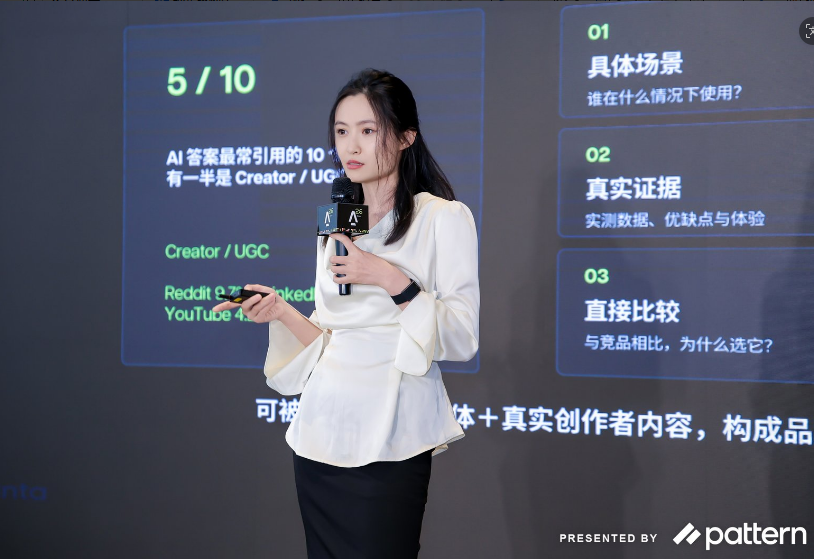
We observe that half of the top 10 domains most frequently cited in AI answers are creator and user-generated content (UGC) repositories. For example, Reddit accounts for 9.7% of citations, LinkedIn 8.9%, and YouTube 4.2%. In addition, high citation weight is given to authoritative media outlets such as Forbes, as well as professional product review websites.
AI tends to prioritize three categories of content.
The first is specific use case context: who uses your product, under what circumstances, and how the product is used.
The second is real empirical data, including test results, product pros and cons, and authentic user experiences.
The third is direct competitive comparisons: why consumers should choose you, and what your concrete advantages are over rival products.
Together, these three content categories form the off-Amazon evidence base for a brand. Equipped with this evidence, brands are far more likely to be recommended by AI.
Therefore, off-platform content is not a nice-to-have; it is a mandatory investment to solve today’s Amazon traffic challenges, and the "entry ticket" for brands to appear in AI-generated answers.
02 There Is No Universally Superior Affiliate Partner; Alignment With Product Stage and Growth Goals Is Key
Many sellers ask: off-platform growth sounds great, but since it is intangible, how can we tell if it is working?
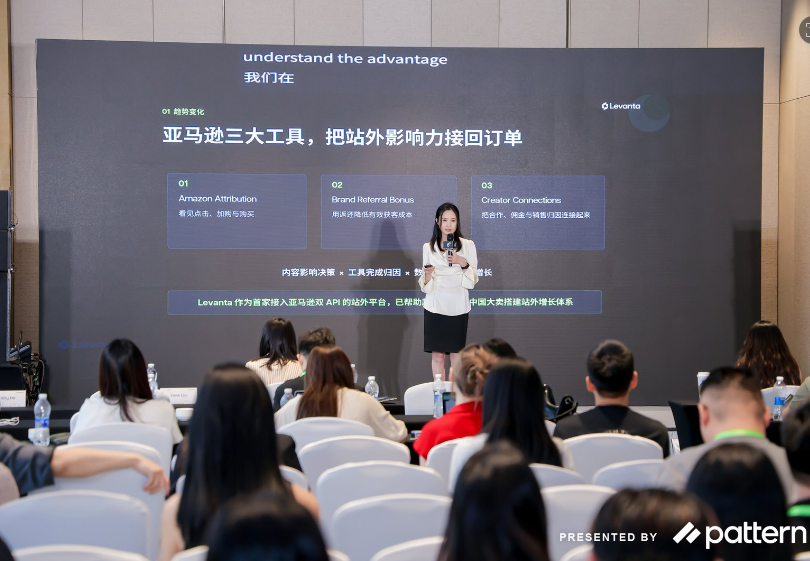
Amazon has now launched three tools to reconnect off-platform impact to actual orders, making it trackable and measurable.
The first is Amazon Attribution, which allows sellers to view click, add-to-cart, and purchase data.
The second is the Brand Referral Bonus (BRB), which provides sellers with a roughly 10% bonus to lower effective customer acquisition costs.
The third is Creator Connections, which links partnership commissions to sales attribution.
Content influences consumer decisions, tools complete sales attribution, and data guides the next round of growth — forming a closed-loop system.
Levanta is the first off-platform provider to integrate with both of Amazon’s core APIs for this use case. Since entering the Chinese market, we have helped over 50% of top-tier large Chinese sellers build their off-platform systems.
But once a brand decides to invest in off-channel growth, it must first understand that there is no one-size-fits-all affiliate strategy. Sellers at different stages need to deploy different tactics and traffic mixes.
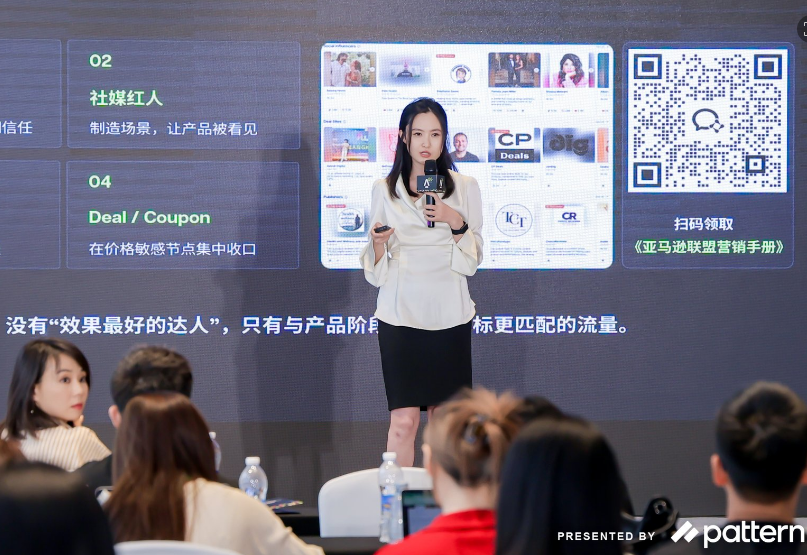
Classified by the consumer decision journey they serve, affiliate partners fall into four categories.
The first group is content sites and review sites. These partners capture consumers who are actively searching and researching purchases, helping brands build long-term trust, and are a key priority for sellers in the growth to mature stage.
The second group is social media influencers, such as creators on TikTok, YouTube, and Instagram. They can help brands expand the top of the funnel during the new product launch or growth stage, creating use case scenarios through content to generate demand among consumers who were previously unaware of the brand, or even unaware of their own need for such a product.
The third group is media buyers, including ad buying agencies and ad buying networks, which help brands rapidly test target audiences and conversion paths.
The fourth group is deal and coupon partners, which drive concentrated conversions and scale sales during periods when consumers are more price-sensitive.
There is no single best-performing affiliate partner, only traffic sources that are better aligned with a product’s life cycle stage and growth objectives.
To evaluate the performance of off-platform content, sellers can focus on four core metrics.
The first is traffic volume, measured in clicks, to track how many off-platform visits content drives.
The second is conversion quality, measured by conversion rate (CVR), calculated as conversions divided by clicks.
The third is sales output, measured by total sales revenue driven by off-platform traffic.
The fourth is investment efficiency, judged by commission spend and return on ad spend (ROAS), to assess whether current investment levels are healthy and support ongoing real-time performance reviews.
After a period of testing, sellers will be able to identify which partners drive higher-value traffic, which products convert best, and how conversion performance trends across the year. While off-platform investment used to operate as an untrackable "black box," that box can now be opened.
We once worked with a smart fitness brand that had already reached RMB 100 million in annual seller revenue and had run some off-platform campaigns, hoping to upgrade its previously scattered partnerships into a scalable, measurable long-term growth channel.
The brand faced three challenges.
First, rising on-platform traffic costs and intensifying channel competition made it hard to identify new growth sources.
Second, its high-ticket products had long consumer decision paths: even if consumers saw the product on TikTok, they might go on to compare prices on Amazon and search for reviews on Google. Simply running influencer awareness campaigns did not guarantee transaction closure.
Third, its existing off-platform collaboration process had high labor costs: the team had to manually source creators, conduct outreach one by one, create tracking links, and negotiate partnerships, which not only made efficiency hard to measure but also made it difficult to sustain scaling for core SKUs during the growth period.
To address these issues, we took a three-step approach.
The first step was scaled outreach. Within 60 days, the brand built a matrix of more than 300 high-quality creators based in Europe and the U.S., operating on a performance-based payment model where no fees were owed unless a sale was generated.
The second step was granular attribution, leveraging official API connections to identify incremental contributions from off-platform traffic. Three months after launch, the brand’s cumulative incremental off-platform sales exceeded $10 million, with 90% of orders coming from first-time brand customers, and its core SKU rose to a top-three organic ranking.
The third step was profit offsetting via BRB: the system automatically matched the roughly 10% official Amazon bonus, offsetting approximately 60% of promotional spend and bringing overall costs under better control.
This playbook, spanning outreach, attribution, BRB offset, and scaled reinvestment, is well suited for high-ticket products.
The logic is entirely different for low-ticket beauty and personal care products and everyday consumer goods. These categories rely more heavily on delivering authentic user experiences to consumers.
Three months after joining the Levanta platform, GRACE&STELLA saw its Best Sellers Rank (BSR) rise by 492 positions and generated $356,000 in affiliate sales. This also demonstrates that strong off-platform performance can lift organic on-platform traffic.
In terms of content, the brand focused on showcasing before-and-after results, application steps, and daily use scenarios, while also providing information on suitable user groups, recommended usage cycles, honest pros and cons, and real usage outcomes.
For its affiliate partner mix, it first used social media influencers on platforms such as TikTok and Instagram to drive broad reach, then captured long-tail search traffic via vertical media outlets, product rankings, and gift guides. This playbook is also applicable to categories such as maternal and baby products, home goods, and pet supplies.
To sum it up in one sentence: the closer content aligns with everyday decision-making contexts, the faster it builds consumer trust.
03 Build a Scalable Off-Platform Growth System in 90 Days, From Cold Start to Major Promotion Season
Ahead of peak shopping seasons such as Black Friday and Cyber Monday, how can brands successfully build and run an off-platform affiliate system within 90 days?
We split this 90-day period into three phases.
The first 30 days are for foundation building: brands need to define their hero ASIN, target audience, competitor set, commission structure, and off-platform traffic tracking setup.
The second 30 days are for validation: brands need to test which affiliate partners, content mixes, content styles, and products are most likely to drive first purchases.
The final 30 days are for concentrated scaling: brands lock in the highest-performing cohort of creators, amplify results via owned-channel communication and additional incentives, and drive sales surges during the promotion period.
The entire framework can be summed up in five keywords: product, audience, partners, incentives, and tracking.
The core task of the cold start phase is to complete the first large-scale round of affiliate partner outreach, targeting roughly 300 to 400 partners. This phase requires focused product selection: rather than promoting every item, brands should select 1 to 2 core ASINs and align on a unified content theme.
For outreach cadence, we recommend contacting 25 to 50 affiliate partners per day, and completing two follow-up touches within 7 to 10 days. After that, teams can centrally assess outreach response rates, product clicks, and initial order performance.
A recommended partner structure for this phase is 50% social media influencers, 30% review media outlets, and 20% deal-focused partners. The key to a successful cold start is identifying the right partners, the right content, and the right product to promote.
Entering the growth phase, brands should no longer spread resources evenly. Following the Pareto principle, brands should focus 80% of budget and effort on the 20% of high-quality affiliate partners that have already proven effective, replicating high-performing partner types, content angles, and ASIN combinations, and rolling out targeted incentives.
Levanta offers two corresponding features to support this.
The first is private commission rates: sellers can establish deeper partnerships with affiliates who have already driven sales, for example by offering higher commission rates of 40% to 45% to secure more exclusive collaborations.
The second is Loyalty Program structures: for example, for every additional $100 in sales an affiliate drives, the brand offers an extra $5 bonus, using tiered incentives to drive sustained growth.
NatPat, for example, used this approach to lock in long-term partnerships with top creators, and tripled its full-year affiliate revenue within three months.
Finally comes the major promotion phase. I want to emphasize that the outcome of a promotion is not decided on the day of the event, but eight weeks in advance. As a promotion approaches, top affiliate partners and premium ad placements are often locked in well ahead of time; without advance preparation, brands may be unable to secure any placement at all.
Eight weeks before the promotion, brands should begin pre-heating, locking in ASINs, product samples, content plans, and publishing schedules.
Three weeks before the promotion, brands should finalize their core product lineup and select 20 to 30 core affiliate partners based on historical performance reviews.
On the final day of the promotion, brands execute concentrated scaling, using time-limited Loyalty Program incentives or private commission rates, and dynamically adjust budgets based on real-time click and GMV data.
One beauty brand we worked with had already matured its off-platform system and validated its content and affiliate partner mix; it ran a concentrated scaling push on Prime Day, generating nearly $700,000 in sales during the Prime Day month.
The earlier brands prepare, the more time they have to lock in high-quality resources and test content and budget allocation — that is the value of early planning.
At this point, I’d like to share a bit about Levanta. We are a U.S.-headquartered company based in Seattle, near Amazon’s global headquarters. We have completed our Series B funding round, and in 2026 we acquired affiliate network Perch. We have integrated with both the Amazon Attribution and Creator Connections APIs, and are also an official certified partner for Walmart and the independent e-commerce platform Shopify.
Specifically, we offer official attribution API access to track clicks, conversions, and orders; our platform hosts more than 90,000 affiliate partners; link management, commission processing, sample distribution, and settlement can all be completed in one centralized system; and we have local market service teams that provide Chinese-language support and overseas affiliate resources for Chinese sellers.
In closing, I want to emphasize that off-platform growth should be planned for as early as possible. The planning I refer to is not simply reaching out to more creators, but truly building a sustainably operating off-platform growth system that establishes a stable, controllable core traffic source for the brand.
Ebrun continues to track and report on this industry intelligence. For more information related to this article, please scan the QR code to follow the author’s WeChat account.

This article was first published on the official website of Ebrun
[Copyright Notice] Ebrun advocates respecting and protecting intellectual property rights. Without permission, no one is allowed to copy, reproduce, or use the content of this website in any other way. If any copyright issues are found in the articles on this website, please provide copyright questions, identification, proof of copyright, contact information, etc. and send an email to run@ebrun.com. We will communicate and handle it in a timely manner.
Translated by AI. Feedback: run@ebrun.com