
Dewu Serves Hundreds of Millions of Monthly Users, Reaffirms Commitment to Helping Users Make Optimal Decisions in Its Next Decade
[Ebrun Original] Recently, on the 11th anniversary of Dewu’s founding, Yang Bing, founder and CEO of the platform, released an internal letter to all employees, sharing the company’s latest operational achievements.
In terms of user scale, Dewu now serves hundreds of millions of users on a monthly basis, with users under 30 accounting for 70% of its total user base.
For business growth, cross-border operations have gradually emerged as a new growth engine. Dewu has launched overseas direct mail services, extending its signature "authenticate first, ship later" model to nine markets including China’s Hong Kong, Macao and Taiwan regions, as well as Japan, South Korea, Southeast Asia, Australia and other countries and regions. As of the end of July, the volume of overseas direct mail orders had increased by more than 400% compared to the initial launch period of the service. Order volumes for toys and musical instruments surged more than sevenfold, while jewelry and accessories saw nearly sixfold growth. The number of users of the platform’s online authentication service rose 184% year on year, with cumulative authentication checks totaling nearly 1.6 billion.
Rental services represent another new business vertical the platform has expanded into recently. The rental segment currently covers more than 100 categories, including digital products, gaming devices, mobile phones and computers, apparel and accessories, luxury bags and luggage, and watches, to meet user demand across scenarios such as travel photography, content creation and hobby experiences.
For Dewu’s new decade ahead, Yang Bing reaffirmed the platform’s strategic direction, noting that its long-term goal remains to "help users make optimal decisions". Dewu "believes users have sound judgment and deserve to be treated with respect", and aims to build long-term trust by maintaining honesty with users throughout product design.
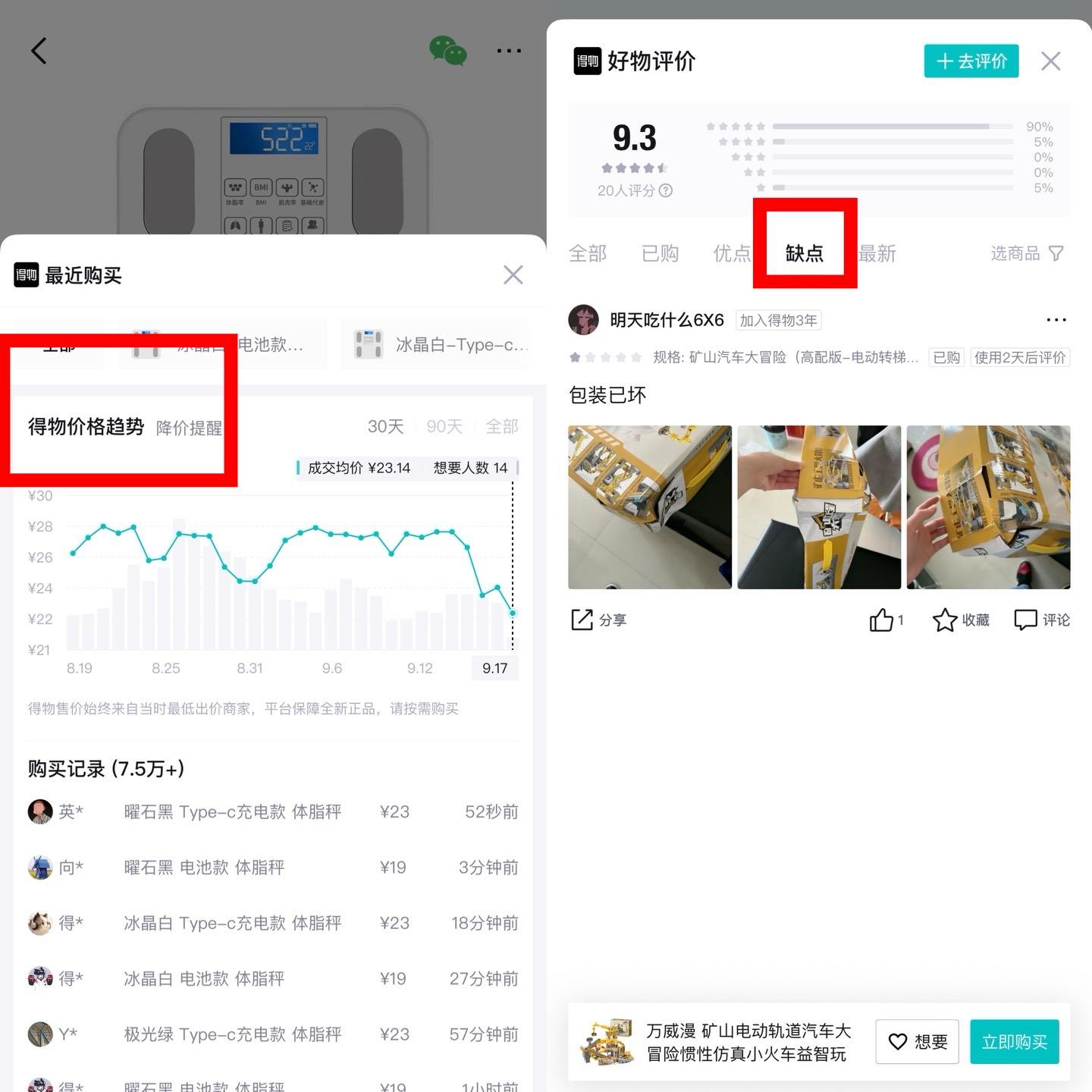
For example, Dewu recently launched a "Cons" tab on product pages, allowing users to view a centralized collection of product downsides on the first screen of the review section of each product detail page. The platform also leverages AI to generate product insights: in addition to basic product descriptions, it proactively displays reminders covering ingredients, sizing information and allergy warnings. It has also added price trend charts on product detail pages to help users time their purchases.
In the new AI era, achieving this long-term goal will require flexible approaches to serve users across the full interest cycle of "discovering, acquiring and sharing".
Yang Bing specifically highlighted the restructuring of work divisions driven by AI. At a time when business lines are becoming increasingly segmented, he encouraged teams to maintain a holistic view of business operations, take ownership of outcomes they can directly influence, and reduce the high collaboration costs caused by overly granular division of labor. He also noted the importance of using AI to handle standardized work, so that human resources can focus more on understanding users, identifying trends, and delivering concrete initiatives to fruition.
Ebrun will continue to track and report on this development. For more information related to this article, please scan the QR code to follow the author’s WeChat account.

This article was first published on the official website of Ebrun.
[Copyright Notice] Ebrun advocates respecting and protecting intellectual property rights. Without permission, no one is allowed to copy, reproduce, or use the content of this website in any other way. If any copyright issues are found in the articles on this website, please provide copyright questions, identification, proof of copyright, contact information, etc. and send an email to run@ebrun.com. We will communicate and handle it in a timely manner.
Translated by AI. Feedback: run@ebrun.com