
Niche Category, Mass Market: How Roborock Is Redefining Compact Washer-Dryers With Technology
[Ebrun Original] Washing machines, once counted among China’s "three big-ticket home essentials" alongside refrigerators and televisions, are undergoing a stark industry bifurcation.
On one hand, domestic retail sales of washing machines reached 36.5 billion yuan in the first half of this year, down 4.5% year-over-year, marking the sector’s entry into a mature, stock-competition phase. On the other, compact washing machines are posting counter-trend growth. Monitoring data from AVC shows that all-channel sales of compact washers hit 630 million yuan in the first quarter of this year, up 23.7% year-over-year. Among them, front-loading compact washer-dryers emerged as the core growth driver, with online and offline sales surging 110% and 673.2% year-over-year respectively in the quarter.
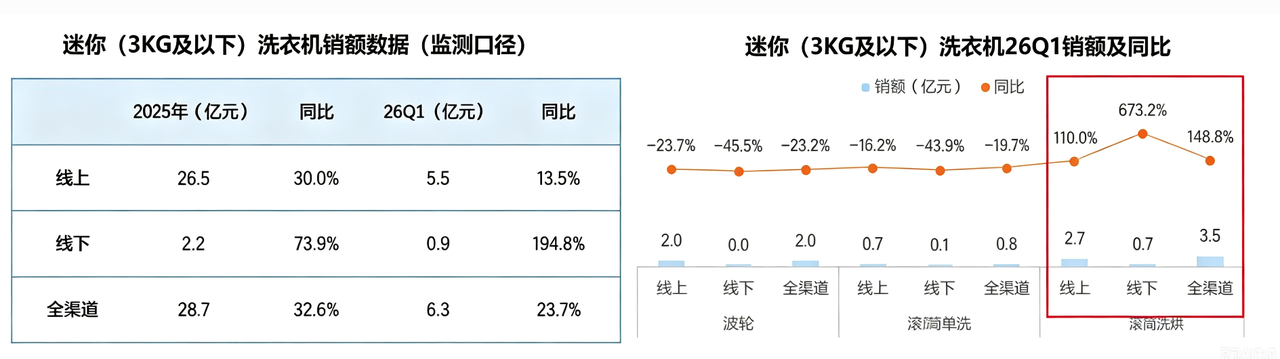
The blockbuster performance of Roborock’s Z1 Mini Pro all-in-one compact washer-dryer is the perfect illustration of this trend. As of July 2026, cumulative sales of Roborock’s compact washers across all online channels surpassed 270,000 units, proving that niche categories are fully capable of carving out genuine incremental growth in a saturated market even as the broader washing machine sector faces headwinds.
As small apartments become the dominant residential format, parents of infants and young children raise standards for clothing hygiene, and the solo-living population continues to grow, household laundry care is shifting from the "one machine for all loads" model to a more refined era of "specialized care for different garments, separate washing for separate needs" — a shift that reflects a structural evolution in household lifestyles.
01
A Cross-Segment Advantage From the Broader Home Cleaning Ecosystem: From Robot Vacuums to Compact Washers
Roborock built its name on robot vacuums, turning the everyday task of cleaning into a high-growth, multi-billion-dollar business. Now, the company has set its sights on the mature, incumbent-dominated washing machine market. Why would a robot vacuum maker enter this red-ocean space?
The move makes perfect sense when viewed through the lens of the broader "home cleaning ecosystem." Robot vacuums solve floor cleaning; washing machines solve fabric cleaning. At their core, both address the same household pain point of cleaning and health: handing chores over to machines to free people from tedious domestic labor.
Roborock’s confidence in this cross-sector foray is backed by its recent track record in the robot vacuum space.
According to the latest quarterly report from the International Data Corporation (IDC), Roborock topped the global robot vacuum market in both shipment volume and sales revenue in the first half of 2026.
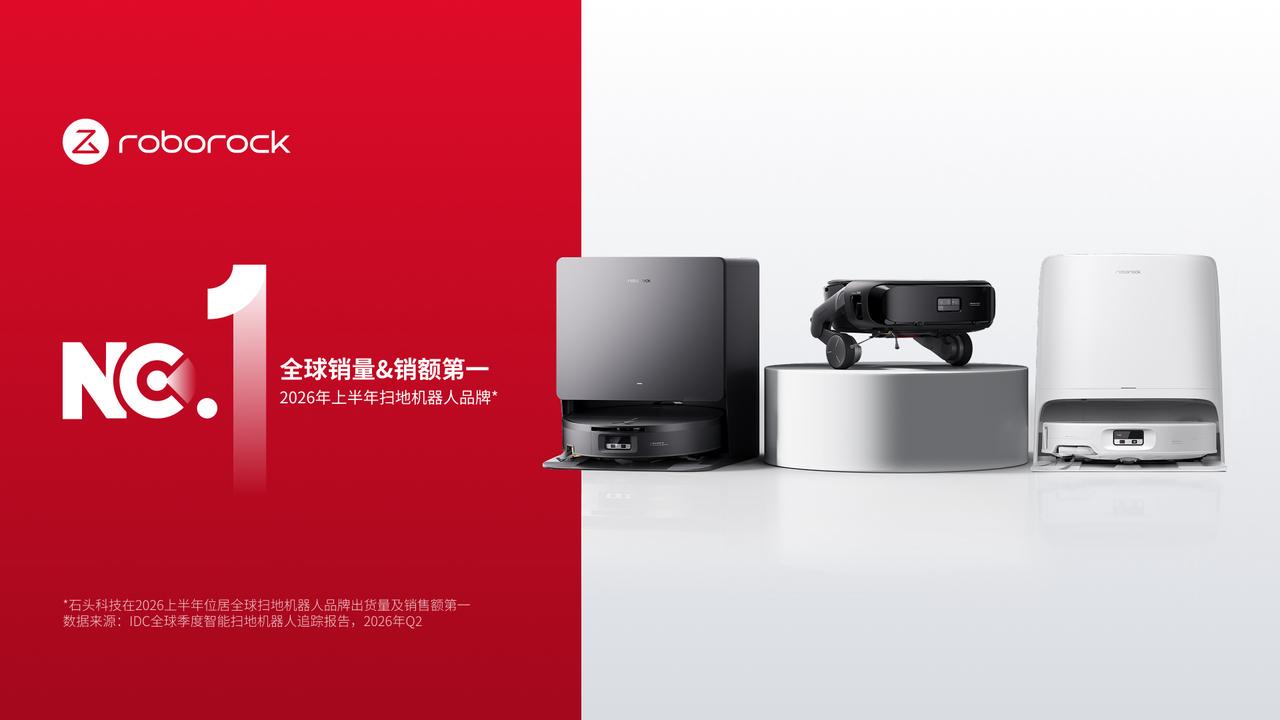
That performance is underpinned by years of deep investment and accumulated expertise in foundational technologies including navigation and perception algorithms, AI scenario recognition, and core execution components. The core technical capabilities honed in robot vacuums — from water flow control and load detection to drying temperature regulation — transfer seamlessly to fabric care, and are being repurposed across key functional modules of its washing machines.
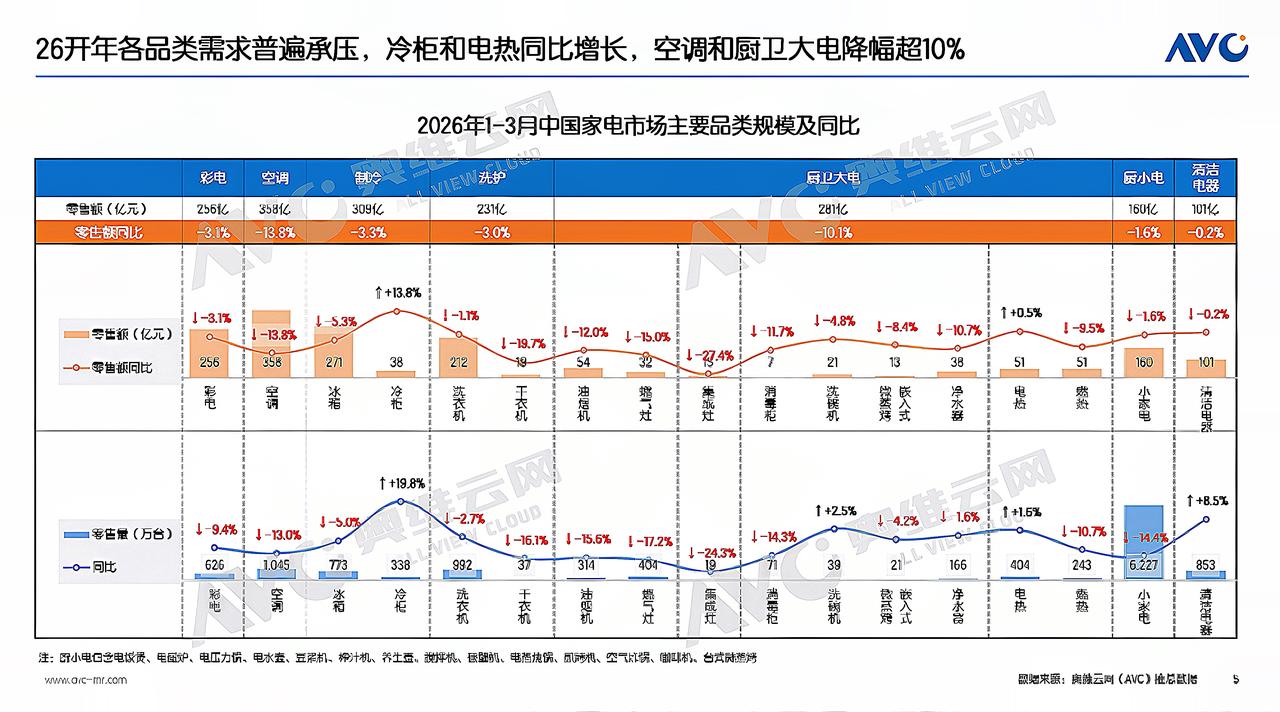
In fact, the washing machine market has fully entered a stock-and-replacement cycle. Data from the National Bureau of Statistics shows that ownership of washing machines among urban Chinese households reached 99.2 units per 100 households in 2024, approaching saturation. AVC data adds that overall retail sales of washing machines fell 1.1% year-over-year in the first quarter of 2026, with market growth entirely driven by replacement demand.
Separate data shows that China’s compact washing machine market reached 4.23 billion yuan in 2025, growing at nearly three times the rate of the overall industry, with buyers concentrated among small-apartment residents in tier-1 and tier-2 cities, families with young children, and young solo dwellers.
Driven by shrinking household sizes, a growing solo population, demand for refined childcare among two-child families, and the rise of the pet economy, a massive incremental market for refined fabric care has emerged. In the white goods market long dominated by legacy giants, Roborock leveraged sharp user insight to precisely target this blue-ocean niche, and the blockbuster launch of the Z1 Mini Pro has validated the forward-looking nature of that strategic call.
02
Three Generations of Compact Washer Evolution: From Single-Tub Top Loaders, Wall-Mounted Front Loaders, to All-In-One Washer-Dryers
Before the launch of Roborock’s Z1 Mini Pro, compact washers evolved through three generations: single-tub top loaders, wall-mounted front loaders, and countertop all-in-one washer-dryers. Across those iterations, products moved from wash-only with no drying function, to requiring wall mounting, to integrating wash and dry but with compromised performance — yet three core pain points around functionality, installation, and performance were never fully resolved.
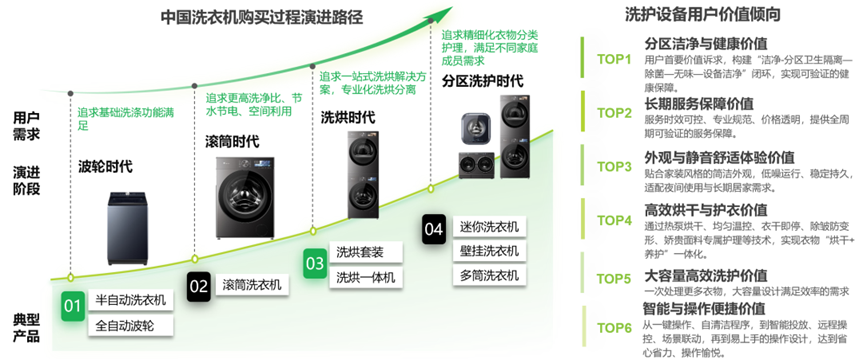
The first generation of compact washers took the form of single-tub top-loading models. Their breakthrough was portability: they did not take up fixed space and could quickly wash small loads. But their drawbacks were equally obvious: they could only wash, with no spin-dry or drying function, required manual water filling and draining, and delivered weak cleaning power — essentially just a scaled-down version of old-style top-loading washers.
The arrival of second-generation wall-mounted front-loading compact washers was once hailed as a pioneering innovation. Front-loading tumble washing delivered stronger cleaning performance than top-loading models, supported automatic water fill and drain, saved floor space, and fit the positioning of a supplementary laundry appliance. But wall-mounted models suffered from critical installation and fall-prevention issues: they had to be mounted on sufficiently thick load-bearing walls, with reinforced installation and sensor controls to prevent falling. Combined with the lack of a drying function and vibration-related noise, the wall-mounted front-loading format never became an ideal solution.
Third-generation countertop all-in-one washer-dryers are the closest to the ideal form factor to date. They require no drilling for installation, can be placed on countertops or stacked on top of full-size washing machines, greatly lowering installation barriers, and the integrated wash-and-dry function eliminates the hassle of hanging laundry to dry. But they still fall short on drying performance, cleaning power, and capacity.
For example, many models have such small drying capacities that users have to dry washed loads in batches; the limited drum space also leads to wrinkling and lingering odors on clothes after drying, leaving users far from a truly hassle-free laundry experience.
These product gaps have left room for substandard offerings in the market. The current compact washer market is rife with uneven quality: some products cut costs by lowering standards for key components, exaggerate the actual performance of functions like sterilization and mite removal, and grab market share via low-price strategies. A sampling inspection result from the Shanghai Municipal Administration for Market Regulation found that 5 out of 10 batches of compact washers failed quality tests, representing a stunning 50% failure rate.
At a time when the industry landscape remains unset, Roborock’s launch of the Z1 Mini Pro is an effort to redefine industry standards for compact washers with professional-grade fabric care capabilities.
03
Breaking Industry Biases With Technology: How the Z1 Mini Pro Is Rewriting Category Standards
In the past, compact washers were largely seen as a supplementary product to full-size washers. Industry standards often stopped at the level of "washes clothes adequately," and consumers took it for granted that compact models inevitably required performance tradeoffs. The launch of the Z1 Mini Pro has completely upended that stereotype. It brings core capabilities including cleaning, sterilization, drying, and installation fully in line with professional fabric care standards, proving that compact no longer means compromised performance.
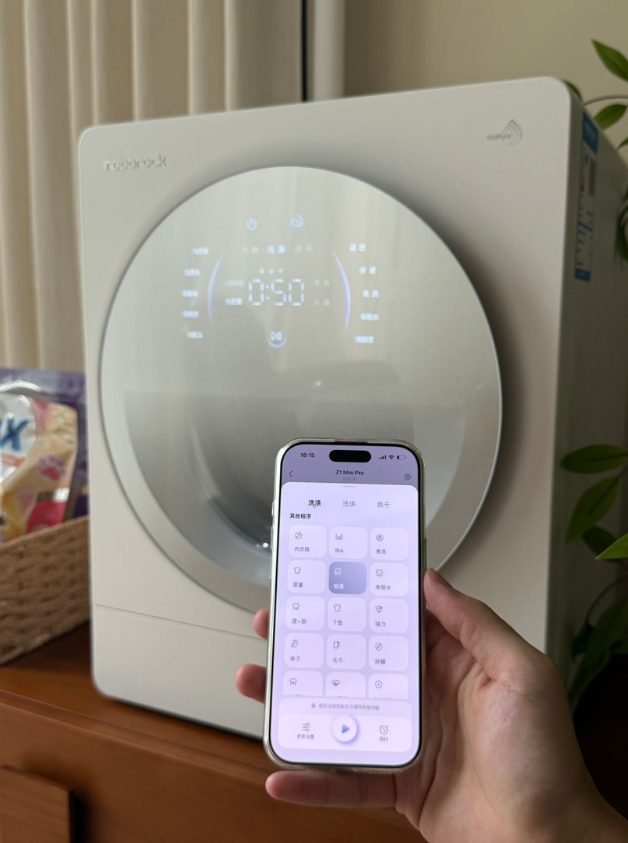
For many consumers, the first impression of compact washers is that smaller size means smaller load capacity. The Z1 Mini Pro sets an industry benchmark for "small size, no compromise," with a 2kg wash capacity and 1kg dry capacity, paired with a 301mm large-diameter inner drum that can wash around 9 baby onesies in a single load.
Cleaning power has long been a criticized shortcoming of compact washers. The Z1 Mini Pro breaks the industry bias that "compact washers can’t get clothes clean," proving that small size can still deliver professional-grade cleaning performance.
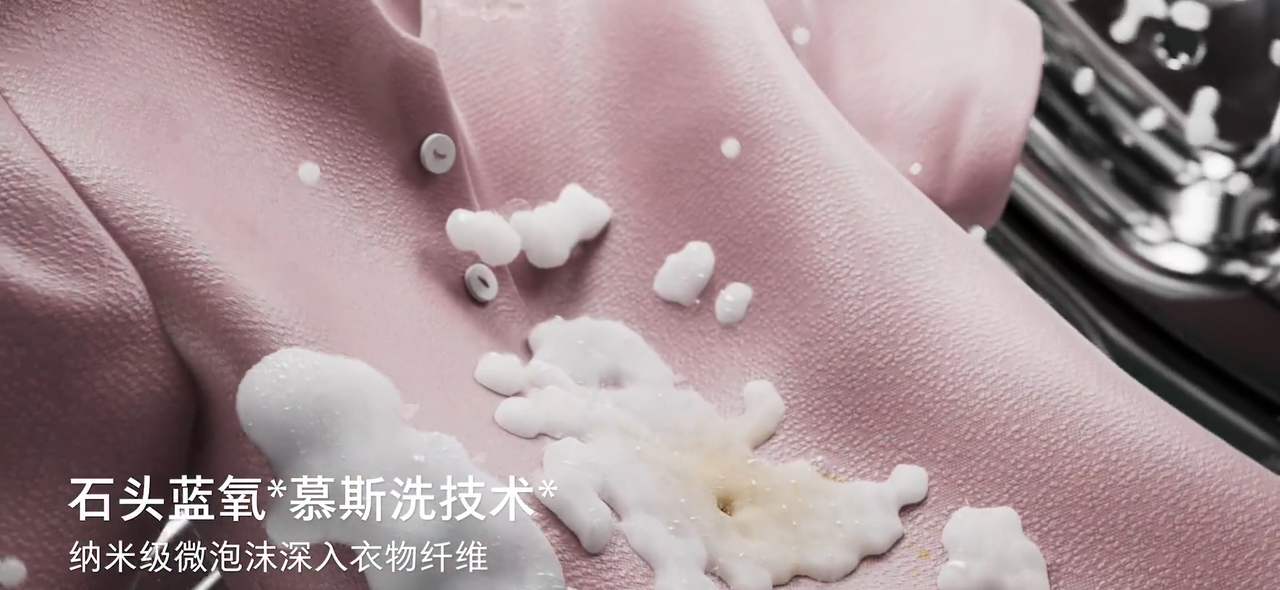
It is equipped with Roborock’s Blue Oxygen Mousse Wash 3.0 technology, which pre-mixes and pressurizes detergent, air, and electrolyzed water into a mousse spray. Paired with an intelligent turbidity sensor system that identifies soil levels, it delivers a washing efficiency ratio of 1.08 and a protein stain removal ratio of 2.49, meeting Tier 1 energy efficiency standards. It easily tackles everything from period blood stains and baby formula stains to sweat-soaked workout gear.
On drying capability, previous compact washer-dryer products generally used simple heat drying, which easily damages fabrics. The Z1 Mini Pro is fitted with Condensation Cloud Soft Drying technology, which enables fully closed internal circulation with no external moisture exhaust, delivers precise temperature control even for delicate fabrics like silk, and achieves a gentle 35°C drying effect.
Sterilization is one of the hardest functions for consumers to verify: sterilization rates and sterilization methods are often only promoted by manufacturers with no way for consumers to verify claims. The Z1 Mini Pro leverages authoritative third-party backing to guarantee sterilization performance that stands up to scrutiny. Its dual blue oxygen and UV sterilization covers the entire wash and rinse cycle, delivering a 99.99% sterilization rate with zero chemical residue, and has passed both baby-safe and low-noise dual certification from the China Household Electric Appliance Research Institute.
Installation convenience is another core advantage of the Z1 Mini Pro. It has a built-in drain pump that supports drain-free upper drainage, eliminating reliance on floor drain positioning. Users can place it on countertops, embed it in cabinetry, stack it directly on top of existing full-size washers, and even share water inlet and outlet connections with their full-size machine.
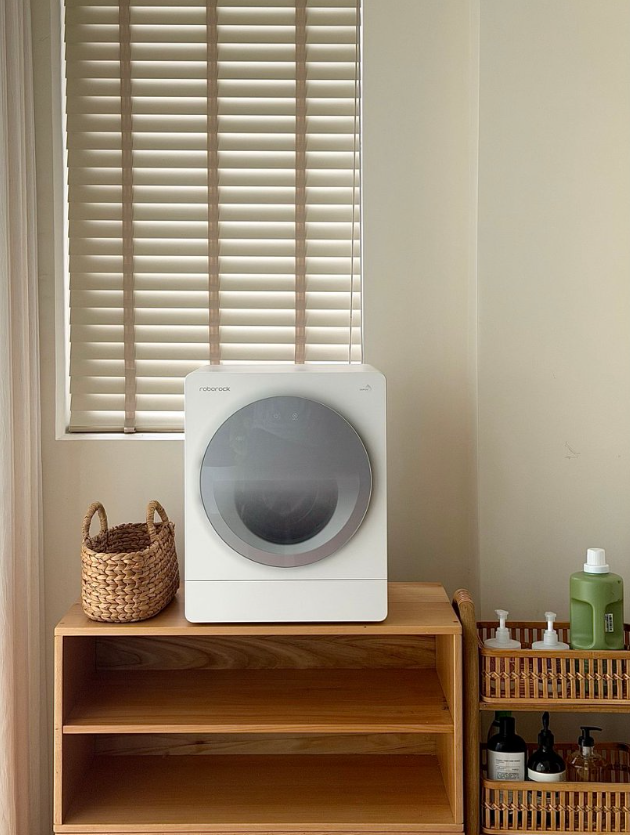
The Z1 Mini Pro is not just changing product dimensions; it is bringing cleaning, drying, sterilization, and installation capabilities up to professional fabric care standards, redefining the value benchmark for the entire compact washer category. Its strong sales performance is not just a marker of the arrival of the refined fabric care era, but also proof of Roborock’s successful cross-sector entry into the washing machine category.
Going forward, competition in the compact washer space will no longer focus on who can make the smallest unit, but who can deliver full-size washer-level fabric care performance within a compact footprint. It is foreseeable that as household laundry concepts continue to upgrade, all-in-one compact washer-dryers will move from an optional supplementary purchase to a standard appliance in more households.
This article was first published on the official website of Ebrun.
[Copyright Notice] Ebrun advocates respecting and protecting intellectual property rights. Without permission, no one is allowed to copy, reproduce, or use the content of this website in any other way. If any copyright issues are found in the articles on this website, please provide copyright questions, identification, proof of copyright, contact information, etc. and send an email to run@ebrun.com. We will communicate and handle it in a timely manner.
Translated by AI. Feedback: run@ebrun.com