
IFA 2026: HuaBao New Energy Makes Two-Pronged Push, Consolidating Core Portable Solar Storage Market and Expanding into New Residential Energy Storage Scenarios
【Ebrun Original】 On September 4, the annual Internationale Funkausstellung Berlin (IFA) kicked off as scheduled at the Berlin Exhibition Center.
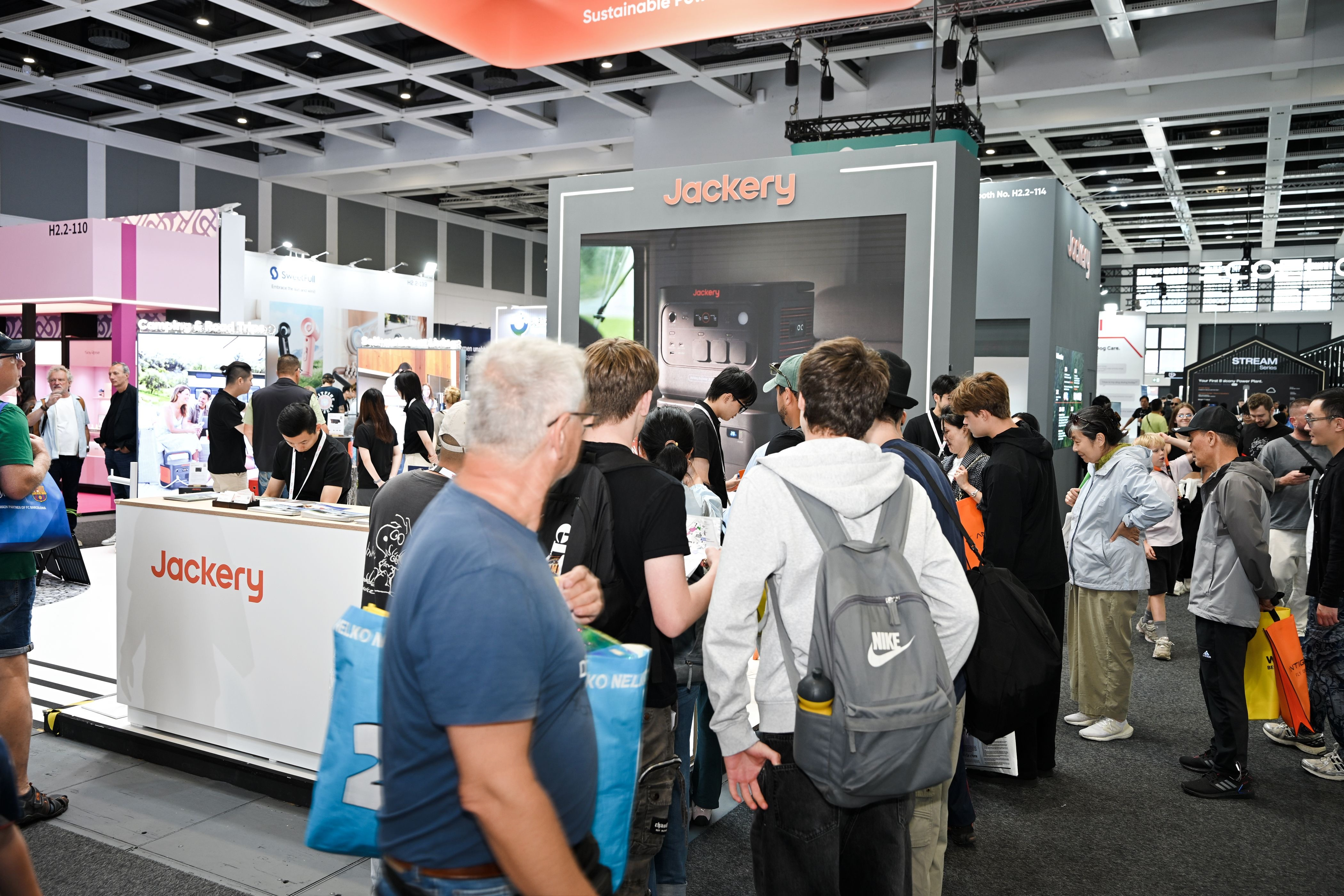
Against the backdrop of ongoing volatility in the global energy supply and demand landscape — from Iran's energy crisis to record high temperatures across Europe — and accelerating penetration of residential energy storage, HuaBao New Energy's booth has drawn far more attention than in previous years.
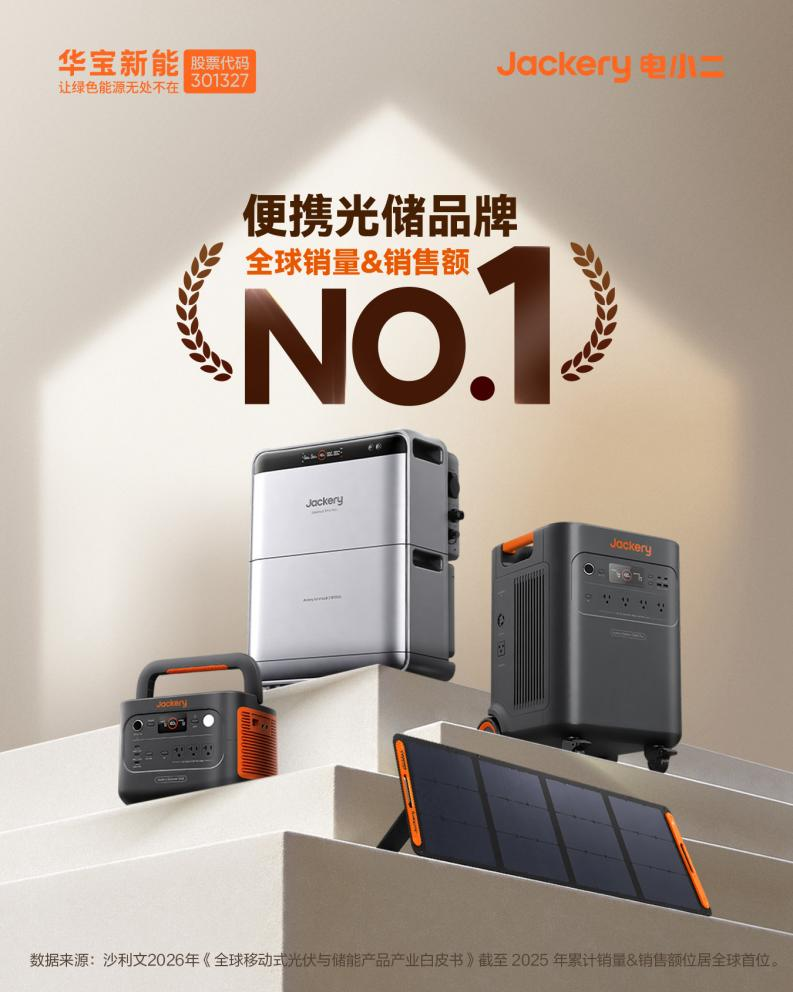
The company, once known as the "first publicly traded portable solar storage firm", disclosed data at this year's show confirming it has secured the number one position globally in the portable solar storage category for both unit sales and revenue, as certified by independent research firm Frost & Sullivan, HuaBao New Energy in the" "category obtained the market achievement of "double first" in global sales volume and sales revenue.
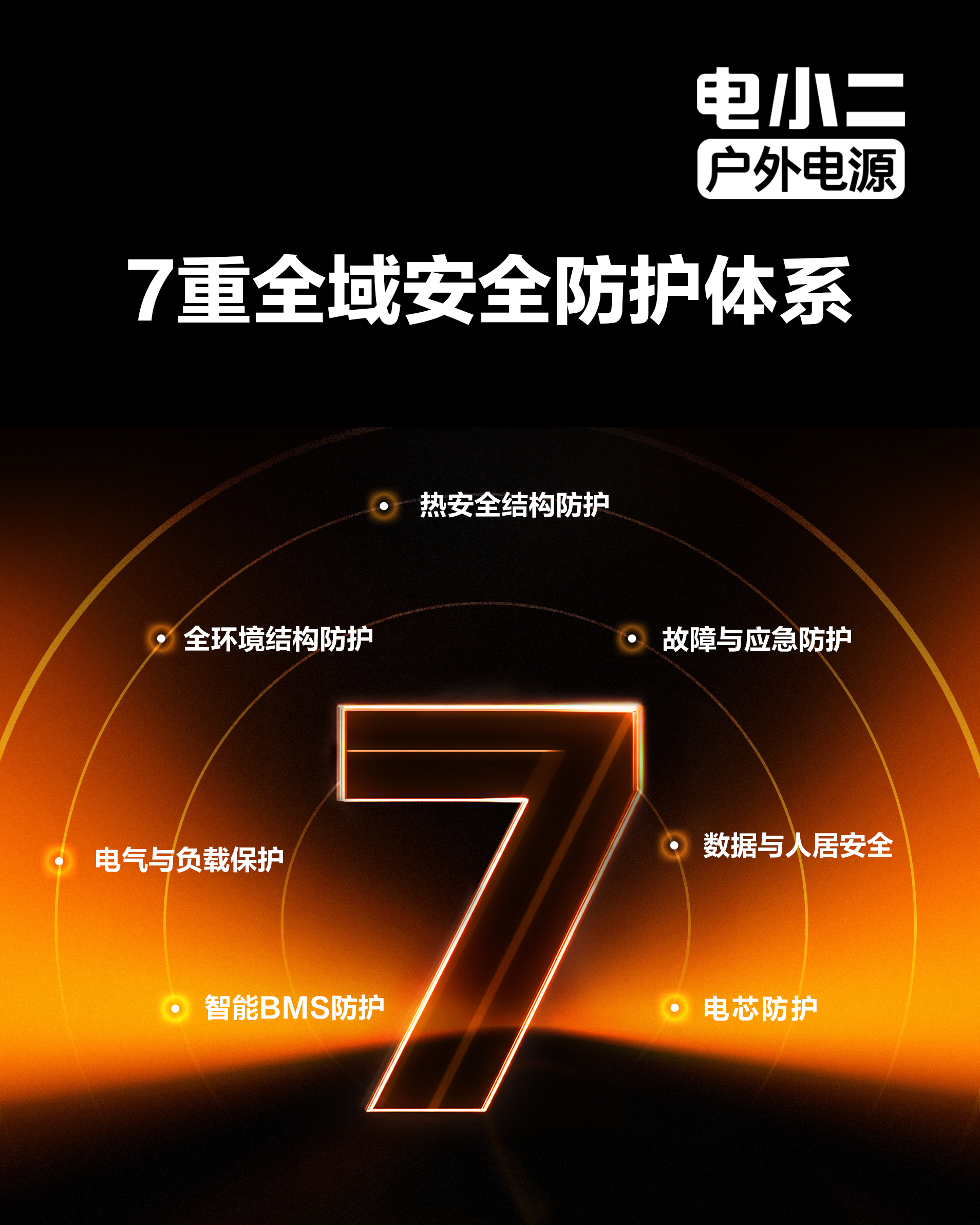
At the same time, HuaBao New Energy unveiled a major strategic initiative: the global launch of the FortiShield Safety System, a 7-layer full-scope safety protection framework.
Multiple product lines under its portfolio have received a new round of upgrades, with several innovative products making their debut. In addition, the first European deployment of its photovoltaic (PV) tile products — a renovation project for a century-old building in Greece — broke ground in September.
From capturing share in existing markets, to placing strategic bets on safety, to rolling out a full-scenario residential energy storage product matrix, this year's IFA undoubtedly serves as the latest window into the industry leader's strategic direction.
I. After securing its leading position, HuaBao New Energy continues to deepen its moat around safety
The residential solar storage market has undergone a drastic reshuffle over the past few years.
Price wars, inventory backlogs and constant market entry and exit have seen the industry gradually return to rationality from its early period of exuberance. Against an environment of intensifying zero-sum competition for existing market share, the weight of holding the number one sales position is self-evident.
Six months ago, when the company released its annual report, Frost & Sullivan already confirmed that its 100W consumer-grade portable solar panels ranked first globally in cumulative unit sales. Now, it has further disclosed that it holds the top position globally for both unit sales and revenue among portable solar storage brands.
While breaking into the top tier of the residential solar storage track, HuaBao New Energy has also steadily maintained the resilience of its traditional core business, as the company steadily transitions toward becoming a "full-scope energy storage player".
What is more noteworthy, however, is its effort to set a new agenda for competitive dimensions in the residential solar storage sector.
At this year's show, HuaBao New Energy made a high-profile announcement of the global launch of the FortiShield Safety System 7-layer full-scope safety protection framework, clearly seeking to elevate safety to a higher strategic position.
As the residential energy storage export market gradually matures, the early-stage strategy of competing primarily on technical specifications may no longer be enough to win, with safety, compliance and long-term service capabilities emerging as new competitive focal points.
Previously, when consumer-facing energy storage brands discussed safety, they typically focused on individual technical metrics: safer battery cells, more sensitive battery management systems (BMS), higher-grade fire-resistant structures or specific certifications.
The FortiShield Safety System differs in that it is not limited to a single product or functional module, but represents a systematic project covering products, compliance, full-lifecycle services and brand endorsement.
From core battery cell protection and intelligent BMS management, to heat-insulating fire-resistant structures and three-tier fire protection systems, to resistance to harsh environments and multiple layers of electrical protection, HuaBao New Energy has extended safety coverage to every physical aspect of product operation.
Against a backdrop of an increasing number of smart devices connecting to home networks, local data operation and encrypted network security have also been incorporated into this safety system.
But product safety itself is only one part of this system.
For energy storage companies, particularly in the core European market, safety means not only "product reliability", but also the ability to meet increasingly complex compliance thresholds.
The safety compliance certification system proposed by HuaBao New Energy covers multiple dimensions including functional safety, environmental protection and cybersecurity, and has even been pre-adapted to relevant European regulatory standards.
Furthermore, unlike ordinary fast-moving consumer goods, residential energy storage products have longer lifecycles, involving after-sales links including installation, grid connection, long-term maintenance and even end-of-life recycling. As such, the definition of "safety" cannot stop at the point of product delivery from the factory.
HuaBao New Energy announced that it has incorporated product liability insurance, installation compliance guidance, full-operating-condition protection and recycling processing into its service system, delivering end-to-end support for customers.
At the launch event, the company also emphasized that it has operated with a long-term, stable safety track record for nearly 15 years.
Supported by its in-house factories, certified laboratories and strict ex-factory testing standards, HuaBao New Energy's safety-focused narrative clearly has solid underlying foundations.
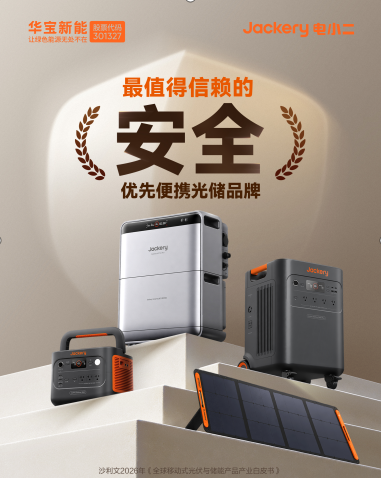
In addition, Frost & Sullivan recently conducted a comparative evaluation of Jackery's 7-layer full-scope safety protection system against competing products, and combined with factors including brand history, ultimately certified Jackery as the industry's "most trusted safety-first portable solar storage brand" currently available.
II. From balconies to villas, from rooftops to fences, targeting high-value residential energy storage customers
If the safety system represents the integration of HuaBao New Energy's "soft power", its new product matrix is a concentrated demonstration of its "hard power".
First, while continuing to develop new business lines, HuaBao New Energy has not neglected the portable solar storage segment that forms its traditional core.
For the EU and UK markets, the Explorer series has launched three new products at once: the E1000plus V2, E2000plus V2 and E3600plus.
All three products support 10-millisecond grid-to-battery power switching, and uphold HuaBao New Energy's fast-charging heritage: they take just 1.25 hours, 1.5 hours and 2 hours respectively to charge from 0 to 100 percent.
Another update pushes its product boundary further into the high-end residential market.
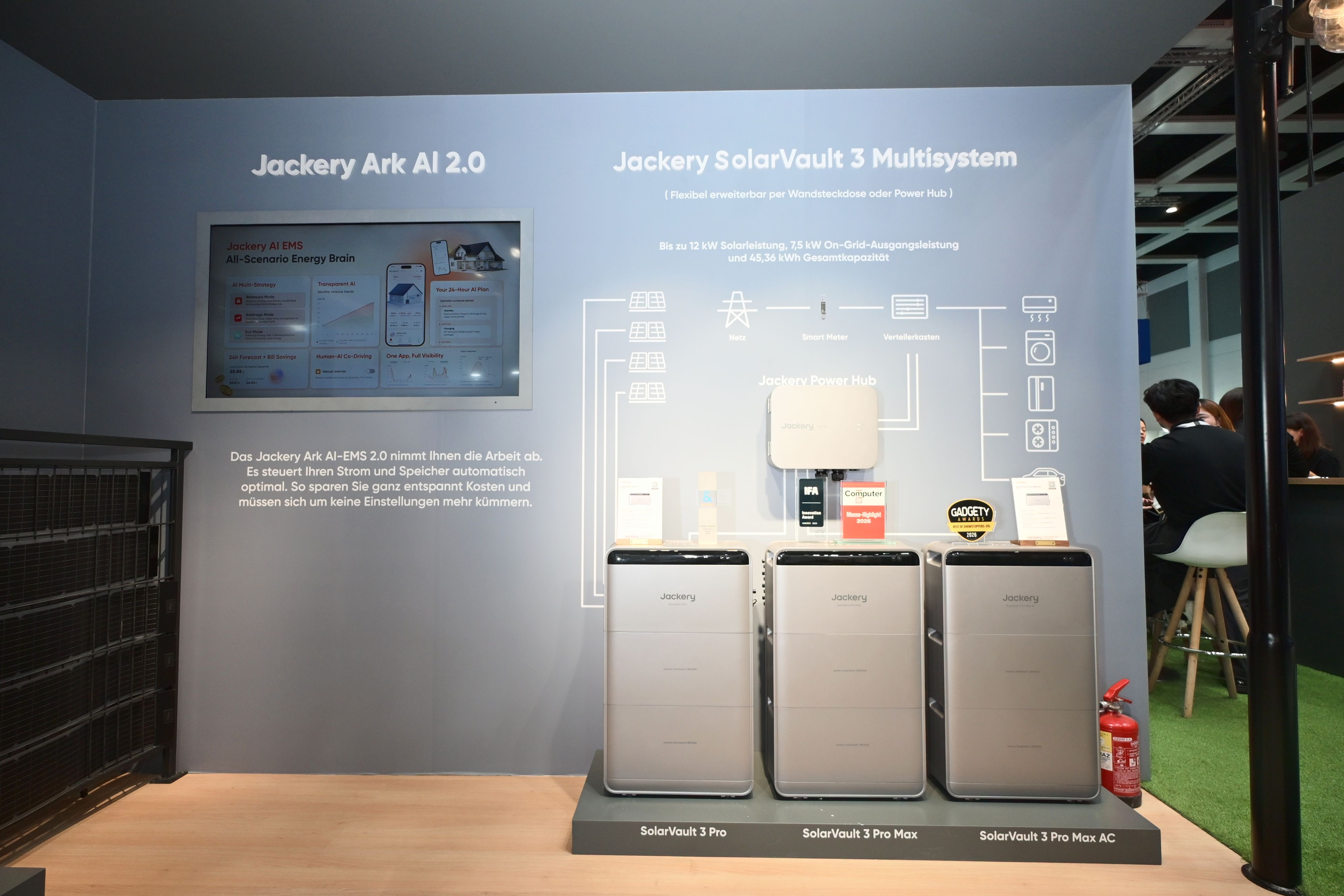
In March this year, HuaBao New Energy launched the SolarVault 3 series of patio and balcony solar storage products in Europe. At this year's IFA, it further announced a new feature for the series: "three-unit parallel operation".
Building on the original single-unit model, the S3 allows 2 to 3 units to operate in parallel as an integrated system, effectively solving pain points including inability to power high-wattage appliances, insufficient single-unit capacity and high initial investment costs. When expanded, the system supports up to 12kW of solar input, 45.36kWh of usable storage capacity and 7500W of grid-connected output.
"This is effectively a premium configuration," one industry insider noted. "A 45kWh capacity is enough to support a multi-person household for several days of normal use, and can even power central air conditioning, high-wattage electric heaters and other appliances."
The three-unit parallel design allows this lightweight balcony energy storage product to compete with villa-scale whole-home energy storage systems designed for comfortable power usage.
The target customers for HuaBao New Energy's residential energy storage product line are also expanding from apartment households to extra-large residences, multi-story villas and high-net-worth households with central air conditioning, high-wattage electric heaters and other equipment — groups that have extremely high requirements for power stability and have sufficient installation budgets.
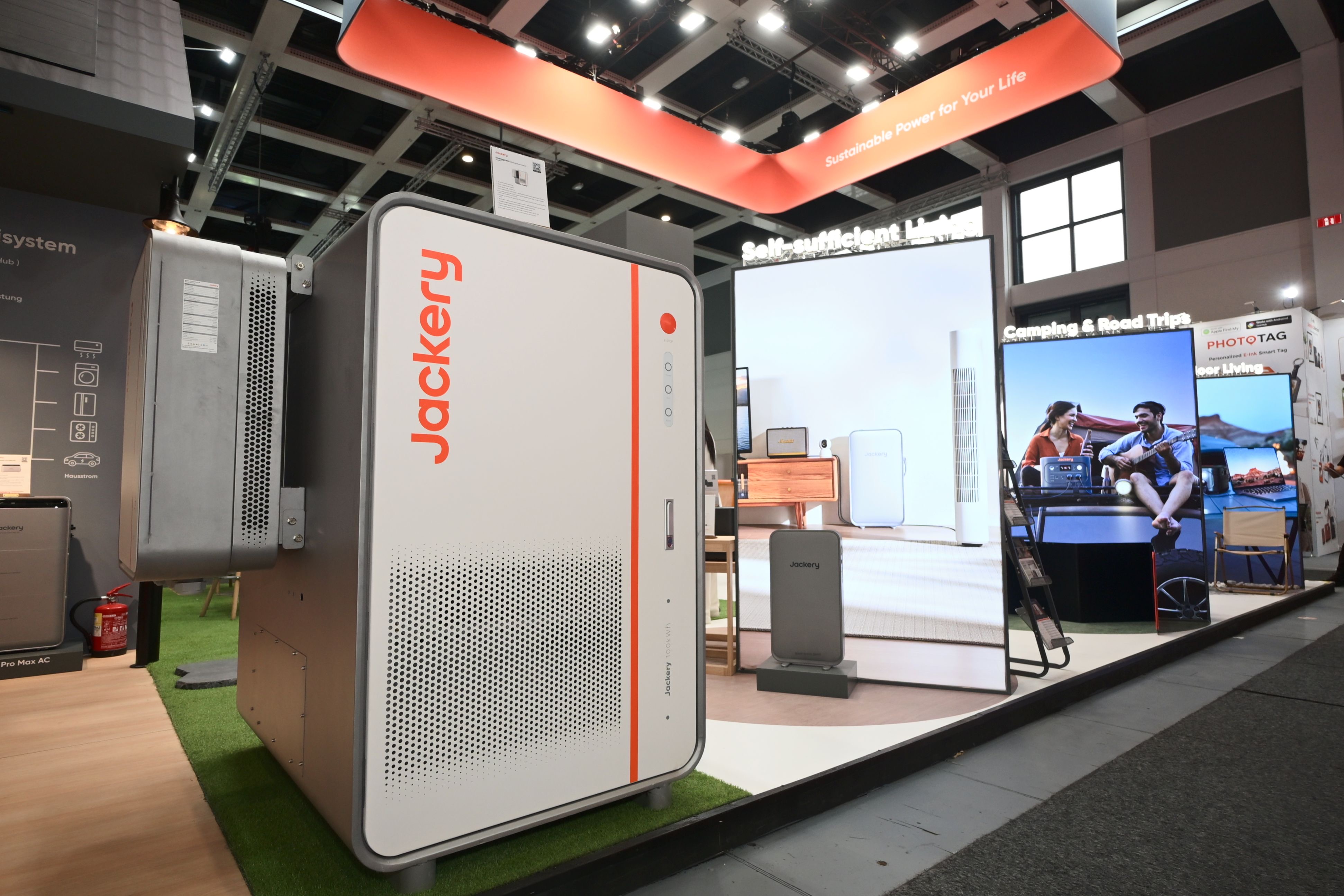
Another new product also targets similar customer groups: the Jackery EnergyGuard Max 100kWh.
As the world's first 100kWh residential energy storage cabinet, it integrates multiple functional modules including a battery system, hybrid inverter, HV-BMS management system, monitoring system, temperature control and security assistance, and EMS energy management system.
Its performance specifications are top-tier:
grid-to-off-grid switching time is just 10ms, meaning even power-sensitive equipment such as servers and wine cellar constant temperature systems will not experience downtime; it has 4 MPPT channels, supports 2x DC over-sizing, comes standard with a diesel generator interface, and has extremely high expandability; it adopts a liquid cooling architecture, comes standard with secondary lightning protection and 1.5x instantaneous overload capacity, adapting to various extreme power usage environments.
The product positioning and target customer base for this energy storage cabinet are very clear: first, scenarios where grid coverage is unavailable or construction costs are prohibitive, such as mining areas, remote rural estates and farms, and facilities in remote mountainous areas; second, island resort hotels, large residences that frequently host parties, and villas with power demands for wine cellars and swimming pools.
In this regard, HuaBao New Energy's strategic ambition to actively develop high-end residential energy storage demand is already very clear.
At the same time, another innovative product seeks to break the morphological constraints of traditional residential PV, precisely addressing common pain points in core markets.
For a long time, in core markets including Europe, North America and Japan, high-latitude regions have faced issues with winter power generation and limited installation space for residential PV.
In response, HuaBao New Energy has launched "flexible modules". Its design concept is straightforward: turn fences into solar power generation facilities, further expanding the physical boundaries of residential solar storage.
The dual-sided power generation flexible modules can be woven into standard double-pole mesh fences, allowing fences originally used for privacy protection to also serve a power generation function — no additional land occupation required, and no reliance on rooftops.
Unlike the "midday single-peak" power generation curve of traditional rooftop PV, the flexible modules are installed vertically in east-west orientation, creating a "morning and evening dual-peak" energy supply that more closely aligns with actual household power consumption habits.
At the same time, vertical installation also offers advantages in winter: when the sun's altitude angle is low, vertical surfaces can receive more sunlight, and snow is less likely to accumulate on the module surface.
III. "Green energy building material" concept comes to fruition, PV tiles achieve first successful deployment in Europe
If the aforementioned products still represent "adding equipment" within residential spaces, PV tiles represent a further advanced concept: integrating energy equipment into the building itself.
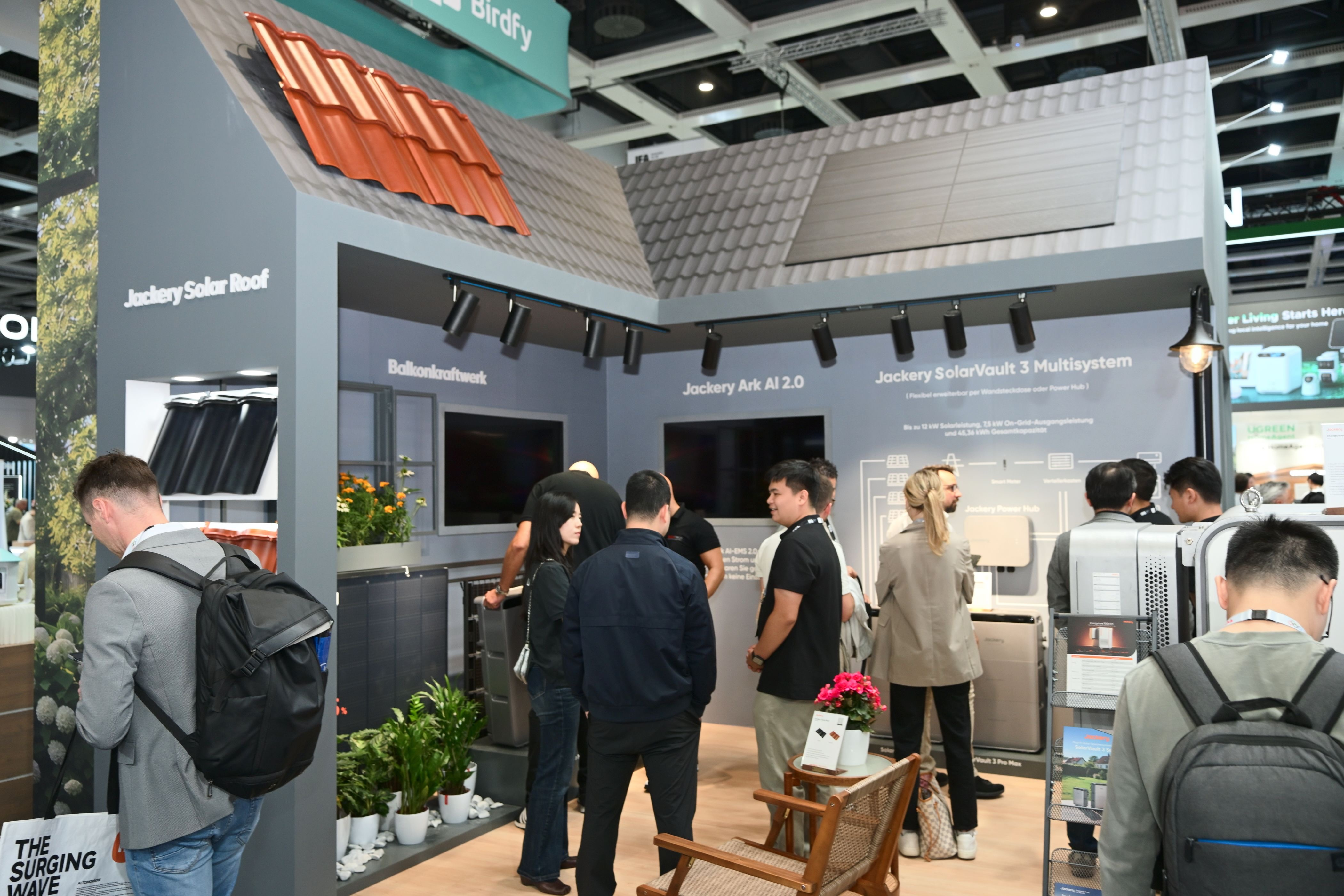
At this year's IFA, HuaBao New Energy disclosed progress on the first European project for its aesthetic curved PV tiles.
A 110-year-old building in the Chania region of Crete, Greece, is currently being renovated into a hotel.
During the renovation process, curved PV tiles are being applied to the roof, integrating the clean energy system into the building structure while preserving the original building's appearance as much as possible.
For a century-old modern building, this kind of renovation is not simple in itself.
Traditional PV modules usually cover rooftops in the form of standardized panels, but for historic and characteristic buildings, there is often a conflict between building protection, aesthetic style and energy renovation.
The curved PV tiles seek to solve this exact pain point: they function as a roofing material while simultaneously generating solar power, and integrate with the original building's roof through their curved tile form.
In fact, compared to portable solar storage or DIY residential energy storage, the market threshold for PV tiles is clearly higher.
It needs to meet both the safety and performance requirements of energy products, while also facing multiple challenges including building materials, appearance design, installation and construction, and varying regional building regulations.
Therefore, the deployment of the first European project is more like a practical application verification.
From a commercial perspective, it means that curved PV tiles are no longer just a conceptual product on exhibition stands. Actual entry into construction projects is a critical step in determining whether the "building + energy" model can form a commercially viable closed loop.
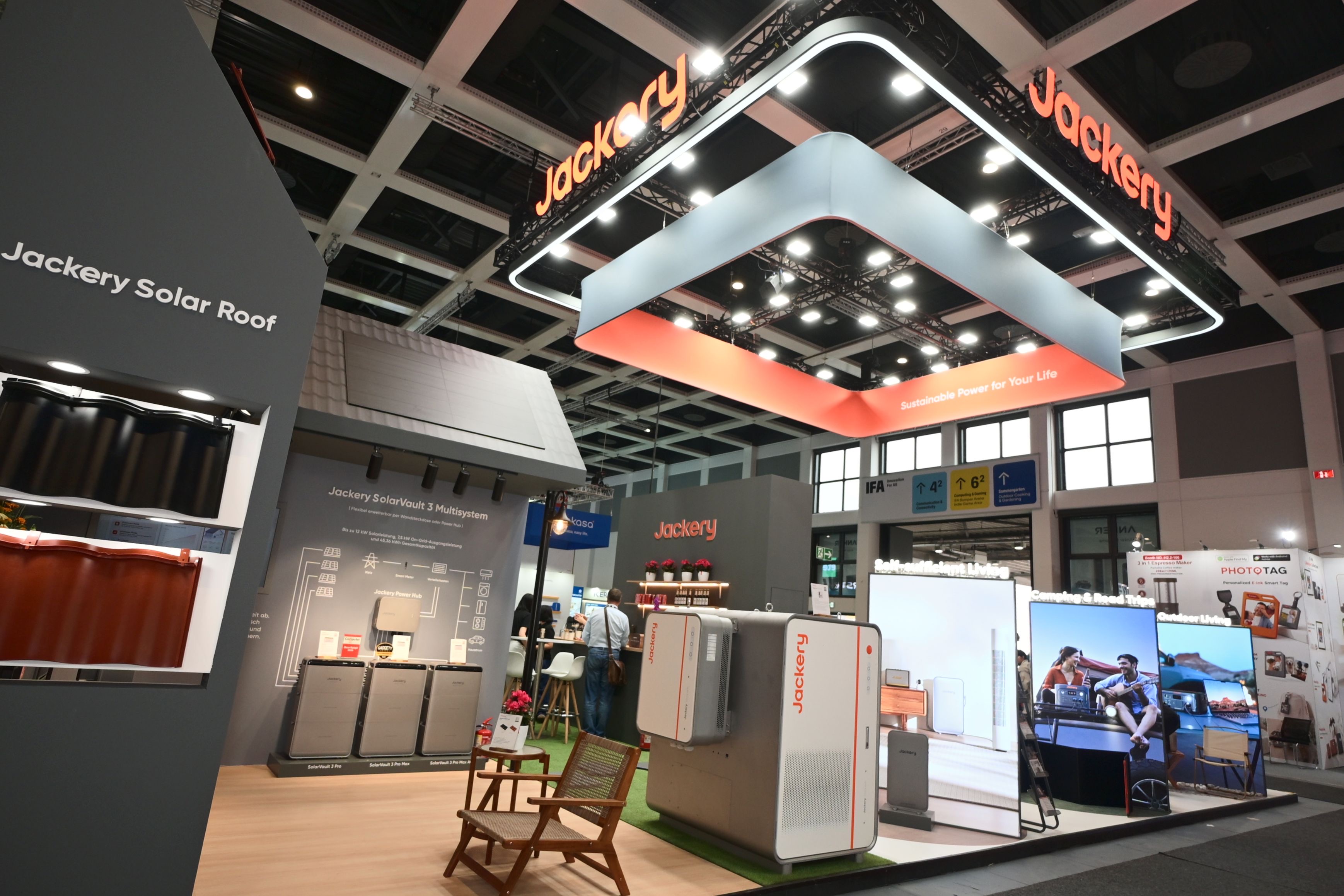
Looking back at last year's IFA, HuaBao New Energy already presented a series of full-scenario residential green power solutions spanning from outdoor to home use.
One year later, this layout has clearly entered a new phase: previously, it may have been more about finding a new growth path, but now it is beginning to advance deeper into more segmented scenarios.
From ordinary household backup power to high-end scenario adaptation; from rooftop PV to fence-based power generation; from single devices with single functions to a multi-dimensional, full-category "safety capability system", HuaBao New Energy's residential solar storage layout continues to expand in depth.
Europe remains a critical market for validating its development progress.
Whether it can truly establish a second growth pole, deliver on the market value of its multiple innovations, and complete its strategic transition into the residential energy storage segment — HuaBao New Energy remains one of the most noteworthy bellwethers for observing Chinese consumer-facing energy storage exports.
Ebrun will continue to track and report on this sector. If you would like to know more information related to this article, please scan the QR code to follow the author on WeChat.

This article was first published on the official Ebrun website
[Copyright Notice] Ebrun advocates respecting and protecting intellectual property rights. Without permission, no one is allowed to copy, reproduce, or use the content of this website in any other way. If any copyright issues are found in the articles on this website, please provide copyright questions, identification, proof of copyright, contact information, etc. and send an email to run@ebrun.com. We will communicate and handle it in a timely manner.
Translated by AI. Feedback: run@ebrun.com