
Baozun Raises 2028 Profit Target to 700 Million Yuan as E-commerce Service Providers' End-to-End Business Model Gains Traction
 By Shi Lei, Zhang Congrong | Edited by Shi Lei
[Ebrun Original] A notable shift in China's e-commerce sector this year is that while scale still matters, it no longer single-handedly explains growth.
For platforms, competition has expanded beyond singular transaction volume metrics to user retention, merchant ecosystem health and operational efficiency. For brands, alongside sales growth, metrics such as return on ad spend, full-price sales rate and inventory turnover have taken on greater priority.
From the 618 shopping festival to preparations for the next round of major promotional events, the industry is converging on a more pragmatic consensus: growth must not only be achieved, but also generate profits. This shift is also reshaping the e-commerce service industry. As brands start calculating the actual return on every dollar of investment, the value of service providers is no longer measured solely by GMV, number of brand clients or channel coverage. New evaluation criteria are emerging: the ability to understand category nuances, align merchandise strategies with content operations, manage inventory efficiently, and convert revenue into profit effectively.
Baozun E-commerce's Q2 2026 financial report, released on August 27, offers a representative case study of this trend.
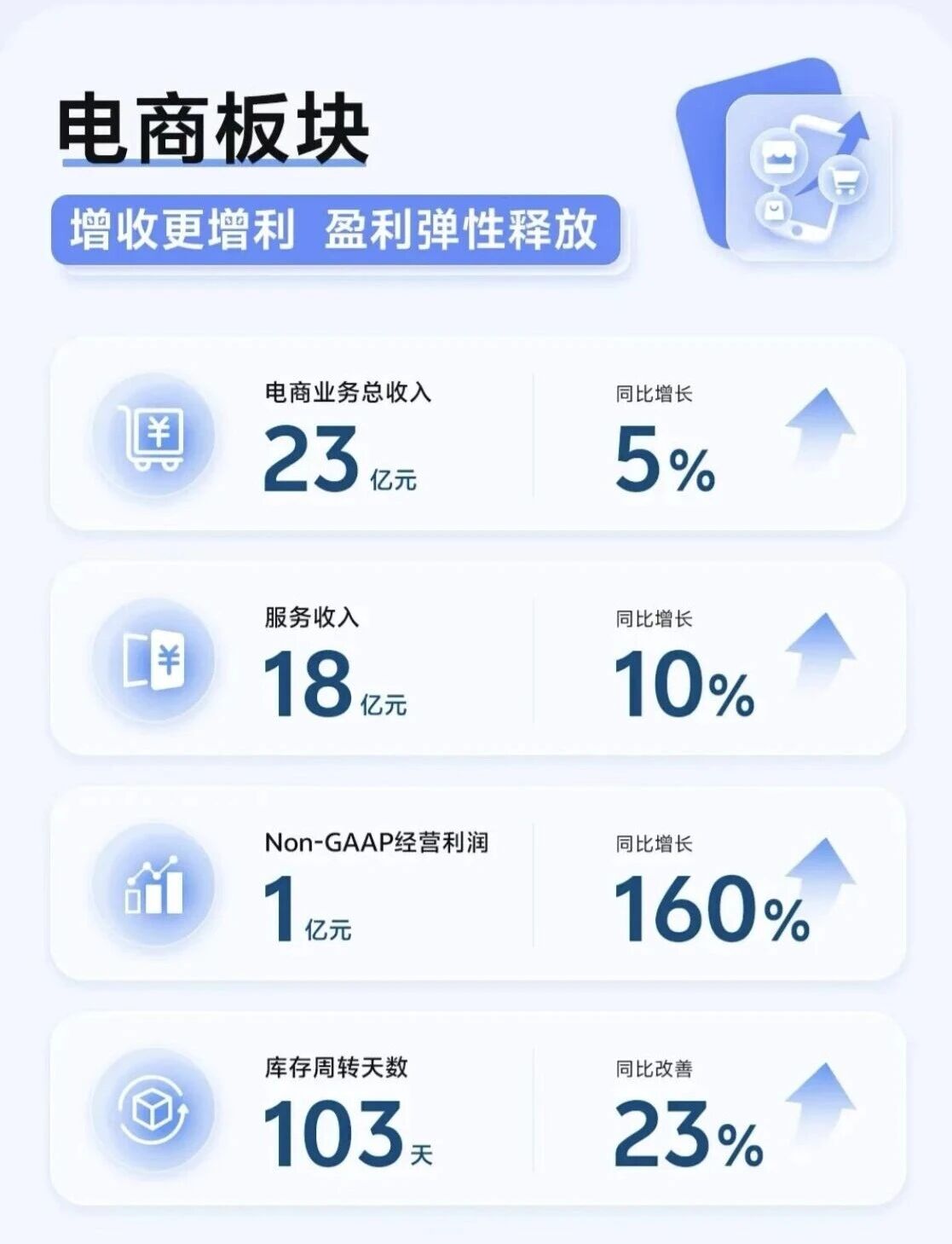
During the reporting period, the group's total net revenue rose 7% year-on-year to 2.7 billion yuan, while non-GAAP operating profit jumped to 74 million yuan from 6 million yuan in the same period last year. Its core e-commerce business segment, Baozun E-commerce (BEC), saw revenue increase 5% year-on-year to 2.3 billion yuan, with non-GAAP operating profit reaching 107 million yuan – the highest Q2 level since 2022.
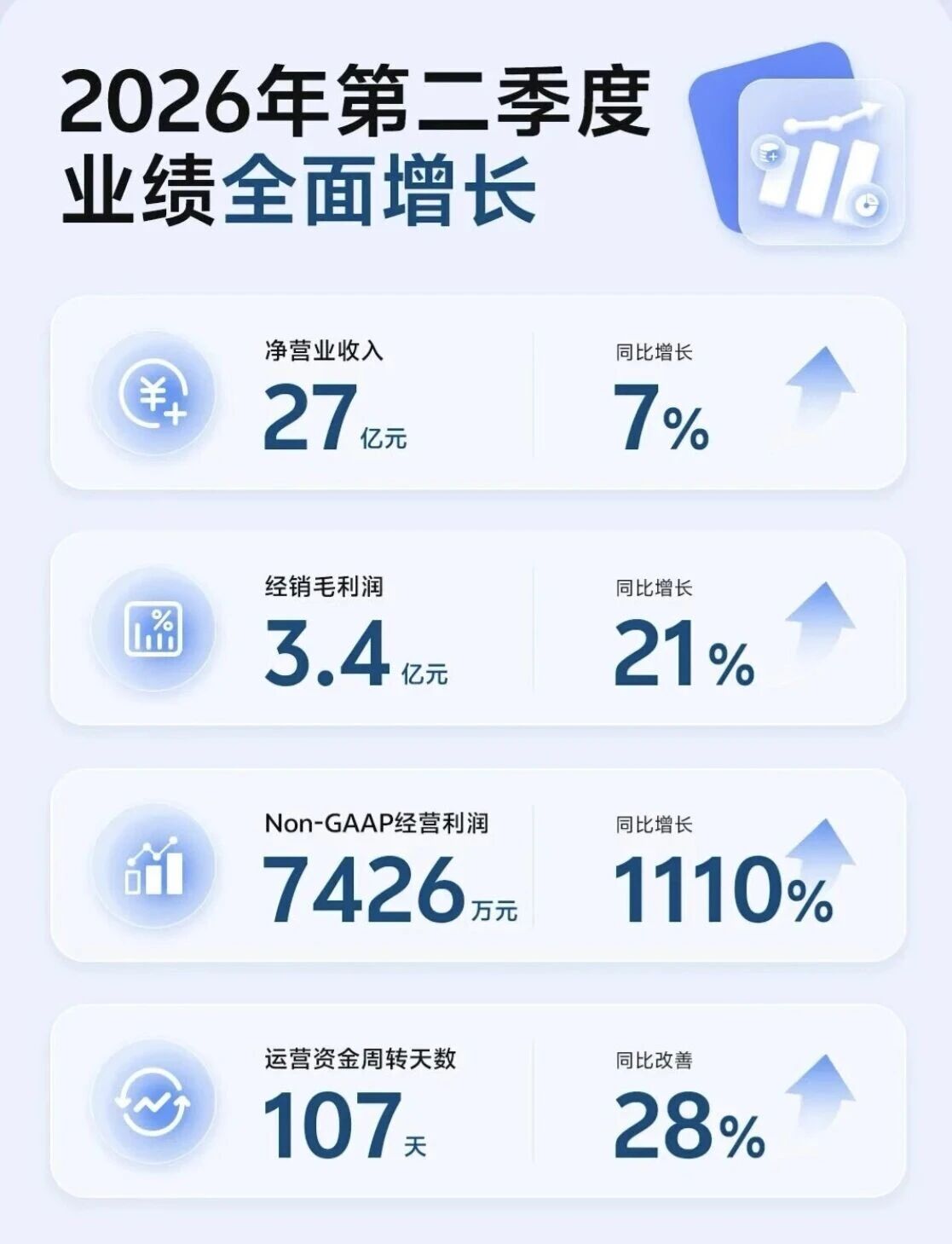
While revenue grew steadily, profit improvement was even more pronounced. More significant than the single-quarter profit figure is that this trend has shown clear continuity: the group returned to non-GAAP operating profitability in Q1 2026, and in Q2, further profit expansion was driven by ongoing improvements in service structure, cost efficiency and inventory management. Last quarter, Baozun announced a "quality first" operational strategy, which has now received full financial validation in the second quarter.
01
Service Revenue Growth Drives Repricing of E-commerce Services
Breaking down BEC's revenue structure, the service business was the standout performer this quarter. In Q2, Baozun's service revenue grew 10% year-on-year to 1.8 billion yuan, outpacing the overall growth rate of its e-commerce business. The company continued to deepen its presence in high-margin categories such as luxury, sports and outdoor, while enhancing its capabilities in digital marketing, content creation and multi-platform operations.
Behind these numbers is a shift in brand demand. With consumers scattered across shelf e-commerce platforms, content platforms, live streaming channels, private traffic ecosystems and offline stores, brands now need to manage far more than a single online store. Coordinating merchandise with content, aligning ad spend with downstream conversion, and integrating membership and inventory systems across channels all test service providers' comprehensive capabilities. Basic operations remain essential, but their value increasingly depends on the ability to adapt to specific category contexts and operational scenarios. Luxury brands prioritize brand expression and consumer experience; sports and outdoor brands need to connect product functionality, lifestyle positioning and community culture; apparel brands are particularly sensitive to new product launch cadence, size assortment optimization and inventory management. There is no one-size-fits-all operational formula across categories, and service providers can only translate platform capabilities into tailored brand solutions by developing deep industry expertise.
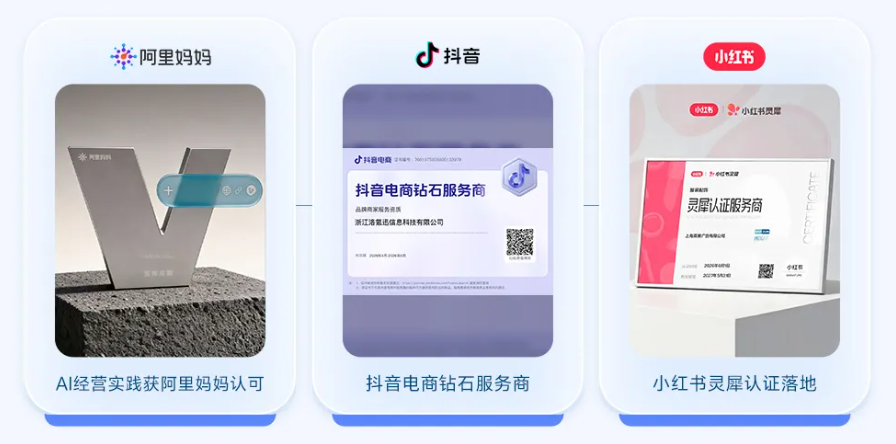
Baozun's re-certification as a Douyin E-commerce "Diamond Service Provider" also reflects its accumulated expertise in the content e-commerce space. For brands, content platforms like Douyin are not just sales channels, but also venues for brand expression and consumer engagement. Live streams and short videos should not only pursue immediate transactions, but also align with merchandise strategies and long-term user operations.
This deep operational capability has been validated in specific projects: for example, a large-scale women's night run live stream event Baozun planned for a well-known international sports brand was not just a competition, but a brand event focused on female empowerment and community building. Attracting millions of online viewers, the event amplified brand value while creating deeply resonant experiences for target audiences.
The double-digit growth in service revenue indicates that brand demand for professional services has not diminished, but is shifting toward deeper category expertise, content operations and cross-channel collaboration. This is also changing the pricing logic for e-commerce services: brands are willing to invest consistently not just in basic execution manpower, but in professional capabilities that solve complex operational problems.
02
Business Structure Restructuring Drives Revenue Quality Improvement
Beyond service business growth, Baozun's adjustment of its distribution business also reflects its focus on profit quality. In Q2, Baozun's distribution revenue fell 10% year-on-year to 541 million yuan, primarily due to the company's voluntary scaling back of low-margin, highly price-competitive businesses in standard product categories such as beauty and home goods.
For e-commerce companies, pursuing revenue is instinctive, but forgoing revenue requires more strategic judgment. Different businesses consume varying amounts of capital, inventory and operational resources. Some businesses deliver top-line sales scale, but fail to generate reasonable margins; when combined with price competition and inventory volatility, higher revenue can actually translate into greater operational pressure. Instead of chasing this type of scale, Baozun is gradually reallocating resources to higher-differentiation categories such as apparel.
Competition in non-standard categories like apparel is not just about supply sources and pricing. Merchandise planning, brand licensing, product development, supply chain management and inventory forecasting are all areas where service providers can create value. Baozun is building out related foundational capabilities, and expects its apparel distribution business to gradually contribute new revenue and profit increments starting from 2027.
This is not a simple category swap, but a re-evaluation of what types of revenue are worth growing. Alongside business structure adjustments, Baozun's operational metrics also improved: while revenue maintained growth, fulfillment costs fell 9% year-on-year, and general and administrative expenses dropped 22% year-on-year; the group's inventory turnover days shortened to 110 days from 132 days at the start of the year.
Service revenue growth, proactive restructuring of low-return businesses, improved cost efficiency and faster inventory turnover collectively drove the improvement in earnings quality this quarter. From returning to non-GAAP operating profitability in Q1 to BEC's non-GAAP operating profit reaching 107 million yuan in Q2, Baozun's profit improvement is not the result of a one-off project or temporary factor, but the outcome of continuous operational structure optimization. For service providers, real value does not come from taking on as many clients as possible, but from the ability to consistently improve the conversion of revenue into profit.
03
From Channel Operations to End-to-End Business Orchestration
Advancing e-commerce service capabilities requires moving beyond the boundaries of single-channel operations. Many online challenges can no longer be solved with online-only solutions. Poor traffic conversion may stem from a mismatch between products and consumer demand; declining promotional efficiency may be tied to inventory structure and pricing strategy; and bottlenecks in online growth may require rethinking the relationship between offline stores and digital channels.
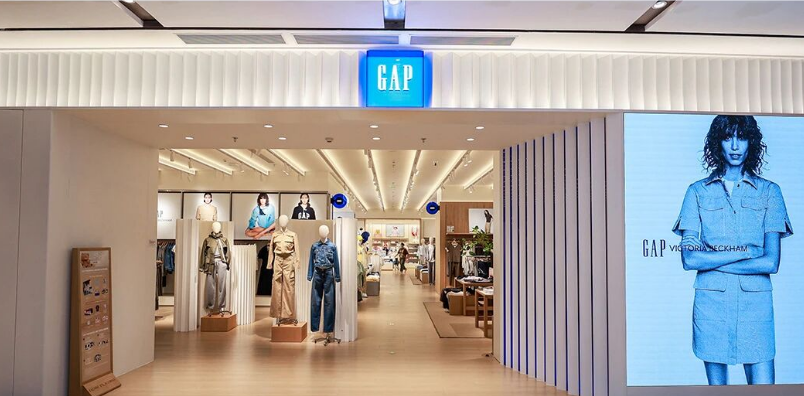
Baozun's brand management business enables the company to participate more deeply in merchandise, marketing, channel and inventory decision-making. In Q2, brand management business revenue grew 22% year-on-year to 486 million yuan. As its core brand, GAP recorded over 20% omnichannel same-store sales growth, with double-digit gains across women's, men's and children's apparel, while store foot traffic, sales conversion and sales per square meter continued to improve.
The difference between operating an entire brand and running a single store is that all business links ultimately converge on the same income statement. Issues such as whether product assortments fit local consumer preferences, whether marketing activities align with merchandise plans, how online traffic connects with offline stores, and how to balance sales opportunities with inventory risks cannot be solved in isolation. GAP's operational practices have given Baozun more direct insight into these interrelationships, which in turn enriches BEC's approach to serving external brand clients.
BEC provides the brand management business with e-commerce operations, digital marketing, technology, logistics and omnichannel capabilities, while the brand management business adds expertise in merchandise planning, store operations, inventory management and consumer operations. The synergistic value between the two segments goes beyond cross-resource sharing: it allows Baozun to understand brand operational challenges from multiple perspectives. This synergy is reflected financially in the brand management business' gross margin, which rose significantly to 56.1% this quarter, up 383 basis points year-on-year, proving the effectiveness of combining local operational capabilities with a brand's global influence.
Technology and automation are also being integrated into this system. Management noted that recent related pilots in GAP's e-commerce operations have achieved initial results, with plans for gradual rollout over the next 18 months. At this stage, technology supports process collaboration, data analysis and operational responsiveness, ultimately serving merchandise, content, channel and consumer operations.
For brand clients, this expansion of capability boundaries means Baozun no longer only provides execution services for individual channels, but is gradually moving into the core links of brand operational decision-making.
04
Profit Quality Emerges as New Benchmark for E-commerce Services
Baozun has raised its 2028 non-GAAP operating profit target from 550 million yuan to 700 million yuan. This target is not supported by a single business line or technology, but by a combination of factors: enhanced BEC profitability, service revenue growth, distribution structure optimization, brand management business improvement, and growing synergy between the two core business segments, which together form the foundation for medium- to long-term profit growth.
Specifically, the brand management business' losses continue to narrow, with non-GAAP operating loss shrinking to 33 million yuan this quarter, and GAP's operating loss improving by over 40% year-on-year. Meanwhile, the company is adhering to a prudent expansion strategy, opening 9 new GAP stores this quarter, and remains on track to meet its target of opening more than 50 new stores for the full year.
This improving operational fundamentals have quickly been recognized by capital markets. Following the earnings release, multiple brokerages including Citi, CLSA and CMB International upgraded Baozun's investment rating, target price and earnings forecast, issuing more positive assessments of its sustained profitability improvement and medium- to long-term growth potential.
For the broader e-commerce service industry, Baozun's Q2 report carries significance beyond single-company profit growth. Slowing traffic dividends do not mean brands no longer need service providers. What has changed is that brands are redefining what types of services are worth paying for. Basic operational capabilities determine whether a service provider can get a seat at the table, but the ability to understand category nuances, align merchandise and content strategies, connect online and offline operations, and balance inventory management with profitability determines how long it can stay there.
In Q2, Baozun Group's revenue grew 7%, service revenue rose 10%, and BEC's non-GAAP operating profit reached 107 million yuan. The simultaneous improvement in revenue, service business performance and profit indicates that its core e-commerce business is not only maintaining growth, but also strengthening its ability to convert business into profit. Scale remains important, but the structure, efficiency and profitability behind that scale are becoming increasingly critical. As the industry stops rewarding only transaction volumes, operational quality has become the new value benchmark for e-commerce services.
This article was first published on the official Ebrun website.
[Copyright Notice] Ebrun advocates respecting and protecting intellectual property rights. Without permission, no one is allowed to copy, reproduce, or use the content of this website in any other way. If any copyright issues are found in the articles on this website, please provide copyright questions, identification, proof of copyright, contact information, etc. and send an email to run@ebrun.com. We will communicate and handle it in a timely manner.
Translated by AI. Feedback: run@ebrun.com