
How a Viral 3D-Printed Shoe Unpacks 5 Emerging Trends at Formnext Exhibition
【Ebrun Original】 You might not expect that at a professional exhibition centered on additive manufacturing (3D printing), the entry point that pushed this technology into the mainstream consumer spotlight was a pair of shoes.
"Normally these sell for 600 to 700 yuan, but the show price today is 299 yuan. We just want customers to experience the benefits of 3D-printed shoes first, otherwise many people are put off by the price tag," a salesperson told me while packing up their booth and making last-minute pitches as the first day of Formnext Asia drew to a close.
This kind of shoe-selling scene was far from rare at the exhibition. According to incomplete statistics, at least 18 exhibitors at Formnext Asia showcased applications related to 3D-printed footwear. Among the vast array of booths, 3D-printed shoes emerged as the most eye-catching product, and the one that most easily resonated with casual attendees on the spot.
Originating in Germany, Formnext has been held annually every November at the Messe Frankfurt exhibition center since 2015. It expanded to the Asia-Pacific region in 2021, with an annual edition held at the Shenzhen World Exhibition & Convention Center, quickly rising to become a leading industry event for the additive manufacturing sector in the region. The 2026 Formnext Asia Shenzhen wrapped up on August 28 after three days, drawing professional attendees from 90 countries and regions. As an industry bellwether, the exhibition's exhibitor lineup and product distribution serve as a barometer of sector trends.
To make sense of this year's show, one can start with several interrelated trends: the full gathering of top consumer 3D printing brands, the unexpected rise of subtractive manufacturing firms (desktop CNC, UV printing), the concentrated boom in metal 3D printing, and the penetration of AI across the entire modeling and printing workflow. The pair of shoes pitched to me is a microcosm of how 3D printing is impacting the consumer end amid these trends.
01 Top Consumer 3D Printing Brands Gather in Full Force
According to official exhibition data, this year's show covered 20,000 square meters and attracted more than 330 domestic and international exhibitors, fully covering the entire additive manufacturing industry chain, from consumer 3D printing brands to industrial 3D printing manufacturers, material suppliers, galvanometer producers, 3D scanner makers, and AI modeling tool providers, among others.
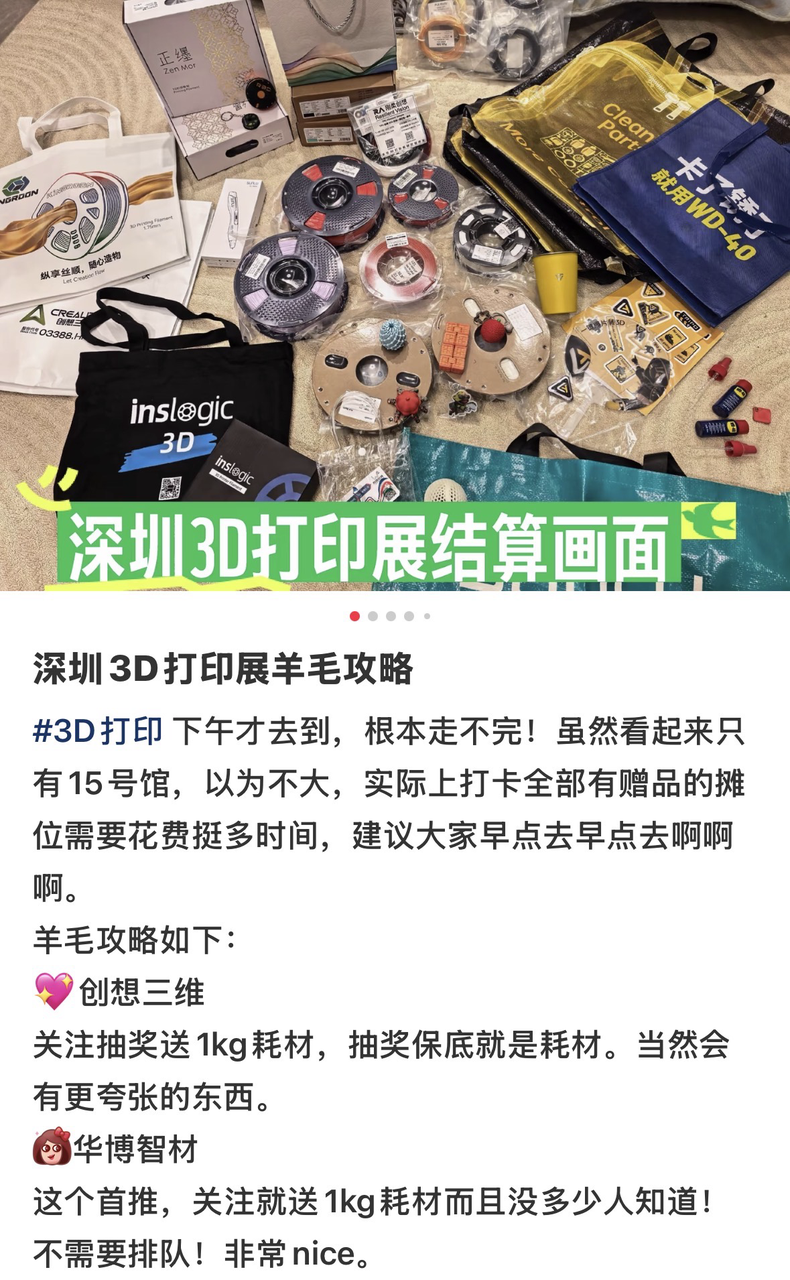
Offering gifts via QR code scans and free ice cream to drive foot traffic is a common practice at trade shows. At this additive manufacturing event, the giveaways were 3D printing filaments, 3D printing pens, 3D printed bouncy balls, 3D printed toys, and other related items. According to a "Shenzhen 3D Printing Show Freebie Guide" compiled by internet users, at least a dozen exhibitors were offering complimentary products.
On the consumer 3D printing front, leading brands including Bambu Lab, Creality, Snapmaker, Elegoo, and Flashforge all had a presence, and their booths were the most crowded, requiring considerable effort to squeeze through to see the products on display. A staff member at one of these brands said they had failed to secure a 100-square-meter large booth, with their space only half the size of other leading brands, making their booth even more packed.
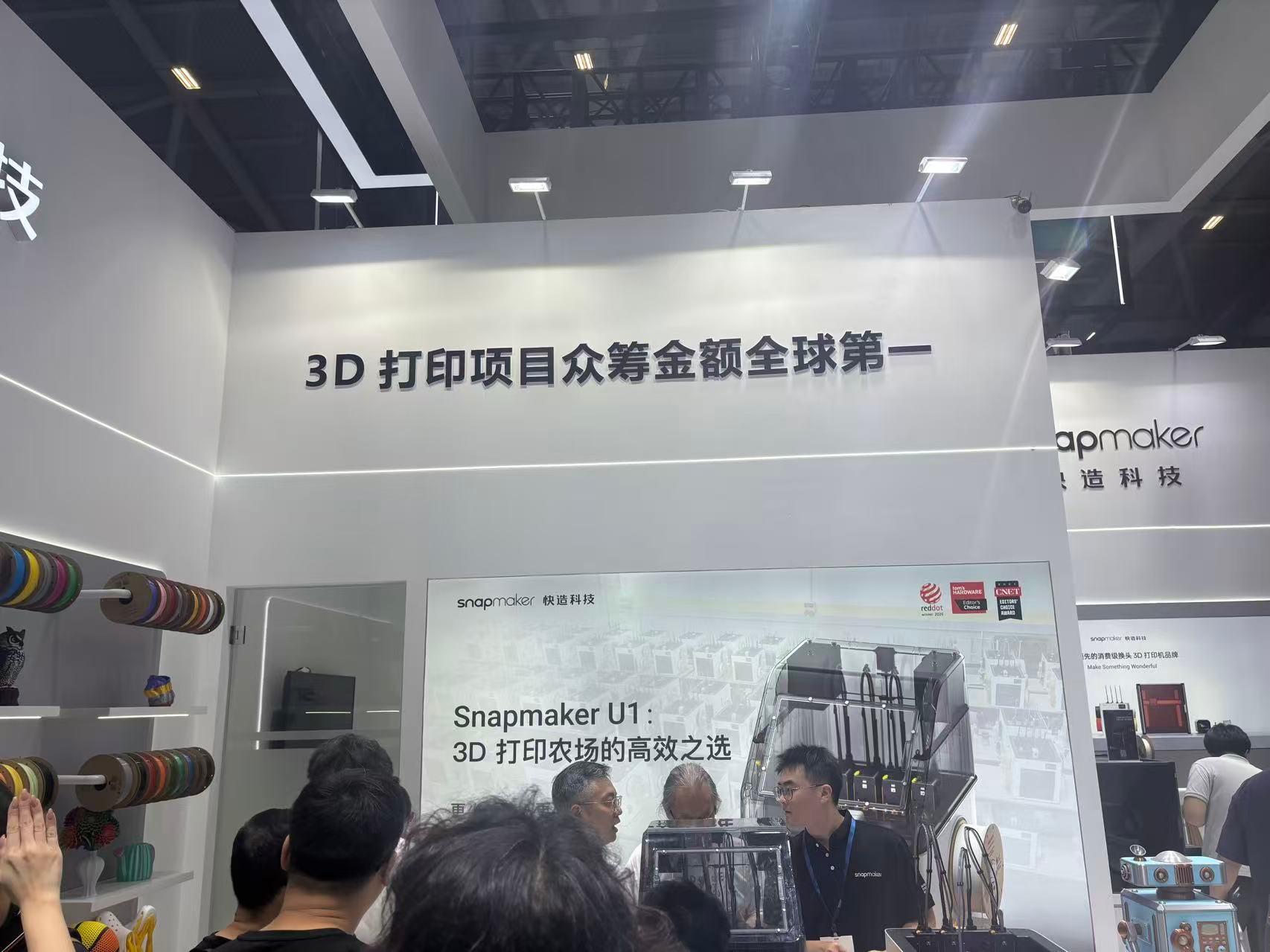
The slogans at various booths offer a glimpse into each brand's core positioning and highlights. For example, Creality's slogan reads "The First Listed Consumer 3D Printing Company" — the company listed on the Hong Kong Stock Exchange in May this year, becoming the first publicly traded firm in the consumer 3D printing space. The most prominent slogan at Bambu Lab's booth is "Bring 3D Printing to Every Household," demonstrating the industry leader's commitment to popularizing 3D printing.
And Snapmaker's slogan, meanwhile, is "World's Highest Crowdfunding Amount for a 3D Printing Project," referencing its Snapmaker U1 new product with an independent four-head parallel system launched last year, which raised 47 million yuan in 12 hours on Kickstarter, making it the highest-funded 3D printing project in global crowdfunding history. Staff said the Snapmaker U1 remained the core exhibit at this year's show.
Creality publicly debuted its K3 3D printer equipped with KliTek? multi-nozzle technology for the first time at this year's Formnext Asia Shenzhen. The K3 adopts a four-nozzle parallel printing architecture, with nozzle changes taking less than 5 seconds and full material swaps completed within 15 seconds, designed to solve pain points in traditional multi-color, multi-material printing such as slow material changes and filament waste. The K3 is not yet publicly available for sale, but posts from farm operators and studios discussing and seeking to purchase the device have already emerged on social media, a testament to its high popularity.
02 Subtractive Manufacturing Firms Grab the Spotlight
A key shift at this year's exhibition was the larger presence of desktop CNC and UV printing enterprises, competing for attention alongside additive manufacturing firms. As a new category of desktop maker tools, CNC has seen accelerated progress across the board this year, from funding and product launches to market education.
Four representative enterprises in the desktop CNC space — Makera, InfiMaker, Xhorse3D, and TwoTrees — all participated in Formnext Asia Shenzhen, entering the market via different approaches including high-precision three-axis, desktop five-axis, and intelligent five-axis solutions, jointly driving precision machining from factory floors to desktops and from professional use to mass consumer adoption.
Makera focuses on high-precision three-axis models, standing out for its lightweight design, low access threshold, and content ecosystem; InfiMaker was founded by a former DJI team, focusing on intelligent five-axis linkage, with self-developed CAM software enabling full-process automation; Xhorse3D's parent company, Shenzhen Xhorse Electronics Technology Co., Ltd., was founded in 2010 and holds a very high market share in the automotive CNC key cutting machine segment. It began developing desktop five-axis CNC technology in 2019, and spun off its desktop CNC business into an independent brand in 2025; TwoTrees specializes in consumer-grade three-axis engraving machines, with a rich product portfolio and high cost-performance ratio that are sold to many countries. It has incorporated user-friendly designs such as safety light curtains, making it suitable for beginners.
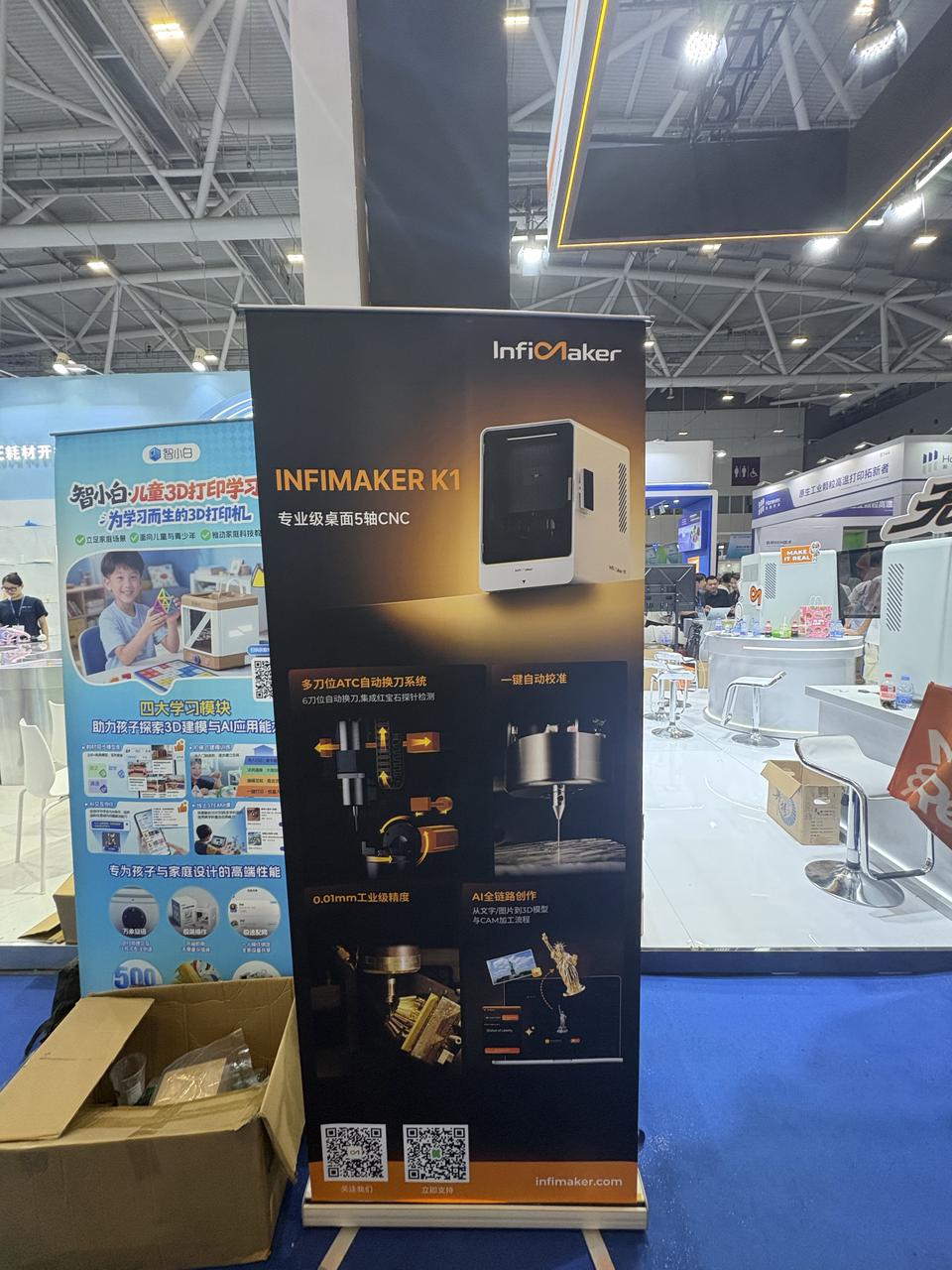
Compared to 3D printing, CNC has reached the consumer market later, with many products still in the just-launched or crowdfunding stage. InfiMaker brought its upcoming desktop five-axis CNC new product InfiMaker K1, which is currently in crowdfunding, to the show, with a Kickstarter QR code placed next to the product, allowing interested attendees to scan and support the campaign directly after learning about the device.
UV printing was another unexpected highlight — the booth of Changlang Technology was surrounded by a circle of attendees. In 2025, Changlang Technology launched its dual-nozzle personal UV printer ePrint, with a core selling point of "four-in-one" functionality (UV printer, DTF heat transfer printing, DTG direct-to-garment printing, UV DTF printer), which raised a total of $4.29 million in crowdfunding. The product only entered the Chinese market this year, making its offline debut at the INNO100 Global Innovation Flagship Store in Shenzhen.
At the exhibition, many attendees were asking about the differences between ePrint and eufyMake E1, a brand under Anker Innovations. The booth posted a QR code for its user group; the first group is already full, and the second group now has nearly 200 members. Users in the group have shown strong interest in the product, actively offering to visit the company to see the product in person and requesting more product demonstration videos.
03 3D-Printed Footwear Moves to Full Industrialization
Almost anyone visiting Formnext Asia would find it hard to miss the 3D-printed shoes, as they are sufficiently eye-catching and available in a wide range of styles. The technology for 3D-printed shoes has matured considerably, and it is now capable of producing not only simple styles such as beach shoes and slippers, but also sneakers and sandals. Compared to ordinary shoes, its advantages include breathability, comfort, waterproofing, and no need for scrubbing — dirt can be rinsed off directly with water.
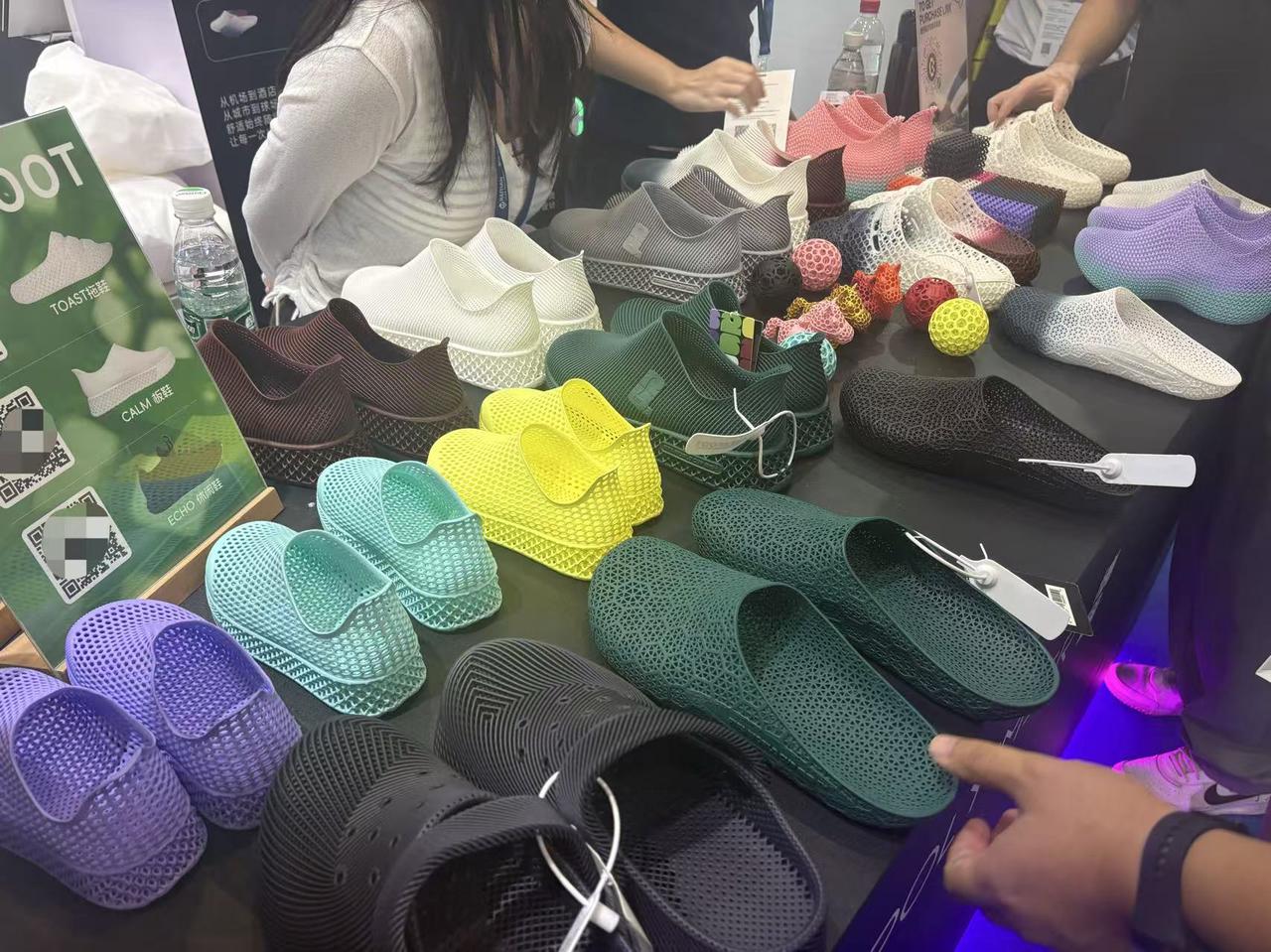
According to incomplete statistics, at least 18 enterprises at Formnext Asia are involved in 3D-printed shoe applications, covering the entire industry chain from 3D printing equipment manufacturers to material suppliers and solution providers. This year's exhibition also hosted the first International 3D Printed Footwear Design Awards, which include five categories: 3D printed footwear design awards, brand awards, equipment awards, material awards, and comprehensive awards. Top global 3D printed footwear designers and industry practitioners were invited as judges to help promote the industrialization of 3D-printed shoes.
Leading international sportswear brands including Adidas and Nike have successively entered the space and launched 3D-printed shoe lines. Relying on their brand influence, channel coverage, and continuous product iteration, they have completed early market education for 3D-printed shoes, allowing the public to gradually recognize and accept this emerging footwear category. Forecasts indicate that the global 3D-printed shoe market size is expected to reach at least 50 billion yuan in the next five years.
Currently, 3D-printed shoes mainly use two technologies: stereolithography (SLA) and Fused Deposition Modeling (FDM). FDM has lower costs but longer production times. If the cost of producing a pair of shoes using SLA technology is 100 yuan, FDM only costs 40 to 50 yuan, but the printing time can be as long as 10 hours (compared to about 4 hours for SLA), and the upper elasticity is slightly poorer. In terms of materials, resin, TPE, and TPU can all be used to print 3D shoes, but only resin materials meet commercial sales standards and deliver better performance.
At present, the overall selling price of 3D-printed shoes is not low, generally around 500 to 600 yuan or even higher. Some exhibitors at the show attracted consumers to try the products through discounted promotions, with promotional prices still around 300 to 400 yuan.
According to staff at 3D printing manufacturer Kongshi Technology, the price of 3D-printed shoes has not dropped significantly mainly because the production process has not yet achieved full automation. After printing, manual polishing, painting, baking and other processes are required, limiting overall production capacity. A factory with 50 to 60 workers can only produce 300 pairs per day, which is already a relatively good level in the industry.
"Limited production capacity is actually more friendly to small sellers, because it creates a moat. It's not a case where anyone with enough capital can mass produce, which would easily lead to overwhelming dominant large sellers," the staff member noted.
04 Metal 3D Printing Experiences Explosive Growth
"Yesterday I alone connected with 13 potential customers. With this many of us here, we probably got at least 100 [customers] in a day," a staff member at metal 3D printing company Gelai Platinum said at Formnext.
According to the staff, metal 3D printing can be applied across various industries. For example, one client approached them to print custom villa escalators, a field they had not previously explored. But the cost turned out to be much lower than traditional manual bending, and production time was also shorter.
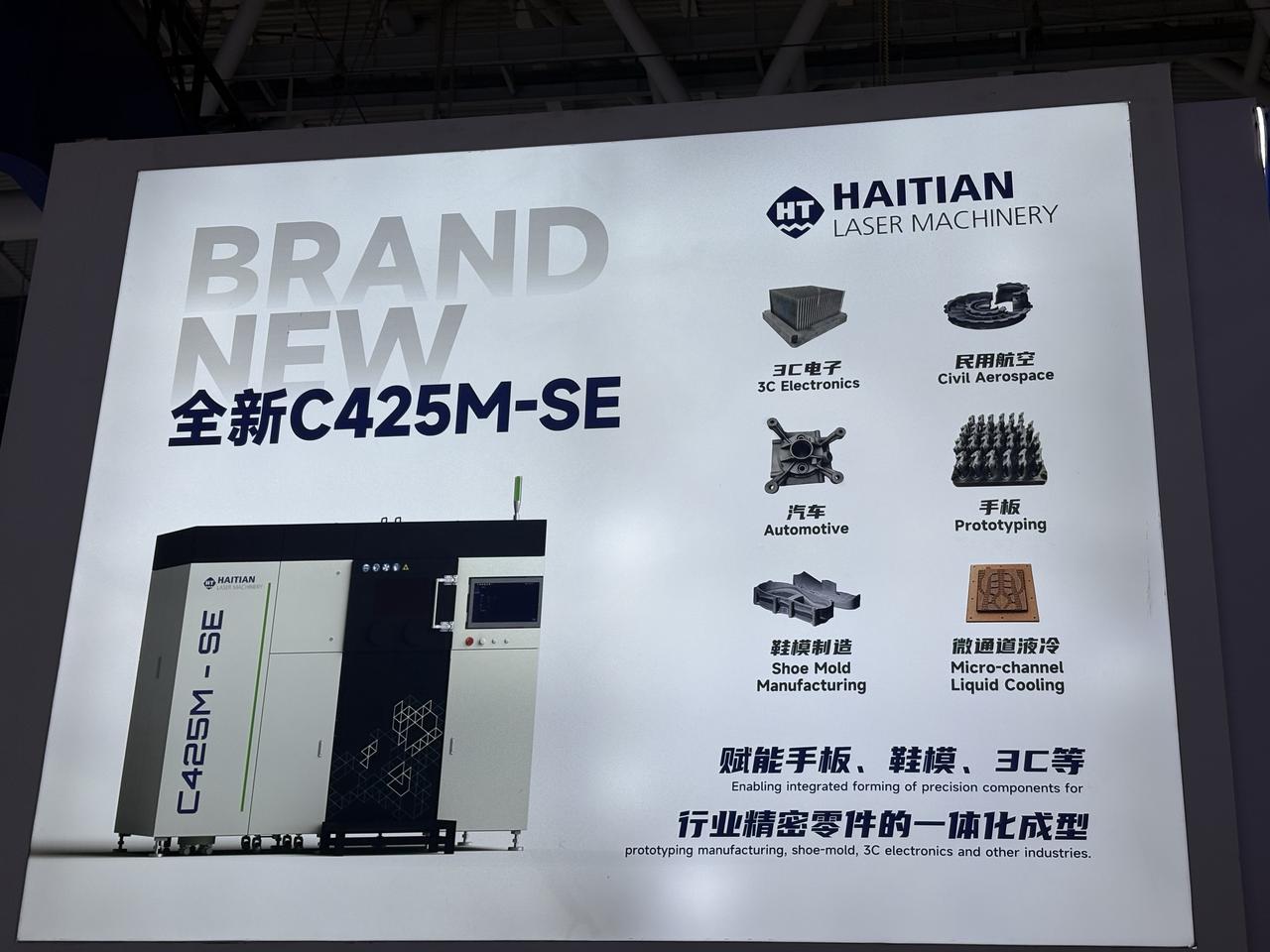
In contrast to non-metal 3D printing, which uses common materials such as plastic, resin, ceramic, and gypsum, metal 3D printing focuses on materials including stainless steel, titanium alloy, aluminum alloy, copper, and gold, almost exclusively for industrial-grade applications.
Metal 3D printing first originated in military, aerospace and other fields that are less cost-sensitive and have extremely high performance requirements; it later gradually expanded to civil industrial scenarios such as medical dentistry, automotive, and industrial molds. The most intuitive impression at this year's exhibition is that it is further expanding into areas closer to end consumers, such as consumer electronics, jewelry, and humanoid robots.
A large number of metal 3D printing equipment manufacturers and printing service providers shared booths on site. One service provider told us that they originally started in resin printing, but seeing the explosive growth window for metal 3D printing, they decisively pivoted, and set up a new factory in Dongguan last year dedicated exclusively to industrial-grade metal 3D printing services.
"Because 3D printing is powder-based, customers worry that products might break if dropped. But in fact, the strength of metal 3D printed parts is already comparable to, or even slightly stronger than, CNC cast parts," he said.
05 AI Becomes a New Engine for 3D Printing
AI is no longer limited to "generating a 3D model"; it is now extending across the entire workflow, including modeling, modification, texturing, part splitting, optimization, and even printing processes. At the exhibition, you can find a company offering AI image-to-model and printing-on-demand services every few steps. Scanning a QR code and uploading a photo can generate a 3D model figurine, which is then printed and mailed directly to the customer. The official AI special segment features enterprises including Meshy AI, Tripo AI, Hi3D, DreamTech, Deep-Mesh, Meigou, and Hyper3D.
In addition to enterprises specializing in AI-generated 3D models, new products launched by various equipment manufacturers are also equipped with AI functions. For example, Creality's new K3 integrates AI capabilities throughout the entire printing process, from automatic RFID filament identification and slicing parameter matching to anomaly detection for issues such as layer shifting and nozzle clogging during printing. A chamber camera continuously monitors the process and automatically pauses problematic prints, and users can also remotely view and control the progress via a mobile app.
Metal 3D printing equipment manufacturer Gelai Platinum's newly launched desktop consumer-grade device DP-C1 supports AI voice input, manual drawing, and automatic photo model generation, delivering zero-threshold operation for end consumers. The device uses self-developed lasers and self-developed software, paired with a cloud platform, allowing users who cannot model to select their preferred models on the platform and print with one click.
In addition, the development of AI has brought more use cases for 3D printing. With the growing demand for AI computing power, server heat dissipation has become a new market for 3D printing. 3D printing can generate complex curved water cooling plates. But in the past, copper, which has excellent thermal conductivity, was highly reflective to lasers and difficult to print. However, breakthroughs in green laser technology have now made copper printing stable and feasible, so a brand-new industry chain spanning copper materials, green laser equipment, and 3D printed heat dissipation components is taking shape.
Ebrun will continue to track and report on related developments. For more information related to this article, please scan the QR code to follow the author on WeChat.

This article was first published on the official Ebrun website
[Copyright Notice] Ebrun advocates respecting and protecting intellectual property rights. Without permission, no one is allowed to copy, reproduce, or use the content of this website in any other way. If any copyright issues are found in the articles on this website, please provide copyright questions, identification, proof of copyright, contact information, etc. and send an email to run@ebrun.com. We will communicate and handle it in a timely manner.
Translated by AI. Feedback: run@ebrun.com