
Farewell to Duty-Free Dividends: Cross-Border E-Commerce Fulfillment-by-Platform Merchants Shift Operations to New Channels and Models
By Han Xiao | Edited by He Yang
(Ebrun Original) "There is no way for new, inexperienced sellers to enter Temu's fulfillment-by-platform business in 2026," said a Temu multi-store seller based in Chengdu. The seller has already withdrawn from Temu's fulfillment-by-platform program, shifting its focus to semi-fulfillment and the Y2 model instead.
Note: Fulfillment-by-platform (full-service model) refers to a setup where merchants only need to supply goods and ship them to the platform's domestic consolidation warehouses. The platform takes full responsibility for store operations, cross-border logistics, after-sales service and other links. Semi-fulfillment refers to a model where merchants stock goods in overseas warehouses on their own and are responsible for local fulfillment and after-sales service, while the platform is in charge of traffic allocation, pricing and sales operations. Y2 is a semi-fulfillment derivative model launched by Temu, where merchants do not need to stock goods in overseas warehouses in advance, ship directly from China after orders are placed, the platform bears the entire cross-border logistics chain, and sellers retain independent operation and pricing rights.
While this statement may be overly absolute, it lays bare the current survival situation of a large portion of cross-border merchants.
From last year to this year, hit by the U.S. cancellation of duty-free treatment for small parcels under $800, repeated fluctuations in tariff rates, and the EU's abolition of duty-free treatment for small parcels under ?150, the cross-border e-commerce fulfillment-by-platform model has encountered repeated setbacks, with store withdrawals and transformations becoming frequently mentioned keywords among merchants.
The fulfillment-by-platform model relies on direct mail small parcels, focusing on low-priced, lightweight small items. Once the duty-free dividend is lost, the sharp rise in costs has left this model teetering.
According to an analysis by a trade and transport group based on Chinese customs data, China's low-value cross-border e-commerce exports fell 7% year-on-year in May 2026, continuing the negative growth trend with monthly growth rates fluctuating between -4% and -11% since September 2025. The cumulative decline from January to May 2026 reached 7.3%, with the cumulative decline in low-value exports to the EU hitting as high as 20.4%.
How can fulfillment-by-platform merchants continue their businesses? After order volumes decline, where will they find new growth?

Under the policy "shockwave", has the fulfillment-by-platform business entered its darkest hour?
Overseas Temu consumers may have noticed that goods on Temu have become more expensive over the past two years, with products under $10 decreasing significantly and those over $20 increasing substantially. In addition to the platform's continuous enrichment of its product structure, the cancellation of duty-free policies in markets such as the U.S. and the EU is also a non-negligible factor contributing to the price increases.
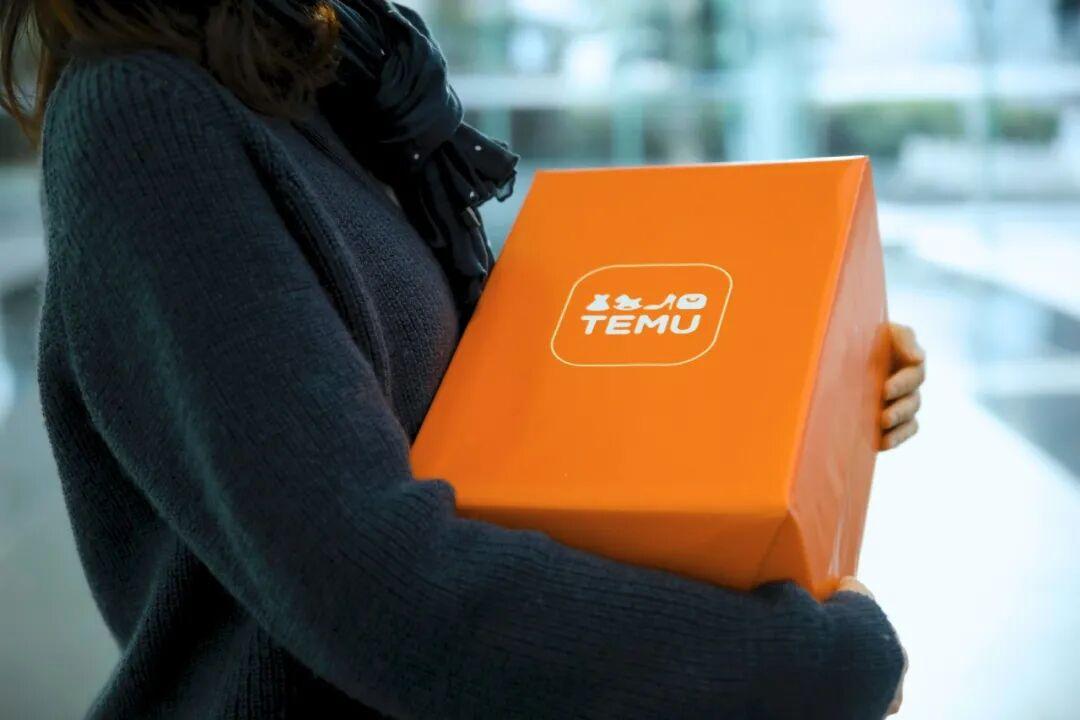
Under the fulfillment-by-platform model, for goods shipped via direct mail parcels, the increased costs after adding high taxes and duties will naturally be partially passed on to consumers. Alternatively, if merchants change their supply chain approach, switching from supplying goods to domestic consolidation warehouses to stocking goods overseas and shipping locally on their own, the increased logistics costs will also be transferred to end selling prices.
Starting from July this year, the EU began imposing a fixed tariff of ?3 per tax number on imported goods under ?150. The implementation of this policy marks the complete end of the small parcel duty-free dividend that lasted for several years. The fulfillment-by-platform model, to a large extent, was built on the foundation of this dividend.
A phone case priced at ?5 or a small kitchen gadget priced at ?8 still had a certain profit margin after deducting logistics and procurement costs when shipped through the duty-free channel. Once the ?3 tariff is added, taxes plus logistics costs are more expensive than the product itself, and the price advantage disappears completely.
"At the same time last year, we had more than 100 orders a day, now we have less than 10 orders a day," a Temu fulfillment-by-platform merchant selling home goods in Yiwu described his European business this year. Most of his products have an average order value of less than ?10. In the past, he relied on duty-free small parcels to drive volume, with thin profits but fast turnover. Now, it is equivalent to a 30% price increase out of nowhere. "Consumers are no longer willing to pay, and the platform is not giving us traffic either."
Opening Temu's European site, almost all products recommended on the homepage are semi-fulfillment goods shipped from local warehouses. The Yiwu merchant said the platform is also forcing merchants to transform by tilting traffic support. With fulfillment-by-platform contracting and semi-fulfillment expanding, Temu's European market seems to be undergoing a structural overhaul.
A similar scenario played out in the U.S. market last year. In May 2025, the U.S. officially abolished the duty-free policy for small parcels under $800 from China, immediately dealing a huge blow to the entire industry's direct mail small parcel business. The fulfillment-by-platform model was undoubtedly the hardest hit area. For Temu, its U.S. monthly active users saw a significant decline, and only gradually recovered after June. At the same time, Temu also hedged against the decline in fulfillment-by-platform business by scaling up semi-fulfillment and launching the Y2 model in the U.S., which allows shipping directly from China to consumers without stocking goods overseas. At the end of 2025, the Y2 model was also launched in the European market.

The EU tax reform has hit small and medium-sized sellers focusing on low-priced general goods the hardest. A seller in the accessories category did the math: in the past, a necklace with a supply price of 8 yuan was sold for ?5, and after deducting logistics fees and platform commissions, he could still make a few cents per order. Now, with the ?3 tariff added, the selling price has to rise to at least ?8 just to break even. "But accessories at this price point simply won't sell on Temu," he said helplessly.
More worrying than thinning profits is the collapse of expectations. The survival logic of fulfillment-by-platform merchants is fast in and fast out, relying on turnover. Goods are stocked in domestic warehouses, and merchants restock according to how much the platform sells, so capital occupation is controllable. Now order volumes have been cut in half, and the restocking rhythm is completely disrupted: stocking too much leads to inventory backlog, while stocking too little means the platform will not allocate traffic, leaving merchants in a dilemma. Many merchants have started to sell goods in domestic warehouses at a discount, or even abandon goods directly and withdraw from the platform.
In addition, the complexity of tariffs is also forcing merchants to improve their compliance awareness. Because the EU has adopted the ?3 fixed tariff policy, HS codes (tax numbers) must be strictly verified. Incorrect declaration, omission of declaration, or under-declaration may lead to parcels being detained or returned, and the resulting return shipping costs may be higher than the value of the goods themselves. "In the past, maybe one or two out of ten parcels were detained, now half of them can't get through," complained a seller of 3C accessories. His products involve multiple sub-models, and a slight deviation in the HS code will result in the parcel being rejected by customs. "In the past, we could just fill in a broad category, but now we have to check each one individually."

The tide turns for fulfillment-by-platform
The fulfillment-by-platform model is not a new concept, but Temu pushed it to the forefront of the industry under this name.
When Temu launched in September 2022, it used the fulfillment-by-platform model as its core entry strategy. In 2023, platforms including SHEIN, AliExpress, TikTok Shop, Lazada and Shopee followed suit and launched their own fulfillment-by-platform models. Due to its low threshold, friendliness to factories and inexperienced cross-border players, and ability to efficiently organize supply chains and deliver cost-effective advantages, fulfillment-by-platform quickly became a trend in the cross-border e-commerce industry, with almost every player talking about and adopting the model for a time.
Even within the fulfillment-by-platform model, each platform has different rules: Temu's fulfillment-by-platform model gives the platform control over pricing, traffic and operation rights, with merchants essentially acting as suppliers. SHEIN's "agency operation model" sees sellers ship goods to domestic warehouses, after which the platform is responsible for unified logistics and last-mile fulfillment. AliExpress conducts targeted recruitment based on sales plans, with merchants able to negotiate pricing and having a stronger sense of participation. For TikTok Shop's fulfillment-by-platform model, the platform is responsible for listing, pricing, logistics and after-sales service, but merchants can also participate in content operations, whether through shooting short videos or collaborating with influencers.
If 2023 was the year of rapid expansion for fulfillment-by-platform, then the wind began to shift gradually after 2024 — and not entirely after the cancellation of the small parcel duty-free policy.
In March 2024, Temu's U.S. site launched semi-fulfillment for merchants capable of stocking goods overseas, rolling it out fully across nine sites in just two months. Under the semi-fulfillment model, merchants need to handle overseas warehouses, shipping and logistics after-sales on their own, while the platform controls pricing and sales. For many small and medium-sized sellers, the threshold has risen sharply. But they gradually found that goods stocked locally seem to be more likely to receive traffic support, and the transformation from fulfillment-by-platform to semi-fulfillment seems to have become the general trend. When the U.S. new tariff policy came into effect in 2025, the fulfillment-by-platform model faced its first life-or-death test after losing the duty-free dividend.
AliExpress began trialing semi-fulfillment in August 2023 and officially launched it in January 2024. By February 2024, AliExpress also launched an overseas fulfillment model. Its semi-fulfillment model entrusts the entire logistics fulfillment link to the platform, while the overseas fulfillment model requires merchants to stock goods in overseas warehouses and be responsible for fulfillment, with the operation links handed over to the platform. Later, AliExpress gradually shifted its strategic focus to overseas fulfillment, which now covers more than 30 countries and regions worldwide. Data shows that more than 20,000 new merchants joined in the first half of 2026, the number of sellers with annual sales of $1 million doubled, and the number of sellers with annual sales of $5 million increased by 567% year-on-year. Fulfillment-by-platform has already taken a back seat in AliExpress's business landscape.
SHEIN has also followed the wave of shifting from full to semi-fulfillment. In May 2024, SHEIN first launched semi-fulfillment on its U.S. site. But compared with Temu's semi-fulfillment, SHEIN gives merchants more space — after sellers provide the supply price, they can participate in pricing and operation with the platform's assistance, while also retaining autonomy over product selection. From 2024 to 2026, SHEIN's semi-fulfillment has continued to expand, currently covering core global markets including the U.S., Canada, Mexico, the UK, Germany, France, Italy, Spain, Japan, Australia, Saudi Arabia, the UAE and South Korea.
There are exceptions. Unlike Temu and AliExpress, which are scaling back fulfillment-by-platform and expanding semi-fulfillment, TikTok Shop is continuing to increase investment in fulfillment-by-platform: it opened four new European markets (Germany, France, Italy, Spain) plus Mexico and Japan last year; in June this year, it opened another eight markets including Poland, the Netherlands, Belgium, the Czech Republic, Austria, Greece, Portugal and Hungary, forming a market network covering 16 countries worldwide. In August this year, TikTok Shop also announced an upgrade to its "Premium Fulfillment-by-Platform Merchant Program", which will step up recruitment efforts across more than 20 key industrial belts in China.
Merchants also share this perception, with many new entrants to the fulfillment-by-platform model choosing to start with TikTok Shop — the content e-commerce channel can still maintain a certain profit margin to hedge against rising costs.
The different approaches of the two platforms stem from their different development stages and logics. For Temu, the fulfillment-by-platform model has completed its historical mission of driving user acquisition and volume growth. Driven by both tariff pressure and quality upgrading, shifting to semi-fulfillment and its own private label brand Xinpinmu seems to be an inevitable choice. For TikTok Shop, the fulfillment-by-platform model is still an important lever for rapid market expansion and filling its product pool.

Three transition paths for merchants
As the tide of fulfillment-by-platform recedes, merchants are seeking their own way out. Some are upgrading their models, some are restarting in new markets, and some are simply switching tracks entirely. A life-or-death transition is underway.
1. Shifting from fulfillment-by-platform to semi-fulfillment, Y2 or Xinpinmu
The enterprises that can still gain a firm foothold in the fulfillment-by-platform model now are mostly two types: one is large source factories, and the other is large traders with deep penetration into industrial belts, supply chain collaboration capabilities and product sourcing capabilities. Small traders that only rely on product selection capabilities and have no supply chain foundation are doomed to struggle to go far.
For industry and trade integrated sellers with their own factories and R&D capabilities, Temu's private label project "Xinpinmu" offers another possibility. The platform directly customizes products, buys out inventory and is responsible for exclusive sales, while merchants only need to focus on production.
For more merchants with acceptable qualifications, switching to semi-fulfillment or the Y2 model has also become an option. Although semi-fulfillment requires merchants to stock goods in overseas warehouses on their own, bringing greater capital pressure, it retains a certain degree of operational autonomy and profit margin. The Y2 model, which lies between fulfillment-by-platform and semi-fulfillment, allows direct shipping from China without the need to stock overseas warehouses in advance, serving as a transitional solution.
A seller of fashion bags told Ebrun that their fulfillment-by-platform business has declined very severely this year — they are considering withdrawing from both Temu and SHEIN's fulfillment-by-platform stores, and their AliExpress fulfillment-by-platform business has also almost come to a standstill. "So we have shifted our business focus to semi-fulfillment," he said.
2. Shifting from North America and Europe to Latin America and Russia
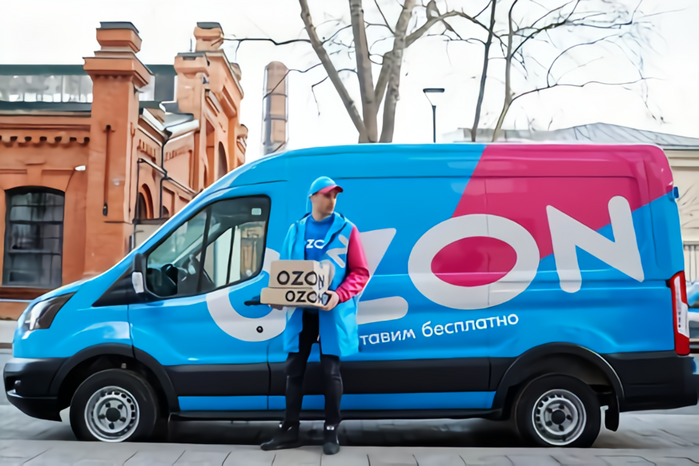
Other merchants are turning their attention to emerging markets that still offer policy dividends. Russia is one of the most watched destinations. Ozon, Russia's leading e-commerce platform, is also actively recruiting Chinese sellers — in April this year, Ozon lowered the entry threshold with measures such as "zero security deposit", and the proportion of active Chinese sellers on the platform now exceeds 20%. Industry insiders revealed that Ozon is even adding 40,000 to 50,000 new sellers per month at present. For merchants withdrawing from fulfillment-by-platform businesses in Europe and the U.S., the Russian market is still in a relatively early stage, requiring a large amount of supply and with less intense competition.
Brazil, meanwhile, has become a new "duty-free paradise" due to its policy shift this year. In May 2026, Brazil resumed its duty-free policy for imported goods under $50, leading to a rapid rise in cross-border online shopping. According to data from Brazil's "Remessa Conforme" import compliance program, the value of small cross-border purchases in Brazil reached approximately 2.6 billion reais in June 2026, hitting a monthly record since the program was launched in 2023, with a month-on-month increase of nearly 37%.
3. Shifting from the "four cross-border e-commerce dragons" to overseas local platforms
Another group of merchants have chosen to switch to overseas local platforms, with European and Latin American platforms being particularly popular. A sports shoe seller from Quanzhou, Fujian, told Ebrun that they started their cross-border business with Temu's fulfillment-by-platform model in 2023, and later expanded to platforms including SHEIN, TikTok Shop and AliExpress. In November 2025, they officially entered Mercado Libre, the Latin American e-commerce platform, and the business grew very quickly. After seeing the overall shrinkage of the fulfillment-by-platform business in North America and Europe this year, he is even more glad that he shifted his focus in advance.
Overseas local e-commerce platforms are also taking the opportunity to expand their seller recruitment. For example, European local fashion platform About You began accelerating the rollout of its third-party seller platform model this year, explicitly stating that it provides sellers with a channel to avoid policy shocks and quickly enter the European market. Central and Eastern European e-commerce platform eMAG is also accelerating the recruitment of Chinese sellers, announcing in June 2026 that it aims to recruit 20,000 Chinese sellers by 2028. Polish e-commerce platform Allegro upgraded its new seller support program this year, launching policies including up to 100% commission exemption, free logistics parcels and traffic promotion, stepping up its recruitment of Chinese merchants.
From model transformation to market migration, and then to platform switching, the migration paths of fulfillment-by-platform merchants vary, but the logic behind them is consistent — the era of extensive growth driven by duty-free dividends has ended, and what will matter next is the depth of supply chains, product capabilities and the speed of adaptation to new markets.
Ebrun will continue to track and report on this trend. If you want to know more information related to this article, please scan the QR code to follow the author's WeChat.

This article was first published on the official website of Ebrun.
[Copyright Notice] Ebrun advocates respecting and protecting intellectual property rights. Without permission, no one is allowed to copy, reproduce, or use the content of this website in any other way. If any copyright issues are found in the articles on this website, please provide copyright questions, identification, proof of copyright, contact information, etc. and send an email to run@ebrun.com. We will communicate and handle it in a timely manner.
Translated by AI. Feedback: run@ebrun.com