
Roundtable Discussion: How Can Brands Build Highly Resilient Omnichannel Supply Chains?
【Ebrun Original】As brand operations shift from single-channel to integrated online-offline and domestic-international models, supply chains face far more than just fulfillment pressures from rising order volumes. Divergent rules across channels, fragmented inventory systems, complex return and exchange workflows, and evolving consumer demands are all testing brands' ability to coordinate goods, inventory, and fulfillment resources.
On August 28, at the 2026 Brand Supply Chain Innovation Private Board Meeting held in Hangzhou, Yao Huili, Executive President of ZTO Cloud Warehouse Technology; Xu Duo, Co-founder and Brand Director of BJHG; and Wang Changshuai, Founder of Zhimei Group, held a discussion centered on "How Can Brands Build Highly Resilient Omnichannel Supply Chains". The roundtable was moderated by Mai Haochao, Dean of Ebrun Research Institute. Guests shared their respective practices and insights from perspectives including brand omnichannel operations, overseas market expansion, supply chain collaboration, and logistics fulfillment.
Disclaimer: This article is a preliminary edited transcript of selected highlights from the discussion, compiled by Ebrun editors without altering the original intent.
01
Omnichannel is not about sharing a single inventory pool, but about enabling true inventory flow
Mai Haochao: Today's discussion covers global supply chains, fast-moving consumer goods brands, the Japanese and Russian markets, and the application of AI in supply chains. We see that as brands operate across more channels and wider markets, consumer requirements for delivery are also increasing. In the face of these changes, can existing supply chain systems respond effectively?
Our topic for today is "How Can Brands Build Highly Resilient Omnichannel Supply Chains". The first question for the three of you, based on your own practices, is how to understand omnichannel supply chains. Is it simply about achieving the same products, warehouses, and fulfillment across online and offline channels?

Xu Duo: We are a relatively young brand. We started developing online in 2017 and only began large-scale expansion of offline stores in 2025. After moving from online to offline operations, the first issue we faced was the difference between online and offline operating models.
Our original online products had relatively low markup multiples, which made it difficult to cover costs such as offline store rent and labor. Therefore, we now adopt a "1.5 inventory pool" strategy: approximately half are offline-exclusive products, and the other half overlap with some online products. Offline-exclusive products have a pricing system tailored to store operating costs, while overlapping products require coordinated price and inventory management across online and offline channels.
We have opened 40 to 50 stores so far. If a batch of goods can only be circulated between offline stores, inventory digestion will be relatively slow. Therefore, we also put some offline products up for sale online, while connecting stores to central warehouses, allowing each store to act as a small warehouse that can fulfill a certain number of online orders. For us, the key to an omnichannel supply chain is not simply sharing a single set of goods, but enabling products to truly flow between different channels.
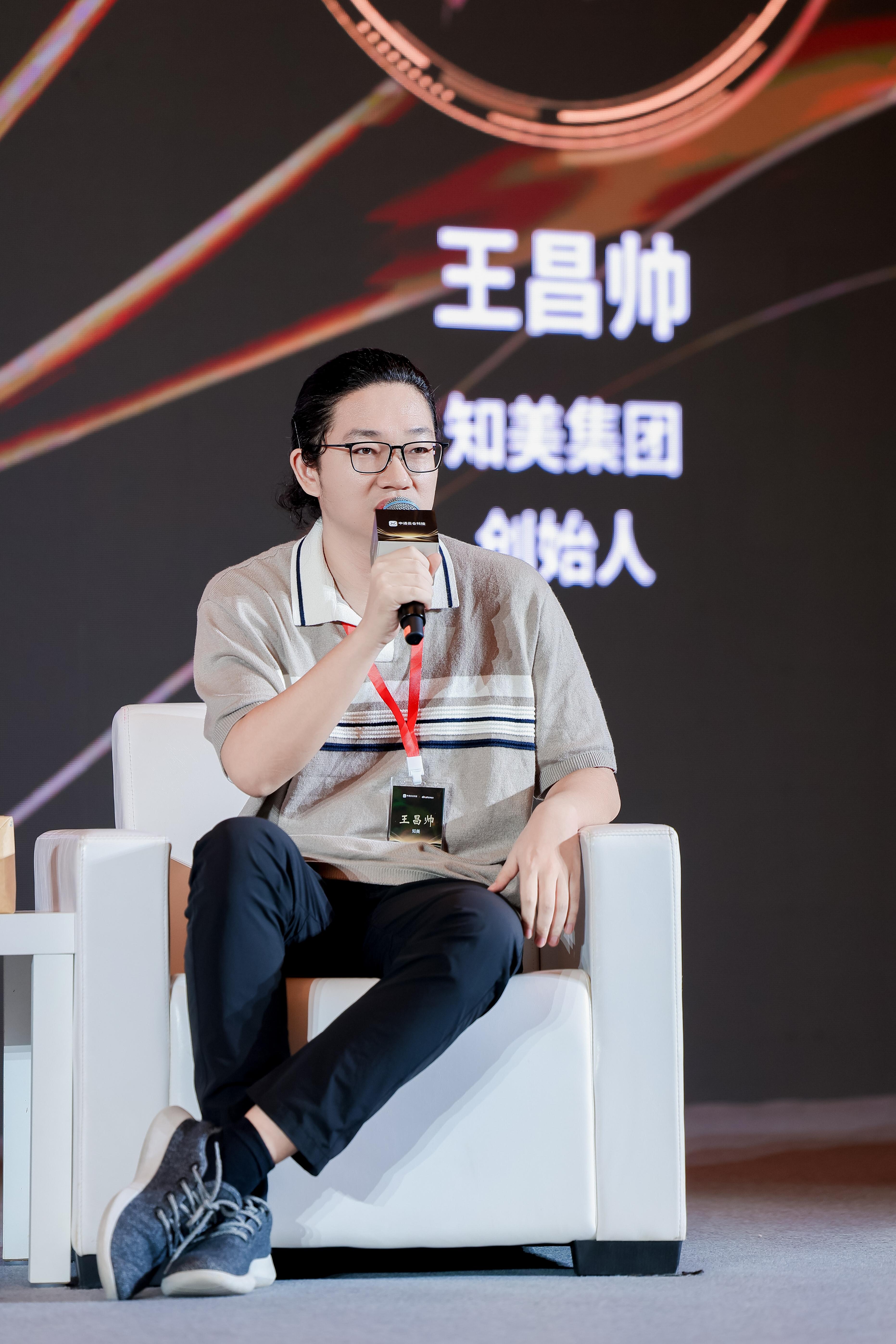
Wang Changshuai: Zhimei Group operates in both domestic and overseas markets, and we also need to handle supply chain collaboration across different brands and channels. From our practice, one of the main challenges for supply chains is information asymmetry between the business side and the supply chain side.
For example, a live stream may generate a large number of orders in a short period of time, while other channels may also require inventory at the same time. Without unified coordination, it is easy to have a situation where inventory is backlogged in one channel while another channel is out of stock.
To solve this problem, we have created the role of supply chain BP. In the past, supply chain was more like a service department at the end of the business chain; now, supply chain BPs need to participate in the operation process, understand the plans and rhythms of different businesses, coordinate overall inventory, and translate business language into language that the supply chain can execute.
Whether it is online and offline returns or influencer sample shipments, they all correspond to specific fulfillment actions in essence. Only when an effective translation and collaboration mechanism is formed between business and supply chain can inventory be truly coordinated.
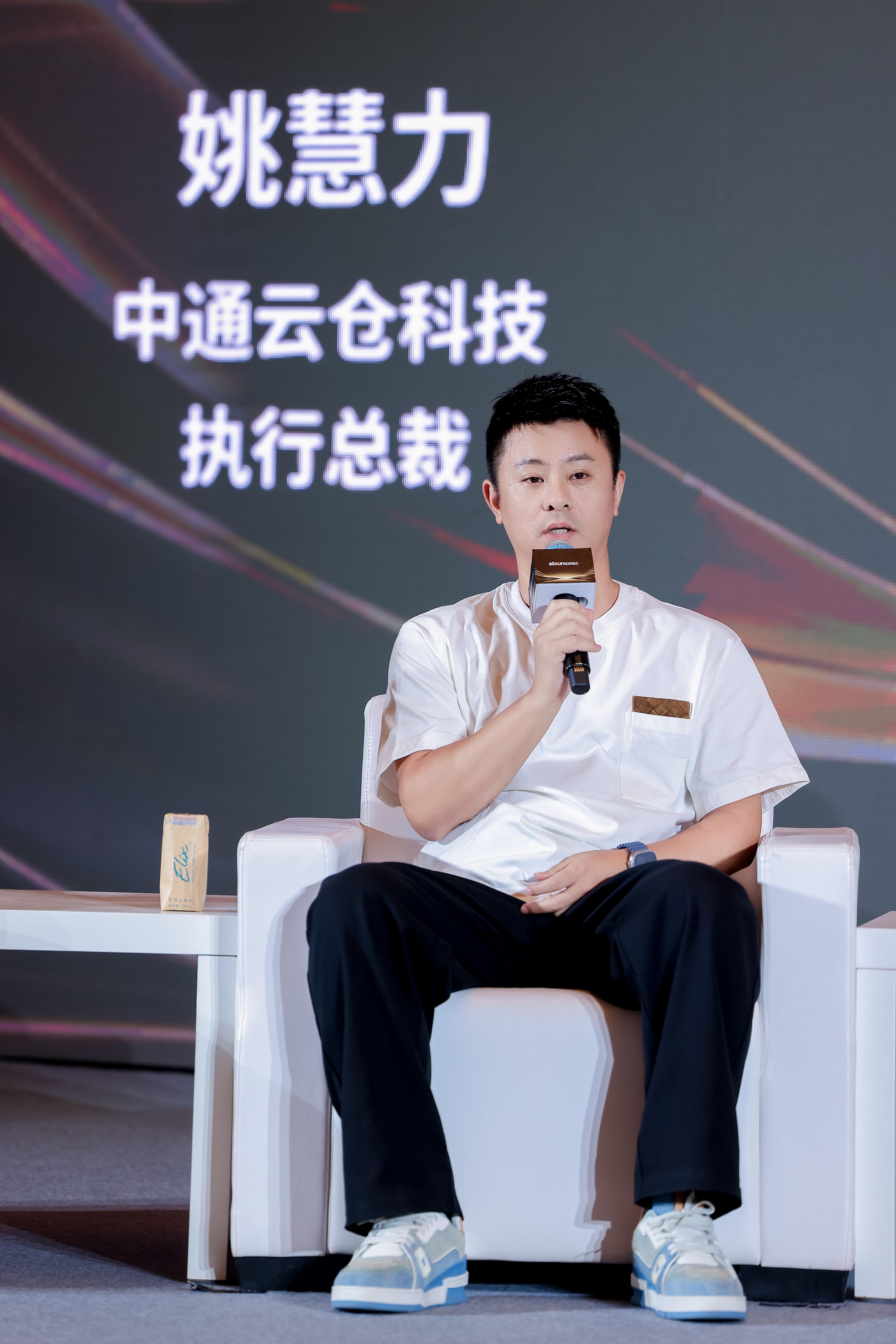
Yao Huili: ZTO Cloud Warehouse Technology mainly provides brands with logistics fulfillment services for domestic and overseas consumers. Over the past few years, our services have gradually expanded from "unified inventory pool" management to omnichannel supply chains.
Take the apparel industry as an example: brands have online orders, offline stores, and inventory needs in different regions, while also having to handle a large volume of reverse returns. We build multi-level warehouse networks based on brands' business layouts, and connect forward fulfillment with reverse logistics.
An omnichannel supply chain is not simply adding a few warehouses or distribution channels, but building a coordinated system of inventory, warehousing, distribution, and returns and exchanges around the brand's actual business scenarios.
02
How does the "1.5 inventory pool" coordinate products, prices, and inventory?
Mai Haochao: Xu Duo mentioned the "1.5 inventory pool" just now. When operating both online and offline, how do brands coordinate products, prices, and inventory to avoid conflicts between different channels?
Xu Duo: The reason we adopt the "1.5 inventory pool" is that our current offline store scale is not large enough to support a completely independent inventory system. At this stage, we are promoting online-offline collaboration mainly in three aspects.
First, we keep online and offline prices consistent as much as possible. If it is difficult to adopt exactly the same sales method for some overlapping products, we use multi-item discounts offline to increase the average order value. The unit price of individual products may be the same, but when consumers buy multiple items at once in stores, the overall price can be more attractive.
Second, we treat each store as a small warehouse. Some offline products are also sold through online channels, and store inventory can fulfill online orders from surrounding areas. Online channels not only serve a sales function, but also help accelerate the turnover of offline inventory.
Third, we focus on the full-price sell-through rate. Looking only at the overall sell-through rate can sometimes mask the problem of insufficient product profits. Even if 80% of a batch of goods is eventually sold, if a large portion of them are sold at a discount, it may still not be a healthy operating result for the brand. Therefore, we focus heavily on the full-price sell-through rate of offline-exclusive products. Only when this indicator reaches a relatively stable level will we gradually increase the proportion of independent offline inventory pools.
Mai Haochao: Trendy brands often launch co-branded or IP collaboration products, which have higher uncertainty. How can the supply chain balance creative expression and rapid response?
Xu Duo: We do not treat all IP products as special goods. Except for some holiday limited editions, gifts, or single-channel exclusive products, most IP collaboration products are still managed according to the logic of regular products. The cost generated by IP authorization is included in the overall price and profit model of the product.
In terms of supplier management, we conduct comprehensive quarterly ratings of partner factories, including sample development cooperation, delivery capability, product quality, etc. The rating results are made public in the supply chain collaboration system. Well-performing partners can receive rewards, while partners with delivery delays or quality issues are subject to corresponding restrictions.
This mechanism has also shown us that some factories are highly cooperative during the sample development stage, but may encounter problems such as unstable delivery or increased defect rates after entering mass production. To build supply chain resilience, brands cannot only look at a single cooperation, but need to continuously evaluate the comprehensive fulfillment capabilities of partners.
03
Localization has no end point, AI needs to turn SOPs into systems
Mai Haochao: Mr. Wang has long focused on overseas markets. After brands enter different countries, what is the most important issue to solve for supply chain localization? Is it compliance, or fulfillment efficiency?
Wang Changshuai: Different countries' compliance requirements do exist in differences, but we believe that more importantly, localization should be treated as an ongoing goal, rather than a task that ends after completing a certain compliance requirement.
Take the Japanese market as an example: local logistics costs are relatively high, and the timeliness of some delivery methods may not meet the brand's operational needs. Our project team and supply chain BP jointly studied the local specific delivery rules, and later found that some products can be sent via compliant postal delivery methods, thus optimizing costs and delivery efficiency.
This case shows that there is no fixed end point for supply chain localization. Brands need to continuously understand the consumption habits, channel rules, and fulfillment conditions of different countries, and then find optimization opportunities from specific scenarios. They cannot simply copy practices that have been proven effective in one market directly to another.
Mai Haochao: As businesses enter more overseas markets, inventory warning, product shelf life management, and reverse logistics will also become more complex. How do you handle these issues?
Wang Changshuai: At this stage, we are more likely to encounter stock shortages rather than near-expiry inventory in some new markets. But as online and offline businesses become more integrated, inventory and shelf life management will become increasingly important, and we are also trying to build corresponding management systems with the help of AI.
In my view, enterprise AI application has roughly gone through three stages. The first stage is using AI as a consultant or search tool to obtain information and assist in decision-making; the second stage is using AI as an assistant or agent to help employees handle specific tasks such as merging spreadsheets; the third stage is using AI to build systems that truly serve the business.
Right now, we are more focused on the third stage. In the past, many companies' SOPs only existed in documents, and employees needed to rely on experience to understand and execute them. Now, we are trying to convert SOPs into specific systems, allowing different departments to build corresponding tools around their own work.
The supply chain team can also build inventory, shelf life, and business warning systems based on this, turning management rules from document requirements into processes that can be directly used in daily work. We hope to eventually form a SOP system that is "visible, tangible, and executable".
04
Supply chain resilience requires both change prediction and stable fulfillment
Mai Haochao: Mr. Yao, from the perspective of a logistics fulfillment service provider, which supply chain links are most worthy of priority AI investment in the future?
Yao Huili: In warehousing and integrated supply chain services, we are currently focusing on two directions.
One is in-warehouse operations. Warehouses need to process a large number of orders, goods, and operational tasks every day. AI algorithms can be used to optimize order planning, staffing, and operation paths to improve overall operational efficiency.
The second is back-end and after-sales service. Consumer inquiries, abnormal order processing, and after-sales response all require a lot of manpower. AI can help enterprises build a more intelligent after-sales service system, enabling more timely problem identification and handling.
Mai Haochao: If a brand wants to choose a category or channel for an omnichannel supply chain pilot in the next quarter, what would you recommend as a starting point?
Yao Huili: Both apparel and beauty are suitable, but the demand in the apparel industry is more representative. Apparel products have a large number of SKUs, obvious seasonality, and relatively high return rates, which place higher requirements on inventory coordination and forward-reverse logistics collaboration.
On the basis of unified inventory pool management, brands can further connect regional warehouses, front warehouses, and reverse services. If returned goods can be quickly re-stocked after inspection and processing, they can re-enter the forward sales process.
This not only reduces inventory loss, but also helps brands improve capital efficiency. For logistics service providers, true omnichannel service is not just about sending out forward orders, but about enabling continuous and efficient flow of goods between forward and reverse links.
Mai Haochao: Finally, please each of you use a key word or a sentence to summarize: What supply chain resilience capability do brands need to prioritize building in the future?
Xu Duo: For brands, resilience ultimately comes from growth, and the foundation of growth is creativity and product strength. Especially for non-standard products such as apparel, whether consumers recognize the product is very critical. Supply chains can help brands improve efficiency, but first there must be products that are truly accepted by the market. Simply put, selling well is a huge strength.
Wang Changshuai: First is to embrace change. Consumers are changing, channels are changing, and the way of internal collaboration within enterprises is also changing. From shelf e-commerce to content e-commerce, and then to different overseas platforms, enterprises need to continuously adapt to the new operating environment.
Second is to find what remains unchanged. The external environment is constantly changing, but why the brand was founded and what value it hopes to provide to consumers – these core elements should not be easily changed. Enterprises need to both embrace change and know how to respond to all changes with constancy.
Yao Huili: For logistics service providers, the most important thing is to be able to deliver goods from warehouses to consumers efficiently and stably under all circumstances. Whether facing big promotion periods, seasonal changes, or unexpected situations, we must ensure the stable operation of warehousing, transportation, and fulfillment systems, so that goods can always flow smoothly.
Mai Haochao: Thank you for the sharing from the three guests. From brand inventory pool design, to localized operations in overseas markets, to AI applications and logistics fulfillment, supply chain resilience is not a single-point optimization of a certain link, but the overall collaboration between products, inventory, channels, systems, and partners.
As the market continues to change, brands need to both predict demand more agilely and take on changes with stable supply chain capabilities. Only by making inventory truly flow, turning business rules into executable systems, and maintaining collaboration across every fulfillment link can omnichannel supply chains transform from an operating concept into an underlying capability that supports long-term brand growth.
This article was first published on the official Ebrun website.
[Copyright Notice] Ebrun advocates respecting and protecting intellectual property rights. Without permission, no one is allowed to copy, reproduce, or use the content of this website in any other way. If any copyright issues are found in the articles on this website, please provide copyright questions, identification, proof of copyright, contact information, etc. and send an email to run@ebrun.com. We will communicate and handle it in a timely manner.
Translated by AI. Feedback: run@ebrun.com