
Zhuohui Wu: The Next Step for Chinese Brands Going Global Is to Align Products, Channels and Organizational Capabilities
[Ebrun Original] On August 28, at the "2026 Brand Supply Chain Innovation Private Board Meeting & 'ZTO Cloud Warehouse Night' Brand Salon", Zhuohui Wu, Vice President of Anker Innovations and CEO of Hiyi E-commerce, delivered a speech titled How Chinese Brands Can Build Omnichannel Global Expansion Capabilities.
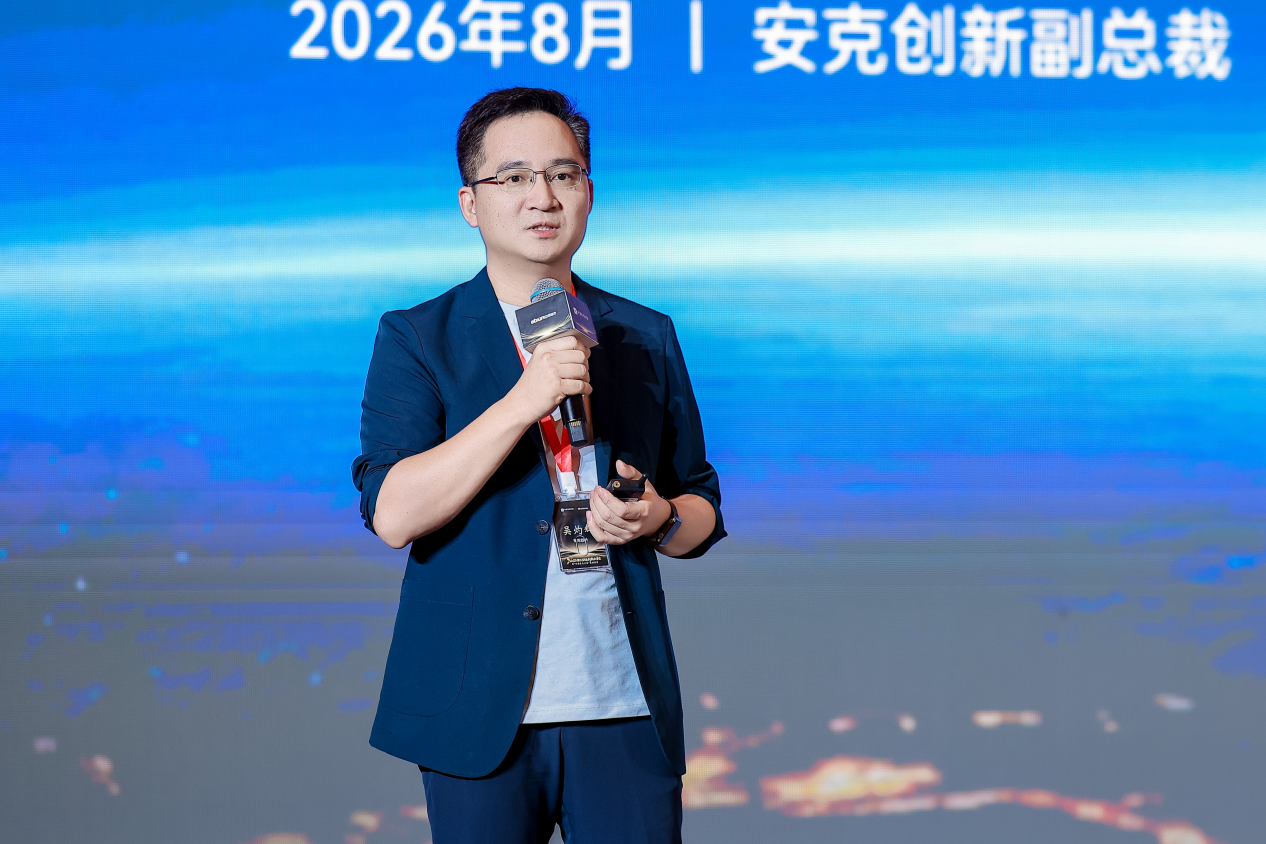
Wu noted that against the backdrop of intensifying competition, platform fragmentation and rising operating costs, the traditional approach Chinese brands previously relied on to go global — "building solid products, excelling at e-commerce operations, and conducting effective local marketing" — is no longer sufficient to navigate the current global market.
New global expansion capabilities need to be rebuilt around three pillars: identifying unmet consumer needs, driving operational synergies across different channels, and strengthening comprehensive corporate capabilities across compliance, localized marketing, AI, talent and supply chains.
In his view, global brand expansion today is no longer a task for a single channel or a single operation team, but a systematic test of product, brand, channel and organizational capabilities.
This article is compiled based on the guest's on-site speech, with edits made without altering the original intent.
The following is the full transcript of the speech:
Good afternoon, everyone. It is a great honor to have the opportunity to share with you today.
In recent years, whether discussing the economic environment, corporate global expansion or specific industries, the terms people mention most often are "uncertainty" and "change".
The international environment, market interest rates and consumer demand are all shifting, leading to a growing number of uncertainties in business operations. However, amid these uncertainties, we can still identify some constants.
China still boasts world-leading supply chain capabilities and a very large pool of engineers. Against this industrial backdrop, we continue to see a large number of emerging brands growing sustainably. Whether companies have already expanded globally, are in the process of doing so, or are preparing to enter overseas markets, their enthusiasm for the global market remains unchanged.
At the same time, however, changing circumstances have brought new challenges to companies expanding abroad.
Today, I would like to share four points: first, Anker Innovations as a case study of a global brand; second, the business positioning of Hiyi E-commerce; third, the changes taking place in the current global expansion environment; and finally, how core capabilities for global brand expansion need to be upgraded.
01
Anker Innovations' Growth Comes From the Multiplier Effect of Products, Brand and Omnichannel Presence
Most of you are already familiar with Anker Innovations. In 2025, the company's revenue exceeded 30 billion yuan, and it has now built a brand portfolio including Anker, Soundcore, eufy and Nebula.
If I were to summarize what Anker Innovations has done right, I believe there are three core factors.
The first is products. For any product-focused enterprise, building high-quality products is the most fundamental capability.
The second is brand-focused operations. Over more than a decade of accumulation, Anker Innovations has continuously built consumer brand recognition.
The third is deep global omnichannel presence. It is not enough to just enter global markets; companies need to continuously build operational capabilities across different channels.
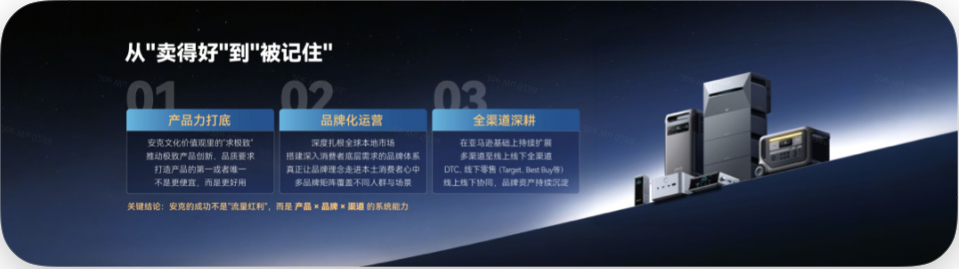
Products, brand and omnichannel presence do not have a simple additive relationship, but a multiplicative one. These three factors work together to support Anker Innovations' sustained growth.
Hiyi E-commerce is a business incubated within Anker Innovations. It started as an internal department and was spun off as an independent subsidiary in 2023, mainly responsible for external cooperation business, serving overseas brands and helping Chinese enterprises expand globally.
Hiyi E-commerce's capability foundation comes from the methodology, AI platform systems and talent system accumulated by Anker Innovations over the long term. On this basis, we carry out customized upgrades for different service targets. Currently, Hiyi E-commerce has partnered with more than 30 brands including Philips, Mondelēz International, Nestlé and AmorePacific.
In terms of business scope, Hiyi E-commerce initially mainly provided Amazon operation services. As brands need to enter more channels, our services have gradually expanded to platforms such as Walmart and TikTok, covering more links including on-site advertising, off-site marketing, content creation and data strategy.
Our goal is to move beyond channel operations to drive brand growth, helping partner brands solve more problems across the entire omnichannel value chain.
02
Three Fundamental Changes in the Global Expansion Environment
The first change in today's global expansion environment is intensifying competition and rising operating costs.
The number of brands expanding overseas is increasing, whether on Amazon or in offline markets. Companies operating on Amazon or running independent stations will clearly feel that CPC (cost per click) is continuing to rise.
I joined Anker Innovations in 2017. Back then, the cost per ad click was around $0.2 to $0.3. Today, in the consumer electronics category, it normally reaches $0.5 to $0.6, and can go as high as $1.
In some categories such as food and beverages, CPC can even reach $8 to $10 during off-peak seasons. We once served a brand from Xiaomi's ecosystem, and during Amazon Prime Day, the cost per click for some category keywords hit an extreme of $100, even exceeding the cost of the device itself.
At the same time, product specifications are also in a constant rat race. Take consumer electronics as an example: the evolution from 720P to 1080P to 4K has continuously pushed up product costs through specification competition.
Rising advertising costs, intensifying platform competition and growing product costs have collectively raised the overall threshold for brands to expand globally.
The second change is that global expansion has moved from a single-platform era to a multi-platform era.
More than a decade ago, many companies could get orders simply by opening a store on Amazon and listing their products. Later, Amazon gradually became the main starting point for Chinese enterprises going global.
But today, if a brand still only operates on Amazon when expanding overseas, it will face great difficulties. With intensifying traffic competition, it is very difficult for brands to simultaneously address growth, cost and user retention issues relying solely on a single platform.
Walmart, TikTok, Temu, SHEIN, brand independent stations and other channels continue to develop. What companies need to consider is no longer "whether to operate on multiple platforms", but the order in which different platforms should be deployed, and how to make them work in synergy.
The third change is that global expansion places higher requirements on enterprises' comprehensive capabilities.
In the past, a company could launch its global expansion business by finding a hit product and setting up an e-commerce operation team. Today, brands not only need good products and operational capabilities, but also need to have capabilities in localized marketing, compliance, talent, digitalization and supply chains, among other areas.
Compliance is particularly critical. In the past, some companies may have chosen to sell products first and then gradually build up compliance capabilities. Now, a growing number of group companies will resolve compliance issues before entering overseas markets.
Consumers are exposed to more and more advertisements every day, so brands also need to build recognition with more localized content to make a lasting impression on consumers.
At the same time, omnichannel operations place higher demands on talent. E-commerce and offline retail have completely different operating logics and capability requirements, and it is not easy to find comprehensive talents who understand products, brands, channels and data at the same time.
Supply chain issues such as global warehousing layout, fulfillment efficiency, overseas production and quality management have also become issues that brands must address when expanding globally.
03
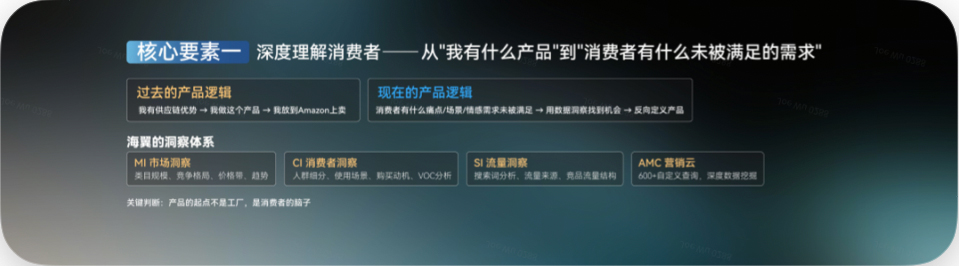
Moving From Studying Negative Reviews to Identifying Unmet Consumer Needs
From a sales and operations perspective, brands used to rely on three main approaches to expand globally.
First, building good products. A common early method was to study Amazon reviews, identify product problems through consumer negative feedback, and then make targeted improvements.
Second, starting with e-commerce. When I joined Anker Innovations in 2017, Amazon accounted for more than 90% of the company's revenue. Back then, companies could launch overseas business relatively quickly simply by completing account registration, stocking inventory, listing products and running advertising campaigns.
Third, conducting good local marketing. Hiring local teams to optimize copy and images could create a certain competitive advantage.
Ten years ago, if a company could do these three things well, it had a relatively high chance of successful global expansion. But today, these have become basic capabilities.
Building good products remains important, but product innovation today cannot stop at optimizing for negative reviews. Companies need to further dig into the most fundamental, unmet needs of consumers.
Not every product needs to have the most advanced technical specifications in the industry. What is more important is which group of people the product serves, and what specific problems it solves for them in what scenarios.
Over the past few years, Anker Innovations has invested a lot of resources in consumer insight, including market research, traffic analysis and data analytics. We hope to gain a deeper understanding of what consumers are thinking, and then target specific groups and their real needs based on product positioning.
For example, we once launched an outdoor security camera with Wi-Fi and solar power capabilities.
When talking about security cameras, people may first think of increasing pixel count, moving from 4K to even higher specifications. But our research found that many vineyards and farms in the U.S. are located in areas with weak network signals. Farm owners usually do not live on the farm and need to check surveillance footage from far away.
If high-resolution video is used, the amount of data transmitted will be very large, which can easily cause delays or even connection interruptions. Therefore, instead of blindly increasing pixels, we chose 1080P, which reduces data transmission pressure while ensuring monitoring effectiveness.
Considering the difficulty of accessing electricity on farms, the product also added solar power, as well as waterproof and rainproof capabilities suitable for outdoor environments.
This product does not gain competitiveness through stacking specifications, but solves a series of real problems such as network, power supply and outdoor use for the specific scenario of farm monitoring. When farm owners see the product, they can quickly understand why it is suitable for them.
Therefore, the first step in product innovation is to find unmet consumer needs, and then design products around specific groups and scenarios.
04
The Key to Multi-Channel Operations Is Not Opening Stores Simultaneously, but Driving Operational Synergies
E-commerce is still a relatively fast starting point for brands expanding globally. But companies today need to think at the same time about how to build presence across multiple mainstream e-commerce channels, and how these channels can develop in synergy with each other.
For example, a brand's independent station can serve as a brand hub, but may not be suitable for handling all sales conversions. For consumer electronics brands, CPA (cost per acquisition) for independent station advertising can reach $100 at peak times.
Therefore, independent stations, Amazon, TikTok and other platforms should not be viewed as independent sales channels. Different channels should play different roles: some are responsible for building awareness, some for retaining users, and some for driving conversions.
We observed two outdoor inflatable pool brands. One is the U.S. local brand Funboy, which mainly adopts a relatively traditional platform operation method; the other is a new Chinese brand expanding overseas, which, in addition to Amazon, continues to invest in off-site marketing and new channels such as TikTok.
The Chinese brand expanded consumer reach through new channels, which further drove growth in its Amazon business. This case shows that multi-channel operations are not just about opening stores on several platforms at the same time, but about letting the content, traffic and user awareness generated by one channel create value for other channels.
Companies need to clarify the positioning, investment order and synergy methods of different channels according to the brand's development stage, so that multiple channels work together rather than operating in isolation.
05
Brands Expanding Globally Need to Rebuild Their Internal Capabilities
In addition to product insight and channel synergy, companies also need to build more solid comprehensive capabilities.
The first is compliance capability. Brands need to understand the product standards, taxation, intellectual property rights and operating rules of target markets earlier, rather than addressing these issues only after the business has reached scale.
The second is localized marketing capability. True localization is not just translating Chinese copy into English, but understanding the culture, lifestyle and purchasing decisions of local consumers.
The third is AI capability.
Anker Innovations has invested heavily in AI in recent years. Our focus is not just on using AI to complete a single task, but on how to use AI to connect internal processes and improve cross-departmental collaboration efficiency.
The problem for many companies is not low efficiency in a single department, but high communication costs and internal friction between different departments. Whether AI can connect information, processes and decision-making will become an important direction for improving enterprise efficiency.
The fourth is talent capability. Omnichannel business requires talents who understand e-commerce, retail, branding and data at the same time. It is difficult to find such comprehensive talents directly from the market, so companies need to establish their own training mechanisms.
The fifth is supply chain integration capability. After entering different countries and channels, how companies arrange their warehousing network, ensure fulfillment efficiency, realize localized production and stably control quality will directly affect the brand's long-term operation in overseas markets.
To sum up, today's global brand expansion needs to focus on three core elements:
First, identifying opportunities early by finding unmet consumer needs.
Second, driving synergies across different channels rather than operating them in isolation.
Third, strengthening internal capabilities, building comprehensive capabilities across compliance, localized marketing, AI, talent and supply chains.
In a market full of uncertainties, only by solidifying these basic capabilities can Chinese brands go further and more steadily.
We also hope that Hiyi E-commerce can collaborate with ZTO Cloud Warehouse Technology to help more enterprises achieve global brand growth.
Thank you all.
This article was first published on the official website of Ebrun.
[Copyright Notice] Ebrun advocates respecting and protecting intellectual property rights. Without permission, no one is allowed to copy, reproduce, or use the content of this website in any other way. If any copyright issues are found in the articles on this website, please provide copyright questions, identification, proof of copyright, contact information, etc. and send an email to run@ebrun.com. We will communicate and handle it in a timely manner.
Translated by AI. Feedback: run@ebrun.com