
Following Shopee’s Lead But With Lighter Measures? Lazada Officially Rolls Out 'Technical Support Fee' Across Five Southeast Asian Markets
【Ebrun Original】 On August 19, it was reported that Lazada has officially rolled out a "technical support fee" for all cross-border orders in Malaysia, Singapore, Thailand, and Vietnam, as well as 3PF (3rd Party Fulfillment) orders in the Philippines. The fee will be automatically deducted by the system at a fixed percentage of the completed order's sales value.
The Lazada technical support fee is a standard platform charge levied on cross-border sellers. When an order is completed, the system automatically deducts the fixed percentage from the seller's sales revenue.
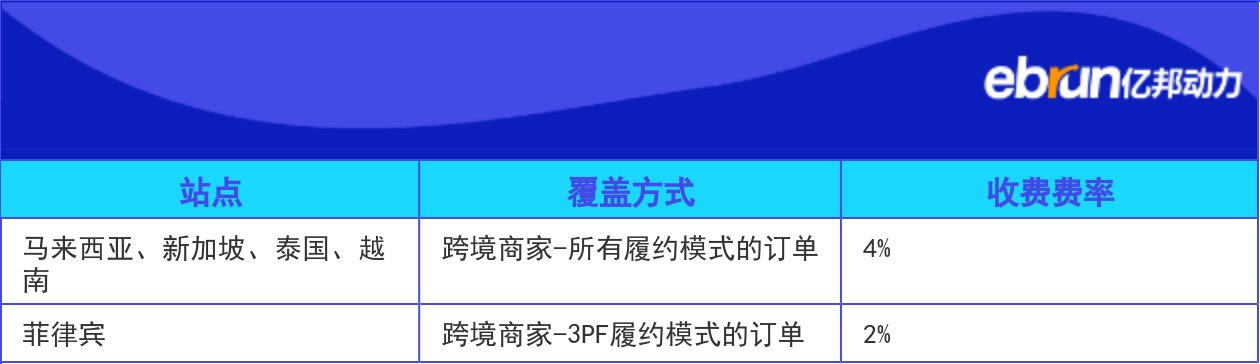
Per the official rules, the fee applies to orders created on or after August 17, 2026. Cross-border sellers in Malaysia, Singapore, Thailand, and Vietnam will be charged a 4% technical support fee for all orders regardless of fulfillment model. In the Philippines, only cross-border orders fulfilled via the 3PF model will incur a 2% fee.
| Market | Eligibility | Rate |
| Malaysia, Singapore, Thailand, Vietnam | Cross-border sellers – all fulfillment models | 4% |
| Philippines | Cross-border sellers – 3PF fulfillment model only | 2% |
In addition, the back-end system will automatically calculate and add applicable value-added tax on the technical support fee. Specific tax rates for each market are listed below:
| Market | Malaysia | Philippines | Singapore | Thailand | Vietnam |
| Tax Rate | 8% | 12% | 0 | 7% | 8% |
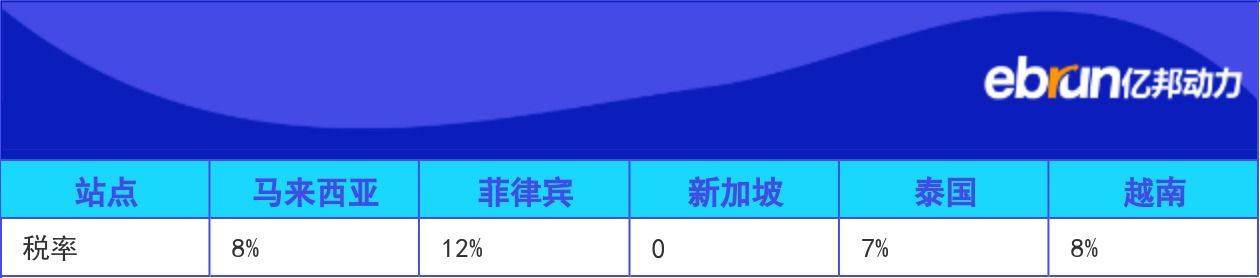
Take the Malaysian market as an example: with a 4% technical support fee and an automatic 8% tax surcharge, the final total deduction for the fee (tax inclusive) will be 4% + (4% * 8%) = 4.32%.
Meanwhile, during the initial rollout phase, Lazada will provide eligible sellers with LSS (Lazada Sponsored Solutions) advertising coupons and SVC (Seller Voucher Cooperation) co-marketing vouchers based on their growth potential and marketing needs. The total value of the awarded LSS and SVC vouchers will not exceed 4% of the sales value of completed orders for eligible cross-border sellers across all orders in Malaysia, Singapore, Thailand, and Vietnam, or 2% for eligible cross-border sellers in the Philippines for 3PF-fulfilled orders.
For cancelled orders, refunds, or returns, the platform will handle already collected technical support fees based on the order's completion status.
If a refund or return occurs before the order is marked as completed, the platform will charge the fee proportionally based on the actual completed transaction amount. No fee will be charged for full returns and refunds, while the fee will apply normally to the completed portion of partial returns.
However, if a refund is initiated after the order is completed, the platform will retain the already collected technical support fee with no refunds issued. This means even if a seller issues a refund to a buyer, the technical fee already paid will not be returned. This charging policy aligns with the platform's commission processing logic, meaning categories with high return rates will bear additional costs as a result.
Notably, Lazada's newly introduced "technical support fee" is to some extent a clear follow-up to Shopee's earlier move, but it is more moderate and restrained in both charging scope and rate.
As early as February this year, Shopee officially announced a new 5% technical support fee for its Singapore, Malaysia, Thailand, and Vietnam sites. This fee applies to all sellers, including those using cross-border direct shipping, official overseas warehouse, and third-party warehouse fulfillment models, with no differentiation based on store type.
In fact, in recent years, amid urgent monetization pressures, frequent commission hikes and new fee introductions have become the norm for the three major mainstream e-commerce platforms in Southeast Asia.
According to incomplete statistics, since the start of 2025, Shopee and Lazada have released more than 20 and over 10 announcements respectively involving fee adjustments or new fee categories. Since its launch in 2021, TikTok Shop's overall commission rate has also risen by more than 10 percentage points, with potentially larger increases in specific regional markets.
Analysts point out that amid continuously rising operating costs, small and medium-sized sellers in Southeast Asia need more refined cost control and product selection strategies, and must grasp cost structure data "specific to each individual SKU". Otherwise, business models with low profit margins and high return rates could easily face the dilemma of "losing more money the more they sell, and failing to make ends meet".
Ebrun will continue to track and report on this development. For more information related to this article, please scan the QR code to follow the author's WeChat account.

[Copyright Notice] Ebrun advocates respecting and protecting intellectual property rights. Without permission, no one is allowed to copy, reproduce, or use the content of this website in any other way. If any copyright issues are found in the articles on this website, please provide copyright questions, identification, proof of copyright, contact information, etc. and send an email to run@ebrun.com. We will communicate and handle it in a timely manner.
Translated by AI. Feedback: run@ebrun.com