
Is Pinduoduo's Main Site Also Stepping Up Its Southeast Asia Push? Free Shipping Threshold Lowered From 99 RMB to "Free Shipping on Every Order", With Convenient Payment Channels Rolled Out Simultaneously
[Ebrun Original] August 19 update – According to earlier reports from Singaporean media, Pinduoduo's main platform has lowered its free shipping threshold for the Southeast Asian market from the previous "free shipping on orders over 99 RMB" to "free shipping on every single item". This eliminates the need for Southeast Asian consumers to purchase multiple low-priced items to meet the minimum order requirement for free delivery.
Meanwhile, Pinduoduo has announced the launch of PayNow, one of Singapore's most popular local instant payment systems, alongside support for credit cards, debit cards and other payment methods. After goods are shipped from China, the platform arranges logistics delivery to consumers, with total transit time averaging around two weeks.
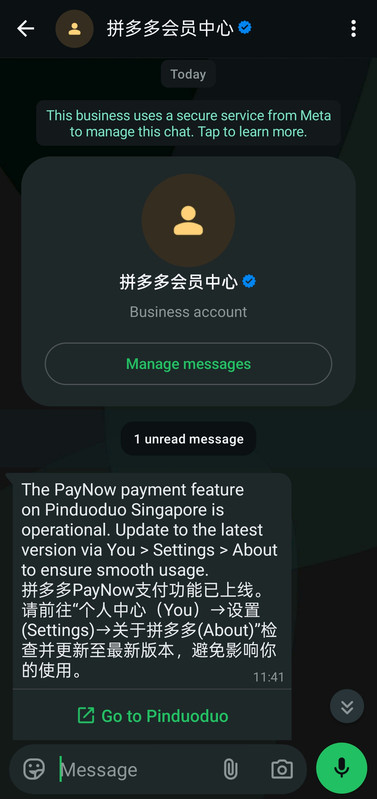
This series of adjustments signals that Pinduoduo's main site is further lowering barriers to cross-border shopping for Southeast Asian consumers. In fact, Pinduoduo first launched consolidated shipping services to Singapore and Malaysia back in 2024, and has long maintained the 99 RMB free shipping threshold for the Singapore market since then. The latest move to eliminate the minimum order requirement for free shipping expands the range of eligible products and applicable consumption scenarios.
Looking at the market landscape, Singapore's e-commerce sector remains dominated by leading platforms.
Data from Southeast Asian market research firm Momentum Works shows that Singapore's e-commerce gross merchandise value reached 5.9 billion USD in 2025, marking a 21% year-on-year increase. Shopee holds a 52% market share, followed by Lazada at 36%, while Amazon and TikTok Shop account for 6% each. Currently, the combined market share of Pinduoduo's main site and Temu in the local market remains relatively limited.
However, Pinduoduo's user-facing exposure in Singapore has been rising recently.
Since April this year, many Southeast Asian consumers have been seeing frequent Pinduoduo main site ads in their social media feeds, with the campaigns highlighting "no minimum free shipping" and offering products from Pinduoduo's China main site directly to Southeast Asian shoppers. As of August 5, Pinduoduo has claimed the top spot in the shopping app download rankings on Apple's App Store in Singapore, with Temu closely following.
Industry insiders note that compared to Temu, Pinduoduo main site's cross-border direct mail business in Southeast Asia may be more focused on local Chinese-speaking populations. For this demographic, Pinduoduo already has strong brand recognition from its operations in the Chinese market, whereas Temu, as a newer entrant to overseas markets, needs to invest more resources in user education.
In terms of regional footprint, Pinduoduo and Temu are currently pursuing relatively parallel expansion paths.
Temu has entered markets including the Philippines, Thailand, Malaysia and Brunei, and was previously launched in Vietnam. Pinduoduo's main site, meanwhile, covers Singapore, Malaysia and Thailand. While both are owned by PDD Holdings, their positioning and specific go-to-market strategies in overseas markets are not entirely identical.
Temu's operations in Vietnam also saw positive developments this year.
In early May, after an approximately 18-month regulatory suspension, Temu restored its ordering function, though it currently maintains a minimum spending threshold of around 887,000 Vietnamese dong (approximately 34 USD). Its payment methods primarily include bank cards and Apple Pay, and it has not yet integrated popular local e-wallets such as Momo and Zalo Pay, nor does its platform interface currently offer a Vietnamese language option.
Regarding Pinduoduo's latest move to further lower the free shipping threshold in Singapore, industry analysts believe this may further intensify competition in the local e-commerce market, though the initial impact will likely be concentrated among price-sensitive consumers.
Ebrun will continue to track and report on this development. For more information related to this article, please scan the QR code to follow the author's WeChat account.

[Copyright Notice] Ebrun advocates respecting and protecting intellectual property rights. Without permission, no one is allowed to copy, reproduce, or use the content of this website in any other way. If any copyright issues are found in the articles on this website, please provide copyright questions, identification, proof of copyright, contact information, etc. and send an email to run@ebrun.com. We will communicate and handle it in a timely manner.
Translated by AI. Feedback: run@ebrun.com