
Conversation with AIVELA Founder Li Donghao: Building Smart Rings as 'Caring' Accessories
【Original by Matishe】The Ebrun Global Products Interview series is a global outstanding product archive co-created by Matishe and Ebrun. We go deep into the frontlines of corporate R&D and manufacturing, committed to deconstructing the pioneers behind well-loved 'great products' that redefine user preferences amid the wave of going global. Beyond documenting stories, we seek to recap the critical decisions and user insights behind every product.
Author | Matishe
A serial entrepreneur with a background in biology, Li Donghao proved himself at 35 with the e-bike brand Urtopia, but was nearly broken by chronic insomnia at 40. He used himself as a test subject, wearing almost every wearable device on the market, and eventually rediscovered his purpose in product development through a ring.
That man is Li Donghao, founder and CEO of AIVELA. The company has just closed a multi-million dollar angel round of funding, and its debut product, the AIVELA Ring Pro, has crowdfunded over 10,000 units across platforms including Kickstarter, Makuake and Zeczec, with mass delivery already underway.
In a conversation with Matishe CEO Liu Chen, Li discussed the ring more as a methodology for 'how people get along with themselves' — devices do not need to make conclusions for users. First and foremost, they should be a mirror that reflects when a person deviates from their own normal state, then help them find their way back.
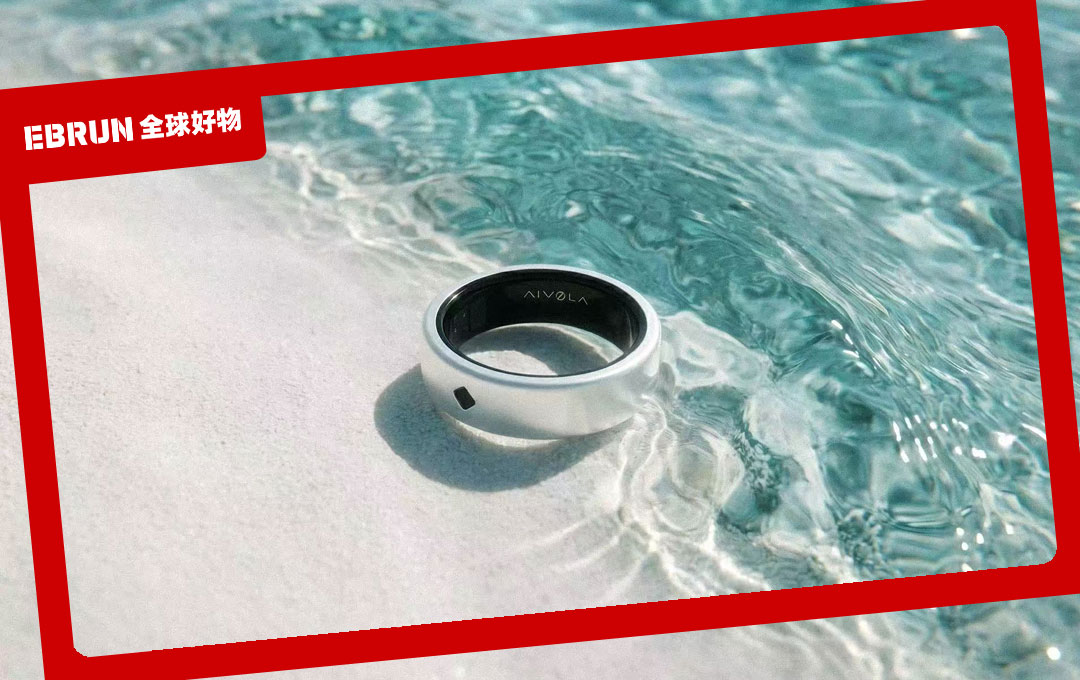
AIVELA Ring Pro

Epiphany sparked by insomnia: from hobby to independent brand
Li settled on the name AIVELA with the help of ChatGPT. Before that, during a trip to Japan, he lay on a boat watching the sea rise and fall, and had an epiphany: "Life is like the ocean, with its ups and downs. Whether it's the rhythm of your heartbeat or your daily mental state, it's essentially a waveform. People have highs and lows in their state every day, and it is these fluctuations that outline the complete trajectory of life." He input this concept of life as a fluctuating waveform into a large language model, and finally got the name AIVELA. Vela means "sail" in Latin, and the product's metaphor is: users are a boat rising and falling on the sea, and AIVELA is the sail that pushes people out of troughs and toward peaks.
Behind this narrative lies the real origin story of the company. Before founding AIVELA, Li was the co-founder of e-bike brand Urtopia. In 2023, amid the high-pressure rhythm of serial entrepreneurship, he suffered from severe insomnia. While researching sleep issues, he discovered the smart ring product category. He described himself: "I studied biology, so when I have a problem, I want to research the root cause and figure out how I can improve my condition." What truly impressed him about smart rings was not the accuracy of individual metrics, but how the device converted multiple signals such as heart rate and recovery status into trends, allowing him to observe the relationship between sleep, overall state and daily behaviors. Once, the device gave an early warning of abnormal physical condition, and when he went to the hospital for a checkup, he really had a fever."In that moment, I suddenly realized it could perceive physical abnormalities even earlier than I could. This kind of product is truly useful."
After that, he used himself as a test subject: adjusting lighting, routines, pre-sleep habits and bedroom environment, then observing changes in data over a period of time. What ultimately helped him improve his condition was a set of lifestyle routines better suited to himself. For example, using a specific fragrance to establish a conditioned reflex in the bedroom where "smelling it means it's time to sleep". This experience later became the starting point of AIVELA's product philosophy: "Individual baseline data is often more decisive than universal medical guidelines." The so-called baseline is not a one-size-fits-all standard applicable to everyone, but a normal range for an individual over a long period. The same heart rate reading can mean completely different things for different users; compared to a single reading, continuous trends and their correlation with life events are far more worthy of attention.

Data is a mirror, not a report card: AIVELA's AI philosophy
If the ring solves the problem of continuous, low-interruption signal collection, then AI solves the problem of how users interpret these signals.
In traditional health apps, data is usually converted into charts and scores according to fixed rules — clear and stable, but difficult to account for each person's real context: staying up late once might be due to work, or travel; a period of heart rate changes could be related to exercise, or just a temporary shift in life rhythm. Without context, the same number can easily be assigned too much meaning. Li incorporated this understanding into AIVELA's AI assistant system ARGO, and split the underlying software architecture into four layers:general health benchmarks, individual physiological profiles, dynamic life context, and user active interaction memory.In his vision, large models are not meant to turn a consumer device into a medical tool, but to review long-term trends based on these four layers of information, look for possible correlations, and then ask questions to help users supplement context. For example, when the system observes continuous changes in sleep duration, it will first ask the user if they have adjusted their routines recently, rather than directly giving a cold score. The key here is to provide users with an entry point for review, experimentation and recap.
To prevent this review from feeling like lecturing, ARGO is designed with two different advisor personalities for communication: one is fact-driven, similar to a professional private doctor, and the other is emotionally empathetic, more like a coaching-style emotional companion. The core member of the team responsible for AI previously built one-on-one teaching products in the education industry, and this background is no coincidence. Li connects the two things: "That's how humans are. We like competition and scoring, but we don't like getting low scores."For someone who is temporarily in a bad state, directly telling them "you are currently in the low score range" can easily become a source of stress itself, rather than help; a more effective approach is to first provide actionable small feedback, then gradually guide them in a positive direction.
Compared to "telling users what they should do", Li cares more about how the product communicates."We hope the underlying tone of the interaction is gentle, completely private and personalized. AI only softly provides a perspective for reference, and the decision-making power always remains in the user's hands as to whether to adopt the suggestion."
Behind this restraint is his redefinition of the boundaries of smart health products: for people who need professional training, clear goals and strict feedback may be effective; but for more ordinary users, the product must first avoid adding psychological burden. This is also a bottom line that Li and his team have always adhered to — not overstepping boundaries. They clearly position AIVELA as a general health and lifestyle device, providing users with management of long-term fluctuating life trends.
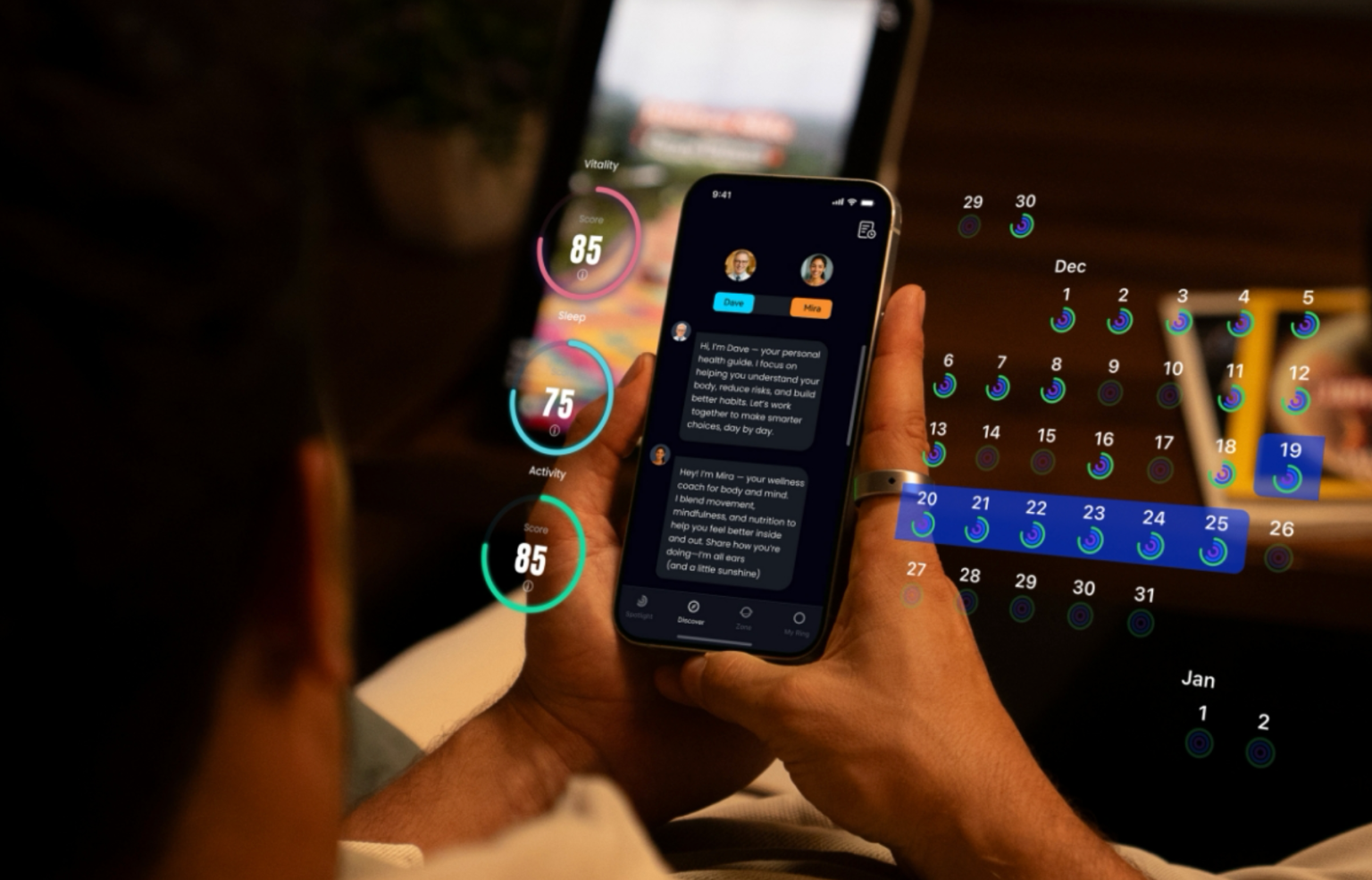
The AIVELA app has a built-in AI doctor that users can chat with in real time to analyze their health indicators.

Focus on perfecting 1 to 1.5 core functions
Smart rings may look simpler than watches, but their engineering difficulty is no lower. The limited internal space needs to accommodate sensors, chips, batteries, antennas and structural components simultaneously, while also balancing battery life, water resistance, wearing comfort and mass production stability. Any additional module may trigger cascading changes in thickness, power consumption and failure risk. Li summarizes this trade-off in one sentence:under the current physical limits of a ring, what should be prioritized and perfected to the extreme is actually "one to one and a half" core functions. For AIVELA, the core function is non-intrusive and accurate continuous physiological trend monitoring, while the remaining half is restrained interactive experience.This is also why the team did not add modules such as microphones to the product: more signals may help the system understand context, but they will also raise user privacy concerns, increase power consumption and structural complexity, which instead harms the most basic wearing experience of the ring. They choose to prioritize maintaining lightness, thinness, battery life and low interruption, letting mature technology serve stable experience first.
The real challenge came in the mass production stage. According to Li's recollection, AIVELA launched in mid-2024, produced prototypes by the end of the year, and then spent a considerable amount of time on engineering verification and mass production preparation. The yield rate of the first small-scale trial production was once very low. The team could only work in batches of a few hundred units, repeatedly adjusting materials, structures, algorithms and processes, before gradually expanding production volume. This process made the team realize that the threshold for smart rings is not just about sensor parameters,how to turn a laboratory solution into a consumer product that can be worn for a long time and delivered stably is where supply chain and engineering capabilities are truly tested.To achieve this goal, AIVELA has carried out joint R&D with leading consumer electronics precision manufacturing enterprises, overcoming a series of manufacturing difficulties such as curved battery laser welding and optical module miniaturization. The first-generation Ring Pro uses aerospace-grade titanium alloy, and incorporates optical finger navigation (OFN) touch control and air gesture interaction. According to official website information, the product supports 8 touch commands and 6 air gestures, and can be connected to mobile phones, tablets and computers via Bluetooth for use cases such as page turning, volume control and camera shutter.
Interestingly, the team does not highlight the gesture interaction feature prominently across all channels. On crowdfunding platforms, facing geek users who are familiar with new hardware and willing to try new things, this interactive capability is a perceptible differentiator worth emphasizing; but when targeting the mass market, the team has instead downplayed the expression of complex functions, putting health trends, wearing experience and appearance first. Li's explanation is,smart rings are still a new category for most consumers, and more information means higher understanding costs. The same product requires different communication sequences for different stages and different groups of people. The interactive function has not disappeared, but has changed from the main narrative to an "Easter egg" that users gradually discover during use — innovative technologies do not need to all appear on the homepage at the same time. Letting users first understand "what it is" and then understand "what else it can do" is often more effective than showing all capabilities at once.

Build the brand first, then talk about channel expansion
In terms of channel strategy, AIVELA is not in a hurry to roll out large-scale distribution. The team currently values independent sites more for their full ability to carry brand information, user feedback and service chains. For channels such as e-commerce platforms, Li's attitude is relatively cautious: if consumers do not yet have a clear understanding of the category, products can easily get caught up prematurely in comparisons centered on category keywords, prices and promotions, making it difficult to build differentiated brand mindshare.
Offline is another path. Since AIVELA defines its product as a "smart accessory", the team is trying to cooperate with overseas boutique jewelry buyer stores, using small-scale displays and experiences to build channel partners' understanding of the product. According to Li, the team has contacted more than 100 stores, hoping to first find a group of partners who can accurately explain the product, then gradually expand coverage.
This methodology largely comes from his previous experience in going-global entrepreneurship. He summarized his experience of breaking into European and American offline channels during his time at Urtopia in one sentence:"The biggest trick in this business is to never turn your back on your dealers. Ultimately, the foundation of doing business is being a person; you need to be sincere and honest enough."Channels are never just about placing goods inside; long-term fulfillment of delivery, service and cooperation commitments is what brands must adhere to. "When building a brand, many times it's not about how many trends you can catch, but how many temptations you can reject." For a startup, shipment scale is certainly important, but the more scarce asset in the early stage of a brand is users' clear understanding of the product — if channel expansion is too aggressive, and service, price or experience are even slightly mismanaged, this understanding will be quickly diluted. Growth is necessary, but it should not come at the cost of harming product experience and partner trust.
From this perspective, AIVELA's channel choices are actually consistent with its product philosophy: not in a hurry to provide all functions, nor in a hurry to enter all channels, but first build core experience and brand awareness.
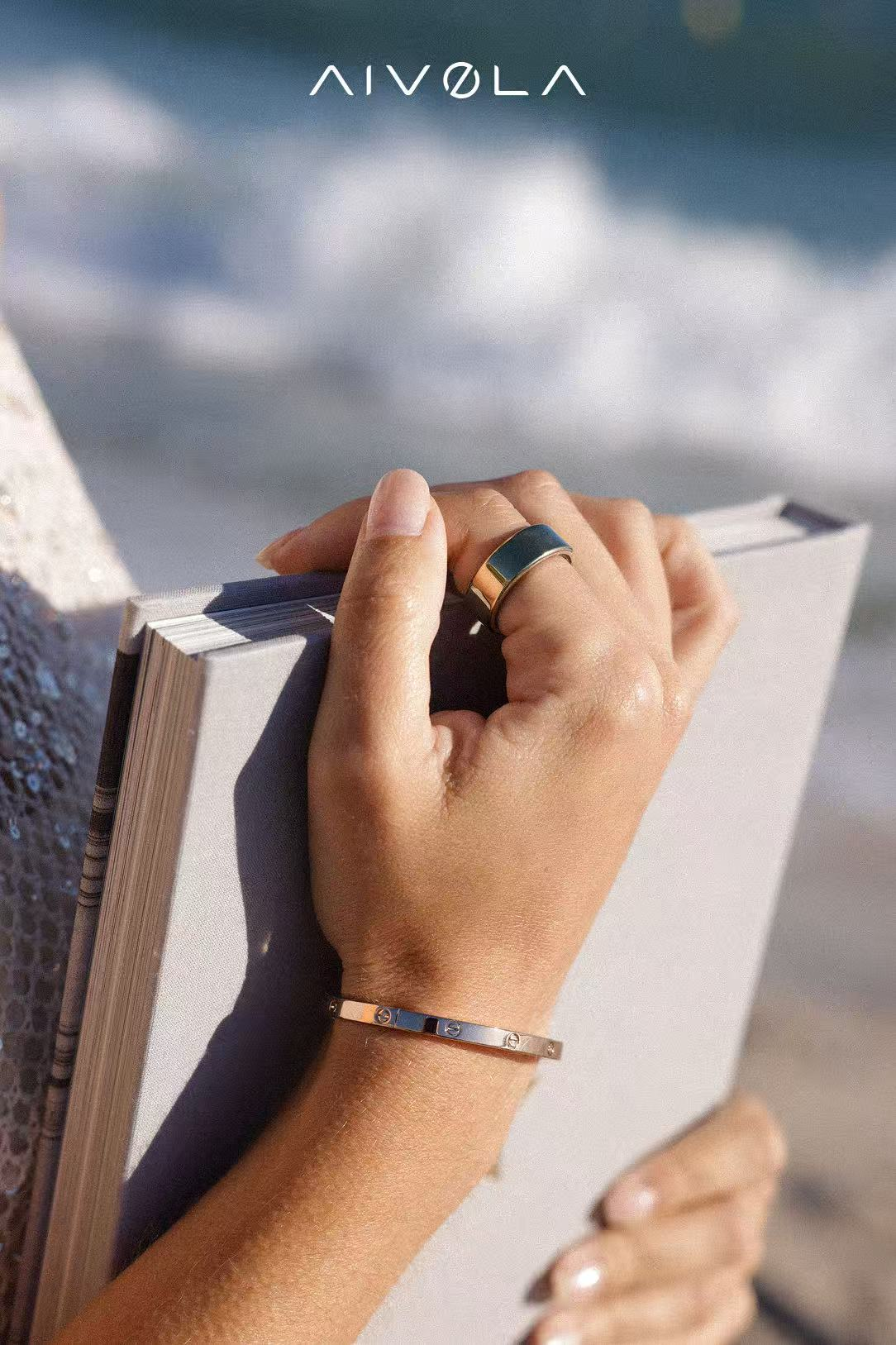
AIVELA Ring Pro

The wearable industry has already accumulated enough data. The next stage of competition may no longer be about who can add more metrics, but about who can convert data into long-term, trustworthy and non-intrusive services. Matishe believes that what AIVELA is trying to answer is actually a more difficult question:as devices become more and more familiar with the human body, how should they interact with people?
Li's answer is to first acknowledge that life inherently has its ups and downs. Products do not need to require users to be in their best state every day, nor do they need to interpret every deviation as a failure. It is more like a mirror that stays by your side for a long time, providing reference when users need it, reducing urging when users are tired, and ultimately helping people rediscover their own rhythm. This may also be the beginning of wearables moving from "measuring the body" to "understanding people". (Original by Matishe / August 7, 2026)
【Seeking exceptional products 'born global'】
Not all products are great products that can truly bring satisfaction to consumers! The 2026 Ebrun Global Products Annual Selection is looking for "global great products" that redefine global standards in technology, aesthetics and consumer experience.
If your product is capable of becoming an industry benchmark, please leave its name here.

[Copyright Notice] Ebrun advocates respecting and protecting intellectual property rights. Without permission, no one is allowed to copy, reproduce, or use the content of this website in any other way. If any copyright issues are found in the articles on this website, please provide copyright questions, identification, proof of copyright, contact information, etc. and send an email to run@ebrun.com. We will communicate and handle it in a timely manner.
Translated by AI. Feedback: run@ebrun.com