
Latin America E-Commerce Reaches New Inflection Point: Seven Major Platforms Vie for Dominance, Sellers Wave Goodbye to the Era of Quick Wins

By Han Xiao Edited by He Yang
【Ebrun Original】The "gold rush" in the Latin American market has never faded. As we enter 2026, tangible changes are indeed unfolding. Cross-border sellers are having to re-evaluate the position of this new continent in the global commercial landscape.
The long-held stereotypical perceptions of the market as a place for stock clearance, white-label goods, and quick profits are shifting, with growing focus on enhancing compliance, long-term in-depth operations, and localized deployment. Some early entrants have already been eliminated, while a large number of latecomers are just starting their journey here.
"To do business in Brazil right now, localization is mandatory. You need to register a local company, pay taxes in compliance, and complete product certification. The relatively high threshold effectively locks out many small sellers. Mexico, by comparison, still allows sellers to test products via cross-border direct shipping, enabling a fast entry through small, iterative steps," said Zhao Weilin, COO of gaming controller brand GAMESIR, describing the two largest national markets in Latin America.
On the platform side, both global players like Mercado Libre and Amazon, and China's "four cross-border e-commerce dragons" (Temu, SHEIN, TikTok Shop, AliExpress) are further accelerating their expansion in Latin America: rolling out new models, lowering entry barriers, reducing fees, and ramping up infrastructure investment. While fiercely competing for consumer market share, they are also recruiting more high-quality sellers to enrich their product offerings.
As platforms sound the charge for expansion, a more realistic Latin American market has emerged: it is neither the mythical land of easy, abundant gold, nor a saturated red ocean with a fixed competitive landscape. With platforms racing to attract sellers, sellers weighing their options, and regulations tightening, a new inflection point has quietly arrived.

"Seven-way rivalry" redraws Latin America's e-commerce landscape
Latin America's e-commerce sector is entering a critical juncture in 2026, marked by both continued market size growth and intensifying platform competition.
Third-party data shows the total size of the Latin American e-commerce market has exceeded $215.3 billion, with an annual growth rate of 12.2% — 1.5 times the global average. Brazil alone accounts for roughly one-third of the region's total e-commerce transaction volume, with online shopping users approaching 100 million. Mexico follows closely as the second-largest market.
In terms of platform landscape, according to statistics from the Brazilian E-Commerce Association, Mercado Libre held more than 42% of the Brazilian market share in 2025 with $58 billion in GMV, firmly securing the top spot. In Mexico, Temu jumped to first place in the second quarter of 2025 with a 15.98% share of website traffic, surpassing long-time leaders Mercado Libre and Amazon for the first time to become the local e-commerce platform with the highest traffic. Beyond Mercado Libre and Amazon, the two platforms with the longest track records in the region, other late entrants are breaking into this blue ocean with diverse strategies, each laying out their roadmap to capture market share.
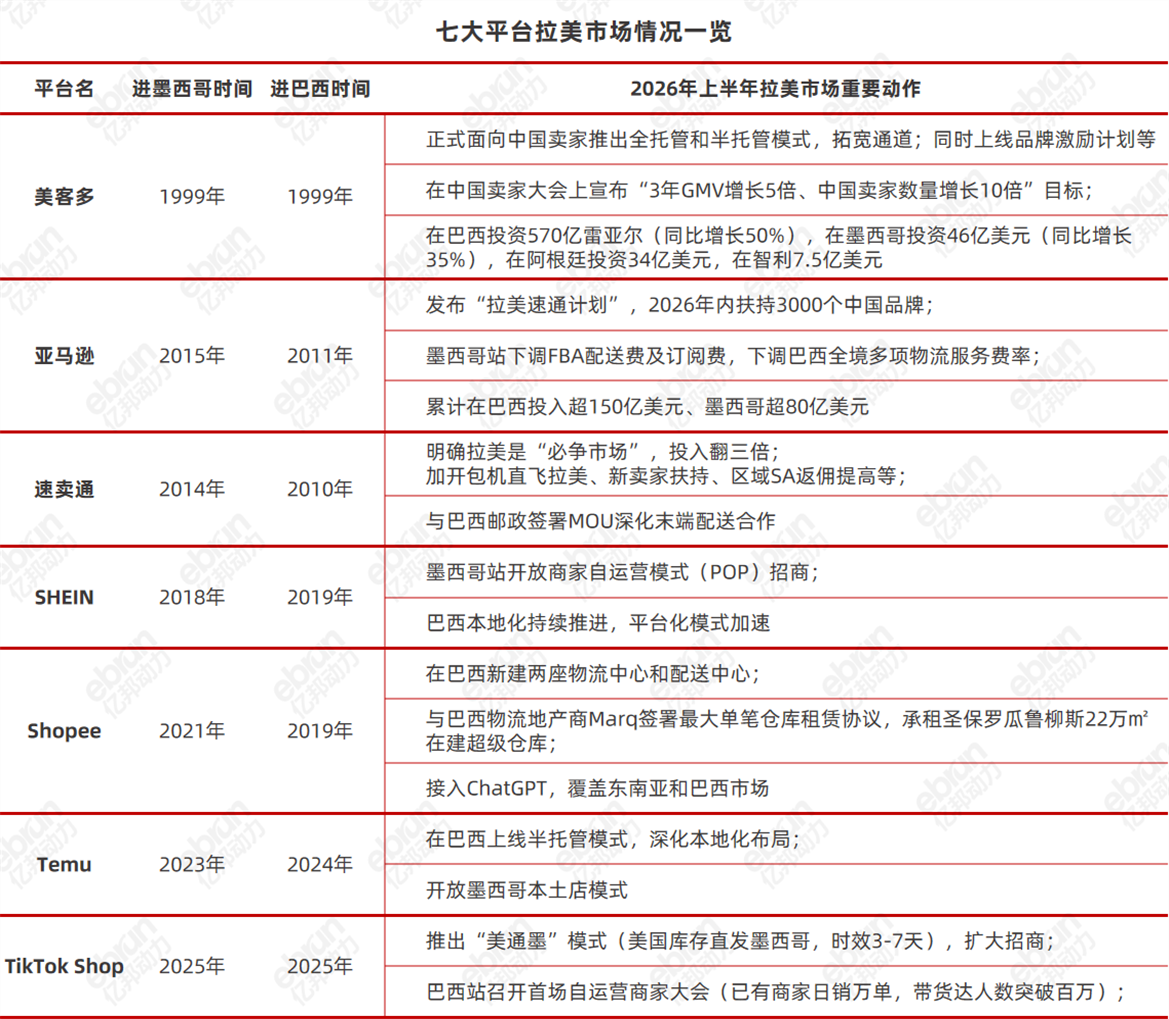
As a local Latin American e-commerce giant, Mercado Libre has built a complete ecosystem covering e-commerce, logistics, and payments over more than two decades. Since entering the Chinese market in 2019, it has continued to step up merchant recruitment efforts, with this year marking a major leap forward. In addition to its merchant self-operation model, it has officially launched fully managed and semi-managed models for Chinese merchants, covering five core markets: Mexico, Brazil, Chile, Colombia, and Argentina. These complementary models have significantly lowered entry barriers, effectively opening the door to sellers of all backgrounds, sizes, and levels of cross-border experience.
At its seller conference in April this year, Mercado Libre directly set an official target of "5x GMV growth and 10x growth in the number of Chinese sellers in the next three years," underscoring its determination in recruiting Chinese merchants.
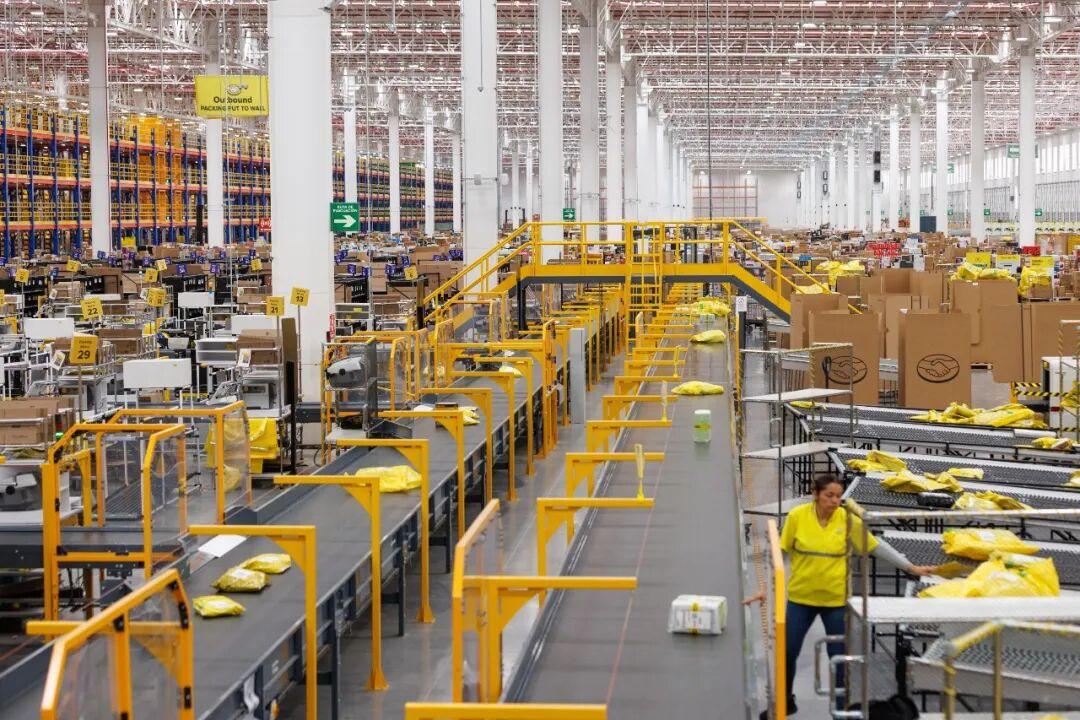
Meanwhile, Mercado Libre continues to increase local investment in Latin America. For example, in 2026, it announced a $4.6 billion investment in Mexico, a 35% increase from 2025, alongside a $3.4 billion investment in Argentina to expand its logistics network and fintech services, among other initiatives.
Following a similar strategy to Mercado Libre, Amazon is also accelerating its recruitment of high-quality sellers and rolling out measures such as fee reductions to benefit small and medium-sized merchants.
In June, Amazon launched its "Latin America Express Program", which aims to support 3,000 Chinese brands in expanding into the Latin American market this year, providing support across logistics, tax IDs, local company registration, advertising, and more, with registration subsidies of up to $12,000.
In addition, Amazon cut fees in both Brazil and Mexico this year: it first significantly reduced FBA shipping fees and subscription fees for its Mexico site, cutting average costs per item by 19 pesos (approximately $1), then lowered logistics service fees for its Brazil site, waiving FBA fees for products priced above 100 reais and offering new sellers 30 days of free testing.
Amazon entered Brazil via a self-operated model in 2012 and Mexico in 2015. Over more than a decade, it has invested over $15 billion in Brazil and built more than 300 logistics facilities, while investing over $8 billion in Mexico, where it operates 14 fulfillment centers and 29 delivery stations.
Shopee, which hails from across the Pacific, is also accelerating infrastructure construction in Latin America this year. While building new logistics and distribution centers in Brazil, it signed its largest ever warehouse lease agreement with Brazilian logistics real estate developer Marq, renting a 220,000 square meter super warehouse in Guarulhos, S?o Paulo. Data shows Shopee now operates 22 distribution and sorting centers, over 200 logistics hubs, and approximately 3,000 pickup points in Brazil, with a partner driver fleet exceeding 45,000.
Shopee is also continuously expanding its business boundaries: it has integrated ChatGPT and launched instant retail services, accelerating its efforts to capture share in this blue ocean market across all fronts. Its first-quarter earnings report showed its Brazil site has become its fastest-growing market globally, even outpacing its home base in Southeast Asia.
Among China's "four cross-border e-commerce dragons", AliExpress was the first to enter Latin America. It entered Brazil via cross-border direct shipping as early as 2010, followed by Mexico in 2014. This year, Latin America was listed alongside the U.S. and South Korea as one of its "must-win markets". When the Brazilian government eliminated the federal tax on goods under $50, AliExpress seized the policy dividend, accelerating cross-border customs clearance efficiency through weekly multiple charter flight schedules.
SHEIN and Temu entered the market later but have posted rapid growth. SHEIN entered Mexico in 2018 and Brazil in 2019, initially focusing on small parcel direct shipping, but has accelerated supply chain localization in recent years. In 2023, SHEIN pledged to invest $150 million to partner with 2,000 local Brazilian factories, creating 100,000 jobs. Currently, SHEIN has 300 partner local factories in Brazil, with locally produced goods accounting for 55% of its offerings, a figure it plans to raise to 85% by the end of 2026.
At the same time, SHEIN's platformization efforts are also accelerating in Latin America. Foreign media reports indicate SHEIN's Brazil site has over 45,000 active third-party sellers, who account for approximately 60% of sales. This year, SHEIN's Mexico site opened recruitment for its self-operation (POP) model, allowing merchants to set their own prices and ship locally.
Temu entered the Mexican market in 2023 with a fully managed model, later rolling out semi-managed and Y2 models (a model between fully managed and semi-managed, where goods are shipped directly from China and merchants are responsible for logistics and operations themselves). Leveraging ultra-low prices and viral referral marketing, it claimed the top spot in Mexico with a 15.98% traffic share in the second quarter of 2025. Replicating the same playbook in Brazil, Temu surpassed 400 million monthly visits in the country in less than a year.
This year, Temu has begun accelerating localization in Latin America, for example launching a semi-managed model in Brazil that requires sellers to stock goods locally and handle fulfillment independently.
TikTok Shop is a relatively new entrant, but is already seen as the biggest dark horse in Latin American e-commerce. It only launched in Mexico in early 2025, initially testing the waters with a fully managed model before opening up its self-operation (POP) model; it entered Brazil in May 2025, starting with a local self-operation model.
Content e-commerce, centered on live streaming and short videos, is a perfect match for the open, enthusiastic culture of the region. TikTok has one of the largest user bases among social media platforms in Mexico (it jumped to third place in 2023 and continues to narrow the gap with the top two), with users spending an average of 1.5 hours per day on the app and 21 active days per month; during this year's Hot Sale promotion, TikTok Shop's overall sales increased more than 8 times year-on-year.
Currently, TikTok's Brazil site has 134 million monthly active users, meaning roughly half of all Brazilians use the platform. On the merchant side, data shows that since launch, the number of daily paying users on TikTok Shop Brazil has increased 53 times, the number of content creators selling goods has climbed to one million, and there are already merchants achieving 10,000 orders per day.
In April this year, TikTok Shop also launched its "U.S. to Mexico" model, similar to Amazon's North America Remote Fulfillment program and Mercado Libre's transfer warehouse model, which allows merchants to sell stock held in the U.S. directly to Mexico, reducing inventory and capital pressure while solving the pain point of long logistics cycles.
It is fair to say that the Latin American e-commerce market is now presenting a "seven-way rivalry" pattern. First movers hold larger market shares and infrastructure advantages, but late entrants are gaining momentum rapidly through innovative models. While collectively growing the overall market pie, they are also redrawing the competitive landscape.

Localized warehousing solves logistics challenges, differentiated products win incremental market share
Latin America is one of the few e-commerce markets in the world with both large scale and such high growth rates. On one hand, it has a huge population and consumer market, but its weak local industrial system means domestic supply cannot meet demand. On the other hand, the entry of new platforms is constantly creating new business opportunities: for example, when TikTok Shop launched just last year, stories of "100 orders per day from organic traffic" and "easy growth" spread widely across the industry.
"Brazil is one of the few large markets in the world that has not been fully penetrated by Chinese sellers, with a young population and strong purchasing power. But its entry threshold is also relatively high. Precisely because of that high threshold, competition is less intense, so we wanted to get in early," said a seller specializing in audio products.
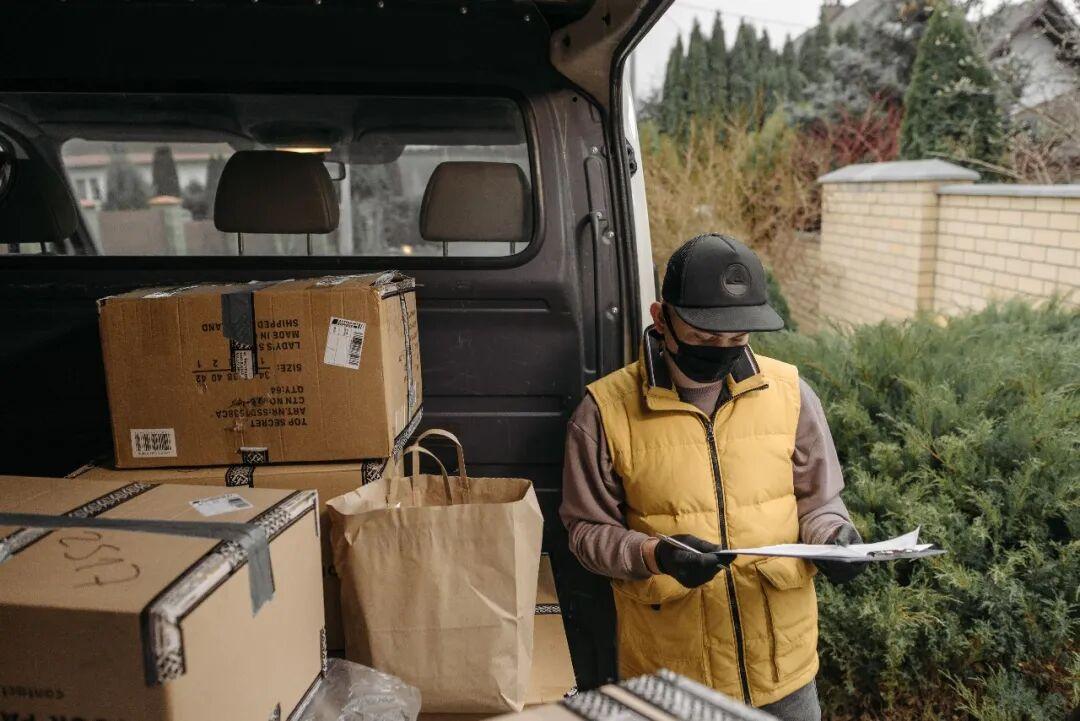
They began exploring the Brazilian market roughly between 2022 and 2023, shipping goods to consumers via small parcel direct mail. "Delivery times were extremely long, customs clearance was very unstable, and sometimes parcels got held up," he recalled. But this "lightweight" entry approach put less capital pressure on sellers, and with less market competition, they still made their first pot of gold in Brazil despite the poor logistics experience.
However, as competition gradually intensified and local regulations tightened, they realized this was not a sustainable long-term strategy. In 2024, they established a local warehouse in Brazil and officially switched to a local stocking model. "I think local stocking is a major trend. International small parcel shipping and customs clearance are generally not favorable; with local stocking and compliant operations, profit margins are also better than small parcel models," the seller noted. This is the biggest shift in their Latin American business logic over the past few years.
As of 2026, he is even more glad he made the early transition to local stocking — a move that has left many followers behind. After joining Mercado Libre's Brazil site last year, the weight of Latin American business in the company's overall portfolio increased further, with this year's target being to double growth in Brazil and expand into Argentina and Chile.
Gaming controller brand GAMESIR also decided to enter the Latin American market in 2022 based on the insight that "solving local logistics pain points could create a competitive moat".
According to COO Zhao Weilin, Brazil has a population of over 200 million, of which more than 100 million are gamers, representing a penetration rate of nearly 70%. But sea freight from China to Brazil takes as long as one to two months, making fulfillment a major challenge. That challenge, however, also presents an opportunity for merchants.
Today, GAMESIR has registered a local company in Brazil and basically completed its localized deployment, with fulfillment times greatly improved through platform delivery systems. Currently, the Latin American market accounts for more than 10% of GAMESIR's global business and is growing rapidly. After joining Amazon, it became a Best Seller on the Brazil site in just six months, sold more than 1,000 units during the 2023 Black Friday promotion, and exceeded 10 million yuan in sales in 2024.
Another benefit of localization is solving after-sales issues. Brazil lacks a mature after-sales system, so repairs and refurbishments can only be completed through local warehouses. GAMESIR has now built a local after-sales team, keeping its return rate below 10%.
In addition, to cope with the long logistics cycles, they plan product lines at least one quarter in advance. "Shipping from China to Brazil takes 30-45 days, factory preparation takes another 60 days, and the sales cycle is one month. That adds up to 130 days, and when you factor in capital turnover, it's 160 days, so planning ahead is essential," Zhao explained.
As another seller put it: if localized warehousing was just an optional extra for doing business in Latin America a few years ago, today it is a mandatory requirement.
Beyond logistics and supply chain, another major shift in the Latin American market is that "generic goods" are gradually losing effectiveness: while the market as a whole is still in a "people searching for goods" supply shortage phase, almost all successful brands and sellers have designed differentiated products tailored to local market characteristics. The early strategy of many sellers of simply moving products from other markets to Latin America, or piggybacking on popular items, is no longer viable.
"The market is no longer short of those generic, mass-market products," said an outdoor sports shoe seller. For example, a lot of work went into one of their best-selling products in Brazil, with designs tailored to local user preferences in terms of comfort, functionality, and color matching.
GAMESIR also deploys differentiated products based on Latin American user needs, even accounting for differences between countries in the region. Zhao Weilin explained: "Mexican gamers have consumption habits similar to those in the U.S., are less price-sensitive, and have the highest Xbox user penetration rate in Latin America. Brazil is dominated by PC and mobile gamers, with a very small share of console users." Currently, GAMESIR mainly promotes Xbox-licensed controllers in Mexico, while focusing on highly compatible PC controllers and mobile gaming controllers in the Brazilian market.
Smart security brand IMOU, for another example, identified that Latin America has abundant sunlight but complex outdoor wiring construction, so it launched a solar-powered solution that delivers 24/7 power via solar panels, greatly reducing installation barriers. Given the high proportion of self-built homes with large yards in Latin America, where a single camera is insufficient, IMOU developed custom multi-lens and multi-camera product lines: one device with multiple lenses that can monitor not only the user's own yard but also the street outside, and even recognize license plates. In addition, to meet local demand for long-duration monitoring, IMOU solved storage pressure through self-developed video compression technology, creating customized surveillance products exclusively for Latin American users.
IMOU began expanding into Latin America in 2025, choosing Mexico as its first market, and saw 2-3x growth during this year's Hot Sale promotion. Building on that momentum, it plans to launch more than 10 new products this year.

"The bigger the storm, the more expensive the fish": No more quick wins in the Latin American market
If the blue ocean incremental market is the sunny side of Latin America, the other side is marked by lengthy logistics and customs clearance processes, complex tax burdens, and changing regulations.
On opposite sides of the Earth's core, China and Latin America are separated by the longest distance in the world. Take Brazil, the region's largest market, for example: the flight distance from China to Brazil is nearly 20,000 kilometers, and sea freight takes 30 to 45 days.
But the biggest obstacle for cross-border sellers is not just physical distance, but the complex tax system of this "country of 100 taxes". Beyond customs clearance, each state in Brazil has its own value-added tax, and moving goods across state borders is like crossing an international border. Invoices are a mandatory permit for transporting goods: a declaration must be submitted to the state tax authority before loading, and if the correct tax documentation is not carried, goods may even be seized on the spot.
In 2025, Brazil passed Supplementary Law No. 214, which stipulates that once a digital platform controls core transaction links such as collection, payment, and delivery, it can no longer position itself as a mere "intermediary" and must bear joint and several tax liabilities. This means that if a seller fails to issue an invoice, the tax authority can directly pursue the platform for the unpaid tax. In addition, Brazil will implement a "tax split payment" mechanism starting in 2027. Taxes will be automatically deducted the moment a consumer makes a payment, meaning taxes are remitted before merchants even receive the funds. This is another major blow to small parcel direct shipping and under-declaration practices.

Mexico is also tightening tax compliance requirements for cross-border e-commerce. Starting January 1 this year, e-commerce platforms are required to withhold value-added tax and income tax from sellers' sales. Subsequently, platforms including Amazon and Mercado Libre issued notices reminding sellers to upload or update their RFC (Federal Tax Registry) information. This means that without a Mexican RFC tax ID, sellers are subject to 20% income tax and 16% value-added tax. This 36% increase in tax costs will significantly squeeze merchants' profit margins. Moreover, tax IDs are not easy to obtain: the application process is strictly reviewed and inefficient, potentially taking up to a year to formally receive, presenting a new round of challenges for merchants.
One favorable policy is that Brazil reinstated its small parcel tax exemption policy this year, eliminating the 20% federal import tax on small parcels valued under $50, and reducing the tax rate on goods valued between $50 and $3,000 from 60% to 30%. This has brought considerable price advantages for cross-border direct shipping merchants.
While complex compliance and tax thresholds have deterred some, they have not dampened the enthusiasm of new entrants. "The bigger the storm, the more expensive the fish. High thresholds and high risks mean great potential. For our brand, we are committed to globalization anyway. Regardless of the risks in a market, as long as it has a large enough population base and enough active users, we will enter it," Zhao Weilin said.
Linda, a representative example of entrepreneurs tapping into the Latin American market, has experienced the full journey from early testing via informal customs clearance to compliant operations and heavy investment in self-built overseas warehouses, and from mass product listing to brand building.
She shifted her focus from Southeast Asia to the Brazilian market in 2021, and found it offered "higher profits, faster inventory turnover, lower advertising costs, easier operations, and larger traffic". Initially, she tried shipping 3C plug products via informal customs clearance channels, but tightened regulatory inspections made this very unstable, and she saw many friends lose all their goods using informal clearance, so she resolved to formalize compliance and build her own overseas warehouse.
Recalling the frequent situations where she had explosive orders but insufficient warehouse capacity, she noted: "Warehousing capacity determines your growth ceiling. If your warehouse is not large enough, sales and profits will be constrained."
Later, she expanded her original 300-square-meter small warehouse to five overseas warehouses with a total area of over 15,000 square meters; at the same time, she continuously strengthened compliance construction across all areas including product certification, taxation, and local employment. Seizing the opportunity of a year-end sales boom last year, Linda's company reached a major growth inflection point, with sales in the final three months accounting for nearly 70% of the full-year performance. This allowed her to reap the benefits of "asset-heavy" deployment.
At the same time, on the product strategy front, she is acutely aware that the mass listing model does not have a long-term future in Latin America. "The thresholds for localization, compliance, and logistics are too high. Mass listing often leads to either running out of stock or picking the wrong products that don't sell. It's better to focus on a small number of categories, improve product strength, complete required certifications, and build a brand step by step," Linda said.
There is no shortage of opportunities in Latin America — what is lacking is patience, a consensus shared by many sellers.
From the perspective of 2026, this is no longer a market where you can "give it a try" and make quick money. It has huge incremental space, but excess returns will only be reserved for those who adhere to long-termism and are willing to make substantial investments.
Ebrun is continuing to track and report on this sector. If you would like to learn more information related to this article, please scan the QR code to follow the author on WeChat.

[Copyright Notice] Ebrun advocates respecting and protecting intellectual property rights. Without permission, no one is allowed to copy, reproduce, or use the content of this website in any other way. If any copyright issues are found in the articles on this website, please provide copyright questions, identification, proof of copyright, contact information, etc. and send an email to run@ebrun.com. We will communicate and handle it in a timely manner.
Translated by AI. Feedback: run@ebrun.com