
SHEIN's Third-Party Platform Business Reaches 14.3% Share, Ranks Third in Global Fashion Market
Ebrun Original - July 27th: SHEIN International Holdings Limited (referred to as "SHEIN") recently passed the Hong Kong Stock Exchange's listing hearing, with Goldman Sachs, Morgan Stanley, and J.P. Morgan acting as joint sponsors. The post-hearing information pack shows that from 2023 to 2025, the company's net revenue was $32.103 billion, $38.748 billion, and $41.847 billion, respectively, with growth rates of 41.1%, 20.7%, and 8.0%. Net profit was $2.789 billion, $3.365 billion, and $2.064 billion, respectively, with net profit margins of 8.7%, 8.7%, and 4.9%.
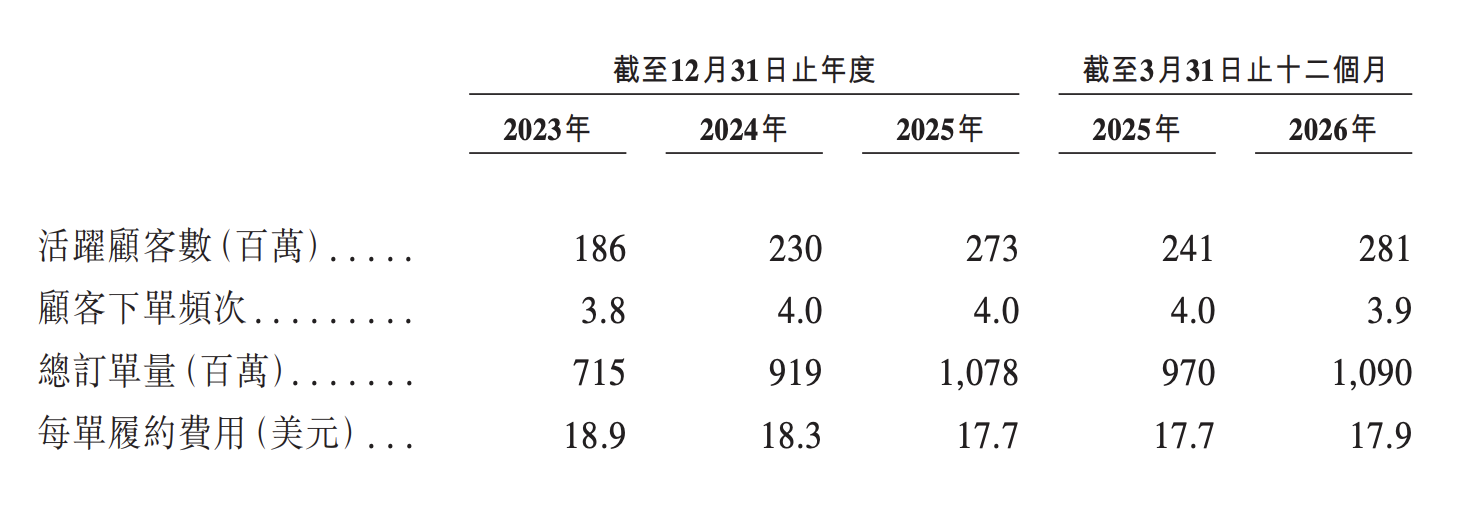
According to the prospectus, as the "world's largest online fashion destination," by the end of 2025, SHEIN served approximately 273 million active customers across about 160 markets. As of the twelve months ending March 31, 2026, the number of active customers further grew to approximately 281 million. Currently, the company offers over 2 million clothing styles, adding about 4,700 new styles daily on average. Total order volume increased from 715 million orders in 2023 to 1.078 billion orders in 2025. Annual order frequency per customer remained between 3.8 and 4.0 times.
01 Platform Business Expansion, Market and Category Diversification
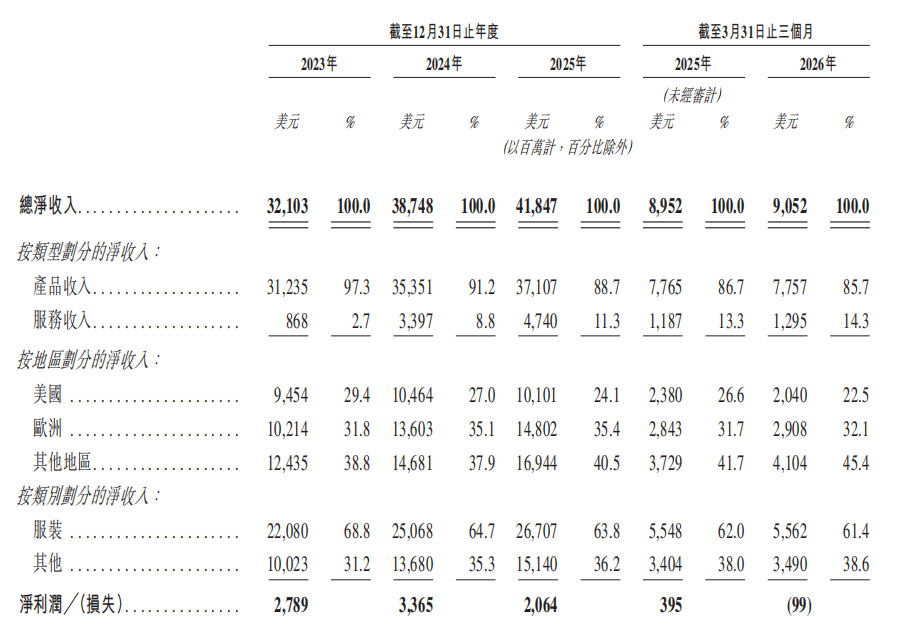
From a revenue structure perspective, the share of SHEIN's service revenue rose from 2.7% in 2023 to 11.3% in 2025, reaching 14.3% in the first quarter of 2026, reflecting the rapid expansion of SHEIN's third-party seller platform business.
By region, in 2025, revenue from the US market accounted for 24.1% of SHEIN's total, down from 29.4% in 2023. Revenue from the European market accounted for 35.4%, up from 31.8% in 2023. Other regions accounted for 40.5%, also increasing compared to 2023.
By product category, SHEIN's apparel revenue share decreased from 68.8% in 2023 to 63.8% in 2025, while the share of other categories increased from 31.2% to 36.2%, reflecting the expansion and diversification of SHEIN's product offerings. It is reported that in addition to fashion apparel, SHEIN also offers home and living, beauty, personal care, and electrical and electronic products.
The "Large-scale Automated Test and Reorder" (LATR) operational model is repeatedly emphasized in the prospectus as SHEIN's core competitive moat. This model involves testing new products in small batches (initial batches of about 100 to 200 pieces), evaluating customer feedback in real-time, and replenishing best-selling products within as fast as five days. The model's effectiveness is notable: in 2025, SHEIN's inventory turnover days were only 36 days, and the proportion of unsold inventory remained in the low single digits.
LATR is built on two key infrastructure pillars: an end-to-end intelligent supply chain and an agile global fulfillment network. The end-to-end intelligent supply chain digitally integrates the entire chain from trend identification, design and development, order allocation, production optimization to customer feedback. An automated order allocation system intelligently matches orders to suppliers based on factors like their expertise, price, and capacity. SHEIN provides suppliers with free cloud-based software solutions to help them manage order acceptance, production, quality assurance, and shipping.
Furthermore, starting with its flagship brand SHEIN, the company has gradually expanded its brand portfolio to cover more price points, unique styles, and a broader range of product categories. In 2025, SHEIN's supply chain network encompassed over 7,500 contract manufacturers and a large number of merchants, independent designers, and other suppliers, most of whom are small and medium-sized enterprises (SMEs). It empowers suppliers through deep technology integration, enhancing transparency, efficiency, and flexibility in the production process. The SHEIN X project, launched in 2021, was upgraded to the SHEIN Xcelerator program in October 2025, providing brands with differentiated supply chain services and a global sales platform.
The prospectus discloses that brands participating in the Xcelerator program can achieve significant annualized sales milestones faster. One brand saw its sales grow approximately 15-fold in the second year of participation, with its operating profit margin increasing by over 30 percentage points and inventory turnover days decreasing by about two-thirds. The operating profit margin for brand empowerment services is approximately twice that of the group's overall operating profit margin.
02 From Early Cross-border Seller to Fashion Giant, Third in Global Market Share
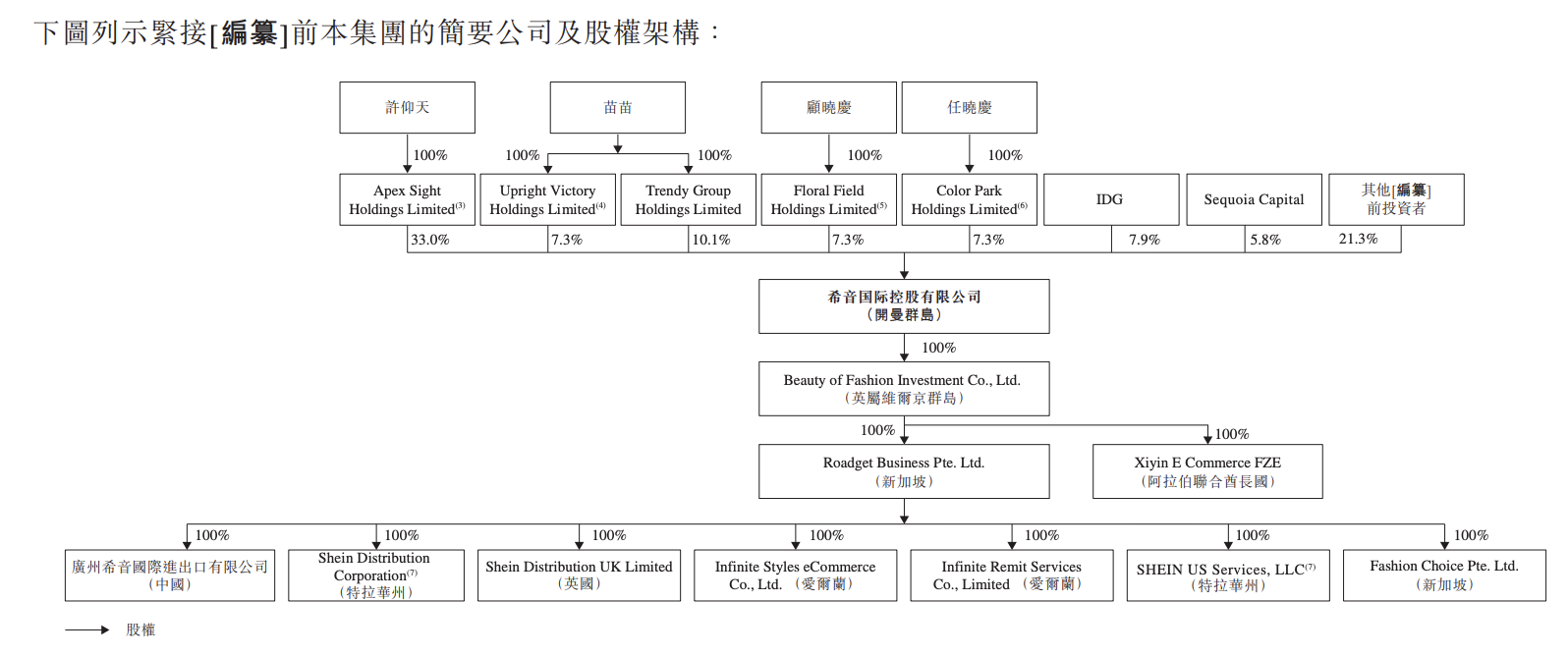
According to the prospectus, founder Xu Yangtian, through his company Apex Sight Holdings Limited, holds approximately 33.0% of SHEIN International's shares, making him the largest shareholder. Early core members including Miao Miao, Gu Xiaoqing, and Ren Xiaoqing collectively hold 32% of the equity. Based on the disclosed shareholding structure, the founding team and core members together hold 65% of the equity.
It is this founding team, which still holds majority ownership, that over more than a decade transformed a cross-border seller primarily focused on wedding dresses into a global fashion giant. In 2008, Xu Yangtian founded Sheinside, the predecessor to SHEIN, in Nanjing, Jiangsu. At that time, it was a small enterprise primarily engaged in cross-border e-commerce for wedding dresses. The team completed its initial capital accumulation in the blue ocean of cross-border e-commerce using search engine optimization techniques. In 2012, the company acquired the Sheinside.com domain and fully transitioned into the fast-fashion women's wear sector. It subsequently relocated its headquarters from Nanjing to Panyu, Guangzhou, immersing itself in the Pearl River Delta's garment industry cluster.
In 2014, the company officially rebranded as SHEIN and began building its supply chain system, simultaneously establishing warehouses in the Americas and Europe, and initiating in-house product design and development. In 2015, the SHEIN brand, benchmarked against ZARA, was officially established, pioneering the "small-batch, quick-response" flexible supply chain model.
In 2022, SHEIN began transitioning from a pure self-operated model towards a hybrid self-operated and open platform model. In March of that year, SHEIN first piloted the platform model in Brazil, allowing third-party merchants to open and operate their own stores. Subsequently, the platform model was gradually rolled out to markets like Mexico and the US. In 2023, SHEIN officially announced its transformation into an e-commerce platform, launching the "SHEIN's Gravity" million-seller plan, completing the strategic leap from a brand retailer to a platform enterprise.
Currently, SHEIN's platform models include Platform Managed Operations (i.e., full-trusteeship), Semi-Managed Operations, and Merchant Self-Operations. The Platform Managed Operations model, the earliest launched by SHEIN, requires sellers to focus solely on supplying goods, with the platform handling almost all operational aspects. It is available in over 150 countries and regions globally. The Semi-Managed model sits between full-trusteeship and self-operation, granting merchants more autonomy while the platform provides logistics, marketing, and other support. It is currently available in the US, UK, EU, Mexico, Australia, Japan, and other sites. The Merchant Self-Operations model allows merchants to open their own stores on the platform, with full store operation permissions and independent pricing rights. It is currently available in the US, Mexico, UK, EU, and other sites.
Beyond online, SHEIN is also exploring offline expansion. As early as 2018, SHEIN opened its first pop-up store in New York. In November 2022, its first "try-on only, no purchase" offline experience store opened in Tokyo. In November 2025, SHEIN opened its first permanent physical store globally in the BHV Marais department store in Paris, covering over 1,000 square meters, marking its transformation from a pure online retailer to an omnichannel "global fashion retailer."
According to a Frost & Sullivan report cited in the prospectus, the global fashion market was valued at $1.7 trillion in 2025 and is projected to grow to $2.0 trillion by 2030. Within this, the online fashion market is expected to grow from $606.4 billion in 2025 to $792.1 billion in 2030, with online penetration increasing from 34.9% to 38.7%. SHEIN's market share in the global fashion market is approximately 1.9%, ranking third, behind Nike (3.0%) and Inditex (2.5%).
"We primarily compete with global fashion retailers and, secondarily, with e-commerce platforms offering fashion products," SHEIN stated in the prospectus.
03 Future Development Strategy and Risk Factors
It is reported that the funds raised from this IPO are planned for four areas: (1) enhancing technological capabilities; (2) increasing brand awareness and strengthening global presence; (3) strengthening corporate responsibility; and (4) general corporate purposes.
Regarding development strategy, the prospectus outlines six future directions for the company: attracting new customers and increasing engagement; further enriching product categories and offerings; advancing sustainability and social impact commitments; creating more opportunities for designers and brands; strengthening supply chain and fulfillment infrastructure; and continuously investing in talent and technology.
In terms of risk factors, changes in tariff policies are highlighted as the most prominent near-term risk mentioned in the prospectus. In response to the US elimination of the de minimis exemption last year and fluctuations in tariff rates, SHEIN has implemented countermeasures, including raising prices in the US market to pass on costs, adopting formal customs declaration procedures, and adjusting localized inventory and fulfillment strategies. Since May 2025, the elimination of the US de minimis exemption has adversely affected SHEIN's US sales and overall net revenue growth, but the company has observed signs of normalization in US consumer purchasing behavior and sales trends.
Regarding the EU's imposition of a flat ?3 tariff on parcels valued at ?150 or less, given that approximately one-third of the company's net revenue in 2025 and Q1 2026 came from Europe, the impact of the EU tariff adjustment is expected to be roughly comparable to or exceed that experienced in the US market. SHEIN's prospectus notes, "As we increase prices to offset part of the increased costs, our sales volume in Europe may be adversely affected in the short term, while a comprehensive assessment of the long-term impact remains premature."
The Iran war is also listed as a risk factor. The war has led to decreased consumer demand in Middle Eastern markets, disruption of major shipping routes through the Strait of Hormuz, rising oil prices and transportation costs, and delays in the global supply chain. SHEIN's prospectus indicates that its Middle Eastern business declined year-on-year in the initial months, with an expected low single-digit percentage point impact on 2026 net revenue. However, the company has mitigated some logistics cost pressures through long-term agreements aimed at securing air freight capacity. The directors believe the Iran war will not have a materially adverse impact on the overall business operations and financial performance in the long term.
Additionally, the prospectus mentions compliance issues as one of the risk factors, focusing on four dimensions: data privacy, consumer protection & ESG, intellectual property, and labor practices. However, SHEIN stated that it has paid fines and rectified resolved matters, is actively defending or cooperating with investigations on pending matters, and continuously strengthens its compliance framework and supply chain audits, among other measures.
Ebrun will continue to track and report on this information. To learn more about related information, please scan the QR code to follow the author on WeChat.

[Copyright Notice] Ebrun advocates respecting and protecting intellectual property rights. Without permission, no one is allowed to copy, reproduce, or use the content of this website in any other way. If any copyright issues are found in the articles on this website, please provide copyright questions, identification, proof of copyright, contact information, etc. and send an email to run@ebrun.com. We will communicate and handle it in a timely manner.
Translated by AI. Feedback: run@ebrun.com