
Desktop Maker Tools Break into the Mainstream: 3D Printers Go Viral. Who's Actually Buying Them?
By Han Xiao, Edited by He Yang
[Ebrun Original] The call that '3D printing has entered its breakthrough year' has been heard for many years. However, from last year to this year, the industry's move beyond its niche may finally be transitioning from a slogan to reality.
Last year, the consumer-grade 3D printer industry achieved three '10-billion-yuan' milestones: export value surpassed 100 billion yuan for the first time, annual investment and financing volume approached 100 billion yuan, and the first company with annual revenue exceeding 100 billion yuan emerged — Bambu Lab. This year, the industry has seen more highlights: Creality listed on the Hong Kong Stock Exchange, becoming the 'first consumer-grade 3D printing stock'; Flashforge Technology secured a 10-billion-yuan Series C financing round, the largest single investment in the industry in recent years.
Performance on the sales front is equally impressive. In 2025, China's 3D printer export volume exceeded 5 million units for the first time, with export value surpassing 100 billion yuan. In the first five months of this year, China's cumulative 3D printer exports reached 2.94 million units, a year-on-year increase of 90%, with a cumulative export value of 7.818 billion yuan, up 106.8% year-on-year.
Although over 80% of the industry's sales come from overseas, domestic sales are also strong. JD.com data shows that during this year's 618 shopping festival, sales volume across all 3D printing categories increased by 80% year-on-year, and transaction value grew by 60%. Industry leader Bambu Lab even announced during the 618 period that its cumulative domestic product sales had surpassed 1 million units.
Other desktop maker devices are also racing ahead alongside 3D printers. For instance, xTool filed for a Hong Kong listing, aiming to become the 'first laser engraving stock'; the UV printing sector has seen multiple new players enter the market; and desktop CNC companies are also highly favored by capital.
The industry commonly refers to 3D printers, UV printers, laser engravers, and CNC devices collectively as 'desktop maker tools'. For some personal studios or 3D printing 'farms' (micro-factories), these devices are used in combination. 3D printers and CNC devices handle producing the base of a product, while UV printers and laser engravers handle surface decoration.
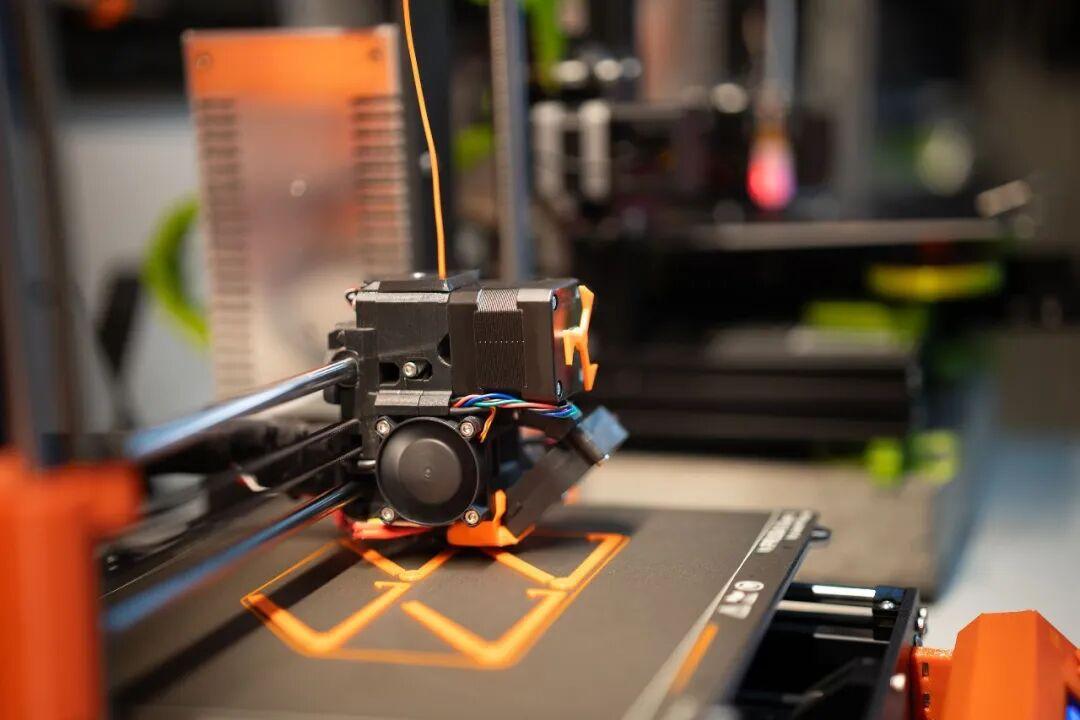
Regarding the positioning of desktop-grade tools, there has long been a debate between the 'toy theory' and the 'tool theory'. Some believe becoming a toy and entering households is their ticket to the mass market. Others argue that these tools originated from the maker culture in Europe and America, inherently possessing a certain barrier to entry, and that their ultimate mission is to serve as productivity tools for studios and 'farmers'. For example, Chaokuo Technology, which focuses on high-speed 3D printers, is dedicated to serving the farmer community by improving printing efficiency and stability. Its founder believes the explosion of 3D printers is essentially a replacement of 'geek toys' by 'productivity tools'.
So, at present, what are the application scenarios for these desktop tools that are breaking out of their niche geek circles? Who is behind the impressive sales figures?

'Farmers': Supporting the Domestic Market
'Farms', 'planting', and 'harvesting' are essentially the 'jargon' of the 3D printing industry. The production model of a 3D printing factory resembles farming — sending 3D model data to machines, setting parameters, and loading materials is akin to planting, while waiting for the print to finish and placing the finished products in boxes resembles harvesting, hence these vivid expressions.
Industry analysis points out that overseas demand for 3D printing relies on personal DIY and small-scale contract manufacturing, while the domestic market centers around a B2B farm model.
According to incomplete statistics, there are currently at least over 2,000 3D printing farms in China. For example, influenced by hit 3D printed toys like 'Radish Knives', a wave of 3D printing farm startups emerged in the second half of 2023. Each farmer operates from a dozen to over a thousand printers, and it's said that with sufficient orders, the initial investment can be recouped in just three months.
These hit products can be seen on domestic e-commerce platforms, offline stalls, and cross-border e-commerce platforms. Particularly in European and American markets, these 3D printed toys have become popular holiday gifts and collectibles. For instance, 3D printed dragon eggs themed for Easter were once all the rage.
Geographically, 3D printing farms are mainly concentrated in Guangdong and Zhejiang.
Guangdong and the Pearl River Delta region possess a complete manufacturing industry chain, with 80% of core 3D printer components available locally. The 'Four Dragons' of 3D printing — Bambu Lab, Creality, Snapmaker, and Anycubic — which hold a 94% share of the entry-level market, are all based in Shenzhen. Large and medium-sized farms with hundreds of printers are scattered across Shenzhen, Dongguan, Foshan, and Shantou.
In Zhejiang, Yiwu and Jinhua have also formed 3D printing industry clusters. On one hand, Yiwu is a global hub for small commodities and cross-border e-commerce sourcing, ensuring smooth downstream sales channels. On the other hand, 3D printer manufacturer Flashforge is headquartered in Jinhua, fostering the agglomeration of local 3D printing farms.
For instance, at the Ningbo Cross-border E-commerce Expo in late May, a 3D printing farm tucked away in a corner unexpectedly became the center of attention, attracting numerous buyers. According to on-site staff, the company, founded just a year ago, operates 3,000 printers and primarily sells 3D printed finished products like retractable toys, vases, and handbags to small B2B clients.
However, as the 3D printed toy sector heats up, issues like a lack of design capability and homogenized competition are becoming increasingly prominent. Some farmers can only passively wait for the next viral product to emerge.
Tan Wenjie, founder of the consulting firm 3D Printing Resource Library, suggests that 3D printing farms may diverge in two directions in the future: one continues to scale up equipment, turning farms into factories for high-volume, low-margin business; the other focuses on innovative design and differentiated services, developing unique products for specific market needs, pursuing high-margin niche businesses.

Studios: Driven by Design and Service
Both 3D printing studios and farms are SMB (Small and Medium-sized Business) users. Farms have a stronger B2B nature and own more machines, while studios own fewer machines, placing greater emphasis on design and service, aligning more closely with the second direction Tan Wenjie mentioned.
These personal studios can be divided into product-driven and solution-driven categories. Product-driven studios primarily target C-end consumers, with offerings further split into mass-produced and custom-made items. Solution-driven studios mainly serve B-end clients, replicating a series of solutions—from design modeling and parameter tuning to product realization—for enterprise customers, often incorporating AI workflows.
'smallsmore' is a typical studio that uses desktop tools to design products. Their business is divided into three parts: an original design digital accessories store, high-margin personalized custom products (e.g., the studio once custom-made a unique ring box for a man about to propose, using 3D printing, UV transfer film, laser engraving, and cutting techniques), and small-batch orders serving B2B enterprises.
Its co-founder, Alvin, told Ebrun that his previous experience in interaction design and work at a consulting firm provided skills and resources in product aesthetics, client resources, pricing strategies, etc., for the studio's current operations.
A large company designing a product goes through a complete process of user research, requirement definition, conceptual design, and product realization. However, Alvin now typically designs products based on daily observations and design intuition, creating items he needs but can't find on the market, testing them while observing market feedback. 'Product design has been internalized into personal intuition and aesthetics. Regardless of sales volume, we are honored that some consumers like all the products we design,' he said.
For example, everyone at the smallsmore studio uses Apple Watches. They noticed Apple released a flame watch face, which inspired them to 3D print a charging dock shaped like a fireplace, complete with a mini firewood rack underneath for placing small matches. Placing the Apple Watch to charge, the flame watch face perfectly becomes the fireplace fire, maximizing the charging ritual.
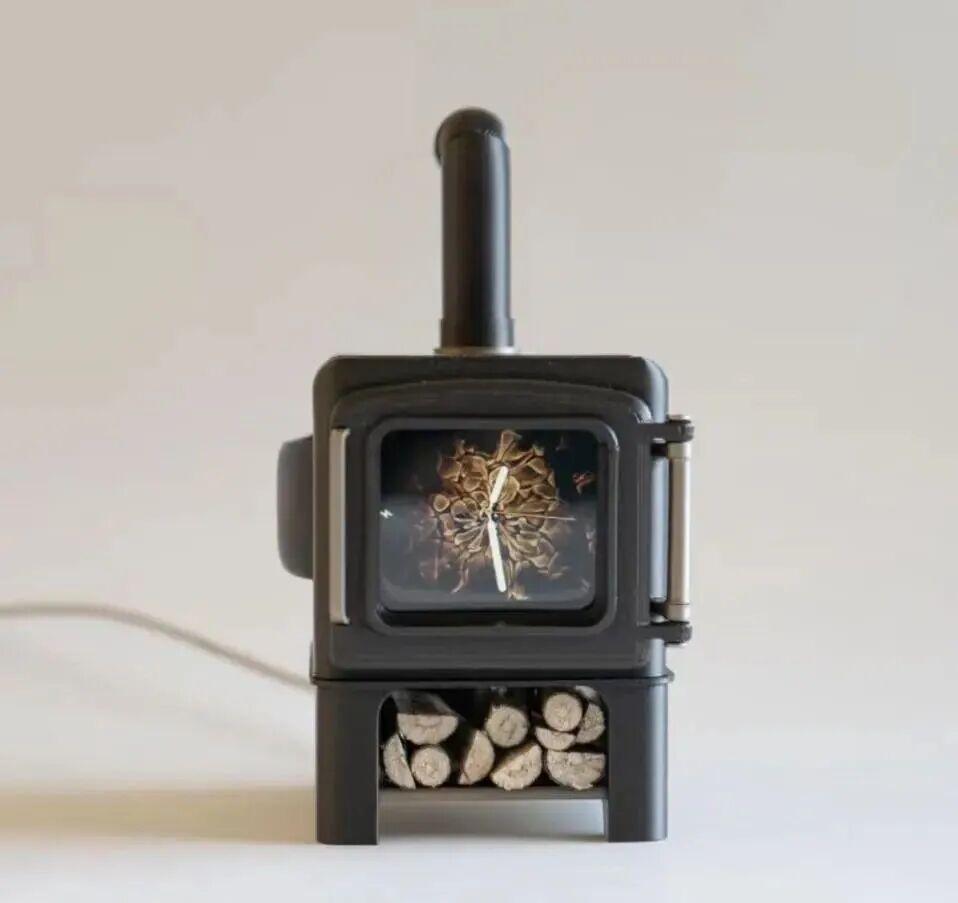
smallsmore's fireplace charging dock
In terms of machine configuration, compared to farms with hundreds of printers, studios have fewer machines but their setups might be more comprehensive. 'We try to use different processes as much as possible to enhance our product competitiveness,' Alvin said.
Currently, the smallsmore studio mainly uses Bambu Lab's H2D and A1mini, along with three laser engravers for composite processes: xTool's base model M1, the laser engraving/cutting machine F2 Ultra, and the UV laser engraver F2 Ultra UV, plus a small CNC machine. The H2D has a higher-end configuration, integrating 3D printing, laser engraving/cutting, CNC knife cutting, and drawing. Alvin noted it's the most forgiving choice and can serve as a backup if a laser engraver has issues.

Household Users: The Key to Entering the Mass Market
If SMBs are the initial and most loyal users of 3D printing, then household users are the key to determining whether it can truly enter the mass market. Industry reports point out that, compared to the adoption curve of robotic vacuum cleaners, current 3D printer shipment volumes are only at their 2015-2016 starting point. Volume growth is taking shape, but household penetration is still in its early stages.
In recent years, the penetration rate among household users in the domestic market has increased significantly. According to a report from China Report Hall, the proportion of household users for consumer-grade 3D printers in China rose from less than 20% in 2023 to 45% in 2025.
On one hand, 3D printing can create teaching aids, models, and materials for science and innovation competitions, turning flat knowledge into tangible, disassemblable, touchable objects, enhancing the fun and practicality of education. This applies to households, schools, and educational institutions. On the other hand, 3D printing can also be used for DIY home accessories, enriching home life, such as LEGO figurines, custom tissue boxes, jewelry organizers, and plant pot holders.
On social media, ads from major brands like Bambu Lab have appeared in videos by parenting influencers, indicating that major brands are also targeting household users. These videos primarily promote the fun and educational functions of 3D printing, mainly for printing children's toys, family portraits, and figurine ornaments.
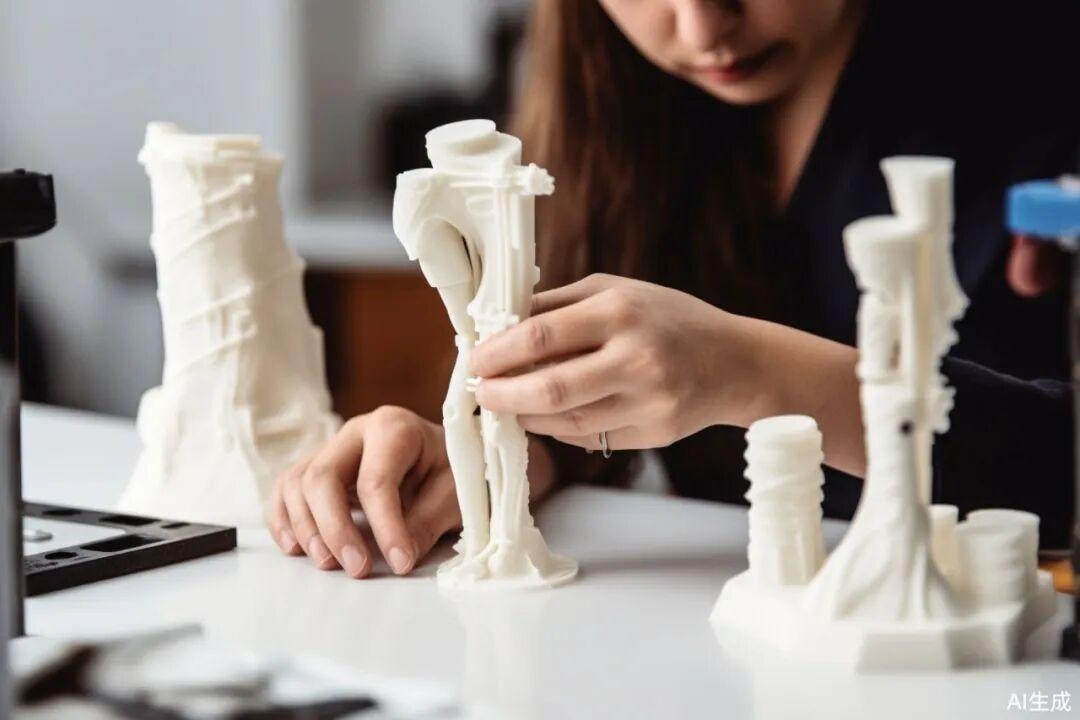
The decisive factors for 3D printers entering households are falling prices and lower barriers to use. Currently, entry-level 3D printers are generally priced around a thousand yuan, with Creality's SPARKX Hi even reaching 799 yuan. In contrast, UV printers cost over ten thousand yuan, and laser engravers start at two to three thousand yuan. The price point of around a thousand yuan means 3D printers are not just productivity tools but can also become household toys, even a trendy educational investment.
Regarding usage barriers, major brands have their own model communities, such as Bambu Lab's MakerWorld and Creality's Creality Cloud, which offer free open-source models, solving the modeling problem. Supporting services for printers are also improving: those worried about buying a printer that ends up unused can first rent and experience one at a makerspace. For installation, JD.com offers on-site 3D printer installation services in 42 cities with a 100% positive rating. From platforms to manufacturers, efforts are continuously being made to lower the usage barrier for 3D printers.
Furthermore, brands are accelerating their offline presence, from flagship stores to Apple authorized resellers, JD Home/JD MALL, and Sam's Club. For example, free trial courses at Bambu Lab's flagship stores primarily target children and parents. For the 3D printing industry, offline stores are not just an additional sales channel but a window to accelerate market education and reach household users.
If children are the primary users, safety and ease of use are the most important features. Currently, mainstream 3D printing technologies are divided into FDM (Fused Deposition Modeling) and resin-based (SLA/DLP). FDM is the most common, more beginner-friendly, with lower machine and material costs, but its precision is inferior to resin printing. However, resin printing can cause some air pollution. Therefore, FDM remains the primary choice for household users.
Some brands focusing on child users have already emerged in the market. For example, ENTINA (Xiao Cheng Guo) specializes in small-sized, easy-to-use, low-barrier desktop FDM 3D printers. AOSEED (Ao Wei Digital), focusing on youth makers and STEAM education, emphasizes integrating 3D printing with STEAM education, offering not only children's 3D printers but also youth design software, course platforms, and other 3D printing education solutions. Toybox, founded in the US, is one of the earliest 3D printing brands focusing on the children's market. Its core is providing an online toy library for one-click printing, allowing children to print toys without learning complex modeling. Its community has accumulated over 10 million printable toys.

Geeks: Loyal Users Nurtured by Maker Culture
In fact, 3D printing was born from the maker culture in Europe and America, a DIY culture rich in creativity and innovation. Because tools like 3D printers were large back then, geeks were used to putting them in garages, working independently in that space to connect wires and tinker with products, giving rise to the term 'garage culture/workshop culture'.
Maker tools like 3D printing are highly community-driven categories. These early enthusiasts exchanged parameters, shared models, discussed problems, and even directly participated in product improvements on various forums, Reddit, Discord, and YouTube. These geeks, primarily middle-class males in Europe and America, formed tight-knit communities centered on technical discussions and gradually developed offline makerspaces.
To this day, DIY enthusiasts remain loyal users of 3D printing. Zhao Haoran is one of them. Wanting to design things himself, he spent two months self-learning parametric modeling (operations like extrusion, rotation, and cutting based on geometric shapes, simpler than sculptural modeling) and purchased a Bambu Lab X2D.
Initially, Zhao Haoran didn't buy a printer directly but used a farm for printing. However, he found farms prioritized quick turnaround and didn't meticulously adjust parameters, resulting in poor-quality prints. Additionally, the materials used by farms didn't meet his requirements. Since farms mainly print figurines and toys, they use bright or silky materials, lacking the matte or marble-like finishes he needed. Considering various reasons, he decided it was better to buy his own equipment.
He compared several processes: CNC, sheet metal, injection molding, and 3D printing. Considering price, difficulty of use, and safety, he finally chose an FDM 3D printer. When choosing a brand, he compared Snapmaker, Creality, and Bambu Lab, ultimately choosing Bambu Lab due to its active community, high resale value, and focus on FDM. For materials (typically PLA and PETG), PLA is like straw material—healthy, harmless, good texture, easy to print, and available in more colors—but less durable than PETG, not heat or UV resistant. Hoping his designs would last longer, he chose PETG.
So far, he has printed household items like pegboard accessories, headphone hooks, and sorting storage boxes. He also designed a product he plans to sell—a display stand for the game 'Arknights' passes, including a base slot, decorative backplate, and space for LED strips. He spent considerable effort adjusting parameters for each part, printing several different versions for comparison.
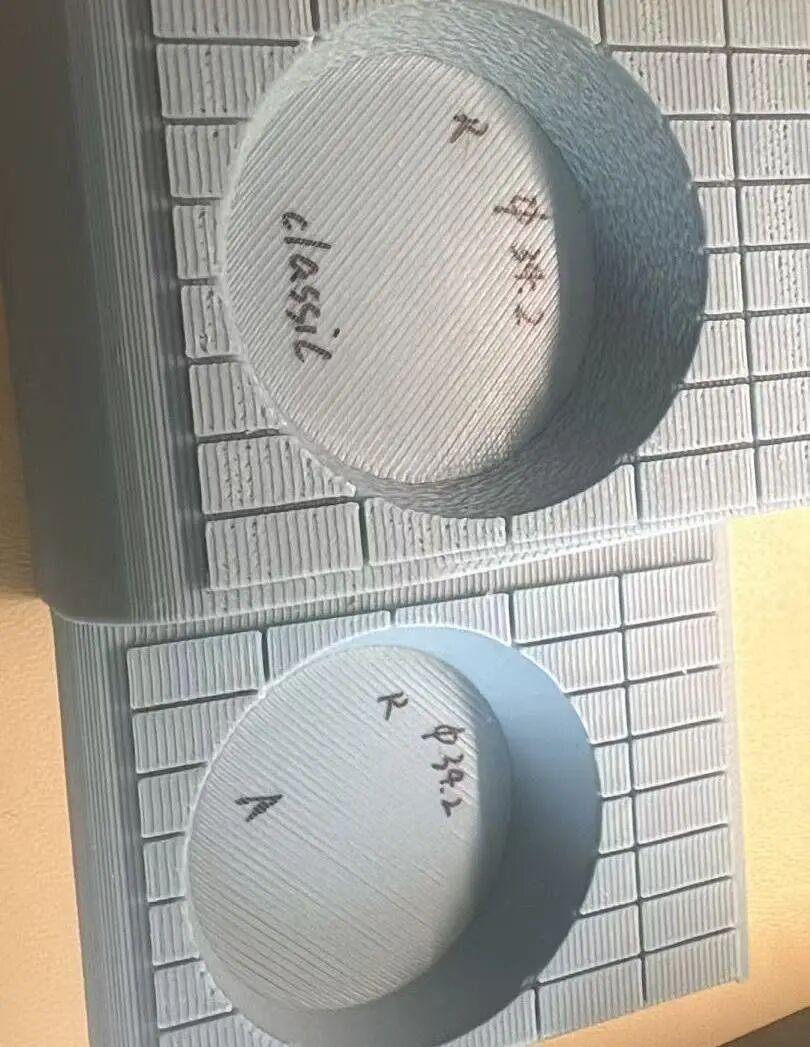
Bases with different parameters
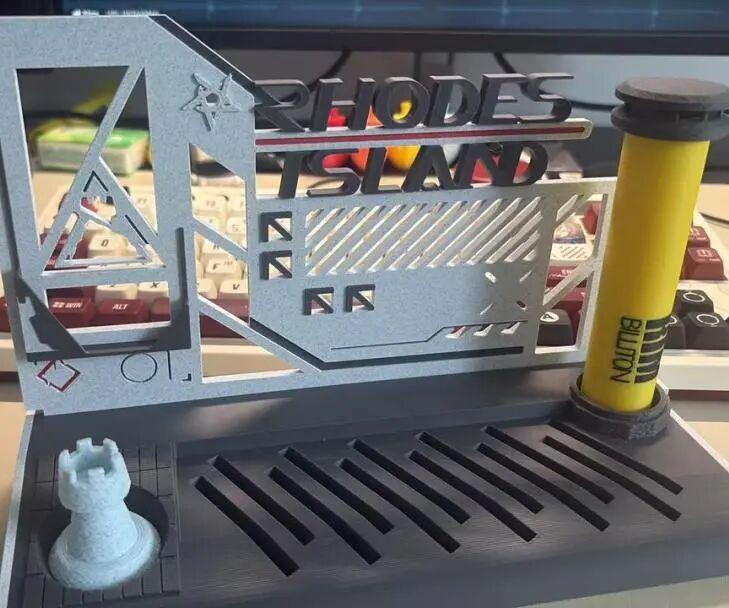
Finished pass display stand
He priced this product set at 120-150 yuan, though the actual cost including materials, magnets, and acrylic tubes should be less than 30 yuan. He decided to price it above 120 yuan because he saw competitors selling similar items for 79 or 89 yuan, but 'the texture isn't as good as mine, they use PLA material with limited lifespan.'
Zhao Haoran plans to take ten sets to sell at a riverside scenic walkway on weekends first, encouraging users to post pictures on Xiaohongshu for cashback to accumulate organic traffic, and later consider opening an online store. He has a more ambitious plan: he hopes his products can gradually move away from IP reliance, shifting towards designing practical products, and then learning sculptural modeling to expand the types of products he can design.
Maker tools are missioned with creation. Geeks enjoy the joy of creation and also hope their creations gain recognition and generate real income. Therefore, among users of maker tools, there are many like Zhao Haoran transitioning from personal hobbyists to SMBs, starting their own small businesses through 3D printers.

Brand Retail Stores: Taking on Market Education Responsibilities
Compared to the user perception of 3D printers as educational tools and toys, laser engravers and UV printers are further from entering households. However, they have a special type of user—brand retail stores.
Currently, xTool's laser engravers and personalized solutions have been deployed in two to three thousand brand stores globally, with nearly 1,000 in China. Using laser engravers and accompanying integrated screens and software, consumers can engrave their favorite patterns on various products like electronics, jewelry/cosmetics, mugs/ceramics, shoes/clothing/bags, etc. Brands xTool has partnered with include Huawei, VIVO, Lefant, Stanley, Starbucks, Nike, Decathlon, MAC, and over 200 others.
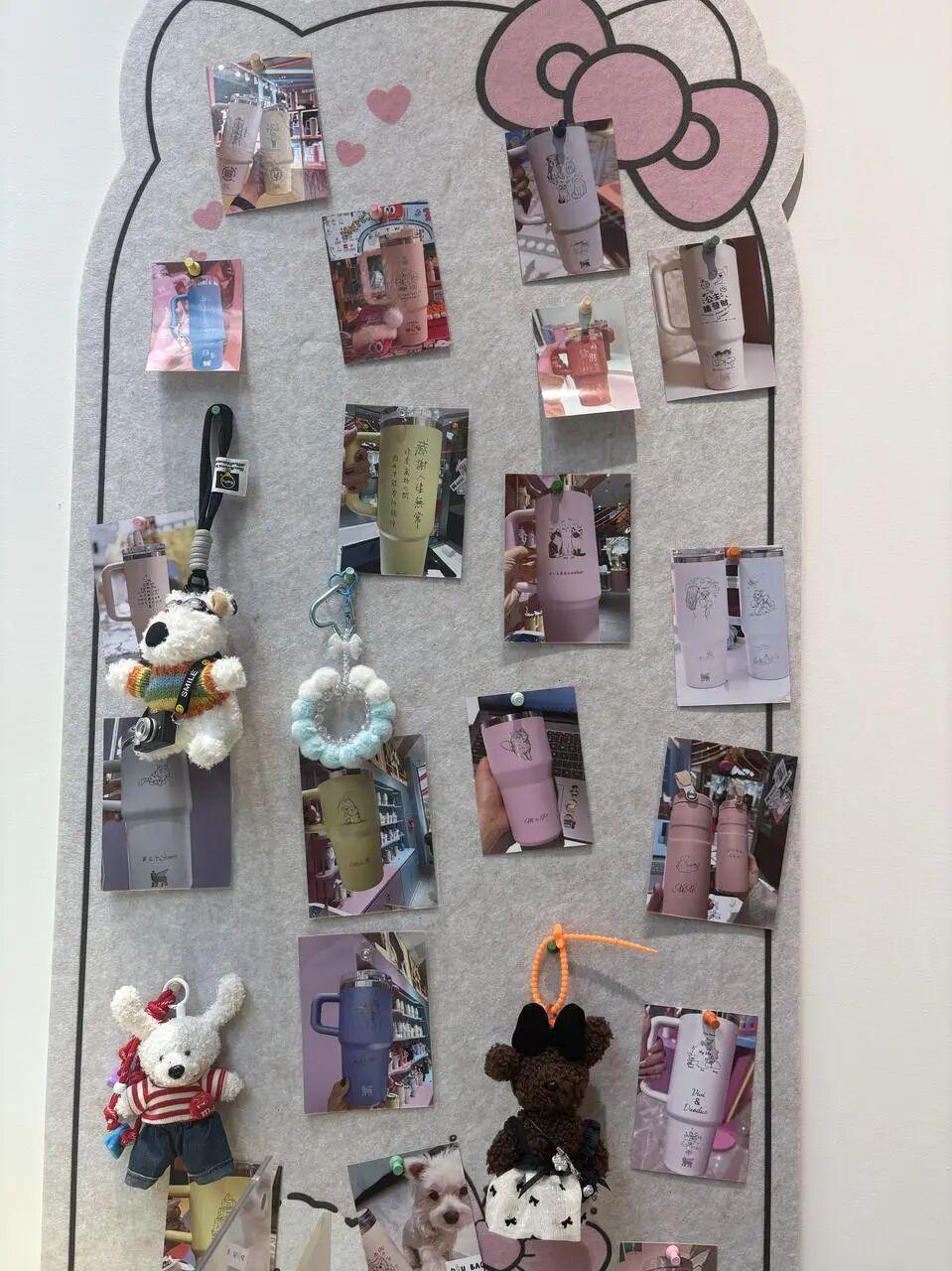
Photos of user-customized cups displayed on the wall of a Stanley store
In addition, eufyMake, the consumer-grade UV printer brand under Anker Innovations, has also collaborated with brand clients for personalized customization, mainly used for brand events, member gifts, limited packaging, etc.
According to Liu Qiang, xTool's Head of Product and Technology for China, xTool's first brand store partner was the American cup brand Stanley. In late 2024, Stanley planned a 14-day pop-up event at MixC World in Shenzhen's Qianhai and wanted to introduce on-site customization services. xTool's personalized solution significantly sped up the custom engraving process. What used to take a week for online customization could now be completed in-store in tens of seconds. During the event, store foot traffic surged, social media buzz attracted a steady stream of consumers, daily engraved cups exceeded 200, and sales nearly doubled.
For brands, personalized services can be a way to maintain product pricing during an economic downturn. 'In a downturn, many brands worry that lowering prices will dilute brand equity, making it hard to raise them later, so they prefer to add value. Our personalized solution essentially offers more service at the same price, leading to improvements in both sales and brand strength,' Liu Qiang explained.
From the tool manufacturer's perspective, applying machines in brand stores poses greater challenges for product stability and service difficulty. 'Huawei might engrave one to two hundred earphones a day, but a C-end user might engrave ten at most. Mass production is more suited for industrial-grade equipment, which requires our consumer-grade products to have industrial-grade stability,' Liu Qiang stated.
Laser engraving isn't a panacea either. For example, engraving the glass back covers of some phones can cause cracking issues. This is determined by the properties of lasers and is hard to avoid. However, as tool manufacturers iterate their hardware, the variety of brands they can collaborate with is increasing. For instance, stores originally using xTool's hot-light lasers experienced burnt, blackened engraving edges, unsuitable for high-value products like jewelry. Now, with the new generation cold-light machine F2 Ultra UV, engraving edges are cleaner, like a knife-cut effect, making it suitable for jewelry brands.
Besides hardware capabilities, corresponding software support is also needed. According to Liu Qiang, currently, xTool engravers used in stores are equipped with integrated screens similar to ordering kiosks, with extremely low barriers to use. Consumers can choose patterns from a gallery or upload their own images, and AI generates patterns suitable for engraving. Additionally, xTool is continuously improving the user experience for brand stores by adding enclosures to screens, equipping cooling systems, and network communication tools.
'Brand stores are naturally the closest touchpoint to consumers. On-site customization in stores allows more consumers to intuitively experience the value of personalized services. We believe that as more brands join, personalized customization will further become a standard capability for retail stores and gradually integrate into consumers' daily shopping experiences,' Liu Qiang concluded.
Ebrun continues to track this story. To learn more about related information, please scan the QR code to follow the author on WeChat.

[Copyright Notice] Ebrun advocates respecting and protecting intellectual property rights. Without permission, no one is allowed to copy, reproduce, or use the content of this website in any other way. If any copyright issues are found in the articles on this website, please provide copyright questions, identification, proof of copyright, contact information, etc. and send an email to run@ebrun.com. We will communicate and handle it in a timely manner.
Translated by AI. Feedback: run@ebrun.com