
The Era of Makers is Here! How 3D Printing is Fuelling the 'One-Person Company' Startup Boom?
By Han Xiao, Edited by He Yang
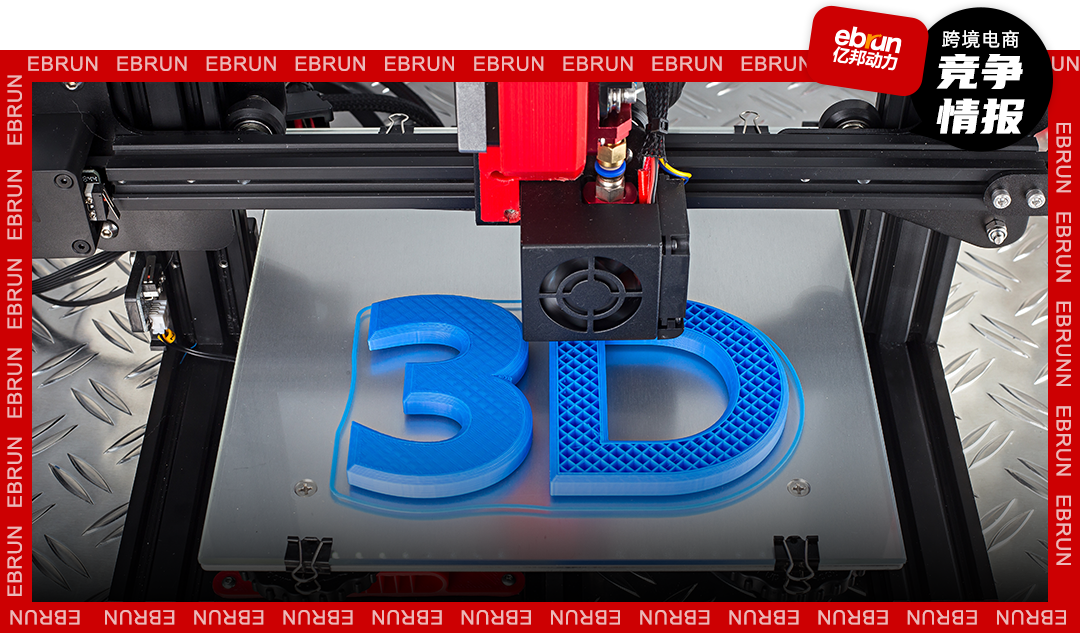
[Ebrun Original] The story of AI giving birth to OPCs (One Person Companies) has been told too many times. While these new-age myths are repeatedly amplified, another group of individual creators is using desktop maker tools costing a few thousand yuan to quickly turn ideas in their minds into physical objects, finding their own business models through trial and error.
A couple runs a dollhouse furniture manufacturing farm with just one Xianyu store and three 3D printers; a five-person team manages four full WeChat groups, selling 500 sets of 1/64 scale miniature vending machines in two and a half months, with total revenue exceeding 100,000 yuan; a studio focusing on 'AI + intangible cultural heritage' designs Chaoshan intangible cultural heritage creative products using 3D printers and UV printers, and also compiles printing parameters, creative models, AI workflows, etc., into a database, replicating them as technical solutions for B-end clients like creative product stores and state-owned enterprises...
A large company designing a product needs to go through a complete process of user research, requirement definition, conceptual design, and product implementation. However, for a personal studio, with the help of desktop-level maker tools, an idea in the mind can become a physical product in a day or even a few hours, then quickly pushed to the market for testing and iteration.
Desktop maker tools generally include four categories: 3D printers, UV printers, laser engravers, and CNC devices. In terms of process, 3D printing and UV printing belong to additive manufacturing, while laser engraving and CNC belong to subtractive manufacturing; in practical use, 3D printers and CNC devices are responsible for producing the product base, while UV printers and laser engravers handle surface decoration.
In recent years, various maker tool brands have been breaking through their circles. Last year, the consumer-grade 3D printing industry achieved three '10-billion' milestones: export scale exceeded 10 billion yuan for the first time, annual investment and financing scale approached 10 billion yuan, and the first company with annual revenue exceeding 10 billion yuan was born - Bambu Lab. This year, Creality landed on the Hong Kong Stock Exchange, becoming the first stock in the consumer-grade 3D printing industry; xTool has submitted its IPO prospectus, aiming to become the 'first stock in laser engraving'; the UV printing track has seen many new players entering; desktop CNC tools are also continuously attracting capital attention.
Strongly supporting core customers like personal studios and creators has become a consensus among various brands. For example, in December 2025, Bambu Lab launched the 'Let's Make It' creation fund, providing long-term funding, technical, and resource support to global makers, with both independent individuals and small studios eligible to apply. Snapmaker, which started with multi-functional printers, also released an innovation fund this year with a total prize pool of 1.05 million RMB, sponsoring open-source projects and global developers.
xTool, a global leader in personal creative tools, also launched the 'Ten Thousand Stalls Plan' this year, hoping to support 10,000 users to become 'stall owners', providing them with promotional resources, consumable resources, model parameters, and other support. 'We hope users who already have machines don't let them gather dust at home; they can use them whether to generate revenue or for public welfare. We also hope the 'Ten Thousand Stalls Plan' can achieve user education, letting more people see laser engraving,' Liu Qiang, xTool's China Regional Product and Technology Head, told Ebrun.
'Desktop tools are not necessarily the optimal solution for production cost or process. They might be more expensive than factory mass production, and the results might not be perfectly controlled, but their greatest significance is giving many creators the possibility to be themselves,' said Alvin, co-founder of the smallsmore studio.

Running a 3D Printing 'Farm' in a Small Rental Apartment
Xiao Luo and her boyfriend jointly run a dollhouse furniture store on Xianyu. Her boyfriend previously ran a stereolithography (SLA) 3D printing studio (one of the 3D printing technical routes, using ultraviolet light to instantly solidify liquid resin, offering higher precision than FDM) and is familiar with related processes. Xiao Luo is a seasoned 'BJD person' (Ball-Jointed Doll enthusiast, a subculture of collectors who enjoy collecting and dressing up miniature doll figures). The two hit it off, one providing the technology and the other the ideas, and together they opened a husband-and-wife shop for 3D printed dollhouse furniture in their rental apartment in Shenzhen.
Xiao Luo's first customer was a 'doll mother' from Macau (a term for doll owners who create backgrounds and furniture for their dolls). She enjoyed making dollhouse props and had strong hands-on skills. She didn't need highly finished products but preferred customization based on her own ideas. She found Xiao Luo on Xianyu. Xiao Luo asked her to find the original model, then helped her modify the size and details, ultimately completing the custom dollhouse furniture service.
This first customer helped Xiao Luo establish her future product development process: first find popular but expensive dollhouse styles on Xianyu with many favorites, then find similar open-source models on model websites, and finally modify and improve based on the original model to develop similar affordable versions.
Modifying an open-source model into one that can be printed and fits dollhouse dimensions is not as simple as imagined. Xiao Luo said, 'Many open-source models are not suitable for printing; they are just for display in games. To save resources, they have fewer polygons. For example, a model that only needs to be shown from the front might be completely hollow at the back. A printable model must be a closed solid, with no missing faces, so modeling software is needed to repair and adjust it yourself.'
The base height for BJD dolls is 180cm. Dolls are generally divided into 1/2, 1/3, 1/4, 1/8, and 1/12 scale dolls. Because both dolls and furniture are extremely miniature, and considering structural stability and potential damage during shipping, the models that can be developed are actually very limited.
Xiao Luo's first hit product was a white chair, available in 6 sizes, priced between 38-170 yuan. She said they initially printed a one-piece version, but the legs broke many times during courier transport. Later, they chose to split it into many parts for printing, requiring buyers to assemble it themselves.
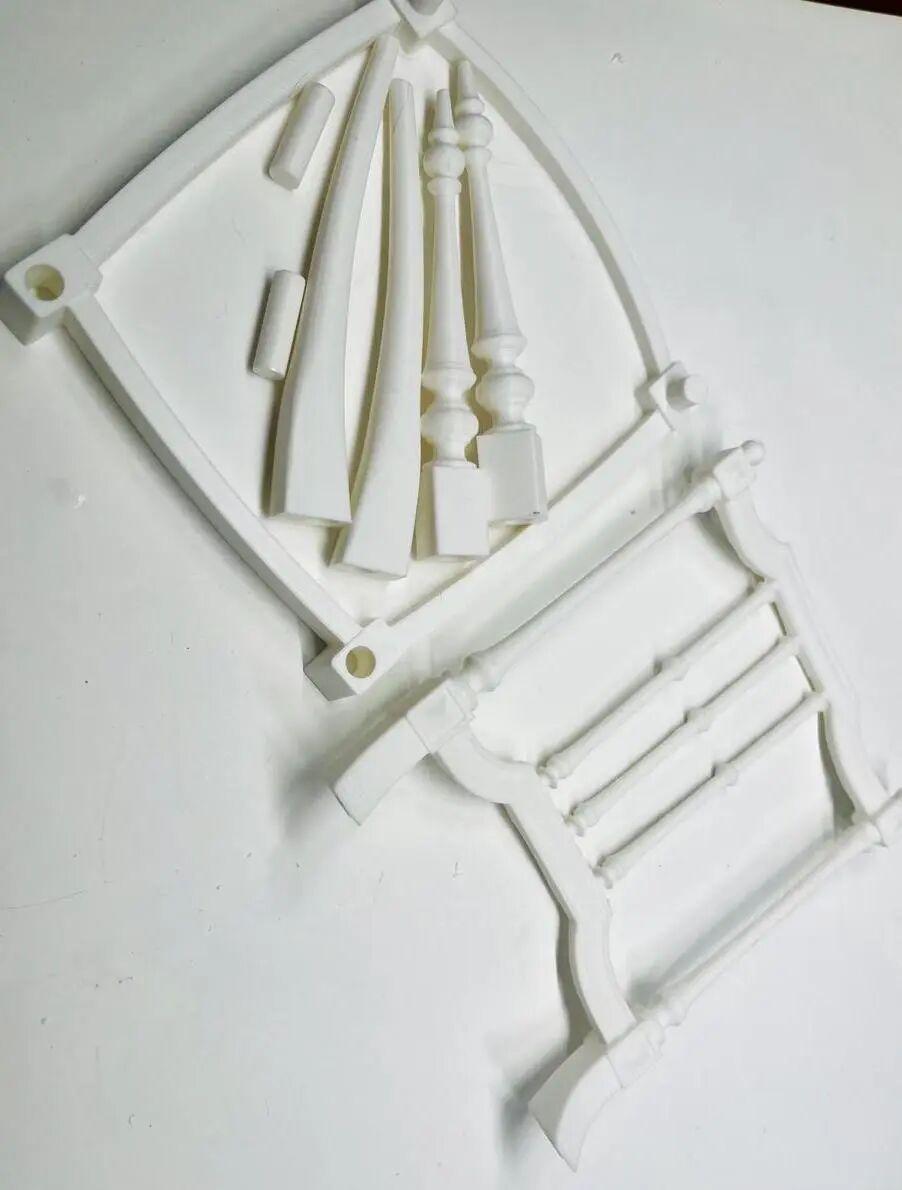
Disassembled dollhouse chair
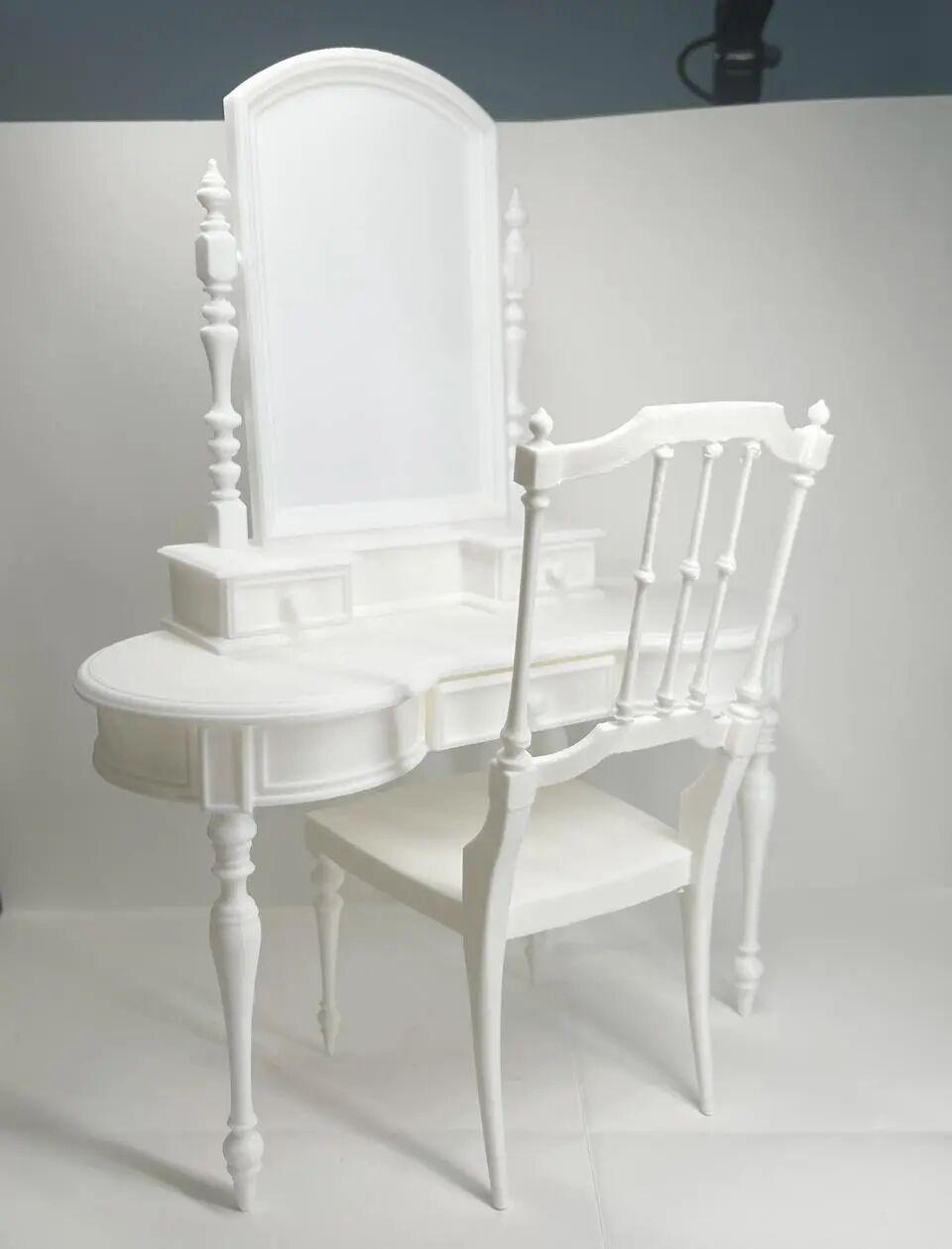
Complete dollhouse chair and dressing table
Previously, dollhouse furniture was mainly assembled from wooden pieces according to hole positions, requiring glue for fixation, demanding higher manual skills, and was unsuitable for humid areas as wood pieces can mold. The advantage of 3D printing is the ability to create irregular shapes, and assembly is easier.
Currently, Xiao Luo has three 3D printers at home: two classic Bambu Lab P1S models and one X2D with two nozzles. Xiao Luo stated that the P1S is a more mature product used by 3D printing studios and 'farm' owners. 'If I don't want to do it someday, I can sell it quickly.' Buying the X2D was 'to experience new technology.' The X2D's auxiliary nozzle can make the contact surface between two materials smoother, but printing time also increases significantly, so it's currently only used for printing complex models.
The dollhouse furniture store started in April last year. At its best, monthly income exceeded 5,000 yuan; at its worst, it was 1,500. Initially, Xiao Luo's income expectation was 'just enough to cover rent and food.' But now, the dollhouse furniture store has turned from her side hustle into her main job, and she has repeatedly postponed returning to a regular job.
Husband-and-wife shops like Xiao Luo's are a microcosm of the startup boom fueled by desktop productivity tools. There are no overnight wealth myths or grand narratives of changing the world, just keenly identifying the needs of a niche group and using accessible tools to materialize ideas. Desktop productivity tools bring creative freedom for ordinary people.
Providing Small-Batch Trial Production for B-end, Driving Down Prices for C-end
The biggest advantage of desktop production tools like 3D printing is not necessarily being faster, better, or even cheaper, but rather convenience, flexibility, low upfront investment, and suitability for small-batch production, making them suitable for services undertaken by small studios.
The smallsmore studio mainly produces 3D printed digital accessories and collaborates with B-end clients, using tools like 3D printers, UV printers, laser engravers, and desktop CNC to help clients with small-batch production. For example, they helped a companion robot startup produce its first batch of robot models for prototype validation.
According to Alvin, co-founder of smallsmore studio, using traditional injection molding (the process of injecting molten plastic under high pressure into a precise mold cavity, cooling and solidifying it to obtain the desired product shape), the first step of mold opening alone takes 45-60 working days. A single mold adjustment adds 10 more days, but production efficiency is very high. As long as the factory has sufficient machines, producing thousands per day is not a problem. 3D printing can adjust a model suitable for production within half a month. Although daily output is only dozens to hundreds, it's sufficient for startups needing small-batch products for trial sales.
Besides saving the time-consuming and laborious mold opening process, 3D printing's advantage also lies in easy modification. If the motherboard circuit changes, there's no need to change the mold; just modify the model slightly in the software, and a new product iteration can be quickly produced.
However, the refinement and texture of 3D printing can sometimes be slightly inferior to traditional injection molding. Alvin gave the example of a snap-fit: because the snap-fit is too small, a product made by injection molding can be used, while a 3D printed product might be too fragile.
The competitiveness of the smallsmore studio lies in the control over product details brought by integrated design and production. 'We consider its final effect during the early design stage, so structural and surface optimization is considered during the initial design process.'
Taking the most common layer lines (also called 'shrinkage lines,' caused by uneven temperature distribution during printing leading to inconsistent cooling speeds and contraction of material in different parts) on 3D printed products as an example, Alvin's team can control fans and printing speed and leave gaps in the structure for smoothing, so the products printed by the studio are more refined than those made by average users.
For B-end clients, the biggest advantage of desktop tools is the convenience and flexibility for small-batch trial production. For C-end consumers, the advantage lies in reducing labor costs, leading to significant price reductions.
Miken Model Studio focuses on the production and sale of 1/64 scale miniature models, turning beverages and snack vending machines into miniature model toys less than 3 cm high. Its founder Liu Jiaming introduced that their consumers are generally the '1/64 scale' community, with products extending from 1/64 scale car models to houses, other buildings, and related accessories, beloved by many players for their exquisite craftsmanship. And because their products are generally produced in limited quantities, they can be resold at the same or even higher than the original price, possessing certain collectible value.
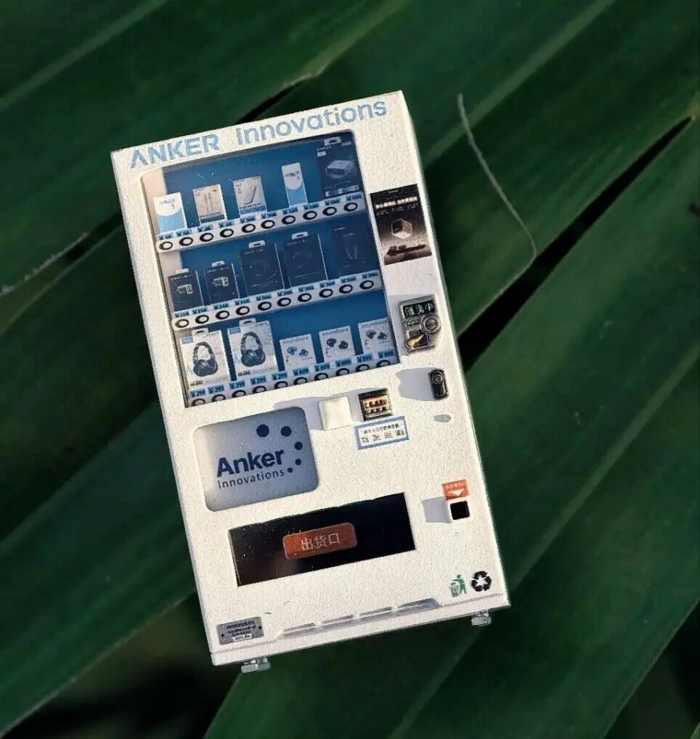
Anker digital product vending machine made by Miken Model Studio
In the past, the production of miniature models heavily relied on manual operations. First, the shell was printed using an SLA 3D printer, then manual steps like coloring, spray painting, sorting, sanding, applying water slide decals, and assembly followed. Basically, only one vending machine could be produced per day, priced around 200-500 yuan. But using consumer-grade UV printers can eliminate many repetitive manual operations. For example, the 30 mini drink bottles inside a vending machine can be spray-painted in one go instead of being colored individually by hand. Daily production capacity increased to 3 units, and the price dropped to 100-200 yuan.
Liu Jiaming explained that developing the affordable version led many potential consumers who were price-watching to place orders. In two and a half months, 500 sets of the affordable version were sold, with revenue exceeding 100,000 yuan, 2.3 times that of the handmade version.
A UV printer is a digital inkjet printing device that uses ultraviolet light curing technology, similar to a 'universal printer,' capable of directly printing vivid, detailed patterns on almost any material surface. Before the advent of consumer-grade UV printing equipment, using UV printing required cooperation with factories, which involved issues like uncontrolled details, minimum order quantity restrictions, and communication difficulties.
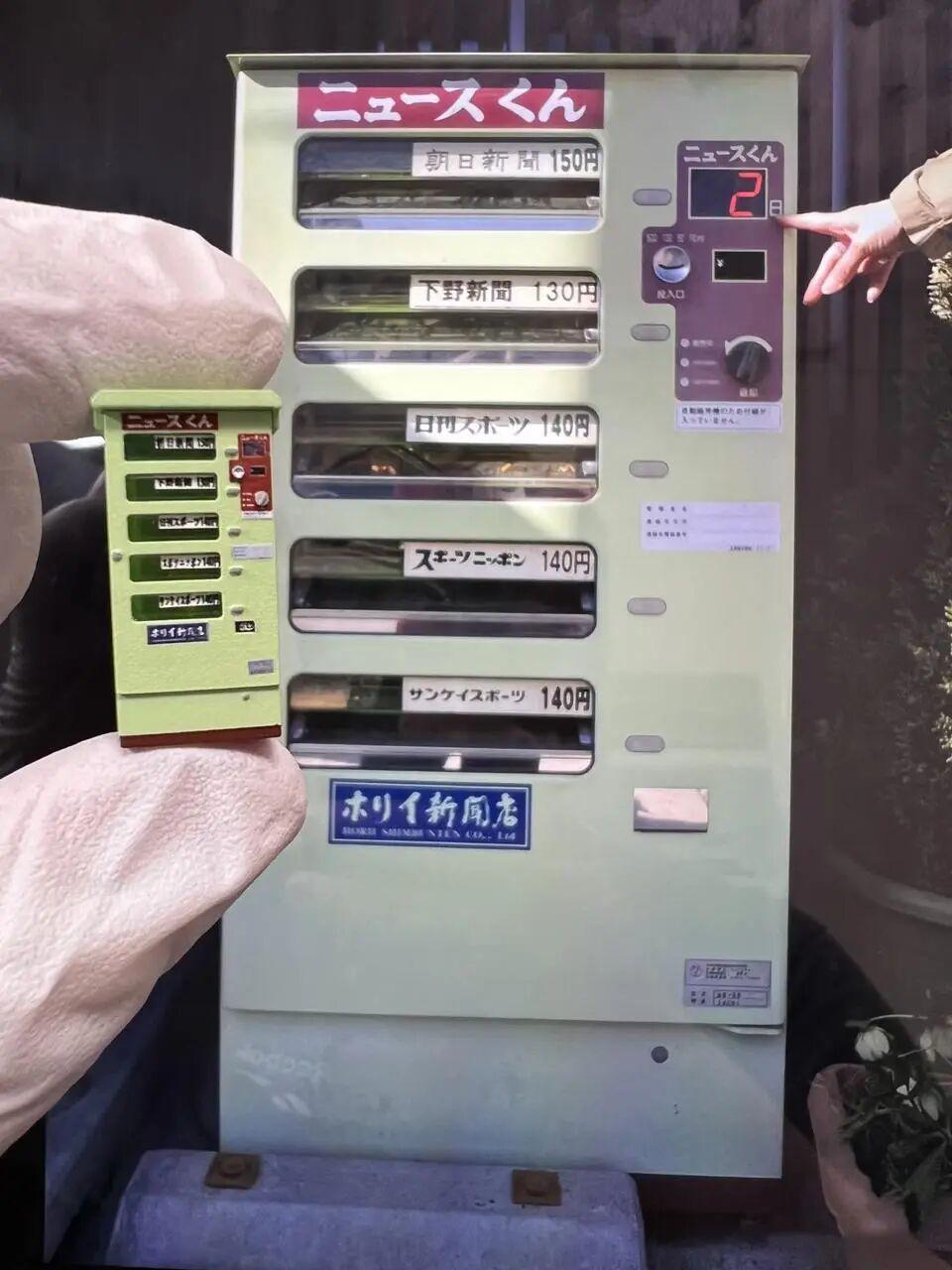
Japanese vending machine made by Miken Model Studio
Miken Model Studio is located in Hubei. Liu Jiaming said that the quality and quantity of UV printing factories in Hubei are not as good as in Guangdong. He spent two days contacting three factories without solving the problem. Later, seeing that eufyMake E1, a consumer-grade UV printer under Anker Innovations, was recruiting testers, he contacted them and became a seed user of eufyMake E1.
Liu Jiaming stated that eufyMake E1 is very suitable for small studios or entrepreneurs. It has a self-cleaning function, unlike industrial-grade UV printers that require manual cleaning. Additionally, the common issue of white ink clogging in UV printers can be resolved by printing a 5x20 strip.

Two Types of Studios: Product-Driven vs. Solution-Driven
The personal studios born from desktop maker tools are not all product-centric. Their business logic generally falls into two categories: product-driven and solution-driven. Product-driven studios mainly target C-end consumers and are further divided into mass-produced and customized. For example, smallsmore studio once customized a unique ring box for a man about to propose using 3D printing and UV transfer stickers. Solution-driven studios mainly target B-end clients, combining AI workflows to replicate a series of solutions including design models, parameter debugging, and product implementation to clients.
Lingyang Workshop is a personal studio focusing on the 'AI + intangible cultural heritage' track. According to its founder Yang Yuye, the team saw the opportunity in AI's rise, hoping to use AI-generated 3D models to design 3D printed toys and ornaments, while using AI tools to re-express and spread Chaoshan traditional culture.
Compared to the lengthy research, modeling, and sampling processes in traditional cultural product development, AI allows personal studios to also have the opportunity to complete exploration from inspiration generation to product validation at lower cost and higher efficiency. Currently, Lingyang Workshop's cultural products designed using a combination of 3D printing and UV printing processes, such as the Old House series (miniature Chaoshan dwellings), iron rod puppet theater stage, and red peach-shaped pastries, have received positive feedback.
But Lingyang Workshop's main business is compiling the AI workflow for developing cultural products into a complete database, replicating it for B-end corporate clients like cultural product stores and puppet troupes.
This workflow includes: first using AI to capture cultural hotspots and elements to build a knowledge base, generating conceptual renderings through large models to determine shape and texture direction; then converting AI renderings into 3D models, with designers manually correcting flaws like structural errors to ensure printability; then selecting processes like 3D printing, UV printing, laser cutting, desktop CNC combination, etc., for physical manufacturing based on product complexity; finally, compiling printing parameters, market feedback, and other data into the database for continuously optimizing AI prompts and design processes, forming a workflow loop.
Yang Yuye stated that with this workflow, simple products can achieve 'renderings in the morning, printing in the afternoon, finished product in the evening,' enabling rapid prototyping within a day. Through traffic conversion from social media, the studio currently has about 10 potential clients in negotiations.
Personal studios relying on desktop maker tools share a common characteristic - their products are relatively niche and specialized, requiring precise social media targeting to find vertical audiences. This also means their sales channels have a certain uniqueness. They generally don't sell on mainstream e-commerce platforms but choose channels like Xianyu, private communities, and content platforms (Xiaohongshu, Douyin, etc.).
Dollhouse 'farm' owner Xiao Luo's main battlegrounds are Xiaohongshu and Xianyu. She said the typical conversion channel is attracting traffic through Xiaohongshu and then placing orders on Xianyu. 'For the BJD circle, Xianyu is used more for transactions. We considered Weidian, but Weidian is less trusted by consumers compared to Xianyu. On Xianyu, funds are only received after the consumer confirms receipt,' she explained.
Miken Model Studio mainly sells through private communities. It's understood that because their product demand is small, to prevent overstocking, new products are generally first announced in WeChat groups, and production is based on pre-order quantities. Moreover, the production cycle for miniature vending machines is as long as half a year, exceeding platform shipping cycles would lead to penalties, so they abandoned e-commerce platforms as a sales channel.
Kevin Kelly, founding editor of *Wired* magazine and technology thinker, proposed a classic theory about 'one-person companies' - the '1,000 True Fans' theory. Anyone engaged in creative or artistic work can make a living as long as they have one thousand loyal fans. This theory finds concrete manifestation in Miken Model Studio. A five-person studio manages a private community of 2,000 people; a niche business can also live decently and sustainably.
Going global is also one of the channels for these studios to expand growth. Currently, 30%-40% of the revenue from Miken Model Studio's affordable products comes from the Hong Kong, Macau, and Taiwan markets, mainly distributed through local well-known distributors and KOLs within Facebook communities.
Because personal studios often lack cross-border e-commerce operation experience, coupled with small teams and limited manpower, they tend to choose trusted agents rather than operating personally when going global.
Lin Wenxuan once ran a pet peripheral store on Xiaohongshu, making pet oil paintings, bag charms, and other products by combining AI-generated images with UV printing. He is planning to collaborate with an agent to launch a pet leather charm brand targeting the Japanese and Korean markets. He stated that Japan, South Korea, and Western markets have a stronger pet culture, with higher acceptance for pet customization and high-premium handmade items. Choosing small charms over large oil paintings is due to lower logistics costs for small items and minimal cultural barriers, as consumers in various countries like them.
In this wave of entrepreneurship fueled by consumer-grade desktop maker tools, if these maker tool brands are the driving force behind it, then the individuals who seize the opportunities of the times, dare to try, and create boldly are perhaps the true protagonists. Tool iterations always open new windows, but how wide the window opens depends on the people using the tools. It is human creativity that gives cold machines warmth and gives niche businesses enduring vitality.
Ebrun continues to track and report on this intelligence. To learn more information related to this article, please scan the QR code to follow the author's WeChat.

[Copyright Notice] Ebrun advocates respecting and protecting intellectual property rights. Without permission, no one is allowed to copy, reproduce, or use the content of this website in any other way. If any copyright issues are found in the articles on this website, please provide copyright questions, identification, proof of copyright, contact information, etc. and send an email to run@ebrun.com. We will communicate and handle it in a timely manner.
Translated by AI. Feedback: run@ebrun.com