
SHOPLINE and Shopify Reach Formal Settlement in Intellectual Property Lawsuit! Over Two Years of Dispute Concludes, Merchant Rights Protected
Ebrun Exclusive: The copyright lawsuit between Shopify and SHOPLINE, which lasted over two years, has finally come to an end.
Recently, SHOPLINE, a global intelligent retail solutions provider, issued a statement announcing it has reached a comprehensive settlement agreement with Shopify. According to the agreement, all lawsuits Shopify filed against SHOPLINE merchants will be completely withdrawn. Merchants can continue using the disputed theme templates without substantial changes, and their business operations will remain entirely unaffected.
It is reported that the lawsuit originated from the official themes each company provides to merchants. Shopify's official open-source theme, Dawn, is the default theme launched in its Online Store 2.0 era. Within the developer community, Dawn gained popularity due to its extremely permissive MIT open-source license, which allows commercial distribution and modification, making it a foundational template for a vast number of Shopify merchants. SHOPLINE, on the other hand, provides merchants with its official theme, Seed.
In May 2024, Shopify filed an intellectual property lawsuit against SHOPLINE in a US court, alleging that the Seed template SHOPLINE provided to merchants was visually similar to the Dawn theme and shared substantial similarities in file structure, function naming, and code content, thereby constituting copyright infringement. Shopify demanded that SHOPLINE pay compensation and requested the court to prohibit SHOPLINE from continuing to offer the Seed template.
In response to the lawsuit, SHOPLINE also took legal offensive action in the US, denying the allegations and challenging the legal basis of Shopify's claims. SHOPLINE argued that Shopify does not hold any valid and enforceable copyright for the Dawn theme, as Dawn is primarily composed of public web technologies, and many of its implementation methods are common industry practices, falling outside the scope of copyright protection Shopify can claim.
The case went through over two years of judicial proceedings. In June 2026, after multiple rounds of in-depth discussions on the key points of contention, both parties ultimately chose to conclude the matter through a commercial settlement. They agreed to resolve all claims raised in the lawsuit on a mutual non-admission of liability basis.
In its statement, SHOPLINE emphasized that this settlement was the result of its initiative to reach a consensus on terms with the other party to swiftly resolve the dispute and ensure the normal operation of merchants' businesses. The Proposed Order submitted to the US Federal District Court and awaiting formal signing also states: This settlement does not constitute, nor should it be interpreted as, SHOPLINE admitting any infringement or related liability.
With this, the legal dispute that gripped the cross-border e-commerce independent store industry has officially concluded, and the rights and interests of numerous SHOPLINE merchants have been safeguarded.
Legally, Shopify's related claims against SHOPLINE merchants have been withdrawn. Any merchant currently using SHOPLINE's services will not face associated risks due to the legal dispute between the platform providers, and merchants need not worry about the compliance of their own stores. Operationally, merchants' past and future use of the disputed theme templates without substantial changes remains unaffected. This means that all SHOPLINE merchants using the involved themes will see no impact on their existing store operations, brand assets, user data, or SEO accumulation due to the resolution of the lawsuit.
For SHOPLINE itself, and indeed for the entire industry, this settlement holds significant meaning.
Over the past decade, the cross-border e-commerce independent store SaaS industry has undergone multiple rounds of rapid development and iteration. As business models matured, a large number of website-building platforms emerged in the global market, with different products competing on capabilities such as templates, plugins, payments, and marketing. Simultaneously, the industry experienced continuous consolidation, shrinking from over 2,000 service providers at its peak to fewer than 100 by 2019, a reduction of over 90%. This trend reflects the constant evolution of merchant needs and the increasing R&D investments required by platforms, leading many small and medium-sized platforms to gradually exit the market while leading players continued to expand their market share.
The lawsuit was initiated during a phase of accelerated industry polarization. Shopify held a dominant position in the "drag-and-drop e-commerce platform" market. However, as its market concentration became excessively high, it also began facing antitrust scrutiny challenges (e.g., the US fintech company Sezzle accused Shopify of violating antitrust laws). Meanwhile, Asian-native platforms like SHOPLINE, leveraging their deep understanding of cross-border merchants, continued to capture incremental market share. Among them, SHOPLINE has navigated a complete 13-year cycle and maintained accelerated growth in 2026.
In Q1 2026, JOYY Group, for the first time, disclosed SHOPLINE's operating data as an independent segment: During the quarter, SHOPLINE achieved revenue of $30.5 million, a year-on-year increase of 16.1%, with gross margin rising to 51.5%. Its annualized revenue scale approached Shopify's level at its 2015 IPO. Notably, impressive data came from the continued increase in the proportion of business from Chinese cross-border merchants, maintaining an ultra-high growth rate of over 60% year-on-year. SHOPLINE continued to gain market share through progress in scale and the quantity/quality of large clients. According to recent data from the e-commerce website database Store Leads, over the past 90 days, another 420 merchants migrated from other e-commerce platforms to SHOPLINE, including well-known industry brands like Zgallerie, Hulala Home, and Zonli.
From the perspective of the current industry development landscape, this lawsuit settlement might also represent a mature industry's response to future challenges. The competitive dimensions in the cross-border e-commerce independent store-building industry are shifting: debates centered on basic store-building capabilities are a thing of the past. The current focus lies in multiple dimensions such as technological capability, AI capability, multi-link fulfillment services, and ecosystem openness.
It is reported that during the progression of the case, SHOPLINE's own product roadmap has also evolved, with in-house R&D capabilities and AI becoming new priorities.
Prior to the lawsuit's initiation, SHOPLINE had already begun a comprehensive iteration of its theme architecture. Since March 2025, SHOPLINE has launched its new-generation OS 3.0 theme for global merchants, featuring the new exclusive in-house developed rendering engine, Sline. Through extremely stringent lightweight design and a zero-third-party-package philosophy, OS 3.0 achieves smooth, non-lagging rendering for pages with millions of node depths. Its resource utilization efficiency is over ten times higher than that of competing products. It represents a comprehensive technological and capability upgrade over the previous OS 2.1 generation, which included the Seed theme, completely breaking free from the constraints of outdated template architectures at the foundational performance level.
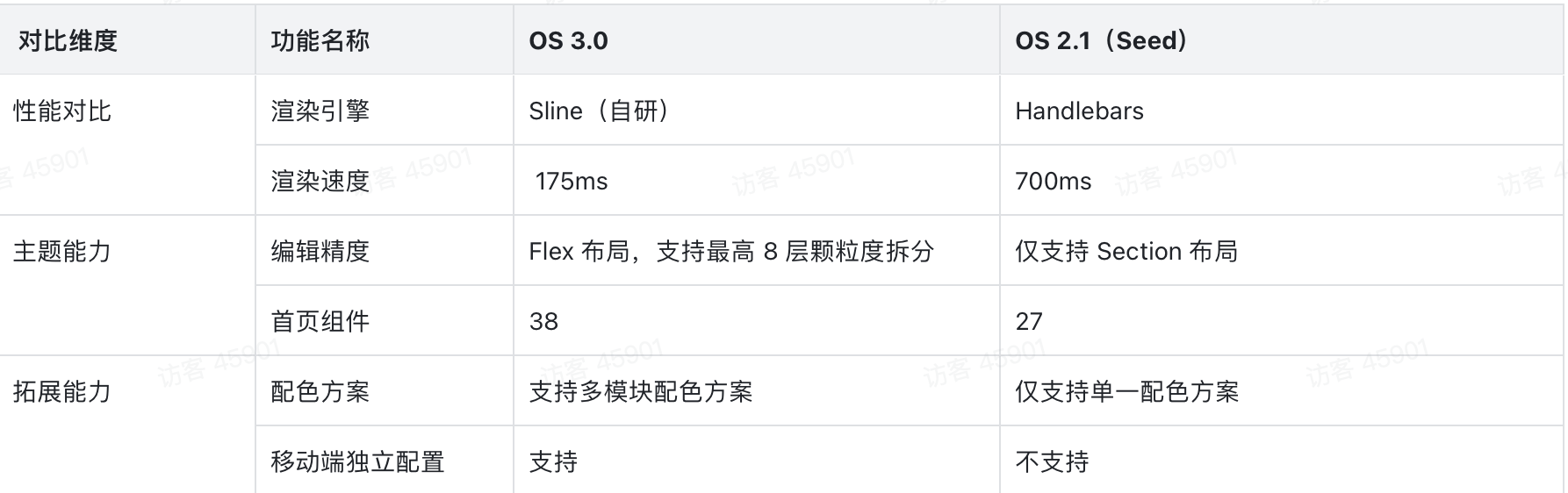
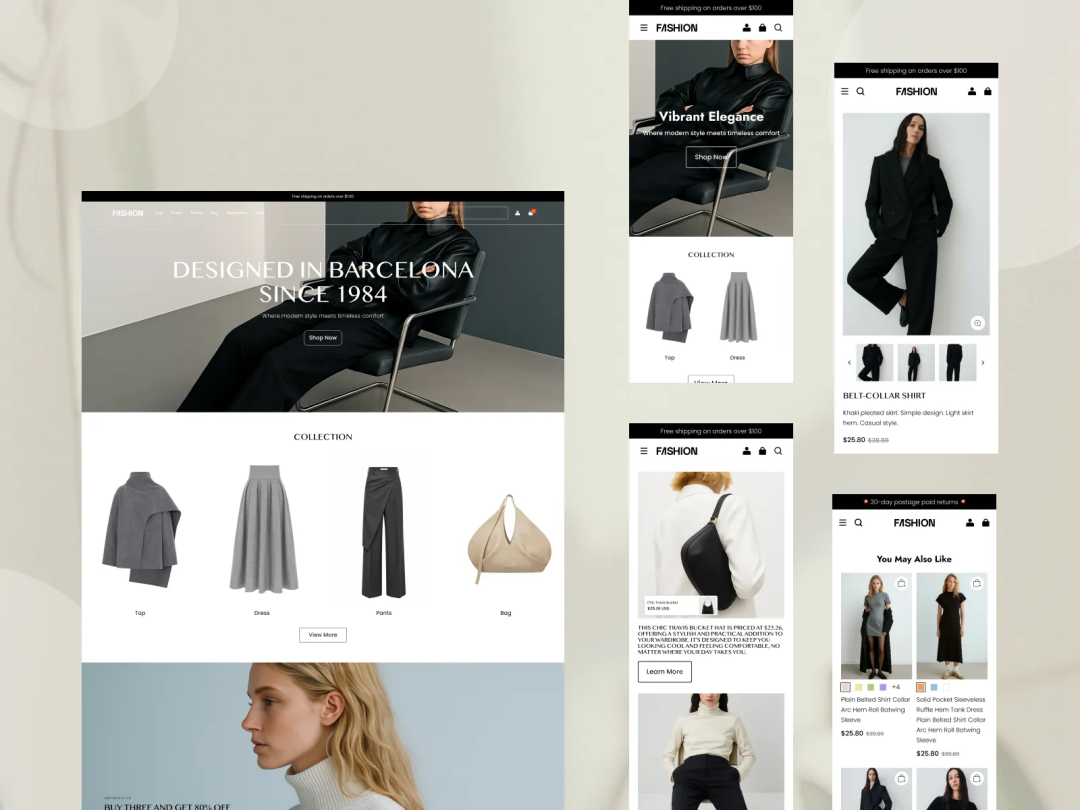
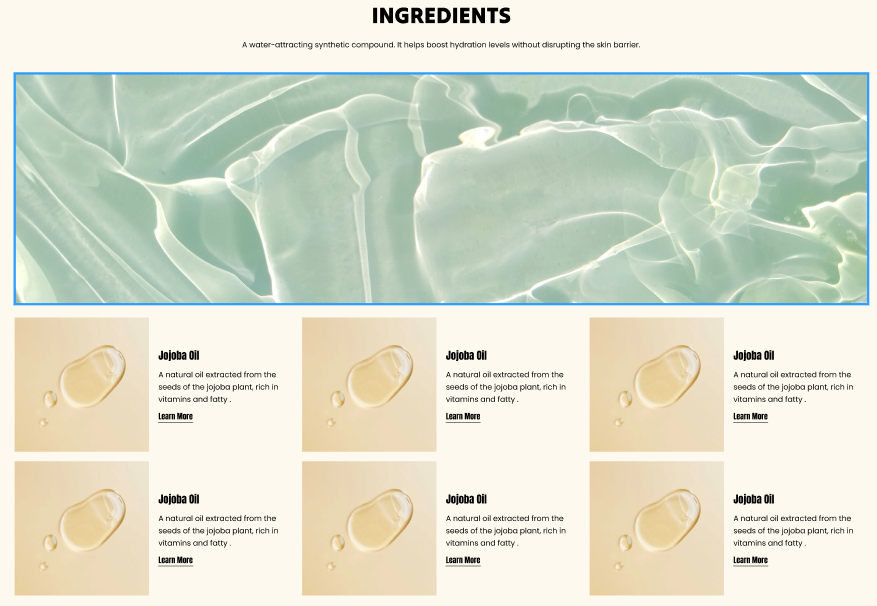
(Image source: SHOPLINE)
SHOPLINE has also been making continuous efforts in AI, launching related tools such as AI store setup and decoration, AI traffic acquisition and conversion, AI business assistant, and AI deep user operation. It has also established a deep partnership with Accio Work (under Alibaba), supporting merchants in solving pain points like store building, product listing, and development through conversational interfaces. Simultaneously, SHOPLINE is no longer limited to on-site traffic. It is also proactively positioning itself for AI search entry points through GEO-structured data upgrades, leveraging AI Copilot for operational efficiency improvements and Agent ecosystem integration, thereby propelling the cross-border e-commerce independent store industry towards a new phase of "AI-native operations."
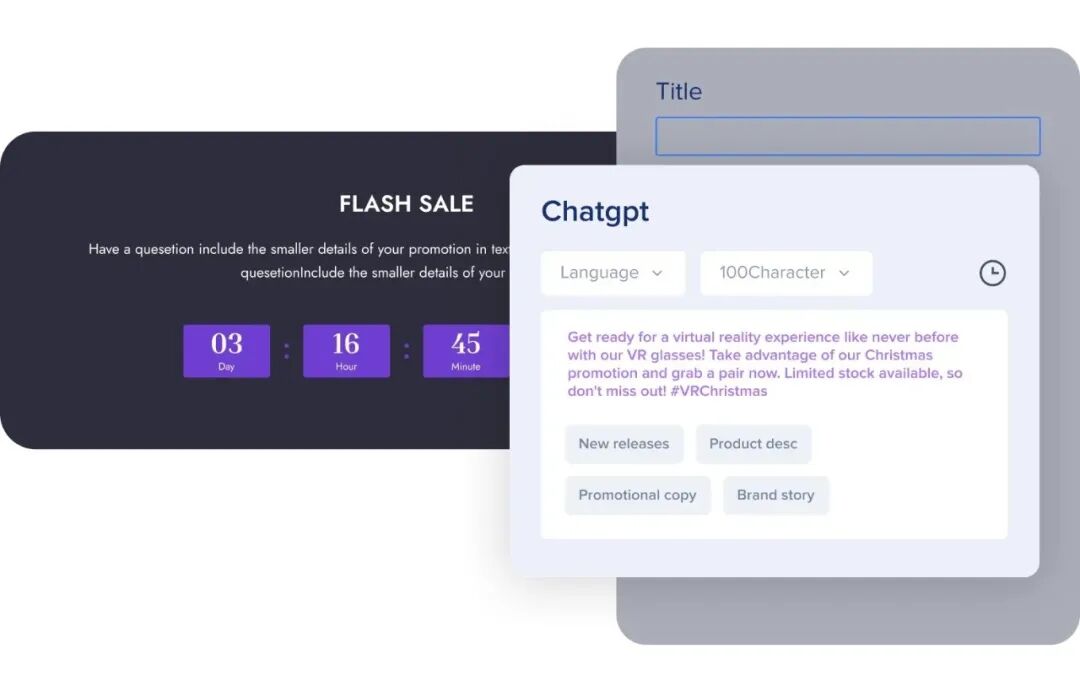
Furthermore, SHOPLINE continues to enhance its capabilities in payments, logistics, and customer service. It has launched its official payment solution, SHOPLINE Payments; the one-stop global e-commerce logistics solution, OneShip; 24/7 Chinese customer service; and 1-on-1 cross-border solution experts.
According to public information, SHOPLINE's team now numbers nearly a thousand people. The platform has cumulatively served over 600,000 merchants globally, including well-known brands such as Zgallerie, IFLYTEK, Caguuu, Sunnystep, and Soufeel. The company is also accelerating its internationalization, with business steadily progressing in the United States, Japan, Australia, Malaysia, Vietnam, and Singapore.
Although a lawsuit centered on code copyright ended in a settlement, it, to some extent, reflects the commercial implications of the evolving industry landscape. Some analysts point out that excessive concentration in the e-commerce SaaS market can easily lead to service premium pricing and a closed ecosystem. The rise of more emerging platforms injects healthy competitive factors into the market. From the merchant's perspective, this not only effectively reduces dependence on a single platform but also, through competitive mechanisms, drives technological innovation and overall service quality tailored for the AI era.
[Copyright Notice] Ebrun advocates respecting and protecting intellectual property rights. Without permission, no one is allowed to copy, reproduce, or use the content of this website in any other way. If any copyright issues are found in the articles on this website, please provide copyright questions, identification, proof of copyright, contact information, etc. and send an email to run@ebrun.com. We will communicate and handle it in a timely manner.
Translated by AI. Feedback: run@ebrun.com