
Decoding the Industrial Code: How the 'SHEIN Chain' Drives Manufacturing Upgrade Behind Steady Foreign Trade Growth
[Ebrun Original] In the first five months of 2026, China's total import and export value of goods reached 20.68 trillion yuan, a year-on-year increase of 15.3%. Monthly import and export figures have exceeded 4 trillion yuan for three consecutive months, maintaining a sound operational trend. Among these, cross-border e-commerce is emerging as the fastest-growing, most promising, and most impactful new form of foreign trade.
Policy signals are equally clear. The Government Work Report has mentioned cross-border e-commerce for 13 consecutive years, and the Outline of the 15th Five-Year Plan also includes "supporting the development of new forms and models such as cross-border e-commerce" in the construction of a modern industrial system. From industry to policy, cross-border e-commerce has evolved from a "new growth driver" to a "fundamental pillar" of foreign trade.
In this process, cross-border e-commerce platforms represented by SHEIN are exploring a path different from the traditional "channel-based overseas expansion": it's not just about selling goods abroad, but also about converting the demand momentum of overseas markets into an upgrade driver for the domestic industrial chain. Its core lies in using digitalization as a link to promote the synergistic effects of "investment in things" and "investment in people": replacing traditional production scheduling methods with digital tools, helping workers master new skills through systematic training, and advancing equipment upgrades in tandem with talent development.
This dual-driven model of "things and people" is precisely what distinguishes SHEIN, with its dual-engine development of "self-operated + platform," from other cross-border e-commerce platforms. This year, SHEIN's flexible supply chain was listed by the Guangdong Provincial Development and Reform Commission as a typical case of coordinated development between manufacturing and service industries. In the "Top 100 Chinese Companies with Global Influence" list recently released by the China Enterprise Globalization Alliance (CEGA) and the Jiemian Cailian Press Research Institute, SHEIN surpassed a host of tech giants, ranking second among the top 100 companies and first in the top 10 list for the internet services industry.
01
Flexible Chain Strengthening: "Small-Batch Quick Response" Reshapes Production Logic
The chronic issue of "high inventory" in the apparel industry has persisted for a long time. Wang Kai, a factory owner in Panyu, Guangzhou, with nearly a decade of experience in jersey manufacturing, has a deep understanding of this.
During the previous Qatar World Cup, Wang Kai's business primarily relied on offline B2B OEM orders, with clients placing bulk orders five to six months in advance. Coupled with a one-month sea freight cycle, inventory and capital turnover pressures lasted for six to seven months. Although factory sales exceeded 60,000 units during the World Cup, inventory pressure remained a constant shadow.
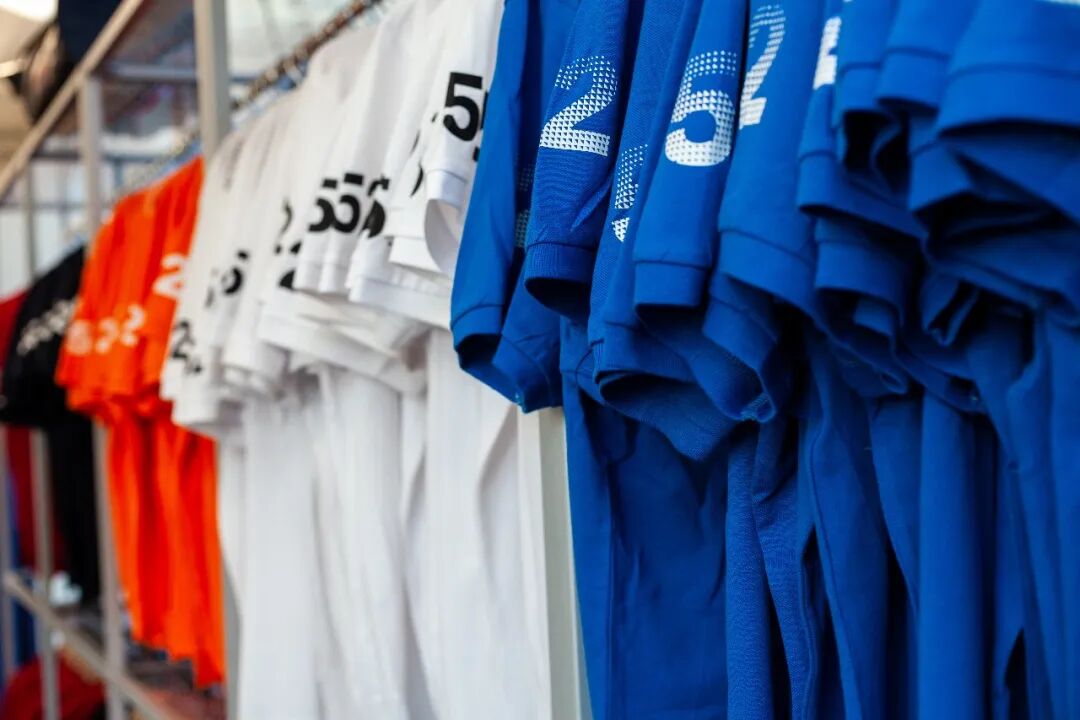
After opening a store on the SHEIN platform in 2024, Wang Kai's factory began adopting the "small-batch quick response" model. It starts with a small initial batch to test the waters, undergoes quality screening through the platform's quality control, and quickly collects end-consumer feedback to drive optimization across the design and production chain.
"Now, the accuracy of new product development is steadily improving, and we can test the popularity of new styles in about 10 days," Wang Kai said. After this year's Spring Festival, jersey orders at his store steadily increased, with sales in March and April rising 30% year-on-year; sales growth jumped to 60% in May. Wang Kai expects to produce 150,000 units during this World Cup period.
The value of the flexible supply chain is not only reflected in "re-orders" but also extends to the "customization" level. "Nowadays, young people prefer personalized and stylish products. The small-batch quick response production model can effectively match and satisfy this consumption trend," said Zheng Tao, a swimwear supplier from the Jinjiang, Fujian industrial cluster. In his view, the flexible supply chain model of "small-batch quick response" allows suppliers to adjust production flexibly based on market demand, reducing inventory overstock, which is particularly suitable for seasonal products like swimwear.
The implementation of a flexible supply chain is inseparable from the digital transformation of production. In the past, small and medium-sized apparel factories mostly relied on manual labor, Excel, and emails for production scheduling. After becoming a SHEIN supplier, factories use the free, open digital management tools provided by SHEIN for online order scheduling and production management, significantly improving information flow and collaboration efficiency and reducing inventory risk at the source.
This also reflects the value of "chain leader" enterprises like SHEIN, which are deeply rooted in domestic industrial clusters, cultivating the supply chain, and promoting the deep integration of "cross-border e-commerce + industrial clusters." From jersey factories in Panyu, Guangzhou, to the swimwear industrial cluster in Jinjiang, Fujian, SHEIN's "small-batch quick response" flexible supply chain model provides thousands of businesses in these clusters with precise demand-side signals from consumers in over 160 countries and regions worldwide. It enables scattered small and medium-sized factories to acquire the market responsiveness that was once exclusive to large brands, allowing traditional manufacturing to find a sustainable development path in digital-intelligent transformation.
02
Technology-Driven Chain Enhancement: Cutting-Edge Innovation Solves Factory Quality and Efficiency Pain Points
In apparel manufacturing, more value-added complex processes often rely on the manual operation of skilled workers. Multiple process steps, low efficiency, and unstable quality are long-standing challenges for small and medium-sized factories. Taking sequin, bead embroidery, and heat-transfer rhinestone fabrics as examples, these techniques are widely used in high-end custom garments like evening gowns and wedding dresses. However, the edges of these fabrics can easily irritate the skin, affecting wearing comfort, and production often faces difficulties like needle breakage and fabric abrasion.
Previously, for small, micro, and medium-sized enterprises, there were no reliable tools on the market; most operations involved multiple manual steps, resulting in high technical barriers, long production times, and difficulty in ensuring quality. SHEIN developed specialized tools targeting these three major process pain points, transforming the multiple manual steps that previously relied on skilled workers into standardized operations. The corresponding products have also become bestsellers highly favored by overseas consumers.
In the often-overlooked packaging stage, SHEIN's self-developed tools have also brought significant quality and efficiency improvements. The "Compression Vacuum Sealing Packaging Machine" is specifically designed for bulky items like down jackets, cotton-padded clothes, sweaters, and plush toys. By using air cylinders to compress and expel air, it effectively reduces the volume of items after full compression, thereby saving storage space and logistics costs, while also providing dustproof, stain-proof, and moisture-proof effects.
Data shows that by the end of 2025, SHEIN had cumulatively developed over 180 innovative tools and delivered 7,500 units to suppliers, helping to increase the average efficiency of related processes by 35%. In the first quarter of 2026, an additional 1,200 units of tools and equipment were delivered. The dividends of technological innovation continue to spread to factories across the industrial chain.
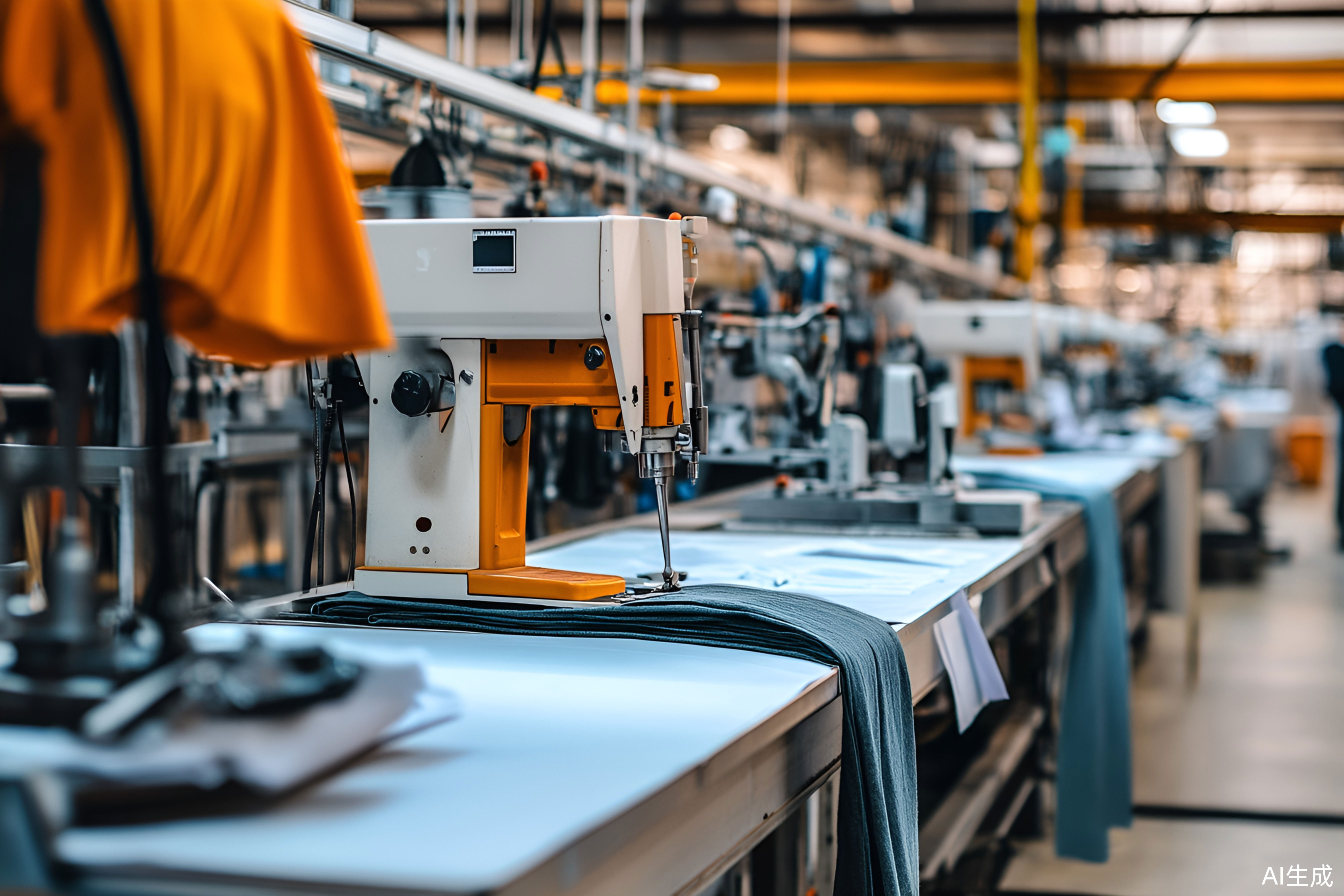
SHEIN's technological innovation is also extending towards green decarbonization across the entire industrial chain. In 2025, SHEIN set and received validation and approval from the Science Based Targets initiative (SBTi) for near-term, long-term, and 2050 net-zero science-based carbon targets. It has also engaged in a series of in-depth collaborations with universities, laboratories, third-party professional institutions, and enterprises around green and low-carbon initiatives.
Specifically, SHEIN collaborated with Donghua University to successfully develop a recycled polyester technology with breakthrough performance, practicality, and cost advantages. It partnered with Transfar Chemicals to establish a joint laboratory, exploring new processes for upgrading high-end fabrics. In collaboration with leading companies like Dongfeng Group, Sinotruk, and CATL, SHEIN officially put into operation over 100 9.6-meter new energy electric box trucks for inter-warehouse transportation in 2025, filling the gap for large-scale industry application.
In fact, from production efficiency to green decarbonization, SHEIN's technological innovation is driving the upgrade of traditional apparel manufacturing towards higher efficiency, lower carbon emissions, and greater sustainability.
03
Talent-Driven Chain Strengthening: Systematic Cultivation Solidifies Long-Term Industrial Growth Capacity
Investing in equipment and tools can solve immediate production efficiency issues, but the deep-seated upgrade of the industrial chain ultimately depends on people. The experience of Deng Ming, a sportswear supplier in Panyu, Guangzhou, provides a vivid illustration. Deng Ming's team transitioned from traditional sportswear to sportswear fashion in 2022. Compared to traditional sportswear, sportswear fashion involves more complex production processes, placing higher demands on the team's capabilities.
"At the very beginning, we attended classes frequently, receiving training on everything from managing defect rates, improving production efficiency, production scheduling, operational capability training, to quality inspector training and certification," Deng Ming recalled. When the team encountered a bottleneck in a specific sewing technique, the professional team from SHEIN's Apparel Manufacturing Innovation Research Center responded immediately, providing on-site instruction on operational essentials.
It is worth noting that with SHEIN's continuous professional support, Deng Ming's team successfully completed the transition, achieving a 15-fold sales growth over five years of cooperation.
Focusing on multiple dimensions such as business management, operational practices, and technical advancement, SHEIN consistently provides regular training for its suppliers. In the first quarter of 2026 alone, nearly 100 training sessions were conducted, benefiting suppliers nearly 8,000 times in total.
More notably, SHEIN has extended its vision for talent cultivation further upstream. SHEIN has established a four-in-one talent cultivation model encompassing "job demand + skill training + skill evaluation + employment services," collaborating with educational institutions to extend talent cultivation from the downstream "employment" stage to the upstream "education" stage. Simultaneously, it also offers "zero-base" skill training to the public and collaborates through vocational skill competitions and the establishment of "micro-majors" in colleges to continuously cultivate composite talents who understand both digital technology and apparel craftsmanship.

Deng Ming's story is just one facet of SHEIN's "investment in people." From sportswear factories in Panyu to the swimwear cluster in Jinjiang, from World Cup jersey sellers to trainees starting from scratch, the synergistic effect of "investment in things" and "investment in people" is continuously amplifying within the industrial chain.
Looking back at China's 20.68 trillion yuan foreign trade performance in the first five months, the significance of cross-border e-commerce has far exceeded "channel-based overseas expansion" itself.
Cross-border e-commerce platforms and fashion industry leaders represented by SHEIN are using digitalization as a link to truly allow overseas market momentum to feed back into the domestic industry—transforming workshops with tools, reshaping workers with training, forging a digital-intelligent and green transformation path for small and medium-sized factories, and solidifying the deep industrial foundations for steady foreign trade growth.
Ebrun will continue to track and report on this development. To learn more information related to this article, please scan the QR code to follow the author's WeChat.

[Copyright Notice] Ebrun advocates respecting and protecting intellectual property rights. Without permission, no one is allowed to copy, reproduce, or use the content of this website in any other way. If any copyright issues are found in the articles on this website, please provide copyright questions, identification, proof of copyright, contact information, etc. and send an email to run@ebrun.com. We will communicate and handle it in a timely manner.
Translated by AI. Feedback: run@ebrun.com