
Exclusive: 8x GMV Surge? Sell Across 12 Countries with One Click? TikTok Shop's Expanding European Zone Becomes the 'New Battlefield for Incremental Growth'
[Ebrun Original] Recently, the TikTok Shop 2026 European New Forces Summit concluded successfully in Shenzhen.
Senior executives including Wang Yufan, Head of New Market Operations for TikTok Shop Europe, Jiao Yanchen, Head of Cross-border POP for Europe/UK, and Chen Meijie, Head of Cross-border POP Central Platform for Europe/Japan, attended the event. They delivered in-depth insights on core topics such as the latest developments in the European zone, opportunities in the eight newly opened markets, the necessity of entry, operational methodologies, and favorable policies for new merchants.
During the summit, the platform released several key signals: As of the summit, the number of active merchants on TikTok Shop Europe has surpassed the 100,000 mark, with the total number of partnered creators exceeding one million, and daily content submissions also reaching the million-level—an ecosystem complete with "people, products, and content" is now mature.
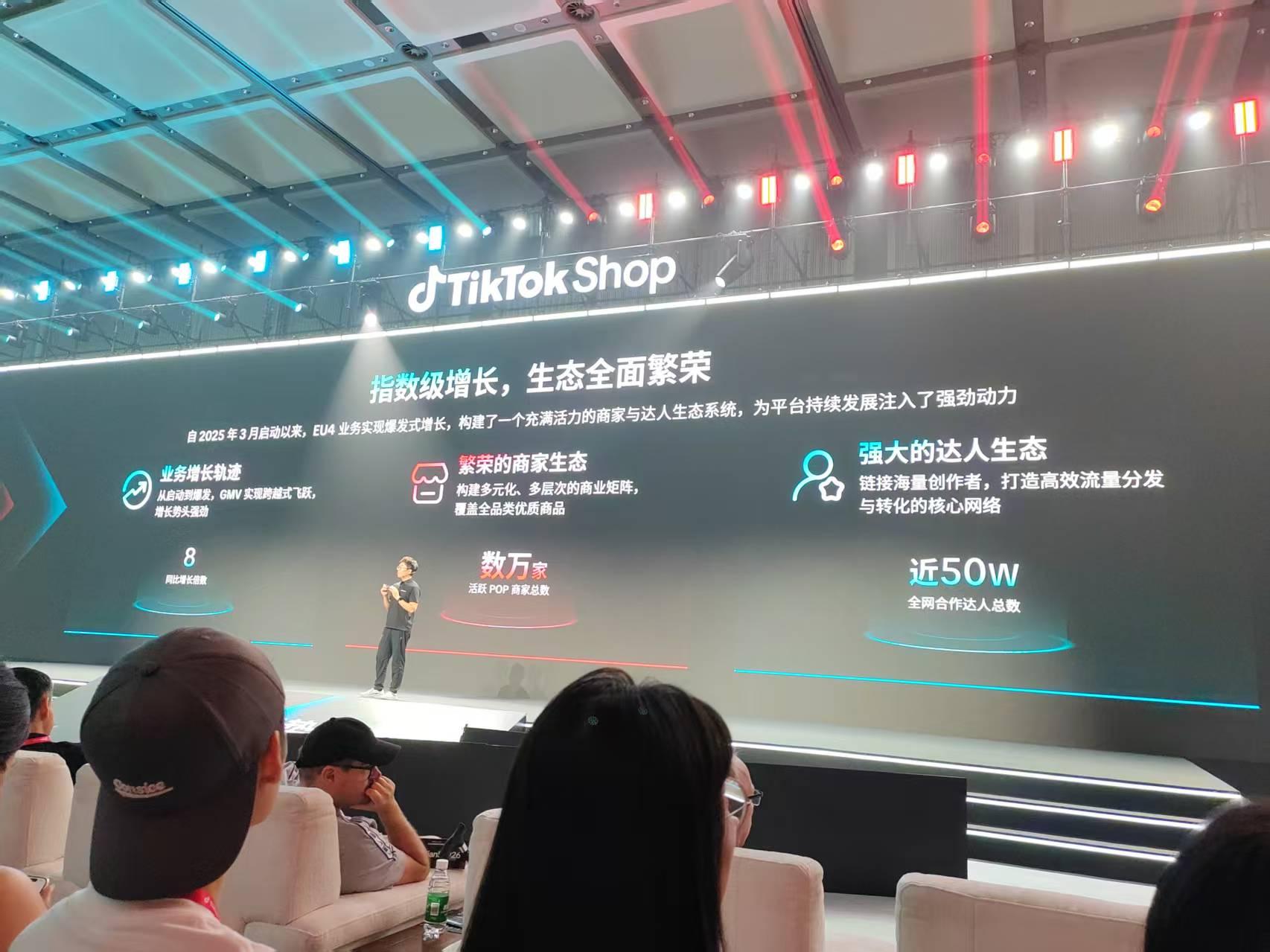
Focusing on the "original EU4" markets of Germany, France, Italy, and Spain, since their launch in March 2025, the GMV of these four sites has achieved leapfrog growth, surging 8 times year-over-year; there are tens of thousands of active POP sellers covering high-quality products across all categories; the total number of partnered creators across the network is approaching 500,000, with content momentum rapidly transforming into commercial explosive power.
As for the "newly opened eight countries," TikTok's user penetration rate has already reached a range of 25% to 40%, with the traffic pool growing rapidly and the potential market space vast.
The further expansion of the European market may be one of the most significant incremental battlefields for Chinese merchants with mature methodologies in 2026.
I. A $700 Billion Market? What Achievements Has TikTok Shop Already Made in Europe?
At the summit, Wang Yufan systematically disclosed the latest data and operational results from the European market. From market size and penetration potential to the merchant ecosystem, a clear growth curve is accelerating across the European continent.
Firstly, in terms of market size, Europe is a "strategic-level market" with sufficient scale and far from being fully carved up.
She pointed out that the entire European e-commerce market is worth a massive $700 billion, approximately equivalent to 0.6 times the US market. The European Union accounts for 75% of this share, around $530 billion.
She succinctly summarized the nature of this market: "The scale is large enough, relatively fragmented, and far from reaching a final state."
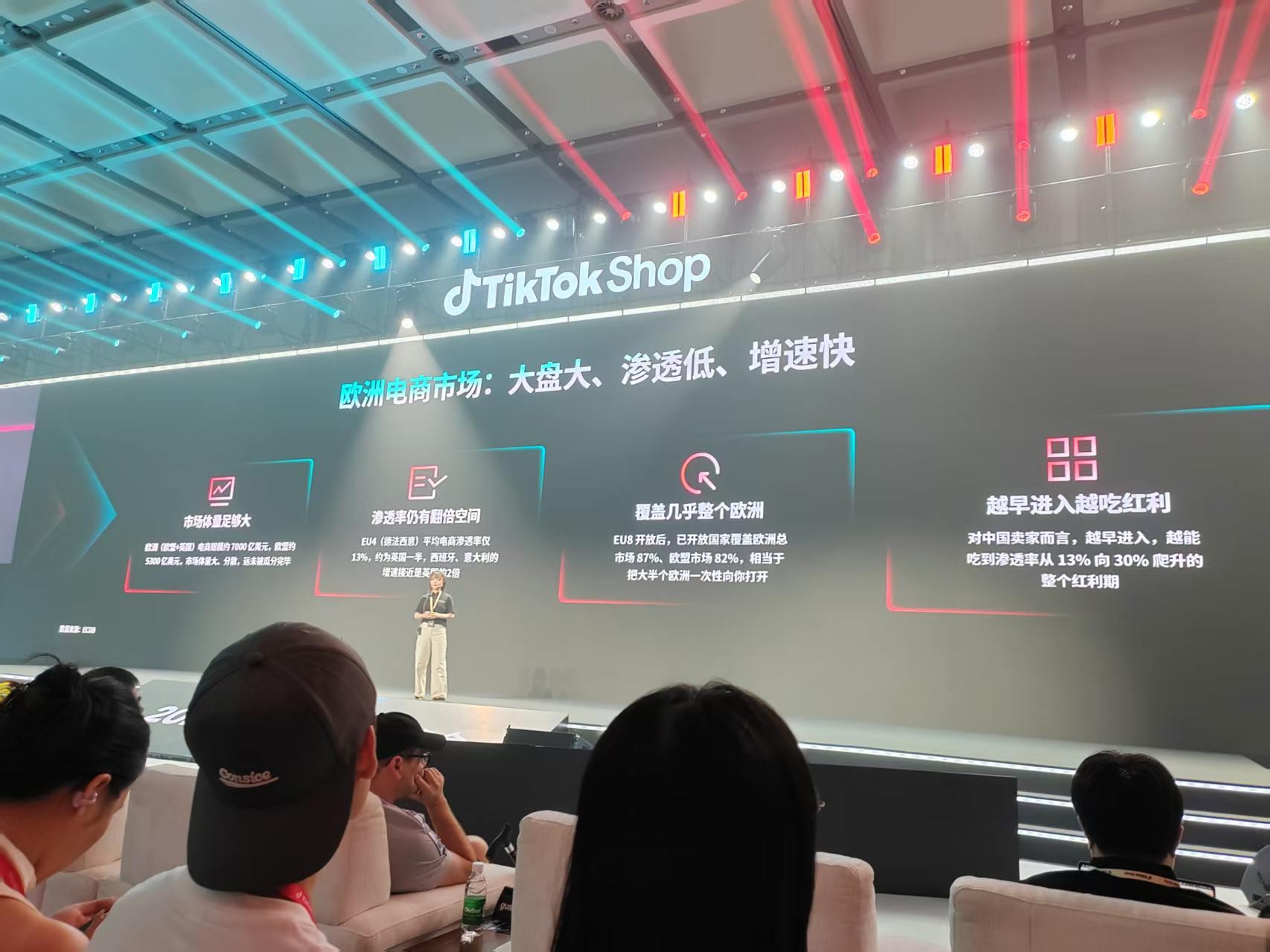
Secondly, in terms of penetration rate, European e-commerce stands on the starting line of explosive growth.
A year ago, when Germany, France, Italy, and Spain first opened, the e-commerce penetration rate was only around 13%, less than half of the UK's. Wang Yufan stated, "This is equivalent to the UK a decade ago, with at least double the room for growth."
Meanwhile, its growth rate is equally noteworthy—taking Southern Europe's Spain and Italy as examples, their growth rates are about twice that of the UK.
The "newly opened eight countries," which have just gone live, not only have considerable e-commerce scale but also growth rates far exceeding those of the UK and the four Western European countries. Among them, the growth rates of Poland and Portugal are nearly three times that of the UK.
More importantly is platform coverage. Currently, the 12 EU countries where TikTok Shop is available cover 87% of the entire European e-commerce market, corresponding to 82% of the EU market.
Wang Yufan claimed this essentially "opens up the entire European market to merchants at once." For Chinese merchants, the earlier they enter, the more likely they are to fully capture the structural dividends as penetration rates move from 13% towards 30%.
The comprehensive maturity of the traffic, merchant, and creator ecosystem is another key answer sheet delivered by the platform.
Taking Germany, the largest single market, as an example, TikTok's monthly active users have reached 27 million, with a population penetration rate of about 33%. Among the newly opened eight countries, the platform's population penetration rate generally ranges from 25% to 40%, with key markets like Poland, the Netherlands, and Belgium averaging around 35%.
Simultaneously, the merchant and creator ecosystems are also maturing.
To date, the number of active merchants in the European zone has exceeded 100,000, the total number of partnered creators surpasses one million, and daily content submissions are also at the million-level.
Focusing on the "original EU4" countries—Germany, France, Italy, and Spain—Jiao Yanchen also shared a set of solid growth data: Since their launch in March 2025, the GMV of these four sites has achieved leapfrog growth, surging 8 times year-over-year; there are tens of thousands of active POP sellers covering high-quality products across all categories; the total number of partnered creators across the network is approaching 500,000.
Additionally, the European market possesses a distinctive feature that cannot be ignored—high average order value, high profit margins, and a high-net-worth user base.
Data shows that the current average order value in the four Western European countries is around $30. Focusing on the 3C category, the average order value can approach $80, while unit prices in some subcategories of small home appliances have far exceeded $100.
II. Fast Growth? Supply Shortage? Abundant Creators? What is the Market Profile of the 'Newly Opened Eight Countries'?
Why did TikTok Shop choose to open eight new European sites at this time? Wang Yufan provided a systematic breakdown from three dimensions: market size, content ecosystem, and infrastructure conditions.
Firstly, from the perspective of market size and competitive landscape, the "newly opened eight countries" combine both scale and growth rate, and their market shares are far from solidified.
Currently, the combined e-commerce transaction volume of these eight countries exceeds $130 billion, larger than the individual markets of Germany or the UK. In terms of growth rate, their average level is far higher than that of the UK and the four Western European countries, with four countries alone having growth rates exceeding 10%.
Monthly active user data is equally noteworthy—the combined MAU of the eight countries has surpassed 60 million, with core countries having population penetration rates over 35%. Wang Yufan assessed this: "The soil of users and content has long been formed. Merchants can start operations immediately upon entry, without needing to educate the market from scratch."
More critical is the competitive landscape.
The market shares in these eight countries are not yet solidified, especially in Central European countries like Austria, Hungary, and the Czech Republic, which have relatively small populations, dispersed languages, and limited local supply. The proportion of cross-border shopping is much higher than in other Western European countries.
This represents a structural advantage for Chinese sellers—supply gaps mean lower entry barriers and faster penetration speeds.
Secondly, from the content ecosystem perspective, the content e-commerce track in the "newly opened eight countries" is blank, creator resources are abundant, but high-quality products are scarce.
Currently, these countries lack a complete and mature content e-commerce track and competitors, with only sporadic Facebook live streams. Although consumers are already familiar with content-driven product discovery and live shopping formats, there is no complete platform that can fulfill the entire journey from discovery to transaction.
"The newly opened sites have ample creator resources, but they lack high-quality products even more. As long as merchants can provide cost-effective, differentiated products, it's easy to exchange for short video and live stream dividends with local creators," she said.
Meanwhile, content can be interconnected across multiple countries. In the German-speaking region, content from Germany and Austria can be shared; in the French-speaking region, content from France and Belgium can also be shared. One set of materials, paired with local language and subtitles, can simultaneously cover multiple countries.
Thirdly, in terms of infrastructure conditions, the pan-European fulfillment system is maturing, and the last-mile experience is approaching domestic standards.
With the full opening of the 12 EU country markets, the platform's pan-European fulfillment infrastructure has gradually taken shape. Merchants can rely on the platform's multi-country fulfillment solutions to cover the newly opened sites.
Wang Yufan specifically mentioned the infrastructure breakthrough in Poland: The platform partnered with the local leading logistics provider InPost, deploying 29,000 parcel lockers locally, enabling 90% of the urban population and 60% of the national population to find a parcel locker within 7 minutes and a pickup point within 24 hours.
In the "newly opened eight countries," the platform further categorized them into three tiers to help merchants understand prioritization for expansion.
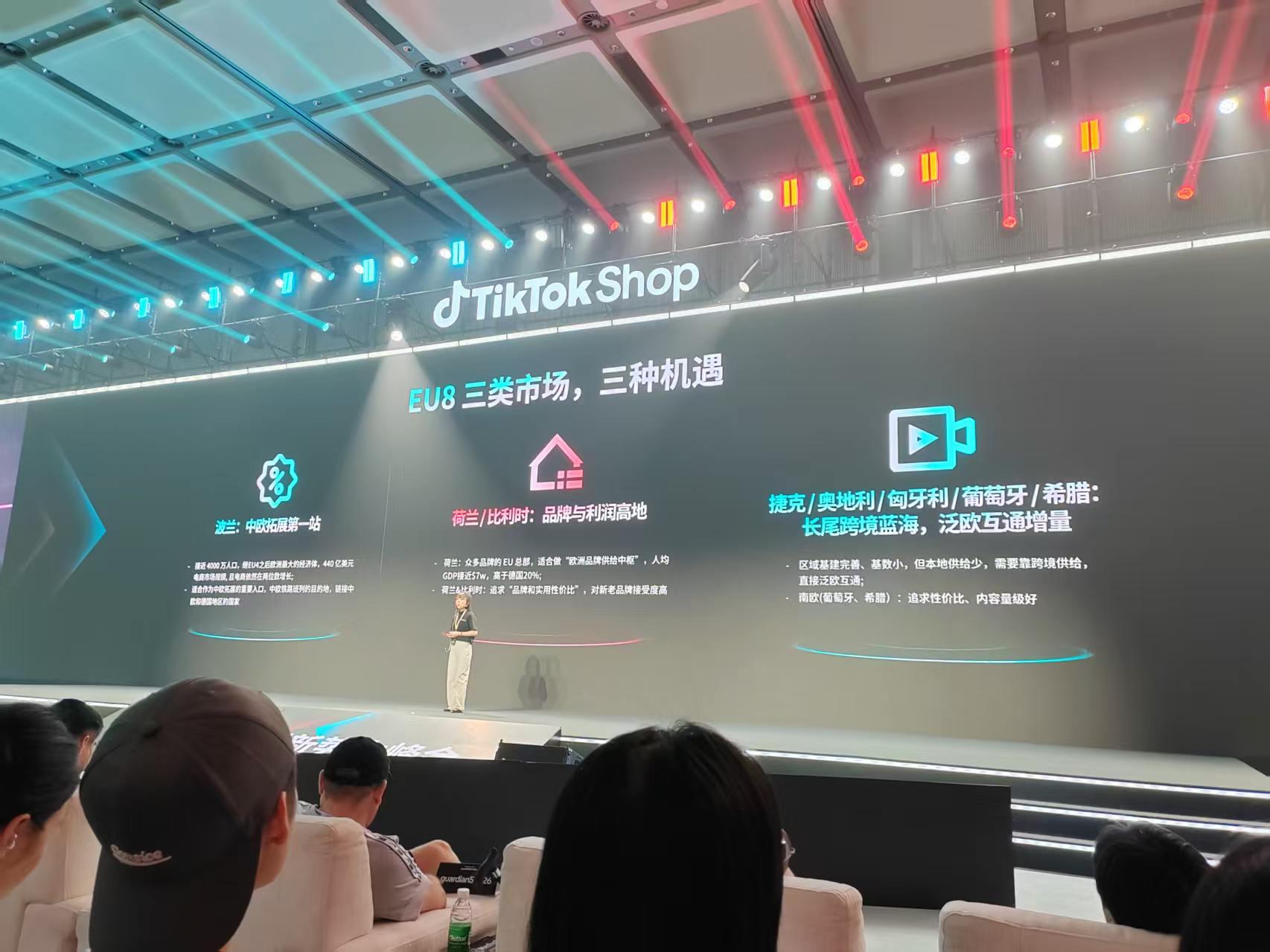
The first tier is Poland.
Its population is close to 40 million, with an e-commerce market size of $44 billion, making it the fifth-largest economy in the EU after Germany, France, Italy, and Spain. For a considerable period, local e-commerce has maintained double-digit growth. Simultaneously, as a transportation hub bordering Germany and a destination for the China-Europe Railway Express, Poland possesses an extremely convenient warehousing and logistics system—8-hour truck coverage to all core German cities, and 3 to 5 days to cover the entire Central European region.
The second tier consists of the Netherlands and Belgium.
These two countries have economic levels similar to the four Western European countries opened last year. The Netherlands is the preferred location for many brands to establish their European headquarters. Ample brand supply drives an active creator ecosystem and content atmosphere, with strong per capita purchasing power. Moreover, local users particularly prefer price comparison, pursuing both brand and cost-effectiveness to the extreme.
The third tier is the "long-tail five countries"—the Czech Republic, Austria, Hungary, Portugal, and Greece.
While individually small, their combined scale is considerable. Precisely because of their smaller size, local supply in these countries is generally insufficient, relying more on cross-border supply to meet consumer demand. Among them, Southern Europe's Portugal and Greece have an especially rich number of creators, providing merchants with a solid foundation for content conversion.
Regarding the "timing of entry" for the newly opened eight countries, Jiao Yanchen offered a clear judgment.
He stated, "Development never relies on a single policy. It's about entering as early as possible when competition is not yet fierce, exposing products to the market quickly, gaining algorithm favor and user recognition, and securing a position within various categories."
In this regard, expanding into the "newly opened eight countries" is not a multiple-choice question of "whether to do it," but a timing question of "doing it early or late."
III. 'Sell Across Europe with One Click' and Enhanced Support for Major Merchants: What New Merchant Benefits Has the Platform Released for the European Zone in 2026?
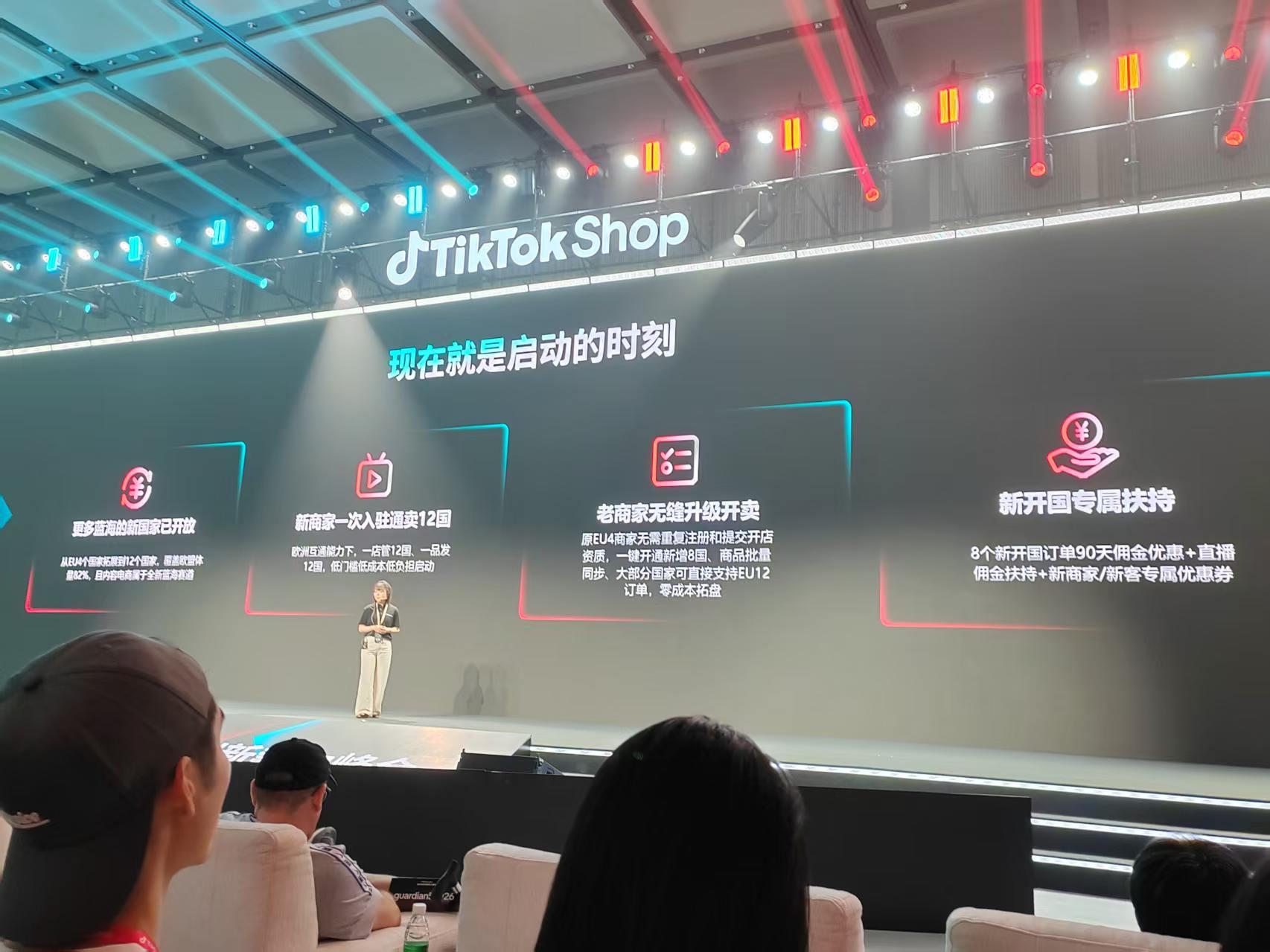
Wang Yufan provided a detailed analysis of the "Sell Across Europe with One Click" operational feature: Merchants only need to manage business in one country, and TikTok Shop can help replicate it across Europe, enabling cross-market expansion with low barriers, low costs, and minimal operational burden.
The platform provides site interconnectivity for EU operations. After registering in a single country, sellers can "open shops with one click," synchronously publish products globally with one click, with product information, inventory, rules, and price conversions automatically synchronized.
Meanwhile, pricing power always remains in the hands of the merchant, who can modify and adjust it independently. She summarized this as: "Considering both operational convenience and retaining the flexibility for localization."
Regarding logistics models, as the pan-European fulfillment network matures, the platform offers differentiated choices for merchants.
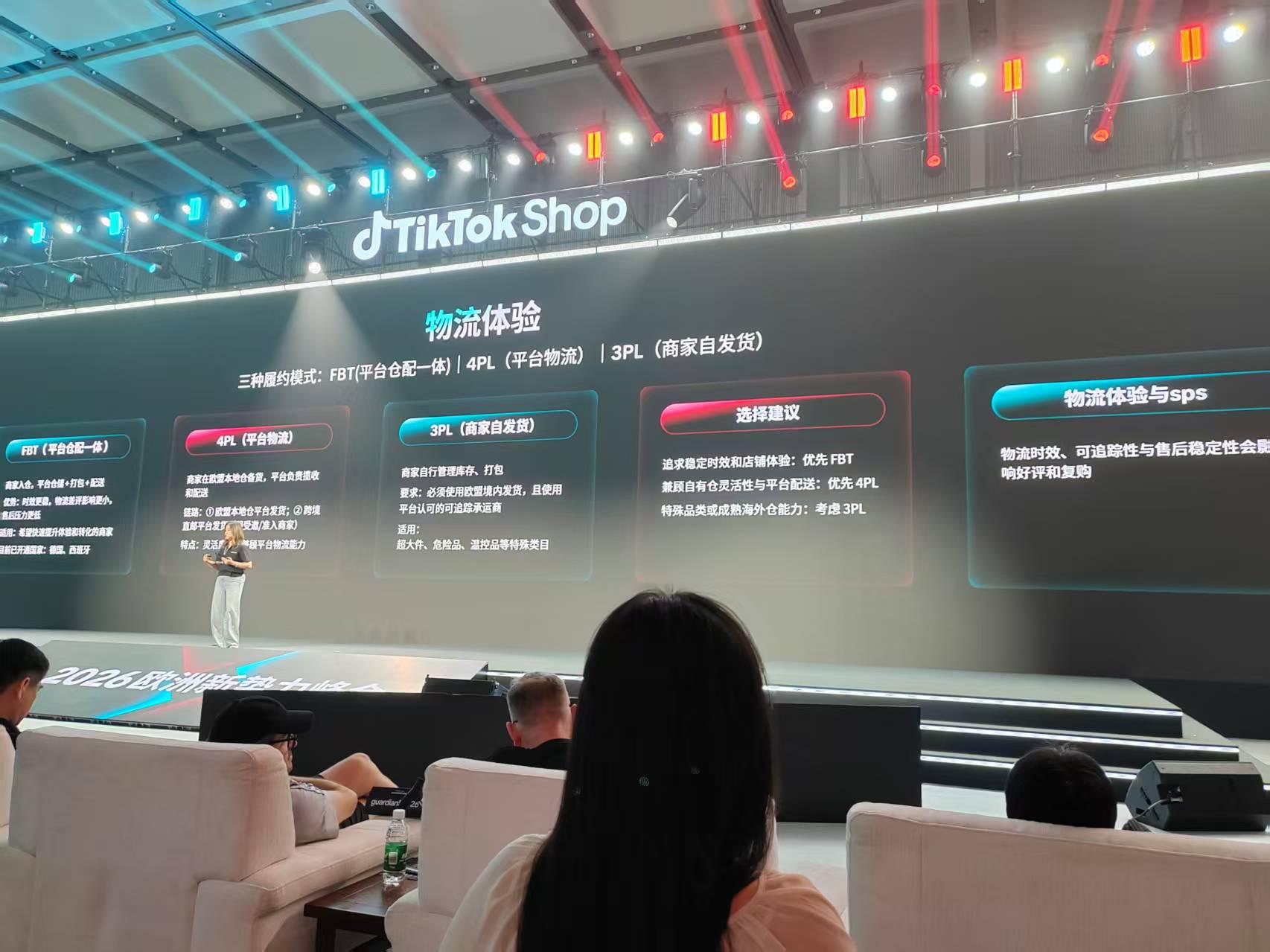
Chen Meijie introduced three logistics models one by one.
First, the FBT model. The platform integrates warehousing and fulfillment, with merchants sending goods to the warehouse. The platform is responsible for storage, packing, and delivery. Advantages include more stable delivery times, reduced impact of negative logistics reviews, and lower after-sales pressure. Currently available in Germany and Spain, it is the preferred choice for merchants pursuing stable delivery times and a quality experience.
Second, the 4PL model. Merchants stock goods in local EU warehouses, and the platform handles pickup and delivery, balancing the flexibility of local warehouses with the platform's delivery capabilities.
Third, the 3PL (Merchant Self-Fulfillment) model. Merchants manage inventory and packing themselves, must ship from within the EU, and use platform-approved trackable service providers. Suitable for special categories like oversized items, hazardous goods, and temperature-controlled products, it fits merchants who already possess mature overseas warehousing capabilities.
Regarding entry models, the platform has prepared two sets of plans for Chinese merchants.
For merchants whose business entity is registered in Mainland China or Hong Kong and who have future needs for cross-border direct shipping, they can refer to the "Cross-border Merchant Model."
Merchants who have already opened stores in the four sites of Germany, France, Italy, and Spain can open stores in the new eight countries with one click without registering a new store or resubmitting qualifications. Existing product links can be batch synchronized, and full pricing autonomy is retained.
For merchants whose business entity is registered in any EU country, the four Western European countries, or Poland, the Netherlands, and Belgium, they can consider the "European Local Store Model," also enjoying FBT and 4PL platform logistics fulfillment.
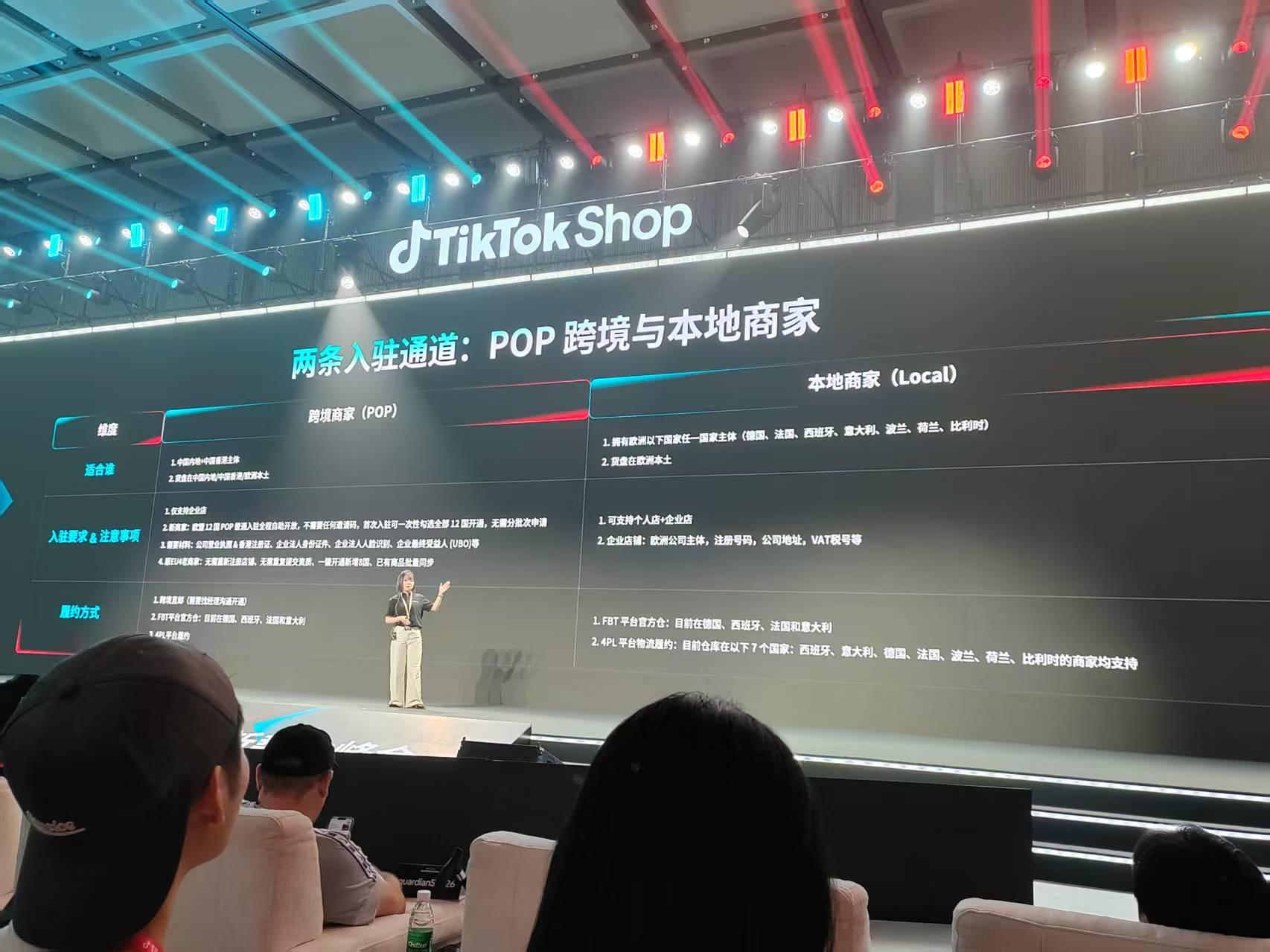
In terms of new merchant benefits, Jiao Yanchen systematically introduced full-chain support for POP merchants.
At the store opening stage, after passing compliance review, merchants can receive a three-month platform commission waiver, significantly reducing costs during the critical launch phase.
Regarding product subsidies, for best-selling products already validated on other sites or platforms, the platform provides strong support such as traffic and product subsidies, directing resources towards truly promising products.
For creator matching, the platform empowers merchants through tools, online and offline investment conferences, creator connections, and community operations, helping merchants collaborate efficiently with creators and improving matching efficiency.
For platform promotions, after successful registration, merchants can receive traffic support across multiple channels. Additionally, the platform offers advertising incentives, providing rebates to merchants who reach certain spending levels.
Particularly noteworthy is that at this summit, the platform specifically emphasized its determination and measures to "further enhance" special privileges for major merchants—providing strong, tilted support to merchants who are seriously committed, growing with the platform, and determined to deeply root themselves in Europe.
Jiao Yanchen revealed that the 2026 European zone POP major merchant support policies will be fully upgraded, with a clearer tiered support logic, formally divided into two categories: "Strategic Key Merchants" and "Strategic High-Potential Merchants."
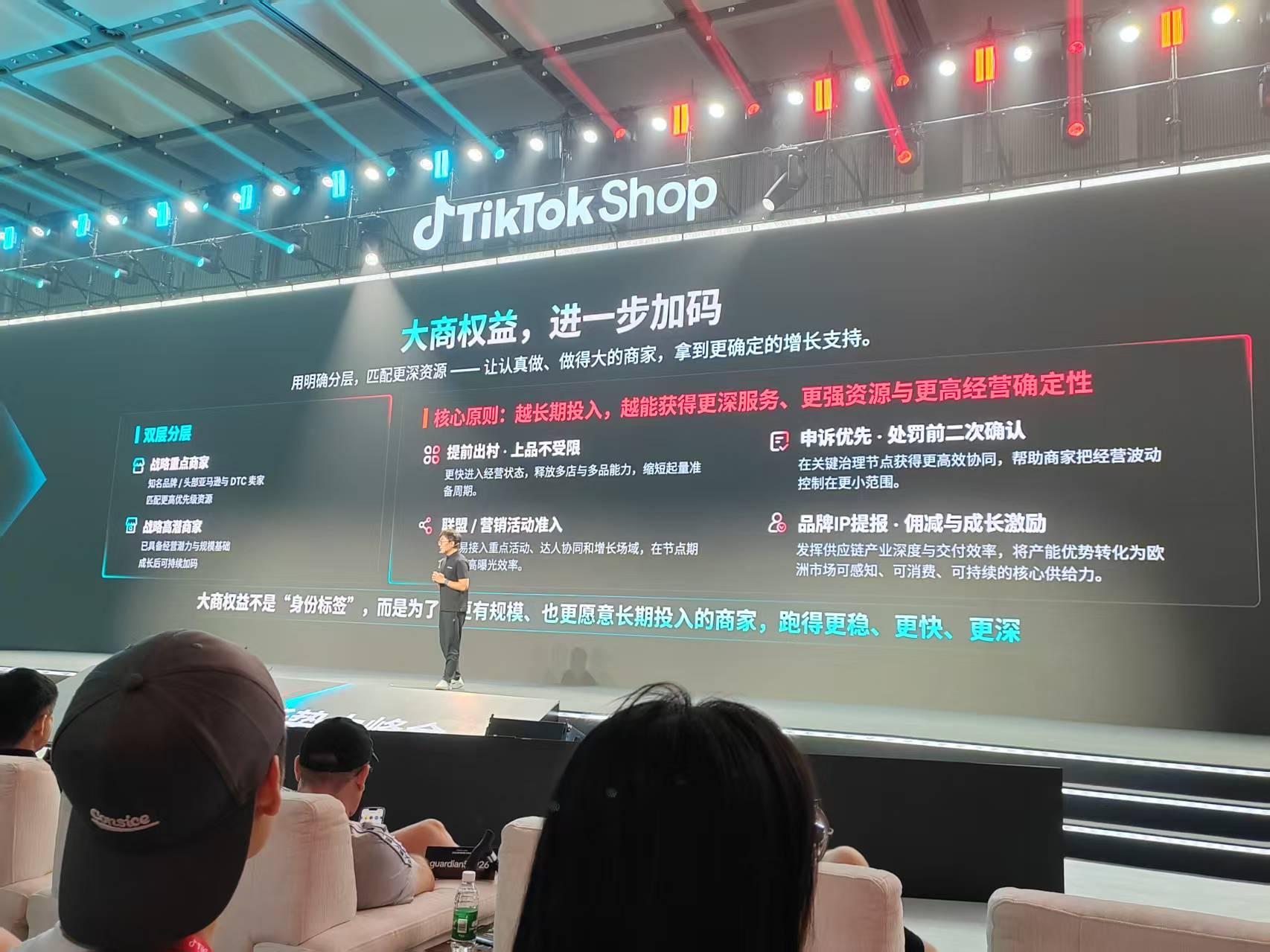
The Strategic Key Merchant group covers well-known brands, top Amazon and DTC sellers, major sellers from other regional markets, etc. The platform will provide ample traffic exposure, product subsidies, and higher-priority resources.
The other group is Strategic High-Potential Merchants, i.e., merchants already possessing operational potential and a foundation for scaled growth, for whom the platform also provides necessary support.
Major merchant privileges cover four core dimensions:
First, helping major merchants enter an operational state faster, unleashing multi-store and multi-product capabilities.
Second, achieving more efficient governance coordination, collaborating efficiently at key governance nodes, such as prioritized appeal handling and secondary confirmation for penalties, keeping governance impact within reasonable bounds.
Third, accessing more growth channels, with priority access to key activities and creator collaborations, obtaining higher exposure and conversion efficiency at various marketing nodes.
Fourth, providing more powerful operational incentives, enjoying better treatment in brand IP application, commission waivers, and growth incentives, transforming merchants' supply chain industry depth and delivery efficiency into a core supply force that is perceptible, consumable, and sustainable in the European market.
[Copyright Notice] Ebrun advocates respecting and protecting intellectual property rights. Without permission, no one is allowed to copy, reproduce, or use the content of this website in any other way. If any copyright issues are found in the articles on this website, please provide copyright questions, identification, proof of copyright, contact information, etc. and send an email to run@ebrun.com. We will communicate and handle it in a timely manner.
Translated by AI. Feedback: run@ebrun.com