
A Conversation with Huang Xiaowei of Qisheng Technology: The Weight and Slowness Behind a 20-Year Journey to 3 Billion Yuan in Annual Revenue from Smart Beds
[Original by Horsehoe Club]
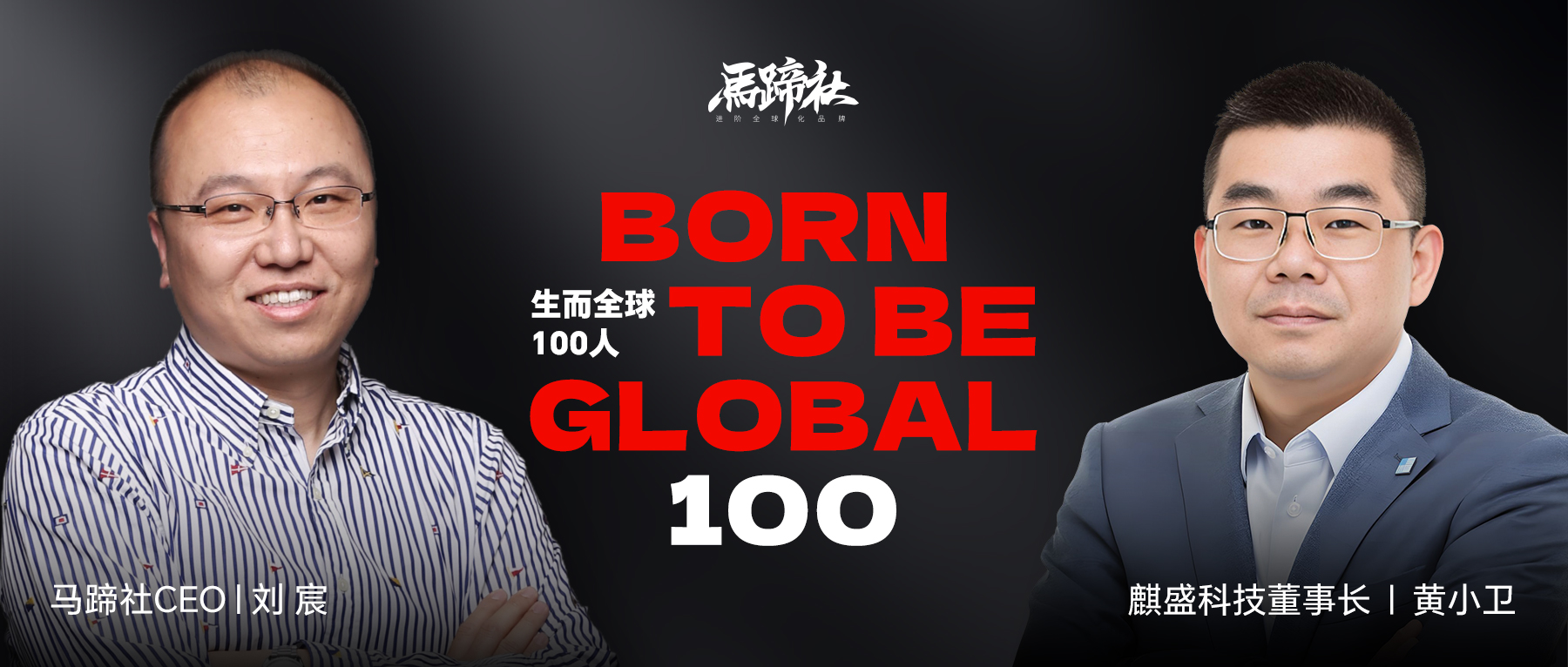
Witnessing the deep reflections of 100 founders to refine global business insights for the next decade.
[Original by Horsehoe Club] A listed smart bed company with over three billion yuan in annual revenue, teetering at the threshold of ten billion, yet its chairman was discussing with us a smart ring project he shelved five years ago and has been hesitant to launch.
"If making money were the top priority, we would have definitely jumped on the trend and produced it long ago, making money first and then iterating slowly," said Huang Xiaowei, Chairman of Qisheng Technology, without hesitation in his tone. "But our energy and resources are limited. Once we commercialize it, a significant portion of the group's resources would inevitably shift towards it, disrupting our true focus on sleep health."
The smart ring has been the hottest sleep monitoring entry point in consumer electronics over the past two years. Overseas companies have turned it into a compelling story, and domestic manufacturers have swarmed in. Qisheng Technology had mature technology for it five years ago but stubbornly held back. The R&D lead at the time looked at him with "deep resentment," feeling Huang Xiaowei was sitting on technology without monetizing it.
But this wasn't the first time, nor would it be the last. You see a Chinese manufacturing enterprise, over twenty years, repeatedly choosing the slower, heavier, and more challenging path between "doing business" and "building an enterprise."
To understand this restraint, one must go back to 1997—when a young Huang Xiaowei, following founder Tang Guohai, was solely focused on building China's own passenger car.

The Red Sedan in the Lobby
The Earliest Spark of Private Chinese Car Manufacturing
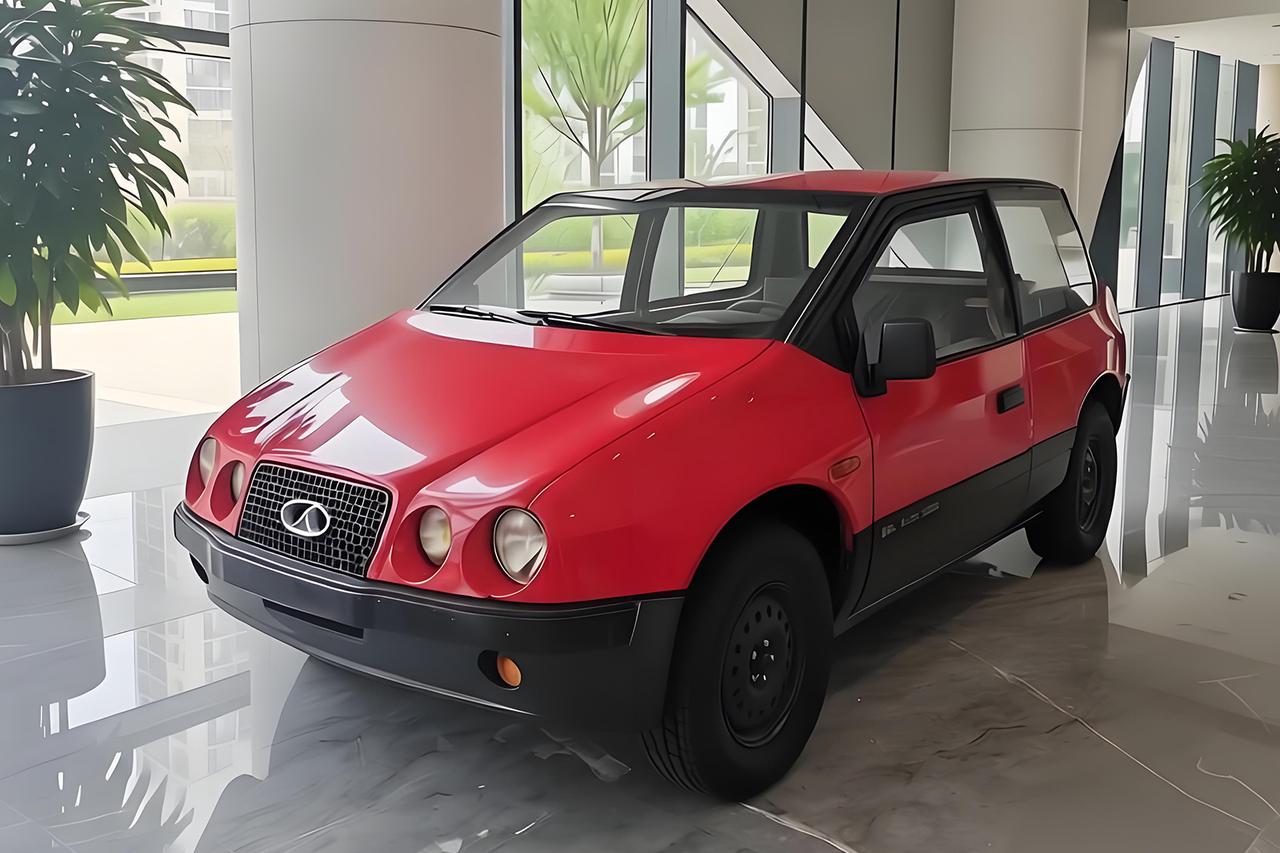
Upon entering the headquarters building in Jiaxing, a vintage red sedan sits in the lobby. Huang Xiaowei told Zheng Min, Chairman of Ebrun, and Liu Chen, CEO of Horsehoe Club, "Among all private enterprises in China, we were actually the first to build complete civilian passenger cars. This car can still start today. It participated in the 1998 Beijing Auto Show and received over 4,000 orders in just four days."
However, the production license never came through. Without the license, they couldn't sell; without sales, banks wouldn't provide financing. Making matters worse, 1997 and 1998 coincided with the Asian Financial Crisis, foreign capital was preoccupied, and venture capital hadn't yet been born in China. "If we could have raised 50-60 million yuan, we could have survived," Huang said. But they were just one step short.
A team of 216 highly educated individuals was forced to disband. Yet, most team members didn't leave the automotive industry. "The earliest foundation for purely private car manufacturing in China was laid by our group," Huang Xiaowei said with both emotion and consolation: although their car never made it to market, it ultimately contributed to China's household automotive industry.
In 2001, the nation's first passenger car production qualification (production license) was approved, years after the team disbanded.
This failure left Huang Xiaowei with two things. One was a lesson: "No matter how impressive the team, we won't blindly believe in it anymore. Success is related to team composition, but it's not the absolute determinant." The other was an obsession with foundational certainty, born from being strangled by funding. This obsession never left them when they later started making beds.

A 42-Year-Old German Colleague's Sudden Death
Can a Bed Detect Vital Signs in Advance?
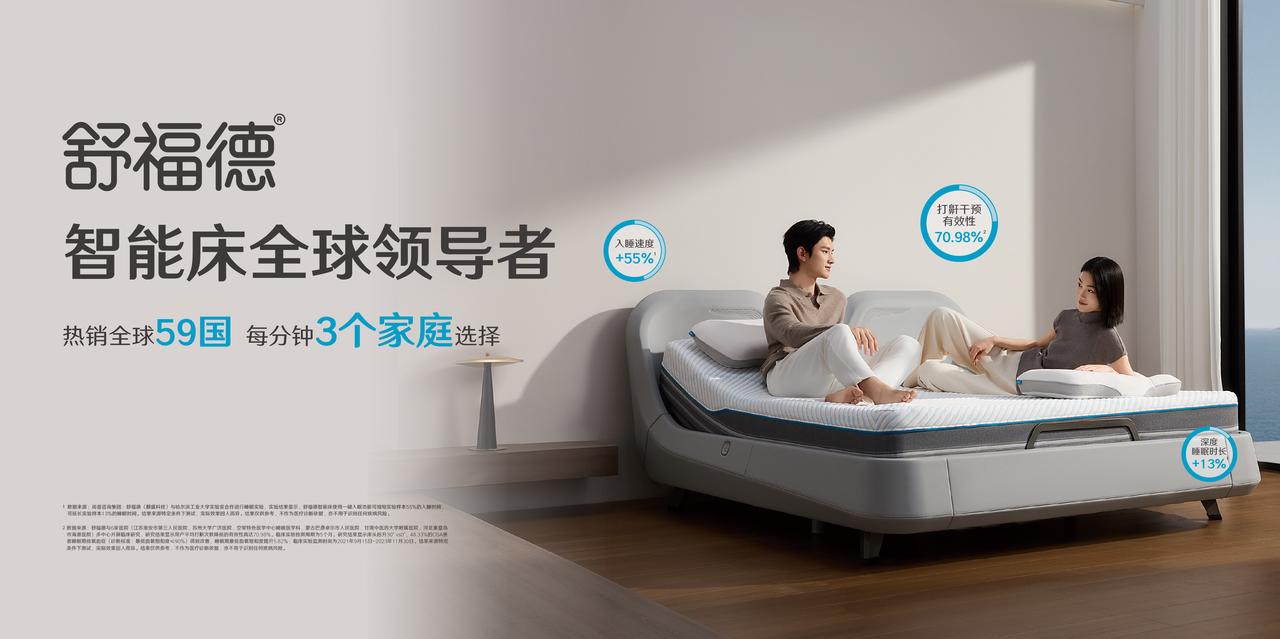
After the car venture failed, this group of electromechanical engineers started from the core motor of the lifting system, made the core component number one globally, and then sold the company. In 2005, they started again, following founder Tang Guohai to establish Jiaxing Shufude Electric Bed Co., Ltd. (renamed Qisheng Technology Co., Ltd. in 2016), this time focusing on smart adjustable beds.
But what truly propelled Qisheng Technology from "making beds" to "promoting sleep health" was a phone call from Germany.
At the end of 2012, a German colleague who had worked with them for seven or eight years, only 42 years old, returned to Germany after the company's annual meeting and passed away in his sleep on the third day, never waking up. "It's what we now call sudden cardiac death," Huang Xiaowei said. This incident deeply affected him. "Such a good brother, how could he just leave like that?"
After the grief, an idea emerged: "In a sleeping state, could the bed detect changes in his vital signs in advance? And then issue a reminder?" At the time, they were making smart adjustable beds, focusing on motors and lifting mechanisms. But to solve this problem, the focus shifted from "how to make the bed more comfortable" to "how to make the bed understand physical health status."
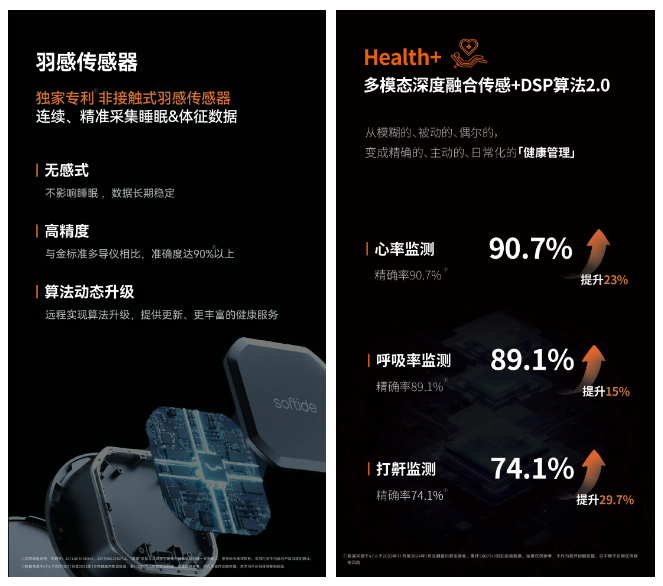
He and several partners traveled the world for over three months, searching for existing technology that could achieve "non-contact vital signs monitoring." They visited leading global sleep medicine centers, research institutions, and even hospitals, but couldn't find anything that could be "bought off-the-shelf and installed on a bed." Ultimately, they chose to collaborate with the Zhejiang Tsinghua Yangtze River Delta Research Institute to develop non-contact sensors from scratch. Starting in 2013, they spent years achieving consumer-grade mass production, eventually creating what was then the world's only non-contact vital signs monitoring sensor capable of detecting "the fall of a feather."
Upgrading a bed from "comfort improvement" to "vital signs protection" defined Qisheng's entire investment direction for the next decade—developing proprietary sensors, accumulating over 100 million hours of sleep data, building disease prediction models, applying for medical certifications, and so on. It was also from this point that the company embarked on a destined, "heavy" and "slow" path of no return.

Can Health Be Discounted? Can Life Be Discounted?
How Counterintuitive Is a Company That Uses Medical-Grade as Its Baseline?
To understand the "heaviness" of Qisheng Technology, one must start with the three nearly harsh bottom lines it set for itself.
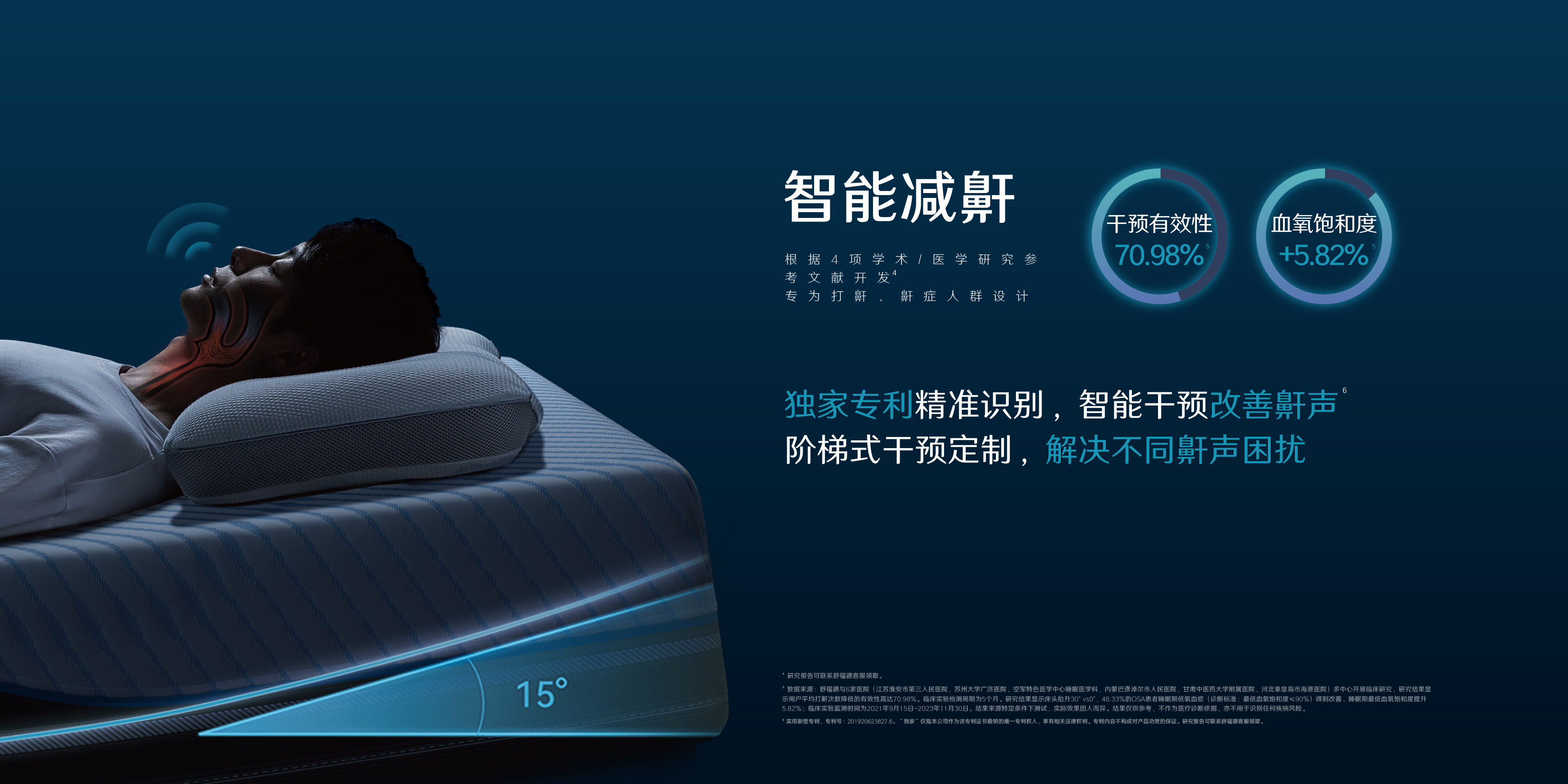
The First Bottom Line: Zero Tolerance for Hallucinations. "For ordinary consumers, it might not matter. But once judged from a professional medical perspective, you absolutely dare not use something with hallucinations," Huang Xiaowei said. To this end, they spent four and a half years rigorously manually annotating all medical knowledge related to sleep health. The underlying knowledge base consists of four types of data: authoritative medical papers and clinical knowledge, an indicator baseline database covering over 20 million people, daily actual sleep data from desensitized users, and "subjective physical sensation" data actively reported by users.
He bluntly stated that even general large language models tested show hallucinations. "If you really want to use it to guide your own treatment and medication, you definitely wouldn't dare to trust it." In Huang's view, top-tier medical applications must substantively solve consumers' health problems.
The Second Bottom Line: First Prove Harmlessness, Then Discuss Effectiveness. This is the most anti-commercial-efficiency rule. The core technology for depression detection algorithms was developed years ago, yet they only dared to launch it this March. Why? "The requirements for consumer-grade products should actually be higher than for medical-grade products," Huang Xiaowei explained. Medical-grade products have doctors' prescriptions as a safeguard, while consumers use them at home in an unmonitored, blind state. Therefore, they must simultaneously prove "effectiveness for large populations" and "absolute harmlessness."
How difficult is it to prove harmlessness? It requires finding 200 diagnosed individuals and 200 healthy individuals for controlled studies, passing strict reviews throughout. "Just the harmlessness proof phase alone takes at least six or seven years." EEG intervention algorithms were mastered eight or nine years ago but haven't been launched to the market yet; they're still undergoing clinical trials. After rat experiments, they use animals like ferrets, whose respiratory and neural responses are closer to humans, for further verification.
"Many people on the market are buying smart sleep-aid pillows. For a company like ours with an electromechanical background, making a smart pillow is a matter of minutes." But Huang Xiaowei firmly refuses to do pillow intervention. "The pillow is too close to the brain; it involves magnetic fields and various intervention frequencies. By the time you discover a real problem, it's too late."
The Third Bottom Line: Insist on No Discounts. Shopping malls pressure you to discount, e-commerce platforms pressure you to discount, the entire industry is complaining about downturns. Huang Xiaowei convinced his own hesitant Shufude sales team with one question: "Do you believe that what we are doing is genuinely improving national health by enhancing sleep?" Everyone said yes. "Then can health be discounted? Can life be discounted?"
"Since neither life nor health can be discounted, if you discount the product, it means the values you preach with your mouth are completely inconsistent with what you think in your mind—you're deceiving yourself."
These three bottom lines combined create the Qisheng Technology that outsiders see as "too heavy, running too slow."

From the First to the Fourth Growth Curve
Doing OEM, Pricing Power Always Belongs to Others
If the bottom lines are the company's "defense," then the four growth curves are its "offense."
Huang Xiaowei has laid out the strategic path with exceptional clarity, so clear that employees know exactly what game the company is playing.
First Curve: Traditional Foreign Trade OEM/ODM. Qisheng Technology maintains long-term strategic partnerships with several well-known overseas mattress brands. He judges this line still has room: "Penetration of smart bedding in American households is less than 17%, in Europe less than 2%, and in China it's almost negligible." The ceiling is still far away.
Second Curve: Brand Development. Domestically, centered on the "Shufude" brand. Firstly, C-end brands are closer to users, more conducive to product iteration, and can continuously launch products and services users need. Secondly, revenue from the original OEM/ODM business cannot sustain continuous R&D investment in the long term.
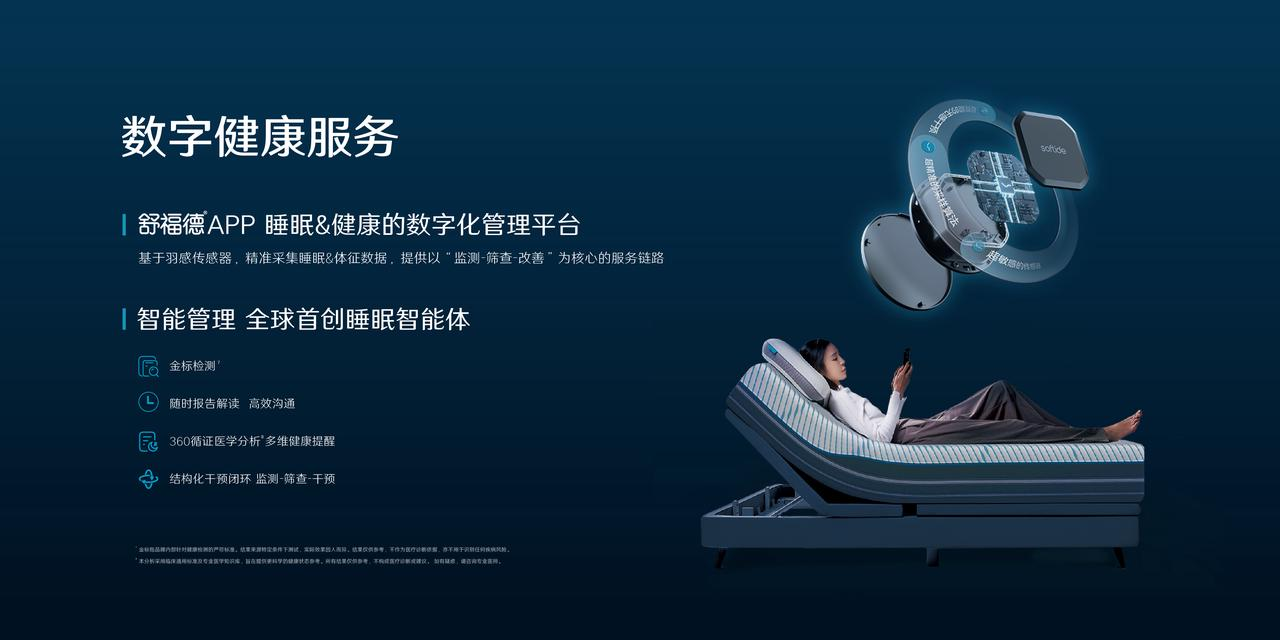
Third Curve: Software Subscription Services. On the day of the interview, they officially launched this system. "We haven't done any marketing, yet a certain percentage of hardware users are already actively paying." Paid services cover medical-grade consumer services like sleep apnea detection, arrhythmia detection, and depression detection. "Users find this useful and are naturally willing to pay for health services."
Fourth Curve: Health Ecosystem. "Once the third curve is established, coupled with the accumulation of multimodal health data, the fourth curve will naturally follow."
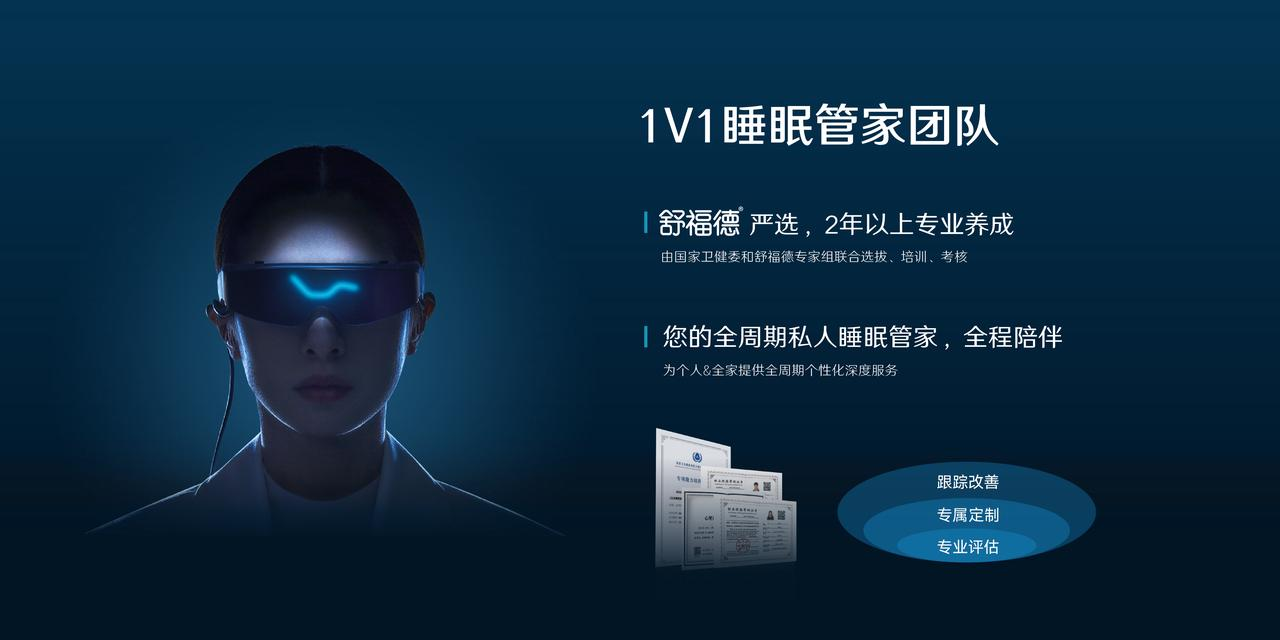
Within these four curves lies a key difference between China and overseas. Overseas users are willing to pay for accurate data itself; but in China, "if you only provide monitoring data, consumers won't care. You must have heavy follow-up services." Thus, Qisheng Technology in China has taken on the most tedious and complex tasks—assigning sleep health managers, assembling medical expert teams, and providing physical on-ground services.
"Typically, tech companies purely chasing quick profits are unwilling to do such complicated work." And this precisely forms a barrier difficult for fast-moving companies to cross. "Heaviness" here transforms for the first time from a "cost" into a "moat."

Who Are the Real Buyers?
Preparing Capacity a Decade in Advance for the Explosion
When discussing the domestic user profile, Huang Xiaowei said something surprising: "Even we were taken aback."
The common external assumption is that a 30,000-yuan smart bed would be bought by high-net-worth families in China. But the data is completely opposite. The core users' average monthly salary falls in the range of 15,000 to 18,000 yuan, constituting the largest proportion.
"Later, through in-depth analysis, we understood that this group actually needs help the most," he said. "Most are in their thirties, the pillars of their families. If their health fails, the entire family collapses."
The occupational distribution is even more intriguing: medical workers rank first. "The ones who need the least education and persuasion are medical workers. Those who understand the field are the first to pay for this health value, even sending commendation banners to stores." Following them are highly educated groups, civil servants, and business owners. The gender ratio is not significantly different, with slightly more women, as household consumption decisions still lean towards women.
This profile is important because it confirms Huang Xiaowei's judgment on market timing: "The true comprehensive explosion of the big health market will take another ten years." Currently, the elderly who are truly old and need elderly care services generally lack purchasing power, with a consumption mindset of "toughing it out." But when the post-60s generation, who benefited from China's reform and opening up and have purchasing power, grow old—using 75 as the age for a cliff-like decline in health—the real big explosion will likely take about ten more years.
When asked, "Qisheng Technology's smart bed annual production capacity has reached 3.6 million units, while current actual annual sales are about 1.1 million units. Why set up so much 'idle capacity'?" Huang Xiaowei smiled and said: "Market demand changes at any time. You can't wait for demand to arrive before expanding capacity. Manufacturing must have a certain level of forecasting, preparing capacity in advance as a reserve. When demand comes, you can seize it immediately. This is the fate of manufacturing."

Three Iron Rules from Two Decades of Going Global
Our Top Executives in the U.S. Are All Locals
Qisheng Technology is a company with nearly 96% of its revenue coming from overseas, highly reliant on exports to the U.S. Going global is its lifeline. Huang Xiaowei's globalization methodology was earned through twenty years of real investment.
This "real investment" is literal. In the U.S., through acquisitions, Qisheng Technology owns five factories covering the East, West, South, North, and Central regions and operates two complete companies. In tariff-frontier countries like Vietnam and Mexico, production bases were also established long ago. Huang Xiaowei noted these overseas factories still lag behind domestic ones: "Currently, relatively traditional manufacturing industries in the U.S. are behind." Implied meaning: Qisheng's core manufacturing competitiveness lies domestically. Building factories overseas isn't for cost reduction but for local supply, enhancing local consumer experience, and establishing a real manufacturing presence in local markets.
First Iron Rule: Respect Mature Markets. "Over the past 25 years, the Top 25 rankings in the U.S. home furnishings industry have hardly changed." In such a market, it's almost impossible for an outsider to cultivate a national brand from scratch. Therefore, his choice is acquisition over building from the ground up. Huang Xiaowei said: "The market education cost for building a brand yourself is extremely high, while the success rate of acquisition is far higher than starting from scratch."
Second Iron Rule: True Localization, Not Predatory Expansion. "Our top executives in the U.S. market are all locals. We never send Chinese personnel to be the top leader there." The domestic headquarters only handles macro coordination, delegating decision-making power to local leaders who "hear the gunfire." He contrasted this with another popular approach (replacing the CEO, supply chain, and finance after acquisition) and firmly believes that, in the long run, a company's top leader in an overseas market must deeply understand the local culture and industry rules.
Third Iron Rule: Have a Broader Perspective. Zheng Min recounted a bitter joke from the cross-border circle: A foreigner said, we finally understand what you Chinese mean by "win-win." Win-win means you want to "win twice." Huang Xiaowei laughed heartily upon hearing this, then added: "That model of only caring about one's own win is not sustainable and greatly damages trust."
He even considered this issue on the scale of industrial workers: "If electric vehicles overwhelm local manufacturing in Europe, it directly affects the livelihoods of millions of industrial workers. We must fully understand their concerns and difficulties to truly go global."

Is It the Founder's Enterprise, or the Enterprise's Founder?
Passing the Baton Relies on Organizational Systems, Not Human Nature
Bringing this long conversation back to a more fundamental issue: power and succession.
Huang Xiaowei is in his fifties. He said he will definitely retire in ten years, at least stepping back from the frontline of operations. He is not the founder of Qisheng Technology but took over the baton from the founder. In Chinese private enterprises where founders often "cannot step down," this statement is extremely rare.
He framed the question sharply: Is this company "the founder's enterprise" or "the enterprise's founder"?
"The enterprise was born because of the founder initially, but it ultimately must, and will, transform into 'the enterprise's founder.' Because human life is finite."

Doing Business or Building an Enterprise
Putting Huang Xiaowei's words together, they point to the same question—the question that should be repeatedly asked regarding Chinese manufacturing and brand globalization today: Are you doing business, or are you building an enterprise?
The logic of doing business is about traffic, arbitrage, "using speed to beat slowness," and selling first, thinking later. It has its commercial value, enriching the market, but it turns "win-win" into "winning twice," treats consumers as "lab rats," and forces R&D-driven enterprises into the peril of "bad money driving out good."
The logic of building an enterprise is precisely the opposite. First, solidly accomplish the difficult but right things, and "making money is just a natural outcome." It means shelving a monetizable hit for five years, spending six or seven years proving "harmlessness," holding firm on pricing when everyone else discounts, entrusting overseas leadership to locals, and the founder proactively setting a retirement timeline.
This path is slow, heavy, lonely, and doesn't look good on short-term financial statements. But Huang Xiaowei is betting on the inflection point when big health fully arrives in ten years: "Why am I so confident? Because our most core underlying R&D capabilities have already been established."
Will Qisheng Technology definitely win? No one can guarantee it. The market will provide its own answer. But in an industry accustomed to "starting early, catching the trend, making a quick profit, and leaving," a company willing to consistently bet its values on a twenty-year timescale is, in itself, already very precious.
After all, as Huang Xiaowei himself said—health cannot be discounted, life cannot be discounted. So, why should a company's faith in "long-termism" be discounted? (Original by Horsehoe Club / June 2026)
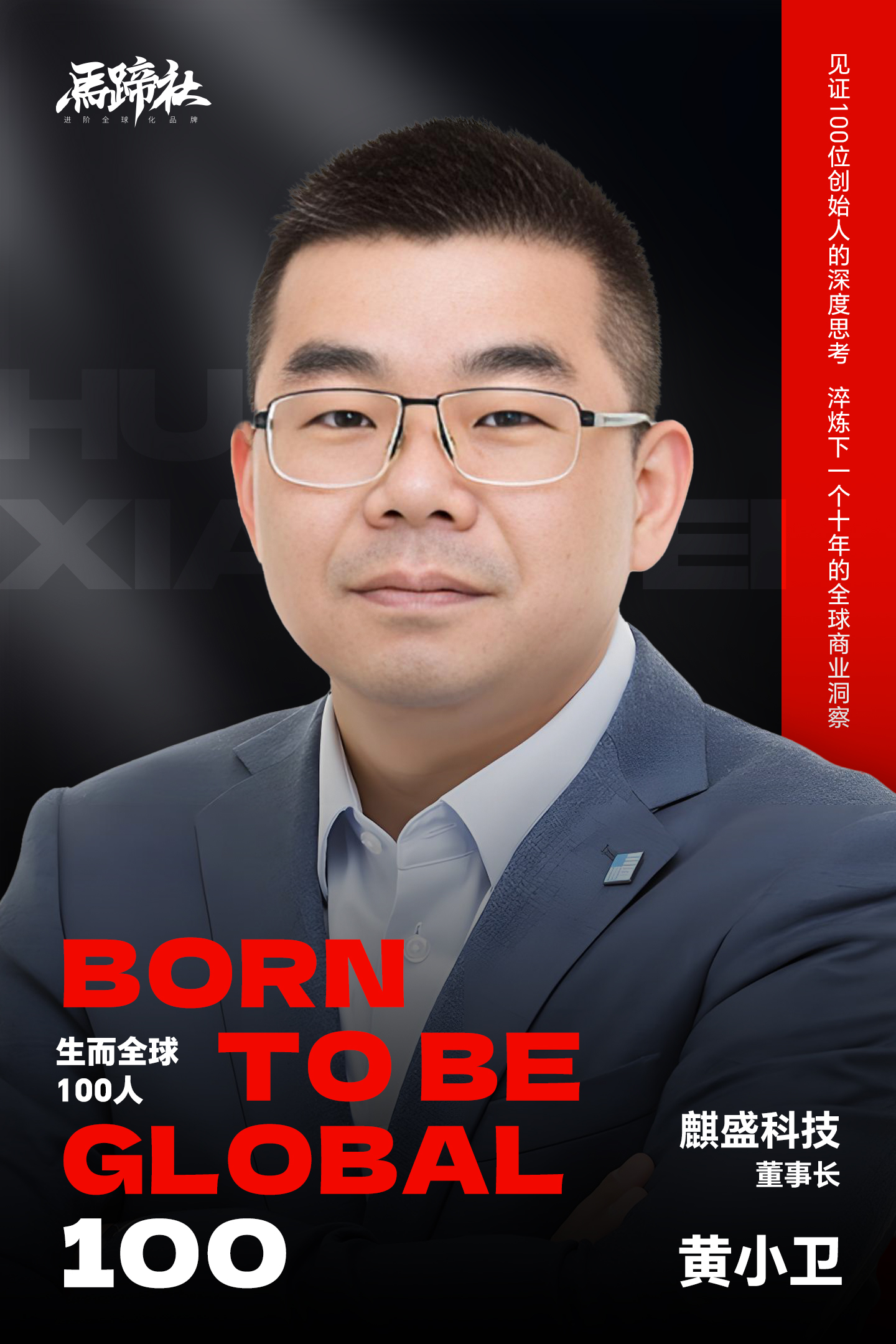
Born To Be Global 100 is a global brand CEO in-depth dialogue column initiated by Ebrun's Horsehoe Club. We are looking for the next interviewee.
If you are also a "Born To Be Global" brand founder with deep reflections on your business philosophy and practice, welcome to contact us, share your story, and jointly define this era.

[Copyright Notice] Ebrun advocates respecting and protecting intellectual property rights. Without permission, no one is allowed to copy, reproduce, or use the content of this website in any other way. If any copyright issues are found in the articles on this website, please provide copyright questions, identification, proof of copyright, contact information, etc. and send an email to run@ebrun.com. We will communicate and handle it in a timely manner.
Translated by AI. Feedback: run@ebrun.com