
Exclusive Interview with Wildberries: GMV Soars 200% in a Year! How Chinese Sellers Are 'Breaking Through' in Russia, Targeting Mid-to-High Price Segments
[Ebrun Original] In 2026, the connotation of 'growth' is undergoing a profound transformation for cross-border e-commerce practitioners. In Europe and the US, the rising thresholds of compliance and regulation, along with frequent changes in trade rules, continue to squeeze the profit margins of companies expanding overseas. Meanwhile, in Southeast Asia, as platform competition intensifies and traffic dividends peak, monetization pressure is accelerating its transfer to merchants, leaving many in the awkward situation of 'increasing revenue without increasing profits.' As former low-cost 'testing grounds' evolve into resource-intensive, hardcore arenas, finding a blue ocean market with remaining opportunities for exponential growth has become a shared anxiety across the industry. It is amidst this clamor of 'profitability hunger' that data from Russia appears particularly striking. Recently, RWB Group, the parent company of Russia's largest e-commerce platform Wildberries, released its 2025 financial data: its annual GMV exceeded $73.3 billion, a year-on-year increase of 49%, a growth rate already rare among large platforms. However, what truly caught the attention of China's cross-border community was not its scale, but its steep supply curve. As of May 2026, the number of Chinese product SKUs on the Wildberries platform had reached tens of millions, a staggering 13-fold increase year-on-year. Over the past year, the GMV of Chinese sellers has even doubled. In the current context of increasing fragmentation in global trade, this near-'spectacular' multiplicative leap undoubtedly makes Russia and the broader CIS market it influences one of the very few 'gravitational fields' still offering structural dividends for 'Made in China.' To deeply analyze this phenomenon, Ebrun conducted an exclusive interview with Alexandra Kulik, Head of Cross-Border Business at Wildberries. Through her perspective, we will examine how this Russian e-commerce giant is paving a stable development path for merchants and address the following questions: In 2026, at what inflection point are Wildberries and the CIS market it deeply cultivates currently situated? In a year marked by constant external shocks and 'certainty' becoming a scarce resource, what kind of growth expectations can it offer for sellers seeking to expand overseas?
I. A Logistics Infrastructure Rising from the Ground: A 40 Billion Ruble Bet on the Far East, Doubling Down on E-commerce Logistics 'Megaprojects'
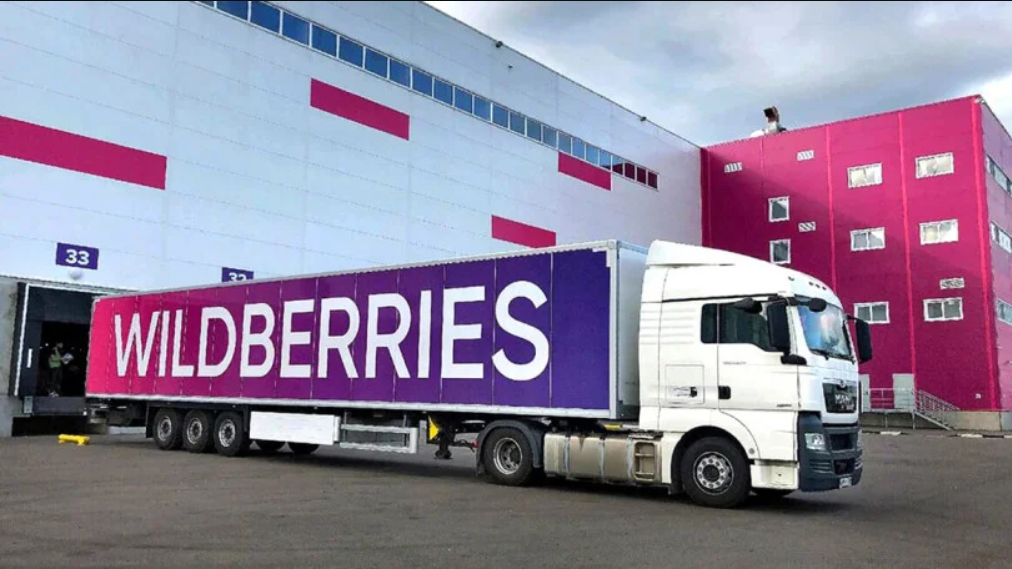
In Russia, logistics is never a simple supporting issue; it is the 'entry ticket' that determines the life or death of an e-commerce platform. Over the past decade, the weakness of third-party logistics systems was a chronic ailment plaguing Russia's e-commerce industry. Precisely because of this, local e-commerce platforms chose the same path to break through—getting directly involved and systematically building their own logistics networks. In this infrastructure race, Wildberries is undoubtedly one of the 'main players.' Data shows that by the end of 2025, the total area of Wildberries' logistics complexes had reached 5.2 million square meters, with over 200 logistics facilities and a daily processing capacity exceeding 25 million orders. Wildberries' ambitions clearly extend beyond mere competition in warehouse area numbers. In 2025, it successfully brought under its wing three major local Russian transportation service platforms—Gruzovichkof (freight), Taksovichkof (instant delivery), and Citymobil (ride-hailing). This series of integration moves signifies that it is firmly grasping mid-haul transportation capacity and last-mile delivery capabilities, weaving a dense logistics capillary network covering the region. Furthermore, another dimension worth deeper examination is Wildberries' deep alignment with local fulfillment habits: unlike the mainstream logic of 'home delivery' in other regional markets, Russian e-commerce exhibits a distinct 'pickup point priority' characteristic. Wildberries data indicates that currently, up to 95% of the platform's customers choose to pick up their orders from collection points. Over the past year, the total number of pickup points exceeded 94,000—and most of them also support try-on and return/exchange services. This offline network, which highly integrates 'delivery, experience, and service,' once established, forms a localization barrier that latecomers find extremely difficult to overcome. How will Wildberries' logistics footprint expand in the future? In this interview, Ms. Kulik disclosed a more specific roadmap to Ebrun. She revealed, 'This year, we plan to build and expand our logistics capacity in cities across Russia and the CIS, and open our first owned logistics facilities in countries where we operate outside Russia, such as Almaty and Astana.' Ms. Kulik stated that RWB plans to put into operation up to 1.7 million square meters of logistics space. Looking at a longer time span, 'the company plans to invest approximately 40 billion rubles in logistics infrastructure construction in the Far East region by 2030.' When asked about the core differences with competitors like Ozon, Ms. Kulik anchored the answer in the word 'scale.' 'Compared to other competitors, Wildberries' logistics facilities have a larger average area, generally exceeding 100,000 square meters. This enables the company to operate simultaneously in dozens of regions and maintain a high level of service even with large order volumes,' she said. She further pointed out that over the past year, the platform added over 30 new transit routes, bringing the total to more than 60. 'Our focus is on expanding the diversity of solutions for sellers, optimizing logistics routes, and increasing coverage density. This not only helps speed up delivery but also enhances the predictability of logistics processes.' It is worth noting that Wildberries does not choose a 'heavy asset' approach in all aspects. Ms. Kulik candidly stated that the platform adopts a hybrid logistics model. 'Wildberries combines the use of its own fleet and infrastructure with the involvement of external partners—logistics operators. This approach ensures the flexibility, scalability, and stability of the operational model.' This pragmatic and elastic strategy firmly controls the initiative at core nodes while avoiding the risk of asset rigidity that full self-operation might bring. When asked to characterize the current stage of Russia's logistics infrastructure development, Ms. Kulik offered an analogy that resonates deeply with Chinese e-commerce practitioners: 'If we compare the current development stage of Russian e-commerce logistics with the Chinese model, the Russian market is in the active infrastructure construction phase, similar to the stage when large Chinese e-commerce platforms massively invested in sorting centers and regional hubs.' She predicts this wave of intensive construction and logistics upgrades will continue for several more years until a mature facility network capable of stably supporting the current and anticipated e-commerce scale is formed. Regarding the 'last mile,' the most crucial link in the logistics chain, Ms. Kulik stated that delivery speed and accuracy are increasingly viewed by consumers as essential components of the service, not optional extras. 'The expansion of the logistics center and pickup point network has a direct impact on fleet structure and route configuration. The last mile is no longer merely the final link in the logistics chain; it has become a strategic tool for enhancing customer loyalty and strengthening a company's competitive position.' In this sense, what Wildberries is undertaking is far more than a warehouse area arms race. It is betting on the golden window of the next few years, during which Russian e-commerce logistics remains in a 'fortification period'—whoever first completes the weaving of this vast fulfillment network spanning 11 time zones and over 12,000 kilometers from the westernmost to the easternmost point will gain the dominant voice in the market.
II. Chinese Products 'Breaking Through Upwards': Beyond High-Speed Growth, Sellers Are Collectively Targeting Mid-to-High Price Segments
If the leap in logistics infrastructure solves the problem of 'how goods move,' then the evolution of the supply structure of Chinese sellers in the Russian market answers a more fundamental question: What kind of Chinese products can actually make money here? For a long time, the profile of Chinese cross-border sellers in Russia has been highly consistent—unbranded goods, extensive product listing, trading price for volume. This is typical of the early ecosystem in emerging markets: supply chain advantages translate into price advantages, massive SKUs quickly fill platform shelves, leading to wild growth but little brand building. However, entering 2026, this narrative is being rapidly rewritten. Ms. Kulik shared a set of compelling data with Ebrun: As of May 2026, the number of Chinese product SKUs on the Wildberries platform had reached tens of millions, a 13-fold increase year-on-year. Over the past year, sales of Chinese products doubled, with the top 100 Chinese sellers achieving an even more astonishing growth rate of 3.8 times. Ms. Kulik explained, 'The most competitive sellers on Wildberries have fully mastered the platform's marketing and operational tools.' But more noteworthy than the growth rate is the quality of that growth. Ms. Kulik observed that the competitive logic of Chinese sellers is undergoing a qualitative change. 'If in the initial stage, massively expanding product variety was a key factor for growth, that is no longer sufficient for sustainable development today,' she pointed out. 'The quality of product detail pages, clear brand positioning, delivery speed, price competitiveness, ratings, and post-purchase customer experience are becoming increasingly important.' Even more telling is the shift in the supply price structure—'As consumers' demands for product quality and design increase, the proportion of mid-to-high-priced Chinese goods on the platform is gradually rising.' In other words, sellers who have preemptively focused on branding and overall experience are beginning to 'harvest' a more mature consumer group willing to pay for quality. The Russian market is quietly transitioning from the rough-and-tumble era of 'extensive listing of unbranded goods' to the upgrade channel of 'quality and brands.' This 'upward breakthrough' on the supply side is not merely a spontaneous evolution of the seller community; Wildberries plays an active role as a catalyst behind the scenes. Although it was not the first mover in recruiting Chinese merchants, Wildberries' sincerity in its late but forceful approach is quite substantial. According to Ebrun's understanding, the Wildberries seller backend is now fully embedded with Chinese language pages, all seller tools support Chinese, and AI tools are provided to assist in translating product descriptions and buyer chat content. Offline, it has established five sub-centers in China—Shenzhen, Ningbo, Hangzhou, Tianjin, Nantong—along with numerous industrial incubation bases spread across major industrial clusters, forming a localized support network from industrial cluster sourcing to seller incubation. At the level of rule design, Wildberries has clearly shifted its incentive focus towards 'quality supply.' Ms. Kulik introduced that the 'Nine-Tier Seller Rating System' implemented since 2025 employs a differentiated commission rate mechanism, 'which can provide the maximum commission discount to high-GMV sellers who offer a quality consumer experience, directly redistributing profit margins towards quality-focused sellers.' The underlying logic of this system is clear and direct: through commission leverage, the platform tilts real profit towards players who continuously invest in product quality, service experience, and brand building. On this foundation, Wildberries further expanded its policy toolkit for Chinese sellers in 2026. Ms. Kulik revealed that from a sales economics perspective, 'the most important new initiative is the platform discount subsidy, which now provides guaranteed subsidies for all products participating in promotional activities; this tool did not exist last year, so its introduction is a significant breakthrough for the cross-border segment.' Simultaneously, Chinese sellers have gained full access to the platform's advertising tools and can pay directly from China using their store balance or advertising account. Also worthy of special attention is the 'Overseas Goods' section—an independent display area accessible directly from the Wildberries homepage and mobile app. From the 'Nine-Tier Rating' system sharing profits with quality sellers to 'discount subsidies' lowering barriers, Wildberries is laying out a clear path: using systems, not slogans, to guide Chinese sellers in their 'upward breakthrough.' For overseas expansion companies already weary of intense competition and holding quality supply chains, this signal is worth serious attention.
III. Predictable Policy Changes: Commission, Tariff, and Compliance Reforms Expected to Achieve a 'Soft Landing'
In 2026, Russian e-commerce regulation is undergoing a round of intensive institutional restructuring. The change most closely watched by Chinese sellers is undoubtedly the comprehensive unification of the commission system. The Russian Federal Antimonopoly Service has explicitly required major e-commerce platforms to eliminate commission differences between local and cross-border sellers by October 2026. This initially sparked market concerns: Would the cost advantage of Chinese sellers be weakened as a result? In response, Ms. Kulik told Ebrun, 'Wildberries is still in consultations with Russian federal government agencies regarding the adjustment plan and is conducting an in-depth assessment of the proposed measures' effects; therefore, the company has allocated additional necessary time for implementation.' Particularly noteworthy is the 'transparency' reform of the pricing mechanism. Ms. Kulik revealed that the platform plans to improve interaction mechanisms with sellers, 'introducing automated processes that allow sellers to independently choose not to participate in discount activities for their products.' In her view, 'These measures aim to enhance the platform's transparency and predictability and ensure fair competition.' This means that some ambiguous areas in the past that might have forced sellers into passive price wars are now being clearly defined. If the commission unification is an undetermined roadmap, then the tightening of tariffs and compliance is like a new normal that must be adapted to. It is reported that the Russian government has recently drafted plans to cancel the tax exemption for cross-border small parcels while frequently increasing e-commerce compliance requirements. Regarding this, Ms. Kulik acknowledged that for some overseas sellers, the implementation of new regulations might indeed narrow their price advantage. But she immediately added, 'Consumer choice still depends not only on price but also on a comprehensive consideration of multiple factors: brand credibility, the quality of product detail pages and the product itself, warranty commitments, return convenience, and delivery speed.' This response perfectly forms a logical closed loop with the earlier discussion on Chinese sellers' 'upward breakthrough'—when the window of price advantage narrows, the moat of quality and brand becomes all the more precious. On the compliance front, Ms. Kulik's answer was direct and pragmatic. 'From the platform's perspective, key areas of compliance lie in correct declaration, providing accurate product information, and adhering to consumer rights protection regulations.' She further reminded sellers, 'Complete product documentation, consistency between product detail pages and actual product characteristics, and compliance with our e-commerce platform's current sales rules are all mandatory obligations.'
Ebrun will continue to track and report on this information. To learn more related to this article, please scan the QR code to follow the author on WeChat.

[Copyright Notice] Ebrun advocates respecting and protecting intellectual property rights. Without permission, no one is allowed to copy, reproduce, or use the content of this website in any other way. If any copyright issues are found in the articles on this website, please provide copyright questions, identification, proof of copyright, contact information, etc. and send an email to run@ebrun.com. We will communicate and handle it in a timely manner.
Translated by AI. Feedback: run@ebrun.com