
Interview with Tan Kefeng, Founder of XbotGo: How to Master the Consumer-Grade AI Sports Camera?
[Ebrun Original]
 Witnessing the deep reflections of 100 founders, tempering global business insights for the next decade.
XbotGo focuses on youth sports filming, deeply integrates with vertical channels like TeamSnap, and adopts a strategy of rapid iteration and self-sustaining growth. By building integrated hardware-software and data moats in a niche market overlooked by giants, it has carved out its space.
At XbotGo's newly relocated office, we saw its latest release, the 'Falcon.' This AI sports camera raised $2.5 million on the crowdfunding platform Kickstarter. Just four years ago, its first-generation product was relentlessly criticized by users, with a return rate as high as 20%.
'It's hard to convey that feeling in words,' XbotGo founder Tan Kefeng told Liu Chen, CEO of Horseshoe Club. 'A children's soccer match has a much greater impact on adults than on the kids. Parents scream, get tense, and excited on the sidelines, while the kids just run off to play after losing.'
It was precisely this emotion of 'parents being more invested than the children' that led this individual, who holds a Ph.D. in Computer Science from the U.S. and was a technical lead at Amazon Lab126 (overseeing hardware development for Echo Dot and Fire TV), to choose a completely different path.

The Initial $1 Million and a Rough Prototype
In 2020, Tan Kefeng resigned from Amazon to pursue entrepreneurship full-time.
He originally thought he could develop a product within a few months. Then the pandemic hit, his child had to take online classes at home, and progress was severely delayed. More crucially, he chose a technical path of using a smartphone plus AI algorithms for automatic tracking, which no one had attempted before.
'The earliest version was extremely rough. Most of the time, it couldn't track the ball. Occasionally it could, but the control was very stiff,' he recalled. 'But we could see hope.'
At that time, he handled everything alone: algorithms, programming, customer service. To accommodate U.S. users' time zones, he often got up in the middle of the night to answer calls. 'I didn't feel tired. I'd just go back to sleep after the call.'
While a product prototype was taking shape, fundraising made little progress. The pandemic nearly halted venture capital activity in Silicon Valley. In 2021, he made his way back to China and toured around, discovering a bigger problem: domestic investors generally didn't understand this use case.
'They would project the habits of Chinese parents. We send our kids to after-school classes, and parents are basically on their phones the whole time. How could they possibly put their phone down?' Tan Kefeng said. 'But in the atmosphere of American sports games, you genuinely have no time to look at your phone. If you do, you might even be looked down upon.'
This cognitive gap led to repeated fundraising failures. One investor, although not investing themselves, helped connect him with a government-guided fund in Suzhou. Ultimately, XbotGo secured its first round of startup support funding: 800,000 RMB (later increased to 1 million RMB).
'The biggest significance of that money wasn't the amount itself, but the confidence and endorsement it gave us,' Tan Kefeng emphasized. With the government endorsement, he hired his first engineer, who was even willing to switch from part-time to full-time with only a slight salary increase.
And so, XbotGo established its base in Suzhou. There were no glamorous moments, only belief and persistence.

20% Return Rate and the Expectations of the Other 80%
In 2022, XbotGo's first-generation product, the Blink Focos, launched. It was a smartphone gimbal priced at $299, using AI algorithms in an app to automatically track the ball and players. It required clamping a smartphone. Under high-intensity outdoor computation, phones were prone to overheating, throttling, or even blacking out. Additionally, the varying computational power of different phones made the user experience like opening a blind box. Despite numerous issues, it still generated over 3 million RMB in sales that year.
But what concerned Tan Kefeng more than sales was another metric: a 20% return rate.
'I thought at the time, there are still 80% of people willing to keep using it,' he said. 'We knew the product was still rough, but users were willing to tolerate it.'
Those complaint calls received late at night due to time zone differences became his best product research. Users would vent but often wouldn't return the product, instead saying, 'I really want this thing to work.' Tan Kefeng honestly acknowledged the problems, telling them they were a startup and iterating. Many users, after hearing this, became brand advocates.
There were more extreme cases too. 'Someone was relentlessly criticizing us online. I sent a private message saying, 'Maybe you should just return it,' and then they ignored me,' Tan Kefeng recalled.
At the time, the main players capable of automatic tracking were professional equipment like Veo and Pixellot. They used a 'panoramic recording + cloud post-processing' model, with hardware costing around $1,200 and annual subscription fees exceeding $1,000. In comparison, XbotGo, though rough, was a one-time purchase at $299 with no annual fees. As long as it could capture 70-80% of the key moments in a game, XbotGo became an irreplaceable necessity.
However, the limitations of the first-generation gimbal were also evident. The product form was similar to DJI's gimbals, and DJI's comparable gimbals sold for just over $100. Tan Kefeng smiled wryly: 'When consumers see our product, they subconsciously compare its price to DJI's.'
Meanwhile, funding issues were a constant pressure. The company's accounts were perpetually low. Even with monthly sales reaching 200,000-300,000 RMB, after deducting platform fees, logistics, return costs, and R&D expenses, they were still operating at a loss.
During that period, the company had only about ten people: one salesperson handling all domestic and international channels, and the rest were engineers. Only when the outsourced bookkeeping became insufficient did they reluctantly hire a dedicated finance person.
'For a long time, we had only one belief: build the product and validate the business model.'
 XbotGo Falcon

Doing What Users Care About Right, Even at a Higher Price
The real breakthrough came with the second-generation product, the 'Chameleon.'
Its base housed an ultra-wide-angle lens and an AI chip (with computing power just over 1 TOPS) responsible for real-time analysis of the ball and player positions on the field. The top part clamped the user's smartphone, which solely handled recording high-quality video.
'Why not use the base to record directly? Because high-quality imaging demands very high lens specifications,' Tan Kefeng explained. 'Tens of millions of pixels, a large sensor, ISP tuning—that's very expensive. But for AI analysis, we just need to see the ball's shadow clearly. Even if the image is distorted or the white balance is off, it doesn't matter.'
This division of labor reduced hardware costs to just over 300 RMB.
More importantly, the product form was no longer a gimbal but an intelligent base with a camera. There were almost no similar products on the market, so consumers stopped comparing its price to DJI's.
Data quickly validated the direction. In 2023, XbotGo's revenue exceeded 10 million RMB. In 2024, with the success of the Chameleon, revenue surged to over 50 million RMB. To date, cumulative shipments of the Chameleon series have surpassed 100,000 units.
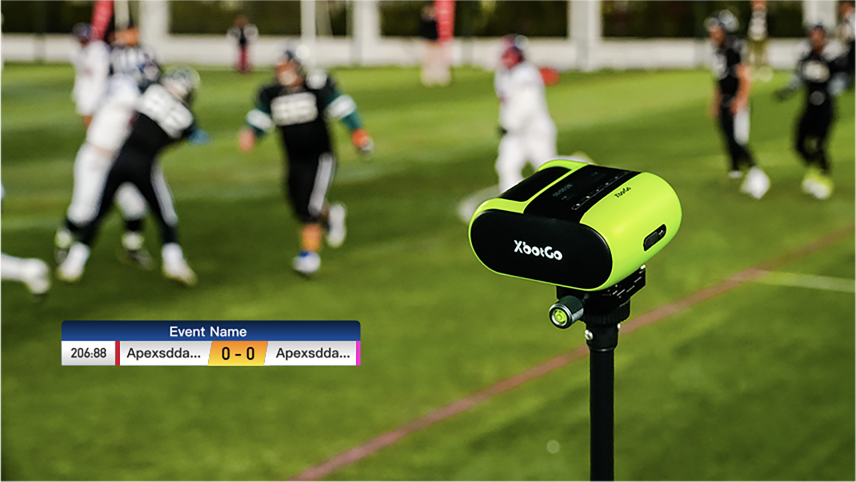
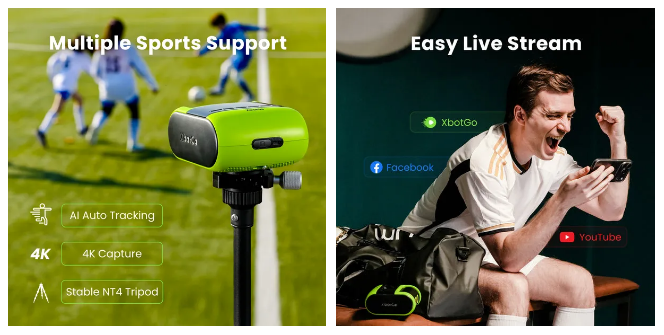
By the end of 2024, XbotGo began developing its third-generation product, the 'Falcon.' It features a dedicated AI processor with computing power up to 6 TOPS and employs an asymmetric dual-camera cooperative system: an auxiliary ultra-wide-angle lens with over 120 degrees handles global situational awareness, while the main camera, equipped with a top-tier Sony IMX678 image sensor, handles native 4K recording.
Underlying this runs a biomimetic 'Frog-Eye Tracking' algorithm. Just as a frog is insensitive to stationary objects but extremely sensitive to flying insects, this algorithm actively filters out static elements like grass and sideline spectators, intensely focusing computational power on predicting the trajectories of high-dynamic objects like soccer and basketballs.
The Falcon is priced at $699, double the price of the Chameleon. Internally, the XbotGo team estimated that the more expensive product might only account for 30% of sales. However, after launch, the Falcon accounted for 60% of unit sales and over 80% of total revenue.
'Users are willing to pay for good products that truly solve their problems,' Tan Kefeng said. 'This gives us the strongest confidence to develop the next generation.'
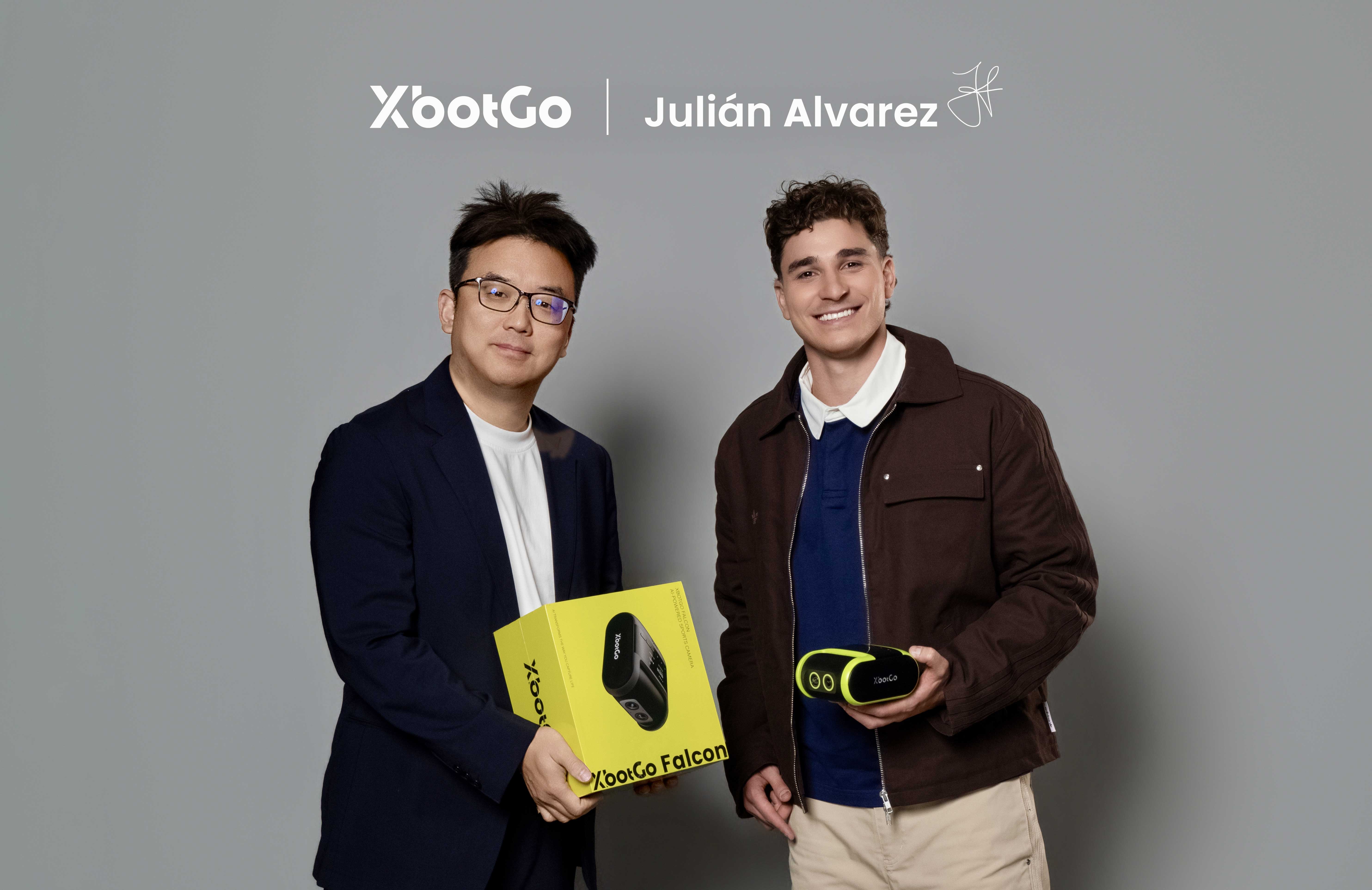 Left: Tan Kefeng, Founder of XbotGo
Right: Julián álvarez, Global Brand Ambassador for XbotGo

The Compound Interest of 'Focus': From Best Buy to álvarez
Once the product was validated, the challenge became selling more.
Initially, XbotGo relied almost entirely on direct online sales. However, after accounting for platform commissions, logistics, returns, advertising, and other expenses, net profit margins were squeezed very low.
Tan Kefeng realized that instead of battling in the red ocean of traffic, it was better to concentrate resources on the most precise target audience.
And once they focused, compound interest began to manifest.
First Compound Interest: Breaking into Mainstream Channels. In 2024, Tan Kefeng brought the 'Chameleon' to Best Buy. After agreeing to an online test, sales steadily climbed: from just a few units in the first week, to 200 in the second week, and then soaring to three or four hundred in the third week. The consistently stable sales ultimately convinced Best Buy to place XbotGo's first batch of products in over 200 core stores by June 2026, with plans to expand to thousands of stores in the future.
Second Compound Interest: Deep Integration with Niche Platforms. XbotGo achieved API-level integration with TeamSnap, the largest youth sports management platform in the U.S. Parents no longer need to switch apps; they can simply click 'Live' within TeamSnap, and the device on the sidelines responds immediately. TeamSnap has served over 30 million users and 19,000+ sports organizations cumulatively. This partnership transformed XbotGo's customer acquisition path from a 'funnel' to a 'direct expressway.'
Third Compound Interest: Precise Channel Expansion Domestically. In China, XbotGo directly connects with youth training clubs, where coaches recommend the product to parents. 'Parents have long decision cycles themselves, but if the club coach says 'we all use this,' the conversion rate becomes very high,' he explained. This model has already achieved monthly sales of over a hundred units in Shenzhen alone.
Fourth Compound Interest: Natural Expansion into B2B Scenarios. iFlytek introduced XbotGo devices into its smart campus sports solutions, with initial orders reaching several thousand units. 'Schools deploy multiple camera positions, so a single school buys more than one unit.'
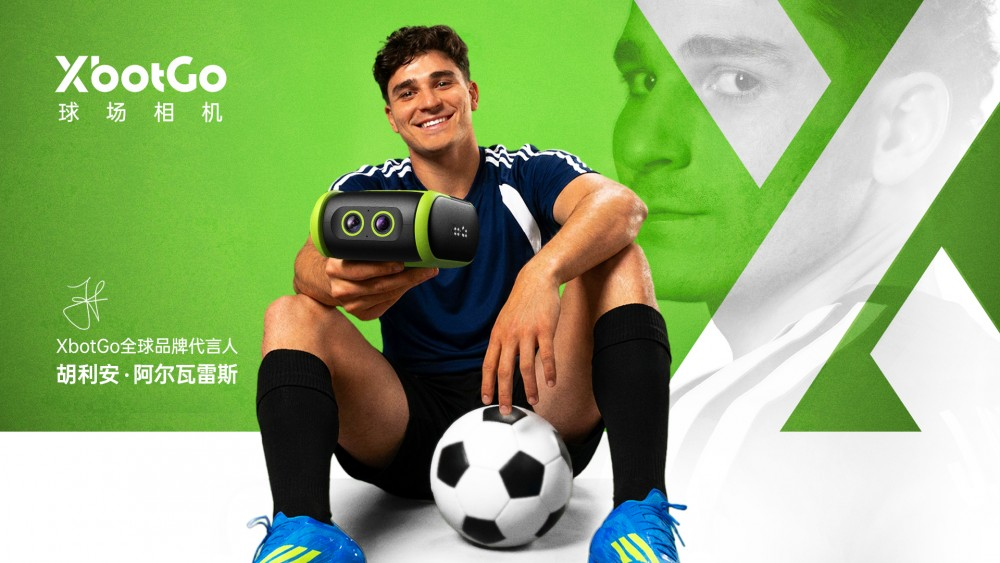
Fifth Compound Interest: Precise Coverage for Brand Momentum. In brand building, XbotGo also adheres to the principle of focus. 'We're not looking for top-tier celebrities like Ronaldo. They're too expensive, and the traffic would be wasted. We look for sports stars whose audience overlaps 100% with our target demographic,' Tan Kefeng stated. Argentine forward Julián álvarez became its first brand ambassador. Next, they plan to sign vertical ambassadors in basketball, tennis, and other fields. 'If this approach works, it can be replicated across various sports.'
Some ask: What if DJI makes a similar product? Tan Kefeng's assessment: 'DJI's drone business is in the tens of billions. The sports-specific camera market is currently only a few hundred million dollars in size. They likely wouldn't be interested.'
He believes XbotGo's real moat has three layers: First, the software service chain is long enough, evolving from 'able to capture' to 'able to auto-edit,' 'able to analyze data,' and 'able to live-stream.' Second, deep integration within sports circles, such as partnerships with precise vertical organizations like TeamSnap and youth training clubs, effectively secures the parents' decision-making channel. Third, accumulated engineering expertise in hardware-software integration. Years of accumulated on-device AI algorithms and scenario-specific data are not something that can be caught up to overnight. These three layers of moat are precisely the 'compound interest of focus' accumulated over time on the timeline.
This logic has also gained capital recognition. In 2026, XbotGo completed a nearly 100 million RMB funding round led by Ninebot Capital, with participation from Yuanhe Holdings, Different Capital, and existing shareholder 01VC, which also increased its investment.

Small Steps, Fast Running: Maintaining Restraint Between Ideals and Reality
Tan Kefeng's entrepreneurial journey differs from many Silicon Valley returnees—he didn't start with a large funding round but relied on $1 million in startup capital, government loans, and sales revenue to 'run fast with small steps.'
'This experience forced us to think about profitability very early on,' he said. 'If you're always burning VC money, you might only focus on user growth and not care about revenue. In the end, the bigger the operation, the harder it is to manage.'
This 'survival-first' mindset is also reflected in product planning. When Liu Chen pointed out the 'restraint' he showed in product development, Tan Kefeng expressed strong agreement. He emphasized, 'We won't create overly conceptual products. What we make must be sellable.'
Newly recruited product managers are all industry veterans. When Tan Kefeng communicates with them, the most frequent topic is 'don't deviate.' Users don't care about sensor size or whether it's one inch; they only care about 'can it capture the goal I want.'
In organizational management, XbotGo also follows the principle of restraint. While business is growing, the rate of personnel increase is slowing. 'At the beginning of the year, departments planned to reach over 320 people by year-end. Now it seems around 280 will be sufficient,' Tan Kefeng said. 'During recruitment and training, we pay special attention to candidates' ability to use AI tools.'
He observed that the programming model for the software team has completely changed. 'You just tell the AI the requirement; there's no need to learn underlying languages anymore.'
But this change also brings anxiety. 'Development is too fast. You don't know when some disruptive thing will appear. Fortunately, we make hardware, which provides a physical layer of defense. If we were purely software, I'd be very worried,' Tan Kefeng admitted frankly.
Reflecting on team changes along the entrepreneurial journey, he is emotional. When important early partners left, it was difficult for him. 'But later I realized the company can function without anyone. Honestly, without me, the company might even develop better.'
'It's hard to accept emotionally, but it's the truth,' he said. 'The company gradually forms its own operational logic.'

From 'Recorder' to 'Analyst': XbotGo's Ultimate Vision
Facing flaws squarely allows one to go further.
In real-game scenarios, single-point gimbals occasionally experience brief loss of tracking or mechanical jerky movements during crowded scrums in the penalty area. The lack of optical zoom weakens the resolution of distant players. There's wind noise interference in open environments, and adaptability to sports like baseball, which involve 'small, ultra-fast balls' and 'divergent running patterns,' is insufficient. These are issues the team must confront directly.
Tan Kefeng isn't anxious about this. 'At this stage, we focus on doing well what we can do,' he stated. Hardware imperfections are an inevitable cost of engineering R&D; the core challenge lies in the development pace following increases in computing power.
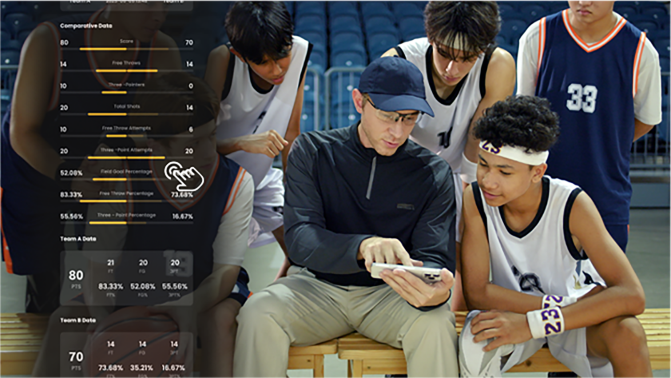
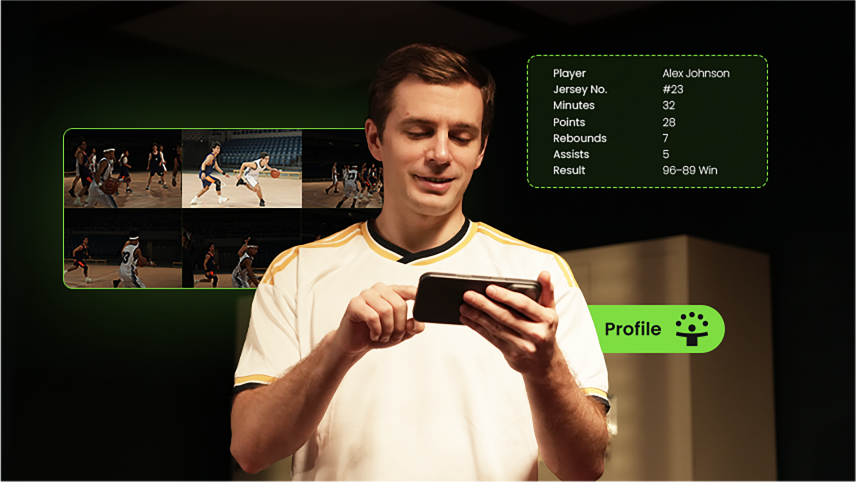
The real engine of evolution is data. Currently, tens of thousands of XbotGo devices deployed across sports fields in the U.S. accumulate hundreds of millions of high-dynamic, real-scenario data points every day. As computing power increases, the system will evolve from a passive 'recorder' to an active 'AI data analyst,' capable of automatically generating tactical heatmaps based on player positioning and even providing injury prevention warnings based on player movement trajectories.
His ultimate vision is to create a professional 'AI photographer.' When it anticipates a penalty kick, the lens automatically zooms in for a close-up. When a goal is scored, it provides professional feedback like a referee. It could even achieve multi-camera coordinated switching, truly understanding the game like a human photographer, freeing manpower from being bound by equipment.
For the next steps, Tan Kefeng's plan is clear: first, master the 'sports camera' domain thoroughly. But he also admits the current product is still far from perfect. The next-generation product will use higher-spec chips, supporting 4K at 60fps and 10x zoom. 'Although the image quality still has a gap compared to professional photographers, it will be worlds apart from today's devices.'
On the technical roadmap, developing proprietary chips is an inevitable direction. 'Using others' chips is expensive, but more importantly, it's wasteful. General-purpose chips include many features we don't need, and some performance aspects don't meet our requirements.'
As for whether they might face disruption from smartphone manufacturers? Tan Kefeng's judgment is firm: 'The market is too vertical and too small for major phone manufacturers to care about. That's precisely our advantage.'

XbotGo's growth story provides an 'atypical' example of going global: not built by burning through venture capital, but by solving real pain points, supported by a group of early users who 'criticized but didn't return the product,' and through continuous hardware and software iteration, gradually carving out a path.
The story contains no overnight success myth. Instead, it's about customer service calls answered late at night, conviction amidst a 20% return rate, and parents' obsession with 'capturing their child's goal.' (Horseshoe Club Original / June 2026)

Tan Kefeng is the founder of XbotGo. He holds a Ph.D. and is a Silicon Valley tech elite who previously worked in Amazon's smart hardware development division. In 2020, based on a product opportunity identified in sports scenarios, Tan Kefeng founded DeepGaze Technology.
Born To Be Global 100 is a global brand CEO deep-dialogue column initiated by Ebrun's 'Horseshoe Club.' We are looking for the next interviewee.
If you are also a 'Born To Be Global' brand founder with deep reflections on your business philosophy and practices, we welcome you to contact us, share your story, and help define this era together.

[Copyright Notice] Ebrun advocates respecting and protecting intellectual property rights. Without permission, no one is allowed to copy, reproduce, or use the content of this website in any other way. If any copyright issues are found in the articles on this website, please provide copyright questions, identification, proof of copyright, contact information, etc. and send an email to run@ebrun.com. We will communicate and handle it in a timely manner.
Translated by AI. Feedback: run@ebrun.com