
After Dominating at Home, How Will Laifen Answer the Global Expansion Question? | EBRUN Global Goods
After achieving the number one market share in the hair dryer category domestically within three years of its first product launch, Laifen is now, in its sixth year, far more than just a hair dryer company. The brand is evolving from an 'online hit' to an 'omnichannel brand' and from a 'single-product champion' to a 'builder of a beauty and personal care ecosystem.' This is the transformation Laifen is undergoing in the Chinese market. In terms of product categories, beyond high-speed hair dryers, Laifen has ventured into personal care products like curling irons, smart makeup mirrors, sonic electric toothbrushes, and linear reciprocating electric shavers, and even broader daily necessities. Regarding channels, 2026 marks the official start of a rapid expansion phase for its offline retail business, with plans for continuous expansion to cover more key cities.
Another segment opening new growth avenues for Laifen—its global business—also entered an accelerated sprint phase in 2026. From 2026 to the present, Laifen's overseas revenue has reached new highs. From January to May, the North American market grew nearly fourfold, while growth in the European market and Amazon channels approached 200%. Products have gradually entered mainstream Western retail channels like Costco, Target, Walmart, and BestBuy. 'Currently, the international business still accounts for a relatively small portion of Laifen's overall operations, but our goal is for it to contribute over half of the company's scale by 2028,' Luo Mingbo, General Manager of Laifen's International Business, told Ebrun.
01
Recalibrating the Global Strategy
The globalization path for a Chinese brand generally falls into three routes: 'born global,' 'domestic first, then overseas,' or 'overseas first, then domestic.' Laifen follows the second route. In Luo Mingbo's words, 'The company was positioned as a global brand from the start. We chose to establish ourselves domestically first because the business cycle in China runs faster—it's like testing that our products are truly competitive and that the underlying business model works in the domestic market.'
Laifen's overseas expansion can be traced back to 2022—the second year after its domestic launch, when it entered Southeast Asian markets through cross-border e-commerce platforms like Lazada. Subsequently, from 2023 to 2024, it began exploring North America, the world's most mature consumer electronics market, followed by entry into Europe.
Public information shows that within just a year of entering Southeast Asia, Laifen ranked among the top in the high-speed hair dryer category in markets like Malaysia and Singapore. In North America, during the 2024 Black Friday sales season, a product (Laifen Hair Dryer SE) surged to the top of the new product rankings in its category on Amazon US. While these trial results might not yet be considered 'strong,' they gave Laifen a clearer sense of direction for its global business.
At the end of 2025, Laifen explicitly included globalization in its corporate strategic plan for the first time. Luo Mingbo, a veteran who previously oversaw overseas business at Anker Innovations and Tineco (officially appointed as General Manager of Laifen International in September 2025), took on the 'military order,' setting a three-year goal for the team to achieve a 1:1 ratio between international and domestic business.
'Although this goal is very challenging—after all, the international business chain is longer and more complex—this is the baseline,' Luo Mingbo stated. Most companies with successful global operations have greater overseas revenue than domestic. Laifen, however, is a typical case where domestic growth far outpaces international, yet its products are equally suitable for both markets. Therefore, Laifen's globalization must accelerate over the next three years.
The key breakthrough point is finding the right market positioning. In Luo Mingbo's view, high-speed hair dryers are not a niche category known only to a few consumers but the mainstream direction for the future upgrade of the hair dryer industry. For many years, the global hair dryer market has had a structural gap: on one end are products that have already upgraded to high-speed technology but haven't truly entered mainstream consumption scenarios; on the other end are a large number of traditional hair dryers still using outdated technology. Many overseas consumers desire a better hair drying and styling experience, but the market lacks a player with mature product strength, brand power, and channel strength to propel high-speed hair dryers from being 'known by a few' to being 'chosen by more households.'
'Laifen's brand philosophy is to reshape every daily necessity through engineering capabilities and aesthetic standards,' Luo Mingbo said. 'In the hair dryer space, we focus more on how to truly grow the high-speed hair dryer category, making more consumers realize that a hair dryer shouldn't just be a basic small appliance; it can become a high-frequency personal care tool that enhances daily life quality.'
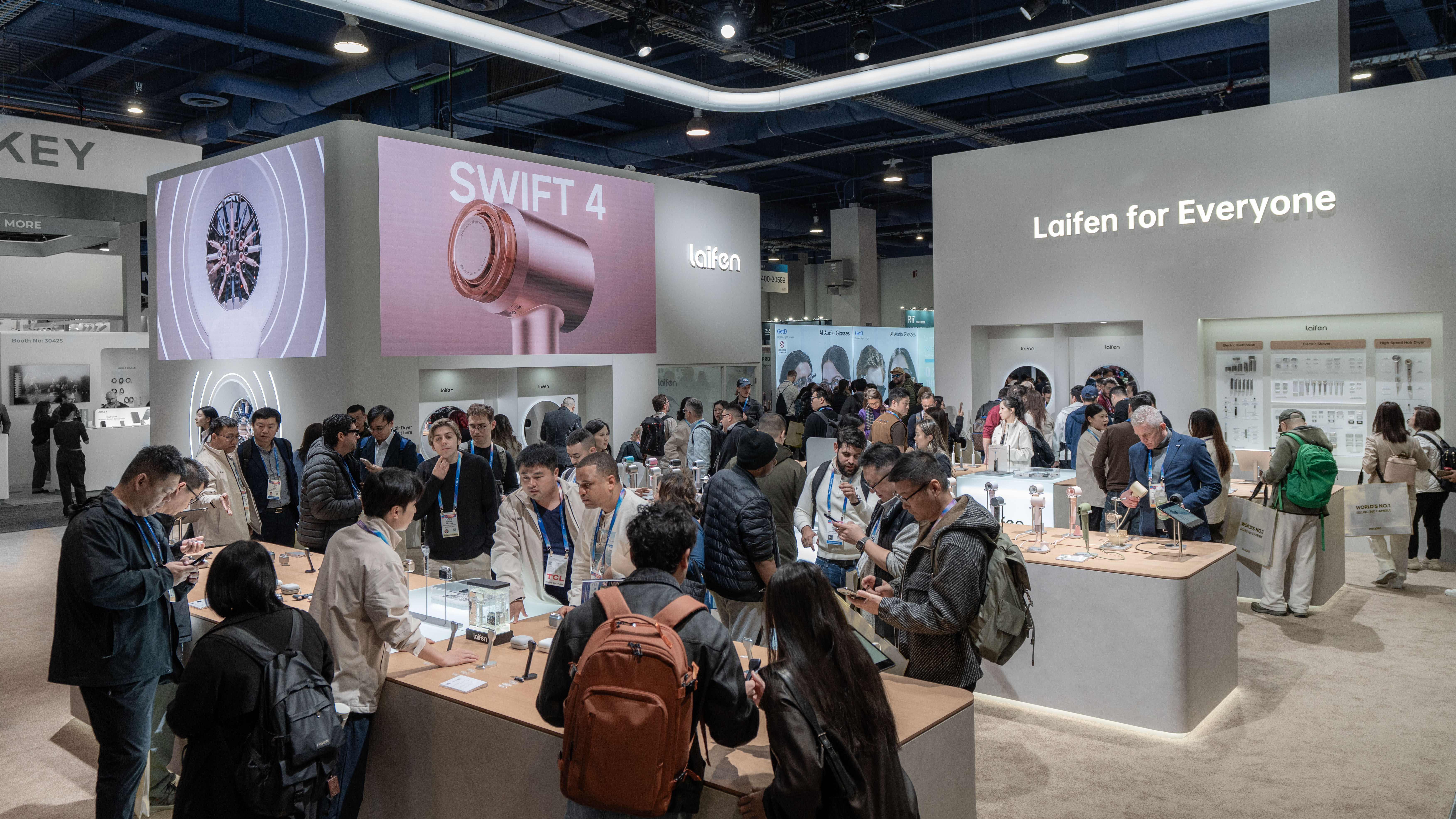
This judgment stems from validation Laifen has already completed in the Chinese market: high-speed hair dryers are not confined to niche, trial, or gifting scenarios. With sufficiently stable product experience, solid technical capabilities, and clear brand recognition, they can become daily essentials for the mass market. Now, Laifen hopes to bring this product and commercial capability to the global market, promoting a genuine category upgrade for hair dryers in more countries.
'What we need to do is use high-standard product definitions, continuously innovative technological capabilities, a more efficient supply chain system, and channel development closer to local consumers to transform the high-speed hair dryer from a 'visible advanced category' into a mainstream choice in more households' daily lives,' Luo said. Supporting this are Laifen's underlying strengths for global competition: from self-developed high-speed brushless motors in R&D, mastering core manufacturing capabilities in production, to full-chain efficiency from core components to finished products. For Laifen, going global is not about replicating domestic hits overseas; it's about reopening the growth space for the high-speed hair dryer category in the global market and becoming a leader in the new wave of personal care appliance upgrades.
02
Going Global: A Full-Frontal Assault
In Luo Mingbo's view, competition intensity among Western brands is far lower than in China. When a brand builds up a category, there aren't as many competitors piling in behind, so it can take five or ten years to grow slowly. But once Chinese entrepreneurs pioneer a new sector, competitors emerge within six months at most. This environment forces a product iteration speed unseen in the West.
For Laifen as a whole, the long-term product expansion direction is moving from personal care to broader daily necessities. However, in terms of overseas market progression, Laifen won't spread categories too wide initially. It will prioritize forming a more complete and focused product array around three major categories: high-speed hair dryers, electric shavers, and electric toothbrushes.
This strategic choice stems from differences in business chains between domestic and international markets. In China, the pathways for consumer reach, content dissemination, channel conversion, and product feedback are extremely short and fast. A sufficiently excellent product can achieve breakout, scale, and capture significant market share relatively quickly. But outside mainland China, especially in Western markets, the business logic and channel chains remain relatively traditional: entering mainstream retail systems takes longer, and building consumer trust relies more on sustained channel presence, product matrices, and localized operations.
Therefore, Laifen's offensive in international markets isn't about rapidly expanding all categories after a single breakthrough. Instead, it will use the three high-frequency personal care categories—high-speed hair dryers, electric shavers, and electric toothbrushes—to support a clearer, more complete brand positioning first. High-speed hair dryers lead because they have already validated Laifen's product strength and category leadership in China. Adding electric shavers and toothbrushes helps Laifen establish a more stable and continuous brand recognition in overseas consumers' daily personal care routines.
'In overseas markets, you can't truly become a brand relying on just one hit product,' Luo Mingbo explained. 'To enter the lives of mainstream Western consumers, you need a relatively complete product array and must continuously build trust in the channels and scenarios they are familiar with.'
Following this logic, Laifen will first establish its brand foundation in key markets like North America and Europe through these three core categories. Once firmly established in these markets, it will gradually expand into more daily necessity categories, continuing to practice its brand philosophy of 'reshaping every daily necessity.'
It is reported that Laifen has already started operations in multiple global regions, with developed markets like North America, Europe, and Australia progressing relatively faster. Among these, North America is designated by Luo Mingbo as 'Laifen's primary battleground that must be won,' a top priority for this year's business. 'The North American market size is far ahead globally, so we will allocate more resources there. Making this market a success first can better radiate to other regions.'
Regarding overseas channel strategy, Luo Mingbo and his team have also re-evaluated: shifting from a past approach more focused on online conversion via cross-border e-commerce to a global channel system emphasizing online-offline synergy and equal focus on brand and sales.
Mainstream retail channels in developed countries will become key targets for Laifen's next breakthrough. Compared to relying solely on e-commerce platforms, entering retail systems like Target, Walmart, BestBuy, and Costco, which are frequently accessed by local consumers, means Laifen isn't just selling products overseas; it's truly entering the daily life scenarios of Western consumers, competing on the same shelves and within the same consumer decision-making environment as long-trusted international brands. This is a necessary step for Laifen's transition from a cross-border brand to a global brand.
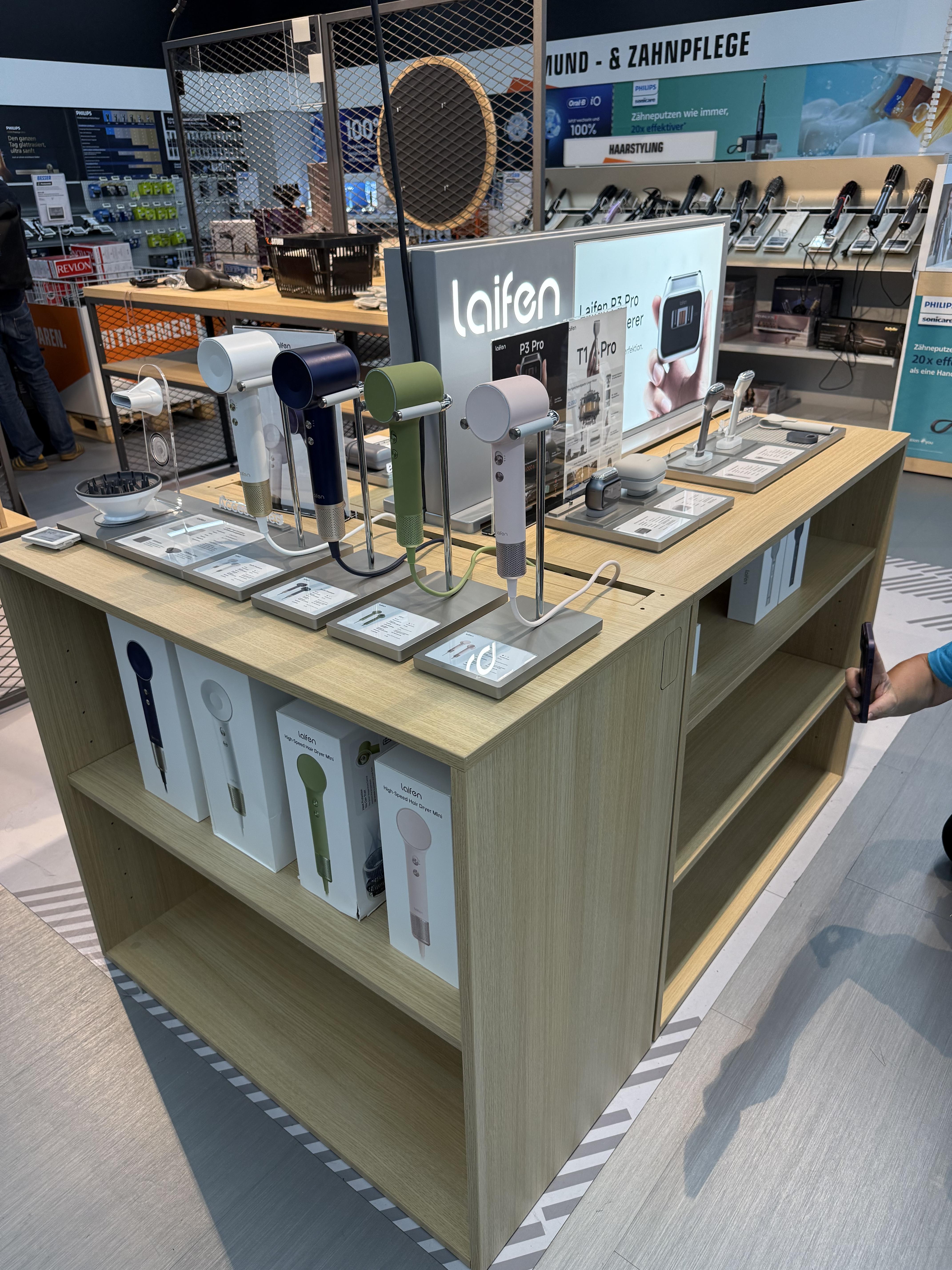
Simultaneously, Laifen has redefined the role of its independent website (DTC site) in overseas operations. Rather than just a sales channel for direct transactions, the Laifen site will shoulder a more important function as a brand stronghold: systematically presenting Laifen's brand philosophy, product ethos, technological capabilities, and user value, becoming the core window for overseas consumers to understand, recognize, and build trust in Laifen.
In Luo Mingbo's view, a true global brand cannot pursue only short-term sales efficiency; it must continuously build brand mindshare and user relationships. Therefore, Laifen's channel layout in overseas markets will evolve from 'where can we sell' to 'where do we build the brand, where do we accumulate trust, where do we influence consumers long-term.'
03
How to Build a Brand Overseas?
'Going global is definitely not about dumping products; only by building a brand can you have a long-term moat.' This is Luo Mingbo's consistent stance, which dictates that Laifen's approach in overseas markets is not just 'selling goods' or focusing solely on immediate conversion.
Laifen allocates more resources to getting closer to consumers locally—for example, heavily promoting offline supermarkets, increasing offline brand exposure, and on Amazon, not just doing conversion-focused ads but using Amazon's full-funnel advertising to amplify brand voice and expand top-of-funnel traffic. The basic starting point is to act like a local brand doing localized marketing, using channels more frequented and familiar to Western consumers and employing marketing methods they prefer.
Of course, the strategy of full-channel presence and heavy offline push brings immense pressure. For instance, negotiations for entering offline supermarkets and business progress are lengthy; data feedback is slow; all marketing actions require pre-judgment, and the cycle for adjustments based on results is also long (unlike cross-border e-commerce, where all data is timely and actions can be quick). But in Luo Mingbo's view, to truly penetrate Western markets and become a brand ingrained in people's minds, this long-term investment is necessary.
'In China, a pure e-commerce brand might not be considered a real brand; it's even more so overseas,' he said. 'When Western consumers walk into a store and see your brand placed alongside brands they've known for 10 or 20 years, that might prove your brand has gained a foothold.'
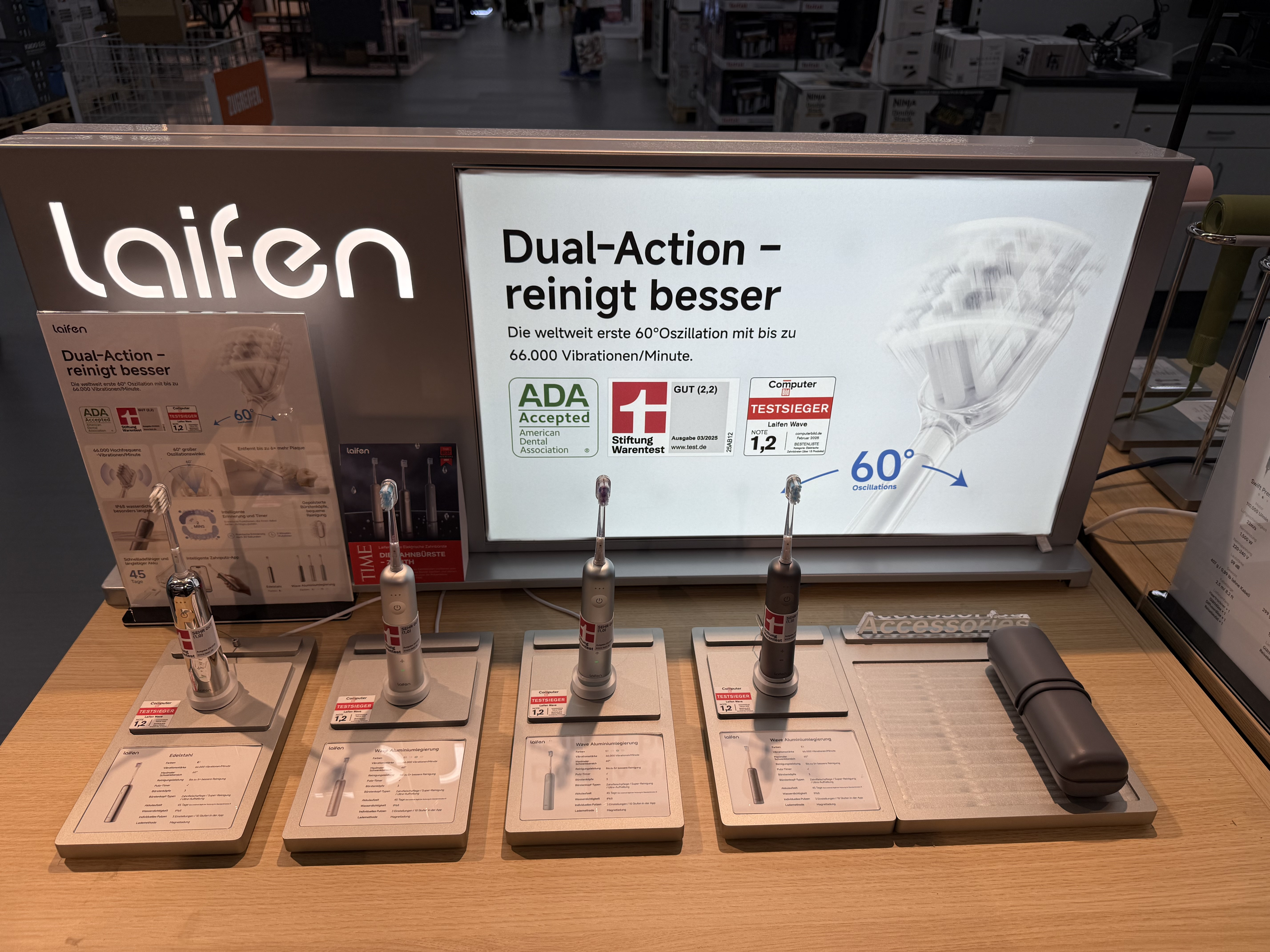
Based on this standard, Luo Mingbo breaks down Laifen's global brand building into a 'three-step' process.
Step one is securing key positions in key channels. This includes obtaining prime shelf space in top retail systems like Target, Walmart, and Costco, as well as achieving top category positions on online platforms like Amazon. 'For a brand newly entering an overseas market, channels are not just sales terminals; they are the first point of contact for brand trust. Only by appearing in channels that local consumers are familiar with, trust, and frequently visit can you have a chance to enter their daily decision-making.'
Step two is expanding the brand marketing funnel. Laifen aims to extend brand communication from core shelves and platforms to more stores, cities, and life scenarios—from major cities to towns, from online platforms to broader content, media, and community touchpoints—so that brand awareness, user perception, and sales scale grow simultaneously.
Step three is establishing local teams to implement meticulous localized operations. This involves truly understanding the local market's business rules, consumption habits, and channel ecosystem, and building sustained operational, feedback, and iteration capabilities locally.
'When these three steps reach a relatively mature stage, Laifen's offensive-defensive system in overseas markets will be preliminarily established,' Luo Mingbo stated. These three steps are not novel methodologies or so-called innovative tactics. Anyone familiar with classic marketing and brand-building logic knows that entering mainstream channels, expanding brand awareness, and establishing localized operational capabilities are the basic path for a brand to go from a regional to a global market. The difficulty lies in long-term persistence.
'Many Chinese brands going global aren't unaware of the methods; it's that their actions easily deviate,' he remarked. 'Some companies are impatient for success, hoping for maximum growth in the shortest time; others lose patience during long-term investment; still others habitually replicate their domestic success without considering the longer channel chains, slower trust-building, and more complex local ecosystems overseas. The result is that strategically they talk about building a brand, but in execution, they revert to just selling goods; they preach long-termism verbally but chase short-term conversions in action.'
Therefore, in his view, for Chinese brands to truly grow into globally recognized brands, the most important thing is to consistently, steadily, and firmly do the right things that have been repeatedly proven. 'There are no secret tricks in global brand building, only the fundamentals under a long-termist approach.'
Summarizing Laifen's core approach to globalization, Luo Mingbo used three keywords: Full-Channel Penetration, Local Deep Cultivation, and Redefining Benchmarks.
'Full-Channel Penetration' means Laifen aims to achieve systematic breakthroughs in key markets, key channels, and key consumption scenarios. Whether it's online platforms, offline retail, professional channels, or content touchpoints, Laifen hopes to enter the real daily life circles of overseas consumers with higher density and quality brand exposure.
'Local Deep Cultivation' means truly integrating into the local commercial ecosystem of each market. Different countries have different channel rules, consumption habits, communication contexts, and retail rhythms. It's essential to establish local teams, build capabilities, understand users, and operate long-term in ways acceptable and trusted by the local market.
'Redefining Benchmarks' is Laifen's higher goal for entering global markets. Laifen is not content with merely gaining a sales seat overseas; it hopes to redefine industry standards in every core category it enters. 'In other words, Laifen's overseas expansion isn't about becoming a supplementary option in a market; it's about becoming a new benchmark driving category upgrades,' he explained.
[Copyright Notice] Ebrun advocates respecting and protecting intellectual property rights. Without permission, no one is allowed to copy, reproduce, or use the content of this website in any other way. If any copyright issues are found in the articles on this website, please provide copyright questions, identification, proof of copyright, contact information, etc. and send an email to run@ebrun.com. We will communicate and handle it in a timely manner.
Translated by AI. Feedback: run@ebrun.com