
Are Overseas Warehouse Explosions Being Mass-Produced? Top Sellers Mired in Cargo Seizure Quagmire, Rights Defense Harder Than Climbing to Heaven...

By Wang Yu
Edited by He Yang
[Ebrun Original] $55 million in inventory seized, a staggering $48 million in fees, heavy bribes to insiders for intelligence, fake police cars showing up late at night for intimidation, public social media bounties for 'hiring a hitman'...
This isn't a plot from an American TV show; it's a business dispute between a major Chinese cross-border seller and an overseas warehouse service provider, a saga as convoluted as 'Rashomon'.
Both sides are telling different stories. The warehouse accuses the seller of not only defaulting on massive storage fees and pressuring them to lease more capacity but also of using air guns to blast open office doors, smashing executive vehicles, sending trucks to blockade the warehouse, and even issuing death threats against the owner and their children. The seller, in turn, 'denies all allegations in the strongest possible terms,' counter-accusing the service provider of being 'highly unreliable,' claiming that even after reaching a settlement and paying millions of dollars, they failed to comply with the agreement and refused to release the goods.
From starting cooperation in 2020, to the relationship souring in 2024, and then to facing off in court in 2026, this high-profile case that has shaken the industry has torn open a bloody gash in the hidden gray areas of the cross-border world.
Although the lawsuit has been withdrawn, criminal investigations are still ongoing. What truly rattles the industry, beyond the extremity of this case, is the 'déjà vu' universality behind it.
'Overseas warehouse disputes, there are people exposing them almost every month,' an anonymous warehouse owner told Ebrun. Whenever news of a peer's 'explosion' (i.e., sudden collapse or scandal) spreads, local seller groups start a new round of 'avoiding landmines' chain messages. 'With so many voices, we often get caught in the crossfire, suffering from malicious rumors spread by opportunists.'
From the seller's perspective, similar scripts play out repeatedly: from sudden price hikes and cargo seizure for ransom, to overnight disappearances and absconding with goods. 'If you haven't been scammed a few times, how can you be considered a seasoned veteran?' one seller quipped.
According to incomplete statistics, in 2025 alone, there were over 30 'explosion' incidents involving overseas warehouses domestically, affecting more than 40,000 sellers, with a cumulative amount involved exceeding 1 billion RMB. Just this March, in Los Angeles alone, five overseas warehouses 'exploded' within a week, involving over 2,000 Chinese sellers, with the value of goods conservatively estimated at 200 million RMB.
When tens of thousands of cross-border sellers entrust their goods to warehouses across the ocean, have they found 'allies' to advance and retreat together with, or 'landmines' ready to detonate at any moment? What are the 'pits' that leave sellers with nothing? And what self-rescue strategies can they rely on?

The Pitfalls of Overseas Warehouses, Even Top Sellers Can't Avoid Them
As a 'veteran' in the cross-border industry and a top seller in Amazon's home textiles category, Chen Shirong is widely recognized as a formidable player within the circle. His company, Eskimo, generates annual sales in the billions. But even such an 'old hand' was once dragged into the quagmire of an overseas warehouse dispute, ultimately escaping only after paying a painful price.
Hearing about the incident mentioned at the beginning, Chen Shirong shared his own past experience of stepping into a pit with Ebrun.
The story began in 2018 when Eskimo was looking for an overseas warehouse in the US and a freight forwarder salesperson came to pitch. 'At that time, overseas warehouses were still a novelty. We didn't think much and just sent some goods over to try,' Chen Shirong recalled. 'We never imagined we'd 'capsize in a ditch' at this stage.' Later, he learned that this service provider originally only did freight forwarding. Seeing the overseas warehouse market heating up, they hastily assembled a few people, went to the US to rent a warehouse, and started recruiting clients.

The initial phase of cooperation was relatively smooth. He likened it to a novice chef handling one or two tables of dishes—'no problem when just starting.'
But during the pandemic, overseas warehouse demand surged—'suddenly 50 tables of guests rushed in, and the kitchen was completely overwhelmed.' Delayed shipments and wrong addresses became the norm, directly lowering Eskimo's store weight and listing rankings on the platform. A more serious issue was the accounts: Chen Shirong found the figures simply didn't match—'10 items out of the warehouse, they insisted it was 20.' Inflated prices were commonplace.
By 2020, Eskimo proactively proposed a 'clean break.' And the real nightmare began then.
The other party first came in person, thumping their chest, promising various discounts to try and retain them. Seeing that retention was hopeless, their attitude took a sharp turn, presenting staggering relocation conditions: for goods worth 1 million, the relocation fee was an astonishing 1.2 million.
This led to intense confrontation between the two sides. It wasn't until 2021 that the other party sued first, on the grounds that Eskimo 'failed to pick up the goods and defaulted on payment.'
Only in court did Chen Shirong truly realize: 'Once the goods enter their warehouse, the merchant is the meat on the chopping block.'
What sent a chill down his spine was discovering he had signed a 'one-sided contract': Party A (Eskimo) only had payment obligations, while Party B bore no liability for delayed shipments, wrong or missing shipments, and the pricing method was vague. 'We signed it muddle-headedly back then, with no sense of precaution,' Chen Shirong stated.
Subsequent investigation by the law firm revealed an even harsher truth: this service provider had 27 similar pending lawsuits, and they appeared as the plaintiff in all of them. Chen Shirong even suspected the other party's business model had mutated—'Since service can't retain clients, then force a rebellion, sue one, and make money through litigation anyway.'
In the end, Chen Shirong lost the lawsuit. He calculated a clear 'account of blood and tears': Goods costing 3 million sat idle in the warehouse for two to three years, with storage fees and late payment penalties totaling over 2 million; disposing of the scrapped goods cost an additional 300,000 in disposal fees; direct book losses exceeded 5 million. If factoring in the opportunity cost during the pandemic supply shortage, where the goods could have been sold at higher prices for a huge profit, 'losing 8 million is not an exaggeration.'
Reviewing this defeat, Chen Shirong regretted two things the most: 'The contract must be reviewed carefully, and before turning hostile, it's best to pull the goods out first, don't leave a handle for others to grasp.'
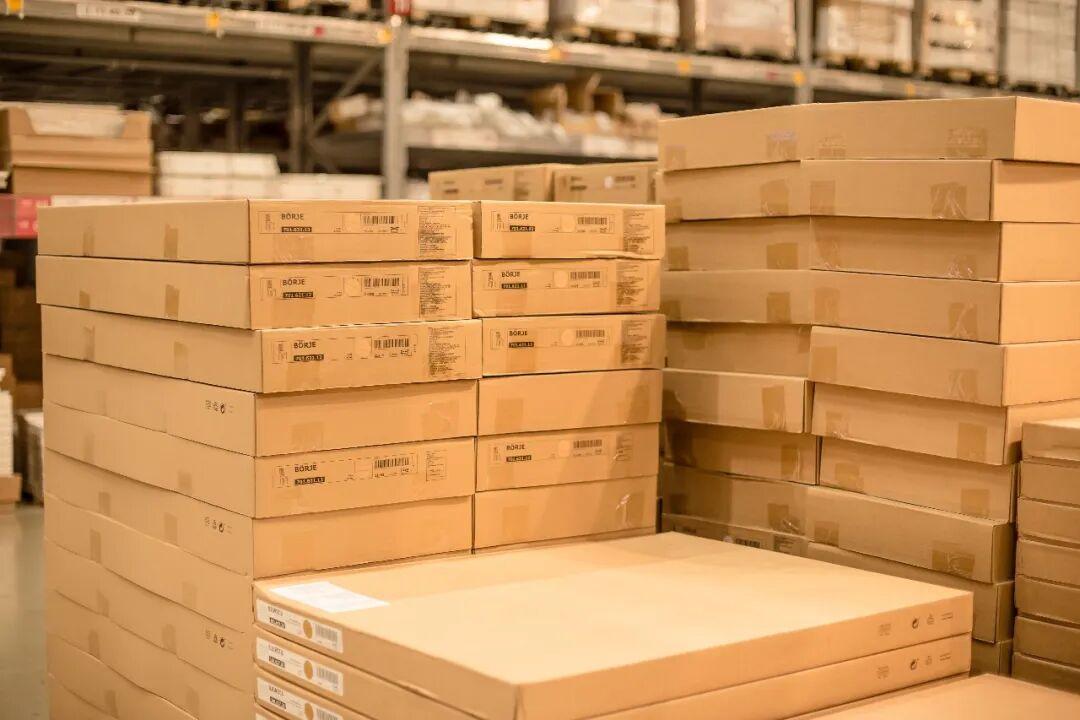
After this ordeal, Eskimo shifted to several well-known top-tier overseas warehouse service providers, split inventory across multiple warehouses to spread risk, and since 2022, has established dedicated logistics supervisor and overseas warehouse supervisor positions. Within the circle of major cross-border e-commerce sellers, a self-formed early warning mechanism for reporting 'untrustworthy overseas warehouses' has also emerged.
'Back then, most overseas warehouse service providers started from scratch. There wasn't much experience to draw from in the market. We could only 'test the waters by shipping goods over,' we simply had no choice,' Chen Shirong admitted. Now, there are at least 20 reputable large-scale overseas warehouses in the market, significantly lowering trial-and-error costs. However, the industry's unhealthy price war and low entry barriers are still creating new 'explosion' stories.

The Constantly Lowering Bar of 'Explosions'
Eskimo's experience is not an isolated case.
Zhang Ning, founding partner and senior attorney at US law firm CBC, told Ebrun that over the past year, incidents of warehouse operators deliberately provoking disputes have increased significantly, showing characteristics of repetition and habitual offending.
More unsettling is that this practice seems to be 'spreading' within the industry. 'Certain overseas warehouse operators are interconnected—they've all seen 'the power of coercion,'' Zhang Ning revealed.
Behind the chaos may lie the seeds of trouble sown during the era of wild growth. Between 2020 and 2024, the overseas warehouse industry experienced unprecedented explosive growth. One logistics practitioner bluntly stated: 'It was a bit like the early years when real estate first boomed, everyone wanted a piece of the action.' Various service providers emerged under banners like 'cloud warehouse,' 'pop-up warehouse,' 'home garage warehouse,' with the good and the bad mixed together.
According to Zhang Ning's recollection, she had a client who originally worked in high-tech in Silicon Valley, thought during the pandemic that doing warehouses was 'a good business,' and switched industries overnight—offering a glimpse into the phenomenon.
'Of course, among this wave of entrepreneurs, there are certainly those doing legitimate business, but it also can't be ruled out that some were in it for quick, shady profits from the start,' she said.
It was precisely during these years that CBC, a comprehensive law firm originally focused on corporate transactions, cross-border investment and M&A, compliance consulting, intellectual property, etc., saw a daily increase in the volume of overseas warehouse dispute cases it handled. 'Many clients who initially came to us for IP disputes also approached us, hoping we could handle their overseas warehouse problems,' she said.

More alarmingly, within this chaos, a significant portion involves 'itinerant merchants' with Chinese backgrounds. Zhang Ning explained that these individuals typically have some foundation and connections in China, discover the business opportunity, and go to the US to engage in warehousing. They are not native-born US residents, have weak local roots, and possess neither permanent assets nor long-term commitment. However, leveraging their fellow townsfolk network with domestic sellers, they can easily gain trust and secure business.
Essentially, these people are not professional logistics operators but are closer to 'brokers' skilled in persuasion and seizing opportunities. Once problems arise, they can at any time file for bankruptcy and simply vanish.
Seizing goods is even more common. 'Under US warehousing law, if you haven't paid storage fees, the warehouse has the right to hold the goods. They exploit sellers' unfamiliarity with US law,' Zhang Ning explained.
On the seller's side, the constraints on rights defense are equally fatal. Many sellers have no registered entity in the US at all, some didn't even sign contracts, relying entirely on verbal promises. When problems occur, they are unwilling to step forward, worsening the rights defense situation. More absurd 'subordinate rebelling against superior' problems frequently appear: a seller entrusts an overseas agent to handle matters, only for the agent to collude privately with the warehouse, directly switching sides.
A deeper fear might come from the sellers themselves not being entirely clean. 'Who would be so stubborn as to call the police or go to court?' an anonymous seller retorted. 'Once the warehouse pulls out the documents, implicating customs issues, intellectual property infringement, it's pulling up the radish and bringing the mud with it—how many dared to say they were completely compliant in the early years of doing business?'
When legal rights defense becomes a luxury, 'the lawless ways of the underworld' begin to breed. Affected by tariff fluctuations, many sellers have extremely limited inventory in the US. Once goods are seized, both the cash flow and platform performance evaluations come under pressure, with almost zero room for turnaround. In such situations, taking desperate risks becomes the last lifeline for some sellers.
According to industry insiders, an 'underground economy' specifically targeting overseas warehouses has emerged in Los Angeles.
The scenario of 'outlaws robbing the birthday convoy' often plays out: to put it bluntly, it's hiring underworld figures to reclaim inventory. The crazy scenes mentioned in the opening case—trucks blocking doors, fake police intimidation, bounties for heads—are, to some extent, an extreme manifestation of this business logic backfiring: when rules fail, violence quietly enters the stage.
On the other hand, even without malicious fraud, the fragile structure of some overseas warehouse service providers themselves is enough to leave sellers with nothing.
Dr. Alan Engle, partner and registered patent attorney at CBC Law Firm, pointed out that the most deadly risk comes from layered subleasing. When a warehouse is sublet through a second, third, or even fourth landlord, the contractual chain in between is extremely fragile. Once a tenant at any level defaults on rent and disappears, the original landlord has the right by law to seize and dispose of all goods within the warehouse—regardless of who owns them.
'I've seen too many sellers whose warehouse loses contact after goods are warehoused. When they rush to the scene, only seizure notices are left,' Zhang Ning described. 'To get the goods back, they not only have to provide cumbersome proof of ownership but also advance the rent owed by the warehouse owner. Even local lawyers in Los Angeles find it difficult to handle; rights defense periods often last over six months.'
Another type of 'explosion' stems from illegal employment practices. Some service providers have been investigated by federal agencies for allegations like wage arrears, threatening workers, withholding wages, forced labor, ultimately settling the matter by paying fines. Those warehouses that couldn't 'settle with money' faced direct seizure, goods seized along with them, and sellers were caught in the crossfire.
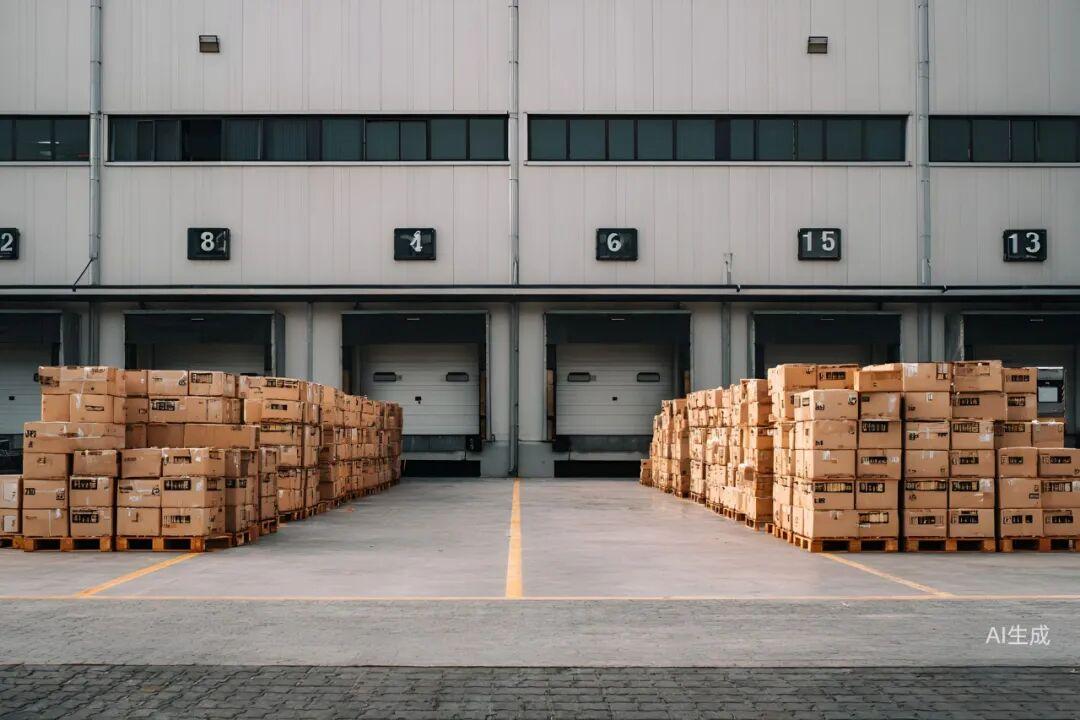
An even more extreme case is 'dragon fire burning the warehouse.' In April 2026, a giant warehouse in Ontario, California, was set on fire by an internal employee, reduced to charred ruins. The arsonist confessed afterward that due to excessively low wages and high living costs, he chose 'mutual destruction'—not only leaving nothing for the warehouse but also turning sellers' inventory to ash.
Another 'pit' comes from gray operations in last-mile delivery—the so-called 'tech orders,' 'water-running orders' (referring to fraudulent practices that exploit carriers' monthly billing cycles or system vulnerabilities, using false information to open accounts, forge shipping labels, evade shipping fees).
A seller told Ebrun that not long ago, a person in charge of a major US overseas warehouse was arrested for this. After the news broke, the warehouse came to a complete halt, with employees owed wages and packages piling up like a mountain. Many clients only found out when their stores were shut down, learning that the person in charge was already behind bars.
'This isn't earning money; it's earning a subpoena to court,' an industry insider stated bluntly. 'Don't harbor illusions, especially with carriers like USPS, which is a US federal agency. Once they investigate, they can make you pay a heavy price.'

Rights Defense 'Harder Than Climbing to Heaven,' Prevention is More Effective Than Cure
When sellers try to seek justice and demand compensation from the warehouse, they discover: this path to rights defense is far more rugged than imagined.
When a dispute truly enters judicial proceedings, the first battle sellers face is applying for a TRO (Temporary Restraining Order)—a legal weapon in emergency situations requiring the court to order forced release of goods and preservation of interests.
Attorney Alan told Ebrun that this procedure is the 'life-or-death line': successful applicants can obtain a release order within two weeks for a quick resolution; conversely, the case will get bogged down in litigation lasting a year or even longer, with legal fees accumulating and difficulty of rights defense increasing exponentially.
However, the threshold for TRO approval is extremely high. Applicants must simultaneously meet multiple conditions: emergency, sufficient evidence, the case is likely to win, and the losses are substantial.
Moreover, even with ironclad evidence, the ruling tendencies of different judges vary widely. 'With a complete evidence chain, the probability of obtaining a TRO is about 30%,' Alan estimated. 'But looking at all cases combined, the overall ratio might not even reach 10%.'
Once failing to smoothly pass the TRO hurdle, the subsequent protracted litigation is enough to exhaust all parties. 'No company wants to be dragged into US litigation procedures,' Alan admitted frankly. In the US, litigation costs are high and procedures are complex. 'House-raiding style' evidence discovery, lawyer fee bills flying in like snowflakes, all cause headaches.
A harsh reality is: 95% of US litigation cases ultimately end in settlement, not judgment.
'How to view the US legal system? It's actually a continuous struggle. The question is, at which stage of this struggle do the parties agree to take a step back each and reach a compromise,' Alan stated. The purpose of going to court is often not to win, but to 'force the other side back to the negotiation table.'
This is also forced by circumstances—because there are very few 'follow-up moves' available for merchants to turn the tables.
'If your goods are protected by intellectual property—for example, having a trademark or using IP—that is a very favorable condition in court battles,' Alan explained. 'Sellers can petition that due to the warehouse's improper handling, these goods might enter the market beyond the owner's control—some judges will approve TRO applications for this reason.
But it must be added that some judges might consider that in such situations, 'no one suffers substantial harm,' and thus reject—'it ultimately comes down to probability, needing luck,' he said.
Another strategy is to try to leave good written records, documenting the unreasonable demands made by the other party, and 'strategically' getting them to admit things, thereby gaining a dominant position in court.
'To some extent, sometimes we have to skillfully use the technique of eliciting information—preferably getting the sued overseas warehouse to reveal some of their real thoughts,' a seller who participated in cargo seizure negotiations told Ebrun.
If insisting on 'building strong fortifications and fighting a stubborn war,' pressing step by step through judicial channels, even if you win, it might just be a fight of pride—or even result in greater losses.
'Many warehouse companies in the US are shell companies,' Zhang Ning stated bluntly. 'They have no assets on the books to pay off debts at all. You win the lawsuit, they casually file for bankruptcy, and you can't get a single cent back.'
Alan also reminded Chinese sellers to note a fundamental difference: in China, the losing party faces comprehensive enforcement pressure; but in the US, judicial institutions don't care much about chasing down the losing party. 'In practical operation, one can only say, whatever you can strive for, that's all you have left.'
Because of this, Zhang Ning's advice to clients is often realistic yet helpless: rather than pursuing a total victory, it's better to settle quickly while you still have negotiation chips. 'Preserve the goods, get some compensation, however little, counts as victory,' she said.
In this regard, prevention beforehand is far more effective than remedy afterward.
'Never sign a contract blindly,' Zhang Ning said, reviewing past overseas warehouse dispute cases she handled. A considerable proportion of clients, let alone negotiating contract details with the warehouse, many didn't even look at it, signing as soon as they got it.
'You might find it surprising—in previous years, many big sellers with annual sales in the hundreds of millions basically relied on 'hitting it off with the warehouse owner in conversation' or friend introductions to sign contracts. Bilingual Chinese-English agreements were signed without even being looked through,' an overseas warehouse manager revealed.
'Many landmines were planted this way, exploding one after another in recent years—often at the point of renewal, the service provider revisits old accounts, leveraging contract loopholes to take a big bite opportunistically,' he disclosed.
Regarding contract terms, Alan emphasized a key 'safety valve' to sellers—it must include a negligence clause. 'Third-party logistics or warehousing companies must confirm in writing that all losses caused by their own negligence or misconduct will be borne by them,' he explained. This clause can effectively guard against cargo seizure and damage caused by landlord repossessing the warehouse, regulatory seizures, or other unexpected faults of the warehouse party.
Besides negligence liability, fee agreements must also be unequivocal. An Amazon seller dealing in hazardous goods stated bluntly that the rules for charging storage fees, handling fees, additional fees, their adjustment basis and frequency of changes, must all be put down in black and white in the contract, even bundling the complete price list and valuation agreement as appendices. 'Those with vague quotes, not considered at all.'
Beyond the contract, warehouse inspection is another must-pass hurdle.
To see through 'warehouse within a warehouse,' 'outsourced warehouse,' and ferret out non-self-operated 'middlemen,' the most direct method is to request video inspection, view real-time inventory monitoring. If possible, on-site inspection is better.
How to inspect? Look at how goods are arranged, overall warehouse condition, SKU placement logic, bin utilization, and even pay attention to the morale and composition of frontline warehouse employees. 'If there's not a single white employee in the warehouse, all are disgruntled-looking Hispanic, African American, can't even speak English properly, looking like illegal immigrants who crossed the border—do you think that's good?' a seller put it bluntly. 'Problems are bound to happen sooner or later.'
He also advised must obtain the direct contact information of frontline warehouse operators, reject methods where only salespeople relay messages in between; look at the local office, reject 'shell warehouses' operating remotely with no physical office; those who only send retouched pictures and only brag about scale should be blocked directly.
Another seller from Temu was more cautious: 'Without doing stress testing, we absolutely dare not deliver goods easily.' First, send a small test batch of a few hundred items to figure out the full-process timeliness of warehousing, shelving, picking, shipping out. More importantly, during major promotional nodes like Mid-Year Sale or Black Friday, closely monitor the service provider's peak season load capacity.
'Only after they haven't dropped the ball through a complete peak season do we dare to stock up in large quantities,' he said.
Ebrun will continue to track and report on this information. To learn more about related information in this article, please scan the QR code to follow the author's WeChat.

[Copyright Notice] Ebrun advocates respecting and protecting intellectual property rights. Without permission, no one is allowed to copy, reproduce, or use the content of this website in any other way. If any copyright issues are found in the articles on this website, please provide copyright questions, identification, proof of copyright, contact information, etc. and send an email to run@ebrun.com. We will communicate and handle it in a timely manner.
Translated by AI. Feedback: run@ebrun.com