
Abolition of Small Parcel Tariffs Leaves Brazilian Market 'Undeclared'! Has the 'New Gold Rush' for Shopee Sellers Arrived?
[Ebrun Original] In 2026, the wave of expanding to Latin America continues to heat up. 'Going to the other side of the globe' is no longer just a slogan but has transformed into countless shipping containers crossing oceans fully loaded. Brazil, as the core 'main battleground,' welcomes another major boost.
Brazil recently announced the cancellation of the 20% federal import tax on small parcels valued under $50; simultaneously, the tax rate for goods valued between $50 and $3,000 was significantly reduced from 60% to 30%.
This signifies that after a two-year hiatus, Brazil's cross-border e-commerce has re-entered an era of 'low tax burden.' This key variable, taxation, has once again become a core factor shaping the market landscape, firing the starting gun for a new round of profit opportunities for cross-border sellers.
Sellers on Shopee Brazil have become typical beneficiaries of this round of 'duty-free dividends.'
Recalling the early days of Shopee's entry in 2019, a seller primarily focused on 3C electronics told Ebrun, 'Despite facing skepticism about being 'too far, too difficult,' early Chinese followers quickly achieved positive cash flow thanks to the platform's aggressive localization expansion.' This also indicates that Chinese sellers have completed a growth leap from establishing a beachhead to continuously expanding their market share.
Now, with the policy tailwind rising again, the market response is swift: seasoned players already established in Latin America are intensively adjusting product selection and increasing inventory to reap the benefits; new, agile sellers who have gained experience in mature markets like Southeast Asia have also decided to stop watching and are choosing to charge into Brazil with full force.
Looking ahead to 2026, Brazil has become the most imaginative 'gold rush' in the cross-border arena due to its immense market potential, and Shopee will continue to pave the way for seller growth through deep localization strategies.
01
Policy Restarts Low Tax Burden, Unlocking New Cross-Border Dividends
'If you still treat Brazil as a 'take-it-or-leave-it' supplementary market today, you will definitely regret it three years from now,' said a veteran seller on the Brazilian platform.
Amidst intensifying competition and thinning profit margins in traditional markets, Brazil is undoubtedly a rare 'growth highland.' 'On Shopee Brazil, you can feel a long-lost atmosphere—very much like the Southeast Asian market seven or eight years ago,' he added.
In this emerging market, there remains a vast amount of untapped 'opportunity dividends': the market size is large enough, growth is fast enough, demand is diverse enough, and supply is far from saturated.
Data shows that in 2025, Brazil's e-commerce market size was approximately $513.2 billion, and it is projected to maintain a compound annual growth rate (CAGR) of 12.14% over the next nine years, continuing to run at a high double-digit growth pace.
Local internet penetration has reached 86.6%, with 187.9 million internet users, yet e-commerce penetration is only 17%; a massive online population remains untapped as e-commerce users—this is a vast blue ocean of incremental growth awaiting cultivation.
Furthermore, nearly 49% of Brazil's population is under 35. These highly youthful 'digital natives' are not only enthusiastic about consumption but also willing to spend: 72% of consumers are willing to use installment payments—advance consumption is already integrated into daily life.
'There's no cutthroat competition here, only land grabbing,' a Shopee seller specializing in small home appliances stated bluntly.
In his view, due to weak domestic industry, Brazil's consumer goods market has long been in a structural state of 'demand chasing supply.' From home goods to electronic accessories, from maternal and infant products to outdoor gear, every category has significant supply gaps waiting to be filled.
'It's still the pioneering stage of mass product listing and expansion. Arriving early allows you to secure top traffic positions in certain niche categories,' he added. 'It's no exaggeration; this is the reality we've personally verified.'
The renewed relaxation of import tariffs on small parcels has opened up new cost and pricing space for this land grab. The sharp drop in tax burden not only significantly increases profits but also means sellers have more flexibility in product selection and pricing.

Precisely because of this, Brazil is witnessing increased bets from major platforms.
Currently, in Brazil's cross-border e-commerce market, Mercado Libre and Amazon, as early entrants, have captured the major market share; platforms like TikTok Shop and AliExpress are rapidly following as emerging forces.
Since entering the Brazilian market in 2019, Shopee has rapidly become a key player in the region due to its strong growth momentum. Currently, Shopee has become one of the core channels for many cross-border sellers expanding into Brazil.
02
Shopee Leads in Traffic, Reshaping Brazilian Consumer Mindset
Shopee replicated its mature operational playbook from Southeast Asia in Brazil, achieving a breakthrough from 0 to 1 in just a few years and challenging for the title of Brazil's e-commerce champion with impressive growth rates.
Data also supports its position in the Brazilian market: Over the past year, Shopee became the traffic leader in Brazilian mobile shopping with a 39.2% share of visits; in the first quarter of this year, its app downloads reached 9 million, firmly holding the top spot.
More telling than the data is the imprint it has carved into the minds of Brazilians: Shopping on Shopee has evolved from a novelty to a daily routine for tens of millions.
Research shows that in rankings of e-commerce platform usage in Brazil, Shopee leads overwhelmingly with a 73% share, far ahead of competitors. And in the Gen Z battleground that will shape the future landscape, Shopee's advantage is even greater—among 18 to 28-year-olds, the platform's mention rate is as high as 47%, far ahead of Amazon and Mercado Libre, each at 10%.
This means that in the minds of Brazil's youngest, most consumption-potential demographic, Shopee is almost the default 'first shopping destination.'
Sellers also revealed to Ebrun that Shopee has sparked a prolonged 'orange fever' in Brazil—its iconic slogans, through viral social media and advertising blitzes, have become popular symbols in the Brazilian internet landscape, deeply permeating local online language.
Brazilian local media also commented that Shopee is one of the platforms most adept at 'localized internet marketing' in recent years, skilled at using memes, trending topics, adapted popular music, and local celebrity endorsements to convey familiarity to users.
This subtle, pervasive mindshare capture may hold more moat value than any short-term traffic purchase.
On the other hand, Brazil's importance in the platform's overall strategic map is also increasing daily. Financial reports show that Brazil has become Shopee's fastest-growing market globally: Thanks to steady increases in core metrics like active buyers, purchase frequency, and average order value, it leads the Brazilian e-commerce field with a 30% GMV growth rate.
Particularly impressive is the Mall business—Mall sellers' GMV more than doubled year-over-year, contributing about 15% of the site's GMV. This signal indicates that beyond 'volume-driven sales,' sellers focused on branding and quality have also found growth levers.
Impressive results do not come from thin air. Behind Shopee's growth curve lies, without a doubt, its steadfast investment in e-commerce infrastructure.
03
Logistics and Content: Dual Drivers Strengthening Platform Competitive Barriers
If front-end growth is the 'visible line' of Shopee navigating the waves in Brazil, then logistics infrastructure is the submerged 'invisible line'—silent, substantial, forming the foundational bedrock for all competition.
On the cross-border logistics chain, Shopee pioneered a new commercial customs clearance channel for Brazil, continuously optimizing clearance efficiency and stability. To date, the platform handles customs clearance for 90% of its parcels, with overall fulfillment times accelerated by up to 2 days. For cross-border sellers long plagued by the 'slowness' of Brazilian customs, this move directly addresses their pain point.
On the last-mile network, which tests patience even more, Shopee chose a steady approach: acquiring land and building warehouses on a large scale, embedding logistics nodes inch by inch into Brazil's vast territory.
Data shows that Shopee operates 22 distribution and sorting centers, over 200 logistics hubs, and approximately 3,000 pickup points in Brazil, partnering with a fleet of over 45,000 drivers. A nationwide fulfillment network is taking shape. The various obstacles of the 'last mile' that once frustrated sellers are being gradually overcome by Shopee's massive 'fulfillment machine.'
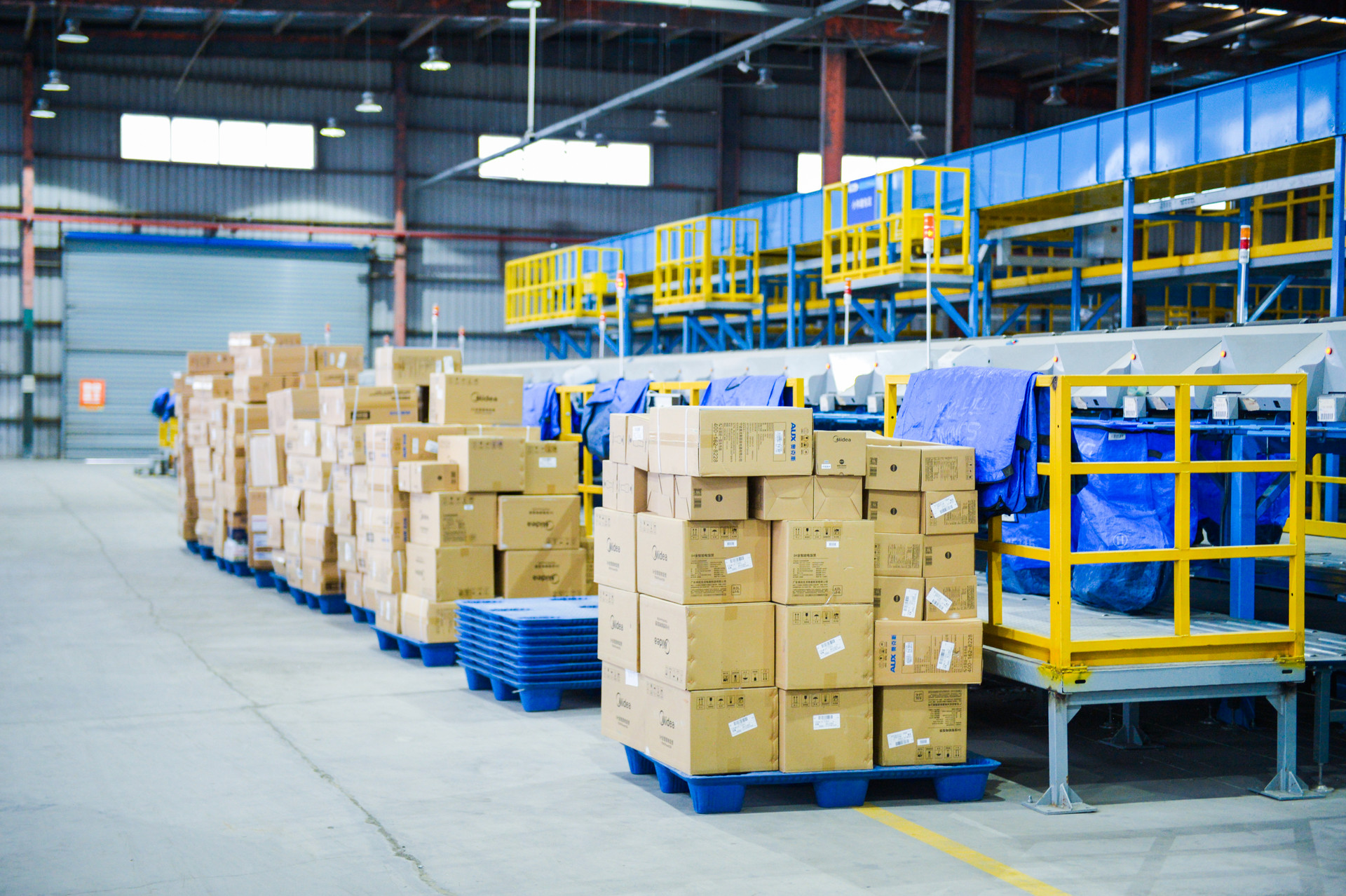
Beyond logistics, content-driven e-commerce is another important piece Shopee has placed in Brazil. Affiliate marketing, creator-driven sales, live-streaming commerce—these tactics repeatedly proven in Southeast Asia are taking root in Brazil.
A large number of influencers and live streamers have emerged, even spurring a local 'side hustle culture' of monetizing social media. 'Shopee has let ordinary people taste the sweetness of e-commerce,' pointed out a local seller, noting that the gradual formation of Brazil's content e-commerce ecosystem creates conditions for sellers already adept at content-driven sales in Southeast Asia to replicate their methodologies.
Monee, the official financial services business unit accompanying Shopee, is developing exceptionally rapidly in Brazil. Last quarter, its loan balance exceeded $1 billion for the first time, with a year-over-year increase of over 250%.
While logistics opens the arteries for goods and content activates the heart of traffic, the payment tool completes the final piece of the puzzle—making the entire commercial loop truly operational.
In fact, Shopee's rise in Brazil replicates not just a spectacular 'growth story' but an entire, cycle-tested ecosystem for overseas expansion. As more and more Chinese sellers seek to escape cutthroat competition and find the next blue ocean of incremental growth, Brazil might just be the most worthwhile ticket to secure in advance in this round of dividend contention.
Ebrun continues to track and report on this development. To learn more information related to this article, please scan the QR code to follow the author's WeChat.

[Copyright Notice] Ebrun advocates respecting and protecting intellectual property rights. Without permission, no one is allowed to copy, reproduce, or use the content of this website in any other way. If any copyright issues are found in the articles on this website, please provide copyright questions, identification, proof of copyright, contact information, etc. and send an email to run@ebrun.com. We will communicate and handle it in a timely manner.
Translated by AI. Feedback: run@ebrun.com