
From Free Product Seeding to Doubled Slot Fees: How TikTok Influencer Commerce Has Transformed Over Three Years
By Han Xiao, Edited by He Yang
[Ebrun Original]
At the recent TikTok Shop US Cross-border POP Annual Merchant Conference, official data revealed: In 2025, the number of active creators grew by 120%, with over 1,600 creators generating annual sales exceeding one million dollars.
According to third-party data analyses, US creators show a trend of "blooming across all categories"—multiple categories now boast creators achieving annual sales in the tens of millions of dollars.
The sharp increase in active creators and the explosion in annual sales figures undoubtedly signal that TikTok's influencer commerce ecosystem is maturing.
Several overseas influencer marketing service providers told Ebrun that "slot fee + commission" has become the mainstream model for creator collaborations. As the merchant base expands, slot fees for top-tier creators have risen, and response rates for outreach have plummeted. The "good old days" of creating best-sellers by simply sending out large volumes of free samples are gone; merchants can no longer easily get a bargain.
However, concurrently, creators' professionalism has increased, their content has become more vertical, and their sales volumes are more stable and predictable. "After these two to three years, creators have become quite stratified. You'll find that the better-performing creators consistently produce decent video content and update diligently," noted Nanfeng, head of the leading US MCN Memo.

Slot Fees Double in Two Years, Yet Quality Creators Are Still in Short Supply
Steven is a lifestyle influencer who grew alongside TikTok, now boasting nearly 7 million followers and having built his own team.
He has promoted products from numerous Chinese brands expanding overseas, such as iGarden's pool cleaning robot, Fanttik's power tools, and DREO's misting fan. He has also posted "product seeding" videos guiding fans to purchase Labubu products from the official TikTok Shop store.
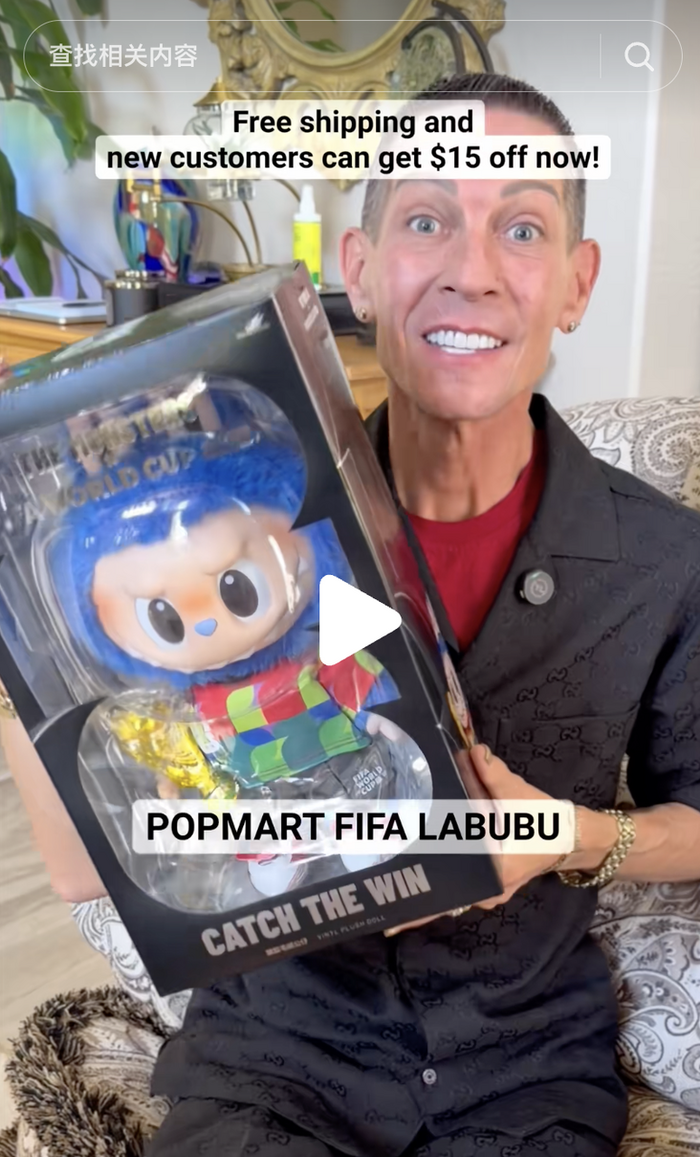
Regarding creators like Steven, Jixiang, CEO of influencer marketing agency Chijing Technology, commented: "TikTok is like a traffic explosion engine. If your content is good enough, you can quickly gain significant traffic. In contrast, Instagram's top-heavy effect is too strong, offering little opportunity for new accounts." This is why a large number of new creators have risen on TikTok.
For merchants, TikTok during its traffic explosion phase is also a "fat piece of meat." "When a new platform emerges, many brands want to overtake on the curve. Whoever gets in first seizes this wave of attention. Collaborating with these rapidly growing creators allows for building a brand at a lower cost initially," Nanfeng explained. In recent years, there have been numerous cases of overseas merchants gaining prominence by following TikTok's lead, such as hair tool brand Wavytalk, hardware tool brand Fanttik, floor fan brand Sweetcrispy, and feminine care brand August.
But now, the "low-hanging fruit" in creator collaborations may have been picked. "From the year before last to last year, slot fees for mid-tier influencers across TikTok, Instagram, and YouTube have almost doubled," Jixiang stated. Since TikTok's e-commerce business began in the US in 2023, creators have been in a state of supply shortage, a situation that is now intensifying.
He attributes this to the rising popularity of the cross-border e-commerce track, a further surge in merchant numbers, giving creators more options and making the competition for top creators more crowded. Simultaneously, brand requirements have increased. Beyond hard metrics like follower count, views, and sales volume, brands now pay more attention to whether a creator's content style aligns with the brand. This leads to creators taking longer to produce single pieces of content, which in turn drives up slot fees.
Official data shows that TikTok has around 100,000 quality creators in the US with monthly sales of $6,000 (the threshold for becoming a full-time creator)—a number that might only be a fraction of Douyin's (China's TikTok) creator pool. Therefore, the problem brands face is that suitable creators are quickly exhausted, leaving little room for expanding reach.
"Take selling a treadmill as an example. You might reach all fitness vertical creators in two or three weeks. What do you do after that? What we do is help clients develop breakout strategies. For instance, a treadmill might be more suitable for the LGBTQ community focused on body management, or new mothers needing postpartum recovery. This effectively expands the pool of new creators," Jixiang explained.
In his view, the development of TikTok's US influencer commerce ecosystem can be divided into three stages:
Stage One: 2019-2022.
Before TikTok Shop opened, there was no pricing standard between brands and creators. Both sides grew wildly through a process of "haggling and bargaining." The company that likely utilized creator strategies most effectively during this phase was fast-fashion retailer SHEIN—its official account content was almost entirely produced by creators, leveraging a massive creator network to achieve rapid brand penetration in the North American market.
Stage Two: 2023.
The launch of TikTok Shop and the emergence of TikTok Shop Alliance affiliate leaders (who charge "brokerage fees" by batch-matching merchants and creators) completely ignited the creator commerce market. Several MCN agencies quickly appeared on the platform, and "wild" cases of single videos generating $100k in orders continuously stimulated more entrants. However, order volumes during this stage were highly unstable. Platform crackdowns on virtual and cross-border shipping led to large-scale store closures, and the market experienced a chaotic period of brutal consolidation.
Stage Three: 2024 to present.
The market has gradually become more rational. Top creator resources have been largely divided among brands, creators widely began demanding slot fees, and the space for pure commission collaborations shrank significantly. The mainstream strategy shifted to a parallel approach of "creator content + GMV Max ad spend," where creators serve as both communication channels and paid ad material. Meanwhile, some major brands have moved their TikTok teams from the e-commerce department to the branding department, repositioning it as a media platform.
Looking at 2025, TikTok's traffic spillover effect is very evident. Muqing, Vice President of TikTok Shop Cross-border E-commerce, stated at the merchant conference that for some brands deeply cooperating with the platform, the GMV spillover rate to their DTC channels exceeds 70%.

Content, Transaction, and Material Creators: A Tripartite Division
"We canceled all pure commission collaborations this year," Nanfeng told Ebrun.
Pure commission means earning money only when products sell, but labor costs are fixed expenses. Given the increasing professionalism of TikTok creators, she believes it's difficult for creators on pure commission deals to produce competitive content or product promotions.
"Slot fee + commission" has become the mainstream collaboration method between US creators and brands. "Very few top influencers do pure commission. It's a mindset in the US. In their understanding, the content I create generates value, and there must be a fixed value investment and exchange for the value I produce," Jixiang explained.
Additionally, product categories influence collaboration models. Jixiang noted that products with scarcity and high average order value (AOV), like crowdfunded items, are more likely to use pure commission models. However, for brands, the higher the AOV, the more cautious they are about sending samples, as the product's value might exceed that of a single video, limiting brand choices. Conversely, brands with lower AOV like women's apparel and cosmetics lean more towards sending samples or pure commission deals to get the most promotion at the lowest cost.
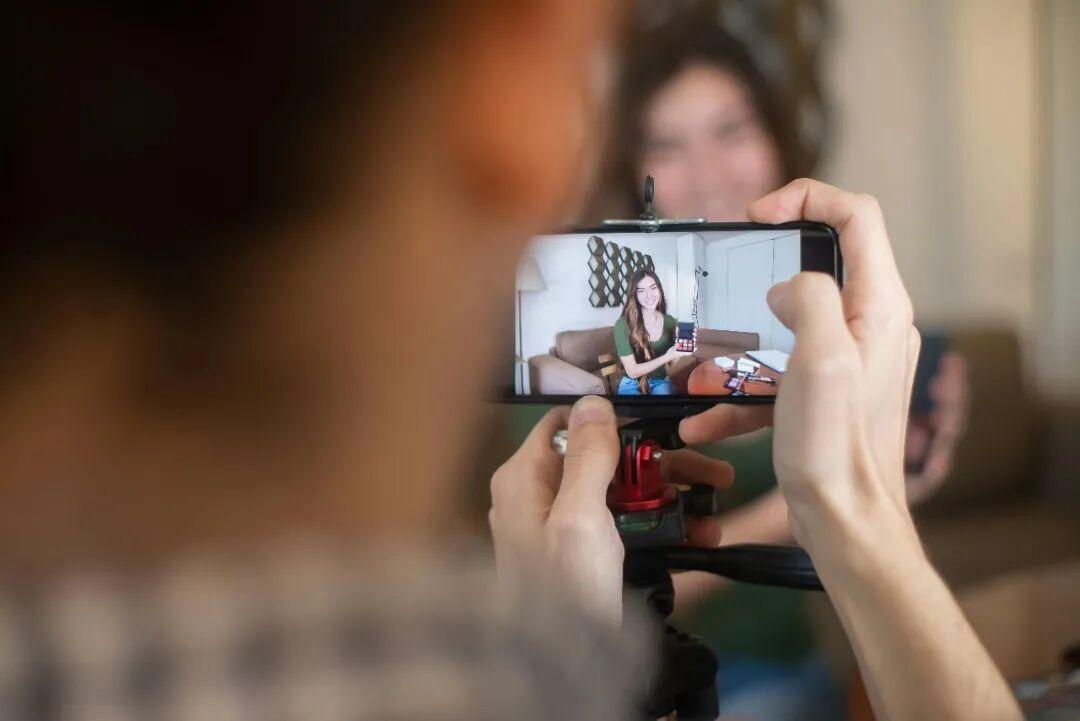
Based on content characteristics and commercialization models, creators can be categorized as content-focused, transaction-focused, or material-focused. According to William, CEO of GS Media, "Content-focused" creators emphasize brand promotion and exposure but may not excel at conversion. "Transaction-focused" creators prioritize sales and take responsibility for driving them. "Material-focused" creators typically have lower personal traffic and smaller followings but can produce high-quality, authentic content suitable for brands to purchase for ad campaigns.
The most typical content-focused creator is YouTube's top influencer—MrBeast, with nearly 500 million YouTube subscribers and over 100 million on TikTok. His videos feature "challenges + charity + extravagance," including incredibly complex challenges, extremely generous charitable acts, or unbelievably expensive purchases. While such videos are costly, the advertising returns are immense; some companies pay $2.5-3 million just for a brief appearance in his videos.
For transaction-focused creators, sales volume isn't solely determined by follower count—small and medium-sized creators' sales abilities are becoming increasingly prominent. According to data from TikTok's third-party data platform EchoTik, in April 2025, the US monthly sales champion creator jordyn_gunderson, with only 125k followers, generated $4-5 million in sales. Creator simonesanderss, with just 11k followers, also ranked sixth on the sales chart.
Material-focused creators align with brands' needs for sourcing UGC creator content. For example, beauty brand Fenty Beauty extensively uses content spontaneously shared by KOCs (Key Opinion Consumers) of different skin tones, genders, and styles. They use TikTok Spark Ads to directly convert content with good organic reach into paid advertisements, rather than creating new ad videos from scratch.
Nanfeng believes that the sales ability of small and medium creators surpassing top creators indicates that most orders aren't driven by fans buying from their favorite creators, but rather by the algorithm's precise recommendations bringing traffic to videos. For instance, an attractive singer sharing singing videos likely has lower sales conversion than a beauty vertical creator sharing makeup techniques. It's evident that content conversion power and vertical product selection ability have surpassed follower count as key metrics for brand collaborations.
In Jixiang's view, judging a quality creator generally involves three levels:
Data level, generally checking if view counts are authentic, signs of inflated traffic, and the geographic distribution of followers (a higher percentage of US users usually indicates stronger commercialization potential).
Content level, assessing the creator's vertical focus and professionalism, including filming techniques, visual aesthetics, and content pacing.
Commercialization level, the ideal creator has brand collaboration experience but isn't overly commercialized, maintaining an appropriate frequency of sponsored content.

The Incompatibility of Transplanting Chinese Models
It's undeniable that TikTok brought mature Chinese e-commerce playbooks, pushing the US creator ecosystem from CPM (cost per mille/impression) gradually towards CPS (cost per sale). However, not all Chinese tactics transplant well across the ocean. The most typical difference lies in the relationship between creators and agencies.
In China, creators and MCNs have strong binding relationships, especially for creators in their early stages, who may be more dependent on MCNs. But US creators are more independent, less controllable, making incubation models difficult.
Chijing was an early MCN attempting to sign and incubate overseas creators from within China, growing the comedy review account realtestworld from 0 to over 6 million followers in two years. However, this account has now stopped updating. Regarding this, Jixiang admitted that while the account achieved good results in content and traffic, commercialization was not successful.
"On one hand, restricted by platform rules, accounts incubated from China cannot enable the shopping cart feature and can only drive traffic to independent websites for monetization. On the other hand, although the account had a large follower base, the percentage of US users wasn't high, which also affected commercialization potential."
According to Jixiang, there are currently three main operational models for US TikTok creators:
One is the "multi-affiliation" model, where a creator maintains cooperative relationships with multiple agencies simultaneously, not signing exclusive agreements with any single one, with each agency sourcing commercial deals for them. This model means overseas MCNs are essentially looser economic alliances.
Another is when an account reaches a certain size, the creator builds their own team and handles commercial deals independently, often with family members acting as agents.
Additionally, there are creators with IP attributes, such as dance competition champions or professionals in various fields. They have fame but don't understand social media operations or commercialization logic, so they choose to delegate operations to agencies. "Ironically, these creators have the deepest binding relationships with agencies," Jixiang noted.
Reportedly, a more common collaboration method now is annual framework agreements, where an MCN provides a creator with, say, over 20 pieces of content per year. For MCNs, this maintains high-frequency interaction and secures favorable prices; for creators, it ensures a steady stream of commercial deals.
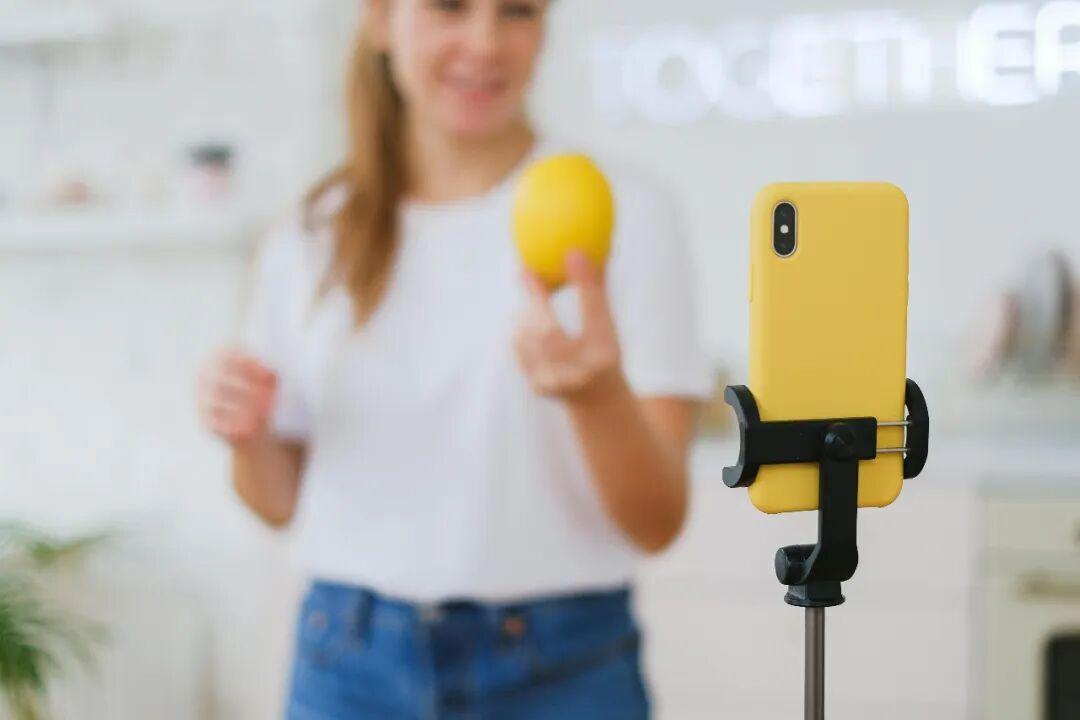
Another major area of "incompatibility" is live-stream e-commerce.
In China, live-stream commerce contributes the majority of Douyin's GMV. Anchors, brand self-streaming, and creator matrices form a mature traffic monetization loop; "shopping while watching" has almost reshaped a generation's consumption habits. In Southeast Asia, TikTok Shop's live-stream e-commerce replicated a similar explosive trajectory—in markets like Indonesia, Thailand, and Vietnam, live-stream commerce GMV growth once surged at multiples or even tenfold rates, becoming one of TikTok's fastest commercialized territories. This gave outsiders reason to believe live-stream commerce would also be TikTok's "trump card" in the US.
However, the script unfolded differently—while live-stream commerce in the US is growing overall, it hasn't reached the speed many anticipated. The "TikTok Shop in the U.S. 2025" report jointly released by Momentum Works and Tabcut shows that in TikTok Shop US's 2025 GMV composition, short videos remain the main driver, contributing about 50%. The share of Shop & Search has significantly increased to 36%, while live-stream commerce's share has slowly grown to 14%.
The cultural differences between China and the US are a major constraint on live-stream e-commerce development. "To do live-stream commerce in the US, you need to give users a reason—why should they wait for a live stream to snag a deal to save a few dollars? This is a significant path challenge," one merchant stated bluntly. "Americans don't like the feeling of being pressured to buy things, so the Chinese-style price-driven live-stream commerce doesn't work well. If you want to make live streams into entertainment shows, the challenge is also significant because the US has plenty of entertainment and leisure programs to watch."
In lifestyle creator Steven's video comments, fans have asked him to start live streaming, but he remains cautious. Reportedly, he has tried live-stream commerce, but even at its best, he only achieved $10k-$20k in sales over two to three hours, which felt like more effort than it was worth, dampening his motivation.
Nanfeng's team also ventured into live streaming, setting up a roughly 4,000-square-foot studio in Los Angeles for both their own product streams and agency streaming services. But reality was "harsh"; under multiple pressures, they eventually stopped. "$300-$400 in sales per hour—what's the point of streaming? It can't even cover venue and labor costs," Nanfeng said. Live streaming is "hard work," requiring talking continuously for over two hours to see conversion and traffic. "Once a creator tries live streaming two or three times without success, their morale breaks. For them, working that hard without earning money, it's better to just shoot videos."
In the view of multiple industry insiders, it's not that live-stream e-commerce can't work in the US, but that domestic Chinese experience cannot be copied directly. Perhaps figuring out a more "American-style" live-stream commerce playbook for creators is the key to breaking through.
Ebrun will continue tracking and reporting on this development. To learn more information related to this article, please scan the QR code to follow the author on WeChat.

[Copyright Notice] Ebrun advocates respecting and protecting intellectual property rights. Without permission, no one is allowed to copy, reproduce, or use the content of this website in any other way. If any copyright issues are found in the articles on this website, please provide copyright questions, identification, proof of copyright, contact information, etc. and send an email to run@ebrun.com. We will communicate and handle it in a timely manner.
Translated by AI. Feedback: run@ebrun.com