
From Gaming Lighting to Desktop Acoustics: How Cololight Seizes Pricing Power in the Deep End of Technology | EBRUN Global Favorites
Column Introduction: EBRUN Global Favorites · Interview is a global archive of excellent products built by Horseshoe Club and Ebrun. We delve into the front lines of corporate R&D and manufacturing, aiming to deconstruct the pioneers who, amidst the wave of globalization, are redefining 'good products' that users love. We don't just record stories; we also attempt to review the key decisions and user insights behind each product.
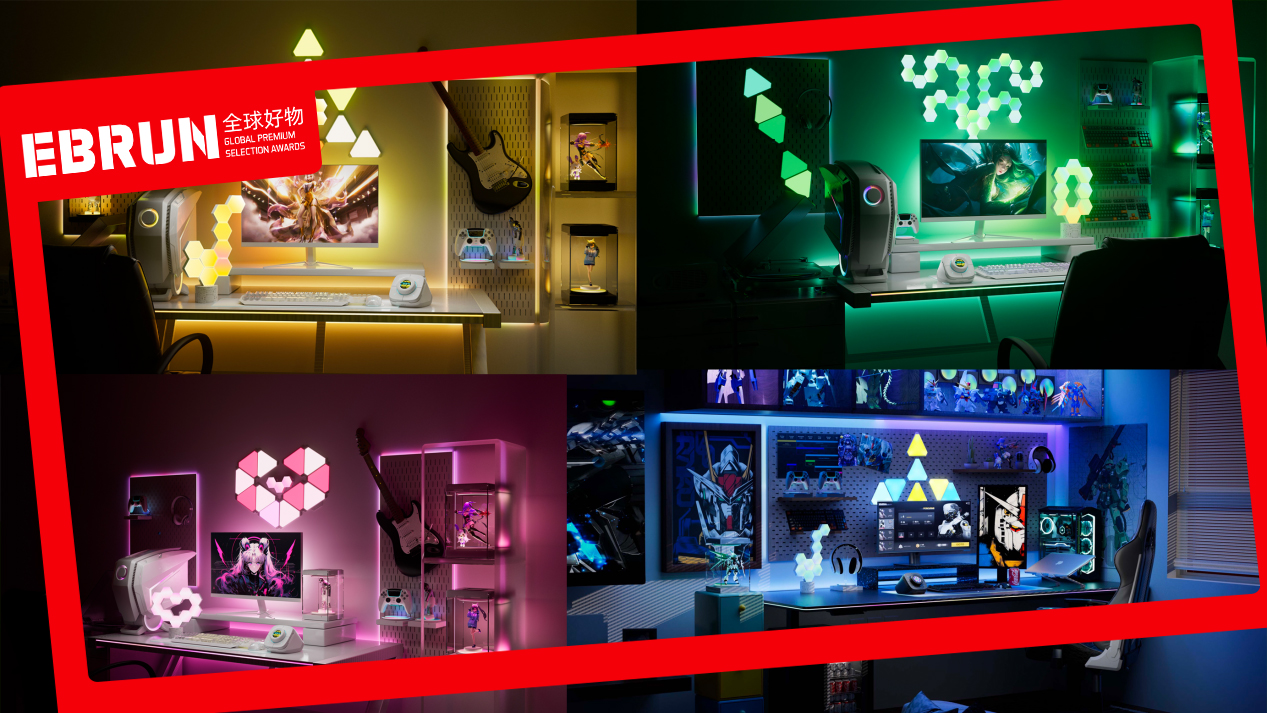

Six years ago, Lifesmart Yunqi Intelligence began to rethink the essence of the smart home industry. The team gradually realized that smart homes are not merely high-tech consumer electronics; they are more like 'decoration products' that need to exist long-term in a user's living space. Compared to specifications and functions, people ultimately care more about spatial ambiance, aesthetic coherence, and long-term user experience. Based on this understanding, the company established the aesthetics-driven high-end brand SUBLIME, entering the deep customization renovation market for high-net-worth individuals and setting a longer-term brand goal for this purpose.
While the main business grew steadily, Steve, the brand director of Cololight, received another mission from the CEO: to find the company's 'second curve.' This new direction needed to have stronger consumer-facing attributes, leverage the company's existing platform and supply chain resources, quickly establish market recognition, and build brand influence. It was at this stage that the prototype of Cololight began to take shape.
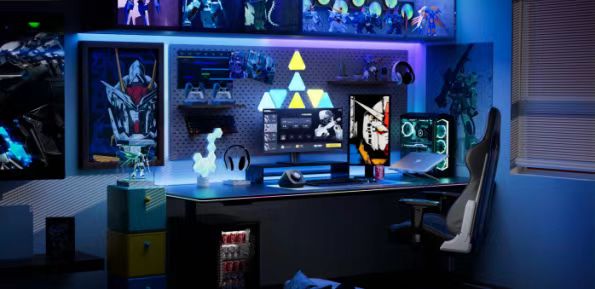
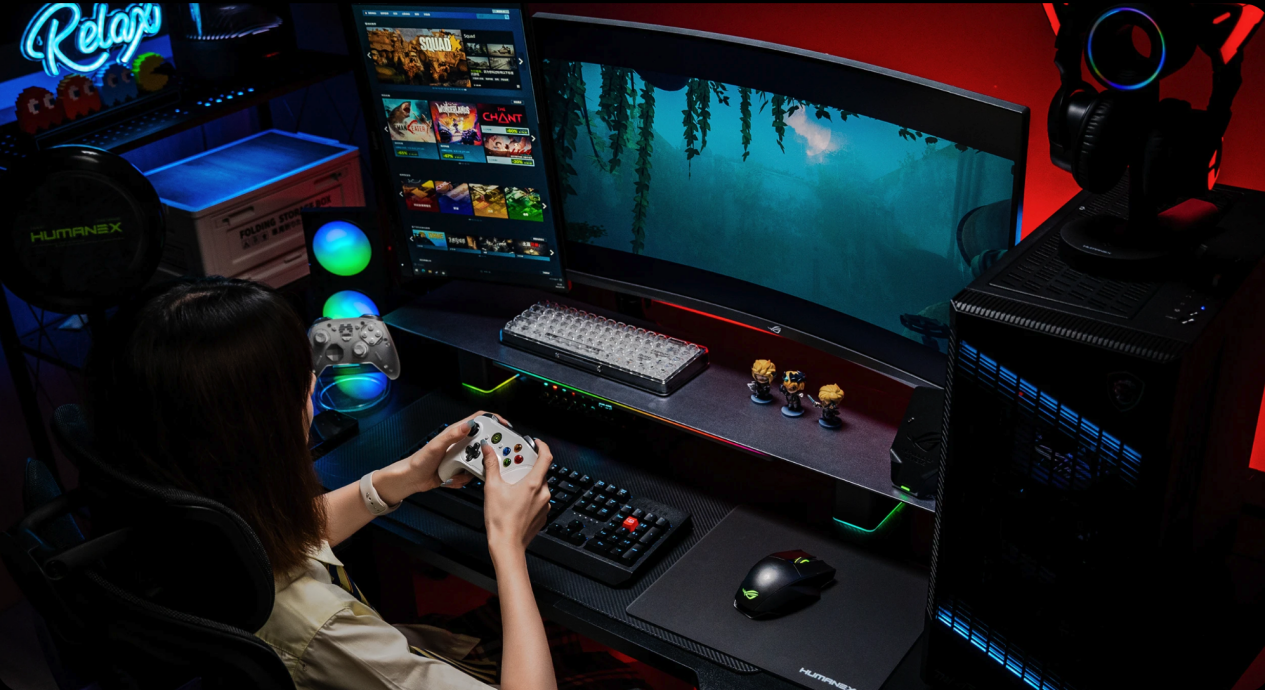
COLOLIGHT RGB series gaming room scene

Steve discovered a natural contradiction in smart home products. They are often hidden within spaces, with extremely low visibility. Even if users interact with them daily, they rarely consciously perceive their existence, making it difficult to form strong brand recognition or emotional connection. 'We wanted to create a product that could be seen,' Steve recalled. Thus, the team shifted its focus to 'lighting.' But Cololight is not just a traditional lighting product. The team hoped it would become a part of desktop ambiance, a form of personal expression, and even a component of gamer culture. This direction quickly gained traction within the gaming room and desk setup communities.
With its highly visual design language and distinct gaming atmosphere, Cololight quickly swept through Western desk setup communities. Numerous YouTube, TikTok, and Instagram desk setup influencers began spreading the word organically. The product evolved from an ambient light into a 'standard element' of a gaming desk setup. This helped Cololight achieve a cold start for the brand in an extremely short time, rapidly accumulating user awareness and brand momentum in overseas markets.

Before discussing the hit-making logic of any smart hardware, we must first clarify an industry question: What kind of 'smart' do consumers actually need? Cololight's success also led the team to re-understand gaming users. Steve found that what players truly need is often not just a specific function itself. They need a sense of ritual, a desktop experience that ignites emotions and enhances immersion. 'Users aren't buying a light; they're buying the emotion that hits the moment they power on their setup,' Steve said.
Based on this insight, leveraging the company's strong internal industrial design capabilities, the team began creating the COLO PLAY.
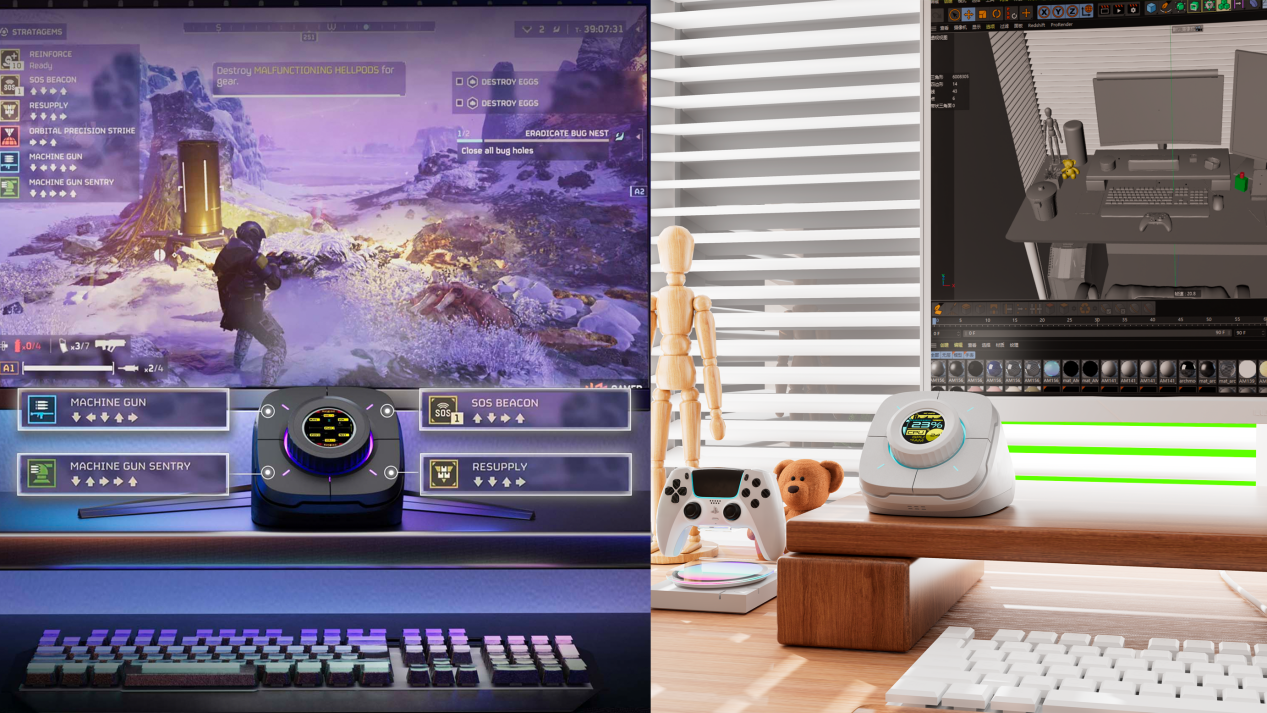
COLO PLAY desktop controller
Any product that seems logically sound on paper must withstand the test of real-world environments. The COLO PLAY desktop console, now quite popular in gaming circles, initially took a detour in its product planning. In early planning, the team attempted to give this device 'pan-smart home' attributes, positioning it as a home control terminal. It integrated numerous sensors like air quality detection, with a price tag exceeding 2,000 RMB. This device used a heavy cyberpunk design language. Once placed in an ordinary home environment, its strong visual impact would clash with cozy interior decor.
Steve and the team realized that if consumers don't pursue aesthetics in their living spaces, they likely wouldn't even install smart devices; but if they seek coziness and elegance, this hardcore gaming style obviously wouldn't fit. The product manager had to face a difficult choice: forcibly educate the market or find a new application scenario for the product. They turned their gaze to the desks of gamers. In that independent space belonging to young people, cyberpunk is not out of place; it's a necessity. But to enter this circle, the product needed drastic 'stripping.'
For players pursuing the ultimate gaming experience, a price over 2,000 RMB was a barrier, and features like formaldehyde detection were meaningless redundancy. The team decisively stripped away the expensive internal sensors, launching a more affordable pure desktop version. In that context, the strong mechanical feel, lighting ambiance, and futuristic design not only didn't feel out of place but naturally belonged. Thus, the team began to subtract. Unlike traditional hardware emphasizing spec stacking, the team cared more about whether the product had enough presence, could truly integrate into a player's desk, and become part of the desktop ambiance. Therefore, while most smart devices on the market were eliminating physical buttons, embracing full touchscreens or pure voice interaction, the COLO PLAY desktop console retained four physical buttons and a clickable knob. In the current smart ecosystem, which may still be full of glitches, buttons provide a physical control window with a 'what you see is what you get' certainty.
In terms of software definition, the device completely pivoted to address gamers' core pain points: the four buttons can be user-customized as macro functions, allowing players to execute combos with one press in games like Helldivers; the 1.2-inch screen above is used to display real-time PC hardware parameters like CPU and GPU usage. In upcoming iterations, it will also add an independent sound card and USB Hub functionality, acting as a small base station on the player's desk.
This approach often faces resistance within hardcore tech companies. Management with a pure technical mindset typically fixates on specifications, believing that mastering all prerequisite information and detailed market research can deduce the correct product outcome. Steve previously worked as a UX engineer at Alibaba.com. He found that even internet user research teams with massive sample sizes often produce data conclusions that are merely used by business units to 'prove predetermined facts.' For example, if a product's sales increase by 50%, the user research report might attribute it to humid weather. Relying solely on limited data makes it difficult to make truly forward-looking judgments.
When data cannot exhaust all variables, Steve believes design becomes an 'intuitive tool' to fill the gaps. Therefore, at Cololight, the power of product definition is appropriately delegated to the design side, rather than letting pure data drive the piling on of all possible technical features. Faced with demands from various sources to 'have this, that, and the other,' Steve insisted on subtraction. They abandoned using pseudo-cutting-edge technology to create hype. In Steve's view, stable, restrained design is what can last on a user's desk.
Steve believes the key to COLO PLAY's success was never feature stacking, but the combination of aesthetics, emotion, and desktop culture. Now, it has gradually become a 'symbol' on many players' desks—symbolizing the user's investment in peripherals and their understanding of desktop aesthetics. This pivot brought direct commercial returns. The pure desktop version of COLO PLAY quickly became one of Cololight's best-selling single items, supporting a business volume in the tens of millions.

Within China's consumer electronics manufacturing system, rapid replication is the norm. As soon as a new product is launched at a trade show, factories quickly produce molds and flood channels with extremely low-priced copies. To avoid this intense homogeneous competition, Cololight chose to artificially raise the manufacturing barrier during product planning. After mastering desktop visual and interactive experiences, Steve began looking at another long-neglected area: sound.
The 7.1.2 channel surround sound speaker COLO GCS is a product of this strategy. This highly mecha-styled, battle-ready gaming acoustic equipment originated from an idea that was somewhat born of an 'outsider's' fearless ignorance. Steve himself is a hardcore peripheral enthusiast and Hi-Fi audiophile. His initial desire was simple: to replicate a near-field home theater system with 'height channels' like Sonos, but for his cramped computer desk. Inspired by a 1990 AKG classic suspended headphone design, he decided to break tradition and create a surround sound speaker with a chair-mounted design and suspended driver architecture. This speaker houses 11 drivers, aiming to replicate a home theater-like soundstage through its non-standard form.
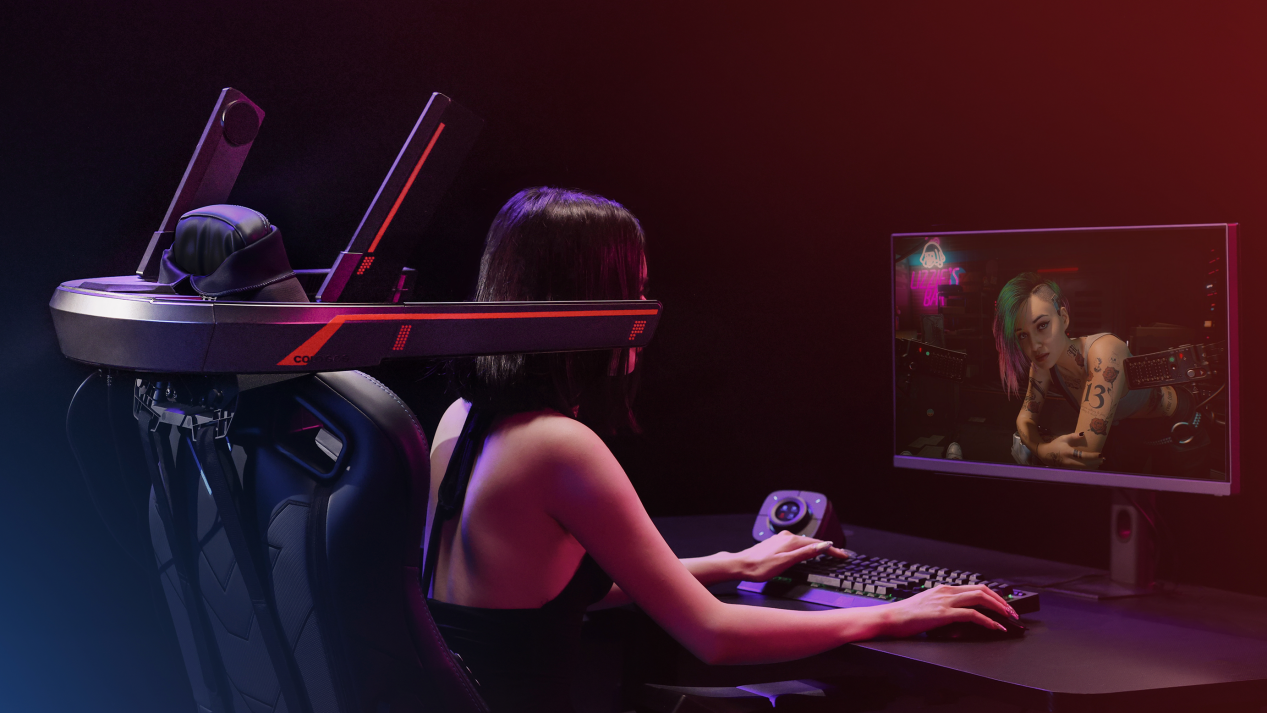
COLO GCS 7.1.2 surround sound speaker
When Steve took these design drawings to factories in Shenzhen, he was met with almost unanimous head-shaking. Physically, this design fit neither traditional speaker acoustics principles nor headphone cavity structures; it was an awkward middle ground where traditional factories' existing acoustic experience was useless. The team realized this was a path almost nobody had walked. Beyond hardware, the underlying software barriers were equally challenging. Steve recalled that to make this entirely new form factor work smoothly on Windows, the team navigated countless technical pitfalls: from Windows system compatibility, to Intel CPU adaptation, to underlying conflicts with Nvidia graphics cards. These problems, with no precedent in the industry, were eventually overcome one by one.
'Initially, when we encountered acoustic problems, I always hoped to find an external acoustic expert to solve them. After searching, I found this direction was too new; many problems didn't even have mature experience to reference. It ended up with me teaching them,' Steve said. Faced with the collective helplessness of the supply chain, Steve made a decision that seemed the 'dumbest' but was the most effective: frantically consulting various experts while relentlessly tackling the problems with internal R&D!
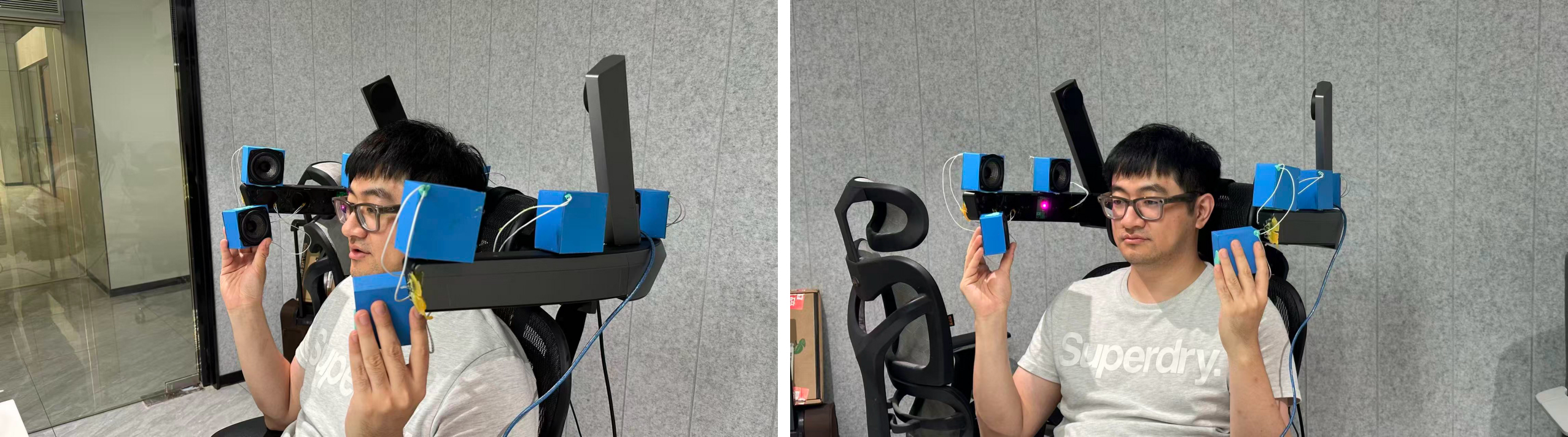
Steve testing the COLO GCS prototype
Over the past year, Steve spent half his time on the supply chain, collaborating with traditional high-end speaker factories to reconstruct the underlying technology, trying to solve resonance elimination and sound clarity issues. The cost of trial and error in this process was high. When the first-generation COLO GCS product was launched in overseas markets, it faced challenges with quality control and compatibility. The team eventually slowed sales and marketing, redirecting efforts back into R&D, completely rewriting the underlying protocols and optimizing the acoustic cavity to complete the technological loop.
But it was precisely this long-cycle trial and error and relentless effort that objectively formed a technological barrier. It combined desktop aesthetic design, complex acoustic structural design, and complex mechanical structural design. Steve said it required: top-tier ID designers, the most flexible acoustic engineers, the most experienced structural engineers, and very reliable partner factories. For large manufacturers pursuing scale and efficiency, this niche desktop gaming segment isn't large enough; for white-label factories accustomed to quick profits, the high R&D costs and initial low yield rates are an insurmountable barrier.
Cololight gained the initiative in product innovation by entering and persisting in this technological 'no man's land.' Any hardware innovation that doesn't discuss commercial viability is just a product manager's self-indulgence. Creating an extremely high technological barrier through persistence is exhilarating, but for a company, the ultimate question remains: How can such a resource-intensive, extreme innovation survive in the market and earn the money to support the next generation of R&D?
For Chinese smart hardware companies, the conventional path to finding high gross margins is going global, penetrating high-net-worth individuals worldwide, and seizing product 'pricing power' through an ultimate experience. But in the traditional cross-border e-commerce context, the strategy of relying on extreme cost-performance to grab market share is failing. Continuously racing to the bottom on price will always encounter domestic factories with lower costs. During a recent closed-door exchange at the Horseshoe Club, the logic of overseas pricing was heavily discussed. Steve and his peers at Horseshoe Club validated a phenomenon: Overseas consumers have very high tolerance for the 'absolute price' of products that provide unique emotional value.
When a product can provide strong emotional value and an irreplaceable competitive experience, it naturally possesses the 'high-premium gene' that transcends ordinary consumer electronics. As some leading Chinese global brands have validated in categories like high-end home appliances and ergonomics: a price difference of two times often corresponds to completely different consumer groups. As long as the product and experience are solid enough, directly targeting high price points above a thousand US dollars is often more effective at penetrating overseas high-end demographics than getting bogged down in price wars with budget options.
Cololight also attempted a high-premium path in overseas markets, but the process wasn't smooth.
Feedback after the launch of the first-generation COLO GCS 7.1.2 surround speaker made the team aware of the challenges brought by this pioneering structural innovation. Due to the extremely high acoustic sensitivity of the suspended cavity, how to stably eliminate resonance in mass production and maintain clarity in near-field listening became a major hurdle for the Chinese engineers.
Faced with the structural challenges exposed by the first-generation COLO GCS 7.1.2, Steve made a decision that seemed extremely heavy at the time. He did not choose to discount and liquidate stock, nor did he opt for superficial 'cross-border after-sales patching' overseas. In Steve's view, since it was a structural flaw, repeated repairs would only wear out the patience of the first supporters through endless shipping and waiting. So, he decisively hit the pause button on sales, choosing to let the business stall short-term and redirect resources back to a complete, fundamental technological reconstruction.
It wasn't until early this year that the structure and hardware of the GCS product were reconstructed, truly closing the technological loop. This attitude of preferring to start over rather than compromise on user experience, while costing Cololight dearly in terms of growth, also helped it maintain the most basic line of credibility within the high-end gaming community.
However, to support such high-end pricing in the thousand-dollar range, relying solely on hardware specs is far from enough. In the DTC (Direct-to-Consumer) global model, heavily reliant on online transactions, a product's premium potential is often anchored the first moment a consumer sees the page. 'When someone visits your independent site or Amazon store, they make two judgments instantly: first, is this store trustworthy; second, what tier is this store. This first impression is critical. Once they form that mental anchor in that instant, you have no chance later to change their mind with words.'
To address this, Cololight translated its team's deep aesthetic design DNA into the marketing of gaming peripherals. Through meticulous visual packaging and high-quality influencer reviews on platforms like YouTube, they established a visual trust system within the player community: 'premium, hardcore, international hit.' When users are captivated by this highly stylized visual presentation and mentally equate the brand with top-tier gaming peripherals, the company truly regains pricing power for its products.

In this era of extremely transparent and fiercely competitive hardware specifications, companies must escape the quagmire of 'low-spec alternatives.' Don't compete on meaningless pseudo-smart features; create 'emotional necessities' that resonate. Don't engage in low-end supply chain price wars; compete on high-level 'aesthetic premium.' Chinese smart hardware companies are attempting to reclaim their product pricing power in the global market by intervening in the reconstruction of the underlying supply chain and establishing commercial aesthetic barriers. (Original by Horseshoe Club / May 2026)
【Looking for 'Born Global' Ultimate Favorites】
Not all products are truly satisfying for consumers! The EBRUN Global Favorites 2026 Awards are looking for those 'global favorites' that are redefining global standards in technology, aesthetics, and consumer experience.
If your product can serve as an industry benchmark, please submit its name here.
[Copyright Notice] Ebrun advocates respecting and protecting intellectual property rights. Without permission, no one is allowed to copy, reproduce, or use the content of this website in any other way. If any copyright issues are found in the articles on this website, please provide copyright questions, identification, proof of copyright, contact information, etc. and send an email to run@ebrun.com. We will communicate and handle it in a timely manner.
Translated by AI. Feedback: run@ebrun.com