
Simon Huang, President of OZON Greater China: Behind the 4 Trillion Ruble GMV, 15 Million 'Super Users' Place Orders Almost Weekly
[Ebrun Original] Recently, at the 2026 OZON Global Sellers Kick-off Conference, Simon Huang, President of Ozon Greater China, delivered a speech titled 'A Comprehensive Analysis of the Ozon Platform and Business Outlook.'
Huang systematically reviewed the rapid growth journey of Ozon since its transition into a platform model and shared his insights on the competitive landscape of global cross-border e-commerce in the next phase, focusing on the structure of the Russian e-commerce market, expansion in the Commonwealth of Independent States (CIS) region, logistics infrastructure development, industry transformation driven by AI, and cross-border compliance trends.
The speech pointed out that over the past few years, the Russian and CIS markets are rapidly becoming one of the most promising emerging regions for global cross-border e-commerce. Currently, e-commerce penetration in Russia is still in a phase of continuous growth.
At the same time, the long-underestimated CIS market is entering a period of concentrated e-commerce consumption boom, alongside the gradual improvement of logistics networks, pickup point systems, and local fulfillment capabilities. In this regard, Huang shared several latest data points on-site.
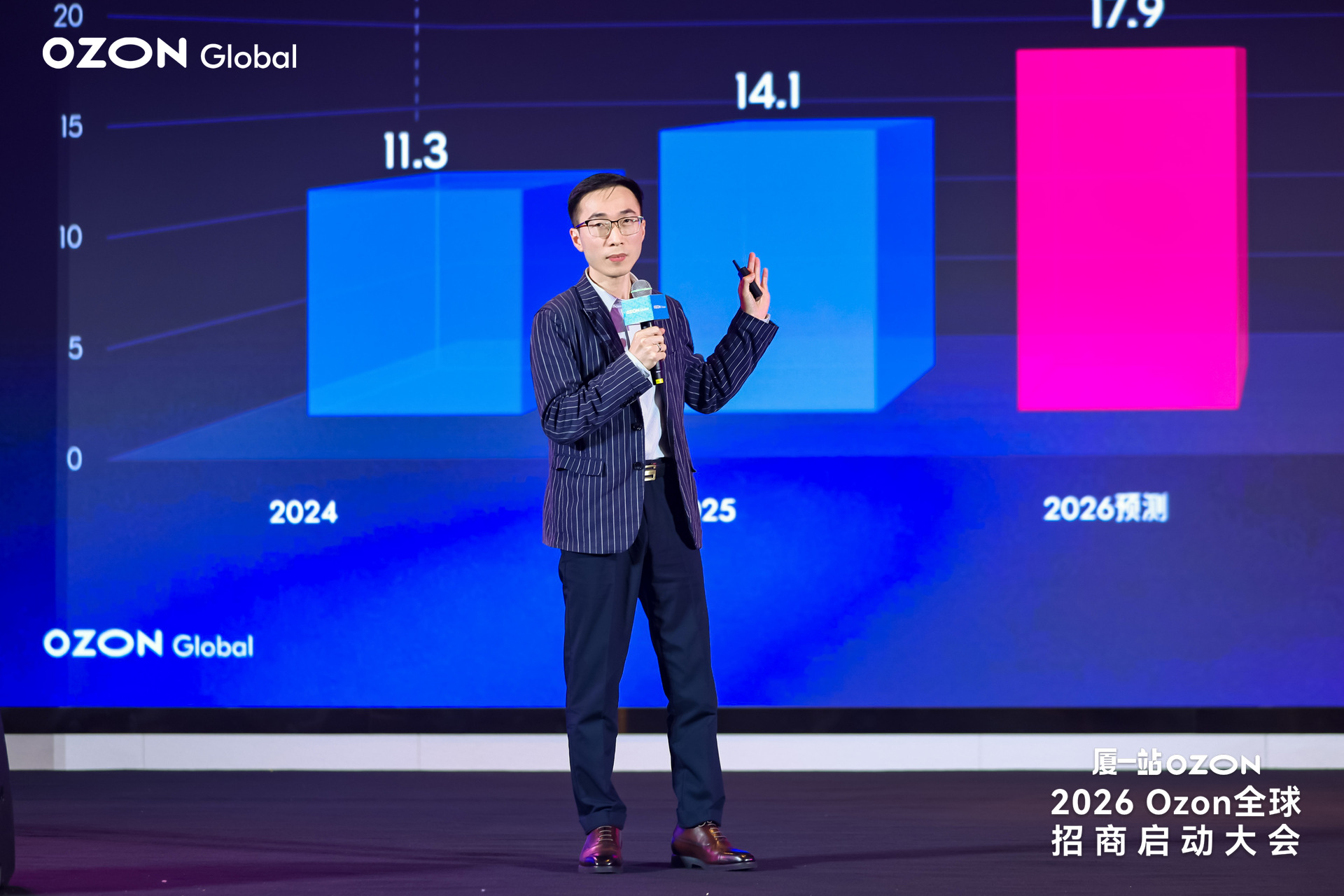
When reviewing Ozon's growth trajectory, Huang emphasized that the platform's rapid expansion over the past few years was not solely reliant on traffic influx or price competition but was built on continuous heavy investment in e-commerce infrastructure and digital capabilities.
In addition to the domestic Russian market, Huang also highlighted Ozon's expansion progress in the CIS region. In the future, thanks to the development of regional logistics solutions, the CIS market is expected to become a significant incremental source for Chinese sellers in the next phase.
At the end of the speech, Huang specifically underscored the importance of compliance for expanding into Russia. He noted that in the context of increasingly stringent global regulations, tax, customs clearance, intellectual property, and product compliance are transitioning from 'additional requirements' to a crucial threshold for companies to deeply cultivate the local market, directly impacting sellers' operational security.
Friendly Reminder: This article is a concise transcript, further edited and organized by Ebrun without altering the original intent.
The following is the speech transcript:
Distinguished guests, dear seller friends, good afternoon! I'm Simon.
I'm very pleased that today, thousands of cross-border e-commerce sellers have come to Xiamen from all over the country to attend our annual Global Sellers Kick-off Conference.
Ozon China was established in the autumn of 2022, and this year marks its fourth year. This is also our fourth Spring Global Sellers Conference. The purpose of our Global Sellers Conference is actually very clear: to help more new sellers, and cross-border enterprises seeking transformation opportunities, find new breakthroughs, understand new market dividends, and the solutions Ozon can provide for everyone.
Therefore, today, my sharing will revolve around market dividends, industry opportunities, and some trend insights, to help everyone, especially new sellers, better understand the unique opportunities in the Russian and CIS markets.
First, I'd like to briefly introduce Ozon's development history.
Ozon was founded in 1998, and today it has a 28-year history. As a long-established internet company, we have now become one of the earliest, largest in terms of user base, and highest in market capitalization listed e-commerce platforms in the entire CIS market.
01 The Underestimated Market of Hundreds of Millions: Russian E-commerce is Experiencing Explosive Growth
Today, Ozon serves not only Russian consumers but also covers the entire CIS market with a population of 250 million. In fact, this market has been underestimated over the past decade. It's only in recent years, with the gradual improvement of digital infrastructure, that the entire market has begun to experience explosive growth.
The entire CIS market includes regions such as Central Asia, Eastern Europe, and Russia. However, I believe the most noteworthy among them is still the Russian market. Because Russia has a population of 150 million, making it the largest consumer market in the entire region.
Data shows that in 2025, the transaction volume of the Russian e-commerce market has reached 14 trillion rubles. At today's exchange rate, that's approximately equivalent to 1.3 trillion Chinese yuan, close to 190 billion US dollars.
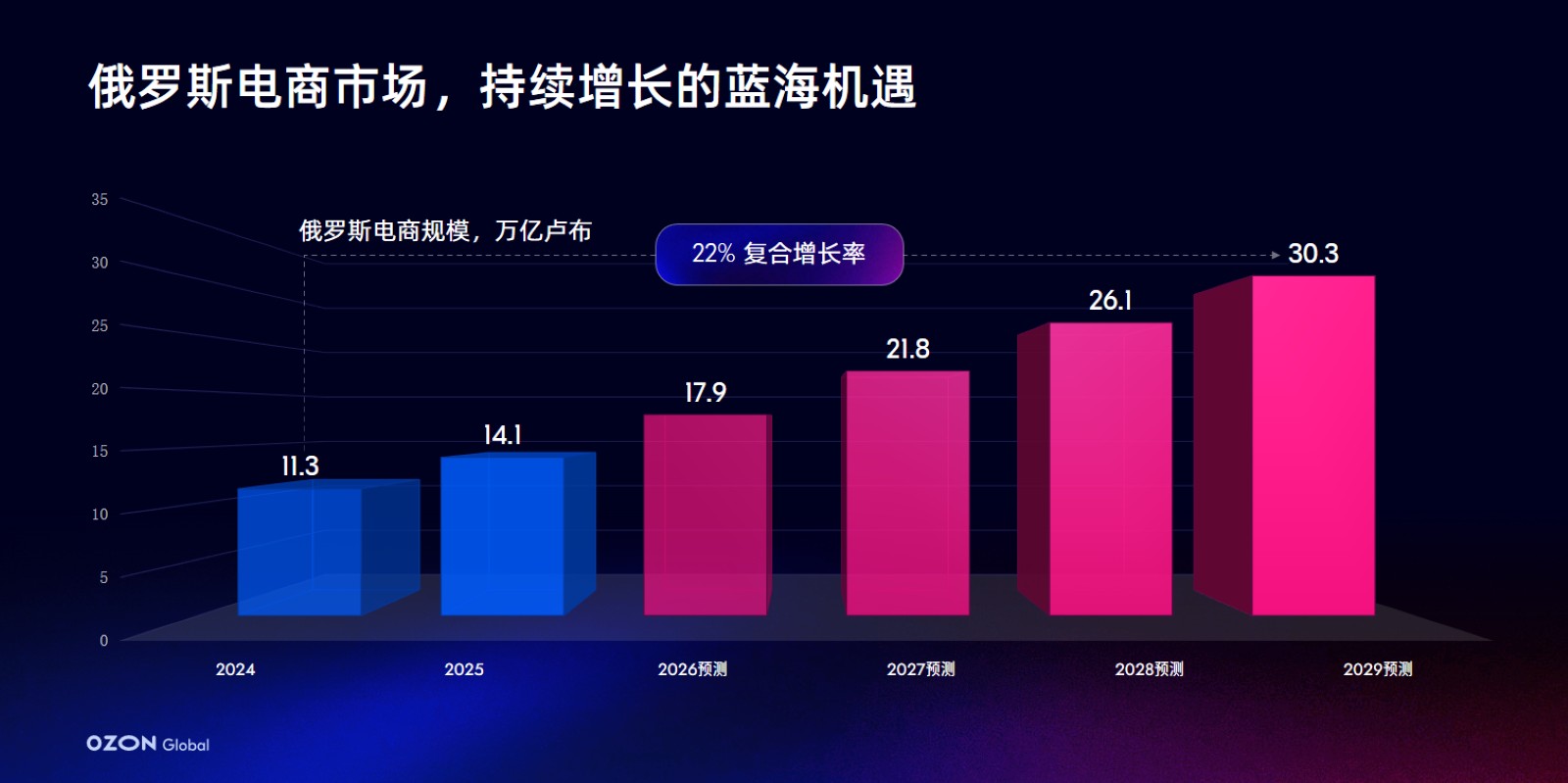
At the same time, we also see that by 2029, the size of the Russian e-commerce market is expected to further grow to 30 trillion rubles, close to 400 billion US dollars. This scale is quite rare in the current European market. Russia is likely to become the first e-commerce market in Europe to surpass the 400 billion US dollar mark.
We also see that the proportion of Russian e-commerce in total social retail sales is continuously increasing. Last year, e-commerce penetration in Russia reached 23%. Compared to mature e-commerce markets like China and South Korea, Russia still has significant room for growth in the future. We believe that in the next two to three years, Russian e-commerce penetration has the opportunity to further increase to 30%.
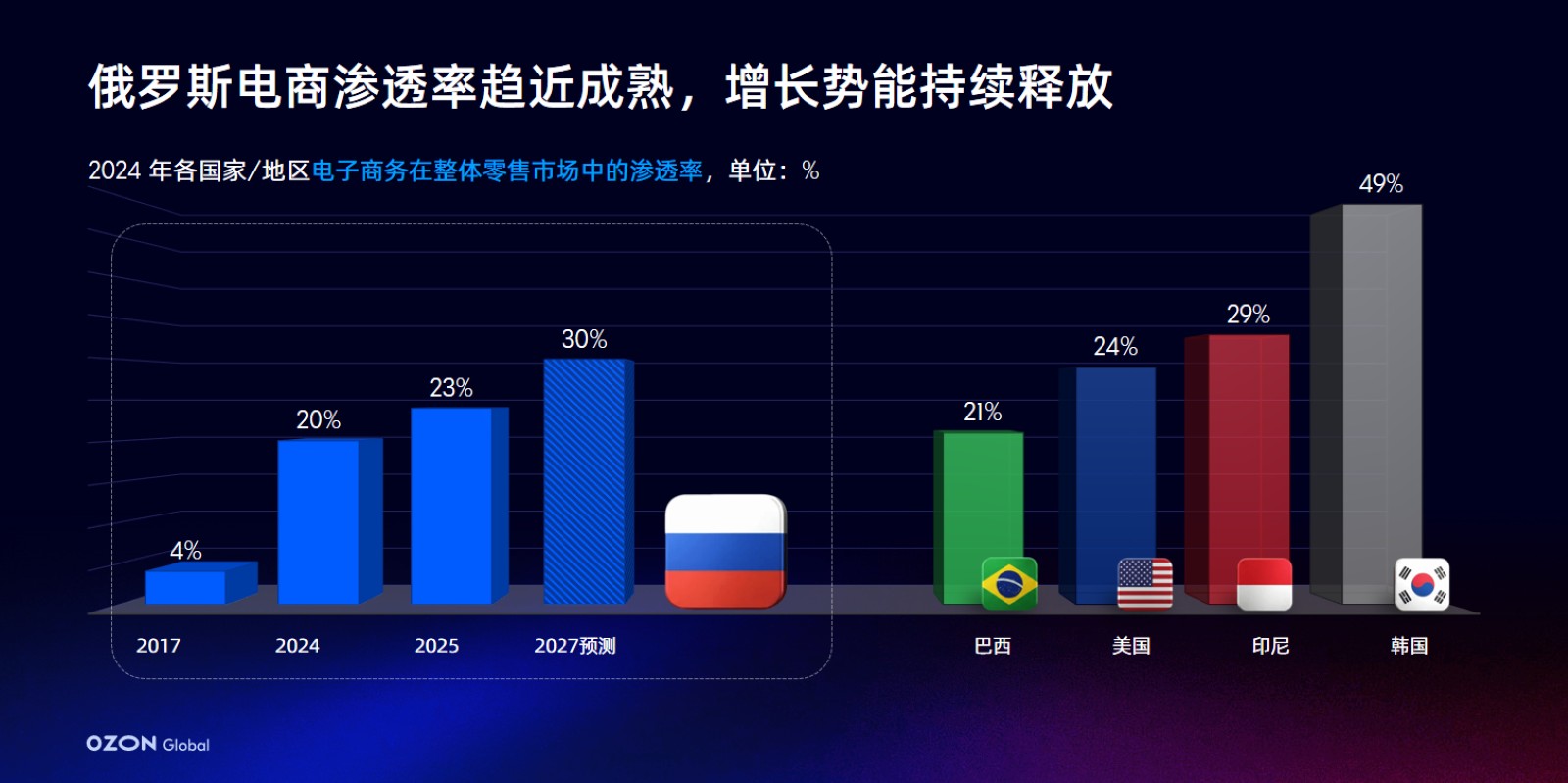
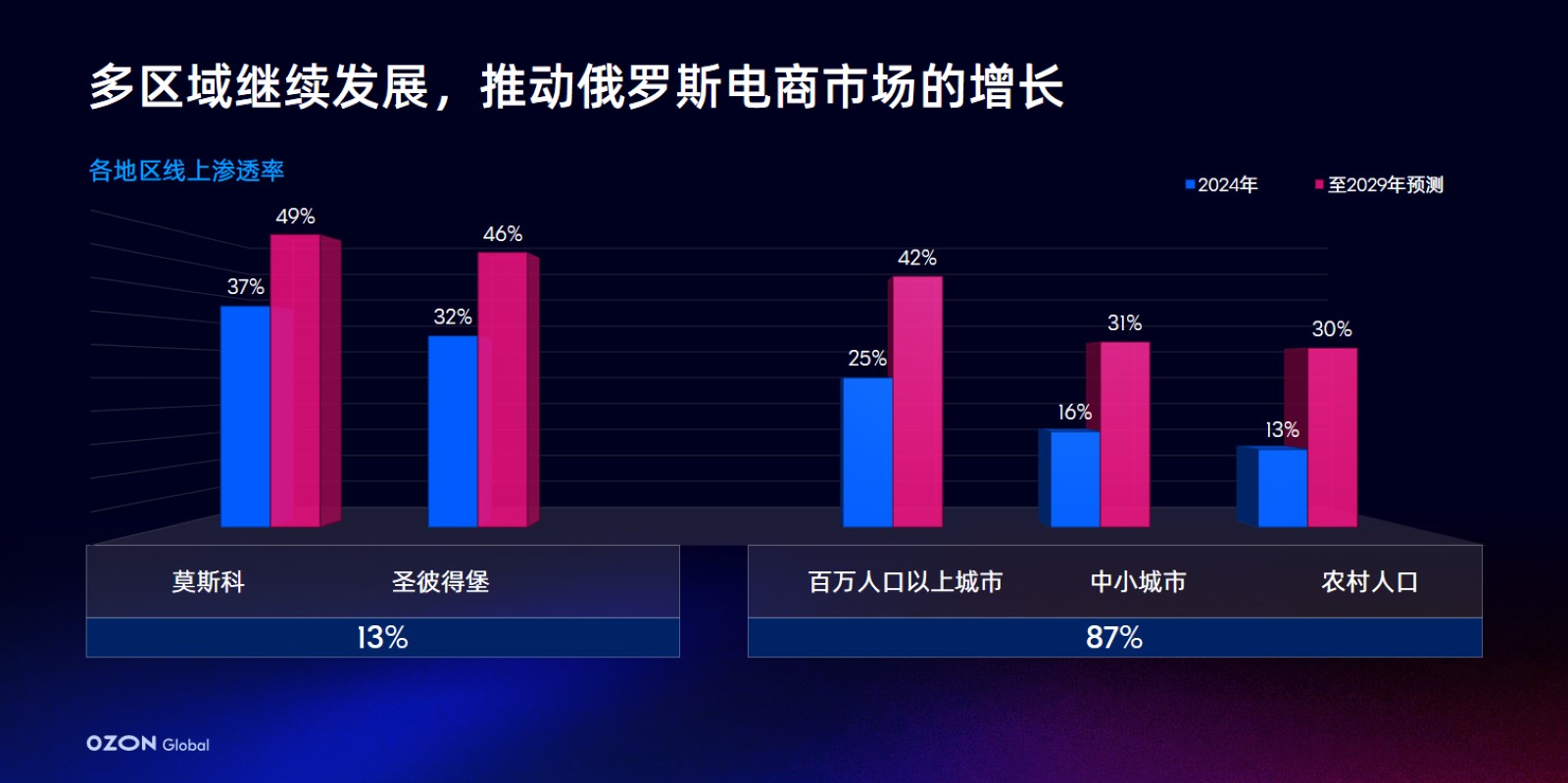
From a regional distribution perspective, core cities like Moscow and St. Petersburg are still the areas with the highest e-commerce penetration. The core regions represented by Moscow and St. Petersburg, with a population of about 20 million and strong purchasing power, account for about 13% of Russia's overall e-commerce market.
However, at the same time, we see that the truly massive incremental market actually comes from small and medium-sized cities and rural areas. Currently, this population segment exceeds 100 million. In the future, e-commerce penetration in these regions will continue to rise.
I believe there are several key factors determining the differences in e-commerce penetration.
The first is population base.
For example, Moscow has over 10 million permanent residents, St. Petersburg about 5.6 million, and there are 14 other cities with populations between 1 and 1.5 million. The remaining 1,100+ cities mostly have populations under 100,000.
Therefore, we see that from population base, infrastructure to per capita disposable income, e-commerce penetration in large cities will continue to increase in the future, even potentially approaching 50% in the coming years.
Thus, for sellers, when selecting products, it's essential to research the consumption preferences of users in different cities.
For brand-oriented sellers, it's even more crucial to focus on the consumption habits of users in Moscow, St. Petersburg, and million-population cities. The product selection logic should align with the city's consumption power. For those targeting small and medium-sized cities and rural areas, emphasizing value for money is more important. This is precisely the strength of Chinese cross-border industrial cluster sellers.
Today, we have already seen many sellers from Fujian's industrial clusters achieve excellent results on Ozon. Their products offer strong value for money, thus gaining recognition from a large number of consumers in lower-tier markets.
The second factor is that I believe there is a noticeable development gap between Chinese e-commerce, Western European e-commerce, and Russian e-commerce.
E-commerce in China and Western markets developed earlier, especially in China, where the pace was very fast. Although Russian e-commerce started later, its catch-up speed is equally astonishing.
02 From 'Small and Beautiful' to Top Two in the CIS: How Did Ozon Achieve Exponential Growth?
For the first 20 years after its founding, Ozon primarily operated on a self-run business model. At that time, we were more like a 'small and beautiful' website, mainly selling books and cultural/creative products.
It wasn't until 2017-2018 that we officially transitioned to a platform model, followed by explosive growth. At the same time, other mainstream Russian e-commerce platforms also began their platformization transitions, so the overall market competition was very intense.
But fortunately, Ozon ultimately succeeded in becoming one of the top two players in the CIS market.
So what exactly did we do right?
First, continuous investment in logistics infrastructure.
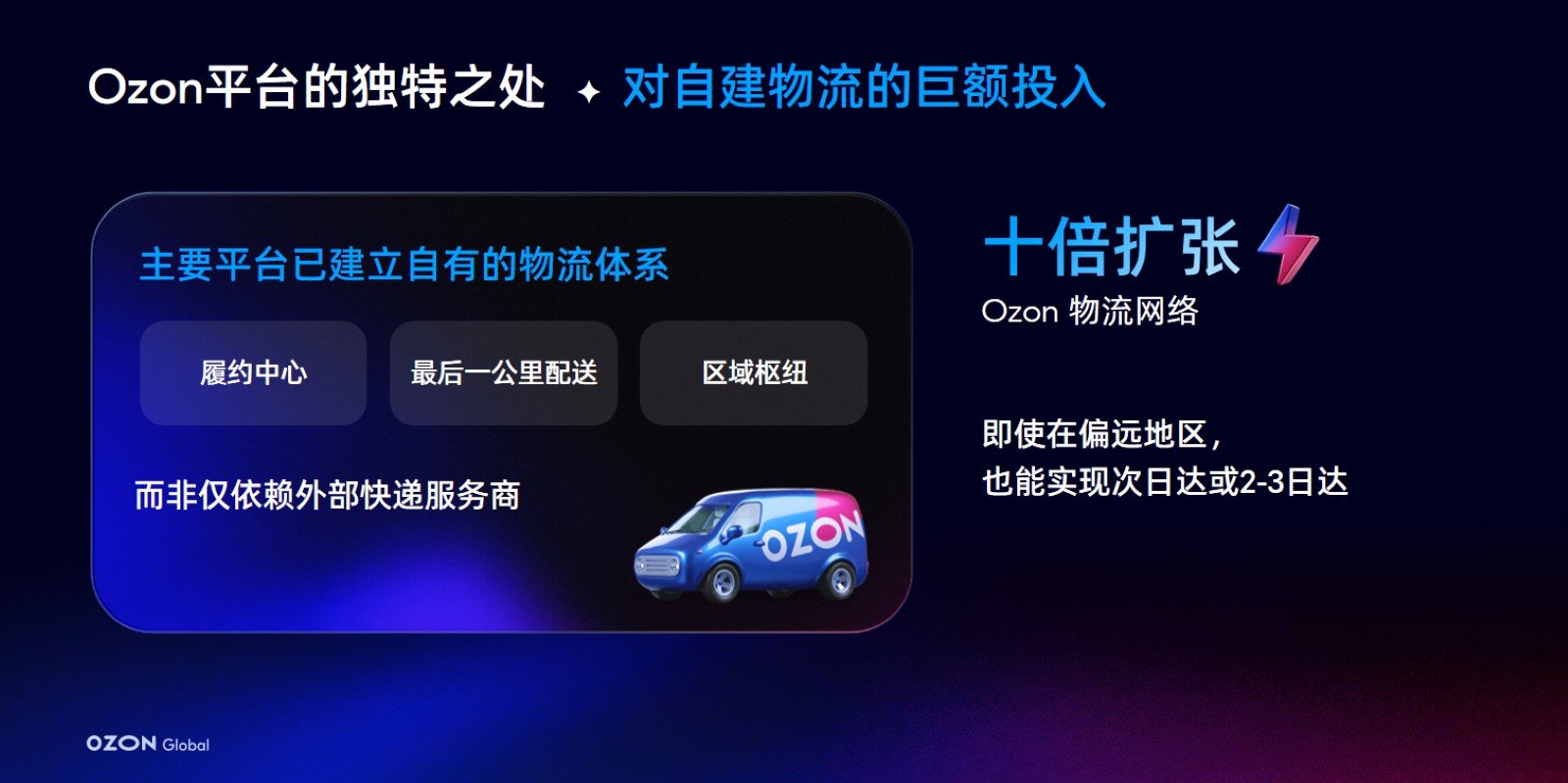
Since 2020, we have continuously increased investment in logistics infrastructure development. Today, Ozon has over 5 million square meters of warehouse space in Russia, along with more than 20,000 in-house drivers and a large number of regional distribution centers covering the entire country.
Today, we can achieve 2-3 day delivery in remote areas, and even 2-hour or 3-hour delivery in core cities. The continuous improvement in logistics efficiency has also driven the rapid growth of the platform's overall business.
Second, the construction of the pickup point network.
The Russian and Belarusian markets have a very unique consumption habit—users are very accustomed to picking up goods at pickup points.
Over the past five years, the number of our pickup points has grown rapidly. Initially, we adopted a self-built model, but later found that relying solely on self-construction was far from sufficient. To cover consumers faster, we began adopting a franchise model.
As of today, we have established a network of nearly 85,000 pickup points across the entire CIS market. Consumers can not only pick up goods at these points but also try on and test products. Many pickup points are even equipped with fitting rooms, providing consumers with an excellent shopping experience.
Currently, our network covers nearly 95% of end consumers. This is a very important innovation at the infrastructure level for us.
Third, persistently advancing the lower-tier market strategy.
We have always believed that the largest incremental market for Russian e-commerce comes from small/medium cities and remote areas. However, e-commerce infrastructure in these regions was originally relatively weak, requiring long-term investment.
Today, through logistics infrastructure, pickup point networks, and digital technology capabilities, we can dynamically deploy more reasonable service networks based on consumer shopping frequency and addresses. It is precisely such infrastructure construction and lower-tier market strategy that have helped us continuously open up new incremental markets.
Today, in the Russian market, Ozon's brand reputation is in an absolutely leading position.
If you have the chance to travel to Moscow or St. Petersburg, you will see a large number of Ozon outdoor advertisements. Even many Russian consumers and tour guides will directly tell you that, in their minds, the best e-commerce platform is Ozon: Over the past four years, our brand reputation has consistently remained above 50% and continues to lead the market.
03 GMV Surpasses 4 Trillion Rubles, Backed by 15 Million 'Super Fans' Voting with Their Wallets
Just last month, we officially released our full-year 2025 financial report.
Here, I'd also like to share a few key data points with you.
In 2025, Ozon's platform total transaction volume exceeded 4 trillion rubles. At the current exchange rate, the overall scale is over 55 billion US dollars. The annual order count was close to 2.5 billion orders. We believe 2026 will usher in a new milestone, and our order count has the opportunity to surpass 3 billion orders.
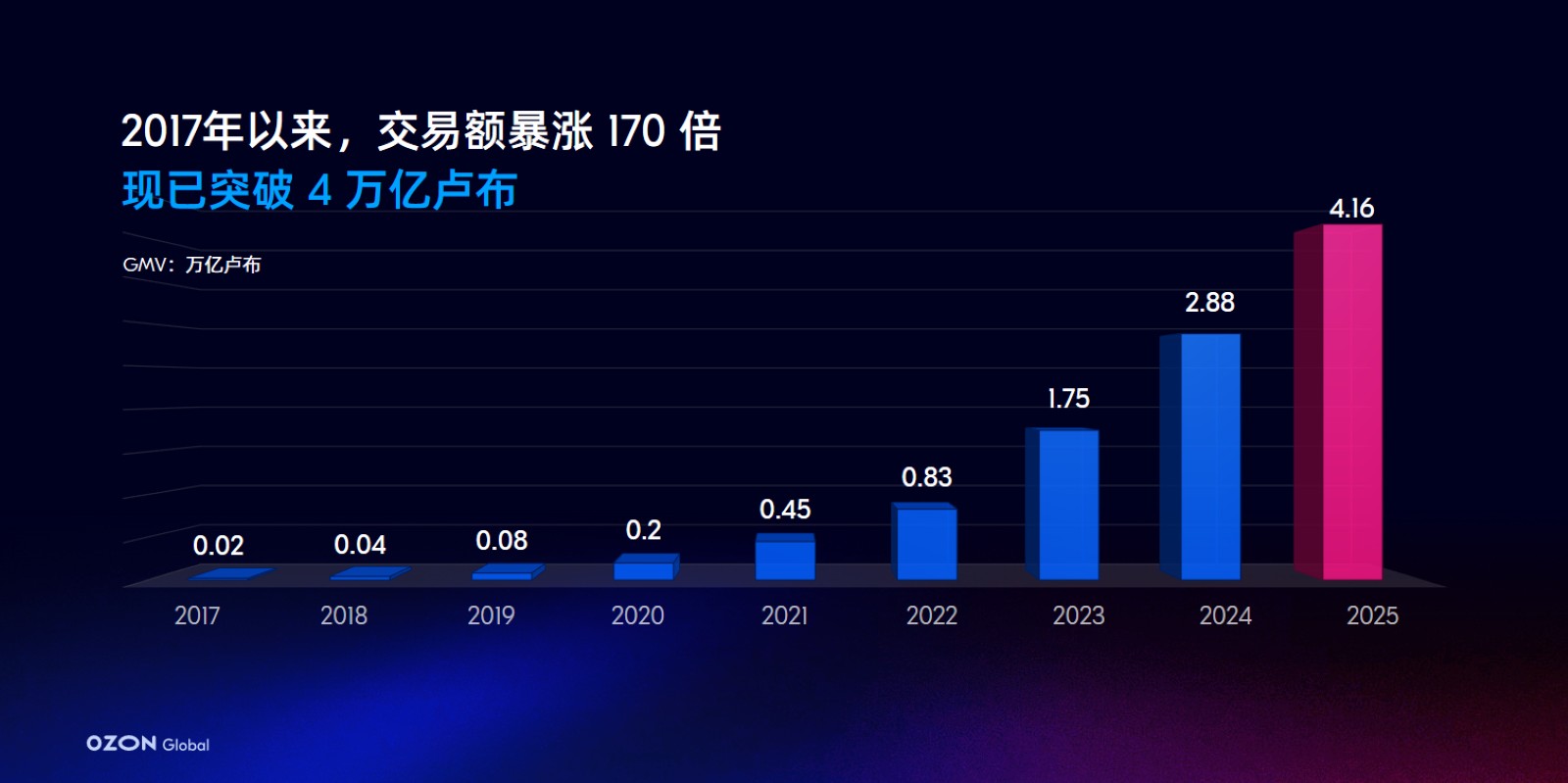
Looking back to 2017, before Ozon's platformization transition, our market ranking was only ninth, and the scale was not large. Today, we have become one of the two largest platforms in the entire market. Our number of active buyers and paying users has grown 22-fold compared to back then. The platform's compound annual growth rate has long remained above 90%, even exceeding 100% for several consecutive years in previous years.
Although last year, due to the already high base, the overall growth rate moderated to around 50%, it still maintained very strong growth. At the same time, our GMV has grown 170-fold compared to 2017. These numbers are the most direct reflection of the overall market dividend.
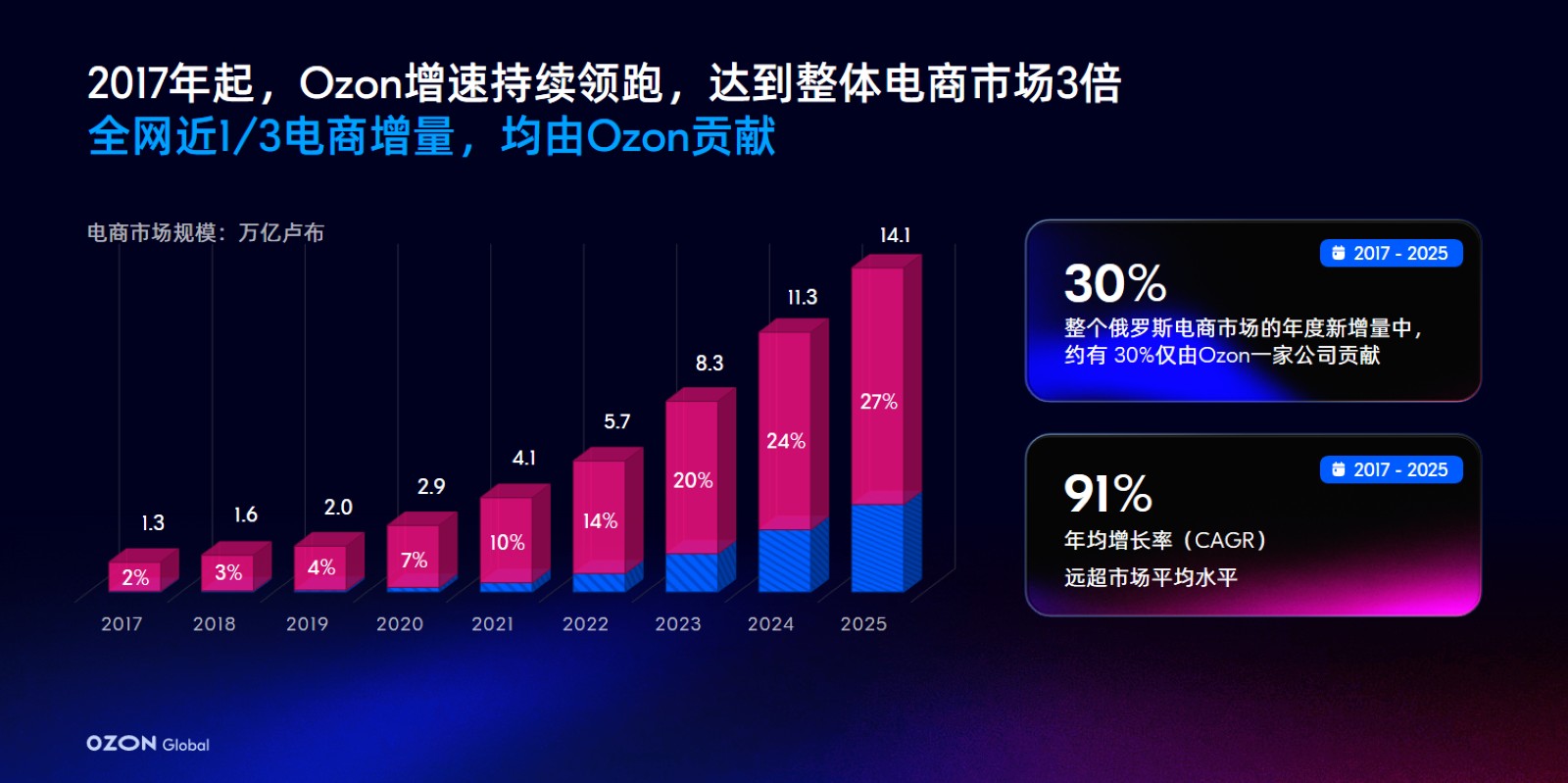
Today, there are also many experienced sellers present. Some sellers started with Ozon in 2022 and have now developed very well. Many enterprises have grown from small teams of three to five people into mature companies with seventy to eighty employees; there are also many sellers who originally sold unbranded products and have now established their own brands on Ozon.
So we see that many Chinese sellers have already enjoyed this round of market growth dividend together with Ozon.
Let me share another piece of data I consider very important—user loyalty.
Last year, there was a significant breakthrough in our users' purchase frequency. In previous years, the average annual purchase frequency per user typically increased by only seven, eight, or around ten orders. But last year, the average annual order count per user jumped from 25 orders directly to 38 orders.
This means that over 65 million users placed, on average, 13 more orders per year. I believe this represents a qualitative change in Ozon user loyalty.
There's another very interesting data point.
Last year, over 15 million 'super fan' users on the Ozon platform placed orders every single week over the past 365 days. Sometimes I think to myself, I shop online a lot domestically, but even so, I probably couldn't place an order on a single platform every week continuously. But today, in Russia, nearly one-tenth of the population maintains the consumption habit of placing orders on Ozon every single week.
This means Ozon has truly integrated into consumers' daily lives.
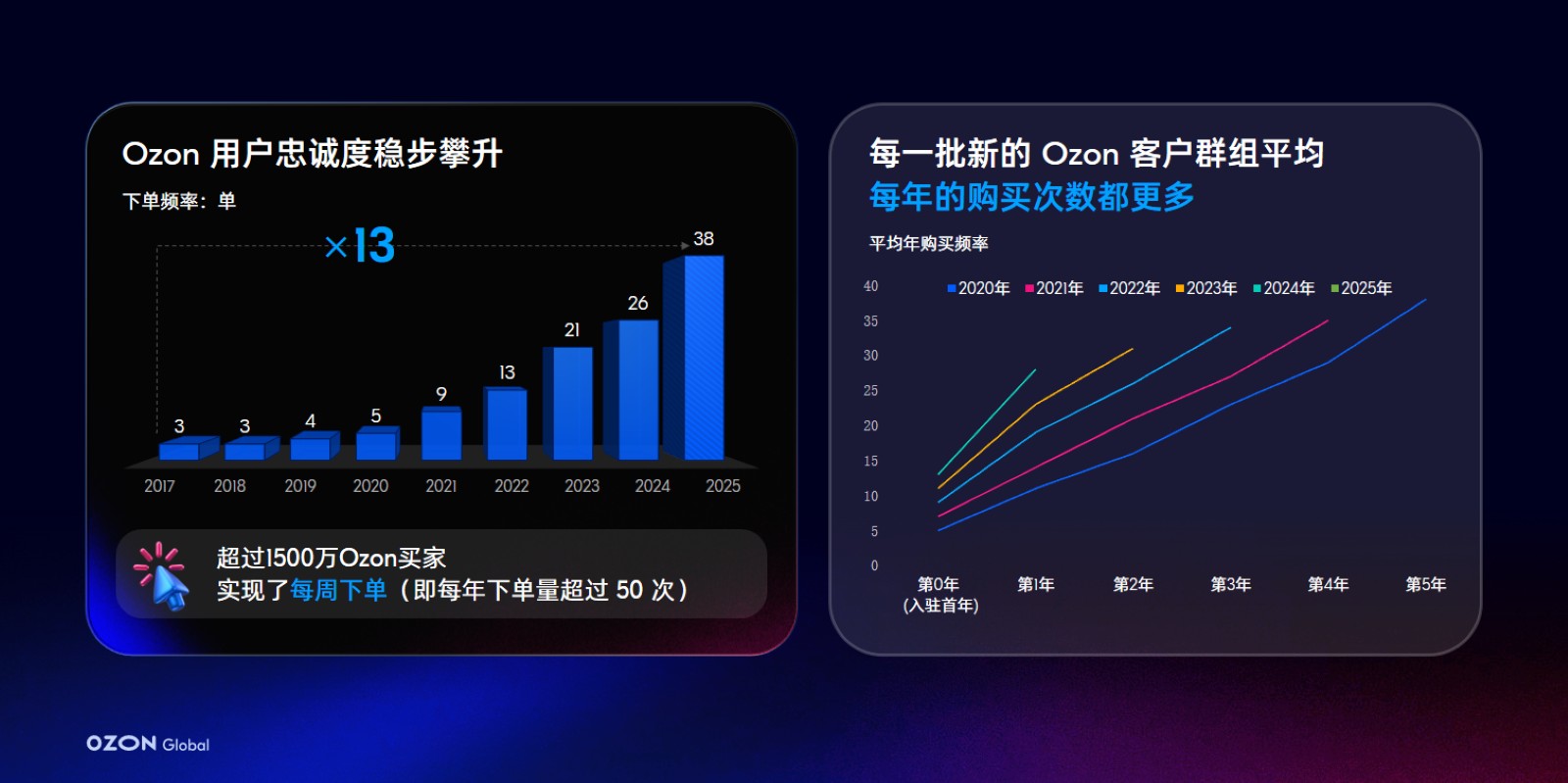
At the same time, we also found that the order frequency of each year's new user cohort is higher than that of previous years' existing users. And these new customer groups have a very distinct characteristic: they are younger.
Today, Generation Z is gradually becoming the main consumption force. We see this trend in the Russian market as well. Young consumers are naturally more accustomed to online shopping; they are no longer willing to spend a lot of time shopping offline in malls because online already offers a sufficiently rich product selection, more convenient shopping experiences, and continuous price subsidies from the platform.
These factors further drive the continuous improvement of user loyalty.
Based on long-term infrastructure construction and user experience optimization, Ozon has today become the platform with the highest user coverage in the entire Russian-speaking and CIS market. Whether in terms of daily active users (DAU) or monthly active users (MAU), we rank first.
In addition to the Russian market, in July 2024, we officially launched our multi-site layout in the CIS.
The first site is Kazakhstan, the second is Belarus. At the same time, we are also advancing the construction of more new sites. Over the past year, we have continuously optimized logistics solutions to help Chinese sellers 'sell with one click' to multiple CIS countries.
In the fourth quarter of last year, order volume in Kazakhstan and Belarus achieved tenfold growth. This year, as the overall base is still not high, we believe the Central Asian and Belarusian markets will see even greater breakthroughs.
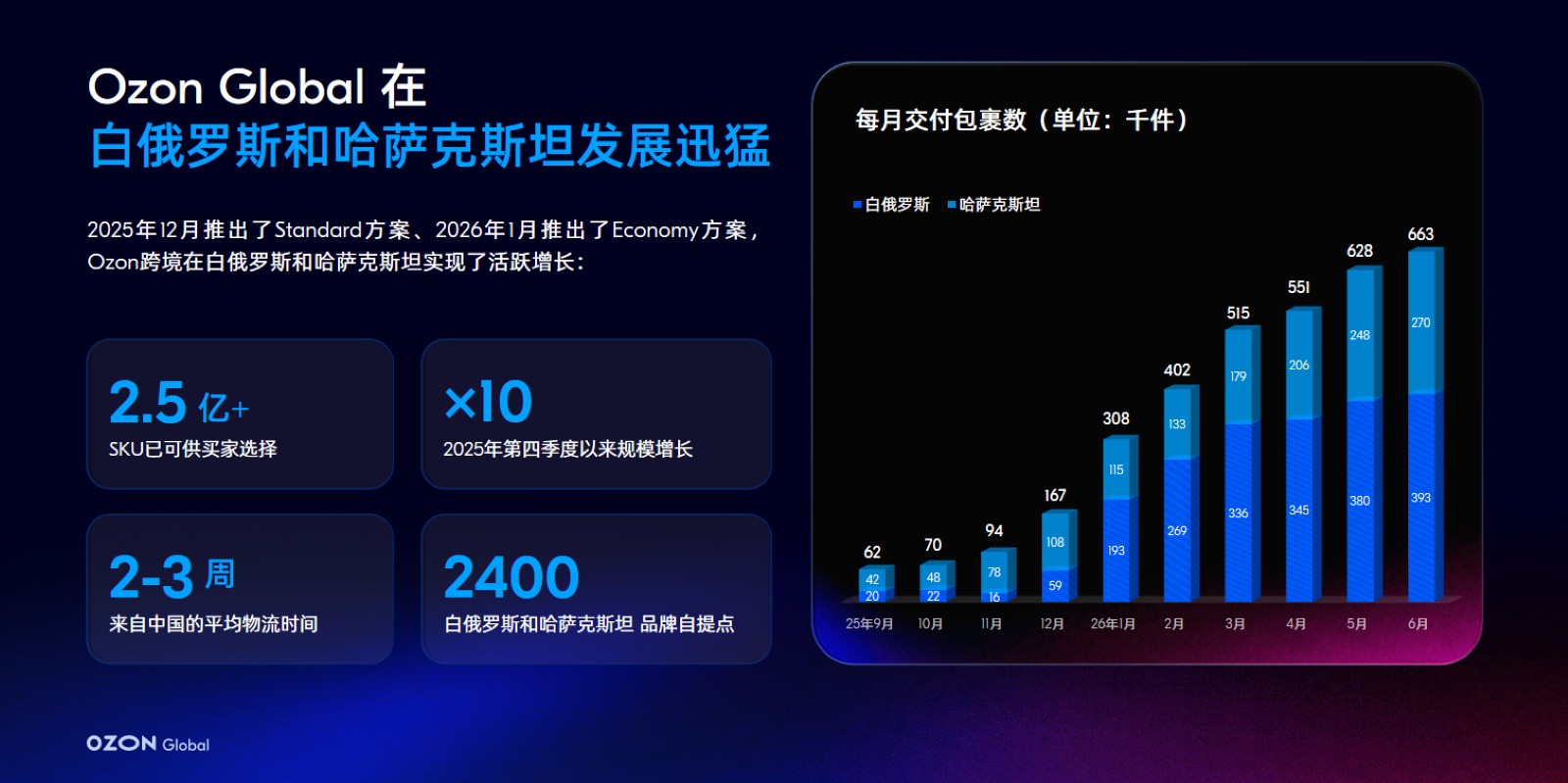
Simultaneously, we continue to optimize the backend operation experience. In the future, sellers will no longer need to configure logistics and shipping cost systems separately for different countries. In the second half of this year, we will launch more new solutions, which you can also keep an eye on.
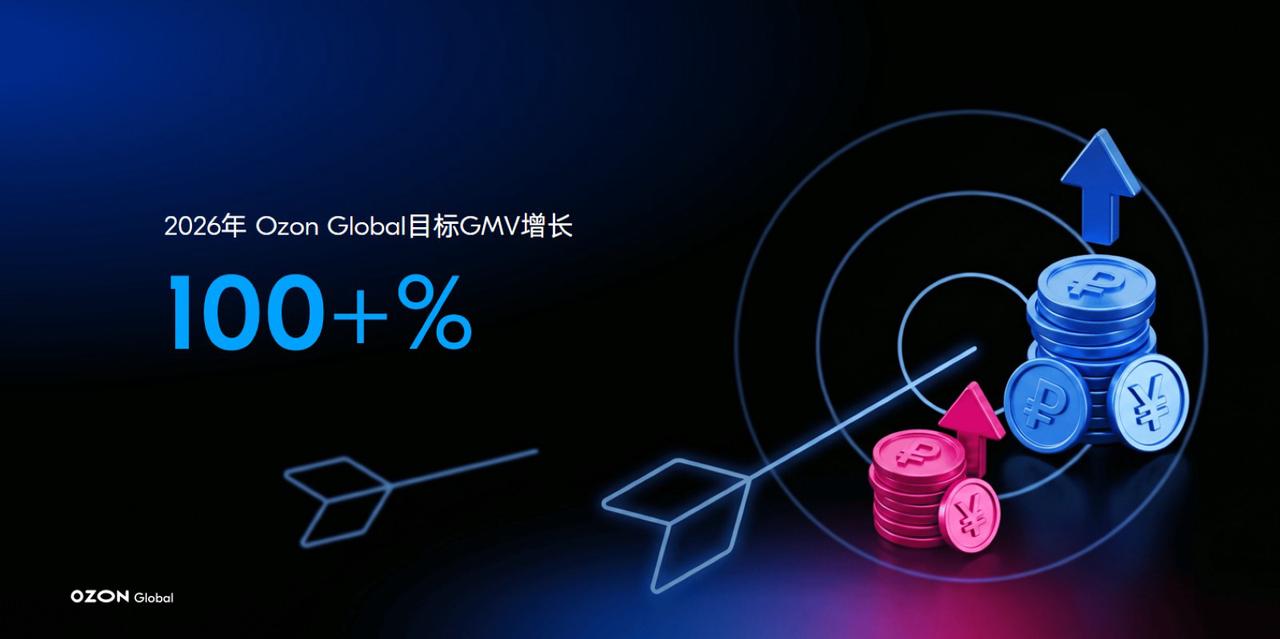
Furthermore, I would like to officially announce Ozon Global's GMV target for 2026: a 100% growth compared to 2025—we are very confident in this goal.
04 AI, Branding, and Compliance: Russian E-commerce Moves Beyond the 'Wild West' Stage, Calling for Professional Players
Finally, I'd like to share three directions that Ozon hopes to jointly advance with sellers in 2026.
The first direction is AI.
Today, more and more sellers are seeking AI agent tools to help enterprises achieve AI-driven, fully managed operations. I believe this is a very clear major trend for the future.
So this year, we also hope to work with more excellent developers to promote the implementation of AI tools in the cross-border e-commerce industry, allowing more sellers to truly enjoy the efficiency dividends brought by AI technology.
Of course, the other side of AI will also bring changes in organizational structure.
I believe that in the future, many seller companies may not need as many operational staff. And those who understand platform rules and operations are likely to choose to start their own businesses. So I predict the next trend will be the rapid popularization of the 'One Person Company' model in the cross-border e-commerce industry.
Because today, many operational personnel are already very familiar with platform rules; as long as they are equipped with AI tools, they can quickly handle operations and management. In the future, more and more individual entrepreneurs will enter the cross-border e-commerce industry.
This leads to the second direction—branding.
Think about it, when everyone can use AI tools for 24/7 operations and quickly generate localized marketing content, where does the real differentiation lie? I believe the answer must be brand.
Because a brand represents corporate aesthetics, consumer perception, user trust, and long-term accumulated brand equity. And these are not things AI tools can replicate in a short time. Therefore, I believe branding will be the biggest opportunity for cross-border e-commerce sellers, including individual entrepreneurs, in the next phase.
The third direction is compliance.
In the current complex global environment, I believe the entire cross-border e-commerce industry is entering a phase of comprehensive compliance.
In the years of rapid industry growth, many might have thought compliance wasn't that important. But today, whether it's tax compliance, logistics compliance, fund compliance, product compliance, or intellectual property compliance, all have become increasingly important.
We must not let our brands and companies ultimately fall due to compliance issues, handing over the market we worked hard to build to competitors.
Finally, I wish everyone great business prosperity in 2026. Thank you all!
Ebrun continues to track and report on this information. To learn more about the topics related to this article, please scan the QR code to follow the author on WeChat.

[Copyright Notice] Ebrun advocates respecting and protecting intellectual property rights. Without permission, no one is allowed to copy, reproduce, or use the content of this website in any other way. If any copyright issues are found in the articles on this website, please provide copyright questions, identification, proof of copyright, contact information, etc. and send an email to run@ebrun.com. We will communicate and handle it in a timely manner.
Translated by AI. Feedback: run@ebrun.com